Why BMW Owners Need a NACS Adapter in 2026
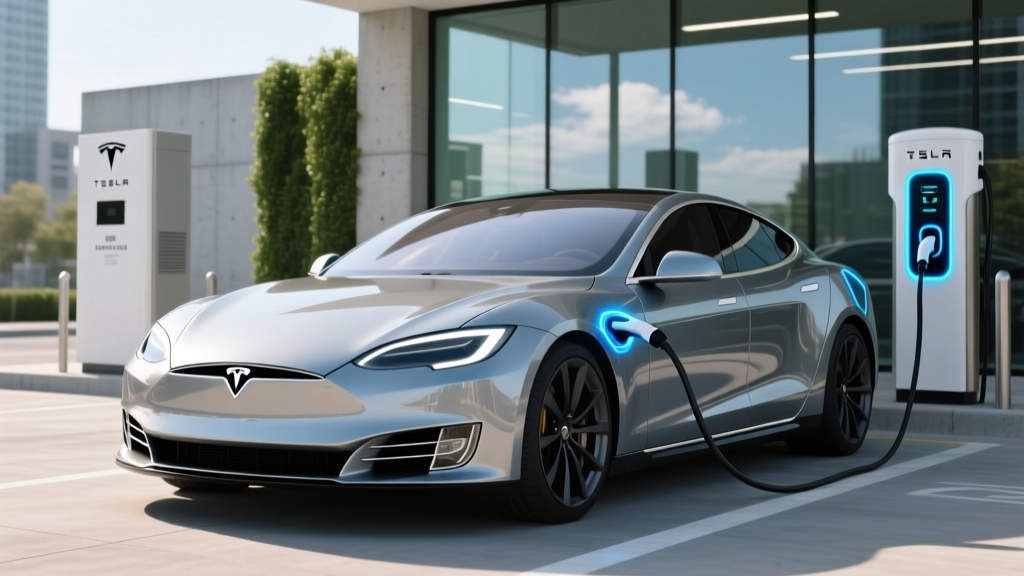
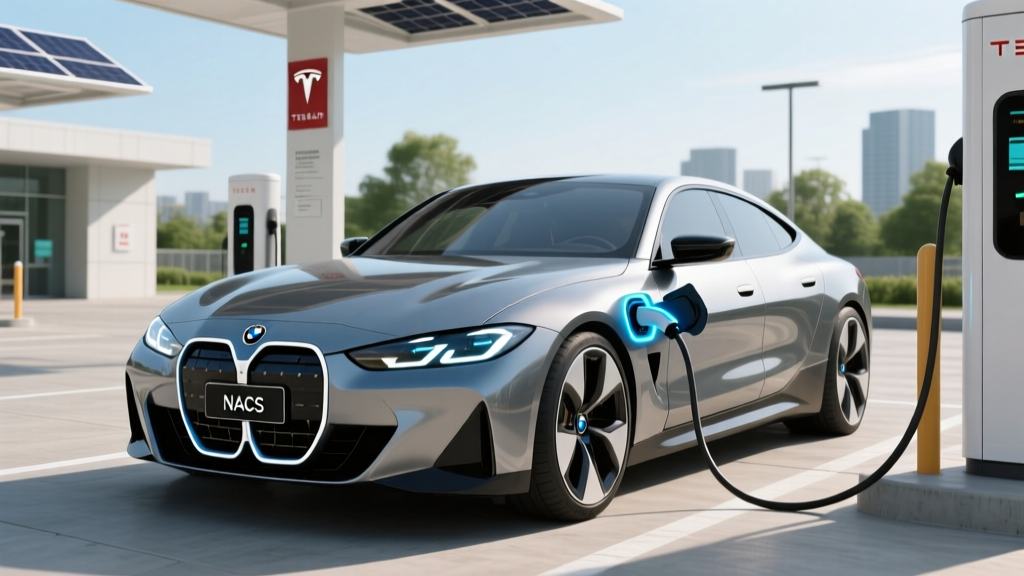
If you drive a BMW i4, iX, i5, or i7, your vehicle left the factory with a CCS1 (Combined Charging System) port. But the North American charging landscape has shifted decisively toward NACS — the Tesla-designed connector now adopted by nearly every major automaker. Tesla's Supercharger network, the largest and most reliable DC fast-charging network in the U.S., opened to non-Tesla vehicles through the Magic Dock at select stations, but full, seamless access requires a NACS adapter or a native NACS port.
BMW began transitioning to native NACS ports on new models starting with the 2025 model year (Neue Klasse platform vehicles). If you own a 2022–2025 BMW EV with a CCS1 port, the BMW NACS adapter is your bridge to the Supercharger network. This guide covers exactly what the adapter does, how it affects your charging speeds, what your home setup should look like, and what it all costs.
Understanding Charging Levels: Speeds in kW and Miles Per Hour
Before discussing adapters, you need clarity on the three charging levels. The critical distinction: kW (kilowatts) measures power — how fast energy flows into your car. kWh (kilowatt-hours) measures energy — the total capacity of your battery. Think of kW as the width of a hose and kWh as the size of the bucket.
| Level | Voltage | Max Power (kW) | Miles of Range Added Per Hour | Typical Use |
|---|---|---|---|---|
| Level 1 | 120V AC | 1.4–1.9 kW | 3–5 mi/hr | Emergency / overnight trickle |
| Level 2 | 240V AC | 7.2–19.2 kW | 20–60 mi/hr | Home daily charging, workplace |
| DC Fast Charge | 400–800V DC | 50–350 kW | 150–800+ mi/hr (peak) | Road trips, rapid top-ups |
For a BMW i4 eDrive40 with its 81.5 kWh (usable) battery, a Level 2 charger at 11 kW adds roughly 35 miles of range per hour — enough to fully replenish overnight. DC fast charging at a Tesla V3 Supercharger (250 kW peak) can take the i4 from 10–80% in approximately 31 minutes, though the BMW NACS adapter may impose its own throughput ceiling (more on that below).
Connector Compatibility: NACS, CCS1, and CHAdeMO Explained
The connector on your BMW EV determines which public chargers you can use without an adapter. Here's where each major EV brand stands in 2026:
| Connector | Brands Using It (Native) | Adapter Needed for Superchargers? |
|---|---|---|
| NACS (Tesla) | Tesla, Ford, GM, Rivian, Volvo, Polestar, BMW (2025+ Neue Klasse), Hyundai/Kia (2025+) | No |
| CCS1 | BMW (pre-2025), VW, Audi, Porsche, Mercedes, Hyundai/Kia (pre-2025), Stellantis | Yes — CCS-to-NACS adapter |
| CHAdeMO | Nissan Leaf (legacy), Mitsubishi Outlander PHEV (legacy) | Limited adapters; network shrinking |
The BMW NACS adapter is a CCS1-to-NACS adapter specifically validated for BMW electric vehicles. It allows your CCS-equipped BMW to plug into Tesla Superchargers (V2, V3, and V4) and destination chargers with NACS connectors. BMW has indicated that the adapter supports DC fast charging at up to the vehicle's native peak rate, though real-world throughput depends on the Supercharger generation and battery preconditioning state.
How Much Does It Cost to Install a Home EV Charger?
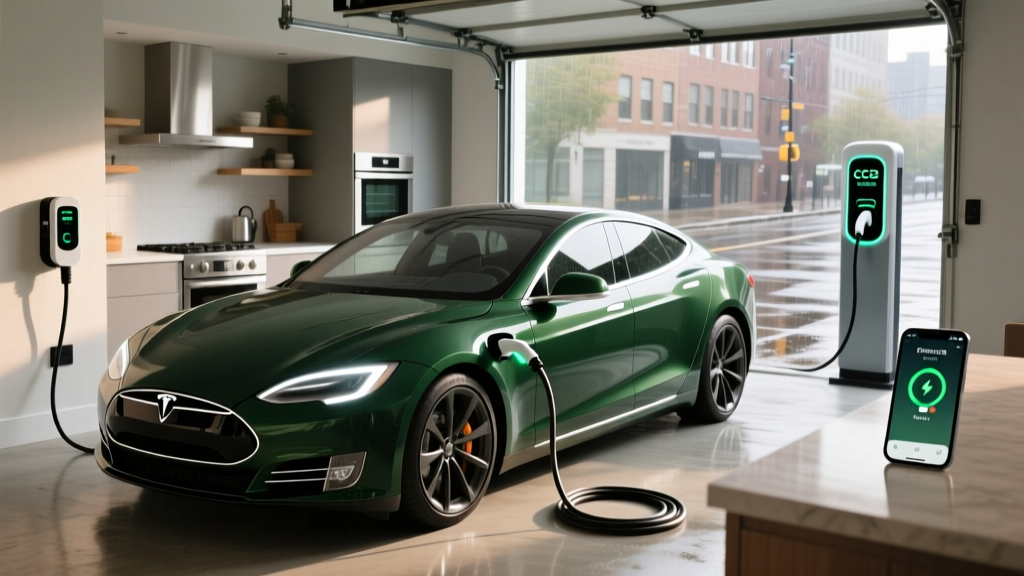
Home Level 2 charging is where 80%+ of EV charging happens. But installation costs vary enormously based on your electrical panel, the distance from panel to charger location, and local permit fees. Here's a realistic breakdown:
| Component | Typical Cost Range | Notes |
|---|---|---|
| Level 2 Charger Unit | $300–$700 | Smart Wi-Fi chargers (ChargePoint, Wallbox, Emporia) |
| Electrician Labor | $500–$2,000 | Depends on run length, conduit, wall type |
| Electrical Permit | $50–$300 | Varies by municipality |
| Panel Upgrade (if needed) | $1,500–$4,000 | Required if panel is 100A or has no spare breaker slots |
| Total (no panel upgrade) | $850–$3,000 | Most homes with 200A service |
| Total (with panel upgrade) | $2,350–$7,000 | Older homes with 100A service |
What electrical upgrades might you need? A Level 2 charger delivering 11.5 kW (48A) requires a dedicated 60A, 240V circuit. Most modern homes with 200A panels have sufficient capacity. However, if your home has a 100A panel, already runs near capacity (electric dryer, range, HVAC), or the panel is in poor condition, an upgrade to 200A service is necessary. A licensed electrician will perform a load calculation per NEC Article 220 to determine this.
For BMW EVs specifically, the onboard charger accepts up to 11 kW (single-phase, 48A) on most trims. A 48A charger on a 60A circuit is the sweet spot — it maxes out the i4/iX onboard charger without overspending on heavier-gauge wiring needed for 80A circuits.
Level 2 Charger Equipment Recommendations for BMW EVs
Not all Level 2 chargers are equal. Here are three proven options that pair well with BMW electric vehicles, all featuring the J1772 connector (which BMW's CCS port accepts natively for AC charging — no adapter needed for home Level 2):
Emporia Vue Level 2 Smart Charger
- Power Output: 48A / 11.5 kW (240V)
- Cable Length: 24 ft
- Connector: J1772
- Smart Features: Wi-Fi, app scheduling, energy monitoring, solar integration
- Price: ~$399
- Why for BMW: Matches the i4/iX 11 kW onboard charger perfectly; energy monitoring helps track charging costs vs. household load.
ChargePoint Home Flex
- Power Output: Up to 50A / 12 kW (240V, configurable)
- Cable Length: 23 ft
- Connector: J1772
- Smart Features: Wi-Fi, Alexa integration, ChargePoint app, flexible amperage settings
- Price: ~$549
- Why for BMW: Configurable amperage lets you dial down to 40A if your circuit is 50A, or run at 48A on a 60A circuit. Proven reliability.
Wallbox Pulsar Plus
- Power Output: 48A / 11.5 kW (240V)
- Cable Length: 25 ft
- Connector: J1772
- Smart Features: Wi-Fi + Bluetooth, Power Sharing (daisy-chain two units on one circuit), compact form factor
- Price: ~$449
- Why for BMW: Compact, well-built, and the Power Sharing feature is ideal if you plan to add a second EV to your garage.
For outdoor installations, ensure your charger carries a NEMA 4 or NEMA 4X rating for weather resistance. All three units above carry outdoor ratings, but a hardwired installation (no plug) is preferred for outdoor use — it eliminates the 240V receptacle as a failure point and typically satisfies local code more easily.
Charging Cost Per Mile: Home vs. Public vs. Gas
The economics of EV charging depend heavily on where and when you charge. Here's a realistic cost comparison using a BMW i4 eDrive40 (EPA-estimated 307 miles of range, 81.5 kWh usable battery, ~3.8 mi/kWh efficiency):
| Scenario | Rate ($/kWh) | Cost for 10–80% Charge (~57 kWh) | Cost Per Mile |
|---|---|---|---|
| Home (off-peak utility rate) | $0.08–$0.14 | $4.56–$7.98 | $0.021–$0.037 |
| Home (standard residential avg.) | $0.16 | $9.12 | $0.042 |
| Public Level 2 (workplace/mall) | $0.20–$0.35 | $11.40–$19.95 | $0.052–$0.092 |
| DC Fast Charge (Electrify America, EVgo) | $0.35–$0.55 | $19.95–$31.35 | $0.092–$0.144 |
| Tesla Supercharger (via BMW NACS adapter) | $0.25–$0.40 | $14.25–$22.80 | $0.066–$0.105 |
| Gas car (30 MPG, $3.40/gal) | — | — | $0.113 |
Home charging at off-peak rates makes the BMW i4 roughly 3x cheaper per mile than a comparable gas sedan. Even DC fast charging on the road is competitive with or cheaper than gasoline on a per-mile basis. The BMW NACS adapter unlocks Tesla Supercharger pricing, which in 2026 averages $0.28–$0.35/kWh in most U.S. markets — generally lower than Electrify America or EVgo peak rates.
According to fueleconomy.gov, the BMW i4 eDrive40 achieves 109 MPGe combined. At national average electricity rates, the annual fuel cost is approximately $600–$750, compared to $1,800–$2,200 for a gas-powered BMW 3 Series.
DC Fast Charging Times: What to Expect with the BMW NACS Adapter
When you plug your CCS-equipped BMW into a Tesla Supercharger using the NACS adapter, charging speed is governed by three factors: the Supercharger's peak output, your BMW's onboard charge curve, and battery temperature (preconditioning matters).
| Model | Battery (Usable kWh) | Peak DC Charge Rate | 10–80% at 200+ kW Charger | 10–80% at 150 kW Charger |
|---|---|---|---|---|
| BMW i4 eDrive40 | 81.5 kWh | 205 kW | ~31 min | ~38 min |
| BMW i4 M50 | 81.5 kWh | 205 kW | ~31 min | ~38 min |
| BMW iX xDrive50 | 105.2 kWh | 200 kW | ~35 min | ~44 min |
| BMW i5 eDrive40 | 81.2 kWh | 205 kW | ~30 min | ~37 min |
| BMW i7 xDrive50 | 101.7 kWh | 195 kW | ~34 min | ~42 min |
Charge curve reality: BMW EVs, like all lithium-ion battery packs, do not sustain peak charge rates for the full session. The i4 may hit 200+ kW between 10–30% State of Charge (SoC), then taper to ~150 kW through 50%, and drop to ~75 kW above 70%. This is normal battery protection behavior. The 10–80% times above reflect the integrated curve, not a sustained peak.
Preconditioning is essential. If you navigate to a Supercharger in your BMW's infotainment system (or via a third-party route planner like A Better Routeplanner), the vehicle will warm the battery to optimal temperature before arrival. In cold weather (below 40°F), skipping preconditioning can add 10–15 minutes to your charge time and reduce peak kW by 30–40%.
Safety, Code, and Installation Best Practices
A Level 2 charger draws sustained high current for hours — this is not like plugging in a phone. Proper installation protects your home and your vehicle:
- Dedicated circuit: Your charger must be on its own dedicated breaker — never shared with other appliances. A 48A charger requires a 60A breaker per NEC 210.20 (continuous loads must be derated to 80% of breaker capacity).
- GFCI protection: The 2020 NEC requires GFCI protection for EV charging outlets (210.8(F)). Hardwired chargers may be exempt in some jurisdictions — your electrician will confirm local requirements.
- Outdoor rating: If your charger is mounted outdoors or in an unsealed garage, it must carry a NEMA 4 rating. The connector holster should include a drip loop and be mounted at least 18" above grade.
- Wire gauge: A 60A circuit requires 6 AWG copper (THHN in conduit) or 4 AWG aluminum. Do not undersize wiring — this is a fire hazard.
- Permit and inspection: Every jurisdiction requires a permit for new 240V circuits. The inspection ensures proper grounding, torque on connections, and correct breaker sizing. Skip the permit, and you risk voiding your homeowner's insurance coverage for electrical fires.
The BMW NACS adapter itself is a passive device — it contains no active electronics for AC charging, though the DC fast-charging adapter includes communication circuitry to translate CCS signaling to NACS. BMW has validated the adapter for use on Tesla Superchargers, and it should carry UL or equivalent certification. Always purchase the adapter directly from BMW or an authorized dealer to avoid uncertified third-party units that could damage your vehicle's charge port or void warranty coverage.
Frequently Asked Questions
How fast will each charging level add range to my BMW?
Level 1 (120V): approximately 3–5 miles per hour. Level 2 (240V, 48A/11 kW): approximately 35–40 miles per hour on the i4/i5. DC fast charging (150–200 kW): approximately 150–200 miles in 15–20 minutes at peak rate. These figures assume moderate temperatures; cold weather reduces all rates by 15–30%.
Which charger connector is compatible with my BMW EV?
For home Level 2 charging, your BMW uses the standard J1772 connector — no adapter needed. For public DC fast charging, pre-2025 BMW EVs have a CCS1 port (compatible with Electrify America, EVgo, and other CCS networks). With the BMW NACS adapter, you also gain access to Tesla Superchargers. 2025+ Neue Klasse BMWs ship with a native NACS port.
How much does the BMW NACS adapter cost?
BMW has priced the official CCS-to-NACS adapter at approximately $200–$300 through authorized dealerships and the BMW accessories store. Pricing may vary by model year. Third-party adapters exist at lower prices but may lack BMW's validation testing and could affect warranty coverage.
Can I use the BMW NACS adapter for Level 2 home charging?
No — and you don't need to. Your BMW's CCS port accepts J1772 connectors natively for AC Level 2 charging. The NACS adapter is specifically for DC fast charging at Tesla Superchargers and NACS-equipped public stations. Your home Level 2 charger (ChargePoint, Wallbox, Emporia, etc.) plugs directly into your BMW with its J1772 cable.
Does the BMW NACS adapter affect charging speed?
The adapter itself introduces minimal resistance. Your charge speed is determined by the Supercharger's output capability and your BMW's charge curve. On a V3 Supercharger (250 kW), your i4 will still peak around 205 kW — the adapter does not bottleneck throughput. On older V2 Superchargers (150 kW), you'll see a maximum of ~150 kW regardless of adapter.
What about the federal tax credit for home charger installation?
The IRS §30C Alternative Fuel Vehicle Refueling Property Credit covers 30% of home EV charger equipment and installation costs, up to $1,000. This is separate from the §30D vehicle purchase credit. Eligibility requires the charger to be installed at your primary residence in an eligible census tract. Consult a tax professional for your specific situation — rules and eligible census tracts are published annually by the IRS.
What electrical upgrades might I need for a home charger?
If your home has a 200A electrical panel with available breaker slots and capacity headroom, you likely need only a new 60A breaker and a wiring run to the charger location. If your panel is 100A, fully loaded, or in poor condition, expect a panel upgrade ($1,500–$4,000). Some homes may benefit from a smart panel or load-management device (like the Emporia VUE with Smart Load Management) that dynamically reduces charger draw when other appliances cycle on — avoiding a panel upgrade entirely.
Sources: fueleconomy.gov for EPA efficiency data; IRS.gov for §30C charger credit rules; BMW USA product specifications for battery and charging data. All pricing and availability current as of 2026 model year. Verify tax credit eligibility with a qualified tax professional.