The BMW iX3 has been one of Europe's most popular premium electric SUVs, and as BMW progressively adopts the North American Charging Standard (NACS) across its lineup, owners and prospective buyers need to understand exactly how the BMW iX3 NACS port transition affects their charging experience. Whether you're importing a model, evaluating a regional variant, or preparing for BMW's full NACS rollout, this guide covers the electrical requirements, connector compatibility, installation costs, and real-world charging speeds you need to plan for.
Understanding the BMW iX3 Charging Architecture
The BMW iX3 is built on BMW's CLAR platform with a net usable battery capacity of approximately 74 kWh (gross ~80 kWh), using NMC (nickel manganese cobalt) cell chemistry. The vehicle supports AC charging at up to 11 kW (three-phase) and DC fast charging at up to 150 kW peak.
BMW officially confirmed its transition to NACS for North American models beginning with 2025 model-year vehicles. For the iX3 — which has primarily been sold in European and Asian markets with a CCS2 port — the NACS transition matters for three scenarios:
- Future North American iX3 variants (announced/expected) that will ship with a native NACS charge port
- Current CCS-equipped iX3 owners who need adapter solutions to access Tesla Superchargers and NACS-equipped networks
- Import/gray-market iX3 vehicles being brought to regions where NACS infrastructure is dominant
Charging Levels Explained: Speeds and Range Added
Every EV owner needs to understand the three charging tiers and what they mean for the iX3's 74 kWh battery. Here's how each level translates to real-world range recovery for the iX3, which achieves approximately 2.5–3.0 miles per kWh depending on driving conditions.
| Level | Voltage / Amperage | Power (kW) | Miles of Range Per Hour | 10–80% Time (iX3) |
|---|---|---|---|---|
| Level 1 (Standard Outlet) | 120V / 12A | ~1.4 kW | 3–4 mi/hr | ~38+ hours |
| Level 2 (Home/Public AC) | 240V / 40–48A | 7.7–11.5 kW | 20–32 mi/hr | ~5–7 hours |
| DC Fast Charging | 400V+ / up to 375A | Up to 150 kW peak | 180–250 mi/hr (peak) | ~32–34 minutes |
Real-world charging curve reality: The iX3's 150 kW peak DC charge rate is not sustained across the entire session. Like all EVs, the iX3 follows a charge curve that tapers significantly above 80% State of Charge (SoC). Expect peak rates between 10–50% SoC, dropping to roughly 80–100 kW between 50–70%, and further tapering to under 50 kW above 80%. This is why manufacturers quote 10–80% times rather than 0–100%.
BMW iX3 NACS Port Compatibility and Adapter Requirements
The connector landscape has shifted dramatically since Tesla opened its Supercharger network and NACS was adopted as SAE standard J3400. Here's how the iX3 fits in:
| Connector Type | Native on iX3? | Adapter Needed? | Networks Accessible |
|---|---|---|---|
| NACS (J3400) | Future NA models (expected) | CCS→NACS adapter for current models (~$200–$250) | Tesla Supercharger, Electrify America (NACS stalls), Rivian Adventure Network |
| CCS1 (Combo) | Yes (current NA-market BMWs) | None for CCS stalls | Electrify America, EVgo, ChargePoint (CCS stalls) |
| CCS2 | Yes (EU-market iX3) | CCS2→CCS1 or CCS2→NACS for NA use | Varies by adapter; EU Superchargers with CCS2 |
| CHAdeMO | No | Not available (legacy standard) | Declining network; not recommended |
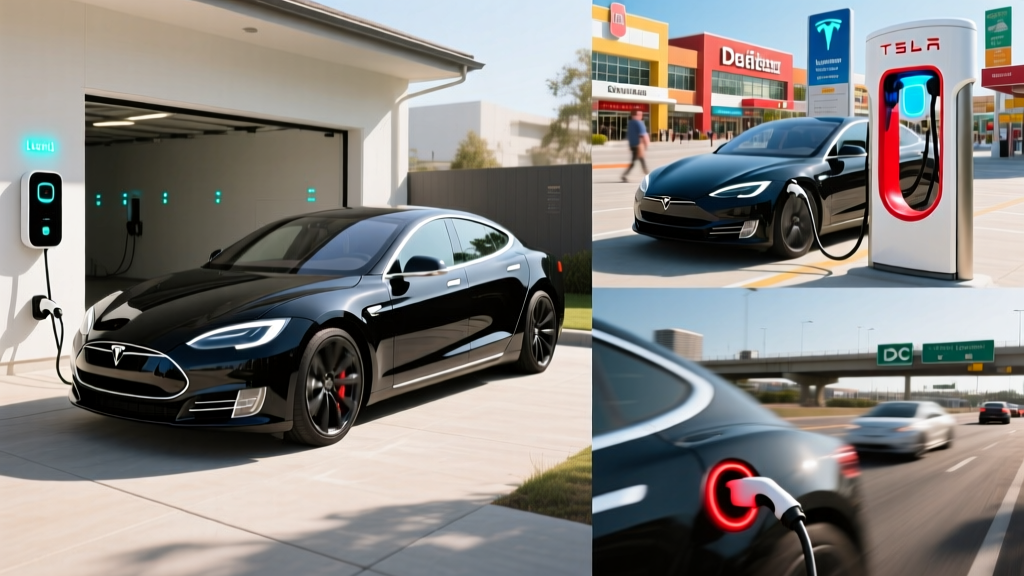
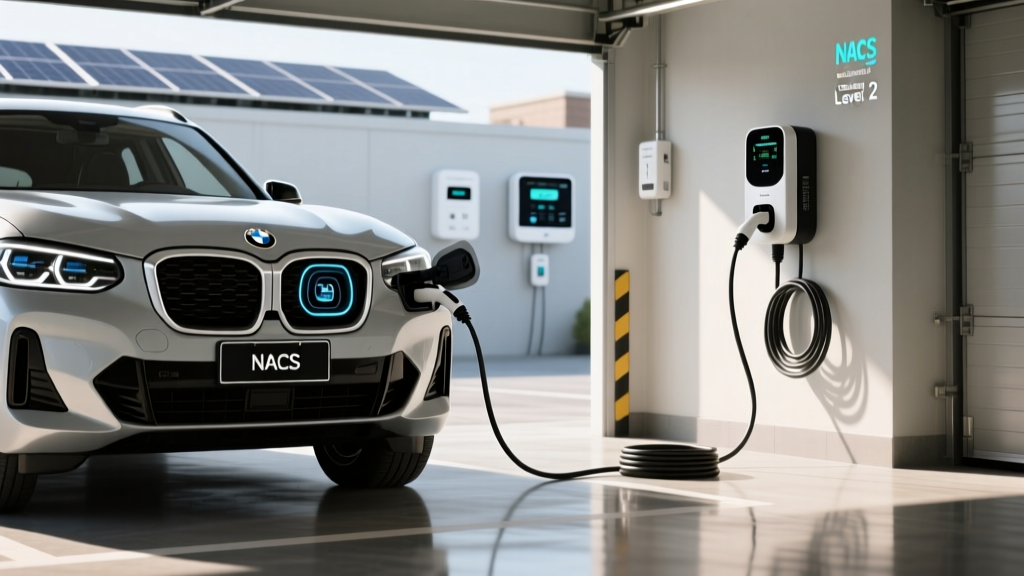
For current iX3 owners with a CCS2 port (European-spec vehicles), BMW and third-party manufacturers offer CCS-to-NACS adapters that enable access to Tesla Supercharger V3 and V4 stalls. These adapters typically support up to 150 kW DC and are rated for the iX3's maximum charge rate. Important: Always verify that any adapter is UL-listed or certified to SAE J3400 standards — uncertified adapters can cause thermal events at high charge rates.
BMW has confirmed that eligible BMW EVs can access Tesla Superchargers via the BMW Charging app or compatible adapter. Check BMW's official charging page for the latest compatibility details.
Home EV Charger Installation: Electrical Requirements and Costs
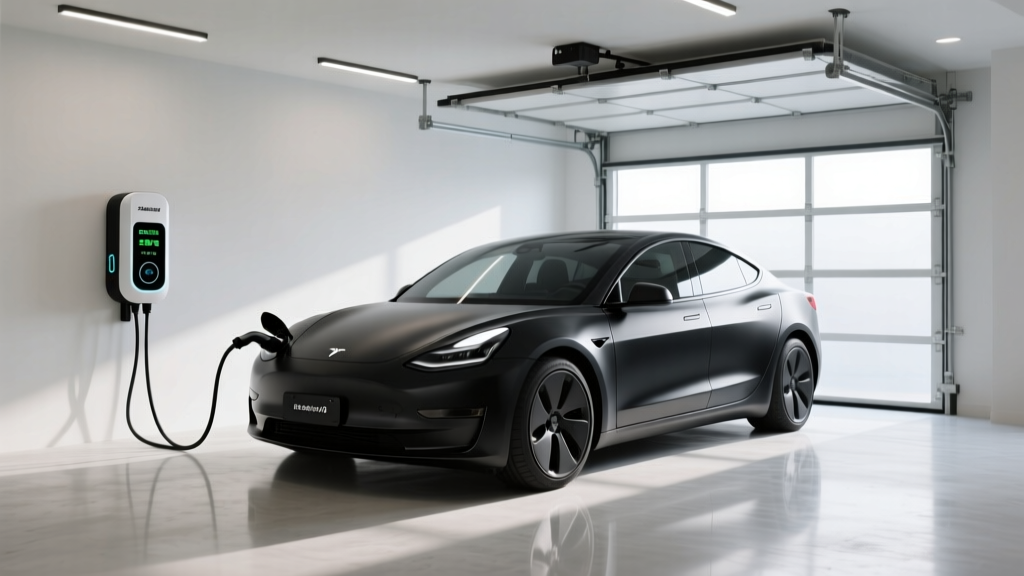
Level 2 home charging is where the iX3 ownership experience truly shines. A proper home setup means waking up to a full battery every morning, eliminating routine public-charging dependency. Here's what a Level 2 installation requires for the BMW iX3:
Electrical Specifications for iX3 Home Charging
- Circuit requirement: Dedicated 50-amp or 60-amp breaker (240V)
- Continuous draw: 40A (9.6 kW) or 48A (11.5 kW) — NEC requires circuits rated at 125% of continuous load
- Wire gauge: 6 AWG copper (for 50A) or 4 AWG copper (for 60A)
- Outlet type: NEMA 14-50 (50A) or hardwired connection (60A recommended for 48A chargers)
- The iX3's onboard charger: Accepts up to 11 kW AC (three-phase) or 7.4–9.6 kW on single-phase 240V North American power
How Much Does It Cost to Install a Home EV Charger?
Installation costs vary enormously based on your home's electrical infrastructure, the distance from your panel to the charging location, and local permit fees. Here's a realistic breakdown:
| Cost Component | Simple Install (Near Panel) | Complex Install (Long Run / Conduit) | With Panel Upgrade |
|---|---|---|---|
| Level 2 Charger (Equipment) | $400–$700 | $400–$700 | $400–$700 |
| Electrician Labor | $300–$600 | $800–$2,000 | $800–$2,000 |
| Materials (Wire, Conduit, Breaker) | $100–$250 | $300–$800 | $300–$800 |
| Permit & Inspection | $50–$200 | $50–$200 | $50–$200 |
| Panel Upgrade (100A → 200A) | N/A | N/A | $1,500–$3,500 |
| TOTAL | $850–$1,750 | $1,550–$3,700 | $3,050–$7,200 |
Federal incentive note: The IRS §30C Alternative Fuel Vehicle Refueling Property Credit offers up to $1,000 (30% of equipment and installation costs) for home EV charger installations, subject to income limits and census-tract eligibility. This credit is separate from the §30D vehicle purchase credit. Consult a tax professional for your specific eligibility.
Recommended Level 2 Chargers for the BMW iX3
Not all Level 2 chargers are created equal. The iX3's 11 kW onboard charger (three-phase) or 7.4–9.6 kW single-phase acceptance rate means you want a charger that can deliver at least 40 amps. Here are tested recommendations across price tiers:
ChargePoint Home Flex
- Power Output: Up to 12 kW (50A) / configurable down to 16A
- Connector: NACS (J3400) or J1772 — select at purchase
- Cable Length: 23 feet
- Smart Features: Wi-Fi, app scheduling, Alexa integration, energy tracking
- Price: ~$550–$650
- Best For: NACS-native future iX3 models; flexible amperage for panel-constrained homes
Tesla Universal Wall Connector
- Power Output: Up to 11.5 kW (48A)
- Connector: Built-in NACS with integrated J1772 adapter
- Cable Length: 24 feet
- Smart Features: Wi-Fi, OTA updates, Power Sharing (multi-unit), vehicle integration
- Price: ~$550–$600
- Best For: Mixed-EV households (NACS + CCS/J1772 via built-in adapter)
Emporia Level 2 EV Charger
- Power Output: Up to 11.5 kW (48A)
- Connector: J1772 (NACS adapter available separately)
- Cable Length: 24 feet
- Smart Features: Wi-Fi, energy monitoring, solar integration, load management
- Price: ~$400–$450
- Best For: Budget-conscious installs; solar-panel households
BMW i Wallbox (OEM)
- Power Output: Up to 11 kW (three-phase) / 7.4 kW single-phase
- Connector: Type 2 (EU) / J1772 (NA) — NACS version expected
- Cable Length: 18 feet (attached)
- Smart Features: BMW Charging app integration, scheduling
- Price: ~$600–$800
- Best For: BMW purists wanting OEM integration
Cost to Charge the BMW iX3: Per-Mile Economics vs Gas
One of the strongest ownership arguments for the iX3 is fuel-cost savings. Let's break down real charging costs across scenarios, using the iX3's efficiency of approximately 3.0 miles per kWh (roughly 33 kWh per 100 miles, consistent with EPA fueleconomy.gov data for vehicles in this class).
| Charging Scenario | $/kWh | Cost per 100 Miles | Cost per Mile | Annual Cost (12k mi) |
|---|---|---|---|---|
| Home (off-peak utility rate) | $0.09–$0.13 | $2.97–$4.29 | $0.03–$0.04 | $356–$515 |
| Home (standard residential rate) | $0.14–$0.18 | $4.62–$5.94 | $0.05–$0.06 | $554–$713 |
| Public Level 2 (ChargePoint, etc.) | $0.25–$0.40 | $8.25–$13.20 | $0.08–$0.13 | $990–$1,584 |
| DC Fast Charging (Electrify America, Tesla) | $0.35–$0.55 | $11.55–$18.15 | $0.12–$0.18 | $1,386–$2,178 |
| Gas SUV Baseline (25 MPG, $3.50/gal) | — | $14.00 | $0.14 | $1,680 |
The takeaway: Home-charged iX3 owners save $1,000–$1,300 annually versus a comparable gas SUV. But if you rely exclusively on DC fast charging, your costs can actually exceed gasoline. The economics strongly favor home charging access.
Safety, Code Requirements, and Preconditioning Tips
EV charging installations must comply with the National Electrical Code (NEC) and local building codes. Key requirements include:
- Dedicated circuit: Your Level 2 charger must be on its own breaker — no shared circuits with dryers, HVAC, or other appliances
- GFCI protection: NEC 2020+ requires ground-fault circuit interrupter protection for outdoor receptacles; hardwired chargers have built-in GFCI
- Outdoor rating: If mounting outside, the charger must carry a NEMA 4 or IP54+ rating for weather resistance
- Permit and inspection: Nearly all jurisdictions require an electrical permit and post-installation inspection — don't skip this, as it affects insurance coverage and home resale
- Wire sizing: Oversizing wire (e.g., 4 AWG for a 50A circuit) reduces voltage drop over long runs and future-proofs for higher-amperage chargers
Preconditioning for Faster DC Charging
The iX3's battery management system performs best when the battery is preconditioned — warmed to optimal temperature before a fast-charge session. BMW's navigation-integrated charging planner can precondition the battery automatically when a DC fast charger is set as your destination. In cold weather (below 40°F), preconditioning can improve peak charge rates by 20–40% and reduce 10–80% charge times by 5–10 minutes. Always navigate to your charger rather than just driving there cold.
Frequently Asked Questions
Does the current BMW iX3 have a native NACS port?
The BMW iX3 sold in European markets is equipped with a CCS2 port. BMW has confirmed NACS adoption for North American models beginning with 2025 model-year vehicles. If a dedicated North American iX3 variant launches, it will ship with a native NACS (J3400) port. Current CCS-equipped BMW EVs can access NACS/Supercharger stations via BMW-approved adapters.
Can I charge my CCS-equipped iX3 at a Tesla Supercharger?
Yes, provided you have a BMW-approved CCS-to-NACS adapter and the Supercharger station has been opened to non-Tesla vehicles (many now are via Tesla's "Open Supercharging" program). The iX3 will charge at up to its 150 kW peak rate on V3 Superchargers. Check the Tesla app or BMW Charging app for station compatibility before arriving.
What electrical upgrades might I need for a home Level 2 charger?
The most common upgrade is a panel service increase from 100A to 200A, which costs $1,500–$3,500. Other potential upgrades include: adding sub-panels for detached garages ($500–$1,500), running new conduit for long wire runs ($5–$15 per foot), and installing a load-management device if your panel is near capacity. A licensed electrician's load calculation is the definitive answer for your home.
How fast will a Level 2 charger fully charge the iX3's 74 kWh battery?
On a 48-amp (11.5 kW) Level 2 charger, a full 0–100% charge takes approximately 6.5–7 hours. On a 40-amp (9.6 kW) circuit, expect roughly 7.5–8 hours. In practice, most owners arrive home with 30–50% battery remaining and wake up fully charged — a 4–5 hour session is typical for daily use.
Is it cheaper to charge at home or use public DC fast chargers?
Home charging is dramatically cheaper. At the national average residential rate of ~$0.16/kWh, you'll pay about $0.05 per mile. Public DC fast chargers at $0.40–$0.55/kWh cost $0.12–$0.18 per mile — two to three times more. If your daily driving is under 250 miles, home Level 2 charging eliminates the need for routine public charging entirely.
What's the real-world range of the BMW iX3?
The iX3's WLTP range rating is approximately 285 miles (460 km). Under EPA testing methodology (which is more conservative), expect an equivalent rating of roughly 240–260 miles. In real-world highway driving at 70+ mph, expect 200–220 miles. In cold weather (below 30°F), range can drop 15–25% to approximately 180–200 miles. Always plan road trips with a 20% buffer below your expected range.