2023 BMW i4 eDrive35 Range: EPA Numbers vs Real-World Driving
The 2023 BMW i4 eDrive35 carries an EPA-estimated 256 miles of range from its 81.5 kWh (usable) lithium-ion battery pack using NMC chemistry. That figure applies to the base eDrive35 trim with standard 18-inch wheels; stepping up to 19- or 20-inch options reduces the EPA sticker by roughly 10–15 miles.
- Mixed driving (city/highway): ~230–245 miles
- Sustained 75 mph highway: ~210–225 miles
- Cold weather (below 32°F): ~180–200 miles (expect 20–30% loss without preconditioning)
- Optimal conditions (city, 55°F, mild regen): up to ~260 miles
The i4 eDrive35's single rear motor (281 hp, 295 lb-ft torque) and 4,541-lb curb weight yield an EPA efficiency rating of 99 MPGe combined (34 kWh/100mi). That's respectable but trails the Hyundai Ioniq 6 (140 MPGe) and Tesla Model 3 RWD (132 MPGe).
How Fast Will Each Charging Level Add Range to the i4 eDrive35?
Understanding charging speed requires distinguishing kW (power — how fast energy flows) from kWh (energy — how much the battery holds). The i4 eDrive35's 81.5 kWh battery is the tank; the kW rate is the hose diameter filling it.
| Level | Power (kW) | Miles Added/Hour | 0–100% Time | Best Use Case |
|---|---|---|---|---|
| Level 1 (120V) | 1.4–1.9 kW | 3–5 mi/hr | ~48+ hours | Emergency/trickle only |
| Level 2 (240V) | 7.4 kW (32A) 11.5 kW (48A) |
22–25 mi/hr 34–38 mi/hr |
~11 hours ~7.5 hours |
Daily home charging |
| DC Fast | Peak 180 kW (sustained ~120 kW avg) |
~450+ mi/hr (peak) | 10–80% in ~31 min | Road trips |
Charging-curve reality check: The i4 eDrive35 peaks at 180 kW only between roughly 10–30% State of Charge (SoC). From 30–60%, expect ~130–140 kW. Above 80%, the car throttles to ~40–50 kW to protect battery health. This is why we quote 10–80% times rather than 0–100%: charging the final 20% on DC fast can take as long as the first 70%.
The onboard AC charger maxes out at 11 kW (48A on a 240V circuit). Installing a 60A home charger won't charge the i4 faster than 11 kW — but it will future-proof for your next EV.
Home Charger Installation: Electrical Requirements & Cost Breakdown
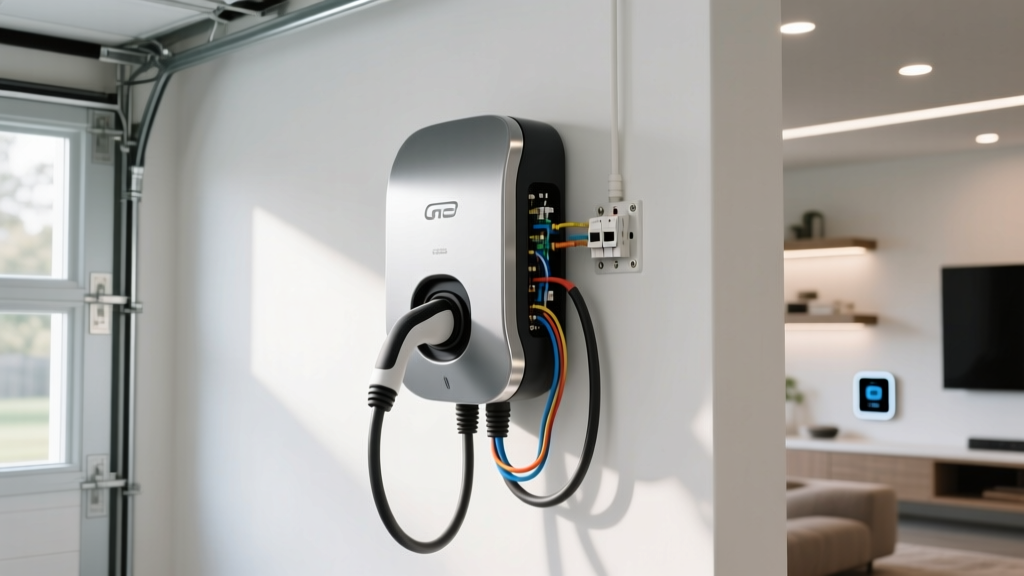
Most i4 eDrive35 owners install a Level 2 wallbox on a dedicated 240V circuit. Here's what your electrician will assess:
Electrical Requirements
- Circuit: Dedicated 50A or 60A breaker (for 40A or 48A continuous charging draw)
- Wire: 6 AWG copper (50A circuit) or 4 AWG copper (60A circuit)
- Outlet vs hardwired: NEMA 14-50 outlet offers portability; hardwired is safer for outdoor installs and avoids GFCI breaker nuisance trips
- Panel capacity: Your main panel must have 2 adjacent open slots and enough amperage headroom (a 200A panel running near capacity may need a load calculation or upgrade)
Panel Upgrade Reality
Homes built before 1990 often have 100A or 150A panels. Adding a 50–60A EV circuit to an already-loaded panel may require a panel upgrade to 200A ($1,500–$3,500) or a smart load-management device like the Emporia V2 with automatic load shedding (~$200–$400 added to the install).
| Item | Low End | High End | Notes |
|---|---|---|---|
| Level 2 charger (hardware) | $400 | $700 | ChargePoint Home Flex, Emporia V2, Wallbox Pulsar Plus |
| Electrician labor + wire | $500 | $1,800 | Depends on run length from panel to garage |
| NEMA 14-50 outlet or hardwire kit | $50 | $150 | Industrial-grade outlet recommended |
| Electrical permit | $50 | $200 | Required in most jurisdictions |
| Panel upgrade (if needed) | $1,500 | $3,500 | 100A → 200A; not always required |
| TOTAL (no panel upgrade) | $1,000 | $2,850 | Typical suburban install |
| TOTAL (with panel upgrade) | $2,500 | $6,350 | Older homes |
Federal incentive note: The Residential Clean Energy Credit (IRS §25D) covers 30% of home EV charger equipment and installation costs, up to $1,000 — but only if you live in a qualifying census tract. Check IRS guidance for your address. This is separate from the §30D vehicle purchase credit.
Which Connector Is Compatible with the i4 eDrive35?
The 2023 BMW i4 eDrive35 was built with a CCS1 (Combined Charging System) port, which handles both Level 2 AC charging (via the J1772 upper section) and DC fast charging (via the two DC pins below).
| Connector | Used By | i4 eDrive35 Compatible? | Adapter Needed? |
|---|---|---|---|
| J1772 (AC Level 1/2) | All non-Tesla EVs | ✅ Yes — native | None |
| CCS1 (DC Fast) | BMW, VW, GM, Ford, Hyundai, Kia | ✅ Yes — native | None |
| NACS (Tesla) | Tesla, and 2025+ Ford/GM/Rivian/Volvo | ⚠️ With adapter | CCS-to-NACS adapter (~$200–$250) for Tesla Superchargers |
| CHAdeMO (DC Fast) | Nissan Leaf (legacy, phasing out) | ❌ No | N/A |
Supercharger access update (2026): Tesla has opened its Supercharger network to CCS-equipped EVs via the Tesla app and a CCS-to-NACS adapter. The i4 eDrive35 can access select Supercharger stalls using an approved adapter (such as the Lectron or A2Z adapter), but charge speeds are limited to the adapter's rating (typically 150 kW max). Always verify stall compatibility in the Tesla app before relying on Superchargers for a road trip.
Level 2 Charger Recommendations for the i4 eDrive35
ChargePoint Home Flex
- Power: Up to 12 kW (50A) — configurable via dip switches
- Connector: J1772 (CCS-compatible for AC)
- Cable: 23 feet
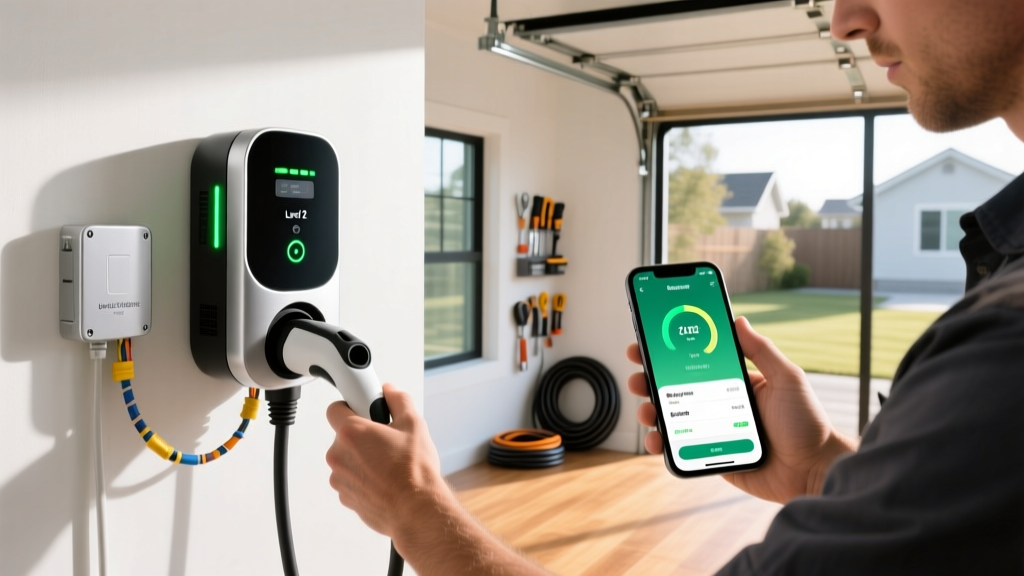
- Smart features: Wi-Fi, app scheduling, Alexa, utility demand-response
- Price: ~$550
- Why for i4: Matches the i4's 11 kW onboard charger; adjustable amperage fits any panel
Emporia V2
- Power: Up to 11.5 kW (48A)
- Connector: J1772
- Cable: 24 feet
- Smart features: Wi-Fi, energy monitoring, solar integration, load management
- Price: ~$400
- Why for i4: Best value; built-in load management avoids panel upgrades in many homes
Wallbox Pulsar Plus
- Power: Up to 11.5 kW (48A)
- Connector: J1772
- Cable: 25 feet
- Smart features: Wi-Fi + Bluetooth, app control, Power Sharing for 2-EV homes
- Price: ~$500
- Why for i4: Compact, outdoor-rated (NEMA 4), excellent cable management
Safety & code considerations: All Level 2 installations should be on a dedicated circuit (no sharing with dryers or ovens). Outdoor installs require a charger rated NEMA 4 (weatherproof). The NEC requires GFCI protection for outlet-based installs — but hardwired units bypass this requirement and avoid nuisance tripping common with 240V GFCI breakers. Always pull a permit; unpermitted work can void home insurance claims.
Charging Cost: $/kWh Scenarios and Cost Per Mile vs Gas
The i4 eDrive35 consumes roughly 34 kWh per 100 miles (EPA combined). Here's what that costs across common charging scenarios:
| Scenario | $/kWh | Cost per 100 mi | Cost per Mile | Cost per 1,000 mi |
|---|---|---|---|---|
| Home (off-peak utility rate) | $0.11 | $3.74 | $0.037 | $37.40 |
| Home (average US rate) | $0.17 | $5.78 | $0.058 | $57.80 |
| Public Level 2 (ChargePoint, EVgo) | $0.25 | $8.50 | $0.085 | $85.00 |
| DC Fast (Electrify America) | $0.48 | $16.32 | $0.163 | $163.20 |
| Gas equivalent (25 MPG, $3.50/gal) | — | $14.00 | $0.140 | $140.00 |
Key takeaway: Home charging at off-peak rates saves roughly $100/month vs gas for a driver covering 1,000 miles monthly. Even at average residential rates, the i4 eDrive35 costs about $58/month in electricity vs $140 in gas. Public DC fast charging, however, can exceed gas costs — use it for road trips, not daily fueling.
Battery Health, Warranty & Long-Term Ownership
BMW covers the i4's high-voltage battery for 8 years or 100,000 miles (whichever comes first) against defects and capacity loss below 70% of original. Real-world NMC degradation data from similar BMW iX3/i4 fleets suggests roughly 5–8% capacity loss in the first 100,000 miles when following best practices:
- Keep daily SoC between 20–80% (use the car's built-in charge limiter)
- Use DC fast charging sparingly — Level 2 home charging is gentler on cells
- Precondition the battery before fast charging (the i4 does this automatically when a DC charger is set in navigation)
- Avoid leaving the car at 100% SoC for extended periods, especially in hot weather
The i4 eDrive35's thermal management system (liquid cooling/heating) is robust. BMW's battery replacement cost, should it be needed out of warranty, is estimated at $16,000–$22,000 (parts + labor) based on current dealer pricing — though individual module replacement is sometimes possible for less.
Frequently Asked Questions
How much does it cost to install a home EV charger for the BMW i4?
A typical Level 2 home installation runs $1,000–$2,850 (equipment + electrician + permit) if your panel has capacity. Older homes needing a 200A panel upgrade should budget $2,500–$6,350 total. Get three quotes from licensed electricians and confirm they pull permits.
How fast does the i4 eDrive35 charge on DC fast charging?
Peak rate is 180 kW, but the charging curve tapers significantly. Expect a 10–80% charge in approximately 31 minutes at a 180+ kW station. From 80–100% adds another 25–30 minutes. For road trips, plan 30-minute stops every 180–200 miles.
Can I charge the BMW i4 at Tesla Superchargers?
Yes, with a CCS-to-NACS adapter (approximately $200–$250). Tesla has opened many Supercharger stalls to CCS vehicles through the Tesla app. Charge speeds are adapter-limited (typically 150 kW max). Verify stall compatibility before relying on Superchargers for long trips.
Is Level 1 (120V) charging practical for the i4 eDrive35?
Only as a backup. Level 1 adds roughly 3–5 miles of range per hour — about 40–60 miles overnight. For a 256-mile battery, a full Level 1 charge takes over 48 hours. If your daily commute is under 30 miles and you can charge 12+ hours nightly, it's technically workable but not recommended as a primary strategy.
What's the real-world highway range of the i4 eDrive35?
Expect approximately 210–225 miles at sustained 75 mph in moderate temperatures (60–80°F). In winter conditions (below 32°F), highway range drops to roughly 180–200 miles due to battery resistance and cabin heating demands. Using seat heaters instead of cabin heat can recover 10–15 miles.
Does the i4 eDrive35 qualify for the federal EV tax credit?
The 2023 BMW i4 eDrive35 does not qualify for the §30D federal tax credit ($7,500) when purchased new, because BMW's battery sourcing did not meet the critical-minerals and battery-component requirements. However, if purchased used from a dealer for under $25,000, it may qualify for the used EV credit (up to $4,000 or 30% of sale price, subject to income limits). Consult a tax professional for your specific situation.