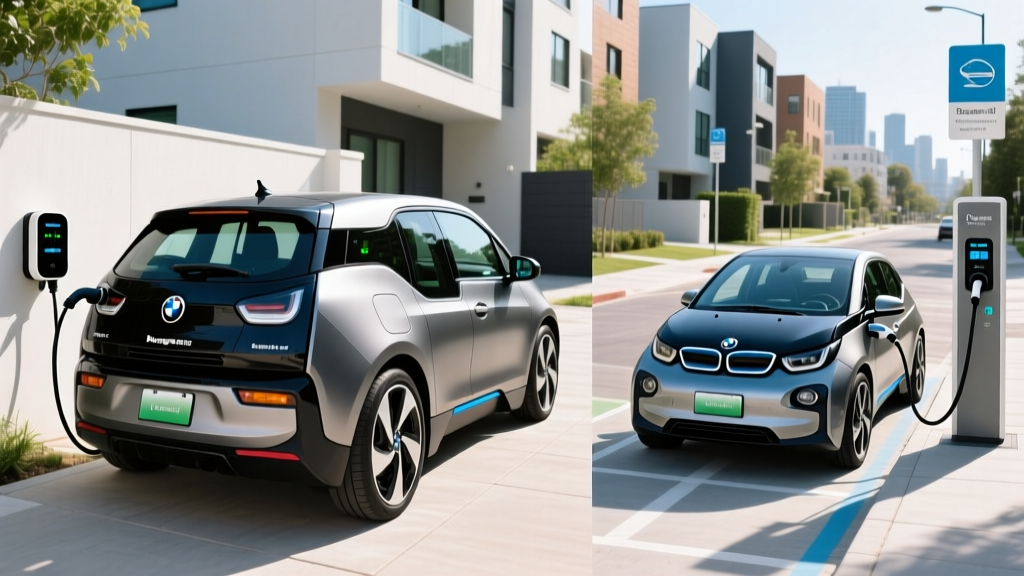
The BMW i3 Range Extender (REx) remains one of the most distinctive plug-in vehicles ever sold in the U.S. — a carbon-fiber city car with a small two-cylinder gasoline generator that kicks in when the battery depletes. Though BMW ended U.S. i3 sales after the 2021 model year, thousands of these cars are still on the road and on the used market. If you own or are considering a pre-owned i3 REx, understanding its charging behavior is essential because the architecture is unlike most modern EVs.
This guide covers everything you need to charge an i3 REx at home and in public: charging speeds at every level, home electrical requirements and installation costs, connector compatibility, cost per mile versus gas, and equipment recommendations tailored to the i3's relatively small battery pack (22 kWh or 33 kWh gross, depending on model year).
BMW i3 REx Battery and Charging Specs at a Glance
Before plugging in, it's critical to know which battery your i3 REx carries. The REx was offered in two generations:
| Specification | i3 REx 60 Ah (2014–2017) | i3 REx 94 Ah (2017–2018) | i3 REx 120 Ah (2019–2021) |
|---|---|---|---|
| Battery (gross / usable) | 22 kWh / ~18.8 kWh | 33 kWh / ~27.2 kWh | 42.2 kWh / ~37.9 kWh |
| Chemistry | NMC (Samsung SDI) | NMC (Samsung SDI) | NMC (Samsung SDI) |
| EPA electric-only range | 72 mi | 97 mi | 126 mi |
| Total range (electric + REx gas) | ~150 mi | ~180 mi | ~200 mi |
| Onboard AC charger | 7.4 kW (single-phase) | 7.4 kW (single-phase) | 11.0 kW (3-phase capable) |
| Max DC fast charge | ~47 kW (CCS) | ~50 kW (CCS) | ~50 kW (CCS) |
| REx engine | 647 cc 2-cyl, 34 HP | 647 cc 2-cyl, 34 HP | 647 cc 2-cyl, 34 HP |
| Fuel tank | 2.4 gal | 2.4 gal | 2.4 gal |
Charging Levels Explained: Speeds for the i3 REx
Understanding the difference between kW (power — the rate of energy flow) and kWh (energy — the total capacity of your battery) is the single most important concept in EV charging. A 7.4 kW charger delivers 7.4 kilowatts of power; over one hour it adds 7.4 kWh of energy to your battery.
| Charging Level | Voltage / Amperage | Max Power (kW) | Miles of Range Added per Hour | i3 120 Ah: 10–80% Time |
|---|---|---|---|---|
| Level 1 (standard 120V outlet) | 120V / 12A | ~1.4 kW | ~4–5 mi/hr | ~20 hours |
| Level 2 (240V home/public) | 240V / 32A | 7.4 kW | ~22–26 mi/hr | ~3.5–4 hours |
| DC Fast Charge (CCS) | 400V+ DC | ~50 kW peak | ~120–150 mi/hr (first 30 min) | ~35–45 min |
Key insight for i3 owners: Because the i3's battery is small, Level 2 charging fills it quickly compared to larger-battery EVs. A full charge from near-empty takes under 4 hours on Level 2 for even the 120 Ah model. This makes overnight home charging extremely practical — you'll wake up fully charged every morning.
On DC fast charging, the i3 REx uses the CCS1 connector (if equipped — it was optional on 60 Ah models and standard on 94 Ah and later). The charge curve peaks around 44–50 kW up to approximately 50% State of Charge (SoC), then tapers to ~25 kW by 80%. This taper is why manufacturers quote 10–80% times rather than 0–100%. Expect roughly 35–45 minutes for a 10–80% session on the 120 Ah model at a 50 kW CCS station.
Home Charger Installation: Electrical Requirements and Costs
Installing a Level 2 home charger is the single biggest quality-of-life upgrade for any i3 REx owner. Here's what's involved electrically:
Electrical Requirements
- Circuit: A dedicated 40-amp, 240V circuit is standard for a 32-amp Level 2 charger (chargers must operate at 80% of circuit capacity per the National Electrical Code).
- Wire gauge: 8 AWG copper for runs up to ~50 feet; 6 AWG for longer runs.
- Outlet type: NEMA 14-50 (most common for plug-in chargers) or hardwired connection.
- Panel capacity: Most modern 200-amp panels can accommodate a 40A EV circuit. Older homes with 100-amp service may require a panel upgrade.
Installation Cost Breakdown
| Component | Low-End Estimate | High-End Estimate | Notes |
|---|---|---|---|
| Level 2 charger (equipment) | $250 | $650 | Depends on brand, smart features, cable length |
| Electrician labor | $300 | $1,200 | Varies by run length, conduit needs, local rates |
| Permit and inspection | $50 | $250 | Required in most jurisdictions for new 240V circuits |
| Electrical panel upgrade (if needed) | $1,500 | $4,000 | Only if existing panel is 100A or at capacity |
| Total (no panel upgrade) | $600 | $2,100 | Typical for homes with adequate panel capacity |
| Total (with panel upgrade) | $2,100 | $6,100 | Older homes may require this investment |
Safety and Code Considerations
- Dedicated circuit: The NEC requires EV chargers to have their own dedicated circuit — never share with other appliances.
- GFCI protection: 2020 NEC (and later) requires GFCI protection for outdoor receptacles used for EV charging. Indoor garage installations may also require it depending on local amendments.
- Outdoor rating: If your charger is mounted outside, ensure it carries a NEMA 4 or IP65 rating for weather resistance.
- Permit: Always pull a permit for a new 240V circuit. Unpermitted work can void home insurance and cause issues at resale.
Connector Compatibility: What Plugs Into an i3 REx?
The BMW i3 REx uses two connectors depending on the charging level:
| Connector | Used For | i3 REx Compatibility | Notes |
|---|---|---|---|
| J1772 (Type 1) | Level 1 and Level 2 AC charging | Standard on all i3 REx models | The universal North American AC connector |
| CCS1 (Combo) | DC fast charging | Optional on 60 Ah; standard on 94 Ah and 120 Ah | Verify your specific car has CCS — some early 60 Ah REx models lack it |
| NACS (Tesla) | Tesla Supercharger and destination charging | Not native — adapter required | Tesla's J1772 adapter works for AC; CCS-to-NACS adapters (e.g., A2Z, Lectron) enable DC access to some Superchargers |
| CHAdeMO | DC fast charging (legacy) | Not compatible | No adapter exists; CHAdeMO infrastructure is declining |
For used i3 REx buyers: Before purchasing, physically check the car's charge port. The CCS port has two additional DC pins below the J1772 connector. If those pins are absent, the car is AC-only and cannot use DC fast chargers — a significant limitation for road trips. BMW's DC fast-charge option cost approximately $750 when new.
Charging Cost per Mile: i3 REx Electric vs. REx Gas vs. ICE
One of the strongest arguments for plugging in your i3 REx every night is the dramatic cost savings over using the range-extender gasoline engine. Here's how the math works out:
| Scenario | Energy Cost | Efficiency | Cost per Mile |
|---|---|---|---|
| Home charging (off-peak, $0.12/kWh) | $0.12/kWh | ~0.27 kWh/mi (120 Ah) | $0.032/mi |
| Home charging (standard, $0.18/kWh) | $0.18/kWh | ~0.27 kWh/mi | $0.049/mi |
| Public Level 2 ($0.30/kWh) | $0.30/kWh | ~0.27 kWh/mi | $0.081/mi |
| DC fast charging ($0.45/kWh) | $0.45/kWh | ~0.27 kWh/mi (plus charging losses ~10%) | $0.134/mi |
| REx gasoline mode (31 MPG combined, $3.50/gal) | $3.50/gal | 31 MPG | $0.113/mi |
| Comparable gas car (28 MPG, $3.50/gal) | $3.50/gal | 28 MPG | $0.125/mi |
The takeaway: Charging at home on off-peak electricity costs roughly 3–5 cents per mile — about one-quarter the cost of running the i3's own REx gasoline engine and less than any conventional car. Even at public DC fast-charger rates, electric driving is comparable to or cheaper than the REx mode. The financial incentive to plug in nightly is substantial: a driver covering 10,000 miles per year on home-charged electricity saves roughly $800–$900 annually versus running on gasoline.
The i3 REx achieves an EPA-rated 111 MPGe combined in electric mode, translating to the low per-mile costs above. The REx engine yields only 31 MPG combined — respectable for a generator, but far more expensive per mile.
Best Level 2 Chargers for the BMW i3 REx
Because the i3's battery is small and its onboard AC charger maxes out at 7.4 kW (or 11 kW on the 120 Ah with 3-phase power, which is irrelevant in most U.S. homes), you don't need a 48-amp or 80-amp charger. A quality 32-amp, 240V unit is the sweet spot — it maxes out the 7.4 kW onboard charger without paying for unused capacity.
Emporia Vue Level 2 Charger
- Power: 48A max (adjustable down to 32A)
- Connector: J1772 (NACS adapter available)
- Cable length: 24 ft
- Smart features: Wi-Fi, app scheduling, energy monitoring, utility integration
- Price: ~$350
- Why for i3: Excellent value, energy monitoring helps track charging costs
ChargePoint Home Flex
- Power: Up to 50A (adjustable via dip switches)
- Connector: J1772 (NACS version also sold)
- Cable length: 23 ft
- Smart features: Wi-Fi, app, Alexa integration, scheduled charging
- Price: ~$550
- Why for i3: Reliable brand, UL-listed, future-proof if you upgrade to a larger EV later
Tesla Universal Wall Connector
- Power: Up to 48A
- Connector: NACS with integrated J1772 adapter
- Cable length: 24 ft
- Smart features: Wi-Fi, OTA updates, Power-Share for dual chargers
- Price: ~$600
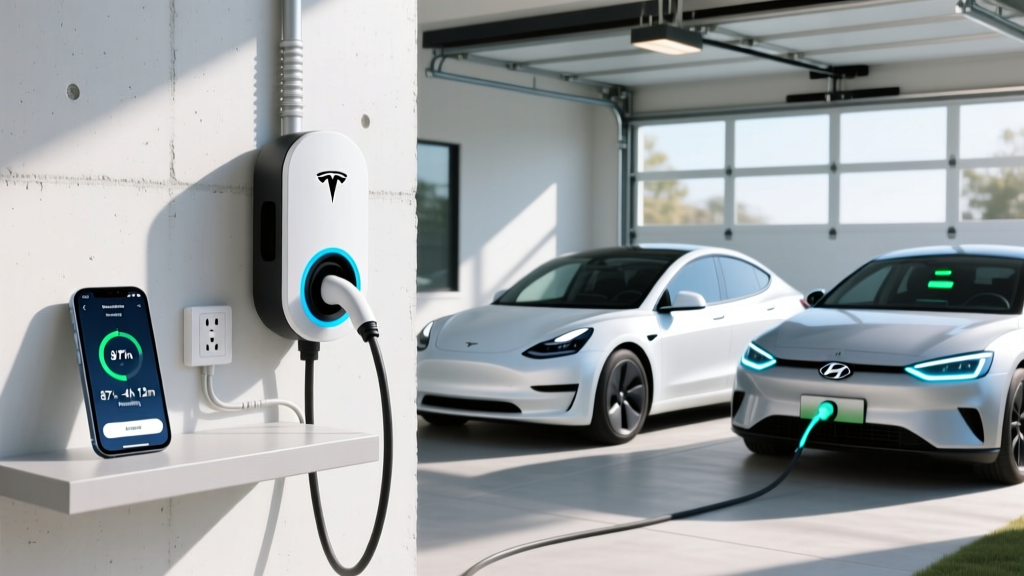
- Why for i3: Built-in J1772 adapter means no dongle needed; excellent if you also own a Tesla
Grizzl-E Smart
- Power: 40A max
- Connector: J1772
- Cable length: 24 ft
- Smart features: Wi-Fi, OCPP-compatible, adjustable amperage
- Price: ~$450
- Why for i3: Built in Canada, extreme cold-rated (-40°F), ideal for unheated garages
Budget pick: The i3 REx came with a BMW-branded Level 1 charger (120V, ~1.4 kW). For occasional top-ups or apartment dwellers without 240V access, this is usable but slow — expect roughly 4–5 miles of range per hour. For daily driving, a Level 2 upgrade is strongly recommended.
Public Charging the i3 REx: Networks and Practical Tips
The i3 REx's small battery and modest DC charge rate (~50 kW peak) mean public charging sessions are short but not ultra-fast by modern standards. Here's how to make the most of them:
- Electrify America, EVgo, and ChargePoint all support CCS1 and are the most common DC networks. A 10–80% session takes ~35–45 minutes.
- Tesla Superchargers: With a CCS-to-NACS adapter (such as the Lectron V-Box or A2Z adapter, ~$150–$250), the i3 REx can access Tesla's open Supercharger stalls. Verify adapter compatibility and maximum throughput before purchasing.
- Preconditioning: The i3 does not have a dedicated battery preconditioning feature for fast charging (unlike Tesla or Porsche). In cold weather, the battery will charge more slowly until it warms through use. Plan for longer DC sessions in winter.
- REx as backup: The range extender eliminates the worst of range anxiety. If a public charger is broken or occupied, you can drive on gasoline to the next station — a genuine advantage over pure BEVs in areas with sparse charging infrastructure.
For public Level 2 charging (shopping centers, workplaces), the i3's J1772 port is universally compatible. A full Level 2 top-up from 20% takes about 3 hours for the 120 Ah model — practical while working or running extended errands.
i3 REx Ownership: Maximizing Electric Driving
The i3 REx is designed as an electric-first vehicle. The gasoline engine is a backup, not a primary power source. Here's how experienced owners optimize their driving:
- Charge nightly: With a small battery and short Level 2 charge times (~3.5 hours from near-empty), nightly plugging ensures you start every day with full electric range.
- Use the REx for longer trips, not daily driving: The 647 cc two-cylinder engine is loud, vibrates noticeably, and achieves only 31 MPG. It's best reserved for trips beyond your electric range.
- Maintain the REx engine: BMW recommends running the REx at least once every few months to keep the fuel system and engine seals lubricated. The car will auto-activate the REx periodically if you don't.
- Fuel freshness: With a 2.4-gallon tank, gasoline can sit for months. Use a fuel stabilizer if you rarely trigger the REx, and try to cycle through a tank every 3–6 months.
- Battery health: Samsung SDI NMC cells in the i3 have proven durable. Most high-mileage i3s show 85–92% State of Health (SoH) at 80,000–100,000 miles. BMW's battery warranty was 8 years/80,000 miles for capacity below 70%. As of 2026, some 2014–2016 models are aging out of warranty — check SoH via the iDrive hidden service menu or an OBD-II app like BimmerLink.
Frequently Asked Questions
How much does it cost to install a home EV charger for the BMW i3?
Expect $600–$2,100 for a typical installation (charger + electrician + permit) if your electrical panel has adequate capacity. If your home needs a panel upgrade from 100A to 200A, add $1,500–$4,000. The i3's modest 7.4 kW charging needs mean a standard 40A/240V circuit is sufficient — no expensive high-amperage infrastructure required.
How fast will each charging level add range to my i3 REx?
Level 1 (120V) adds roughly 4–5 miles per hour. Level 2 (240V, 32A) adds about 22–26 miles per hour, filling the 120 Ah battery in under 4 hours. DC fast charging at 50 kW adds roughly 120–150 miles per hour in the initial phase, reaching 80% in about 35–45 minutes.
Which connector does the BMW i3 REx use?
All i3 REx models use the J1772 connector for Level 1 and Level 2 AC charging. DC fast charging uses CCS1, which was optional on 2014–2017 (60 Ah) models and standard on 2017+ (94 Ah and 120 Ah) models. The i3 does not natively support Tesla's NACS connector, but aftermarket CCS-to-NACS adapters are available for Supercharger access.
Is it cheaper to charge the i3 at home or run the REx on gas?
Home charging is dramatically cheaper. At $0.12/kWh off-peak, electric driving costs about $0.03 per mile. The REx gasoline engine at 31 MPG and $3.50/gal costs about $0.11 per mile — roughly 3.5× more. Over 10,000 miles per year, home charging saves approximately $800–$900 versus driving on gasoline.
What electrical upgrades might I need for a home charger?
Most homes with a 200-amp electrical panel can accommodate a 40-amp dedicated EV circuit without upgrades. Homes with 100-amp service, older wiring, or panels already near capacity may need a panel upgrade ($1,500–$4,000). A licensed electrician should perform a load calculation to determine your specific needs. Always pull a permit for new 240V circuits.
Can I use a Tesla Supercharger with my BMW i3 REx?
Yes, with a CCS-to-NACS adapter. Tesla has opened select Supercharger stalls to non-Tesla CCS vehicles via the Tesla app. Adapters from Lectron, A2Z, and others ($150–$250) physically connect the i3's CCS port to Tesla's NACS cable. Verify your specific adapter is on Tesla's approved list and that the Supercharger stall supports non-Tesla vehicles before relying on this for travel.