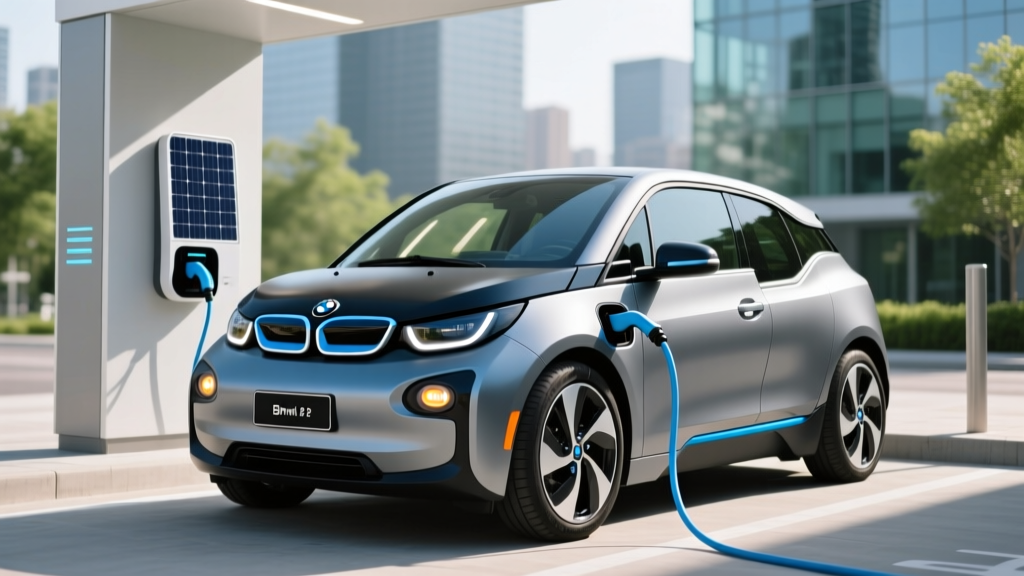
The BMW i3 remains one of the most distinctive electric vehicles ever sold in the United States. Produced from 2014 through 2021, its carbon-fiber-reinforced plastic (CFRP) passenger cell, ultra-light construction, and optional gasoline range-extender (REx) made it an early pioneer in urban electrification. If you own or are considering a used i3, understanding how charging choices affect the range of a BMW i3 in daily driving is the single most important factor in satisfaction with the car.
This guide covers the i3's battery specifications across model years, how each charging level adds range, what a home Level 2 installation actually costs in 2026, and how to keep charging costs low per mile.
BMW i3 Battery Sizes and EPA Range by Model Year
The i3 was offered with three distinct battery packs over its production run. The usable capacity — not the gross pack size — determines your actual range. BMW marketed these as 60 Ah, 94 Ah, and 120 Ah cells, but the usable kWh (kilowatt-hours, the unit of energy stored) is what matters.
| Model Years | Battery (Usable kWh) | Cell Chemistry | EPA Range (mi) | Real-World Range Estimate |
|---|---|---|---|---|
| 2014–2016 | 18.8 kWh | NMC (Samsung SDI) | 81 mi | 60–75 mi (highway/cold) |
| 2017–2018 | 27.2 kWh | NMC (Samsung SDI) | 114 mi | 85–105 mi |
| 2019–2021 | 37.9 kWh | NMC (Samsung SDI) | 153 mi | 120–140 mi |
The i3 REx (range extender) models pair a smaller usable battery with a 0.65-liter two-cylinder gasoline generator that maintains charge once the battery depletes to roughly 6%. The 2019–2021 REx carries an EPA electric range of 126 miles before the generator engages, with total range extending past 200 miles when the 2.4-gallon fuel tank is included.
Charging Levels Explained: How Fast Each Adds Range to Your i3
Understanding the difference between kW (kilowatts — the rate of power delivery, like water flow from a hose) and kWh (kilowatt-hours — the total energy delivered, like gallons in a bucket) is essential. Your charger's kW rating determines how fast you fill the i3's battery, measured in kWh.
| Level | Voltage / Amps | Power (kW) | Miles of Range Added per Hour | Typical Use Case |
|---|---|---|---|---|
| Level 1 | 120V / 12A | ~1.4 kW | ~5–6 mi/hr | Overnight top-up, emergencies |
| Level 2 (Home) | 240V / 32A | ~7.7 kW | ~30–34 mi/hr | Daily home charging |
| Level 2 (Max i3) | 240V / 48A | 11 kW (i3 onboard limit) | ~44–48 mi/hr | Fastest AC charge the i3 accepts |
| DC Fast (CCS) | ~400V DC | Up to 50 kW | ~150–180 mi/hr (peak) | Road trips, quick top-ups |
The BMW i3's onboard AC charger accepts a maximum of 11 kW on Level 2. Installing a 48-amp (11.5 kW) home charger will max out the car's acceptance rate. Going higher — say, an 80-amp charger — will not charge the i3 any faster, though it would future-proof for a next EV.
For DC fast charging, the i3 supports the CCS1 (Combined Charging System) connector and peaks at approximately 50 kW. On a 50 kW station, the 120 Ah model charges from 10% to 80% in roughly 35–40 minutes. The charge curve tapers significantly above 80% to protect the battery, so the final 20% can take as long as the first 60%.
Home Charger Installation: Electrical Requirements and Costs
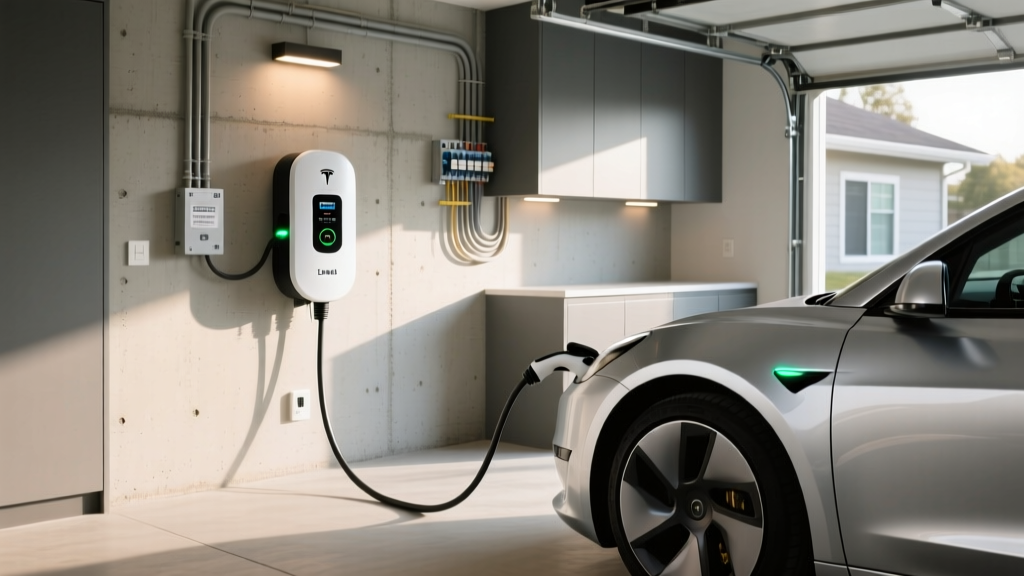
Most i3 owners charge at home, and a Level 2 station transforms daily usability. Here is what a 2026 installation involves.
Electrical Requirements
A dedicated 240-volt circuit is required for Level 2 charging. For a 32-amp charger (7.7 kW), you need a 40-amp breaker (National Electrical Code requires circuits to be rated 125% of continuous load). For a 48-amp charger (11 kW), you need a 60-amp breaker.
If your electrical panel is at or near capacity — common in homes built before 2000 with 100-amp main service — you may need a panel upgrade to 200 amps, which adds significant cost.
| Component | Cost Range | Notes |
|---|---|---|
| Level 2 EVSE Equipment (32A–48A) | $350–$700 | Hardwired units are cheaper than NEMA 14-50 plug-in models |
| Electrician Labor (standard install) | $500–$1,500 | Varies by run length from panel to garage/carport |
| Electrical Permit | $50–$200 | Required in most jurisdictions; varies by municipality |
| Panel Upgrade (if needed) | $1,500–$3,500 | 100A → 200A service upgrade; not always necessary |
| Total (no panel upgrade) | $900–$2,400 | Most homes with 200A service fall in this range |
| Total (with panel upgrade) | $2,400–$5,900 | Older homes or those near panel capacity |
Always hire a licensed electrician and pull a permit. Unpermitted work can void homeowner's insurance claims and create fire risk. The NEC requires a GFCI-protected circuit for outdoor installations and recommends it for indoor garage circuits as well.
Federal Tax Credit for Home Charging Equipment
Under IRS §25C / §25E residential energy credits, homeowners may claim up to 30% of the cost of qualified EV charging equipment (capped at $1,000 per year). Eligibility depends on your tax liability and whether you live in a qualifying census tract. Consult a tax professional for your specific situation.
Connector Compatibility: CCS1, NACS, and the i3
The BMW i3 uses the CCS1 (Combined Charging System) connector for both AC Level 2 and DC fast charging in North America. It does not natively support Tesla's NACS connector or the CHAdeMO standard used by older Nissan Leafs.
| Connector | Standard Used By | i3 Compatible? | Adapter Available? |
|---|---|---|---|
| J1772 (AC Level 1/2) | All non-Tesla EVs | Yes — native | Not needed |
| CCS1 (DC Fast) | BMW, VW, GM, Ford, Hyundai, most US-market EVs | Yes — native | Not needed |
| NACS (Tesla) | Tesla (all), Ford/GM/Rivian starting 2025+ | No — not native | CCS-to-NACS adapters exist (~$200–$300) for Supercharger access |
| CHAdeMO | Nissan Leaf, Mitsubishi Outlander PHEV | No | Not practical; no widely available adapter |
With Tesla opening its Supercharger network to non-Tesla vehicles equipped with CCS adapters (via the Tesla app), i3 owners can access Superchargers using a certified CCS-to-NACS adapter. However, the i3's 50 kW DC fast-charge ceiling means you will not see the speeds newer EVs achieve at V3 Superchargers (250 kW).
Cost to Charge: Per-Mile Economics vs. Gasoline
One of the strongest arguments for the i3 is its low operating cost. The 120 Ah model achieves approximately 113 MPGe combined according to fueleconomy.gov, consuming about 30 kWh per 100 miles.
| Scenario | Rate | Cost per Full Charge (37.9 kWh) | Cost per Mile |
|---|---|---|---|
| Home (off-peak utility rate) | $0.12/kWh | $4.55 | $0.030 |
| Home (national avg. residential) | $0.17/kWh | $6.44 | $0.042 |
| Public Level 2 (ChargePoint, EVgo) | $0.30/kWh | $11.37 | $0.075 |
| DC Fast Charging (Electrify America) | $0.48/kWh | $18.19 | $0.120 |
| Gasoline car (30 MPG, $3.40/gal) | $3.40/gallon | — | $0.113 |
At home off-peak rates, the i3 costs roughly 3 cents per mile to drive — about one-quarter the per-mile cost of a 30 MPG gasoline car at $3.40 per gallon. Even at public DC fast-charging rates, the i3 is roughly cost-competitive with gasoline. The key takeaway: home charging is where the economics are overwhelmingly in your favor.
Recommended Level 2 Chargers for the BMW i3
Because the i3 caps AC charging at 11 kW (48 amps), you do not need the most powerful charger on the market. A reliable 32-amp or 40-amp unit will serve the i3 well and can be upgraded later for a future EV with higher acceptance rates.
ChargePoint Home Flex
- Power: Up to 11.5 kW (48A) — matches i3 max
- Connector: J1772 (CCS compatible for AC)
- Cable length: 23 feet
- Smart features: Wi-Fi, app scheduling, Alexa integration
- Price: ~$549 (2026 retail)
- Install: Hardwired or NEMA 14-50 plug
Emporia Level 2 EV Charger
- Power: Up to 11.5 kW (48A)
- Connector: J1772
- Cable length: 24 feet
- Smart features: Energy monitoring, solar integration, app control
- Price: ~$399
- Install: Hardwired recommended for 48A
Tesla Wall Connector (with J1772 adapter)
- Power: Up to 11.5 kW (48A)
- Connector: NACS native; J1772 adapter sold separately (~$50)
- Cable length: 24 feet
- Smart features: Wi-Fi, OTA updates, load sharing
- Price: ~$475 + adapter
- Install: Hardwired only
For the i3 specifically, the ChargePoint Home Flex is the strongest overall pick: its adjustable amperage (16A–50A) lets you match your circuit capacity, and the J1772 connector plugs directly into the i3 without adapters.
Charging Time Examples: From 10% to 80%
Here is what real charging sessions look like for the 120 Ah (37.9 kWh usable) i3 across different scenarios:
| Charger Type | Power (kW) | Energy Added (~26.5 kWh) | Estimated Time |
|---|---|---|---|
| Standard 120V outlet (Level 1) | 1.4 kW | 26.5 kWh | ~19 hours |
| 240V / 32A Level 2 | 7.7 kW | 26.5 kWh | ~3.5 hours |
| 240V / 48A Level 2 (i3 max) | 11 kW | 26.5 kWh | ~2.5 hours |
| 50 kW DC Fast Charger (CCS) | 50 kW (peak) | 26.5 kWh | ~35–40 minutes |
Level 1 charging is impractical for the 120 Ah model unless you drive fewer than 40 miles daily and can leave the car plugged in for 12+ hours. Level 2 is the practical daily standard: plug in when you get home, and the car is fully replenished by morning. DC fast charging is adequate for road trips, though the i3's 50 kW ceiling means 30-minute stops rather than the 15-minute stops newer EVs can achieve.
Safety, Code, and Installation Best Practices
EV charging places a sustained high-current load on your home's electrical system — far more demanding than intermittent loads like an oven or dryer. Follow these guidelines:
- Dedicated circuit: Your Level 2 charger must have its own dedicated breaker. Do not share the circuit with other appliances.
- Breaker sizing: NEC Article 625 requires the circuit breaker to be rated at 125% of the charger's maximum continuous draw. A 40A charger requires a 50A breaker; a 48A charger requires a 60A breaker.
- GFCI protection: Required for all outdoor receptacles and recommended for indoor garage installations. Hardwired units with built-in ground-fault protection are preferred.
- Outdoor rating: If your charger is mounted outside, ensure the EVSE is rated NEMA 4 (weatherproof) and that any receptacle is in a weatherproof enclosure.
- Cable management: Use a wall-mounted holster or retractable cable system to prevent tripping hazards and cable damage.
- Permit and inspection: Pull an electrical permit and schedule a final inspection. This protects your insurance coverage and ensures code compliance.
Frequently Asked Questions
How much does it cost to install a home EV charger for my BMW i3?
Expect $900–$2,400 for a standard installation (equipment + electrician labor + permit) if your electrical panel has sufficient capacity. If your home needs a panel upgrade from 100A to 200A service, total costs can reach $2,400–$5,900. The 30% federal tax credit under §25E can offset up to $1,000 of equipment and installation costs.
How fast will each charging level add range to my i3?
Level 1 (120V) adds about 5–6 miles of range per hour. Level 2 at 32 amps adds about 30–34 miles per hour. Level 2 at the i3's 11 kW maximum adds about 44–48 miles per hour. DC fast charging at 50 kW adds roughly 150–180 miles per hour at peak, though this tapers significantly above 80% state of charge.
Which connector and charger is compatible with my BMW i3?
The i3 uses the J1772 connector for AC charging (Level 1 and Level 2) and the CCS1 connector for DC fast charging. Any J1772 Level 2 home charger will work. For Tesla Supercharger access, you need a CCS-to-NACS adapter (~$200–$300), though the i3's 50 kW charge ceiling limits the benefit.
How much does charging an i3 cost per mile compared to gasoline?
At the national average residential electricity rate of ~$0.17/kWh, the i3 (120 Ah) costs about $0.042 per mile. A comparable 30 MPG gasoline car at $3.40/gallon costs about $0.113 per mile. Home charging saves roughly 60–75% per mile vs. gasoline.
What electrical upgrades might I need for a Level 2 charger?
You need a dedicated 240V circuit with a breaker sized to 125% of the charger's amperage. If your home has a 100-amp main panel that is already near capacity (common with electric dryers, ranges, and HVAC), you may need a 200-amp panel upgrade costing $1,500–$3,500. A licensed electrician can perform a load calculation to determine if an upgrade is necessary.
Does the BMW i3 battery degrade, and does that affect range?
Yes. BMW warranted the i3 battery for 8 years/100,000 miles against capacity loss below 70% of original. Real-world data from high-mileage i3 owners shows typical degradation of 10–18% over 8–10 years, depending on climate and charging habits. A 120 Ah i3 that originally delivered 153 EPA miles may realistically deliver 125–135 miles after several years. Avoid frequent DC fast charging and prolonged storage at 100% state of charge to minimize degradation.