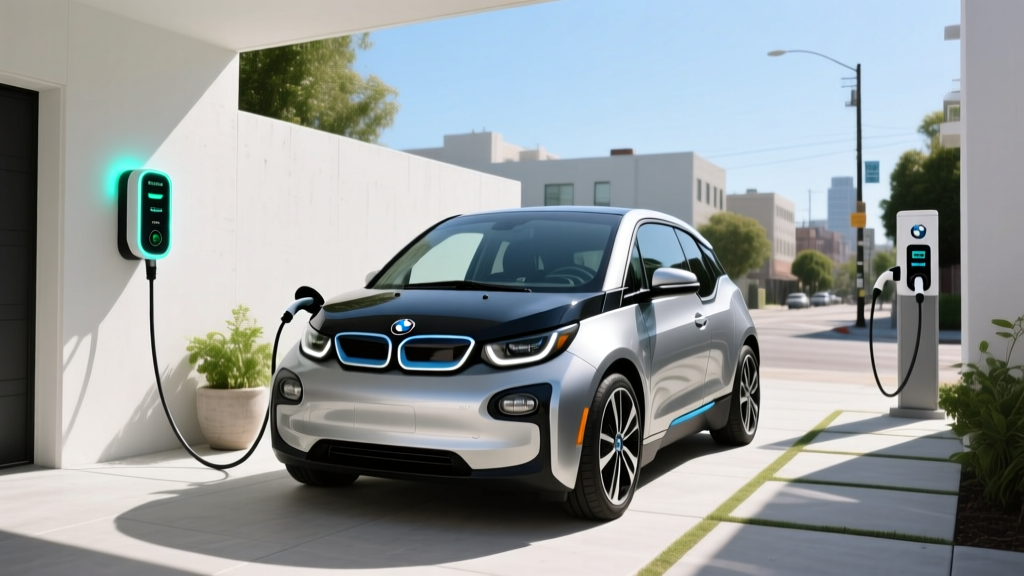
The BMW i3 remains one of the most distinctive EVs ever built. With its carbon-fiber-reinforced plastic (CFRP) passenger cell, ultra-tight turning circle, and quirky-yet-premium interior, it carved out a niche that no current model quite fills. BMW ended i3 production in July 2022, but it thrives on the used market — and understanding the real-world range on a BMW i3, along with the charging infrastructure that supports it, is essential for prospective buyers and current owners alike.
This guide covers the i3's battery variants and realistic range expectations, then expands into a full charging walkthrough: Level 1, Level 2, and DC fast charging speeds, home installation costs and electrical requirements, connector compatibility, and the true cost-per-mile of driving electric versus gas.
BMW i3 Battery Variants and Real-World Range
The i3 was sold in the US across three main battery generations. Knowing which one you're looking at determines everything from daily usability to road-trip viability.
| Model Years | Battery (Gross / Usable) | Chemistry | EPA Range (BEV) | Real-World Highway | Real-World Cold (30°F) |
|---|---|---|---|---|---|
| 2014–2016 | 22 kWh / 18.8 kWh | NMC | 81 mi | 60–70 mi | 50–60 mi |
| 2017–2018 | 33 kWh / 27.2 kWh | NMC | 114 mi | 85–100 mi | 70–85 mi |
| 2019–2021 | 42.2 kWh / 37.9 kWh | NMC | 153 mi | 120–140 mi | 100–120 mi |
The i3 REx (Range Extender) models include a 0.65L two-cylinder gasoline engine that acts as a generator, adding roughly 70–80 miles of extended range on a full 2.4-gallon tank. However, the REx adds weight and complexity, and its electric-only range drops to about 126 miles on the 42.2 kWh variant. For this guide, charging specs focus on the pure BEV models, though the REx charges identically.
Charging Levels Explained: Speeds in kW and Miles Per Hour
Before plugging in, it's critical to understand the difference between kW (kilowatts) and kWh (kilowatt-hours). kW measures the rate of power delivery — how fast energy flows into the battery. kWh measures energy capacity — how much the battery holds. Think of kW as the width of a hose and kWh as the size of the bucket.
The BMW i3 accepts up to 7.4 kW on AC Level 2 (single-phase, 32A) and up to 50 kW on DC fast charging via CCS1 (Combined Charging System). Earlier models (2014–2016) had DC fast charging as an option; by 2017 it was standard on most US trims. CHAdeMO was never offered on the US-market i3.
| Level | Voltage / Amperage | Max Power (kW) | Miles of Range Added Per Hour | Best Use Case |
|---|---|---|---|---|
| Level 1 (120V) | 120V / 12A | 1.4 kW | ~4–5 mi/hr | Overnight top-ups, emergencies |
| Level 2 (240V) | 240V / 32A | 7.4 kW | ~24–28 mi/hr | Daily home charging |
| DC Fast (CCS1) | 200–450V DC | 50 kW (peak) | ~100–120 mi/hr (10–80%) | Road trips, rapid top-ups |
On a Level 1 standard household outlet, a fully depleted 42.2 kWh i3 takes approximately 27–30 hours to charge. This is impractical as a primary charging method but works for overnight replenishment if your daily commute is under 20 miles.
Level 2 at 7.4 kW fills the 42.2 kWh battery from empty to full in roughly 5.5–6 hours. This is the sweet spot for home charging — plug in when you get home, and the car is full by morning.
DC fast charging at 50 kW takes the i3 from 10% to 80% in approximately 35–40 minutes. Note that the i3's charge curve tapers significantly above 80% — charging from 80% to 100% on DC can take nearly as long as 10% to 80%. For road trips, plan to charge to 80% and move on.
Home EV Charger Installation: Electrical Requirements and Costs
Installing a Level 2 home charger is the single biggest quality-of-life upgrade for any EV owner. For the i3, a 240V / 32A (7.4 kW) circuit is the maximum you can utilize, but installing a 40A or 48A charger future-proofs your setup for your next EV, which will almost certainly accept higher AC rates.
Electrical Requirements
- Dedicated circuit: A Level 2 charger requires its own dedicated breaker — 40A or 50A for most modern chargers. The i3 will only draw 32A, but the circuit must be rated for the charger's maximum output.
- Wire gauge: 6 AWG copper for a 50A circuit; 8 AWG for a 40A circuit.
- Panel capacity: Your electrical panel must have sufficient spare amperage. A 200A panel in a modern home usually has headroom. A 100A panel in an older home may require an upgrade ($1,500–$3,500+).
- GFCI protection: NEC 2020 and later require GFCI protection for EV receptacles (NEMA 14-50 or 6-50). Hardwired chargers often have built-in ground-fault protection, which can simplify code compliance.
- Permit: Most jurisdictions require an electrical permit for a new 240V circuit. Inspections ensure the work meets NEC and local code.
Installation Cost Breakdown
| Component | Simple Install (panel nearby, no upgrade) | Complex Install (long run, panel upgrade) |
|---|---|---|
| Level 2 Charger (Equipment) | $300–$650 | $300–$650 |
| Electrician Labor | $300–$800 | $800–$2,000 |
| Electrical Permit | $50–$150 | $50–$200 |
| Panel Upgrade (if needed) | $0 | $1,500–$3,500 |
| Conduit, Wire, Misc. | $50–$150 | $200–$500 |
| Total Estimated Cost | $700–$1,750 | $2,850–$6,850 |
The wide range reflects real-world variability. A condo garage with a panel 10 feet from the parking spot is at the low end. A 1960s home needing a 200A panel upgrade and a 60-foot conduit run to a detached garage is at the high end. Always get at least two quotes from licensed electricians. According to the US Department of Energy, the national average for a straightforward Level 2 install is roughly $1,200–$1,500 including equipment.
Federal tax credit note: The Alternative Fuel Vehicle Refueling Property Credit (IRS Form 8911) can cover up to 30% of home charger equipment and installation costs, capped at $1,000. Eligibility depends on your census tract meeting certain criteria. Check IRS guidelines for current-year rules.
Connector Compatibility: What Plugs Into a BMW i3?
The BMW i3 uses two connectors in the US market:
- J1772 (Type 1): For Level 1 and Level 2 AC charging. This is the standard AC connector for all non-Tesla EVs sold in the US.
- CCS1 (Combined Charging System): For DC fast charging. The CCS1 plug adds two DC pins below the J1772 connector.
The i3 does not natively support NACS (the Tesla connector). However, with the industry-wide shift to NACS, many public networks now offer NACS connectors, and adapters are available.
| Connector | Native to i3? | Adapter Needed? | Availability |
|---|---|---|---|
| J1772 (AC Level 1/2) | Yes | No | Universal on all public AC chargers |
| CCS1 (DC Fast) | Yes | No | Electrify America, EVgo, ChargePoint DC |
| CHAdeMO (DC Fast) | No | Not available (no CCS→CHAdeMO adapter exists) | Rare; mostly legacy Nissan Leaf stations |
| NACS (Tesla Supercharger) | No | Yes — CCS1-to-NACS adapter (~$200–$300) | Tesla Supercharger network (open to non-Tesla via adapter) |
For i3 owners in 2026, a CCS1-to-NACS adapter is worth considering. Tesla has opened its Supercharger network to non-Tesla EVs at many locations, and adapters from manufacturers like Lectron or A2Z are widely available. This dramatically expands your DC fast-charging options, especially on highway corridors where Supercharger stations outnumber Electrify America or EVgo locations.
Charging Cost Per Mile: EV vs Gas
One of the strongest arguments for EV ownership is lower per-mile fuel cost. The BMW i3 is exceptionally efficient — the 42.2 kWh model achieves an EPA-rated 113 MPGe combined, consuming roughly 30 kWh per 100 miles (0.30 kWh/mi).
| Scenario | Rate | Cost per kWh | Cost per Mile (i3) |
|---|---|---|---|
| Home Off-Peak (utility TOU rate) | Residential overnight | $0.08–$0.12 | $0.024–$0.036 |
| Home Standard Rate | Residential average | $0.15–$0.18 | $0.045–$0.054 |
| Public Level 2 (ChargePoint, etc.) | Commercial | $0.25–$0.40 | $0.075–$0.12 |
| DC Fast Charging (Electrify America) | Per-kWh pricing | $0.35–$0.55 | $0.105–$0.165 |
| Tesla Supercharger (with adapter) | Per-kWh pricing | $0.28–$0.40 | $0.084–$0.12 |
| Gas Vehicle (28 MPG, $3.40/gal) | — | — | $0.121 |
At home on off-peak rates, the i3 costs roughly 3 cents per mile to drive — less than a quarter of what a 28 MPG gas car costs at $3.40 per gallon. Even at public DC fast chargers, the i3 is often cheaper per mile than gas, though the gap narrows. The key takeaway: home charging is where the economics work best. Public charging is convenient but can approach gas-car costs on expensive networks.
For a driver covering 12,000 miles per year:
- Home off-peak: ~$300–$430/year in electricity
- Public DC fast (exclusive): ~$1,260–$1,980/year
- Gas car (28 MPG, $3.40/gal): ~$1,457/year
Recommended Home Chargers for the BMW i3
Since the i3 maxes out at 7.4 kW AC, any quality Level 2 charger rated 32A or higher will work. Choosing a 48A unit gives you headroom for future EVs. Here are three strong options for 2026:
Emporia Vue Smart Charger (48A)
- Power Output: 48A / 11.5 kW max (i3 will draw 32A / 7.4 kW)
- Connector: J1772 (NACS version also available)
- Cable Length: 24 ft
- Smart Features: Wi-Fi, app scheduling, solar integration, energy monitoring, TOU rate optimization
- Price: ~$350–$400
- Install: Hardwired (recommended) or NEMA 14-50 plug
Best for: Budget-conscious buyers who want smart scheduling and solar integration.
ChargePoint Home Flex (50A)
- Power Output: Up to 50A / 12 kW (adjustable via DIP switches)
- Connector: J1772 (NACS adapter available)
- Cable Length: 23 ft
- Smart Features: Wi-Fi, app-based scheduling, Alexa integration, flexible amperage
- Price: ~$550–$650
- Install: NEMA 14-50 plug or hardwired
Best for: Adjustable amperage to match your panel's capacity; strong app ecosystem.
WallConnector Gen 4 (48A, NACS)
- Power Output: 48A / 11.5 kW max
- Connector: NACS native (CCS1 adapter needed for i3)
- Cable Length: 24 ft
- Smart Features: Wi-Fi, over-the-air updates, Power Sharing (dual units on one circuit), vehicle-specific charge limits
- Price: ~$425–$475
- Install: Hardwired only
Best for: Future-proofing with NACS. Note: you'll need a NACS-to-J1772 adapter for the i3 (~$100–$150).
For i3 owners who plan to keep the car long-term and don't anticipate a NACS EV soon, the ChargePoint Home Flex or Emporia Vue with a native J1772 connector is the simplest path — no adapters required.
Safety, Code, and Installation Best Practices
EV charging draws sustained high current for hours — unlike an oven or dryer, which cycles on and off. This makes proper installation non-negotiable.
- Always use a licensed electrician. DIY 240V work is dangerous and may void your homeowner's insurance if an unpermitted install causes a fire.
- Hardwire when possible. Hardwired chargers eliminate the NEMA 14-50 receptacle, which is a known failure point under sustained EV loads if not installed with an industrial-grade outlet (Hubbell or Bryant brand, not the big-box store version).
- GFCI compliance: NEC 2020+ requires GFCI protection on EV receptacles. Hardwired chargers with integrated ground-fault detection can satisfy this requirement and avoid nuisance tripping.
- Outdoor rating: If your charger is mounted outside, ensure it carries a NEMA 4 (or IP55+) rating for rain and dust resistance. All three chargers above are outdoor-rated.
- Thermal monitoring: Quality chargers include thermal sensors that reduce output if internal temperatures rise — critical for hot-climate garages or direct-sun outdoor mounts.
- Cable management: A retractable reel or wall hook prevents tripping hazards and protects the cable from UV degradation and physical damage.
Frequently Asked Questions
How much does it cost to install a home EV charger for a BMW i3?
For a straightforward installation with a nearby 200A panel, expect $700–$1,750 including the charger, electrician labor, wire, conduit, and permit. If your home needs a panel upgrade from 100A to 200A, total costs can reach $2,850–$6,850. Get multiple quotes from licensed electricians and ask about the federal refueling property credit (up to $1,000).
How fast will each charging level add range to my i3?
Level 1 (120V) adds about 4–5 miles of range per hour. Level 2 (240V, 7.4 kW) adds about 24–28 miles per hour — enough to fully recharge the 42.2 kWh model overnight in roughly 5.5–6 hours. DC fast charging at 50 kW adds roughly 100–120 miles per hour between 10–80% SoC, completing that range in about 35–40 minutes.
Which connector and charger is compatible with the BMW i3?
The i3 uses J1772 for AC charging (Levels 1 and 2) and CCS1 for DC fast charging. It does not natively support NACS/Tesla Superchargers, but a CCS1-to-NACS adapter ($200–$300) unlocks Tesla's network. CHAdeMO is not compatible and no adapter exists.
How much does charging the i3 cost per mile compared to gas?
At home on off-peak electricity rates ($0.08–$0.12/kWh), the i3 costs roughly 2.4–3.6 cents per mile. A comparable gas car at 28 MPG and $3.40/gallon costs about 12.1 cents per mile. Even public DC fast charging ($0.35–$0.55/kWh) at 10.5–16.5 cents per mile is often cheaper than gas, though the savings gap narrows significantly.
What electrical upgrades might I need for a Level 2 charger?
You'll need a dedicated 40A or 50A breaker on a 240V circuit. If your electrical panel is a 100A service with limited spare slots, a load calculation may show you're at capacity — requiring a panel upgrade to 200A ($1,500–$3,500). Older homes with knob-and-tube or aluminum wiring may need additional remediation. Always have a licensed electrician perform a load calculation per NEC Article 220 before committing to a charger purchase.
Can I charge my BMW i3 at Tesla Superchargers?
Yes, with a CCS1-to-NACS adapter. Tesla has opened many Supercharger locations to non-Tesla EVs via the "Charge Other Vehicles" program. You'll need the Tesla app to initiate sessions at participating stations. Verify adapter compatibility and station availability before relying on this for road trips.
Does the BMW i3 support scheduled charging for off-peak rates?
Yes. The i3's onboard iDrive system supports scheduled departure times and charging windows. Additionally, most smart Level 2 chargers (Emporia, ChargePoint, WallConnector) offer app-based scheduling, allowing you to set charging to begin at, say, 11 PM when utility rates drop to their lowest tier.