The BMW i3 remains one of the most distinctive electric vehicles on the used market, and in 2026 it continues to serve as an excellent urban commuter and second car. Whether you own the original 60 Ah model, the 94 Ah refresh, or the final 120 Ah variant (produced through 2022), choosing the right BMW i3 charger setup determines how practical the car is day-to-day. This guide covers every charging scenario — from a standard wall outlet to DC fast charging — with exact speeds, costs, and equipment recommendations.
Before we get into specifics, a critical distinction: kW (kilowatts) measures power — how fast energy flows into the battery. kWh (kilowatt-hours) measures energy — the total capacity of the battery. A 50 kW charger delivering power for one hour adds 50 kWh of energy. The i3's usable battery capacity ranges from 18.8 kWh (early 60 Ah) to 37.9 kWh (120 Ah model). Keep this distinction front and center as we evaluate charging options.
BMW i3 Battery and Charging Specs by Model Year
The i3 went through three major battery generations. Your charger strategy depends on which one you own. Here are the exact specifications per EPA data:
| Model | Years | Usable Battery (kWh) | EPA Range | Onboard AC Charger | Max DC Charge Rate | Connector |
|---|---|---|---|---|---|---|
| i3 60 Ah | 2014–2016 | 18.8 kWh | 81 mi | 7.4 kW (single-phase) | ~47 kW (CCS) | Type 1 J1772 / CCS1 |
| i3 94 Ah | 2017–2018 | 27.2 kWh | 114 mi | 7.4 kW (single-phase) | ~47 kW (CCS) | Type 1 J1772 / CCS1 |
| i3 120 Ah | 2019–2022 | 37.9 kWh | 153 mi | 7.4 kW (single-phase) | ~50 kW (CCS) | Type 1 J1772 / CCS1 |
Charging Levels: How Fast Will Each Add Range?
The BMW i3 supports all three charging levels, but its relatively small battery means charging times are shorter than larger EVs. Here is what each level delivers:
| Charging Level | Voltage / Amperage | Power (kW) | Miles of Range Added per Hour | Best Use Case |
|---|---|---|---|---|
| Level 1 (120V AC) | 120V / 12A | ~1.4 kW | ~5–6 mi/hr | Overnight top-off, emergency |
| Level 2 (240V AC) | 240V / 32A | 7.4 kW (i3 max) | ~25–30 mi/hr | Daily home charging |
| DC Fast Charge | DC direct | Up to ~50 kW | ~150–180 mi/hr (peak) | Road trips, rapid top-up |
Level 1: The Included Cord
Every i3 shipped with a 120V Level 1 charging cord. Plugging into a standard household outlet delivers roughly 1.4 kW. For the 120 Ah model (37.9 kWh usable), a full 0–100% charge takes approximately 27 hours. This is impractical for daily use unless you drive fewer than 25 miles per day and can leave the car plugged in overnight. Level 1 works as a backup or for occasional top-offs.
Level 2: The Home Charging Standard
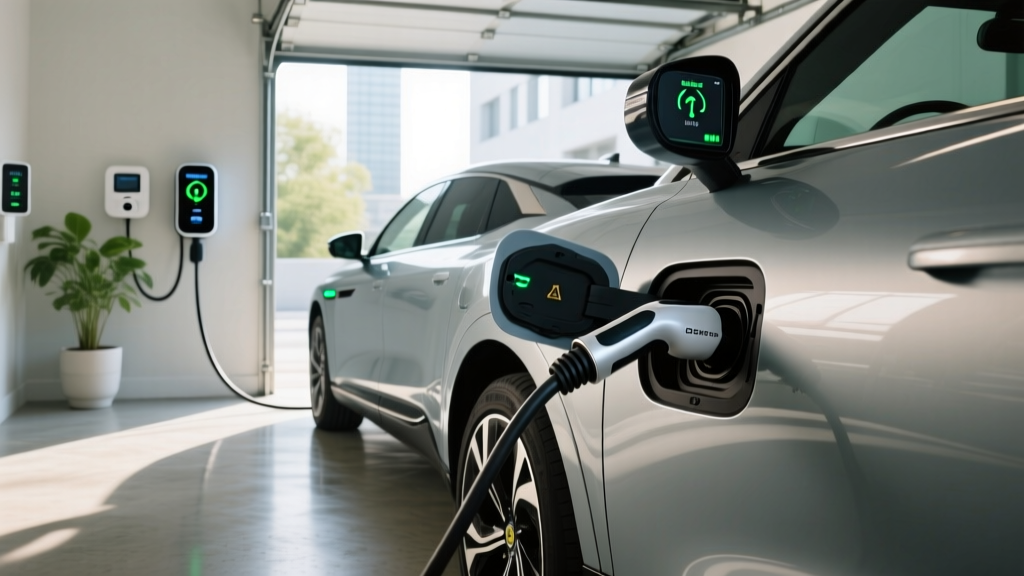
A 240V Level 2 charger is the practical baseline for i3 ownership. The i3's onboard AC charger accepts up to 7.4 kW on single-phase power (some European models support 11 kW three-phase, but US-market i3s are single-phase). At 7.4 kW, the 120 Ah model charges from empty to full in roughly 5.5 hours. A typical overnight session from 30% to 100% takes about 4 hours — more than adequate for daily driving.
DC Fast Charging: CCS Combo
DC fast charging was optional on early 60 Ah models and became more widely available on 94 Ah and standard on 120 Ah variants. The i3 uses the CCS1 (Combo) connector for DC charging. Peak charge rates reach approximately 47–50 kW depending on the model. On the 120 Ah i3, a 10–80% charge at a 50 kW CCS station takes roughly 35–45 minutes. Note that the i3's charge curve tapers significantly above 80% SoC — charging from 80–100% on DC can take as long as the 10–80% session. For road trips, plan to charge to 80% and move on.
Which Connector Does the BMW i3 Use?
The US-market BMW i3 uses two connectors:
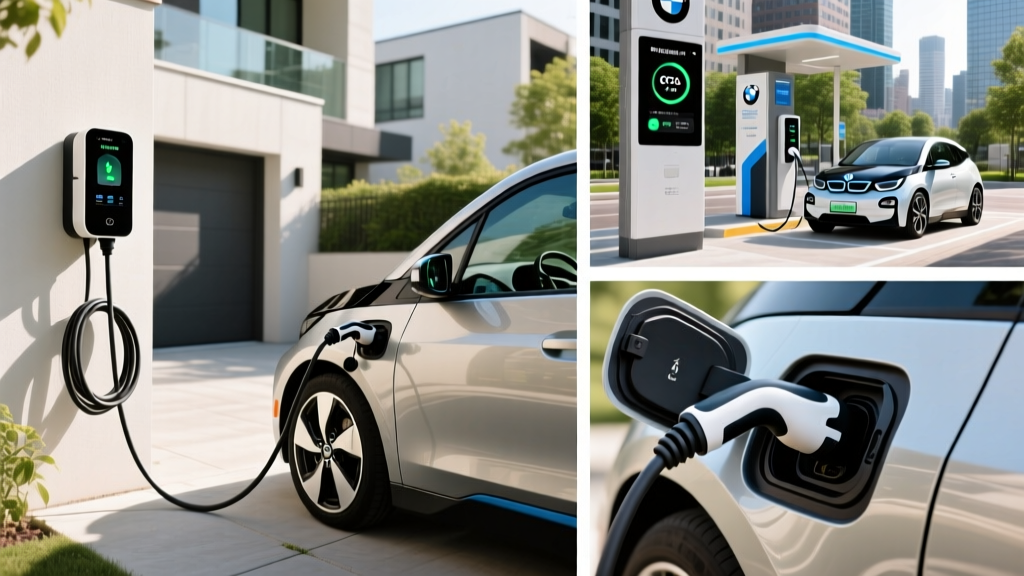
- J1772 (Type 1) — for Level 1 and Level 2 AC charging. This is the standard AC connector used by nearly all non-Tesla EVs in North America.
- CCS1 (Combo) — for DC fast charging. This adds two DC pins below the J1772 inlet.
As of 2026, the North American Charging Standard (NACS) — developed by Tesla — is becoming the dominant connector for new EVs. However, the i3 was never produced with a NACS port. Here is how compatibility works for i3 owners in the evolving charging landscape:
| Charging Network / Scenario | Native Compatibility | Adapter Needed? |
|---|---|---|
| Home Level 2 (J1772 charger) | Yes — direct plug | No |
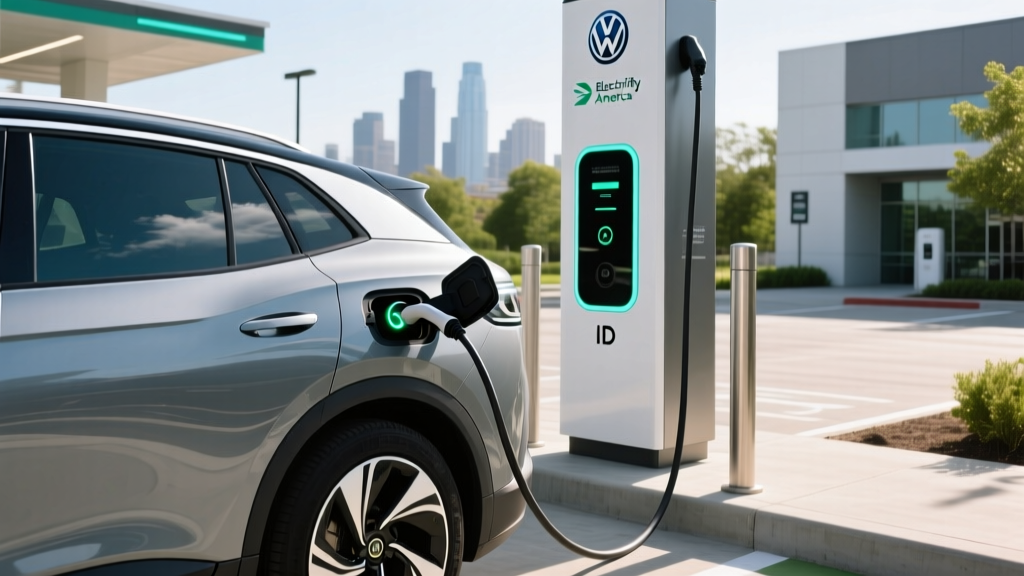
| Electrify America (CCS) | Yes — direct plug | No |
| EVgo / ChargePoint (CCS stations) | Yes — direct plug | No |
| Tesla Supercharger (NACS, CCS-equipped) | Partial — only at Superchargers with Magic Dock or CCS integration | Check station listing |
| Tesla Supercharger (NACS-only, no Magic Dock) | No | NACS-to-CCS adapter (limited availability, ~$200–$250) |
How Much Does It Cost to Install a Home BMW i3 Charger?
Installing a dedicated Level 2 home charger involves three cost components: the charger unit itself, electrical work by a licensed electrician, and local permits. Total costs vary significantly based on your home's electrical panel capacity and the distance from the panel to your parking spot.
| Cost Component | Simple Install (panel nearby, no upgrade) | Complex Install (long wire run or panel upgrade) |
|---|---|---|
| Level 2 Charger (32A–40A, 240V) | $350–$650 | $350–$650 |
| Electrician Labor (240V circuit, 40A–50A breaker) | $500–$1,200 | $1,500–$3,000 |
| Electrical Permit | $50–$150 | $50–$200 |
| Panel Upgrade (100A → 200A, if needed) | N/A | $1,500–$3,500 |
| Total Estimated Cost | $900–$2,000 | $3,400–$7,350 |
Electrical Requirements for the i3
The i3's 7.4 kW onboard charger draws approximately 32 amps at 240V. Electrical code requires that continuous loads (like EV charging) not exceed 80% of the circuit rating. This means you need a minimum 40-amp dedicated circuit with a 40A breaker. Many electricians recommend installing a 50A circuit with a NEMA 14-50 outlet for future flexibility — the i3 will only draw what it needs (32A), but the infrastructure supports a future EV with a larger onboard charger.
When Do You Need a Panel Upgrade?
Homes with 100-amp electrical service may lack capacity for a 40A EV circuit, especially if you already run electric heating, an electric dryer, and an electric oven simultaneously. A licensed electrician will perform a load calculation per NEC Article 220. If your panel is at capacity, a service upgrade to 200A is required — adding $1,500–$3,500 to the project. This is one of the most commonly underestimated costs in home EV charging.
What Does Charging a BMW i3 Cost Per Mile vs. Gas?
The i3 120 Ah achieves an EPA-rated 113 MPGe combined, consuming roughly 30 kWh per 100 miles. Your actual cost per mile depends on your electricity rate. Here are real-world scenarios for 2026:
| Charging Scenario | Rate ($/kWh) | Cost per 100 Miles | Cost per Mile | Equivalent Gas Price (at 30 MPG) |
|---|---|---|---|---|
| Home — Off-Peak (utility TOU rate) | $0.09 | $2.70 | $0.027 | $0.81/gallon |
| Home — Standard Residential Average | $0.16 | $4.80 | $0.048 | $1.44/gallon |
| Public Level 2 (ChargePoint, EVgo) | $0.30 | $9.00 | $0.090 | $2.70/gallon |
| DC Fast Charging (Electrify America) | $0.48 | $14.40 | $0.144 | $4.32/gallon |
For context, a comparable gas-powered BMW 2 Series Gran Coupe averaging 30 MPG at $3.50/gallon costs about $0.117 per mile in fuel alone. Home charging the i3 at off-peak rates costs roughly one-quarter of that. Even public DC fast charging is competitive with gasoline on a per-mile basis, though it erodes the i3's cost advantage.
Best BMW i3 Home Charger Recommendations (2026)
Since the i3's onboard charger caps at 7.4 kW (32A at 240V), you do not need a 48A or 80A charger. A quality 32A–40A Level 2 unit is the sweet spot — it maxes out the i3's capability without overspending on hardware you cannot fully utilize.
Emporia Vue Level 2 Charger
- Power Output: 40A / 9.6 kW (i3 will use 7.4 kW)
- Connector: J1772
- Cable Length: 24 ft
- Smart Features: Wi-Fi, app scheduling, energy monitoring, solar integration
- Price: ~$399
- Why for i3: Budget-friendly, excellent app, future-proof 40A output
ChargePoint Home Flex
- Power Output: Configurable 16A–50A / up to 12 kW (i3 will use 7.4 kW)
- Connector: J1772
- Cable Length: 23 ft
- Smart Features: Wi-Fi, Alexa integration, charge scheduling, detailed session data
- Price: ~$549
- Why for i3: Configurable amperage lets you match your circuit exactly; proven reliability
Grizzl-E Smart
- Power Output: 40A / 9.6 kW (i3 will use 7.4 kW)
- Connector: J1772
- Cable Length: 24 ft
- Smart Features: OCPP-compatible, app control, firmware updates, outdoor-rated (NEMA 4)
- Price: ~$449
- Why for i3: Built for extreme temperatures, excellent for outdoor/garage installs in cold climates
Any of these chargers will fully replenish an i3 120 Ah overnight in 5–6 hours. The ChargePoint Home Flex stands out if you plan to own a future EV with a larger onboard charger, as its adjustable amperage accommodates circuits from 20A to 60A.
Safety, Code, and Installation Best Practices
EV charging places a sustained, high-current load on your home's electrical system for hours at a time. This is fundamentally different from intermittent loads like a dryer or oven. Proper installation is non-negotiable:
- Dedicated circuit: Your Level 2 charger must be on its own dedicated circuit — never shared with other appliances.
- GFCI protection: NEC 2023 (Article 625.54) requires GFCI protection for all EV charging outlets rated 150V or less to ground and 50A or less. Most quality hardwired chargers include internal ground-fault protection. If using a NEMA 14-50 receptacle, a GFCI breaker is required.
- Outdoor rating: If your charger is installed outdoors, ensure it carries a NEMA 4 (or NEMA 4X) rating for weather resistance. The Grizzl-E Smart and ChargePoint Home Flex both meet this standard.
- Wire gauge: A 40A circuit requires 8 AWG copper wire minimum; a 50A circuit requires 6 AWG. Your electrician will size wire based on circuit length and local code.
- Permit and inspection: Most jurisdictions require an electrical permit for EV charger installation. The work must pass inspection to ensure code compliance. Skipping the permit risks insurance claim denial if an electrical fire occurs.
- Hardwired vs. plug-in: Hardwired chargers eliminate the receptacle as a failure point and are often preferred for 40A+ circuits. Plug-in units (NEMA 14-50) offer portability if you move.
Always hire a licensed electrician familiar with NEC Article 625 (Electric Vehicle Charging System Equipment). Per NFPA, improper EV charger installation can create fire and shock hazards.
Public Charging Options for the BMW i3
The i3's CCS1 connector gives it access to the largest public DC fast-charging networks in North America:
- Electrify America: CCS-native. Most stations offer 50–150 kW chargers. The i3 will peak at ~50 kW. Expect a 10–80% charge in 35–45 minutes. Pricing averages $0.43–$0.52/kWh depending on location and membership tier.
- EVgo: CCS-native at most stations. 50–100 kW chargers common. Pricing averages $0.30–$0.45/kWh. EVgo's subscription plans can reduce per-kWh costs for frequent users.
- ChargePoint: Extensive Level 2 network (J1772) plus some DC fast stations. Ideal for destination charging at shopping centers and workplaces.
- Tesla Superchargers with Magic Dock: Tesla has opened select Supercharger stations to non-Tesla EVs via the built-in Magic Dock CCS adapter. Use the Tesla app to check station compatibility before traveling. As of 2026, Magic Dock availability is expanding but remains limited to specific locations.
For i3 owners, public DC fast charging is best used for road-trip top-ups rather than daily charging. The i3's small battery and ~50 kW peak rate mean it charges relatively quickly compared to larger-battery EVs, but the per-kWh cost at public stations significantly reduces the economic advantage over gasoline.
Frequently Asked Questions
Can I charge my BMW i3 with a Tesla charger?
Not directly. The i3 uses a J1772/CCS1 connector, while Tesla Superchargers use the NACS connector. However, select Tesla Supercharger stations equipped with the Magic Dock adapter allow non-Tesla CCS vehicles to charge. Check the Tesla app for compatible stations. Third-party NACS-to-CCS adapters exist but vary in quality and DC fast-charging compatibility.
How long does it take to charge a BMW i3 at home?
On a 240V Level 2 charger at 7.4 kW, the i3 120 Ah (37.9 kWh) charges from empty to full in approximately 5.5 hours. A typical daily top-up from 30% to 90% takes about 3 hours. On Level 1 (120V), a full charge takes 27+ hours — impractical for regular use.
Does the BMW i3 support DC fast charging?
Yes, but it was optional on early 60 Ah models (2014–2016) and became more widely available on 94 Ah and 120 Ah variants. Check your specific vehicle — if it has a CCS1 inlet (the J1772 port with two additional DC pins below), it supports DC fast charging at up to ~50 kW. If it only has a J1772 port, it is limited to AC Level 2 charging.
What size breaker do I need for a BMW i3 home charger?
The i3 draws up to 32 amps continuously at 240V. Per NEC rules, continuous loads cannot exceed 80% of circuit capacity, so you need a minimum 40-amp breaker on a dedicated circuit with 8 AWG copper wire. A 50-amp circuit with a NEMA 14-50 outlet is commonly installed for future flexibility.
Is it worth installing a Level 2 charger for the i3?
Absolutely. Level 2 charging at 7.4 kW fully replenishes the i3 overnight at the lowest possible cost (as little as $0.027/mile on off-peak electricity). Level 1 is too slow for daily use, and relying solely on public DC fast charging is expensive and inconvenient. A home Level 2 installation typically pays for itself within 1–2 years through fuel savings compared to a gasoline vehicle, according to DOE estimates.
Will a 48A charger charge my i3 faster than a 32A charger?
No. The BMW i3's onboard AC charger is limited to 7.4 kW (32A at 240V). Even if you plug into a 48A or 80A charger, the i3 will only draw 32A. Higher-amperage chargers are not harmful — they simply provide more capacity than the i3 can use, which may benefit a future EV with a larger onboard charger.