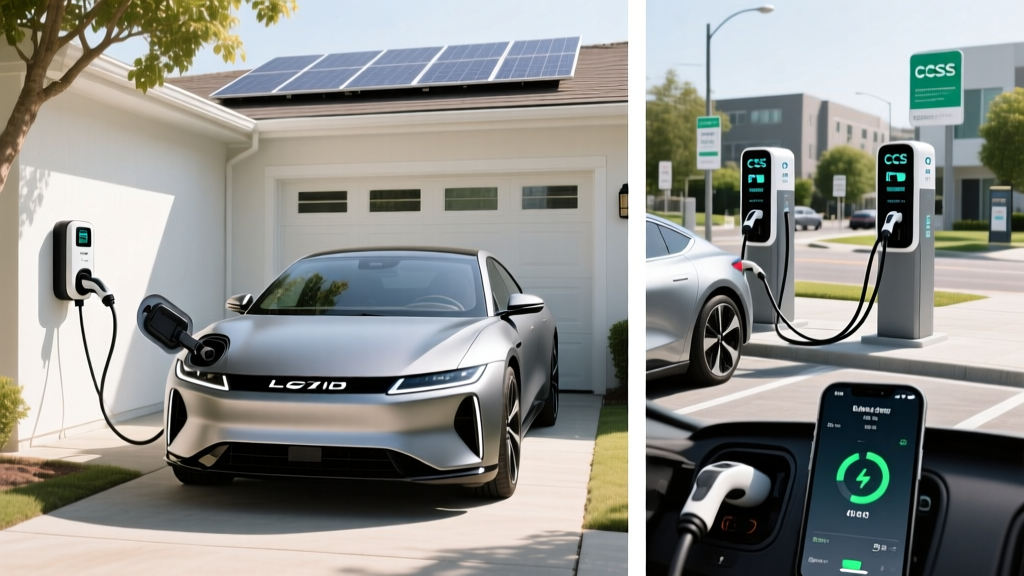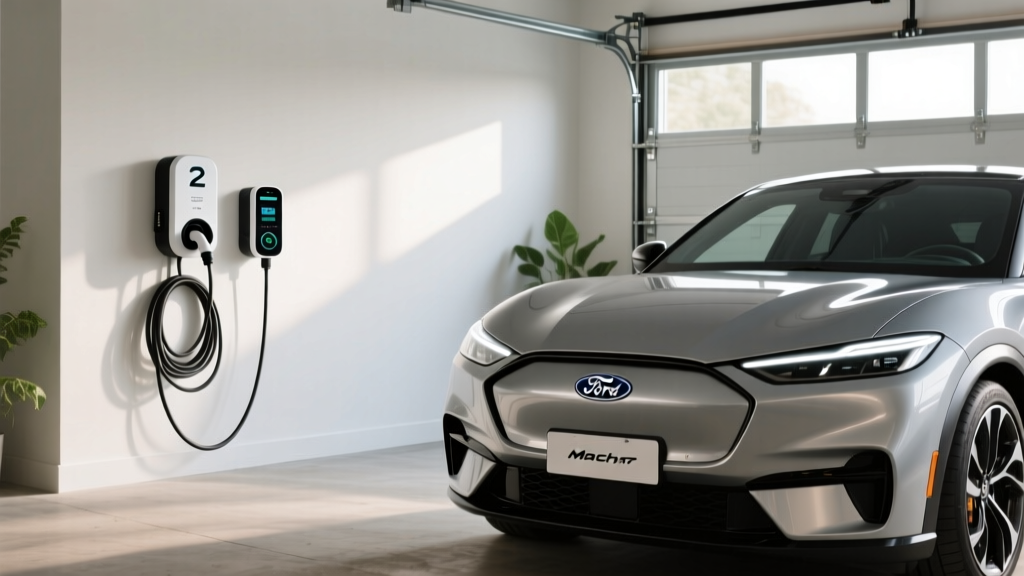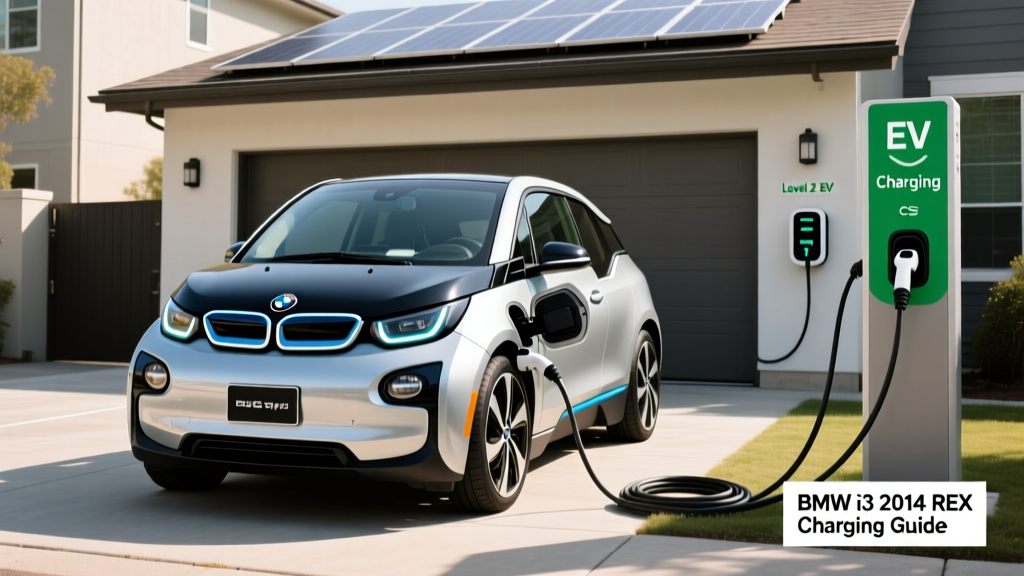
The BMW i3 with Range Extender (REx) remains one of the most distinctive plug-in vehicles on the used-EV market. Its 22 kWh lithium-ion battery (roughly 18.8 kWh usable) paired with a 647cc two-cylinder gasoline generator gives it a split personality: a short-range electric commuter that can stretch its legs with a sip of premium fuel. If you own or are shopping for a 2014 i3 REx, understanding its charging behavior — and how to set up efficient, safe home charging — is essential to getting the most from this pioneering plug-in.
This guide covers every charging scenario a 2014 i3 REx owner will encounter, from a standard 120V wall outlet to DC fast charging, plus realistic home-installation costs, connector compatibility, and per-mile fueling economics in 2026.
Understanding the 2014 BMW i3 REx Battery and Powertrain
Before plugging in, it helps to know what you're filling. The 2014 i3 REx carries an 8-module Samsung SDI lithium-ion pack rated at 22 kWh gross, with approximately 18.8 kWh usable. BMW built in a buffer to protect long-term battery health — you'll never see 0% or 100% on the dash in absolute terms.
The electric motor produces 170 hp (125 kW) and 184 lb-ft of torque. The Range Extender is a 34-hp twin-cylinder engine that acts purely as a generator — it never drives the wheels directly. It kicks in when the battery drops to roughly 6.5% State of Charge (SoC), maintaining that floor so you can continue driving on gasoline.
Electric-only (EPA): 72 miles
Real-world electric: Expect 55–65 miles in mixed driving; 45–55 miles in freezing weather or sustained highway speeds above 70 mph.
Gasoline range (REx): ~70–80 additional miles on the 2.4-gallon tank.
Total combined range: ~140–150 miles before needing a plug or a gas station.
EPA MPGe (electric): 117 MPGe combined
EPA MPG (gasoline, REx mode): 39 MPG combined
Source: fueleconomy.gov
Given the modest battery size, charging the i3 REx is faster than most modern long-range EVs — but its charging hardware also has specific limitations you need to plan around.
Charging Levels Explained: What the i3 REx Can Accept
Every EV charges at one of three levels. The critical distinction to understand: kW (kilowatts) measures power — how fast energy flows into the battery. kWh (kilowatt-hours) measures energy — the total capacity of the battery. Think of kW as the flow rate of a hose and kWh as the size of the bucket.
| Level | Voltage | Max Power (kW) | Miles of Range Added per Hour | Connector |
|---|---|---|---|---|
| Level 1 (120V household) | 120V AC | ~1.4 kW (12A) | ~4–5 miles/hr | J1772 (built-in cable) |
| Level 2 (240V home/public) | 240V AC | 7.4 kW (32A) | ~22–25 miles/hr | J1772 |
| DC Fast Charging | DC direct | 50 kW (CCS Combo 1) | ~100–120 miles/hr (peak) | CCS1 or CHAdeMO* |
*The 2014 i3 was available with an optional DC fast-charge package. Without it, the car is limited to Level 2 AC charging only. Check your vehicle's charge port: if you see two additional large pins below the standard J1772 connector, your car has the CCS1 DC fast-charge inlet.
Level 1: The Emergency Trickle
The i3's included Level 1 EVSE plugs into any standard 120V household outlet. At roughly 1.4 kW, a full charge from empty takes approximately 13–14 hours. This is adequate only for overnight top-ups if your daily driving is under 30 miles. For a 2014 i3 REx with its smaller battery, Level 1 is more viable than for a 100-kWh EV — but it still won't replenish a fully depleted pack in a single night if you also ran the REx.
Level 2: The Daily Workhorse
A 240V Level 2 station delivering the i3's maximum 7.4 kW will charge the 18.8 kWh usable battery from empty to full in roughly 2.5–3 hours. This is the sweet spot for i3 ownership: plug in when you get home, and the car is ready well before morning. Even a partial charge during a workday adds meaningful range.
DC Fast Charging: Road-Trip Insurance
If your 2014 i3 has the DC fast-charge option, it can accept up to 50 kW via CCS1. BMW quoted a 0–80% charge in approximately 25–30 minutes at a 50 kW station. The i3's charge curve is relatively flat through 80% SoC thanks to its small battery and active thermal management, then tapers significantly above 85% to protect cell health.
On a 50 kW charger, expect roughly:
- 10–80%: ~25 minutes
- 80–100%: ~15–20 additional minutes (taper)
Note that CHAdeMO DC fast charging was also available on early i3 models in some markets via adapter or alternate inlet configuration, but CCS1 became BMW's standard for North American models.
Home Charger Installation: Electrical Requirements and Costs
Installing a Level 2 home charger for your i3 REx requires a dedicated 240V circuit. Here's what's involved electrically:
Electrical Specifications
- Voltage: 240V (split-phase, standard US residential)
- Amperage: 40A circuit recommended for a 32A continuous charger (National Electrical Code requires circuits rated at 125% of continuous load)
- Wire gauge: 8 AWG copper (THHN in conduit or NM-B/Romex for short indoor runs)
- Breaker: 40A double-pole in your main or sub-panel
- Outlet option: NEMA 14-50 receptacle (allows charger portability) or hardwired connection (preferred by many electricians for safety and code compliance with GFCI requirements)
Does Your Electrical Panel Need an Upgrade?
This is the variable that most surprises new EV owners. Your home's electrical panel has a total capacity — typically 100A, 150A, or 200A in US homes. Adding a 40A EV circuit to a 100A panel that's already near capacity may require:
- Panel upgrade: Upgrading from 100A to 200A service — $1,500–$3,500 depending on utility connection work
- Load calculation: A licensed electrician will perform an NEC Article 220 load calculation to determine if your panel has headroom. Older homes with electric dryers, electric ranges, and central AC are more likely to need upgrades
- Smart panel / load management: Devices like the Emporia Vue or a charger with built-in load management (e.g., Wallbox Pulsar Plus with Power Meter) can dynamically reduce charging current when other appliances are running, potentially avoiding a panel upgrade entirely — typically $200–$400 additional
Installation Cost Breakdown
| Component | Simple Install (panel nearby, no upgrade) | Complex Install (long run, panel upgrade) |
|---|---|---|
| Level 2 charger unit (32–40A) | $350–$650 | $350–$650 |
| Electrician labor (2–4 hrs simple / 6–10 hrs complex) | $400–$800 | $1,200–$2,500 |
| Materials (wire, conduit, breaker, outlet) | $100–$300 | $300–$700 |
| Electrical permit | $50–$150 | $50–$150 |
| Panel upgrade (if needed) | $0 | $1,500–$3,500 |
| Total estimated range | $900–$1,900 | $3,400–$7,500 |
The i3 REx's modest 7.4 kW onboard charger means you don't need a 48A or 80A circuit. A 40A circuit with a 32A charger is perfectly matched — potentially saving you $200–$500 on wire and breaker costs compared to a high-power setup.
Connector Compatibility: What Plugs Into the i3?
The 2014 i3 was produced before the industry-wide shift to NACS (North American Charging Standard, originally the Tesla connector). Here's how connector compatibility works for this vehicle:
| Connector Type | Compatible with i3 REx? | Notes |
|---|---|---|
| J1772 (Level 1 & Level 2 AC) | Yes — native | Standard AC charging port on all i3 models. All public Level 2 stations in the US use J1772. |
| CCS1 (DC Fast) | Yes — if equipped with DC fast-charge option | CCS Combo 1 adds two DC pins below the J1772 inlet. Verify your car has this before relying on DCFC. |
| CHAdeMO (DC Fast) | No (not on North American models) | Some early European i3 models had CHAdeMO; US-market i3s use CCS1 for DC. |
| NACS / Tesla (Level 2 AC & DC) | Adapter required | As of 2025–2026, J1772-to-NACS adapters are available (~$150–$250) for accessing Tesla Destination Chargers and Superchargers. Tesla sells an official J1772 adapter; third-party CCS-to-NACS adapters also exist for DCFC access. |
Charging Cost: Electricity vs Gasoline for the i3 REx
One of the strongest arguments for the i3 REx is its low per-mile fueling cost when running on electricity. Here's a realistic comparison using 2026 energy prices:
| Scenario | Rate | Cost per Full Charge (18.8 kWh) | Cost per Mile (electric) |
|---|---|---|---|
| Home charging (off-peak utility rate) | $0.12/kWh | $2.26 | $0.035/mi |
| Home charging (average US residential) | $0.17/kWh | $3.20 | $0.049/mi |
| Public Level 2 (network pricing) | $0.30/kWh | $5.64 | $0.087/mi |
| DC fast charging ( Electrify America, EVgo) | $0.45/kWh | $8.46 | $0.130/mi |
| Gasoline (REx mode, premium required) | $4.20/gal (premium) | $10.08 (2.4 gal tank) | $0.136/mi |
The takeaway: Charging at home on an off-peak rate costs roughly one-quarter what the REx's gasoline engine costs per mile. Even public DC fast charging is marginally cheaper than burning premium in the range extender. The financial incentive to plug in whenever possible is clear.
For context, a comparable gasoline-only compact car averaging 30 MPG on $3.50/gallon regular fuel costs about $0.117 per mile — the i3 on home electricity beats that by a factor of three.
Recommended Home Chargers for the BMW i3 REx
Because the i3's onboard charger maxes out at 7.4 kW (32A at 240V), you don't need to overspend on a 48A or 80A unit. A quality 32A or 40A Level 2 charger is the right match. Here are proven options in 2026:
Emporia Level 2 EV Charger
- Power output: 40A (9.6 kW max — i3 will draw 7.4 kW)
- Connector: J1772 (NACS version also available)
- Cable length: 24 feet
- Smart features: Wi-Fi, energy monitoring via Emporia app, solar integration, scheduled charging, load management with Power Meter add-on
- Price: ~$399
- Best for: Budget-conscious owners who want smart energy tracking and potential solar-aware charging
ChargePoint Home Flex
- Power output: Configurable 16A–50A (set to 32A or 40A for i3)
- Connector: J1772 (NACS adapter available separately)
- Cable length: 23 feet
- Smart features: Wi-Fi, ChargePoint app scheduling, Alexa integration, flexible amperage lets you match your circuit exactly
- Price: ~$599
- Best for: Owners who want a proven brand with flexible amperage settings for future EV upgrades
Wallbox Pulsar Plus
- Power output: 40A (9.6 kW max)
- Connector: J1772 (integrated tethered cable)
- Cable length: 25 feet
- Smart features: Wi-Fi + Bluetooth, myWallbox app, Eco-Smart mode for solar integration, Power Boost load management (requires separate meter), compact form factor
- Price: ~$549
- Best for: Tight garage spaces and solar-panel-equipped homes
BMW i Wallbox (OEM)
- Power output: 32A (7.7 kW)
- Connector: J1772, tethered cable
- Cable length: ~18 feet
- Smart features: Basic scheduling via BMW app, clean aesthetic match for BMW garage
- Price: ~$700–$850 (often available through BMW dealers or certified installers)
- Best for: Owners who prefer OEM-matched equipment and dealer-supported installation
For a 2014 i3 REx specifically, the Emporia or Wallbox Pulsar Plus offer the best value: both deliver more amperage than the i3 can use (future-proofing for your next EV), include smart scheduling for off-peak utility rates, and cost under $550.
Safety, Electrical Code, and Installation Best Practices
EV charging is a continuous high-draw electrical load — your installation must meet the 2026 National Electrical Code (NEC) and local amendments. Key requirements:
- Dedicated circuit: Your Level 2 charger must be on its own dedicated breaker — not shared with any other outlet or appliance
- GFCI protection: NEC 2023 and later editions require GFCI protection for EV receptacles (NEMA 14-50 outlets). Hardwired chargers are often exempt from this requirement, which is why many electricians now recommend hardwiring over plug-in installations
- Outdoor rating: If your charger is installed outside (driveway, exterior wall), the unit must carry a NEMA 4 or NEMA 4X rating for weather resistance. All four chargers recommended above carry outdoor ratings
- Permit and inspection: Most jurisdictions require an electrical permit for EV charger installation. The inspection ensures proper wire gauge, breaker sizing, grounding, and GFCI compliance. Budget $50–$150 for the permit and schedule the inspection before closing up any walls
- Cable management: The i3's charge port is located on the right rear quarter panel. Plan your charger mounting location and cable length so the cable reaches comfortably without stretching across a driveway or walkway
Always hire a licensed electrician for a 240V installation. DIY electrical work at this voltage carries serious arc-flash and fire risk, and an unpermitted installation may void your homeowner's insurance coverage in the event of a claim.
Public Charging With the i3 REx: Networks and Practical Tips
The 2014 i3 REx's limited electric range makes public charging strategy important. Here's how to use the major networks effectively:
Level 2 Public Charging
Every public Level 2 station in the US uses a J1772 connector — your i3 plugs in natively. Networks like ChargePoint, Blink, and Tesla Destination Charging (with adapter) are all accessible. At 7.4 kW, expect roughly 22–25 miles of range added per hour. A 2-hour stop at a shopping center or workplace can replenish most of the battery.
DC Fast Charging on the Road
If your i3 has the DC fast-charge option, you can use Electrify America, EVgo, and other CCS1 networks. At 50 kW peak, a 25-minute stop adds enough range for the next 60+ miles of electric driving. Download the PlugShare or A Better Routeplanner app to locate compatible stations along your route.
With the expanding NACS (Tesla Supercharger) network opening to non-Tesla vehicles, a CCS-to-NACS adapter ($200–$300) significantly expands your DCFC options — particularly valuable for the i3 given the declining number of CCS-only stations in some regions.
Maximizing Your i3 REx Battery Life
The 2014 i3's battery is now over a decade old in most examples. Proper charging habits can preserve remaining capacity:
- Avoid daily 100% charges: Set your charger or i3's charge timer to stop at 80–90% for daily use. Reserve 100% for longer trips where you need maximum electric range
- Don't let it sit at 0%: If the battery is fully depleted, plug in as soon as possible. Extended storage at very low SoC accelerates degradation
- Precondition while plugged in: Use the BMW Connected app to preheat or precool the cabin while the car is still on the charger. This uses grid power instead of battery energy, preserving range — especially important in winter when cold batteries lose 20–30% of their effective capacity
- Monitor State of Health (SoH): The i3's iDrive system or third-party OBD2 tools (like BimmerCode or LeafSpy-equivalent apps) can report battery degradation. Expect a well-maintained 2014 pack to retain 75–85% of original capacity by 2026 — roughly 14–16 kWh usable
BMW's original high-voltage battery warranty was 8 years/100,000 miles with a guaranteed minimum of 70% capacity retention. Most 2014 models have passed the time threshold, but some may still be within the mileage limit — check your vehicle's warranty status with a BMW dealer.
Frequently Asked Questions
How much does it cost to install a home EV charger for the BMW i3 REx?
A straightforward Level 2 installation (electrical panel nearby, no upgrade needed) typically costs $900–$1,900 including the charger unit, electrician labor, materials, and permit. If your home needs a panel upgrade from 100A to 200A service, total costs can reach $3,400–$7,500. The i3's 7.4 kW onboard charger means a 40A circuit is sufficient — you don't need the more expensive 60A or 80A circuits required by larger EVs.
How fast will each charging level add range to my i3 REx?
Level 1 (120V) adds roughly 4–5 miles of electric range per hour. Level 2 (240V at 7.4 kW) adds approximately 22–25 miles per hour, fully charging the battery in 2.5–3 hours. DC fast charging at 50 kW (if equipped) can add roughly 100–120 miles of range per hour at peak speed, reaching 80% SoC in about 25 minutes.
Which connector and charger is compatible with my 2014 i3 REx?
All 2014 i3 models use a J1772 connector for Level 1 and Level 2 AC charging — this is compatible with every public Level 2 station in the US. For DC fast charging, you need a vehicle equipped with the optional CCS1 inlet (check for two extra DC pins below the J1772 port). To access Tesla Superchargers or NACS-equipped stations, you'll need a J1772-to-NACS or CCS-to-NACS adapter.
How much does charging cost per mile compared to gasoline?
Charging at home on an average US electricity rate of $0.17/kWh costs roughly $0.05 per mile in the i3 REx. Running the gasoline range extender on premium fuel ($4.20/gallon) costs approximately $0.14 per mile. Home charging is about one-third the per-mile cost of the REx's gasoline engine — a significant savings for daily commuting.
What electrical upgrades might I need for a Level 2 charger?
You'll need a dedicated 40A, 240V circuit in your electrical panel. If your panel is a 100A service that's already heavily loaded (electric dryer, range, HVAC), you may need a panel upgrade to 200A service — costing $1,500–$3,500. A licensed electrician will perform a load calculation to determine if your existing panel has capacity. Smart load-management devices can sometimes avoid a panel upgrade by dynamically reducing charging current when other large appliances are running.
Can I use the Range Extender while charging?
No. The i3's gasoline range extender will not activate while the vehicle is plugged in and charging. The car prioritizes grid power for charging and cabin preconditioning when connected.
Does the 2014 i3 REx qualify for any tax credits in 2026?
The federal §30D new-vehicle EV tax credit does not apply to used purchases. However, the Used Clean Vehicle Credit (§25E) offers up to $4,000 (30% of sale price, capped at $4,000) for qualified used EV and PHEV purchases from a licensed dealer, subject to income limits ($75,000 single / $150,000 married filing jointly) and a $25,000 maximum sale price. Since most 2014 i3 REx models sell well under $25,000, this credit is often accessible. Verify current eligibility rules at IRS.gov and consult a tax professional.