What "BMW Free Charging" Actually Gets You in 2026
BMW's complimentary charging programs have evolved significantly since the early i3 days. For 2026 model-year EVs like the i4, i5, i7, iX, and the new iX3 (Neue Klasse platform), BMW typically partners with Electrify America to offer a limited period of complimentary DC fast charging — often 2–3 years or a set kWh cap (e.g., 1,000–2,000 kWh) from the date of purchase or lease. The exact terms vary by model, trim, and promotional period, so always confirm with your dealer and read the fine print before signing.
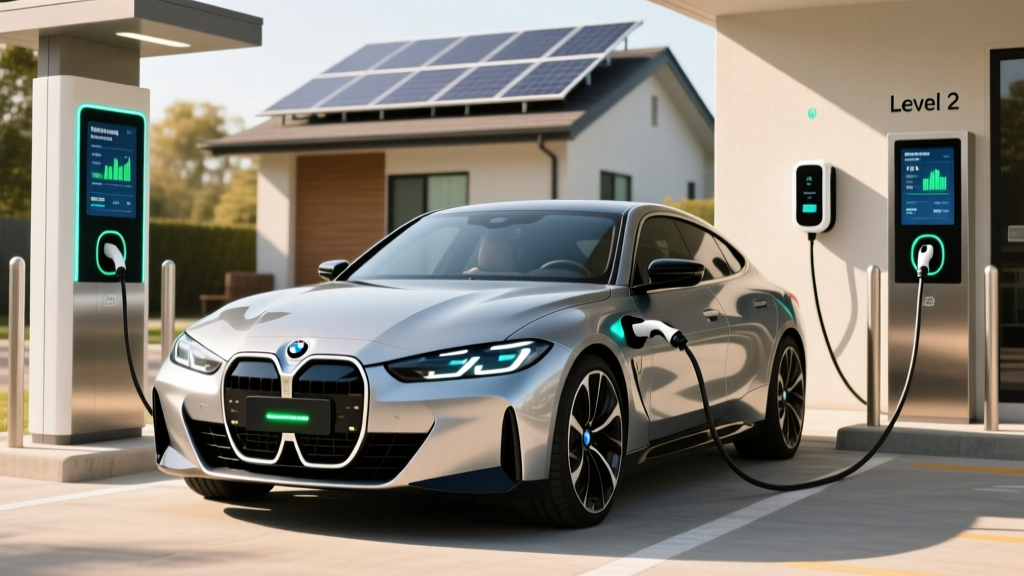
But free public charging is only one piece of the ownership puzzle. Most BMW EV owners do 80%+ of their charging at home on a Level 2 circuit, where electricity costs a fraction of public DC fast-charging rates. This guide walks through every charging layer — from the complimentary network perks to the real cost of installing a 240V home charger, connector compatibility shifts (NACS adoption), and exactly what you'll pay per mile compared to a gas-powered 3 Series or X5.
Charging Levels: Speeds, Range Added, and Real-World Times
Every BMW EV sold in 2026 supports three charging tiers. Here's what each actually delivers in practice — not just peak marketing numbers.
| Level | Voltage / Amps | Power (kW) | Miles of Range / Hour | Best For |
|---|---|---|---|---|
| Level 1 | 120V / 12A | ~1.4 kW | 3–5 mi/hr | Overnight trickle, PHEVs, emergencies |
| Level 2 | 240V / 32–48A | 7.7–11.5 kW | 22–38 mi/hr | Daily home charging, workplace |
| DC Fast | 400–800V DC | 50–205 kW (peak) | 150–600+ mi/hr (at peak) | Road trips, quick top-ups |
Real Charging Times for Current BMW EVs
BMW's 2026 lineup spans a wide battery-capacity range. Here are 10–80% DC fast-charge times based on manufacturer data and independent testing. Note that charging curves taper significantly above 80% — the last 20% can take as long as the first 60%.
- BMW i4 eDrive40 (83.9 kWh usable, NMC): Peak 205 kW at 800V architecture — 10–80% in ~31 minutes on a 350 kW Electrify America stall. Sustained average closer to 130–140 kW.
- BMW i5 eDrive40 (84.3 kWh usable, NMC): Peak 205 kW — 10–80% in ~30 minutes. Real-world highway preconditioning is critical; without it, expect 40+ minutes in cold weather.
- BMW iX xDrive50 (111.5 kWh usable, NMC): Peak 200 kW — 10–80% in ~35 minutes. The larger battery absorbs high power longer, but the curve still drops to ~60 kW by 85% SoC.
- BMW i7 eDrive50 (105.7 kWh usable, NMC): Peak 195 kW — 10–80% in ~34 minutes.
On a Level 2 home charger at 11 kW (48A), any of these batteries will refill from 10–100% overnight in 8–11 hours — which is exactly the use case home charging is designed for.
Home Charger Installation: Electrical Requirements and Real Costs
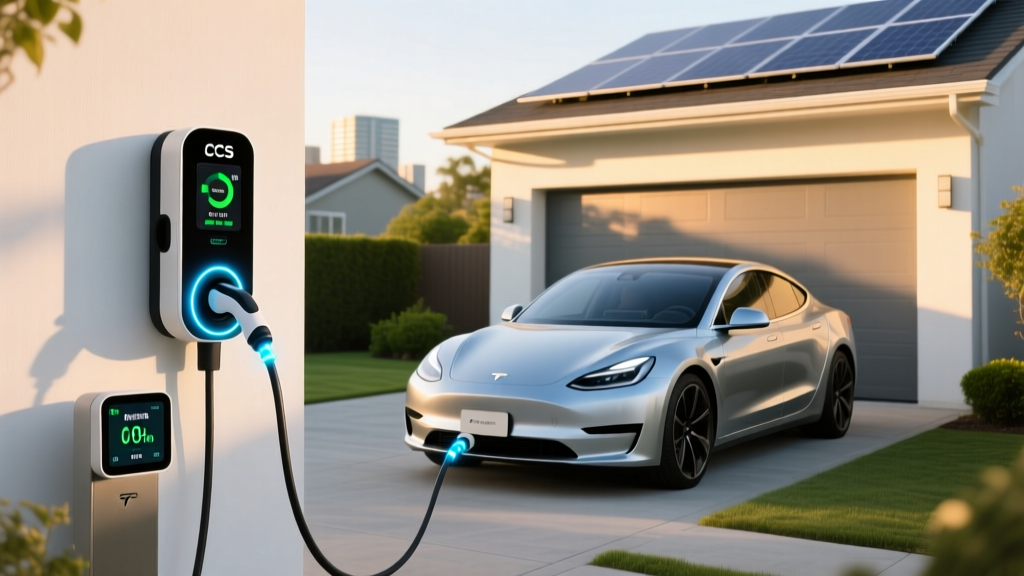
Installing a dedicated Level 2 home charger is the single most impactful upgrade for BMW EV ownership. Here's what the electrical work actually involves.
Circuit and Panel Requirements
A 48-amp Level 2 charger requires a dedicated 60-amp circuit (NEC code mandates circuits be rated at 125% of continuous load: 48A × 1.25 = 60A). This means:
- Wire: 6 AWG copper (or 4 AWG aluminum) run from your panel to the charger location.
- Breaker: A dedicated 60A double-pole breaker occupying two slots in your panel.
- Panel capacity: Your main service panel must have both physical space (two adjacent slots) and sufficient amperage headroom. A 200A panel in a home with electric HVAC, dryer, range, and water heater may be near capacity — an electrician will perform a load calculation per NEC Article 220.
- Panel upgrade: If your home has a 100A or 150A main panel (common in homes built before 2000), upgrading to 200A typically costs $1,500–$3,500. In rare cases, a 400A service or a sub-panel may be needed.
- Permit: Most jurisdictions require an electrical permit ($50–$300) and a post-install inspection.
| Component | Typical Cost Range | Notes |
|---|---|---|
| Level 2 Charger (hardware) | $350–$750 | 40A–48A smart chargers |
| Electrician labor (standard install) | $400–$1,200 | Depends on panel-to-charger distance, wall type, conduit run |
| Electrical permit & inspection | $50–$300 | Varies by municipality |
| Panel upgrade (if needed) | $1,500–$3,500 | 100A→200A service upgrade |
| Total (no panel upgrade) | $800–$2,250 | Most common scenario for 200A-panel homes |
| Total (with panel upgrade) | $2,300–$5,750 | Older homes or high-load households |
Safety and Code Considerations
Every compliant Level 2 installation should include:
- Dedicated circuit: Never share the EV charger circuit with other appliances. This prevents nuisance tripping and fire risk.
- GFCI protection: NEC 2020 and later require GFCI protection for outdoor receptacles and many indoor EV charging installations. Hardwired chargers often integrate GFCI internally; plug-in units (NEMA 14-50) may require a GFCI breaker, which adds $50–$100.
- Outdoor rating: If mounting outside, the charger must be NEMA 4 or NEMA 4X rated. All recommended units below meet this standard.
- Disconnect: Some jurisdictions require a local disconnect switch within sight of the charger — your electrician will know local code.
- Cable management: A 25-foot cable is standard; plan the mount location so the cable reaches your BMW's charge port (driver-side rear quarter panel on i4/i5, driver-side front fender on iX/i7) without stretching across a walkway.
Connector Compatibility: CCS1, NACS, and BMW's Transition
The North American connector landscape shifted dramatically in 2024–2025 when BMW committed to adopting the NACS (North American Charging Standard, aka Tesla's connector) on new vehicles. Here's where things stand for 2026:
| BMW Model (2026) | Native Connector | CCS1 Access | Tesla Supercharger Access |
|---|---|---|---|
| i4 (all trims) | CCS1 | Native — plug directly in | Via BMW-approved CCS-to-NACS adapter |
| i5 (all trims) | CCS1 | Native — plug directly in | Via BMW-approved CCS-to-NACS adapter |
| iX (all trims) | CCS1 | Native — plug directly in | Via BMW-approved CCS-to-NACS adapter |
| i7 (all trims) | CCS1 | Native — plug directly in | Via BMW-approved CCS-to-NACS adapter |
| Neue Klasse iX3 (upcoming) | NACS (expected) | Via NACS-to-CCS adapter | Native — plug directly in |
Adapter reality check: BMW has offered or approved CCS-to-NACS adapters (typically $200–$250) for current CCS1-equipped models. These adapters enable access to Tesla Supercharger V3/V4 stalls (up to 250 kW). However, adapter use may slightly reduce peak charge speed due to communication handshake overhead — expect ~5–10% longer 10–80% sessions vs native CCS on a comparable-speed charger. Always use the BMW-approved adapter; third-party units may not support the full power negotiation or may void warranty coverage on the charge port.
CHAdeMO is effectively dead for new passenger EVs in North America. No current BMW uses it, and no adapter is needed or recommended.
Level 2 Charger Recommendations for BMW EVs
BMW's onboard charger accepts up to 11 kW AC (some trims 7.4 kW). Pairing it with a quality Level 2 unit maximizes overnight convenience. Here are three proven picks for 2026:
ChargePoint Home Flex
- Power: Up to 12 kW (50A) — configurable down to 16A
- Connector: CCS1 (J1772 + CCS combo)
- Cable: 23 ft
- Smart features: Wi-Fi, scheduling, energy tracking, Alexa
- Outdoor rating: NEMA 4
- Price: ~$550–$650
- Best for: Flexible amperage if your panel is tight on capacity
Emporia Level 2 EV Charger
- Power: Up to 11.5 kW (48A)
- Connector: CCS1 (J1772 + CCS combo)
- Cable: 24 ft
- Smart features: Wi-Fi, solar integration, energy monitoring, scheduling
- Outdoor rating: NEMA 4
- Price: ~$350–$400
- Best for: Budget-conscious owners, solar-panel households
Tesla Wall Connector (with adapter)
- Power: Up to 11.5 kW (48A)
- Connector: NACS native — requires CCS-to-NACS adapter for current BMWs
- Cable: 24 ft
- Smart features: Wi-Fi, power sharing (multiple units), OTA updates
- Outdoor rating: NEMA 4X
- Price: ~$425 (charger) + ~$200–$250 (adapter)
- Best for: Households with both a Tesla and a BMW — future-proof for NACS-native BMWs
For most BMW EV owners in 2026, the ChargePoint Home Flex at 48A is the sweet spot: native CCS1 plug (no adapter hassle), configurable amperage if your electrician recommends a lower circuit, and reliable app-based scheduling to charge during off-peak utility hours.
Cost to Charge: Home vs. Public vs. Gas — The Real Math
"BMW free charging" sounds great, but how does the economics shake out once the complimentary period ends? Let's run the numbers using a BMW i5 eDrive40 (84.3 kWh battery, EPA-estimated 295 miles of range, ~3.5 mi/kWh efficiency).
| Scenario | Rate ($/kWh) | Cost for Full Charge (84.3 kWh) | Cost Per Mile |
|---|---|---|---|
| Home — off-peak (utility TOU rate) | $0.08–$0.14 | $6.74–$11.80 | $0.02–$0.04 |
| Home — standard residential rate | $0.14–$0.20 | $11.80–$16.86 | $0.04–$0.06 |
| Public Level 2 (ChargePoint, etc.) | $0.20–$0.35 | $16.86–$29.51 | $0.06–$0.10 |
| DC Fast Charging (Electrify America) | $0.35–$0.56 | $29.51–$47.21 | $0.10–$0.16 |
| Gasoline equivalent (BMW 530i, 28 MPG, $3.50/gal) | — | — | $0.125 |
The takeaway: home charging on off-peak rates is 3–6× cheaper per mile than gasoline. Even public DC fast charging at peak rates is roughly on par with gas — but that's the scenario BMW's complimentary charging program covers, making your road-trip miles effectively free during the promotional window.
For context on EPA efficiency data for the BMW i5, the combined MPGe rating is approximately 97 MPGe, translating to roughly 29 kWh/100 miles. Your actual efficiency will vary with temperature (expect 15–25% range loss below 32°F), highway speed (75+ mph significantly increases consumption), and terrain.
Maximizing BMW's Free Charging Program
If your BMW purchase includes complimentary Electrify America charging, here's how to extract maximum value:
- Download the EA app and link your BMW VIN before your first session. Activation can take 24–72 hours after dealer enrollment.
- Precondition your battery before arriving at a DC fast charger. Use the BMW iDrive navigation to route to the charger — this triggers thermal preconditioning automatically, warming the NMC battery to its optimal charge temperature (~77–95°F). Without preconditioning, a cold battery may accept only 50–80 kW instead of the rated 200+ kW, doubling your session time.
- Charge from 10–80%, not 0–100%. The charge curve tapers hard above 80%. Going from 80–100% at a DC fast charger can add 20–30 minutes for just ~60 miles of range — a poor use of your free kWh allotment and your time.
- Plan road trips around EA corridors. Electrify America has the densest highway coverage in the US, but rural stretches (parts of I-90, I-10 west Texas, I-80 Nebraska) remain sparse. Use PlugShare or A Better Route Planner to map sessions.
- Track your complimentary balance. BMW's free-charging allotment is typically tracked in kWh, not dollars. Monitor it in the EA app so you're not surprised when it runs out mid-trip.
Frequently Asked Questions
How much does it cost to install a home EV charger?
For most homes with a 200A electrical panel, a professional Level 2 installation (48A charger, 60A dedicated circuit) costs $800–$2,250 including hardware, electrician labor, and permit. If your home needs a panel upgrade from 100A to 200A, add $1,500–$3,500. Always get a load calculation from a licensed electrician before committing.
How fast will each charging level add range?
Level 1 (120V) adds 3–5 miles per hour — fine for PHEVs, impractical for a 295-mile BMW i5. Level 2 (240V, 48A) adds 22–38 miles per hour, fully recharging overnight. DC fast charging at 200 kW can add 150+ miles in 10 minutes at peak, but sustained rates average lower due to the charge curve taper.
Which connector is compatible with my BMW EV?
All current 2026 BMW EVs (i4, i5, i7, iX) use CCS1 natively. For Tesla Supercharger access, you'll need a BMW-approved CCS-to-NACS adapter (~$200–$250). The upcoming Neue Klasse iX3 is expected to ship with NACS natively. CHAdeMO is not compatible with any current BMW.
How much does charging cost per mile vs. gas?
Home off-peak charging costs $0.02–$0.04 per mile in a BMW i5 — roughly 3–5× cheaper than a gas-powered 530i at $0.125/mile. Public DC fast charging at $0.48/kWh averages $0.12–$0.16/mile, comparable to gasoline. BMW's free charging program eliminates this cost during the promotional period for DC sessions.
What electrical upgrades might I need for a home charger?
The most common upgrade is a panel capacity increase from 100A or 150A to 200A ($1,500–$3,500). You'll also need two open breaker slots, a 60A double-pole breaker, and a dedicated 6 AWG wire run. Homes with existing 200A+ service and available slots typically need no panel upgrade. A licensed electrician's load calculation is the definitive answer.
Does BMW's free charging cover Level 2 public chargers too?
Typically, no. BMW's complimentary charging programs almost exclusively cover DC fast charging on partner networks (primarily Electrify America). Public Level 2 chargers at malls, workplaces, and parking garages are billed at the station operator's standard rate. Always confirm the specific terms of your vehicle's promotion.
Can I use a Tesla Supercharger with my CCS1 BMW?
Yes, with a BMW-approved CCS-to-NACS adapter. Tesla has opened many Supercharger V3 (250 kW) and V4 stalls to non-Tesla EVs via the NACS standard. Expect slightly reduced peak speeds due to adapter communication overhead — roughly 5–10% longer sessions compared to native CCS on equivalent hardware.