If you own a BMW i4, iX, i5, or i7, you've probably noticed something frustrating: the Tesla Supercharger network is the largest and most reliable DC fast-charging ecosystem in North America, and for years, your BMW's CCS1 port locked you out. That's changing fast. By 2025, BMW began equipping new models with the North American Charging Standard (NACS) port, and for existing CCS-equipped BMWs, the OEM-released BMW adapter for Tesla charger access has become a critical accessory. This guide breaks down exactly how the adapter works, what charging speeds you can expect, how to set up home charging, and what it all costs per mile.
Why BMW Owners Need a Tesla Charger Adapter in 2026
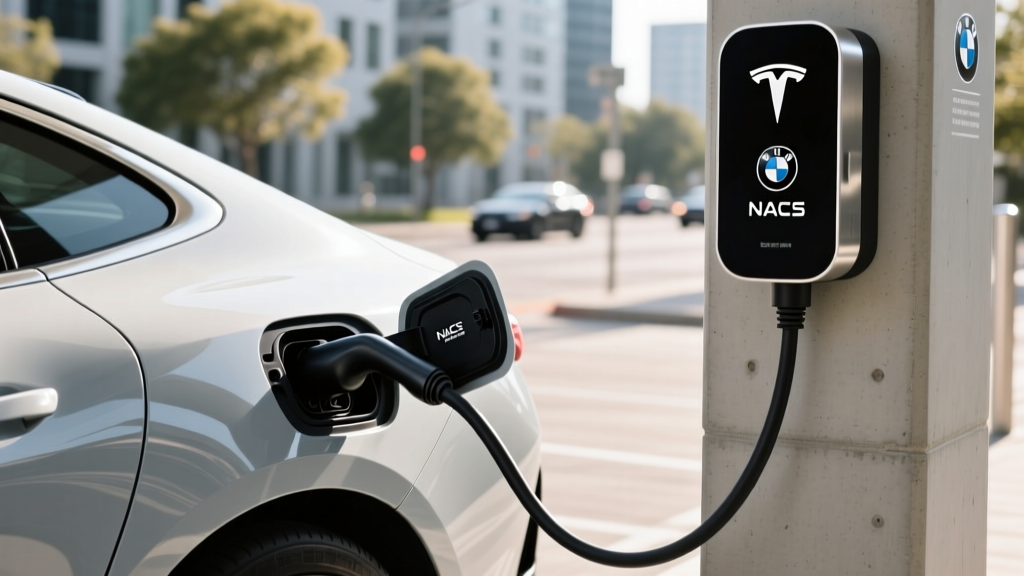
BMW's transition from CCS1 to NACS follows the broader industry shift that began when Ford and GM adopted Tesla's connector in late 2023. BMW confirmed NACS adoption for its new EV lineup starting with the 2025 model year, but hundreds of thousands of CCS-equipped BMWs — including the i4 (2022–2024), iX (2022–2024), i5 (2024 CCS models), and i7 (2023–2024) — remain on the road with the older connector.
The Tesla Supercharger network operates over 6,000 stations and 65,000+ individual chargers across the U.S. and Canada, many offering 150 kW (V2) or 250 kW (V3/V4) peak output. For BMW owners, the OEM BMW NACS-to-CCS adapter unlocks access to this network at DC fast-charging speeds, supplementing the Electrify America, EVgo, and ChargePoint networks that BMW's Connected Charging system already supports.
Here's the critical detail: the adapter works at Tesla Superchargers and at any NACS-equipped Level 2 destination charger. It does not, however, convert a Tesla home wall connector to CCS without the adapter physically attached to your car's port.
Charging Levels Explained: Speeds, kW, and Miles Per Hour
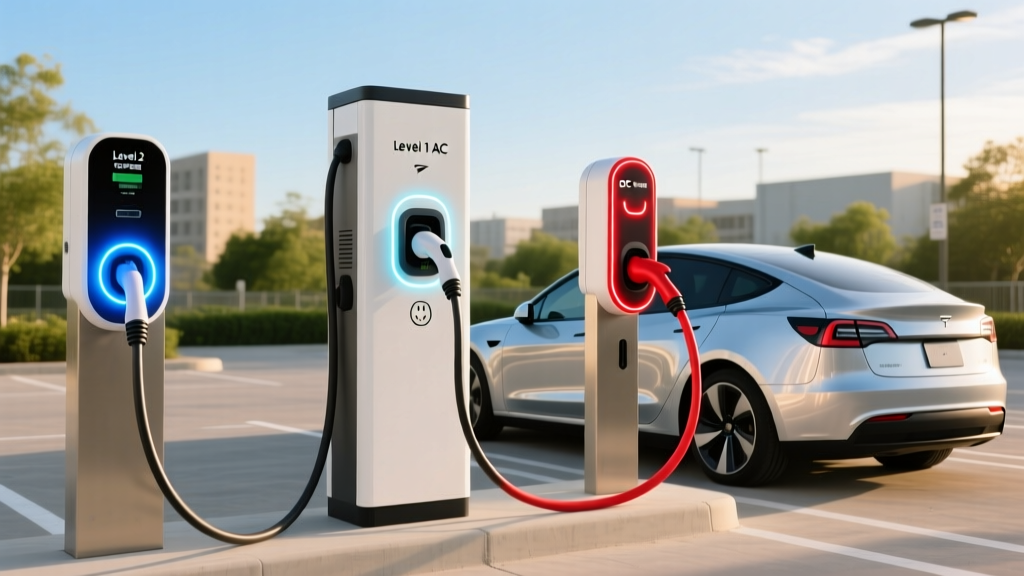
Before we get into adapter logistics, let's nail down the three charging tiers every EV owner must understand. Power is measured in kW (kilowatts) — the rate of energy flow — while battery capacity is measured in kWh (kilowatt-hours) — the total energy stored. Mixing these up is the most common mistake in EV ownership discussions.
| Level | Voltage / Amps | Power (kW) | Miles of Range Added Per Hour | Typical Use Case |
|---|---|---|---|---|
| Level 1 (120V) | 120V / 12A | ~1.4 kW | 3–5 mi/hr | Emergency / trickle; overnight top-up |
| Level 2 (240V) | 240V / 32–48A | 7.7–11.5 kW | 25–44 mi/hr | Home daily charging; workplace; destination |
| DC Fast Charge | 400–800V DC | 50–250 kW (peak) | 150–650+ mi/hr (peak rate) | Road trips; rapid top-up; Supercharger / EA / EVgo |
For a BMW i4 eDrive40 (81.5 kWh usable battery, EPA 301 miles), a full Level 2 session from 10–80% SoC takes roughly 7.5 hours at 7.7 kW or about 5 hours at 11.5 kW. On a 200 kW DC fast charger, the same 10–80% session drops to approximately 31 minutes, though the charge curve tapers significantly above 80% — a physics reality we'll address below.
The BMW Adapter for Tesla Charger Access: Compatibility and How It Works
BMW's official NACS-to-CCS1 adapter is a compact, roughly 1.5 lb unit that plugs into your BMW's CCS port on one end and accepts a NACS (Tesla-style) connector on the other. It supports both DC fast charging (up to the adapter's rated throughput) and Level 2 AC charging.
| BMW Model | Model Years | Native Port | Needs BMW NACS Adapter? | Tesla Supercharger Access |
|---|---|---|---|---|
| BMW i4 | 2022–2024 | CCS1 | Yes | With adapter only |
| BMW i4 (refreshed) | 2025–2026 | NACS | No | Native |
| BMW iX | 2022–2024 | CCS1 | Yes | With adapter only |
| BMW iX (Neue Klasse) | 2026+ | NACS | No | Native |
| BMW i5 | 2024 (CCS) | CCS1 | Yes | With adapter only |
| BMW i5 | 2025–2026 | NACS | No | Native |
| BMW i7 | 2023–2024 | CCS1 | Yes | With adapter only |
| BMW i7 | 2025–2026 | NACS | No | Native |
A few practical notes from real-world use:
- Adapter throughput: BMW's OEM adapter is rated for DC fast charging up to approximately 200 kW. On a 250 kW V3 Supercharger, your BMW i4 will likely peak around 200–205 kW before the adapter's thermal limit engages a taper. On a 150 kW V2 Supercharger, you'll see the full 150 kW.
- Plug-and-charge: Tesla's Supercharger plug-and-charge authentication works with the BMW adapter once you've linked your BMW VIN in the Tesla app. No RFID fumbling required at the stall.
- Level 2 destination use: The adapter also works at NACS-equipped Level 2 chargers (Tesla Wall Connectors at hotels, restaurants, etc.), charging at up to 11.5 kW / 48A — your BMW's onboard charger limit.
- CCS networks still work: You don't lose Electrify America or EVgo CCS access. Just remove the adapter and plug directly into the CCS cable.
Real-World DC Fast Charging: What to Expect at a Supercharger
Peak kW ratings on spec sheets don't tell the whole story. A DC fast-charging session follows a charge curve: power ramps up quickly from low SoC, peaks in the 10–40% range, then tapers progressively as the battery management system (BMS) protects cell health by reducing current. Above 80%, charging slows dramatically — often to under 50 kW — which is why every manufacturer quotes 10–80% times rather than 0–100%.
Here's what BMW owners can realistically expect at Tesla Superchargers with the adapter:
| BMW Model | Usable Battery (kWh) | Peak Charge Rate (kW) | 10–80% Time (V3 / 250 kW stall) | 10–80% Time (V2 / 150 kW stall) |
|---|---|---|---|---|
| i4 eDrive40 | 81.5 | ~205 (adapter-limited) | ~31 min | ~38 min |
| i4 M50 | 81.5 | ~205 | ~31 min | ~38 min |
| iX xDrive50 | 105.2 | ~200 | ~35 min | ~45 min |
| i5 eDrive40 | 81.2 | ~205 | ~30 min | ~37 min |
| i7 xDrive60 | 101.7 | ~195 | ~34 min | ~44 min |
Home EV Charger Installation: Requirements, Costs, and Electrical Upgrades
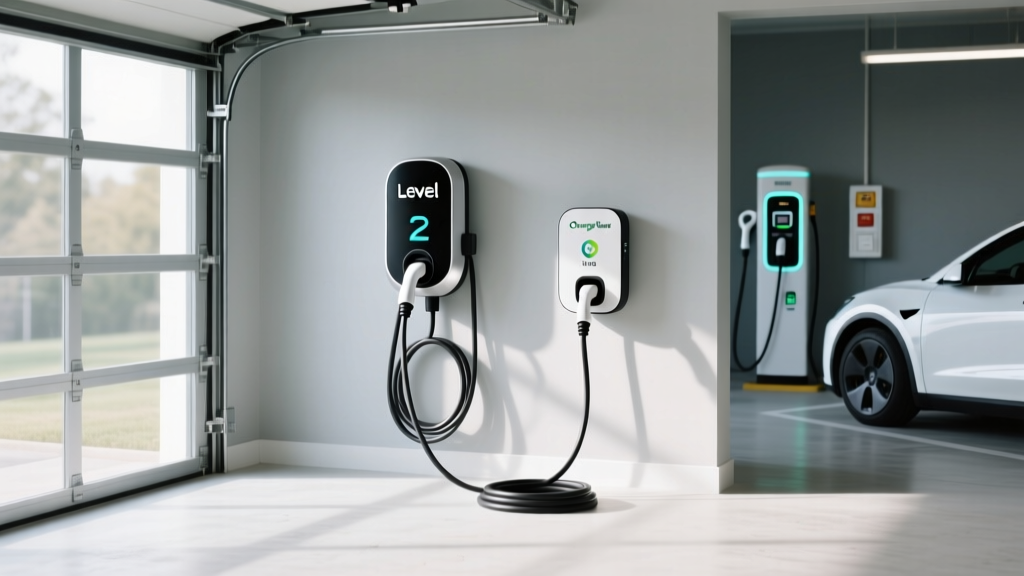
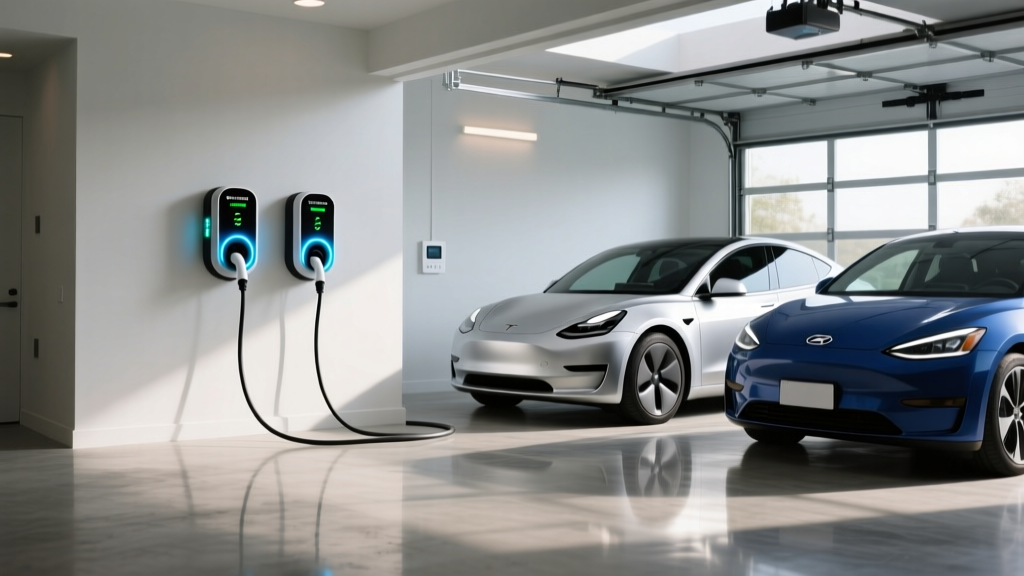
Most BMW EV owners will do 80% or more of their charging at home on a Level 2 (240V) circuit. Here's what a proper installation actually requires — and what it costs.
Electrical Requirements
A Level 2 home charger for a BMW EV needs:
- 240V dedicated circuit on your main electrical panel
- Breaker amperage: 40A breaker for a 32A charger, or 60A breaker for a 48A charger (National Electrical Code requires the breaker to be rated at 125% of the continuous load)
- Wire gauge: Typically 6 AWG copper for a 48A/60A circuit, or 8 AWG for a 32A/40A circuit — your electrician will determine exact spec based on run length
- Hardwired vs. plug: Hardwired installations (no plug) are preferred for 48A chargers and avoid the NEMA 14-50 receptacle, which can loosen over time with daily plug/unplug cycles. If using a NEMA 14-50 outlet, it must be a commercial-grade, EV-rated receptacle (not a standard dryer outlet)
Panel Upgrade Reality
This is the cost many homeowners overlook. If your home has a 100A main electrical panel — common in homes built before 1990 — adding a 60A EV circuit may exceed your panel's capacity, especially if you also run electric heat, an electric dryer, and an electric range. A panel upgrade to 200A typically costs $1,500–$3,000 depending on your utility and municipality. Homes with existing 200A panels rarely need an upgrade for a single Level 2 charger.
Installation Cost Breakdown
| Component | Simple Install (panel nearby, no upgrade) | Complex Install (long run, panel upgrade) |
|---|---|---|
| Level 2 Charger (hardware) | $400–$700 | $400–$700 |
| Electrician labor (2–4 hrs simple / 6–10 hrs complex) | $400–$800 | $1,200–$2,500 |
| Electrical permit | $50–$150 | $50–$150 |
| Panel upgrade (if needed) | $0 | $1,500–$3,000 |
| Conduit, wire, mounting hardware | $50–$150 | $200–$500 |
| Total Estimated Cost | $900–$1,800 | $3,350–$6,850 |
Some utility companies offer rebates of $250–$500 for Level 2 charger installation, and certain states provide additional incentives. Check your local utility's EV program page before scheduling work.
Level 2 Charger Equipment Recommendations for BMW EVs
Your BMW's onboard charger accepts up to 11 kW (single-phase, 48A) on most current models. Here are proven Level 2 units that pair well with BMW EVs:
BMW Wallbox (OEM)
- Power: 11.5 kW / 48A
- Connector: NACS (2025+ models) or J1772 (2022–2024 models with CCS port)
- Cable: 25 ft
- Smart features: BMW Connected app integration, scheduled charging, solar optimization
- Price: ~$600–$700
- Best for: Owners who want seamless BMW app integration
ChargePoint Home Flex
- Power: Up to 12 kW / 50A (configurable 16–50A)
- Connector: J1772 (NACS version available 2025+)
- Cable: 23 ft
- Smart features: ChargePoint app, Alexa, energy tracking, flexible amperage to match your circuit
- Price: ~$550–$700
- Best for: Flexibility across circuit sizes and multi-EV households
Tesla Wall Connector (with BMW adapter)
- Power: 11.5 kW / 48A
- Connector: NACS (native)
- Cable: 24 ft
- Smart features: Wi-Fi updates, power sharing (multiple units on one circuit), load management
- Price: ~$425–$475
- Best for: Households with both a Tesla and a BMW (NACS model or with adapter)
Emporia Vue + EV Charger
- Power: Up to 11.5 kW / 48A
- Connector: J1772 or NACS
- Cable: 24 ft
- Smart features: Whole-home energy monitoring integration, solar-aware scheduling, V2H-ready (future)
- Price: ~$400–$500 (charger only; monitor sold separately)
- Best for: Solar owners and energy-optimization enthusiasts
Charging Cost Per Mile: BMW EV vs. Gas Car
Let's run the numbers that actually matter: what you'll pay per mile to drive your BMW EV, across different charging scenarios, compared to a comparable gas-powered BMW.
| Scenario | Rate | BMW i4 Cost/Mile | BMW 430i Cost/Mile (28 MPG combined, $3.50/gal) |
|---|---|---|---|
| Home Level 2 (off-peak utility rate) | $0.09/kWh | $0.027 | $0.125 |
| Home Level 2 (standard rate) | $0.15/kWh | $0.045 | $0.125 |
| Public Level 2 (ChargePoint, etc.) | $0.30/kWh | $0.090 | $0.125 |
| DC Fast Charge (Tesla Supercharger avg.) | $0.35/kWh | $0.105 | $0.125 |
| DC Fast Charge (Electrify America peak) | $0.48/kWh | $0.144 | $0.125 |
The BMW i4 eDrive40 achieves approximately 3.0–3.3 kWh/mile (EPA combined). At home off-peak rates, you're paying roughly $0.03 per mile — about 76% less than the gas 430i. Even at DC fast-charging rates, you're typically still saving money versus gas, unless you're paying peak Electrify America rates in California, where DC charging can briefly exceed gas cost per mile.
Over 15,000 miles per year, home charging at $0.12/kWh saves a BMW i4 owner roughly $1,350 annually versus fueling a 430i. Over a 5-year ownership period, that's $6,750 in fuel savings — before accounting for reduced maintenance (no oil changes, fewer brake replacements thanks to regenerative braking).
Safety, Code Compliance, and Installation Best Practices
EV charging involves sustained high-current draw for hours at a time. This is fundamentally different from a dryer or oven that cycles on and off. Here's what keeps your installation safe and code-compliant:
- Dedicated circuit: Your Level 2 charger must have its own dedicated breaker — never shared with another appliance. This is NEC Article 625 compliance.
- GFCI protection: The 2020 NEC requires GFCI protection for all receptacles used for EV charging. Hardwired installations are exempt from this requirement, which is one reason many electricians prefer hardwired setups — fewer nuisance trips.
- Outdoor rating: If your charger is installed outdoors (garage exterior, driveway), the unit must carry a NEMA 4 or NEMA 4X weather rating. All chargers listed above meet this standard.
- Cable management: A retractable cable organizer prevents tripping hazards and protects the cable from UV degradation and physical damage.
- Permit and inspection: Most municipalities require an electrical permit for a new 240V circuit. Your electrician pulls the permit, and a city/county inspector verifies the work. Skipping this step can void your homeowner's insurance in the event of an electrical fire.
- Load management: If your panel is near capacity, consider a smart charger with load-management capability (like the Emporia or Tesla Wall Connector with power sharing). These units dynamically reduce charging current when other household loads spike, avoiding panel overload without requiring a costly upgrade.
BMW Adapter for Tesla Charger: Frequently Asked Questions
How much does the BMW NACS adapter cost?
BMW's official NACS-to-CCS1 adapter is priced at approximately $200–$300 through BMW dealerships and the BMW accessories store. Third-party adapters exist at lower prices, but BMW recommends using only the OEM unit to ensure thermal management compatibility and warranty coverage. Using an uncertified adapter could potentially affect your high-voltage battery warranty in the event of a charging-related fault.
Can I use a Tesla Wall Connector at home with my CCS-equipped BMW?
Yes — with the BMW NACS adapter attached to your car's CCS port, you can plug in a Tesla Wall Connector's NACS cable and charge at up to 11.5 kW (48A). This is a practical solution for households that own both a Tesla and a BMW, since the Tesla Wall Connector is one of the most affordable high-quality Level 2 units at ~$425.
Will the BMW adapter work at non-Tesla NACS chargers?
Yes. As more networks (ChargePoint, EVgo, Electrify America) deploy NACS-equipped stalls alongside CCS, the adapter works at any NACS charger — not just Tesla Superchargers. By late 2026, most major networks are expected to have NACS connectors available at new installations.
Does the adapter reduce charging speed?
Minimally. The adapter introduces a small additional connection point, which can add marginal electrical resistance. In practice, the adapter is rated for ~200 kW DC throughput, which means on a 250 kW V3 Supercharger, your BMW may peak at ~200–205 kW instead of the full 250 kW. On 150 kW V2 Superchargers and all Level 2 chargers, you'll see no speed reduction at all. For the BMW iX and i7, which have native peak charge rates around 195–200 kW anyway, the adapter's limit is essentially a non-factor.
What electrical upgrades might I need for home charging?
The most common upgrade is a panel upgrade from 100A to 200A ($1,500–$3,000) if your existing panel can't accommodate a new 60A breaker. Other possible upgrades include replacing outdated wiring (aluminum to copper), adding a sub-panel in a detached garage ($800–$1,500), or upgrading your utility service drop if your home's total load exceeds what the utility feed can supply. A licensed electrician can perform a load calculation during an initial consultation — typically free or under $150.
How fast will each charging level add range to my BMW?
Level 1 (120V standard outlet): 3–5 miles per hour — suitable only for overnight trickle or emergency use. Level 2 (240V home charger at 48A): 35–44 miles per hour — fully replenishes a daily commute overnight. DC Fast Charging (200 kW at a Supercharger): adds roughly 150–180 miles in a 20-minute session. For context, a BMW i4 owner who drives 40 miles round-trip daily needs only about 1 hour of Level 2 charging per day to fully replace consumed energy.
Is the BMW high-voltage battery warranty affected by Supercharger use?
No. BMW's high-voltage battery warranty (8 years / 100,000 miles, with a 70% capacity retention threshold) covers degradation regardless of charging network. Using the BMW OEM adapter at Tesla Superchargers does not void warranty coverage. However, consistently charging to 100% or regularly using DC fast charging exclusively (never Level 2) may accelerate degradation — a characteristic of all lithium-ion batteries, not specific to any network. BMW recommends setting a daily charge limit of 80–90% and using DC fast charging primarily for road trips.
Sources: fueleconomy.gov for EPA range and efficiency data; BMW USA press materials and spec sheets for model-year connector and battery specifications; IRS.gov for current federal EV incentive rules. Electrical installation guidance based on NEC Article 625. All pricing reflects 2025–2026 market rates and is subject to regional variation. Consult a licensed electrician for site-specific installation requirements and a tax professional for incentive eligibility.