If you own a Ford Mustang Mach-E, F-150 Lightning, or are eyeing the next-generation Ford EV lineup, you've likely encountered the term BlueOval Charging Network. Unlike a single branded charging network like Tesla's Superchargers, Ford's BlueOval Charge ecosystem is an aggregator — stitching together home charging hardware, public DC fast-charging partners, and the FordPass app into one unified experience. But what does that actually mean for your daily charging routine, your wallet, and your home electrical panel?
This guide breaks down the BlueOval Charging Network from the ground up: home Level 2 installation realities (including panel upgrades), public DC fast-charging access through Ford's partners, connector compatibility as the industry shifts to NACS, and hard numbers on what charging actually costs per mile in 2026.
What the BlueOval Charging Network Actually Is
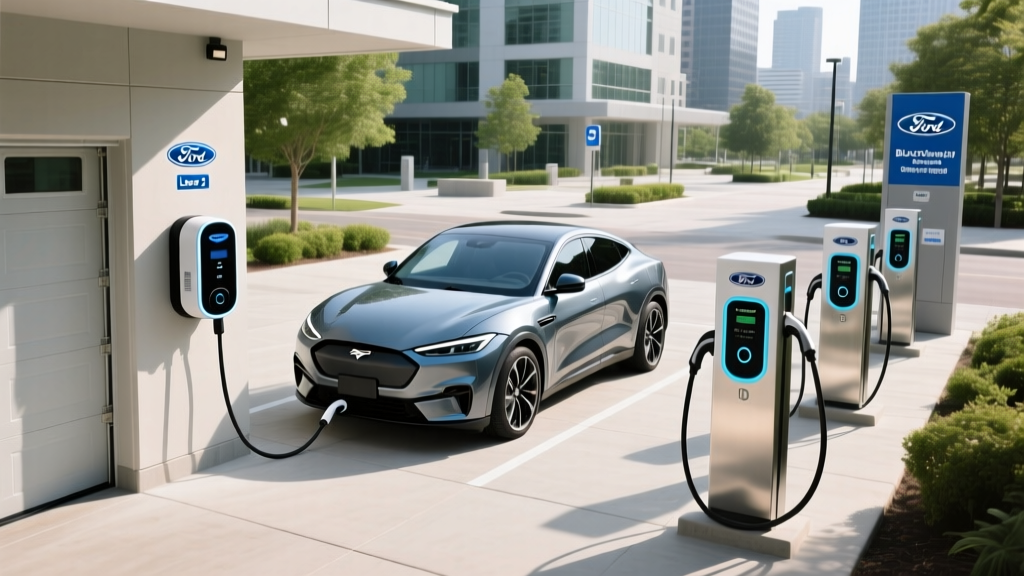
The BlueOval Charge network is Ford's branded charging ecosystem that integrates three layers:
- Home charging: Ford's Connected Charge Station and Mobile Power Cord, managed through FordPass
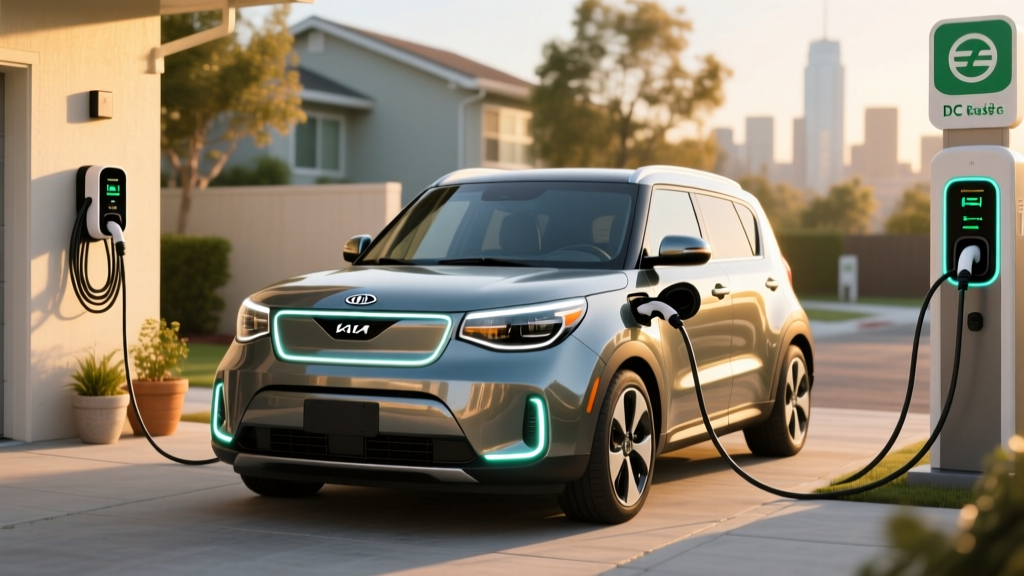
- Public DC fast charging: Access to over 100,000 public chargers through partners including Electrify America, EVgo, and the Tesla Supercharger network (via Ford's NACS adapter)
- Software layer: Route planning, charger availability, payment processing, and charge-session tracking all funneled through the FordPass app or the vehicle's SYNC infotainment system
Critically, Ford does not own or operate public charging stations the way Tesla does. Instead, BlueOval serves as a routing and billing aggregator — similar to how a travel app aggregates flights. This means your real-world charging experience at a public station depends on the underlying network's reliability, not Ford's. The advantage is breadth: BlueOval gives you access to more charging points than any single network. The disadvantage is that you're still subject to Electrify America's uptime or EVgo's queue times.
Since mid-2024, Ford EVs have gained access to Tesla's Supercharger network via a NACS adapter, dramatically expanding the BlueOval ecosystem's reach. As of 2026, Ford vehicles ship from the factory with the NACS charge port, eliminating the adapter requirement for new buyers.
Charging Levels Explained: Speeds, kW, and Real-World Range Added
Before discussing BlueOval hardware, let's anchor the three charging levels with exact figures. A common point of confusion is kW versus kWh: kW (kilowatts) measures power — how fast energy flows into your battery. kWh (kilowatt-hours) measures energy capacity — how much the battery holds. Think of kW as the width of a hose and kWh as the size of the bucket.
| Level | Voltage | Power (kW) | Miles of Range Added Per Hour | Typical Use Case |
|---|---|---|---|---|
| Level 1 | 120V AC | 1.0–1.4 kW | 3–5 mi/hr | Overnight trickle; PHEVs; emergency top-ups |
| Level 2 | 240V AC | 7.2–19.2 kW | 20–60 mi/hr | Home daily charging; workplace; destination |
| DC Fast Charge | 400–800V DC | 50–350 kW | 150–1,200+ mi/hr (peak) | Road trips; rapid top-ups (10–80% in 15–45 min) |
For context, a Ford Mustang Mach-E with the Extended Range battery (91 kWh usable, EPA 320 mi) charging on a 48-amp Level 2 circuit at 11.5 kW will add roughly 37 miles of range per hour — enough to fully replenish overnight. On a 150 kW DC fast charger, that same Mach-E can go from 10–80% in approximately 38 minutes, though the charge curve tapers significantly above 80% SoC.
Real-World Range Note: EPA range estimates assume mixed driving at moderate temperatures. Expect 15–30% range reduction in sustained highway driving at 75+ mph, and 20–40% reduction in sub-freezing winter conditions due to cabin heating and reduced battery efficiency. A Mach-E Extended Range rated at 320 mi EPA may deliver 240–260 mi on a cold-weather road trip.
Home Charging Installation: Costs, Electrical Requirements, and Panel Gotchas
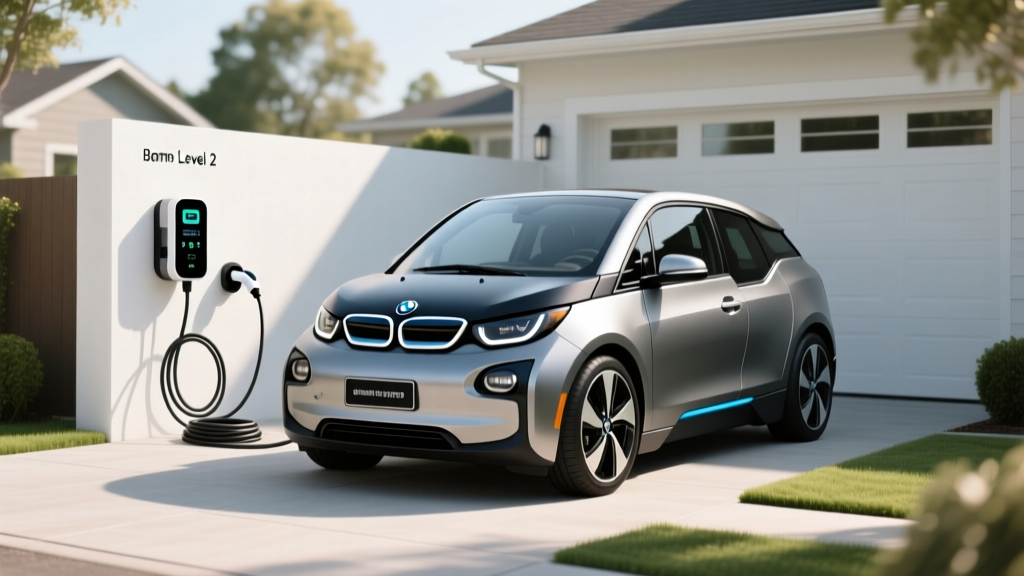
Ford offers two primary home charging solutions under the BlueOval umbrella:
- Ford Connected Charge Station (48-amp, hardwired): Delivers up to 11.5 kW on a 60-amp dedicated circuit. Wall-mounted, Wi-Fi enabled, with a 25-foot cable. MSRP approximately $700–$800 for the unit.
- Ford Mobile Power Cord (30-amp / 12-amp): A portable unit that plugs into a 240V NEMA 14-50 outlet (30A, ~7.2 kW) or a standard 120V household outlet (12A, ~1.4 kW). MSRP approximately $400–$500; included with some trims.
Electrical Requirements
For the Connected Charge Station at full 48-amp output, you need:
- A dedicated 60-amp, 240V circuit from your electrical panel
- 6 AWG copper wire (or 4 AWG aluminum) run from the panel to the charger location
- A hardwired connection (no plug) — required by NEC Article 625 for circuits above 50 amps in many jurisdictions
- A panel with sufficient spare capacity — typically at least 60 amps of unused headroom on a 200-amp service
For the Mobile Power Cord on a NEMA 14-50 outlet, you need a dedicated 50-amp circuit with a 14-50R receptacle, typically using 6 AWG copper wire.
The Panel Upgrade Reality
Many homes built before 2000 have 100-amp or 150-amp electrical service. Adding a 60-amp EV circuit to an already-loaded 100-amp panel is often impossible without a panel upgrade to 200 amps — or using a load-management device. This is the single biggest surprise cost in home EV charging.
| Component | Low-End Estimate | High-End Estimate | Notes |
|---|---|---|---|
| Level 2 charger unit | $400 | $800 | Ford Mobile Power Cord vs. Connected Charge Station |
| Electrician labor (standard install) | $600 | $1,500 | Varies by wire run distance, wall type, conduit |
| Electrical permit | $50 | $250 | Required in most jurisdictions; varies by municipality |
| Panel upgrade (if needed) | $2,000 | $4,500 | 100A to 200A service upgrade; includes new panel, utility coordination |
| Load-management device (alternative) | $300 | $600 | e.g., Emporia, Span; avoids panel upgrade in some cases |
| Total (no panel upgrade) | $1,050 | $2,550 | Typical scenario for newer homes with 200A service |
| Total (with panel upgrade) | $3,050 | $7,050 | Older homes or high-load panels |
Always consult a licensed electrician for a site-specific assessment. The National Electrical Contractors Association provides a contractor finder, and many utilities offer free pre-installation electrical assessments.
Public Charging on the BlueOval Network: Partners, Speeds, and Access
The BlueOval ecosystem aggregates access to multiple public networks through the FordPass app. Here's what you're actually plugging into:
- Tesla Supercharger network (NACS): Over 25,000 stalls in North America, many offering 150–250 kW peak. Ford EVs built from 2025 onward have native NACS ports; earlier models use a Ford-provided NACS adapter. This is the most reliable DC fast-charging network in the U.S., with consistent uptime and straightforward plug-and-charge billing.
- Electrify America (CCS1): Stations with 150–350 kW chargers. Ford EVs with CCS ports can use these natively. Reliability has improved but remains inconsistent at older stations.
- EVgo (CCS1/NACS): Urban and suburban fast-charging locations, typically 50–350 kW. Growing NACS availability.
- ChargePoint (Level 2 and DC): Primarily destination and workplace Level 2 charging, with some DC fast locations.
Ford's BlueOval Charge Plan has historically included complimentary public charging credits for new EV buyers (e.g., 250 kWh of complimentary Electrify America charging). Check current promotions on Ford's site, as these offers change by model year.
DC Fast Charging Times for Ford EVs
| Vehicle | Battery (kWh usable) | Peak DC Rate (kW) | 10–80% Time | Charger Type |
|---|---|---|---|---|
| Mustang Mach-E Extended Range | 91 kWh (NMC) | ~150 kW | ~38 min | 150 kW CCS/NACS |
| F-150 Lightning Extended Range | 131 kWh (NMC) | ~155 kW | ~41 min | 150 kW CCS/NACS |
| Mustang Mach-E GT | 91 kWh (NMC) | ~150 kW | ~38 min | 150 kW CCS/NACS |
| F-150 Lightning Standard Range | 98 kWh (NMC/LFP variant) | ~120 kW | ~44 min | 150 kW CCS/NACS |
These times assume optimal battery preconditioning (the vehicle's thermal management system warming the battery before arrival at the charger, triggered by navigating to the charger in SYNC/FordPass) and a charger capable of sustaining peak output. In practice, expect 10–80% sessions to run 5–10 minutes longer than stated due to charge-curve tapering, ambient temperature, and station load-sharing.
Connector Compatibility: NACS, CCS1, and the Adapter Transition
The North American charging connector landscape has undergone a seismic shift. Here's where Ford stands in 2026:
| Connector | Ford Vehicles (2025+) | Ford Vehicles (2021–2024) | Network Access |
|---|---|---|---|
| NACS (Tesla-style) | Native port — no adapter needed | Requires Ford NACS adapter (provided or available for purchase) | Tesla Superchargers, growing EA/EVgo NACS stalls |
| CCS1 | No longer standard on new Fords | Native port on most models | Electrify America, EVgo, ChargePoint DC |
| CHAdeMO | Not supported | Not supported (Nissan Leaf standard) | Largely legacy; declining availability |
| J1772 (Level 2) | Supported via included J1772-to-NACS adapter or native J1772 on older models | Native J1772 port | All public Level 2 stations |
If you're buying a used 2022–2024 Mach-E or Lightning with a CCS port, the Ford NACS adapter (approximately $200 if not included) unlocks Tesla Supercharger access — a significant range-anxiety reducer for road trips. Confirm adapter availability with your dealer, as supply has been inconsistent.
Cost to Charge: Home vs. Public vs. Gas — The Per-Mile Math
The economics of EV charging depend heavily on where and when you charge. Here's a realistic breakdown using a Mustang Mach-E Extended Range (91 kWh battery, ~3.0 mi/kWh real-world efficiency) as the baseline:
| Scenario | Rate ($/kWh) | Cost to Add 200 Miles | Cost Per Mile | Equivalent Gas MPG (at $3.50/gal) |
|---|---|---|---|---|
| Home, off-peak utility rate | $0.08–$0.12 | $5.40–$8.10 | $0.027–$0.041 | 85–130 MPGe |
| Home, standard residential rate | $0.14–$0.18 | $9.40–$12.10 | $0.047–$0.061 | 57–75 MPGe |
| Public Level 2 (ChargePoint, etc.) | $0.20–$0.35 | $13.50–$23.60 | $0.068–$0.118 | 30–51 MPGe |
| DC Fast (Electrify America / EVgo) | $0.35–$0.55 | $23.60–$37.10 | $0.118–$0.186 | 19–30 MPGe |
| Tesla Supercharger (typical 2026) | $0.28–$0.42 | $18.90–$28.30 | $0.095–$0.142 | 25–37 MPGe |
| Gas vehicle (25 MPG combined) | $3.50/gal | $28.00 | $0.140 | 25 MPG |
| Gas vehicle (30 MPG combined) | $3.50/gal | $23.30 | $0.117 | 30 MPG |
The takeaway: home charging on off-peak rates is 3–5x cheaper per mile than gasoline. Public DC fast charging approaches or exceeds gas costs per mile — but you're paying for speed and convenience on road trips, not daily commuting. If 80%+ of your charging happens at home, your effective cost per mile will be dramatically lower than any gas vehicle.
Check fueleconomy.gov for EPA-rated MPGe and kWh/100mi figures for specific Ford EV models.
Recommended Home Charging Equipment for Ford EVs
Whether you use Ford's branded hardware or a third-party charger, here are proven options compatible with the BlueOval ecosystem:
Ford Connected Charge Station
- Power: 11.5 kW (48A, hardwired, 60A circuit)
- Connector: J1772 (older) / NACS-integrated (newer models)
- Cable length: 25 feet
- Smart features: Wi-Fi, FordPass scheduling, charge-status LED, load balancing
- Price: ~$700–$800
- Best for: Ford-loyal owners wanting seamless FordPass integration
ChargePoint Home Flex
- Power: Up to 12 kW (50A, NEMA 14-50 or hardwired)
- Connector: J1772 (NACS adapter available separately)
- Cable length: 23 feet
- Smart features: Wi-Fi, app scheduling, Alexa integration, detailed energy reports
- Price: ~$550–$700
- Best for: Multi-EV households; excellent app and data tracking
Emporia Vue + EV Charger
- Power: Up to 11.5 kW (48A, hardwired)
- Connector: J1772 (NACS adapter available)
- Cable length: 24 feet
- Smart features: Whole-home energy monitoring, solar integration, load management, time-of-use optimization
- Price: ~$500–$650
- Best for: Solar-equipped homes; budget-conscious buyers wanting load management without panel upgrade
Tesla Wall Connector (Universal)
- Power: Up to 11.5 kW (48A, hardwired, 60A circuit)
- Connector: NACS native + J1772 adapter (Magic Dock style)
- Cable length: 24 feet
- Smart features: Wi-Fi, Tesla app, power-sharing between multiple units
- Price: ~$450–$600
- Best for: Households with both Ford (NACS) and Tesla vehicles
For 2025+ Ford EVs with native NACS ports, the Tesla Universal Wall Connector or a NACS-native Ford station eliminates the need for J1772 adapters at home. For older CCS/J1772 Ford EVs, the ChargePoint Home Flex remains the most versatile choice.
Safety, Code, and Installation Best Practices
EV charging draws sustained high current for hours — this is fundamentally different from intermittent loads like a dryer or oven. Safety and code compliance are non-negotiable:
- Dedicated circuit: Your Level 2 charger must be on its own dedicated breaker — never shared with other appliances. NEC Article 625 governs EV charging installations.
- GFCI protection: Outdoor installations require GFCI (Ground Fault Circuit Interrupter) protection. Most hardwired indoor installations in garages do not require GFCI at the breaker, but local codes vary. Your electrician will determine this.
- Outdoor rating: If mounting outside, ensure the charger carries a NEMA 3R or NEMA 4 rating for weather resistance. All recommended chargers above carry appropriate outdoor ratings.
- Wire gauge: Undersized wire causes overheating and fire risk. For a 48A charger on a 60A breaker, 6 AWG copper is standard. Longer wire runs may require 4 AWG to limit voltage drop.
- Permit and inspection: Virtually all jurisdictions require an electrical permit and post-installation inspection for EV charger circuits. Unpermitted work can void home insurance claims and create resale issues.
- Utility notification: Some utilities require notification before adding a high-load EV circuit. Many offer time-of-use (TOU) rate plans that can cut your charging cost by 40–60% — ask about these before installation.
Frequently Asked Questions
How much does it cost to install a home EV charger for my Ford?
For a standard installation with no panel upgrade, expect $1,050–$2,550 total (charger unit + electrician + permit). If your home needs a 200-amp panel upgrade, add $2,000–$4,500. Get at least two quotes from licensed electricians and confirm they have EV charger installation experience.
How fast will each charging level add range to my Mach-E or Lightning?
Level 1 (120V) adds 3–5 miles per hour — useful only for PHEVs or emergency top-ups. Level 2 (240V, 48A) adds roughly 30–40 miles per hour on a Mach-E, fully replenishing overnight. DC fast charging at 150 kW adds 150+ miles in roughly 20 minutes at peak rate, though sustained speed tapers as the battery fills past 80%.
Which connector does my Ford EV use, and do I need an adapter?
Ford vehicles from 2025 onward ship with NACS ports natively. Model years 2021–2024 use CCS1 and require a Ford-provided NACS adapter for Tesla Supercharger access. For home Level 2 charging, older models use J1772; newer NACS models may include a J1772-to-NACS adapter for public Level 2 stations that still use J1772 connectors.
How much does charging cost per mile compared to gas?
Home charging on off-peak rates costs roughly $0.03–$0.04 per mile — about 3–4x cheaper than a 25 MPG gas vehicle at $3.50/gallon. Public DC fast charging costs $0.10–$0.18 per mile, which can equal or exceed gas costs. The savings advantage of EVs is maximized when the majority of charging happens at home.
What electrical upgrades might I need for a Level 2 charger?
The most common upgrade is a panel capacity increase from 100A to 200A service, costing $2,000–$4,500. Alternatives include load-management devices (e.g., Emporia, Span panel) that dynamically throttle charger draw when other household loads spike, potentially avoiding a panel upgrade. A licensed electrician can assess your panel's spare capacity with a load calculation per NEC Article 220.
Does the BlueOval Charging Network work with non-Ford EVs?
BlueOval Charge is designed for Ford and Lincoln EVs. The FordPass app, routing, and billing integration are specific to Ford vehicles. However, the underlying public networks (Tesla Superchargers, Electrify America, EVgo) are accessible to any compatible EV with the appropriate connector or adapter.
Is the Ford Mobile Power Cord sufficient for daily charging?
If you have a NEMA 14-50 outlet installed on a dedicated 50A circuit, the Mobile Power Cord delivers ~7.2 kW (30A) — adding roughly 22–25 miles per hour on a Mach-E. For most daily commutes under 60 miles, this is adequate for overnight replenishment. However, the hardwired Connected Charge Station at 11.5 kW charges roughly 60% faster and is recommended for F-150 Lightning owners with the 131 kWh Extended Range battery, where a full replenishment at 7.2 kW takes over 18 hours.