If you own a Ford Mustang Mach-E, F-150 Lightning, or are eyeing one of Ford's upcoming electric models, you've likely encountered the term Blue Oval Charging Network. It's Ford's branded umbrella for its charging ecosystem — a combination of home charging solutions, public DC fast-charging partnerships, and access to Tesla's Supercharger network via adapter. But what does that actually mean for your daily driving, your electrical panel, and your wallet?
This guide breaks down every layer of charging available to Ford EV owners in 2026, from the 120-volt outlet in your garage to 150+ kW highway fast chargers. We'll cover exact speeds, real costs, connector compatibility, and the electrical work your home might need.
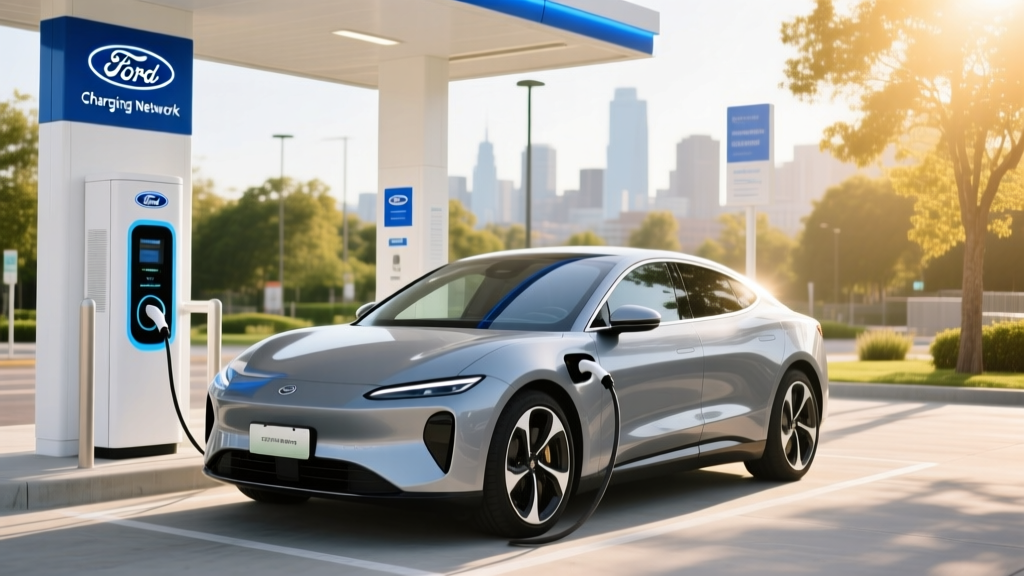
How the Blue Oval Charging Network Is Structured
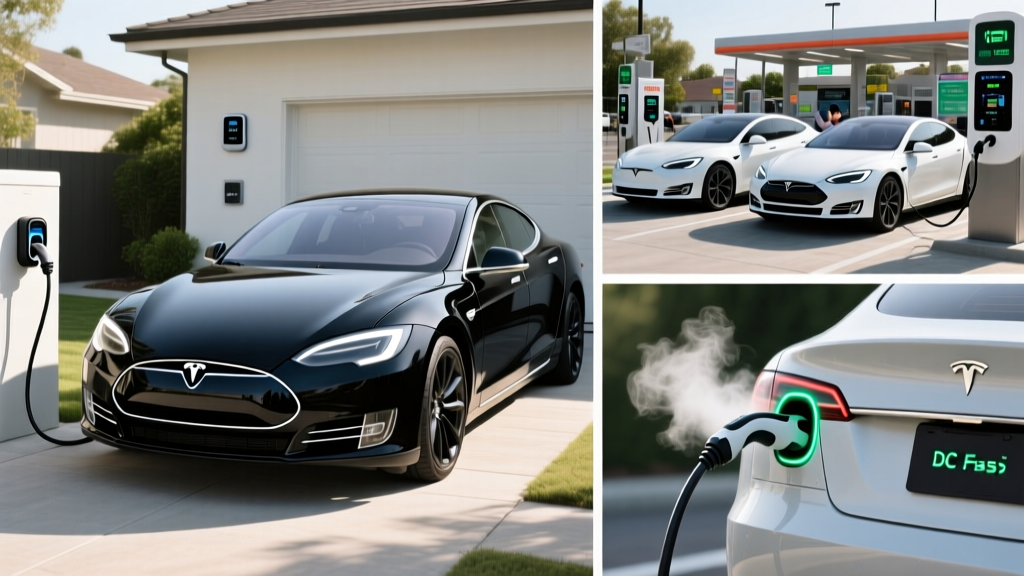
The Blue Oval Charging Network isn't a single physical network of chargers owned by Ford. Instead, it's an aggregated access layer that bundles multiple charging providers into the FordPass app. As of 2026, it includes:
- Home charging: Ford's branded Connected Charge Station and Mobile Power Cord, plus third-party Level 2 recommendations.
- Public DC fast charging: Integrated access to Electrify America, EVgo, and other networks through FordPass, with pricing and availability shown in-app.
- Tesla Supercharger access: Since mid-2024, Ford EVs with the NACS adapter can access over 20,000 Tesla Superchargers across North America — a major expansion of practical fast-charging coverage.
FordPass shows real-time charger availability, pricing, and routing. However, the actual charging experience — reliability, speed, connector condition — depends on the underlying network operator. Ford doesn't control whether an Electrify America stall is working; they just surface it in your app.
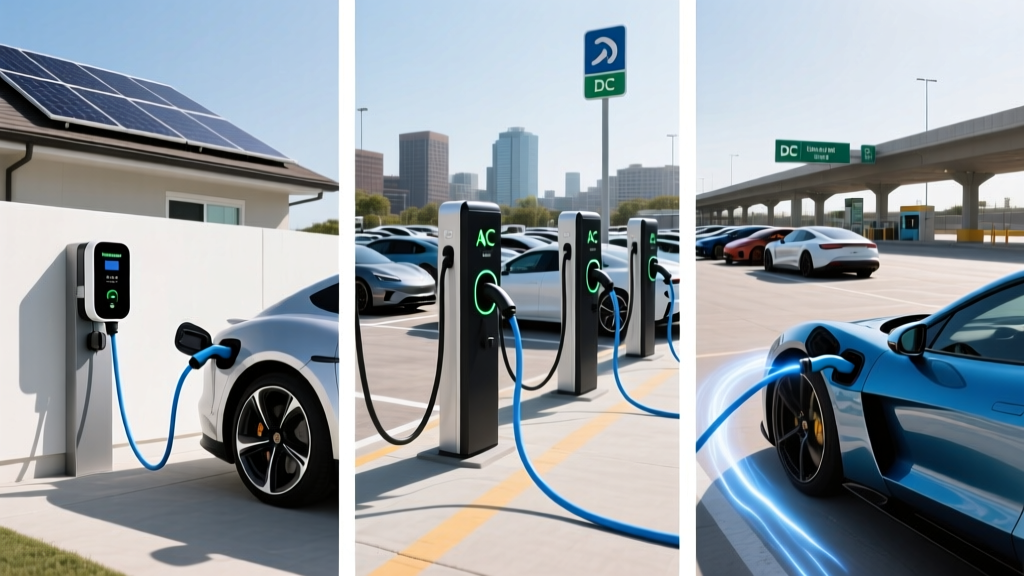
Charging Levels Explained: Speeds, Power, and Range Added
Before comparing chargers, you need clarity on the three charging levels. The critical distinction: kW (kilowatts) measures power — the rate of energy delivery. kWh (kilowatt-hours) measures energy — the total amount stored in your battery. A 72 kWh battery charged at 11 kW takes roughly 6.5 hours from empty; at 150 kW DC fast charging, it can go from 10% to 80% in about 30 minutes.
| Level | Voltage / Amperage | Power (kW) | Miles of Range Added per Hour | Typical Use Case |
|---|---|---|---|---|
| Level 1 | 120V / 12A | ~1.4 kW | 3–5 mi/hr | Overnight trickle, emergency top-up |
| Level 2 | 240V / 32–48A | 7.7–11.5 kW | 20–35 mi/hr | Daily home charging, workplace |
| DC Fast Charging | 400–800V DC | 50–250+ kW | 150–600+ mi/hr (peak) | Road trips, highway corridors |
Real-world note on DC fast charging: Peak kW rates are not sustained. A Mustang Mach-E Extended Range (91 kWh usable battery) may peak at 150 kW on a compatible Electrify America charger, but the charge curve tapers significantly above 80% State of Charge (SoC). Expect a 10–80% session in roughly 38–45 minutes, not a linear calculation from peak power. The F-150 Lightning Extended Range (131 kWh usable) can accept up to ~170 kW peak but will take longer in absolute time due to the larger battery — roughly 41 minutes for 10–80%.
Home Charging Installation: What Your Electrical Panel Needs
Most Ford EV owners will want a dedicated Level 2 home charger. This is where the Blue Oval Charging Network's home equipment comes in, but installation is where costs and complexity vary dramatically.
Electrical Requirements for Level 2 Charging
A Level 2 charger requires a 240-volt dedicated circuit, similar to what powers an electric dryer or oven. The amperage depends on the charger:
- 32A circuit: Delivers 7.7 kW — sufficient for most overnight charging needs. Requires a 40A breaker (NEC requires circuits be rated at 125% of continuous load).
- 40A circuit: Delivers 9.6 kW. Requires a 50A breaker.
- 48A circuit: Delivers 11.5 kW — the maximum most Ford onboard chargers accept. Requires a 60A breaker.
Panel Upgrade: The Cost Variable Most Buyers Miss
If your home has a 100A electrical panel (common in homes built before the 1990s), adding a 40–60A dedicated EV circuit may push your total load past the panel's capacity. An electrician will perform a load calculation to determine this. If you're over capacity, you'll need either:
- A panel upgrade to 200A ($1,500–$3,500 depending on region and complexity), or
- A load-management device like the Emporia Smart Charger with automatic load shedding ($100–$200 additional), which dynamically reduces charger draw when other appliances activate.
| Cost Component | Low End | High End | Notes |
|---|---|---|---|
| Level 2 Charger Equipment | $300 | $750 | Hardwired units cheaper; Wi-Fi/smart features add cost |
| Electrician Labor (circuit + install) | $500 | $2,000 | Depends on run length, wall type, conduit needs |
| Permit & Inspection | $50 | $250 | Required by most jurisdictions; varies by municipality |
| Panel Upgrade (if needed) | $1,500 | $3,500 | 100A → 200A; not always required |
| Total (no panel upgrade) | $850 | $3,000 | Typical for modern 200A-panel homes |
| Total (with panel upgrade) | $2,350 | $6,500 | Older homes or high-load situations |
The federal Residential Clean Energy Credit does not cover EV chargers after 2022 for most taxpayers. However, the Alternative Fuel Vehicle Refueling Property Credit (§30C) was restored under the Inflation Reduction Act and can cover up to 30% of charger hardware and installation costs (max $1,000 for residential) — but only if you live in a qualifying census tract. Check IRS guidelines and consult a tax professional before assuming eligibility.
Connector Compatibility: NACS, CCS1, and What Ford Uses
Ford made a pivotal decision in 2023: it adopted the North American Charging Standard (NACS) — essentially Tesla's connector — for all future EVs. Here's where things stand in 2026:
| Vehicle | Built-in Connector | Adapter Needed? | Networks Accessible |
|---|---|---|---|
| 2021–2024 Mustang Mach-E | CCS1 | NACS adapter (provided by Ford or purchased ~$200) | Electrify America, EVgo, ChargePoint, Tesla Supercharger (via adapter) |
| 2022–2024 F-150 Lightning | CCS1 | NACS adapter (provided by Ford or purchased ~$200) | Same as above |
| 2025+ Mustang Mach-E | NACS (native) | CCS1 adapter (if needed for legacy stations) | All networks natively or with CCS adapter |
| 2025+ F-150 Lightning | NACS (native) | CCS1 adapter (if needed) | All networks natively or with CCS adapter |
| E-Transit (commercial) | CCS1 | Varies by model year | Primarily CCS-based public networks |
CHAdeMO is effectively dead in North America for new vehicles. If you encounter a CHAdeMO-only station, it's not relevant to Ford EVs.
For older CCS1-equipped Ford EVs, the NACS adapter is essential for Supercharger access. Ford initially distributed these free to owners; as of 2026, replacement or additional adapters cost approximately $200 through Ford or Tesla. The adapter supports up to 150 kW DC fast charging — sufficient for current Ford models.
Charging Cost: Per Mile vs. Gasoline
The economics of EV charging depend heavily on where and when you charge. Here's a realistic breakdown for a 2025 Mustang Mach-E Premium Extended Range (EPA combined efficiency: 3.0 mi/kWh, or roughly 100 MPGe):
| Charging Scenario | Cost per kWh | Cost per Mile | Annual Cost (12,000 mi) |
|---|---|---|---|
| Home (off-peak utility rate) | $0.08–$0.14 | $0.027–$0.047 | $320–$560 |
| Home (standard residential rate) | $0.14–$0.20 | $0.047–$0.067 | $560–$800 |
| Public Level 2 (workplace, retail) | $0.20–$0.35 | $0.067–$0.117 | $800–$1,400 |
| DC Fast Charging (Electrify America, EVgo) | $0.35–$0.55 | $0.117–$0.183 | $1,400–$2,200 |
| Tesla Supercharger (via adapter) | $0.28–$0.42 | $0.093–$0.140 | $1,120–$1,680 |
Gas comparison: A comparable gas-powered crossover averaging 27 MPG combined at $3.30/gallon costs roughly $0.122/mile, or about $1,464 annually. Home-charged EVs beat this decisively; exclusive DC fast charging roughly breaks even or costs slightly more. The takeaway: home charging access is the economic foundation of EV ownership. Public fast charging is for road trips, not daily fueling strategy.
Equipment Recommendations: Home Chargers for Ford EVs
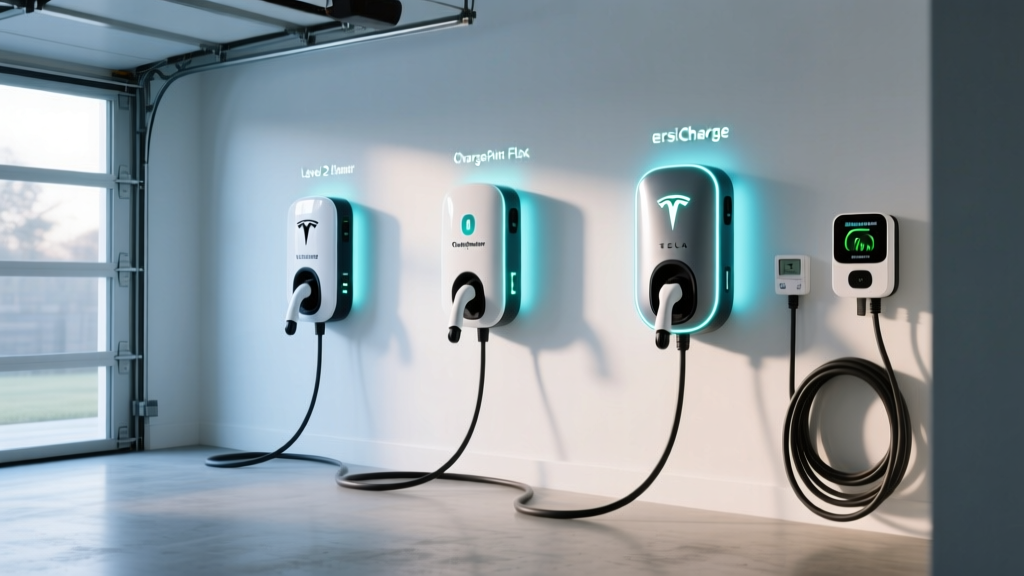
Ford sells its own branded home chargers through the Blue Oval Charging Network, but third-party units often offer better value or features. Here are vetted picks for 2026:
Ford Connected Charge Station
- Power: 48A / 11.5 kW (hardwired, 240V)
- Connector: NACS (2025+ models); CCS1 (earlier)
- Cable length: 25 ft
- Smart features: FordPass integration, scheduled charging, energy monitoring
- Price: ~$600–$700
- Best for: Ford loyalists who want seamless app integration and warranty alignment
ChargePoint Home Flex
- Power: Configurable 16–50A (up to 12 kW at 50A; 240V)
- Connector: NACS or J1772 (with adapter for CCS)
- Cable length: 23 ft
- Smart features: Wi-Fi, app scheduling, Alexa integration, amperage adjustment via app
- Price: ~$550–$650
- Best for: Flexibility — adjustable amperage lets you match your circuit without a new charger
Emporia Level 2 EV Charger
- Power: 48A / 11.5 kW (hardwired, 240V)
- Connector: J1772 (NACS adapter available)
- Cable length: 24 ft
- Smart features: Wi-Fi, real-time energy monitoring, load management with Emporia Vue panel monitor
- Price: ~$350–$400
- Best for: Budget-conscious installers; load-management feature avoids panel upgrades
WallConnector (Tesla)
- Power: 48A / 11.5 kW (hardwired, 240V)
- Connector: NACS native
- Cable length: 24 ft
- Smart features: Wi-Fi, power sharing between two units, OTA updates
- Price: ~$450
- Best for: 2025+ Ford EVs with native NACS; excellent value for a high-quality unit
Important: The Ford Mustang Mach-E and F-150 Lightning both have an 11.5 kW onboard charger (single-phase). Buying a charger rated above 11.5 kW won't charge these vehicles faster — the vehicle's onboard charger is the bottleneck for Level 2 AC charging. However, higher-rated chargers offer future-proofing for your next EV.
Public Charging Reliability: What the Blue Oval Network Can't Guarantee
The Blue Oval Charging Network advertises access to over 90,000 charge points in North America. That number includes Level 2 destination chargers at hotels and retail locations — not all are DC fast chargers. The practical fast-charging network (DC, 50+ kW) is considerably smaller.
Based on aggregated user data and third-party reliability studies, here's what to expect from major networks accessible through FordPass in 2026:
- Tesla Supercharger (via adapter): Highest reliability — consistently 95%+ uptime. Best road-trip experience, though stalls can be crowded in high-traffic corridors.
- Electrify America: Improved since 2023–2024 hardware refresh, but still reports ~80–88% uptime. Occasional handshake failures with CCS1 vehicles; NACS adapter users report fewer issues.
- EVgo: Good urban coverage, moderate reliability (~85% uptime). Newer 350 kW stalls are solid; older 50–100 kW units show their age.
- ChargePoint: Dominates Level 2 destination charging; DC fast footprint is smaller and less consistent.
Practical tip: On road trips, always have a backup charging location within 20–30 miles. The FordPass app and third-party apps like PlugShare let you check recent user check-ins for real-time charger status.
Safety, Electrical Code, and Installation Best Practices
EV charging draws sustained high current for hours — this is a fundamentally different electrical load than intermittent appliances. Key safety and code requirements:
- Dedicated circuit: Your Level 2 charger must be on its own dedicated circuit — not shared with other outlets or appliances. This is a National Electrical Code (NEC) requirement, not optional.
- GFCI protection: NEC 2020 and later require GFCI protection for outdoor receptacles used for EV charging. Hardwired installations (recommended for 40A+ circuits) bypass this issue, as GFCI is built into the charger unit.
- Outdoor rating: If your charger is mounted outdoors, it must carry a NEMA 4 (weatherproof) rating. All chargers recommended above meet this standard.
- Permit and inspection: Most municipalities require an electrical permit for new 240V circuits. The inspection ensures proper wire gauge, breaker sizing, grounding, and conduit. Skipping the permit risks insurance denial in the event of an electrical fire.
- Wire gauge: A 60A breaker (for 48A continuous charging) requires 6 AWG copper wire (or 4 AWG aluminum). Your electrician will size this correctly, but it's worth verifying.
Always hire a licensed electrician familiar with EV charging installations. Ask for their load calculation methodology and whether they pull permits as standard practice — if they suggest skipping the permit, find another electrician.
Frequently Asked Questions
How much does it cost to install a home EV charger for my Ford?
Expect $850–$3,000 for a straightforward installation in a home with a 200A panel and short wire runs. If your home needs a panel upgrade from 100A to 200A, total costs can reach $2,350–$6,500. The charger equipment itself runs $350–$700; the majority of cost is electrician labor and materials.
How fast will each charging level add range to my Mach-E or F-150 Lightning?
Level 1 (120V) adds 3–5 miles of range per hour — essentially overnight trickle charging. Level 2 (240V, 48A) adds roughly 28–35 miles per hour for a Mach-E and 20–25 miles per hour for the heavier F-150 Lightning. DC fast charging at 150 kW can add 150+ miles in 15 minutes during the peak of the charge curve, though sustained rates are lower.
Which connector does my Ford EV use, and do I need an adapter?
Model years 2021–2024 use CCS1 and require a NACS adapter for Tesla Supercharger access. Model year 2025 and later use NACS natively and may need a CCS1 adapter for older public chargers. Ford initially provided NACS adapters free to existing owners; replacement adapters cost around $200.
How much does charging cost per mile compared to gas?
Home charging at off-peak rates costs roughly $0.03–$0.05 per mile for a Mustang Mach-E — about one-third to one-quarter the cost of gasoline at $3.30/gallon and 27 MPG combined. Exclusive public DC fast charging narrows the gap to roughly $0.12–$0.18 per mile, which is comparable to or slightly higher than gas.
What electrical upgrades might I need before installing a Level 2 charger?
The most common upgrade is a panel replacement from 100A to 200A service ($1,500–$3,500). You may also need a new breaker slot, upgraded meter socket, or a load-management device if your panel is near capacity. A licensed electrician's load calculation will determine this before any work begins.
Does the Blue Oval Charging Network include free charging?
Ford has offered promotional complimentary charging periods on Electrify America and other networks with certain new-vehicle purchases, but these are time-limited (typically 2–3 years or a kWh cap). As of 2026, standard charging is pay-per-use at published network rates. Check your FordPass account for any remaining promotional balance.