Quick Verdict: Where Blink Fast Chargers Fit in 2026
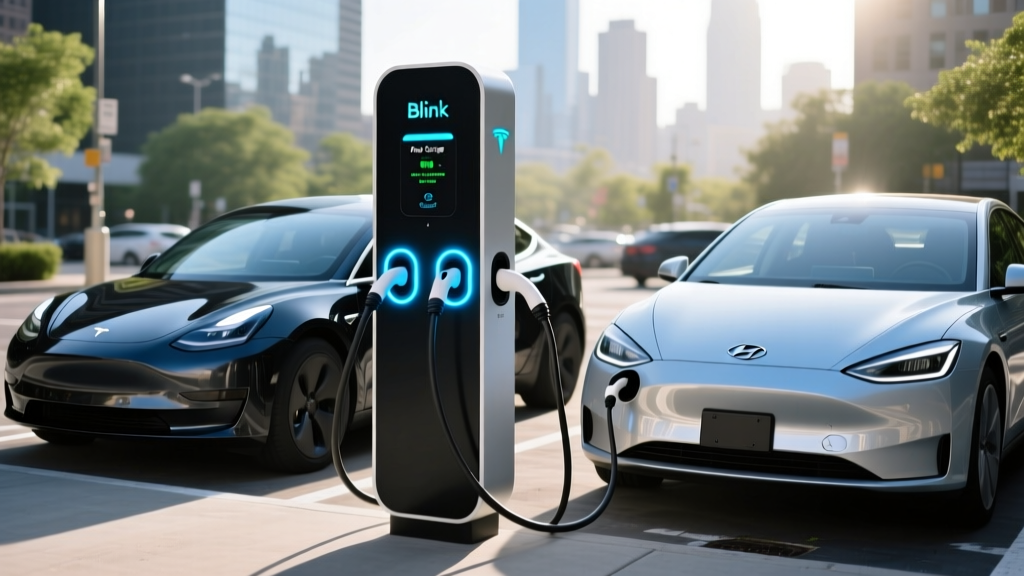
Blink operates one of the largest mixed-use charging networks in the U.S., but "Blink fast chargers" means very different things depending on the hardware you plug into. In 2026, Blink's public footprint spans everything from legacy 50 kW DC units installed nearly a decade ago to newer 180 kW and 360 kW cabinets capable of matching the peak charge rates of vehicles like the Hyundai Ioniq 5, Kia EV6, and Lucid Air. For EV shoppers evaluating whether a Blink charger along their commute or road-trip route will actually deliver, the answer hinges on three variables: the specific cabinet at that location, your vehicle's peak DC acceptance rate, and the connector it offers (NACS, CCS1, or CHAdeMO).
This guide breaks down Blink's current DC fast-charging lineup, real-world speeds, per-kWh pricing, connector availability, and how the network compares against Electrify America, EVgo, and Tesla Superchargers — plus a refresher on home charging alternatives if you'd rather skip the public network entirely.
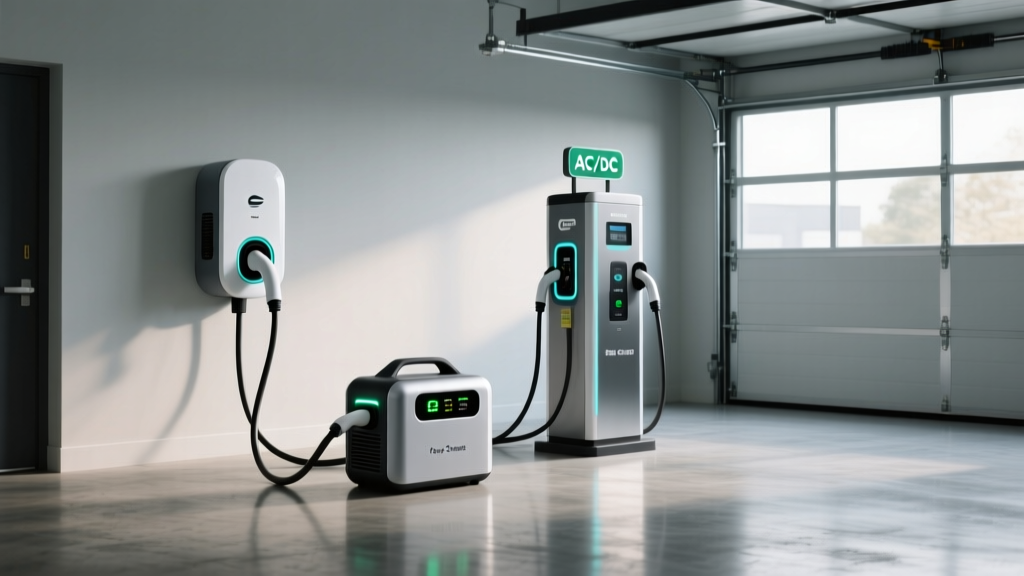
How Blink Fast Chargers Work: DC Speeds, Tiers, and Real-World Output
Before diving into Blink-specific hardware, a quick literacy check that trips up too many new EV owners: kW (kilowatts) measures power — how fast energy flows into your battery at any moment. kWh (kilowatt-hours) measures energy — the total capacity of your battery, like gallons in a fuel tank. A 360 kW charger doesn't deliver 360 kWh; it delivers energy at a rate of 360 kW, which tapers as your battery's state of charge (SoC) climbs.
| Level | Power (kW) | Voltage | Miles of Range Added per Hour | Typical Use Case |
|---|---|---|---|---|
| Level 1 | 1.2–1.9 kW | 120V AC | 3–5 mi/hr | Overnight trickle, PHEVs |
| Level 2 | 7.2–19.2 kW | 240V AC | 20–60 mi/hr | Home, workplace, destination |
| DC Fast | 50–360 kW | 200–900V DC | 120–900+ mi/hr (peak) | Road trips, quick top-ups |
Blink's DC fast-charging hardware in 2026 falls into three practical tiers:
- Legacy 50 kW cabinets: Older Blink units still in service at retail locations and parking garages. Adequate for a 10–80% charge on a 75 kWh battery in roughly 65–75 minutes, but increasingly outpaced by modern EV acceptance rates.
- Mid-range 62.5–120 kW units: Blink's workhorse deployments from 2020–2024, often dual-port. A 120 kW cabinet can add 10–80% on an 82 kWh battery (VW ID.4, Ford Mustang Mach-E extended range) in approximately 35–45 minutes, depending on the vehicle's charge curve.
- High-power 180–360 kW cabinets: Blink's newer IQ 200 and partner-sourced ultra-fast hardware, targeting 800V-architecture vehicles. On a Hyundai Ioniq 5 (peak ~240 kW acceptance), expect 10–80% in roughly 18–22 minutes at a 360 kW Blink station — provided the unit isn't power-sharing with a second vehicle on the same cabinet.
Real-world charge-curve reality: No EV sustains its peak kW rate for the entire session. Most vehicles hit peak charge rate between 10–30% SoC, then taper progressively. A "360 kW charger" doesn't mean your car charges at 360 kW — it means the cabinet can supply up to that rate if your vehicle can accept it. Always look up your specific EV's DC charge curve, not just the station's max output.
Connector Compatibility: NACS, CCS1, and CHAdeMO on the Blink Network
Blink's connector mix varies by installation date and region. Older Blink DC stations predominantly feature CCS1 and CHAdeMO connectors. Newer deployments, responding to the industry-wide shift to the North American Charging Standard (NACS), increasingly include NACS cables or at minimum provide CCS1 with NACS adapter compatibility.
| Connector | Brands Using It (Native) | Blink Availability | Adapter Needed? |
|---|---|---|---|
| NACS (J3400) | Tesla, Ford, GM, Rivian, Volvo, Polestar, Hyundai (2025+) | Growing — newer Blink deployments | CCS-to-NACS adapters for older CCS-only stations |
| CCS1 | VW, BMW, Mercedes, Stellantis, older Ford/GM/Hyundai | Widely available across Blink network | NACS-to-CCS adapter for NACS-port vehicles |
| CHAdeMO | Nissan Leaf (legacy), Mitsubishi Outlander PHEV | Limited — legacy Blink stations only | Not practical to adapt; use native cable |
If you drive a 2025+ Ford F-150 Lightning, GM Equinox EV, or any vehicle that switched to NACS, confirm the Blink station you're heading to has a NACS cable — or carry a quality CCS-to-NACS adapter (such as the Lectron or A2Z adapter, typically $150–$250). The Blink charging map in their app lists connector types per station, but real-world reliability of that data can lag when stations are retrofitted.
Blink Fast Charger Pricing: $/kWh, Per-Mile Cost, and Gas Comparison
Blink's public DC fast-charging pricing is set per-location and varies significantly — typically between $0.39 and $0.69 per kWh in 2026, with some high-traffic urban or highway-corridor stations pushing higher. Blink also sometimes applies idle fees if your vehicle remains plugged in after reaching its charge limit.
| Scenario | Rate | Vehicle Efficiency | Cost Per Mile |
|---|---|---|---|
| Home Level 2 (off-peak utility rate) | $0.13/kWh | 3.0 mi/kWh (e.g., Tesla Model Y) | $0.043 |
| Blink DC Fast (mid-tier station) | $0.49/kWh | 3.0 mi/kWh | $0.163 |
| Blink DC Fast (premium highway) | $0.64/kWh | 3.0 mi/kWh | $0.213 |
| Gas vehicle (30 MPG combined) | $3.40/gallon | 30 MPG | $0.113 |
| Gas vehicle (22 MPG, truck/SUV) | $3.40/gallon | 22 MPG | $0.155 |
The math makes the ownership case clear: home Level 2 charging is dramatically cheaper than gas, while public DC fast charging on Blink (or any network) at premium rates can equal or exceed the per-mile cost of a fuel-efficient gas car. DC fast charging is a road-trip convenience, not your daily fueling strategy. If you can't charge at home or at work, the economics of EV ownership narrow considerably.
Charging Time Examples: 10–80% on Blink Hardware
Here's what real charging sessions look like on Blink's various DC tiers, using common 2026 battery sizes and realistic charge-curve assumptions (not peak-rate marketing claims):
- Tesla Model Y (75 kWh, NACS, peak ~250 kW): At a Blink 180 kW cabinet — 10–80% in ~28 min. At a Blink 50 kW legacy unit — 10–80% in ~68 min.
- Hyundai Ioniq 5 (84 kWh, 800V, peak ~240 kW): At a Blink 360 kW cabinet — 10–80% in ~20 min. At 120 kW — ~38 min.
- Ford F-150 Lightning (131 kWh extended range, peak ~150 kW): At a Blink 180 kW cabinet — 10–80% in ~48 min (battery-limited, not station-limited). At 50 kW — ~135 min.
- Chevrolet Equinox EV (85 kWh, peak ~150 kW): At a Blink 120 kW cabinet — 10–80% in ~42 min.
Cold-weather caveat: Battery temperatures below 50°F significantly slow DC charge rates unless your vehicle actively preconditioned the battery during navigation to the charger. Expect 10–80% times to increase 20–40% in freezing conditions on any network, including Blink.
Blink Network Reliability: Uptime, App Experience, and How It Compares
Blink's network uptime has historically trailed Tesla Superchargers and Electrify America in third-party reliability surveys. The J.D. Power EV Experience Index has consistently ranked Blink in the middle-to-lower tier for charger availability and payment ease. Common complaints from the EV-owner community include:
- Legacy 50 kW stations that are still listed as "DC fast" but deliver underwhelming speeds for modern large-battery EVs.
- Occasional payment-app glitches requiring a Blink membership card or RFID fob as backup.
- Power-sharing on dual-cable cabinets: when two vehicles plug into one 120 kW cabinet, each may receive only 60 kW or less.
On the positive side, Blink has been aggressively deploying higher-power hardware since 2023, and their acquisition strategy (including the BP Pulse integration in certain markets) has expanded station counts. For trip planning, always verify the specific station's kW rating and connector type in the Blink app or on PlugShare before committing to a stop.
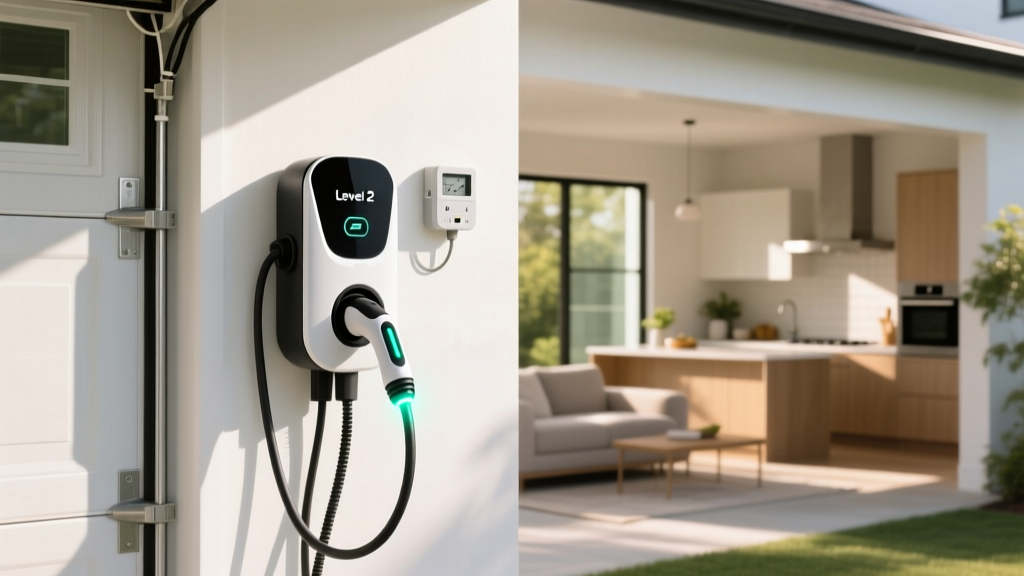
Home Charging Alternative: Level 2 Installation and Costs
If Blink's public pricing and reliability concerns push you toward home charging — the economically optimal choice for most EV owners — here's what a Level 2 home installation actually requires and costs in 2026.
Electrical requirements: A typical home Level 2 charger runs on a dedicated 240V circuit, most commonly 40A or 48A (delivering 9.6 kW or 11.5 kW respectively, since continuous load must be derated to 80% of breaker capacity — a 48A charger requires a 60A breaker). Older homes with 100A main panels may need a panel upgrade to 200A to accommodate an EV circuit alongside existing loads like electric ranges and dryers.
| Component | Typical Cost Range | Notes |
|---|---|---|
| Level 2 charger hardware | $350–$750 | Emporia, ChargePoint, Wallbox, Tesla Wall Connector |
| Electrician labor (standard install) | $500–$1,500 | Depends on run length from panel to garage/driveway |
| Electrical permit | $50–$200 | Varies by municipality |
| Panel upgrade (if needed) | $1,500–$4,000 | 100A → 200A service; not required in most newer homes |
| Total (no panel upgrade) | $900–$2,450 | Most common scenario |
| Total (with panel upgrade) | $2,400–$6,450 | Older homes, high-load households |
Safety and code considerations: The National Electrical Code (NEC) requires a dedicated circuit for EV charging — you cannot share the circuit with other appliances. Outdoor installations require a NEMA 4-rated (weatherproof) enclosure or a hardwired unit rated for outdoor use. Many jurisdictions now require GFCI protection on 240V EV circuits; hardwired chargers sidestep the nuisance-tripping issues that some owners experience with NEMA 14-50 receptacles on GFCI breakers.
The IRS §30C alternative fuel refueling property credit covers up to 30% of home charger hardware and installation costs (capped at $1,000 for residential), though eligibility depends on census-tract requirements. Check irs.gov for current-year rules, as income and location restrictions apply.
Equipment Recommendations: Home Level 2 Chargers Worth Buying
Emporia Vue Level 2 (48A / 11.5 kW)
- Power: 48A, 11.5 kW (hardwired) or 40A, 9.6 kW (NEMA 14-50 plug)
- Connector: J1772 (NACS adapter included in 2025+ versions)
- Cable length: 24 ft
- Smart features: Wi-Fi, app scheduling, solar-integration with Emporia Vue energy monitor, load management
- Price: ~$399 (plug-in) / ~$449 (hardwired)
Tesla Wall Connector (48A / 11.5 kW)
- Power: 48A, 11.5 kW (hardwired, 60A breaker)
- Connector: NACS native (J1772 adapter available separately)
- Cable length: 24 ft
- Smart features: Wi-Fi, OTA updates, power-sharing between two Wall Connectors on one circuit
- Price: ~$475
ChargePoint Home Flex (up to 50A / 12 kW)
- Power: Adjustable 16A–50A, up to 12 kW (hardwired at 50A; plug-in at 40A max)
- Connector: J1772 (NACS version available 2025+)
- Cable length: 23 ft
- Smart features: Wi-Fi, Alexa integration, detailed app energy tracking, flexible amperage dip-switch
- Price: ~$649
Wallbox Pulsar Plus (48A / 11.5 kW)
- Power: 48A, 11.5 kW (hardwired)
- Connector: J1772 or NACS (selectable at purchase)
- Cable length: 25 ft
- Smart features: Wi-Fi + Bluetooth, Eco-Smart solar mode, Power Sharing for dual installs
- Price: ~$599
Frequently Asked Questions
How much does it cost to install a home EV charger?
A standard Level 2 home installation (no panel upgrade) typically runs $900–$2,450 all-in, including the charger hardware ($350–$750), electrician labor ($500–$1,500), and permit ($50–$200). Homes needing a 100A-to-200A panel upgrade should budget an additional $1,500–$4,000. Get at least two quotes from licensed electricians — pricing varies enormously based on the distance from your panel to the charging location.
How fast will each charging level add range?
Level 1 (120V) adds roughly 3–5 miles of range per hour — fine for PHEVs with small batteries but impractical for full BEVs. Level 2 (240V, 48A) adds approximately 35–45 miles per hour for an efficient sedan like a Tesla Model 3, or 25–35 miles per hour for a larger SUV like a Rivian R1S. DC fast charging on a Blink 180 kW cabinet can add 150–250+ miles in a 20-minute session, depending on the vehicle's acceptance rate and battery state of charge.
Which connector or charger is compatible with my EV?
Check your vehicle's charge port: 2025+ Tesla, Ford, GM, Rivian, Volvo, and Hyundai models use NACS. Most 2020–2024 non-Tesla EVs use CCS1. The Nissan Leaf uses CHAdeMO. For home Level 2 charging, all non-Tesla EVs through 2024 use J1772; Tesla uses NACS. Adapters exist for most combinations, but for DC fast charging, always match the station's native cable to your vehicle's port when possible — adapters add a point of failure and aren't universally supported at high power levels.
How much does charging cost per mile compared to gas?
Home Level 2 charging at $0.13/kWh costs roughly $0.04–$0.05 per mile for a typical EV — about one-third to one-quarter the cost of a 30 MPG gas car at $3.40/gallon. Public DC fast charging at Blink's mid-tier rate of ~$0.49/kWh costs approximately $0.16/mile, which is comparable to or slightly more than a fuel-efficient gas car. The cost advantage of EVs depends heavily on consistent access to home or workplace Level 2 charging.
What electrical upgrades might I need for a home charger?
The most common upgrade is a panel replacement from 100A to 200A service, needed when your existing panel lacks capacity for a 40A–60A dedicated EV circuit alongside existing loads. A licensed electrician will perform a load calculation per NEC Article 220 to determine if your panel can accommodate the new circuit. Other potential upgrades include replacing a Federal Pacific or Zinsco panel (known fire hazards found in 1960s–1980s homes), adding a sub-panel in an attached garage, or trenching conduit for a detached-garage install. Never skip the permit — unpermitted EV charger work can void homeowner's insurance claims related to electrical fires.
Is Blink a good network for road-trip DC fast charging?
Blink works as a supplementary road-trip network, particularly in areas where Tesla Superchargers and Electrify America have gaps. However, for primary road-trip planning, most experienced EV owners prioritize Tesla Superchargers (now open to NACS-equipped non-Tesla vehicles) and Electrify America for their higher-power hardware density and better uptime records. Use Blink when it's conveniently located on your route, but always have a backup station identified within 15–20 miles in case the Blink unit is offline, occupied, or power-sharing at reduced output.