If you've pulled into a shopping center or highway rest stop and spotted a Blink charging station, you've probably wondered whether it's worth plugging in — especially when you need a fast top-up. The Blink DC fast charger network has expanded significantly through 2025 and into 2026, adding higher-power units and broader connector support. But how fast do they actually charge, what do they cost, and how do they compare to the networks you already trust?
This guide breaks down Blink's DC fast charging hardware, real-world charge speeds, per-kWh pricing, connector compatibility, and where the network fits into your broader charging strategy — whether you drive a NACS-equipped Tesla, a CCS1 vehicle like the Hyundai Ioniq 5, or a legacy CHAdeMO model like the Nissan Leaf.
Understanding Blink's DC Fast Charger Hardware Lineup
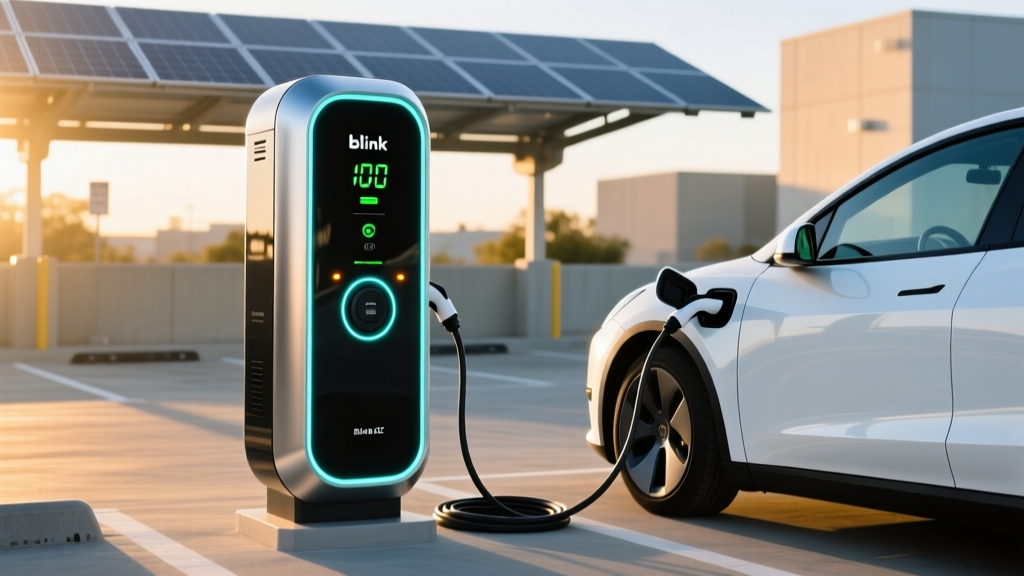
Blink Network (operated by Blink Charging Co.) deploys several tiers of DC fast charging (DCFC) hardware. Unlike Level 2 chargers that deliver AC power to your car's onboard charger, DC fast chargers supply direct current straight to the battery, bypassing the onboard converter and enabling much higher power delivery. Here's what Blink currently offers in the field:
| Model | Max Output (kW) | Connectors | Typical Deployment |
|---|---|---|---|
| Blink Series 4 (60 kW) | 60 kW | CCS1, CHAdeMO | Retail parking, workplaces |
| Blink Series 9 (120 kW) | 120 kW | CCS1, CHAdeMO, NACS (adapter) | Highway corridors, fleet depots |
| Blink Series 9 (180 kW) | 180 kW | CCS1, NACS | Travel centers, high-traffic retail |
| Blink Series 10 (360 kW) | 360 kW (split) | CCS1, NACS | Fleet hubs, major highway corridors |
The 60 kW units are the most common in Blink's existing footprint — often found at grocery stores, malls, and municipal lots. The 120–180 kW units represent newer deployments along highway corridors. The 360 kW Series 10 is a power cabinet that can split output across two dispensers, meaning a single vehicle might see up to 180 kW if the other stall is occupied, or the full 360 kW if it's the only car charging. This power-splitting behavior is common across all networks, not unique to Blink.
How Fast Does a Blink DC Fast Charger Add Range?
Charge speed depends on three variables: the charger's maximum output, your vehicle's maximum acceptance rate, and your battery's state of charge (SoC). EV batteries accept charge fastest between roughly 10–50% SoC, then taper significantly as they approach full. This is called the charge curve, and it means you'll rarely sustain peak kW for an entire session.
| Charging Level | Power (kW) | Voltage | Miles of Range/Hour | Typical Use Case |
|---|---|---|---|---|
| Level 1 (120V outlet) | 1.4–1.9 kW | 120V AC | 3–5 mi/hr | Overnight trickle, PHEVs |
| Level 2 (240V home/public) | 7.2–19.2 kW | 240V AC | 20–60 mi/hr | Daily home charging, workplace |
| DC Fast (60 kW) | Up to 60 kW | 200–500V DC | 150–200 mi/hr (peak) | Public top-ups, older DCFC |
| DC Fast (120–180 kW) | 120–180 kW | 200–920V DC | 300–600 mi/hr (peak) | Highway road-trip charging |
| DC Fast (350+ kW) | Up to 350 kW | 800V DC | 700–1,000+ mi/hr (peak) | 800V vehicles (Ioniq 5, Taycan) |
Here's what that looks like in practice with common battery sizes at a Blink 120 kW station:
- Hyundai Ioniq 5 (84 kWh battery, 800V architecture): Accepts up to ~240 kW peak. At a 120 kW Blink unit, it will be capped at 120 kW. Expect 10–80% in roughly 28–32 minutes (vs. ~18 min on a 250+ kW charger).
- Ford Mustang Mach-E Extended Range (91 kWh usable, 400V): Peaks around 150 kW. At 120 kW, expect 10–80% in approximately 38–45 minutes.
- Chevrolet Equinox EV (85 kWh, 400V): Peaks around 150 kW. At a 60 kW Blink unit, expect 10–80% in roughly 55–65 minutes.
- Tesla Model Y Long Range (~75 kWh usable): Peaks at ~250 kW on Superchargers. At a 120 kW Blink with NACS adapter or native cable, expect 10–80% in approximately 30–35 minutes.
At Blink's more common 60 kW units, add roughly 50–70% more time to the estimates above. The charge-curve taper above 80% SoC is significant — going from 80–100% can take as long as 10–80%. For road trips, plan to charge to 80% and move on.
Blink DC Fast Charger Pricing: What You'll Pay Per kWh
Blink's pricing varies by location and is set partly by the site host. In most markets, Blink DC fast charging runs between $0.39 and $0.69 per kWh, with an average hovering around $0.49–$0.55/kWh in 2026. Some locations add a per-session fee of $1.00–$2.00. Blink members who sign up for the Blink Membership plan receive a discounted rate (typically $0.05–$0.10/kWh less than the guest rate).
| Scenario | Cost/kWh or Gallon | Vehicle Efficiency | Cost Per Mile |
|---|---|---|---|
| Home Level 2 (off-peak utility rate) | $0.13/kWh | 3.0 mi/kWh (100 MPGe avg) | $0.043/mi |
| Home Level 2 (peak utility rate) | $0.22/kWh | 3.0 mi/kWh | $0.073/mi |
| Blink DCFC (average) | $0.52/kWh | 3.0 mi/kWh | $0.173/mi |
| Electrify America (avg) | $0.48/kWh | 3.0 mi/kWh | $0.160/mi |
| Tesla Supercharger (avg) | $0.35/kWh | 3.5 mi/kWh | $0.100/mi |
| Gasoline (2026 avg $3.40/gal) | $3.40/gallon | 28 MPG (avg ICE) | $0.121/mi |
| Gasoline (hybrid, 50 MPG) | $3.40/gallon | 50 MPG | $0.068/mi |
The math is clear: home Level 2 charging is dramatically cheaper than any public DC fast charger, including Blink. At average Blink pricing, DC fast charging costs more per mile than gasoline in a fuel-efficient car. DCFC is best understood as a road-trip and convenience tool — not a daily charging strategy. If you rely exclusively on public DC fast charging, your fuel cost advantage over gasoline shrinks substantially.
For authoritative efficiency data on specific vehicles, check the EPA's fueleconomy.gov database, which lists kWh/100mi and MPGe for every EV sold in the US.
Connector Compatibility: Will a Blink DC Fast Charger Fit Your EV?
The North American charging connector landscape has shifted dramatically since Tesla opened its NACS (North American Charging Standard) to other automakers. Here's where Blink stands in 2026:
| Your EV Brand | Native Connector | Blink Compatibility | Adapter Needed? |
|---|---|---|---|
| Tesla (Model 3/Y/S/X) | NACS | Newer Blink 180–360 kW units have NACS cables; older 60–120 kW units may not | Carry a NACS-to-CCS1 adapter for older Blink stations |
| Ford, GM, Rivian, Volvo, Polestar (2025+) | NACS (native) | Same as Tesla — newer units yes, older check | CCS1 adapter included with most vehicles |
| Hyundai, Kia (Ioniq 5/6, EV6/9) | CCS1 (2024 and earlier) / NACS (2025+) | All Blink DCFC units have CCS1; NACS on newer deployments | Check model year; CCS1 works at all Blink CCS stations |
| VW, BMW, Mercedes, Subaru (Solterra) | CCS1 | Fully compatible with all Blink DCFC units | No adapter needed |
| Nissan Leaf (all years) | CHAdeMO | Only Blink 60 kW and some 120 kW units have CHAdeMO | No adapter exists for CHAdeMO-to-CCS; check Blink app for CHAdeMO availability |
Practical advice: Before driving to a Blink station, open the Blink app or check PlugShare to confirm which connectors are available at that specific location. The 60 kW stations almost always have CCS1 and CHAdeMO. The newer 180–360 kW stations are increasingly NACS-native. If you drive a NACS-equipped vehicle and rely on Blink, carrying a compact CCS1-to-NACS adapter (approximately $150–$250 from brands like Lectron or A2Z) ensures you can use any CCS1-equipped Blink unit.
How Blink Compares to Electrify America, Tesla Superchargers, and ChargePoint
Blink occupies a middle tier in the US DC fast charging landscape. Here's how the major networks stack up on the metrics that matter:
Network Size & Coverage
Winner: Tesla Supercharger Network. With over 28,000 stalls across North America (now open to NACS-equipped non-Tesla EVs at many locations), Tesla's network remains the most extensive and reliable. Blink operates roughly 3,000+ DC fast charging ports — a meaningful footprint, but far smaller. Electrify America has approximately 4,500+ DCFC ports.
Charge Speed Availability
Winner: Electrify America and Tesla. Both networks widely deploy 150–350 kW chargers. Blink's fleet still skews toward 60–120 kW, though newer 180–360 kW deployments are closing the gap. If you drive an 800V vehicle (Ioniq 5, EV6, Taycan), you'll want to seek out Blink's higher-power stations specifically.
Pricing Transparency
Winner: Tesla Superchargers. Tesla's pricing is displayed in-vehicle before you start charging and averages $0.30–$0.40/kWh. Blink's pricing varies by site host and is shown in the app before initiation. Always check the per-kWh rate on-screen before tapping "Start."
Uptime & Reliability
Winner: Tesla Superchargers. Industry data consistently places Tesla Supercharger uptime above 97%. Blink and Electrify America have historically trailed, though both have improved. Blink's reliability varies by location — newer deployments tend to perform better. Check recent user reviews on PlugShare before relying on a specific station for a long trip.
Home Charging Setup: The Foundation of Your EV Charging Strategy
Because public DC fast charging — at Blink or any network — costs 3–5× more per mile than home charging, installing a Level 2 home charger should be your priority. Here's what's involved:
Electrical Requirements
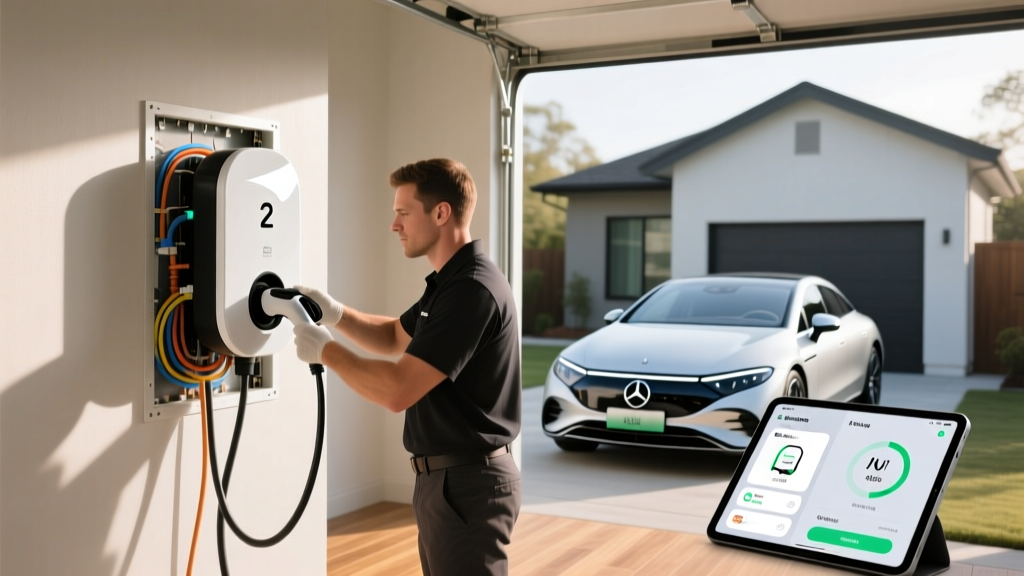
A typical home Level 2 charger requires a 240V dedicated circuit, similar to what powers an electric dryer or oven. Common configurations:
- 40A circuit / 32A continuous (7.7 kW): The most popular residential setup. Adds roughly 25–30 miles of range per hour. Sufficient for overnight charging of virtually any EV.
- 50A circuit / 40A continuous (9.6 kW): Adds roughly 32–38 miles per hour. Recommended for larger batteries (100+ kWh trucks like the F-150 Lightning or Rivian R1T).
- 60A circuit / 48A continuous (11.5 kW): Adds roughly 40–45 miles per hour. Requires a robust electrical panel with available capacity.
Panel Upgrade Considerations
Many homes built before 2000 have 100A or 150A electrical panels. Adding a 40–60A EV circuit may require a panel upgrade to 200A, especially if you also run electric heating, a dryer, and an oven. A licensed electrician will perform a load calculation per NEC Article 220 to determine if your panel has headroom. Don't skip this step — overloading a panel is a fire hazard.
| Component | Low Estimate | High Estimate | Notes |
|---|---|---|---|
| Level 2 Charger Equipment | $350 | $750 | Quality smart chargers (ChargePoint Home Flex, Emporia, Wallbox) |
| Electrician Labor | $500 | $2,000 | Depends on run length from panel to garage/driveway |
| Electrical Permit | $50 | $300 | Required in most jurisdictions; varies by city/county |
| Panel Upgrade (if needed) | $1,500 | $4,000 | 200A upgrade; not always necessary |
| Total (no panel upgrade) | $900 | $3,050 | Most homes with 200A panels |
| Total (with panel upgrade) | $2,400 | $7,050 | Older homes with 100–150A panels |
The IRS Residential Clean Energy Credit (IRC §25C) covers up to 30% of charger equipment and installation costs, capped at $1,000, for chargers installed through 2032. Consult a tax professional to confirm eligibility for your situation.
Safety and Code Requirements
- Dedicated circuit: Your EV charger must be on its own dedicated breaker — never shared with other appliances.
- GFCI protection: NEC 2023 and later require GFCI protection for outdoor receptacles and many indoor EV installations. Hardwired chargers (no plug) may have different requirements depending on jurisdiction.
- Outdoor rating: If installing outdoors, ensure the charger carries a NEMA 4 or IP65 weather rating. All major brands (ChargePoint, Emporia, Wallbox, Grizzl-E) offer outdoor-rated units.
- Wire gauge: A 40A circuit requires minimum 8 AWG copper wire; a 60A circuit requires 6 AWG. Your electrician will size appropriately.
Recommended Home Level 2 Chargers (2026 Picks)
ChargePoint Home Flex
- Power: Up to 11.5 kW (48A) on a 60A circuit; configurable down to 16A
- Connector: NACS (native), J1772 included
- Cable Length: 23 feet
- Smart Features: Wi-Fi, scheduled charging, Alexa integration, energy dashboard
- Price: ~$599
- Best For: Most EV owners who want a proven, app-connected charger
Emporia Vue EV Charger
- Power: Up to 11.5 kW (48A)
- Connector: J1772 (NACS adapter available)
- Cable Length: 24 feet
- Smart Features: Wi-Fi, integrates with Emporia Vue energy monitor for whole-home tracking, solar-aware charging
- Price: ~$399
- Best For: Budget-conscious buyers or homes with solar panels
Wallbox Pulsar Plus
- Power: Up to 11.5 kW (48A)
- Connector: J1772 or NACS (select at purchase)
- Cable Length: 25 feet
- Smart Features: Wi-Fi + Bluetooth, Power Sharing (link two units on one circuit), eco-smart solar mode
- Price: ~$549
- Best For: Two-EV households needing coordinated charging on a single circuit
Grizzl-E Smart
- Power: Up to 10 kW (40A)
- Connector: J1772 or NACS
- Cable Length: 24 feet
- Smart Features: Wi-Fi, OCPP-compatible, adjustable amperage via DIP switches
- Price: ~$449
- Best For: Cold-climate owners (rated to -40°F) and those wanting a rugged, no-frills unit
Using Blink DC Fast Chargers Effectively: Practical Tips
Blink chargers are a solid option when you need a public top-up, particularly in areas where other networks are sparse. Here's how to get the most from each session:
- Precondition your battery. If your EV has a navigation-based battery preconditioning feature (Tesla, Hyundai/Kia 800V models, Ford Mach-E with recent OTA updates), set the Blink station as your destination. This warms the battery to optimal charging temperature and can shave 5–10 minutes off your session, especially in cold weather.
- Charge from 10–80%, not 0–100%. The charge curve tapers aggressively above 80%. You'll spend more time (and money) filling the last 20% than the first 70%.
- Check the Blink app for real-time status. Before detouring to a station, confirm it's operational, see which connectors are available, and check the current per-kWh price.
- Enroll in Blink Membership if you use the network more than twice a month. The per-kWh discount typically pays for itself within 2–3 sessions.
- Have a backup plan. In areas with limited DCFC density, identify an alternate station (Electrify America, EVgo, Tesla Supercharger) within 10–15 miles in case the Blink unit is offline or occupied.
Frequently Asked Questions
How much does it cost to install a home EV charger?
Expect $900–$3,050 for a standard Level 2 installation in a home with an adequate 200A electrical panel. If your home needs a panel upgrade (common in pre-2000 homes with 100A or 150A service), total costs can range from $2,400 to $7,050. The federal §25C credit covers 30% of costs up to $1,000.
How fast will each charging level add range?
Level 1 (120V) adds 3–5 miles per hour. Level 2 (240V home) adds 20–45 miles per hour depending on amperage. DC fast charging at 60 kW adds roughly 150–200 miles per hour at peak; at 150+ kW, expect 400–700+ miles per hour at peak. Real-world rates taper significantly above 80% SoC.
Which connector/charger is compatible with my EV?
Vehicles from 2025 onward from Ford, GM, Rivian, Volvo, and Polestar use NACS natively. Most Hyundai, Kia, VW, BMW, Mercedes, and Subaru EVs use CCS1. Nissan Leaf uses CHAdeMO. Blink DC fast chargers primarily offer CCS1, with newer high-power units adding NACS. CHAdeMO is available only on select older Blink units. Check the Blink app or PlugShare before visiting.
How much does charging cost per mile vs gas?
Home Level 2 charging at $0.13/kWh costs roughly $0.04/mile — about one-third the cost of gasoline at $3.40/gallon in a 28 MPG car ($0.12/mile). Public DC fast charging at Blink (~$0.52/kWh) costs approximately $0.17/mile, which is actually more expensive than gasoline for efficient cars. Home charging is where the real savings live.
What electrical upgrades might I need?
The most common upgrade is a panel capacity increase from 100A or 150A to 200A, costing $1,500–$4,000. You may also need a new conduit run if your panel is far from the garage or driveway. Your electrician will perform an NEC Article 220 load calculation to determine if your existing panel can support the added circuit without an upgrade.
Is the Blink network reliable enough for road trips?
Blink's reliability has improved, but it's not yet at Tesla Supercharger levels. For road trips, use Blink as one option in a multi-network strategy. Keep the Electrify America, EVgo, and PlugShare apps installed, and always check real-time station status before committing to a stop. In urban and suburban areas, Blink is a convenient top-up option during errands.
Can I use a Tesla Supercharger instead of Blink?
If your EV has a native NACS port (2025+ Ford, GM, Rivian, Volvo, Polestar, and newer Tesla vehicles), yes — you can access most Tesla Superchargers. If your EV has CCS1, you'll need a NACS adapter (provided by many automakers or available aftermarket) to use Tesla's network, which is generally faster, cheaper, and more reliable than Blink's DCFC stations.
For the latest federal incentive rules affecting charger installation and EV purchases, consult the IRS Residential Clean Energy Credit page. For vehicle-specific efficiency data, the EPA's fueleconomy.gov remains the definitive source.