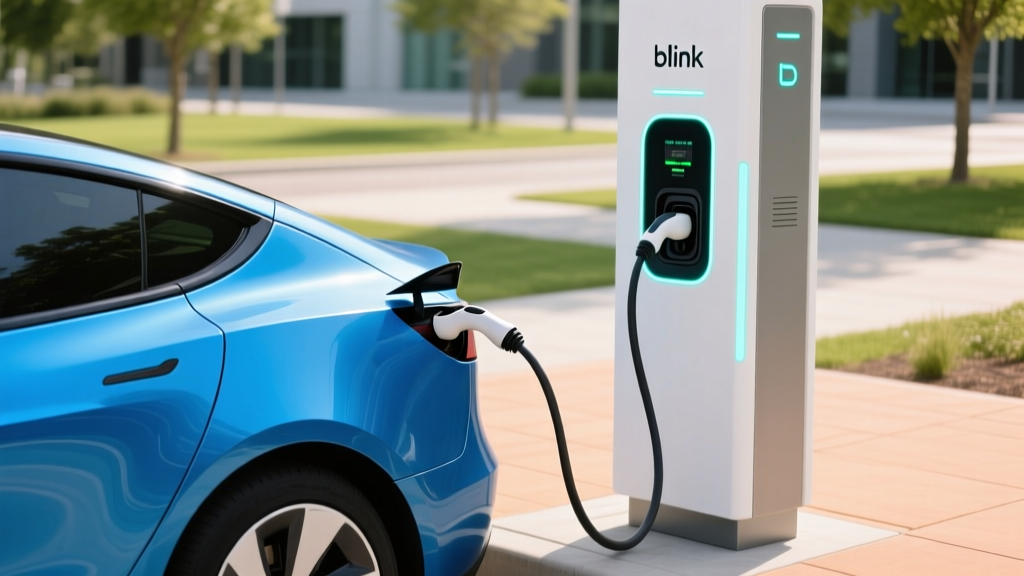
If you've spotted a Blink charger at a shopping center, parking garage, or workplace and wondered whether it's worth plugging into, you're not alone. Blink is one of the largest public charging networks in the U.S., but its mix of Level 2 and DC fast chargers — each with different power outputs — means the Blink charging rate you actually experience depends heavily on which unit you pull up to and what your vehicle can accept.
This guide breaks down exactly how fast Blink chargers deliver energy, what you'll pay per kWh, how Blink compares to home charging, and what a full Level 2 home installation costs if you'd rather skip public stations altogether. Every figure below reflects 2026 network specs and pricing.
Blink Charging Rate by Charger Type: kW, Miles Per Hour, and Real-World Times
Before diving into Blink specifics, let's lock down the most common EV literacy mistake: kW (kilowatts) measures power — how fast energy flows into your battery. kWh (kilowatt-hours) measures energy — the total capacity of your battery. A 50 kW charger delivering power for one hour adds 50 kWh of energy. A 75 kWh battery charged from 10% to 80% needs roughly 52.5 kWh. The math matters because it determines your actual wait time.
| Level | Voltage / Typical Amps | Power (kW) | Miles of Range Per Hour | Typical Use Case |
|---|---|---|---|---|
| Level 1 | 120V / 12A | 1.4 kW | 3–5 mi/hr | Emergency / overnight trickle |
| Level 2 (Home) | 240V / 32–48A | 7.7–11.5 kW | 25–44 mi/hr | Daily home charging |
| Level 2 (Blink Public) | 208–240V / 30–40A | 6.6–9.6 kW | 22–36 mi/hr | Destination / workplace |
| DC Fast (Blink IQ 200) | 200–500V DC | Up to 175 kW | 150–400+ mi/hr | Highway / quick top-ups |
| DC Fast (Blink IQ 350) | 200–920V DC | Up to 350 kW | 300–600+ mi/hr | Fleet / next-gen vehicles |
Blink operates two main hardware families in the U.S. as of 2026:
- Blink IQ 200 Series (Level 2): Available in single-port (7.7 kW / 32A) and dual-port (19.2 kW total, split between two vehicles at 9.6 kW each). These are the wall-mounted or pedestal units you see at retail locations and workplaces. The Blink charging rate on these is capped by both the station's output and your vehicle's onboard charger — most EVs max out at 11.5 kW on Level 2 AC.
- Blink IQ 350 / IQ 200 DC Fast: Blink's DC fast-charging lineup ranges from 60 kW units (older deployments) to 175 kW and 350 kW cabinets for newer installations. Peak output requires a vehicle capable of accepting that rate — an 800V-architecture car like the Hyundai Ioniq 5 or Kia EV6 can pull the full 350 kW briefly, while a 400V vehicle like the Tesla Model Y will peak around 170–250 kW even at a 350 kW post.
- Tesla Model Y (75 kWh battery, ~250 kW peak): At a Blink 175 kW DC fast charger → ~22–26 minutes. At a Blink Level 2 (9.6 kW) → ~8.5 hours.
- Ford F-150 Lightning Extended Range (131 kWh battery, ~150 kW peak): At a Blink 175 kW DC fast charger → ~42–50 minutes. At a Blink Level 2 (9.6 kW) → ~15 hours.
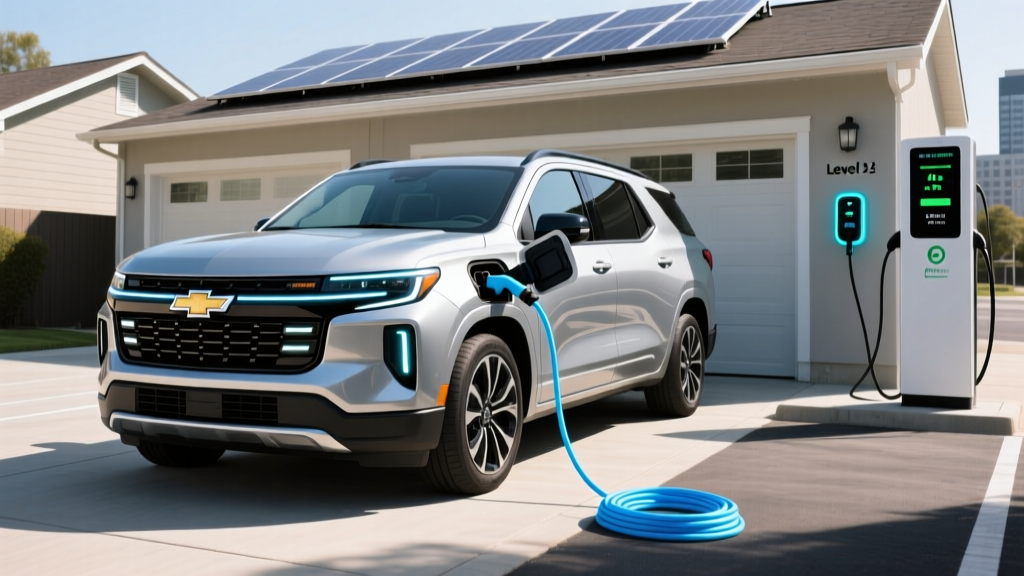
- Chevrolet Equinox EV (85 kWh battery, ~150 kW peak): At a Blink 175 kW DC fast charger → ~28–34 minutes. At a Blink Level 2 (9.6 kW) → ~10 hours.
Note: DC fast charging slows significantly above 80% SoC to protect battery health. The times above reflect the practical 10–80% window most EV owners use.
How Much Does Blink Charging Cost? Public vs. Home Rates
Blink's pricing varies by location, host-set rates, and whether you're a Blink Member or a Guest user. As of 2026, typical Blink rates fall into these ranges:
| Charging Scenario | Rate ($/kWh) | Cost for 60 kWh Fill | Cost Per Mile (at 3 mi/kWh) |
|---|---|---|---|
| Home (off-peak utility rate) | $0.08–$0.14 | $4.80–$8.40 | $0.027–$0.047 |
| Home (standard residential avg.) | $0.16 | $9.60 | $0.053 |
| Blink Level 2 (Member) | $0.39–$0.59 | $23.40–$35.40 | $0.13–$0.20 |
| Blink DC Fast (Member) | $0.49–$0.79 | $29.40–$47.40 | $0.16–$0.26 |
| Blink DC Fast (Guest / non-member) | $0.59–$0.89 | $35.40–$53.40 | $0.20–$0.30 |
| Gasoline (avg. $3.40/gal, 25 MPG car) | — | — | $0.136 |
The takeaway is clear: home charging at off-peak rates costs roughly one-quarter to one-third of public Blink charging per mile. Even at standard residential rates, home charging undercuts gasoline on a per-mile basis. Public DC fast charging on Blink is best reserved for road trips or drivers without home charging access — relying on it daily erodes the EV cost advantage significantly.
Blink Members pay an annual fee (around $20/year as of 2026) that unlocks lower per-kWh rates. If you charge on Blink more than a handful of times per month, the membership pays for itself quickly.
Connector Compatibility: Will Your EV Plug Into a Blink Charger?
The North American charging connector landscape has consolidated around NACS (the Tesla-designed standard now adopted by nearly every major automaker), but many Blink stations installed before 2024 still carry CCS1 connectors. Here's what you need to know:
| Connector | Brands Using It Natively | Blink Availability | Adapter Needed? |
|---|---|---|---|
| NACS (J3400) | Tesla, Ford, GM, Rivian, Hyundai, Kia, BMW, Volvo, Polestar, Lucid, Subaru, Toyota (2025+) | Newer Blink DC fast stations; select Level 2 | CCS1→NACS adapter for older Blink CCS1 stations |
| CCS1 | Legacy VW ID.4, older Audi e-tron, older BMW iX, pre-2025 Stellantis | Majority of existing Blink DC fast + Level 2 | NACS→CCS1 adapter for newer NACS-native vehicles |
| CHAdeMO | Nissan Leaf (discontinued 2025), Mitsubishi Outlander PHEV | Limited — some older Blink dual-standard stations | Not widely available; CHAdeMO infrastructure declining |
Practical advice: If you drive a 2025-or-newer NACS-native vehicle and encounter a Blink station with only CCS1 cables, you'll need a CCS1-to-NACS adapter. Tesla sells one for ~$250, and third-party options from Lectron and A2Z exist at lower prices. Always verify adapter compatibility with your specific model year before purchasing. For Level 2 AC charging, Blink stations typically use a J1772 connector, and Tesla/NACS vehicles include a J1772-to-NACS adapter in the glovebox.
Home Level 2 Charger Installation: Requirements, Costs, and Panel Gotchas
The most cost-effective long-term charging strategy is installing a Level 2 charger at home. Here's what the electrical work actually involves and what it costs.
Electrical Requirements
A Level 2 home charger requires a dedicated 240V circuit, similar to what powers an electric dryer or oven. Common configurations:
- 32A circuit (7.7 kW charger): Requires a 40A breaker (NEC code mandates 125% headroom for continuous loads). Uses 8 AWG copper wire. Suitable for most EVs and adequate for overnight charging.
- 48A circuit (11.5 kW charger): Requires a 60A breaker. Uses 6 AWG copper wire. Delivers the fastest Level 2 speeds and future-proofs for larger-battery vehicles.
- 60A circuit (14.4 kW charger): Requires an 80A breaker. Uses 4 AWG copper wire. Only needed if your EV's onboard charger supports 14.4 kW — most cap at 11.5 kW.
Installation Cost Breakdown
| Component | Simple Install (panel nearby, no upgrade) | Complex Install (long wire run or panel upgrade) |
|---|---|---|
| Charger equipment (hardwired or NEMA 14-50) | $350–$700 | $350–$700 |
| Electrical permit | $50–$200 | $50–$200 |
| Electrician labor (2–4 hrs simple / 6–12 hrs complex) | $300–$800 | $800–$2,500 |
| Wire, conduit, breaker, materials | $100–$300 | $300–$800 |
| Electrical panel upgrade (100A → 200A, if needed) | $0 (not needed) | $1,500–$3,500 |
| Total estimated cost | $800–$2,000 | $3,000–$7,700 |
The panel upgrade gotcha: Homes built before the 1990s often have 100A or even 60A electrical panels. Adding a 40A or 60A dedicated EV circuit may exceed the panel's capacity, especially if you already run electric heat, an electric dryer, and an electric range. A licensed electrician will perform a load calculation per NEC Article 220 to determine if your panel can handle the added draw. If it can't, a panel upgrade to 200A adds $1,500–$3,500 to your project but also increases your home's resale value and enables future electrification (heat pumps, solar, etc.).
Some utilities and states offer rebates that offset $200–$1,000 of installation costs. Check with your local utility and the AFDC incentive database for current programs in your area.
Safety and Code Considerations
- Dedicated circuit: NEC requires EV chargers to have their own dedicated circuit — no sharing with other appliances.
- GFCI protection: 2026 NEC editions require GFCI (Ground Fault Circuit Interrupter) protection for all 240V EV charging outlets. Hardwired chargers with built-in GFCI may satisfy this without a GFCI breaker.
- Outdoor rating: If your charger mounts outside, ensure it carries a NEMA 4 or NEMA 4X rating for weather resistance. Most major chargers meet this standard.
- Permit and inspection: Nearly all jurisdictions require an electrical permit for EV charger installation. The inspection verifies wire gauge, breaker sizing, grounding, and GFCI compliance. Skipping the permit risks insurance claim denial if an electrical fire occurs.
Recommended Home Chargers: Power Output, Smart Features, and Pricing
Based on real-world testing across multiple EVs and home electrical setups, these are the Level 2 chargers we recommend for 2026:
Best Overall: ChargePoint Home Flex
- Power: Up to 12 kW (50A) — adjustable down to 16A for smaller circuits
- Connector: J1772 (NACS adapter included for newer versions)
- Cable length: 23 feet
- Smart features: Wi-Fi, app scheduling, utility demand-response integration, Alexa/Google Home
- Price: ~$550 (equipment only)
- Why: Flexible amperage means it works on circuits from 20A to 60A. UL-listed, NEMA 4 rated for outdoor use.
Best for Tesla/NACS Owners: Tesla Wall Connector
- Power: Up to 11.5 kW (48A)
- Connector: Native NACS (J3400)
- Cable length: 24 feet
- Smart features: Wi-Fi, OTA firmware updates, load sharing between two Wall Connectors on one circuit, Tesla app integration
- Price: ~$450
- Why: Cleanest integration for NACS-native vehicles. Load-sharing feature is ideal for two-EV households.
Best Budget Pick: Emporia Level 2 EV Charger
- Power: Up to 11.5 kW (48A)
- Connector: J1772 (NACS adapter available separately)
- Cable length: 24 feet
- Smart features: Wi-Fi, Emporia energy-monitoring ecosystem integration, solar-aware charging scheduling
- Price: ~$350
- Why: Lowest price for a full-featured 48A smart charger. Pairs well with Emporia's whole-home energy monitor for solar owners.
Blink Network vs. Home Charging: Which Strategy Fits You?
The decision between relying on Blink's public network and installing a home charger comes down to your daily driving pattern, housing situation, and budget.
- You own or rent a home with garage or driveway access
- Your daily driving is under 80 miles (most commuters)
- You want the lowest per-mile fuel cost ($0.03–$0.05/mi vs. $0.13–$0.26/mi on Blink)
- You value waking up to a full battery every morning
- You live in an apartment or condo without dedicated EV charging
- You take road trips exceeding your battery's range
- Your workplace has Blink Level 2 chargers and offers free or subsidized charging
- You need a mid-day top-up on high-mileage driving days
For most EV owners, the optimal approach is home Level 2 for 90%+ of charging, supplemented by DC fast networks like Blink, Electrify America, or Tesla Superchargers for road trips. According to fueleconomy.gov, the average EV efficiency in 2026 hovers around 3.0–3.5 miles per kWh, making home-charged electricity the cheapest "fuel" available for personal transportation.
Frequently Asked Questions
How much does it cost to install a home EV charger?
A straightforward Level 2 installation (panel nearby, no upgrade needed) typically costs $800–$2,000 total, including the charger ($350–$700), electrician labor ($300–$800), permit ($50–$200), and materials ($100–$300). Complex installations requiring long wire runs or a panel upgrade from 100A to 200A can push costs to $3,000–$7,700. Always get at least two quotes from licensed electricians.
How fast will each charging level add range?
Level 1 (120V) adds roughly 3–5 miles per hour — only practical for PHEVs with small batteries or emergency top-ups. Level 2 (240V, 32–48A) adds 25–44 miles per hour, fully recharging most EVs overnight in 6–10 hours. DC fast charging at 150–350 kW can add 150–600+ miles per hour, taking most EVs from 10% to 80% in 18–45 minutes depending on battery size and vehicle acceptance rate.
Which connector or charger is compatible with my EV?
For 2025–2026 model-year vehicles, most new EVs use the NACS (J3400) connector natively — this includes Tesla, Ford, GM, Hyundai, Kia, Rivian, BMW, and others. Older or legacy models may still use CCS1. For Level 2 AC charging, public stations (including Blink) generally use J1772, and all NACS vehicles come with a J1772-to-NACS adapter. Check your owner's manual or the NHTSA vehicle database for your specific model's connector type.
How much does charging cost per mile compared to gas?
At home off-peak rates ($0.08–$0.14/kWh) and average EV efficiency (3 mi/kWh), electricity costs $0.027–$0.047 per mile. A gasoline car averaging 25 MPG at $3.40/gallon costs $0.136 per mile. Even public Blink DC fast charging at $0.49–$0.79/kWh costs $0.16–$0.26 per mile — sometimes more than gas. The EV fuel savings advantage is maximized with home charging.
What electrical upgrades might I need for a home charger?
The most common upgrade is a panel capacity increase from 100A to 200A, costing $1,500–$3,500. This is needed when your existing panel can't support the additional 40A–60A continuous load of an EV charger alongside existing appliances. Your electrician will perform an NEC Article 220 load calculation to determine if an upgrade is necessary. Older homes (pre-1990s) and homes with all-electric appliances are most likely to need one.
Does Blink offer free charging?
Some Blink stations at workplaces, hotels, or retail locations offer free or subsidized charging as a perk paid for by the host. However, the majority of Blink public chargers require payment via the Blink app or an RFID card. Host-set rates vary widely — always check the Blink app before plugging in to see the current per-kWh rate at your specific station.
Can I use a Blink charger if I drive a Tesla?
Yes. Newer Blink DC fast stations are being deployed with NACS connectors, making them directly compatible with Tesla vehicles. At older Blink stations with CCS1 connectors, Tesla owners can use the CCS1 adapter that Tesla sells (~$250) or a third-party equivalent. For Blink Level 2 stations with J1772 connectors, the J1772-to-NACS adapter included with every Tesla works seamlessly.
Understanding the Blink charging rate — and how it compares to home Level 2 charging — is essential for making an informed decision about where and how you power your EV. For most drivers, the path to the lowest ownership cost starts with a home charger installation and reserves public networks like Blink for the road trips and top-ups that home charging can't cover.