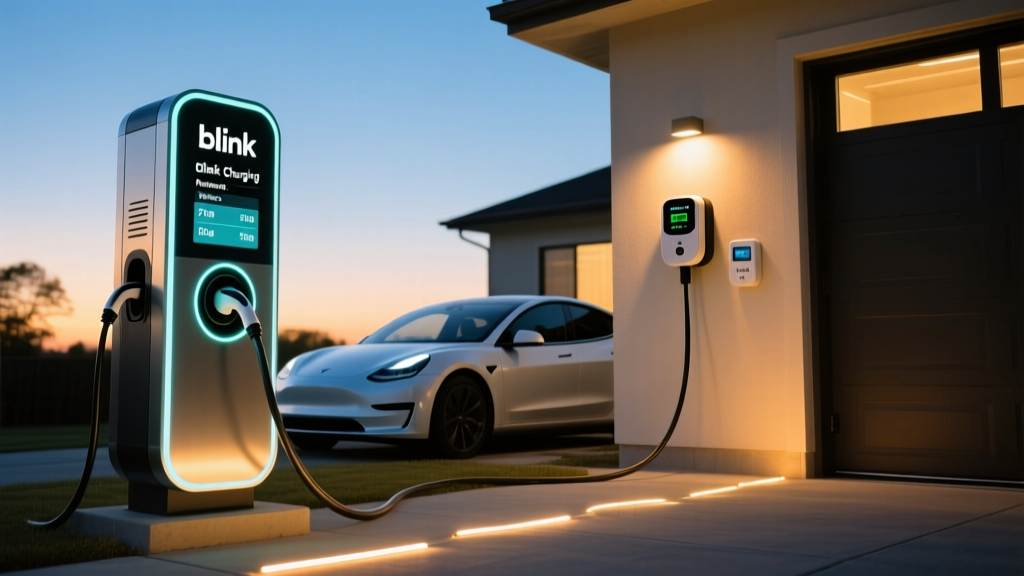
If you have driven past a Blink-branded charging pedestal in a grocery store parking lot or a municipal garage, you have likely wondered about the economics behind the network. For many EV owners, the Blink network is a familiar sight, but the actual Blink charging cost at public stations often prompts a deeper question: how does paying per kilowatt-hour (kWh) on a public network compare to the economics of installing a Level 2 charger at home?
As an analyst who has tracked public network pricing and managed home charging installations, I have broken down the exact costs associated with the Blink network, compared them to home charging scenarios, and evaluated the Blink HQ200 home unit to see if keeping it in the family makes financial sense.
Understanding the Blink Charging Cost on Public Networks
Blink operates a decentralized network of Level 2 and DC Fast Charging (DCFC) stations across the United States. Because Blink often utilizes a franchise or host-partner model, pricing is not always uniform. The host (the business or property owner where the charger is located) often has a say in the final rate, though Blink sets baseline minimums.
In 2026, the typical Blink charging cost for their Level 2 (AC) stations ranges from $0.39 to $0.59 per kWh, depending on the region and local utility demand charges. In states with high electricity costs like California or Massachusetts, you may see rates pushing toward $0.69 per kWh. For their DC Fast Chargers, the cost typically jumps to $0.49 to $0.79 per kWh.
To put that into perspective, a session adding 30 kWh (roughly 90-110 miles of range in a mid-size SUV) at a Blink Level 2 station priced at $0.49/kWh would cost approximately $14.70. While this is convenient for destination charging, it is significantly more expensive than residential electricity rates.
Home Charging Economics: The Real Cost Per Mile
The primary financial advantage of EV ownership comes from home charging. While the Blink charging cost on a public network fluctuates based on commercial rates, your home electricity rate is generally stable and far lower.
| Charging Scenario | Avg Cost per kWh | Cost Per Mile | Cost for 300-Mile "Fill-Up" |
|---|---|---|---|
| Blink Level 2 (Public) | $0.49 | $0.14 | $42.00 |
| Blink DC Fast (Public) | $0.65 | $0.19 | $55.71 |
| Home (National Avg 12¢) | $0.12 | $0.034 | $10.28 |
| Home (Time-of-Use Off-Peak) | $0.08 | $0.023 | $6.85 |
| Gas Vehicle (28 MPG @ $3.20/gal) | N/A | $0.114 | $34.28 |
Even at higher residential rates, home charging remains the most cost-effective way to fuel an EV. If you rely exclusively on public networks like Blink for daily driving, you may end up paying more per mile than a fuel-efficient gas vehicle.
Blink HQ200 Home Charger: Specs and Value
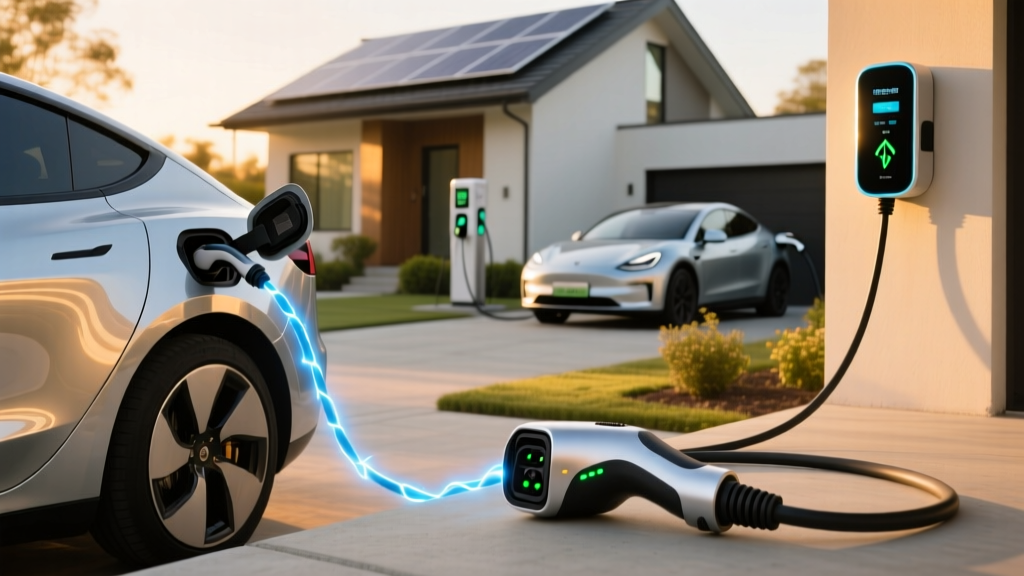
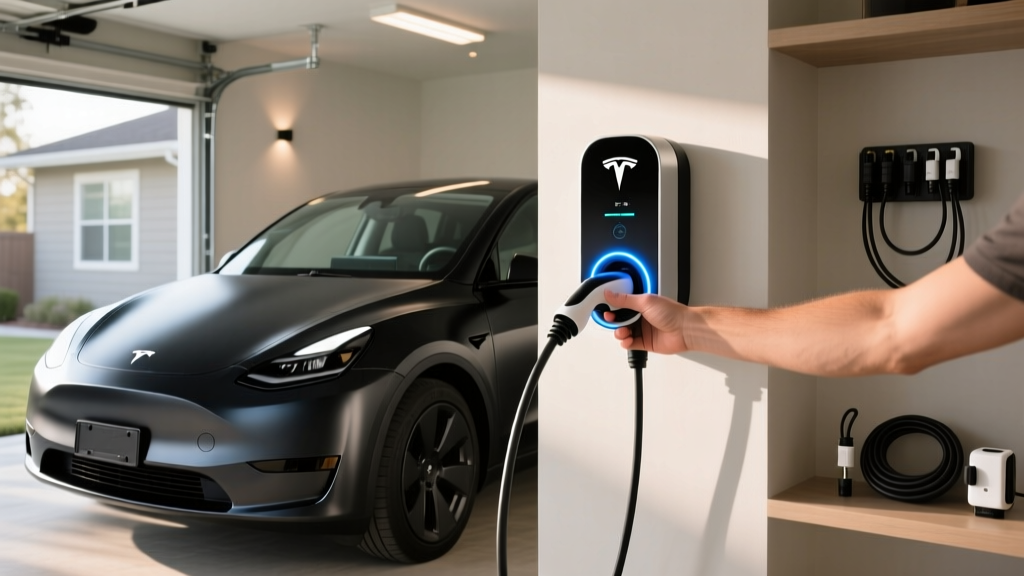
Blink offers its own residential hardware, the Blink HQ200, which is a Wi-Fi-enabled smart charger. While it integrates with the Blink app, it is important to note that using the HQ200 at home does not subject you to public "Blink charging cost" rates; you simply pay your utility company for the electricity used.
Blink HQ200 Smart Charger
- Power Output: 32 Amps (7.7 kW at 240V)
- Connector: NACS (Tesla) or J1772 (Universal)
- Cable Length: 23 feet
- Smart Features: App scheduling, energy tracking
- Price: ~$449 (often discounted with utility rebates)
Market Alternative: ChargePoint Home Flex
- Power Output: Up to 50 Amps (12 kW at 240V)
- Connector: NACS or J1772
- Cable Length: 23 feet
- Smart Features: Alexa, detailed reporting
- Price: ~$599
The Blink HQ200 provides 7.7 kW of power, which adds roughly 25-30 miles of range per hour. For most drivers with a daily commute of 40 miles, an overnight charge is more than sufficient. However, for owners of large-battery trucks like the Ford F-150 Lightning (131 kWh usable), the 7.7 kW rate will take nearly 17 hours for a 0-100% session, making a higher-amperage unit (48A or 80A) a better choice for those vehicles.
Level 2 Home Installation: Costs and Requirements
How much does it cost to install a home EV charger? The answer depends entirely on your home's existing electrical infrastructure. A Level 2 installation requires a dedicated 240V circuit, similar to a clothes dryer or electric oven.
| Component | Estimated Cost Range | Notes |
|---|---|---|
| Level 2 Charger (Hardware) | $350 - $650 | Blink HQ200, ChargePoint, Emporia |
| Electrician Labor (Simple) | $400 - $800 | Panel is near garage; 10-20ft run |
| Electrical Permit | $50 - $200 | Varies by local jurisdiction |
| Panel Upgrade (If Needed) | $1,500 - $3,500 | Upgrading from 100A to 200A service |
| Total (Simple Install) | $800 - $1,650 | Most common for newer homes |
Safety and Code Considerations
According to the National Electrical Code (NEC), EV charging is considered a "continuous load." This means the circuit must be rated for 125% of the charger's maximum draw. A 32-amp charger (like the Blink HQ200) requires a 40-amp breaker. If you install a 48-amp charger, you must have a 60-amp breaker. Always use a licensed electrician to ensure the work is permitted and insured.
Charging Levels and Speed: What to Expect
How fast will each charging level add range? The speed is dictated by the power (kW) delivered to the vehicle. Note that kW (kilowatt) is the rate of flow, while kWh (kilowatt-hour) is the total amount of energy stored in your battery.
| Level | Power (kW) | Range Added/Hour | Typical Use Case |
|---|---|---|---|
| Level 1 (120V) | 1.4 kW | 3 - 5 miles | Emergency / PHEV top-ups |
| Level 2 (240V) | 7.7 - 11.5 kW | 25 - 45 miles | Home / Destination / Blink Public |
| DC Fast (DCFC) | 50 - 350 kW | 150 - 1,000+ miles | Highway travel; 10-80% in 18-40 min |
Connector Compatibility: Will it Fit My EV?
The industry has largely standardized around the North American Charging Standard (NACS) for 2025-2026 models, though many older EVs still use the CCS1 or CHAdeMO connectors. Most Blink stations offer J1772 for Level 2 (which fits all non-Tesla EVs and Teslas with an adapter) and CCS1 for DC Fast Charging.
| Connector | Common Brands | Adapter Needs for Blink |
|---|---|---|
| NACS (Tesla) | Tesla, Ford, Rivian, GM, Hyundai/Kia | Tesla-to-J1772 adapter for L2; native NACS for newer DCFC |
| CCS1 | VW, BMW, older Ford/GM/Hyundai | Native fit for most Blink DCFC stations |
| CHAdeMO | Nissan Leaf (older), Mitsubishi | Native fit; becoming less common on new Blink units |
Is the Blink HQ200 Right for You?
If you are looking to minimize your "fuel" costs, the Blink HQ200 is a competent, if slightly lower-powered, home unit. It is best suited for:
- Daily commuters driving less than 60 miles round-trip.
- Owners of mid-sized EVs (Tesla Model 3, Hyundai Ioniq 5, Chevy Equinox EV).
- Those who find utility rebates that specifically incentivize Blink hardware.
If you own a high-capacity truck or frequently drive 200+ miles in a day, you should look for a 48-amp or 80-amp charger to reduce downtime. For more details on federal incentives for home charging equipment, refer to the IRS Alternative Fuel Vehicle Refueling Property Credit guidelines.