Why the Blink Charging Card Matters for EV Owners
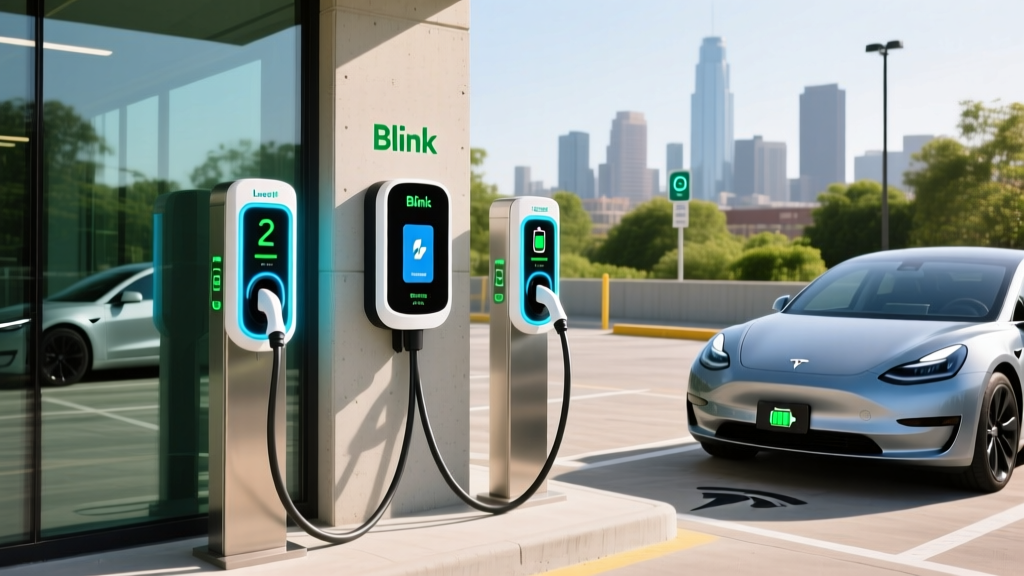
If you've pulled up to a Blink public charger and fumbled with app logins or credit-card readers, the Blink Charging Card (sometimes called the Blink RFID membership card) is the physical tap-and-charge key to the Blink network. It links directly to your Blink account, bypasses app authentication delays, and can be preloaded with funds for seamless sessions. But understanding what you're actually paying per kWh, how fast Blink stations deliver power, and whether public charging makes financial sense compared to a home Level 2 install requires digging into the numbers.
This guide breaks down exactly what the Blink Charging Card gives you, how Blink's public network stacks up on speed and cost, and — critically — how a home charger installation compares on both economics and convenience. We'll cover real kW figures, install cost breakdowns, and equipment picks so you can make a data-driven decision.
Charging Levels Explained: Speeds, kW, and Real-World Range Added
Before evaluating any network or home setup, you need clarity on what each charging level actually delivers. kW (kilowatts) measures power — how fast energy flows into your battery. kWh (kilowatt-hours) measures energy capacity — the size of your battery tank. They are not interchangeable.
| Level | Voltage | Power (kW) | Miles of Range per Hour | Typical Use Case |
|---|---|---|---|---|
| Level 1 | 120V AC | 1.0–1.4 kW | 3–5 mi/hr | Overnight top-up, PHEVs, low-mileage drivers |
| Level 2 (Home/Public AC) | 240V AC | 3.3–19.2 kW | 12–75 mi/hr | Daily home charging, workplace, destination |
| DC Fast Charging | 400–800V DC | 50–350 kW | 150–1,200+ mi/hr (peak) | Road trips, rapid top-ups, commercial fleets |
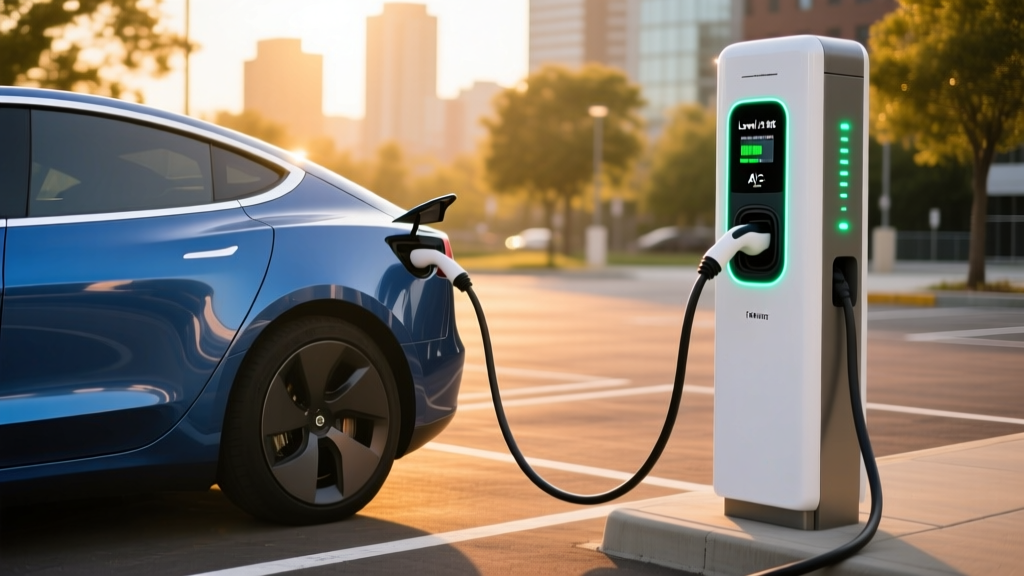
Most Blink public locations offer Level 2 AC charging at 6.6–19.2 kW (their IQ 200 series stations) and select DC fast-charging sites at up to 180 kW (IQ 300 series). A 19.2 kW Level 2 Blink station adds roughly 60–75 miles of range per hour to a vehicle like the Hyundai Ioniq 5 or Tesla Model Y — enough for most daily needs in 2–3 hours.
For context on DC fast charging: a 2026 Tesla Model Y Long Range (82 kWh battery, ~310 miles EPA) charging at a 150 kW DC fast charger will typically go from 10–80% in about 25–30 minutes. Expect real-world speeds to taper above 80% State of Charge (SoC) as the battery management system protects cell health — the charging curve is never a flat line.
How the Blink Charging Card Works: Fees, Pricing, and Access
The Blink Charging Card is an RFID-enabled membership card tied to your Blink account. Here's what it does and what it costs:
- Activation: Order the card through the Blink app or website; it arrives by mail and links to your existing account.
- Payment: You preload funds or link a credit/debit card. Tap the card on any Blink station's RFID reader to start a session — no phone required.
- Membership tiers: Blink offers a free basic account and a paid Blink Membership (historically around $1.99/month, though pricing varies by region and may have changed). Members receive discounted per-kWh rates at participating stations.
- Pricing model: Blink stations are priced by the host (property owner, business, municipality), so rates vary. Expect $0.39–$0.69/kWh at most public Level 2 Blink stations, and $0.49–$0.79/kWh at DC fast-charging locations. Some hosts charge a session fee ($1.00–$2.00) on top of the per-kWh rate.
| Scenario | Rate | Cost per Mile (3.5 mi/kWh vehicle) | Cost for 300-Mile Trip |
|---|---|---|---|
| Home Level 2 (off-peak utility rate) | $0.12/kWh | $0.034/mi | $10.29 |
| Home Level 2 (average US residential) | $0.17/kWh | $0.049/mi | $14.57 |
| Blink Level 2 Public (member rate) | $0.49/kWh | $0.140/mi | $42.00 |
| Blink DC Fast (non-member) | $0.69/kWh | $0.197/mi | $59.14 |
| Gas vehicle (28 MPG, $3.50/gal) | — | $0.125/mi | $37.50 |
The math is stark: home charging at off-peak rates costs roughly one-quarter of public Blink charging per mile. Even at average residential electricity rates, home charging undercuts both Blink public rates and gasoline. The Blink Charging Card is convenient for on-the-go top-ups, but relying on it as your primary charging strategy is the most expensive way to power an EV short of exclusive DC fast-charging use.
According to U.S. Energy Information Administration (EIA) data, the average US residential electricity rate hovers around $0.16–$0.18/kWh, though states like Washington and Louisiana average under $0.12/kWh while California and Massachusetts exceed $0.28/kWh. Your local rate dramatically changes the home-vs-public calculus.
Home Level 2 Charger Installation: Costs, Electrical Requirements, and Gotchas
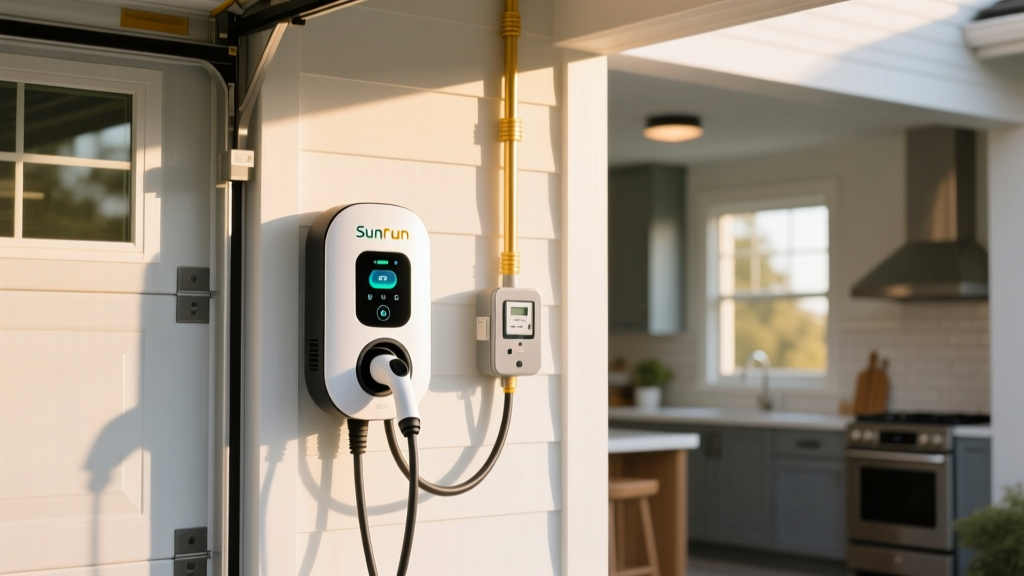
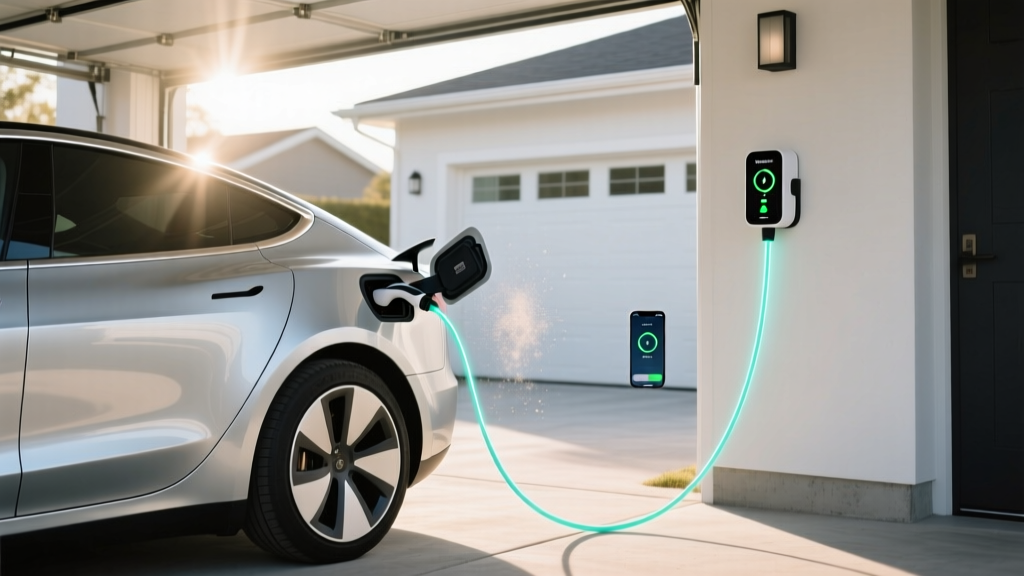
The single highest-leverage decision an EV owner makes is installing a Level 2 home charger. Here's what's involved electrically and financially.
Electrical Requirements
A typical home Level 2 charger requires a 240V dedicated circuit — the same voltage your electric dryer or oven uses. Common configurations:
- 40-amp circuit / 32-amp continuous charger: Delivers ~7.7 kW. Sufficient for most EVs with overnight charging.
- 50-amp circuit / 40-amp continuous charger: Delivers ~9.6 kW. Good for larger batteries (Ford F-150 Lightning 131 kWh, Rivian R1S 149 kWh).
- 60-amp circuit / 48-amp continuous charger: Delivers ~11.5 kW. Maximum practical for single-family homes without panel upgrades.
Electrical code (NEC 2023/2026) requires continuous loads like EV chargers to use only 80% of the circuit's rated amperage. A 40A breaker supports 32A continuous charging — this is not optional.
Panel Upgrade Reality
Homes built before 1990 often have 100-amp electrical panels. Adding a 40–60A dedicated EV circuit to a maxed-out 100A panel requires a panel upgrade to 200A, which is the single largest cost variable in a home charger install. Modern homes (post-2000) with 200A panels usually have sufficient headroom.
A licensed electrician will perform a load calculation (NEC Article 220) to determine if your panel can handle the additional circuit. Don't skip this — it's a code requirement and a safety necessity.
| Component | Low-End | Typical | High-End (Panel Upgrade) |
|---|---|---|---|
| Level 2 charger equipment (hardwired or NEMA 14-50 plug) | $300 | $500–$700 | $700–$900 |
| Electrician labor (run conduit, wire, mount) | $400 | $800–$1,500 | $1,500–$3,000 |
| Permit and inspection | $50 | $100–$250 | $250–$500 |
| Panel upgrade (if needed: 100A → 200A) | — | — | $2,000–$4,000 |
| Total | $750 | $1,400–$2,450 | $4,450–$8,400 |
The IRS §30C Alternative Fuel Vehicle Refueling Property Credit covers 30% of home charger equipment and installation costs, up to $1,000, for qualifying installations in eligible census tracts. This can offset $300–$1,000 of your total. Eligibility depends on your property's census tract designation — consult irs.gov or a tax professional to confirm.
Connector Compatibility: NACS, CCS1, CHAdeMO, and Adapter Needs
The North American charging connector landscape has consolidated significantly since 2024, but compatibility still varies by vehicle and station.
| Connector | Used By | Blink Network Support | Adapter Needed? |
|---|---|---|---|
| NACS (Tesla / SAE J3400) | Tesla (all), Ford, GM, Rivian, Hyundai, Kia, Volvo, Polestar (2025+ models) | Select Blink stations (expanding) | CCS1→NACS adapter for non-Tesla vehicles at CCS stations |
| CCS1 (Combined Charging System) | Legacy Ford, GM, VW, BMW, most pre-2025 models | Most Blink DC fast stations | NACS→CCS1 adapter for NACS-equipped vehicles at CCS stations |
| CHAdeMO | Nissan Leaf (discontinued), Mitsubishi Outlander PHEV | Limited Blink locations | No adapter available for NACS/CCS vehicles; legacy only |
| J1772 (Level 2 AC) | All non-Tesla EVs (Level 2 only) | All Blink Level 2 stations | Tesla owners use included J1772→NACS adapter |
For Blink specifically: all Blink Level 2 stations use J1772 connectors, compatible with every EV on the road (Tesla owners tap in their J1772 adapter). Blink's DC fast stations are predominantly CCS1, with NACS connectors being added to newer IQ 300 installations. Before relying on Blink for a road trip, check the Blink app or BlinkCharging.com for connector availability at your destination station.
Charging Time Examples: How Long Does a Session Actually Take?
Real-world charging time depends on battery size, state of charge, charger power output, and the vehicle's onboard charge acceptance rate. Here are practical examples:
| Vehicle (Battery kWh) | Level 2 @ 7.7 kW | Level 2 @ 11.5 kW | DC Fast @ 150 kW | DC Fast @ 250 kW |
|---|---|---|---|---|
| Chevy Equinox EV (85 kWh usable) | ~7.7 hrs | ~5.2 hrs | ~32 min | ~22 min |
| Tesla Model Y LR (82 kWh usable) | ~7.4 hrs | ~5.0 hrs | ~28 min | ~18 min |
| Hyundai Ioniq 5 (84 kWh usable) | ~7.6 hrs | ~5.1 hrs | ~25 min | ~18 min |
| Ford F-150 Lightning Ext. (131 kWh usable) | ~11.9 hrs | ~8.0 hrs | ~48 min | ~35 min |
Critical caveat: DC fast-charging times assume ideal conditions — battery preconditioned to optimal temperature, low starting SoC, and no power-sharing with adjacent stalls. In cold weather (below 32°F / 0°C), expect 10–80% times to increase by 20–40% unless your vehicle actively preconditioned the battery. At a Blink 180 kW DC fast station, the Hyundai Ioniq 5 (800V architecture, 240 kW peak acceptance) will be bottlenecked by the station's 180 kW cap, adding roughly 5–7 minutes vs. a 250 kW Electrify America or Tesla Supercharger V4 stall.
Equipment Recommendations: Best Home Level 2 Chargers (2026)
If you're deciding between relying on the Blink Charging Card for public sessions or investing in home Level 2, here are proven chargers worth considering:
ChargePoint Home Flex
- Power output: Up to 11.5 kW (48A on 60A circuit); adjustable down to 16A
- Connector: J1772 (NACS version available for 2026)
- Cable length: 23 feet
- Smart features: Wi-Fi, Alexa integration, scheduled charging, energy tracking via app
- Price: ~$549–$599
- Best for: Flexible amperage adjustment if your panel is tight on capacity
Wall Connector (Tesla, Gen 3 with J3400/NACS)
- Power output: Up to 11.5 kW (48A on 60A circuit)
- Connector: NACS native; includes J1772 adapter for non-Tesla EVs
- Cable length: 24 feet
- Smart features: Wi-Fi, power-sharing (daisy-chain up to 6 units), OTA updates
- Price: ~$475
- Best for: Tesla owners or mixed-NACS households; best value-to-performance ratio
Emporia Vue Home EV Charger
- Power output: Up to 11.5 kW (48A); also available in 40A version
- Connector: J1772
- Cable length: 24 feet
- Smart features: Integrates with Emporia Vue energy monitor, solar-aware scheduling, load management
- Price: ~$399–$449
- Best for: Budget-conscious buyers; solar-panel households wanting energy integration
Blink HQ 200 (Home / Commercial)
- Power output: Up to 19.2 kW (80A on 100A circuit) — requires commercial-grade panel capacity
- Connector: J1772 (dual-cable options available)
- Cable length: 25 feet
- Smart features: Blink network integration, RFID card support, revenue-grade metering
- Price: ~$1,200–$1,800 (equipment only; commercial install adds significantly)
- Best for: Commercial properties, HOA shared charging, multi-family buildings — overkill for most single-family homes
For the vast majority of single-family homeowners, the Tesla Wall Connector or ChargePoint Home Flex offers the best balance of price, power, and smart features. The Blink HQ 200 is designed for commercial and fleet applications and requires electrical infrastructure that most homes don't have without substantial upgrades.
Safety and Electrical Code Considerations
EV chargers draw sustained high current for hours — this is fundamentally different from intermittent loads like a microwave. Safety isn't optional:
- Dedicated circuit: Your EV charger must be on its own dedicated breaker — no sharing with other outlets or appliances.
- GFCI protection: NEC 2023 and later require GFCI (Ground Fault Circuit Interrupter) protection for all EV charging outlets. Hardwired chargers with built-in ground-fault protection may satisfy this; plug-in units on NEMA 14-50 receptacles require a GFCI breaker (add ~$50–$100 to your panel cost).
- Outdoor rating: If mounting outdoors, ensure the charger carries a NEMA 4 or NEMA 4X rating (weatherproof). All recommended chargers above meet this standard.
- Wire gauge: A 60A circuit requires 4 AWG copper wire (or 3 AWG aluminum) per NEC Table 310.16. Your electrician will size this correctly — don't attempt DIY wiring for a circuit this large.
- Permit and inspection: Most jurisdictions require a permit for EV charger installation. The inspection verifies wire sizing, breaker rating, grounding, and GFCI compliance. Skipping the permit risks insurance claim denial in the event of an electrical fire.
Always hire a licensed electrician — not a general contractor or handyman — for EV charger installation. The sustained high-current nature of EV charging makes proper connections, torque specifications, and thermal management critical. Per NFPA / NEC guidelines, improper EV charger wiring is a documented fire risk.
Frequently Asked Questions
How much does it cost to install a home EV charger?
A typical home Level 2 charger installation costs $1,400–$2,450 including equipment ($300–$700), electrician labor ($400–$1,500), and permit ($50–$250). If your home needs a panel upgrade from 100A to 200A service, add $2,000–$4,000, bringing the total to $4,450–$8,400. The IRS §30C credit can offset up to $1,000 (30%) for eligible installations.
How fast will each charging level add range?
Level 1 (120V) adds 3–5 miles per hour. Level 2 (240V, 7.7–11.5 kW) adds 25–45 miles per hour depending on your vehicle's efficiency. DC fast charging (50–350 kW) can add 150–1,200+ miles per hour at peak, though the charge curve tapers significantly above 80% SoC, so practical sessions are 10–80% in 18–48 minutes depending on battery size and station power.
Which connector and charger is compatible with my EV?
For Level 2 AC charging, all non-Tesla EVs use J1772 and Tesla vehicles use NACS (J3400) — Tesla includes a J1772 adapter. For DC fast charging, vehicles made from 2025 onward are increasingly adopting NACS, while older models use CCS1. CHAdeMO is limited to the Nissan Leaf (now discontinued). Check your vehicle's charge port and the station's connector before arriving.
How much does charging cost per mile compared to gas?
Home charging at the US average rate of ~$0.17/kWh costs roughly $0.049/mile for a vehicle averaging 3.5 miles per kWh. A comparable gas vehicle at 28 MPG and $3.50/gallon costs $0.125/mile — about 2.5x more. Public Blink charging at $0.49–$0.69/kWh costs $0.14–$0.20/mile, which is comparable to or slightly more expensive than gasoline. Home charging is where the EV cost advantage lives.
What electrical upgrades might I need for a home charger?
The most common upgrade is a panel upgrade from 100A to 200A service ($2,000–$4,000) if your existing panel lacks capacity for a dedicated 40–60A circuit. You may also need conduit runs from the panel to the garage or driveway, a GFCI breaker ($50–$100), and in some jurisdictions, a smart load-management device that throttles the charger when household demand peaks. Your electrician's load calculation will determine exactly what's required.
Is the Blink Charging Card worth it if I have home charging?
Yes, as a backup. Even dedicated home chargers will need occasional public top-ups for road trips, unexpected detours, or apartment-dwelling guests. The Blink card eliminates app friction and can be preloaded with funds. However, for daily driving, home Level 2 charging at $0.12–$0.17/kWh will always be dramatically cheaper than any public network at $0.39–$0.79/kWh.