Blazer EV SS Range: What the EPA Sticker Doesn't Tell You
The 2025 Chevrolet Blazer EV SS is the performance flagship of GM's Ultium-based crossover lineup, packing 615 horsepower, 650 lb-ft of torque, and a 0-60 mph time of 3.4 seconds. But for daily ownership, the headline question isn't acceleration — it's how far this 6,500-pound AWD electric SUV actually goes on a charge, how fast it replenishes, and what it costs to set up at home.
Below, we break down the Blazer EV SS range and efficiency data, then walk through the full charging ecosystem — from Level 1 trickle charging to 190 kW DC fast stops, and the real costs of a home Level 2 installation.
| Drivetrain | Dual-motor AWD |
| Horsepower | 615 hp / 650 lb-ft |
| Battery (usable) | 102 kWh (NMC, Ultium platform) |
| EPA Range | 279 miles (SS trim, 22-inch wheels) |
| MPGe (combined) | 79 MPGe |
| 0-60 mph | 3.4 seconds |
| Max DC Fast Charge | 190 kW peak |
| Level 2 Onboard Charger | 11.5 kW (48A) |
| Connector | NACS (native Tesla Supercharger access) |
| Base MSRP | $61,900 (exceeds §30D MSRP cap for SUVs) |
| Battery/Powertrain Warranty | 8 years / 100,000 miles |
Real-World Range vs. the 279-Mile EPA Estimate
EPA sticker: 279 miles
Highway driving (70-75 mph, moderate temps): ~230–250 miles
City/suburban mixed driving: ~260–275 miles
Cold weather (below 32°F, cabin heat on): ~195–225 miles (20–30% reduction)
Hot weather + aggressive driving: ~235–255 miles
The 279-mile EPA figure for the SS trim is lower than the Blazer EV LT's 324-mile estimate, primarily because the SS rides on 22-inch wheels with stickier performance tires and carries a heavier dual-motor setup. The SS also trades some efficiency for its 615-hp output, achieving 79 MPGe combined versus the LT's 89 MPGe, per fueleconomy.gov.
MPGe (miles per gallon equivalent) measures how far an EV travels on 33.7 kWh of electricity — the energy equivalent of one gallon of gasoline. A 79 MPGe rating means the Blazer EV SS consumes roughly 42 kWh per 100 miles in combined driving. That's a meaningful figure when calculating your actual charging costs.
The Blazer EV's Ultium battery pack uses nickel-manganese-cobalt (NMC) chemistry. NMC offers higher energy density than LFP (lithium iron phosphate), which is how GM fits 102 kWh of usable capacity into this platform, but NMC cells degrade slightly faster over thousands of charge cycles. GM's 8-year/100,000-mile battery warranty covers the pack if capacity drops below a specified retention threshold.
Charging the Blazer EV SS: Levels, Speeds, and Times
Understanding charging requires one foundational distinction: kW (kilowatts) measures power — the rate of energy delivery, like water pressure from a hose. kWh (kilowatt-hours) measures energy — the total amount stored or delivered, like gallons in a bucket. The Blazer EV SS has a 102 kWh battery (the bucket). A 190 kW DC fast charger fills that bucket at up to 190 kW (the pressure) — but only until the battery management system tapers the rate to protect the cells.
| Level | Power | Miles Added/Hour | 10-80% Time | Typical Use |
|---|---|---|---|---|
| Level 1 (120V) | ~1.4 kW | ~3 mi/hr | ~50+ hours | Emergency/top-up only |
| Level 2 (240V, 48A) | 11.5 kW | ~27 mi/hr | ~6.2 hours | Home/overnight charging |
| DC Fast (190 kW peak) | Up to 190 kW | N/A (session-based) | ~30 min (10-80%) | Road trips |
DC Fast Charging Curve Reality
The Blazer EV SS peaks at 190 kW on a capable DC fast charger, but that peak only holds between roughly 10% and 30% state of charge (SoC). The charge curve tapers significantly after 50%, and drops sharply above 80% to protect battery longevity. Expect the 10-80% session to take approximately 30 minutes at a 350 kW-capable station. On a 150 kW charger, that same 10-80% session stretches to roughly 40-45 minutes.
This taper is universal across lithium-ion batteries. Planning road trips around 10-80% stops — rather than topping to 100% — saves considerable time. Charging from 80% to 100% can take as long as the 10-80% portion.
Home Level 2 Installation: Costs, Electrical Requirements, and Gotchas
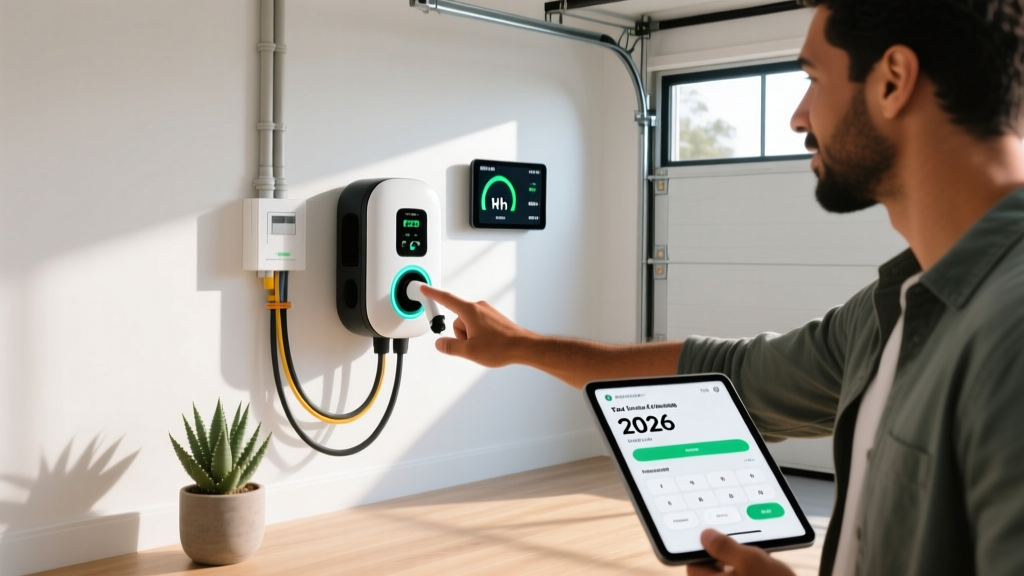
The Blazer EV SS's 11.5 kW onboard charger accepts up to 48 amps at 240 volts. To unlock that full speed, you need a hardwired Level 2 station on a dedicated 60-amp circuit (EV chargers are considered continuous loads by the National Electrical Code, requiring the circuit to be rated at 125% of the charger's max draw — so a 48A charger needs a 60A breaker).
Electrical Requirements
- Voltage: 240V (same as a dryer or oven outlet)
- Amperage: 60A dedicated circuit for full 48A charging; a 50A circuit limits output to 40A / 9.6 kW
- Wire gauge: 6 AWG copper (for 60A) or 8 AWG (for 50A), run in conduit
- Panel capacity: Your main panel must have sufficient spare capacity — typically 200A service is adequate for most homes with an EV charger, but older homes with 100A panels often need an upgrade
Installation Cost Breakdown
| Component | Simple Install (panel nearby) | Complex Install (long run/panel upgrade) |
|---|---|---|
| Level 2 Charger (hardware) | $400–$700 | $400–$700 |
| Licensed Electrician Labor | $500–$1,200 | $1,500–$3,500 |
| Permit & Inspection | $50–$200 | $100–$350 |
| Electrical Panel Upgrade (if needed) | $0 | $1,500–$3,000 |
| Total Estimated Cost | $950–$2,100 | $3,500–$7,550 |
The biggest variable is whether your electrical panel has spare capacity and is physically close to your garage or parking spot. A simple install — where the panel is in the garage with open breaker slots and the charger mounts within 10 feet — can wrap up under $1,500 total. A complex install requiring a new 200A panel, a 60-foot conduit run through walls or underground, and local utility coordination can exceed $5,000.
Always hire a licensed electrician and pull a permit. Unpermitted EV charger installations can void home insurance claims and create fire hazards. The NEC requires GFCI protection for outdoor receptacles, and hardwired installations should use a disconnect switch within sight of the charger.
Connector Compatibility: NACS, CCS1, and What the Blazer EV SS Uses
The 2025 Blazer EV SS comes with a NACS (North American Charging Standard) port — the connector originally developed by Tesla and now adopted by GM, Ford, Rivian, and most major automakers. This means the Blazer EV SS can charge natively at Tesla Supercharger stations (over 25,000 stalls across the U.S.) without an adapter.
| Connector | Brands Using It (2025-2026) | Adapter Needed for Superchargers? |
|---|---|---|
| NACS | Tesla, GM (Blazer EV, Equinox EV, Silverado EV), Ford, Rivian, Volvo, Polestar | No — native access |
| CCS1 | Hyundai, Kia, VW, BMW, older GM models (Bolt EV/EUV) | Yes — CCS-to-NACS adapter (~$200-250) |
| CHAdeMO | Nissan Leaf (legacy), Mitsubishi Outlander PHEV | Limited adapter options; network declining |
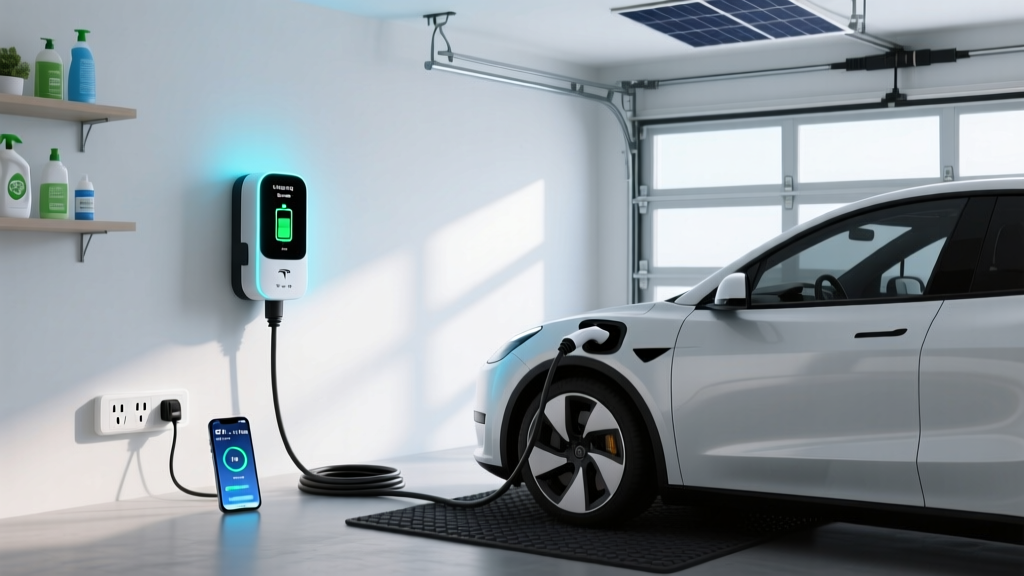
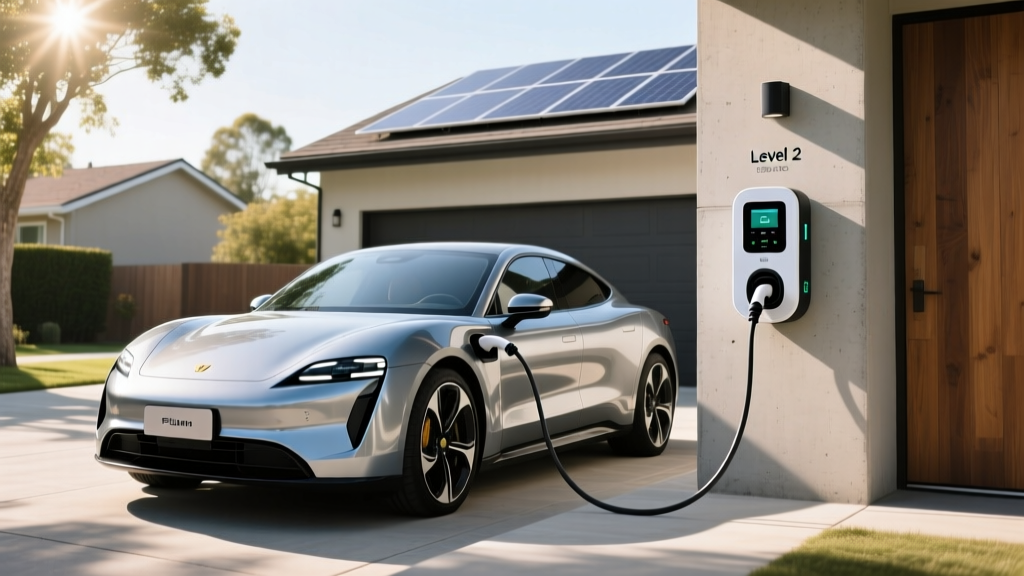
For Level 2 home charging, the Blazer EV SS uses the same NACS connector. Most home Level 2 chargers now ship with NACS plugs or offer a NACS option. If you already own a J1772 (the older Level 2 standard) home charger, GM includes a J1772-to-NACS adapter with the vehicle for Level 2 use.
Level 2 Charger Equipment Recommendations
Below are three Level 2 chargers suited to the Blazer EV SS's 11.5 kW / 48A onboard charger, all available in NACS or configurable for NACS:
Tesla Wall Connector (NACS)
Power: Up to 11.5 kW (48A)
Cable Length: 24 feet
Smart Features: Wi-Fi, OTA updates, power sharing between units, load management
Connector: Native NACS
Price: ~$475
Best For: Blazer EV SS owners wanting max compatibility with NACS ecosystem. Note: Tesla Wall Connectors also include a J1772 adapter for non-Tesla use, but the NACS version works natively with the Blazer EV SS.
ChargePoint Home Flex (NACS version)
Power: Up to 12 kW (50A) — configurable down to match your circuit
Cable Length: 23 feet
Smart Features: Wi-Fi, app scheduling, energy reports, Alexa integration, NEMA 14-50 plug or hardwired
Connector: NACS (2025+ model) or J1772 with adapter
Price: ~$650
Best For: Owners who want flexible amperage settings and robust app controls. Plug-in version allows portability if you move.
Emporia Vue Level 2 Charger
Power: Up to 11.5 kW (48A)
Cable Length: 24 feet
Smart Features: Wi-Fi, energy monitoring, solar integration, scheduling, load management
Connector: NACS or J1772 (select at purchase)
Price: ~$400
Best For: Budget-conscious buyers who still want smart scheduling and energy tracking. Excellent value with solar-panel integration for homes with rooftop PV.
Charging Cost Per Mile: Blazer EV SS vs. Gas Equivalent
The Blazer EV SS consumes approximately 42 kWh per 100 miles (combined). Here's what that costs across common charging scenarios, compared to a gas-powered equivalent like the 2025 Blazer RS with a 3.6L V6 (22 MPG combined):
| Scenario | Rate | Cost/Mile (EV SS) | Cost/Mile (Gas, $3.40/gal) |
|---|---|---|---|
| Home (off-peak utility rate) | $0.12/kWh | $0.050 | $0.155 |
| Home (average U.S. rate) | $0.17/kWh | $0.071 | $0.155 |
| Public Level 2 (ChargePoint, etc.) | $0.30/kWh | $0.126 | $0.155 |
| DC Fast (Tesla Supercharger avg) | $0.35/kWh | $0.147 | $0.155 |
| DC Fast (Electrify America peak) | $0.48/kWh | $0.202 | $0.155 |
At home on off-peak rates, the Blazer EV SS costs roughly one-third as much per mile as its gas counterpart. Even on public DC fast chargers at average rates, the EV is slightly cheaper per mile. Only at peak-rate DC fast stations does the cost per mile exceed gasoline — which is why most EV owners do 85-90% of their charging at home.
Safety, Code, and Smart Charging Tips for Blazer EV SS Owners
Before energizing your home charger, verify these safety and code requirements with your electrician:
- Dedicated circuit: The Level 2 charger must be on its own dedicated breaker — never shared with other appliances.
- GFCI protection: Required for outdoor receptacles (NEC 2020+). Hardwired installations may not require GFCI at the breaker in all jurisdictions, but local codes vary.
- Outdoor rating: If your charger mounts outside, ensure the unit carries a NEMA 4 (weatherproof) rating. All three recommended chargers above are outdoor-rated.
- Cable management: A 24-foot cable can be a tripping hazard. Use a wall-mounted cable organizer or retractor.
- Preconditioning: The Blazer EV SS can precondition its battery when you set a departure time in the MyChevrolet app. This warms the battery to optimal charging temperature, improving DC fast-charge speeds — especially critical in cold weather when a cold-soaked battery may accept only 50-80 kW until it warms up.
Frequently Asked Questions
How much does it cost to install a home EV charger for the Blazer EV SS?
A straightforward Level 2 installation (panel nearby, short wire run, no panel upgrade) typically costs $950–$2,100 all-in, including the charger hardware, electrician labor, and permit. If your home needs a panel upgrade from 100A to 200A service, or the wire run exceeds 50 feet through finished walls, expect $3,500–$7,550. Always get 2-3 quotes from licensed electricians.
How fast will each charging level add range to the Blazer EV SS?
Level 1 (120V) adds about 3 miles per hour — useful only for overnight top-ups if you drive under 30 miles daily. Level 2 (240V, 48A) adds roughly 27 miles per hour, fully replenishing the 102 kWh battery overnight. DC fast charging at 190 kW peak can add up to 100+ miles in 10 minutes during the peak portion of the charge curve (10-30% SoC).
Which connector does the Blazer EV SS use?
The Blazer EV SS uses NACS natively for both Level 2 and DC fast charging. This gives it direct access to Tesla Supercharger stations and all NACS-equipped public chargers. For older J1772 Level 2 stations, GM provides a J1772 adapter. CCS1 stations require a CCS-to-NACS adapter (sold separately, ~$200-250).
Does the Blazer EV SS qualify for the federal EV tax credit?
The Blazer EV SS has a base MSRP of $61,900, which exceeds the $80,000 MSRP cap for SUVs under IRS §30D — so the SS trim itself is within the cap. However, eligibility also depends on buyer income limits ($150K single / $300K joint), battery component sourcing requirements, and critical mineral rules that change annually. As of 2025, many GM Ultium vehicles qualify for partial or full credits depending on battery sourcing. Check the latest rules at IRS.gov and consult a tax professional.
What's the real-world highway range of the Blazer EV SS?
Expect roughly 230–250 miles at sustained 70-75 mph highway speeds in moderate temperatures. Cold weather (below freezing) reduces that to approximately 195–225 miles due to cabin heating demands and increased battery internal resistance. Using the heat pump (standard on the Blazer EV) and seat/steering wheel heaters instead of full cabin heat can recover 10-15 miles of range in cold conditions.
Can I charge the Blazer EV SS on a regular 120V outlet?
Yes, using the included Level 1 mobile charging cord. However, at ~1.4 kW, you'll add only about 3 miles of range per hour. A full 10-100% charge would take over 70 hours. Level 1 is practical only for PHEVs or BEVs driven under 25-30 miles daily with overnight access. For the Blazer EV SS with its 102 kWh pack, Level 2 is strongly recommended.