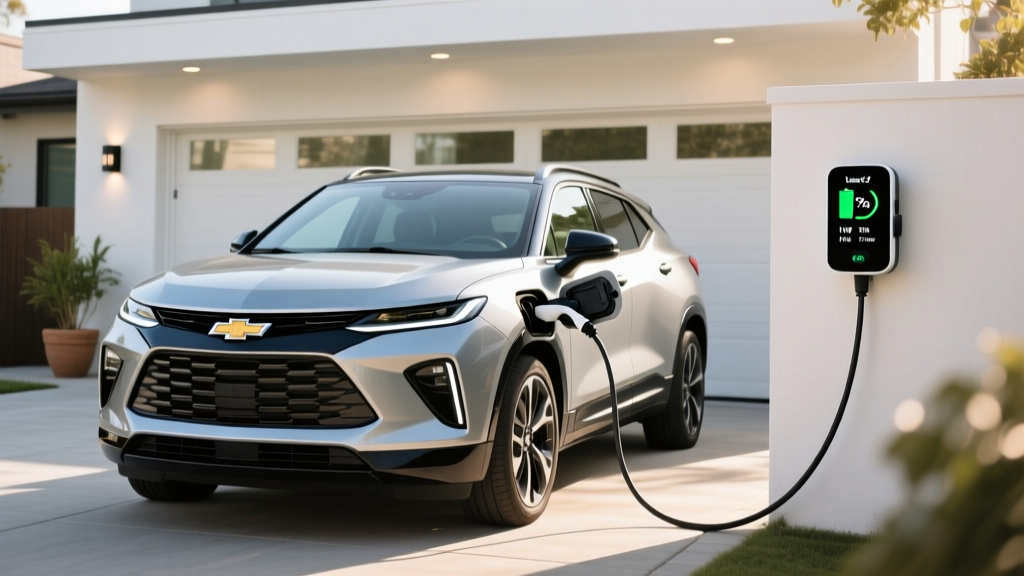
The 2026 Chevrolet Blazer EV offers a compelling mix of midsize SUV utility and electric efficiency, but like any EV, its real-world usability hinges on how you charge it. The EPA-estimated range varies significantly by trim and drivetrain — from 279 miles on the AWD RS to 324 miles on the FWD 2LT — but those sticker numbers only tell part of the story. This guide covers what Blazer EV range actually looks like on the road, how fast each charging level replenishes the battery, and exactly what it takes to set up Level 2 charging at home.
2026 Blazer EV Range: EPA Estimates vs Real-World Expectations
The Blazer EV is built on GM's Ultium platform with a usable battery capacity of approximately 102 kWh (NMC chemistry). Range varies by trim because drivetrain configuration and wheel size affect efficiency. Here is what the EPA says, and what you should actually expect:
EPA estimates assume a mix of city and highway driving at moderate temperatures. On a pure highway road trip at 70+ mph, expect roughly 10–15% less range than the EPA sticker. In cold weather (below 30°F), range can drop 20–30% due to battery resistance and cabin heating demands. A 324-mile EPA FWD model may deliver 260–280 miles on a winter highway run.
| Trim | Drivetrain | EPA Range | MPGe (City/Hwy) | Real-World Highway Est. |
|---|---|---|---|---|
| 2LT (FWD) | Front-Wheel Drive | 324 mi | 103 / 88 | ~275–290 mi |
| RS (RWD) | Rear-Wheel Drive | 320 mi | 100 / 87 | ~270–285 mi |
| RS (AWD) | All-Wheel Drive | 279 mi | 96 / 81 | ~235–250 mi |
| SS (AWD) | All-Wheel Drive | 290 mi | 97 / 82 | ~245–260 mi |
Source: fueleconomy.gov
The SS trim, with its 557-horsepower dual-motor setup and 0–60 mph time of roughly 4.0 seconds, trades a small amount of range for substantial performance. For most buyers prioritizing maximum range, the FWD 2LT is the efficiency sweet spot.
Charging Levels Explained: How Fast Each Level Adds Range
Understanding the difference between kW (power — the rate of energy flow) and kWh (energy — the battery's total capacity) is essential. Think of kW as how wide the pipe is, and kWh as the size of the tank. The Blazer EV's 102 kWh battery is the tank; the charger's kW output determines how fast you fill it.
| Level | Voltage / Amps | Max Power (kW) | Miles of Range Per Hour | Full Charge Time (0–100%) |
|---|---|---|---|---|
| Level 1 (120V outlet) | 120V / 12A | ~1.4 kW | ~3–4 mi/hr | ~72+ hours |
| Level 2 (240V home/public) | 240V / 48A | ~11.5 kW | ~29–34 mi/hr | ~9–10 hours |
| DC Fast Charging | 400V architecture | Up to 190 kW (peak) | ~150+ mi in 10 min (peak) | 10–80% in ~32 min |
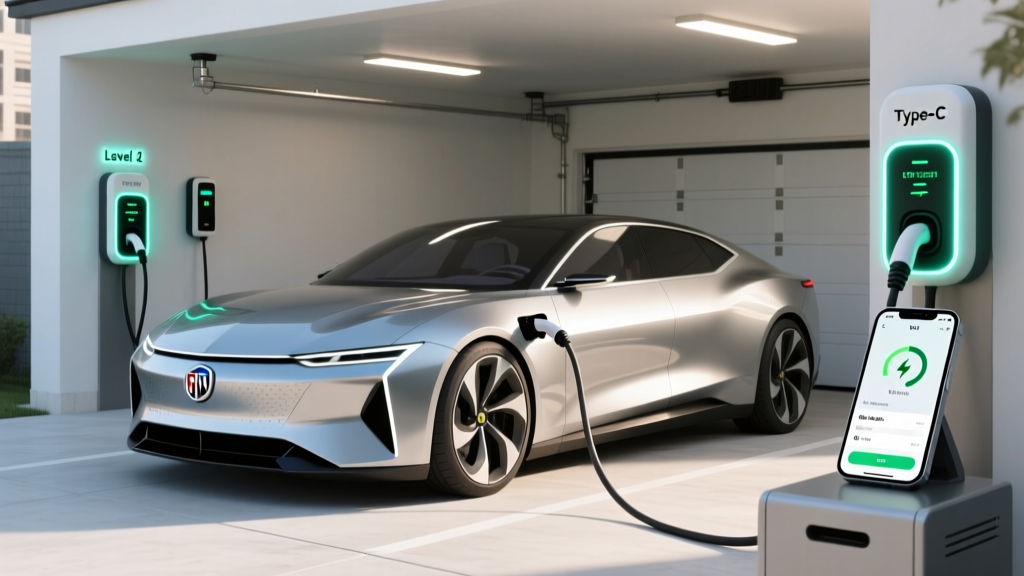
Level 1 is essentially an emergency trickle — useful only if you drive fewer than 30 miles per day and can leave the car plugged in overnight. For Blazer EV owners, Level 2 at home is the practical baseline. The Blazer EV's onboard charger accepts up to 11.5 kW on AC power, so a 48-amp Level 2 circuit will max out its charging capability.
On DC fast charging, the Blazer EV peaks at approximately 190 kW. However, like all EVs, it does not sustain peak speed throughout the session. The charge curve tapers significantly above 80% state of charge to protect battery health. A 10–80% session at a capable 200+ kW station takes roughly 32 minutes, but pushing from 80–100% can add another 20–25 minutes. For road trips, plan your stops around the 10–80% window.
Home Level 2 Charger Installation: Electrical Requirements & Costs
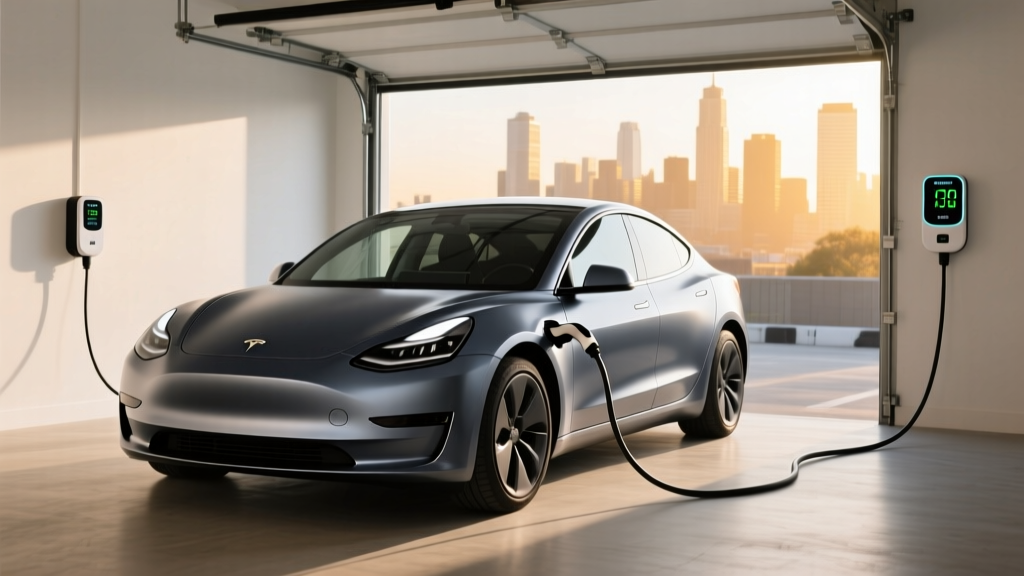
Installing a Level 2 charger at home is the single biggest upgrade most EV owners make. For the Blazer EV, you want a 240-volt circuit that can deliver at least 48 amps to fully utilize the 11.5 kW onboard charger.
Electrical Requirements
- Circuit: Dedicated 60-amp breaker (a 48A continuous load requires a circuit rated at 125% — so 60A)
- Wire: 6 AWG copper (or 4 AWG aluminum) THHN in conduit, or equivalent NM-B/Romex rated for the run
- Outlet vs hardwired: A NEMA 14-50 outlet offers flexibility (you can unplug the charger and take it if you move), but hardwired installations avoid GFCI nuisance trips that some jurisdictions now require on 14-50 receptacles
- Panel capacity: Your main electrical panel must have enough spare amperage. A typical 200-amp panel with moderate existing loads can usually accommodate a 60A EV circuit. Older homes with 100-amp service will likely need a panel upgrade.
Panel Upgrade Reality
If your home has a 100-amp main panel, or your existing loads (HVAC, electric oven, dryer, water heater) already consume most of a 200-amp panel's capacity, you may need either a panel upgrade to 200A or a smart load-management device like the Emporia Load Management Kit, which dynamically reduces charger amperage when other high-draw appliances kick on. A panel upgrade from 100A to 200A typically costs $1,500–$3,500 depending on your utility's requirements and local labor rates.
Installation Cost Breakdown
| Component | Simple Install (panel adjacent) | Complex Install (long run, conduit) |
|---|---|---|
| Level 2 Charger (48A) | $400–$700 | $400–$700 |
| Electrician labor | $300–$600 | $800–$2,000 |
| Materials (wire, conduit, breaker) | $50–$150 | $200–$600 |
| Permit & inspection | $50–$150 | $50–$250 |
| Panel upgrade (if needed) | $0 | $1,500–$3,500 |
| Total | $800–$1,600 | $2,950–$7,050 |
Always hire a licensed electrician and pull a permit. Unpermitted work can void homeowner's insurance claims and create fire hazards. Many utilities offer rebates of $200–$500 for Level 2 installations — check with your local provider.
Connector Compatibility: NACS, CCS, and What the Blazer EV Uses
For the 2025 model year, GM transitioned its EVs — including the Blazer EV — to the North American Charging Standard (NACS), the connector originally developed by Tesla. This is a significant advantage: Blazer EV owners gain native access to Tesla's Supercharger network (over 25,000 stalls in North America) without an adapter.
| Connector | Native? | Adapter Needed? | Networks Accessible |
|---|---|---|---|
| NACS (Tesla) | Yes (2025+ models) | No | Tesla Supercharger, Electrify America, EVgo, many others |
| CCS1 | No (2025+ models) | Yes — NACS-to-CCS adapter (~$100–$200) | Electrify America, EVgo, ChargePoint (CCS stalls) |
| CHAdeMO | No | Not practical (no mainstream adapter) | Limited legacy network |
| J1772 (Level 2 AC) | Adapter included | NACS-to-J1772 adapter (usually included with vehicle) | All public Level 2 stations, home chargers |
Important note for 2024 Blazer EV owners: The 2024 model year shipped with a CCS1 port. If you own a 2024 model, GM provides a NACS adapter for Supercharger access. The 2025 and 2026 models have the NACS port natively.
For home charging, most Level 2 chargers still ship with a J1772 connector. You will use the included J1772-to-NACS adapter (provided by GM) to plug into your home unit, or you can purchase a Level 2 charger with a native NACS plug.
Charging Cost Per Mile: Blazer EV vs Gasoline SUV
One of the strongest arguments for the Blazer EV is operating cost. Here is how charging expenses compare to a similarly sized gas SUV averaging 24 MPG combined, using national averages:
| Scenario | Rate | Cost Per Mile | Annual Cost (12,000 mi) |
|---|---|---|---|
| Home charging (off-peak) | $0.12/kWh | $0.036 | $432 |
| Home charging (standard rate) | $0.16/kWh | $0.048 | $576 |
| Public Level 2 | $0.28/kWh | $0.084 | $1,008 |
| DC Fast Charging (road trip) | $0.40/kWh | $0.120 | $1,440 |
| Gas SUV (24 MPG, $3.40/gal) | $3.40/gallon | $0.142 | $1,700 |
At the Blazer EV's combined efficiency of roughly 3.0–3.3 miles per kWh, home charging on an off-peak rate saves approximately $1,250 per year compared to a gas SUV. Even exclusive public DC fast charging is competitive with gasoline on a per-mile basis. The math strongly favors home charging — which is why the Level 2 installation investment pays for itself quickly.
Recommended Home Level 2 Chargers for the Blazer EV
To take full advantage of the Blazer EV's 11.5 kW onboard charger, you need a 48-amp (or higher) Level 2 unit on a 60-amp circuit. Here are three well-regarded options:
Power: Up to 12 kW (50A) | Connector: J1772 or NACS | Cable: 23 ft | Price: $550–$650
- Adjustable amperage (16A–50A) to match your circuit
- NACS plug option available for native Blazer EV compatibility
- Wi-Fi enabled with app scheduling and energy tracking
- UL listed, indoor/outdoor rated
Power: Up to 11.5 kW (48A) | Connector: J1772 | Cable: 24 ft | Price: $350–$400
- Budget-friendly with smart scheduling via app
- Integrates with Emporia Vue home energy monitor
- Optional load management kit avoids panel upgrades
- Uses J1772 — requires GM's included NACS adapter
Power: Up to 11.5 kW (48A) | Connector: NACS native | Cable: 24 ft | Price: $420–$475
- Native NACS plug — no adapter needed for 2025+ Blazer EV
- Wi-Fi connected with over-the-air firmware updates
- Load sharing between multiple Wall Connectors
- Sleek design, indoor/outdoor rated
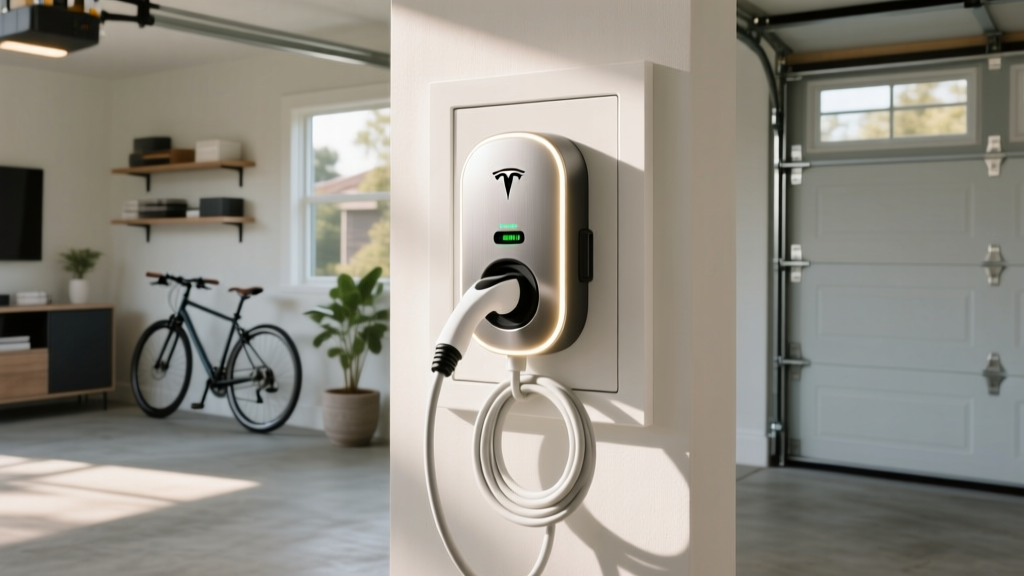
For 2025–2026 Blazer EV owners, the Tesla Wall Connector is arguably the cleanest setup — plug in directly with no adapter. If you want a universal charger that can also serve guests with non-Tesla EVs, the ChargePoint Home Flex with a J1772 plug is the versatile pick (you'll use the car's included adapter).
Safety, Electrical Code & Best Practices
A Level 2 charger draws significant continuous current — often for 8–10 hours at a stretch. Safety is non-negotiable:
- Dedicated circuit: Your EV charger must be on its own dedicated breaker. Never share the circuit with other appliances.
- GFCI protection: The 2020 and 2023 National Electrical Code (NEC) requires GFCI protection for 14-50 receptacles in garages. However, GFCI breakers can nuisance-trip with some EV chargers. Many electricians now recommend hardwired installations to avoid this issue.
- Outdoor rating: If your charging location is outdoors or in an exposed carport, ensure the charger carries a NEMA 4 or IP55 rating for weather resistance.
- Cable management: A 24-foot cable can become a tripping hazard. Use a wall-mounted cable organizer or retractor.
- Utility notification: Some utilities require notification when you install an EV charger, especially if you want access to time-of-use (TOU) rate plans that offer cheaper overnight charging.
Blazer EV Battery Health & Warranty
The Blazer EV's Ultium battery pack uses NMC (nickel manganese cobalt) chemistry, which offers high energy density but requires some care for long-term longevity:
- Warranty: GM covers the battery for 8 years / 100,000 miles against defects and capacity loss below 70% of original capacity.
- Daily charging: For routine use, GM recommends setting the charge limit to 80% to reduce stress on NMC cells. Charge to 100% only before long road trips.
- Cold weather: Use the Blazer EV's preconditioning feature (available via the MyChevrolet app or navigation-based preconditioning) before DC fast charging in cold weather. A cold battery charges significantly slower — preconditioning warms the pack to optimal temperature.
- DC fast charging: Occasional DC fast charging is fine, but exclusive reliance on it can accelerate degradation over years. Home Level 2 is gentler on the battery.
Frequently Asked Questions
How much does it cost to install a home EV charger for the Blazer EV?
A straightforward Level 2 installation with a short wire run from a 200-amp panel typically costs $800–$1,600 including the charger, electrician labor, materials, and permit. If your home requires a panel upgrade or a long conduit run, costs can rise to $3,000–$7,000. Always get multiple quotes from licensed electricians.
How fast will each charging level add range to the Blazer EV?
Level 1 (120V) adds roughly 3–4 miles per hour — adequate only for very low daily mileage. Level 2 (240V, 48A) adds approximately 29–34 miles per hour, fully recharging the 102 kWh battery overnight in about 9–10 hours. DC fast charging at peak 190 kW can add over 150 miles in roughly 10 minutes under ideal conditions, with a 10–80% session taking about 32 minutes.
Which connector and charger is compatible with my Blazer EV?
The 2025 and 2026 Blazer EV uses a native NACS connector for DC fast charging and Level 2 AC charging. For home Level 2 chargers with J1772 plugs, use the J1772-to-NACS adapter included with your vehicle. The 2024 Blazer EV has a CCS1 port and requires a NACS adapter (provided by GM) for Supercharger access.
How much does charging the Blazer EV cost per mile compared to gas?
At a national average home electricity rate of $0.16/kWh and the Blazer EV's efficiency of ~3.1 mi/kWh, home charging costs approximately $0.048 per mile — roughly $576 per year for 12,000 miles. A comparable gas SUV at 24 MPG and $3.40/gallon costs about $0.142 per mile, or $1,700 annually. Home charging saves over $1,100 per year.
What electrical upgrades might I need for a Blazer EV home charger?
You need a dedicated 60-amp, 240-volt circuit to support 48-amp continuous Level 2 charging. Homes with a 200-amp main panel and moderate existing loads typically accommodate this without upgrades. Homes with 100-amp service, or 200-amp panels already near capacity, may require a panel upgrade ($1,500–$3,500) or a smart load-management device to avoid overloading the service.