Why Aesthetics Matter in Your Garage EV Charging Setup
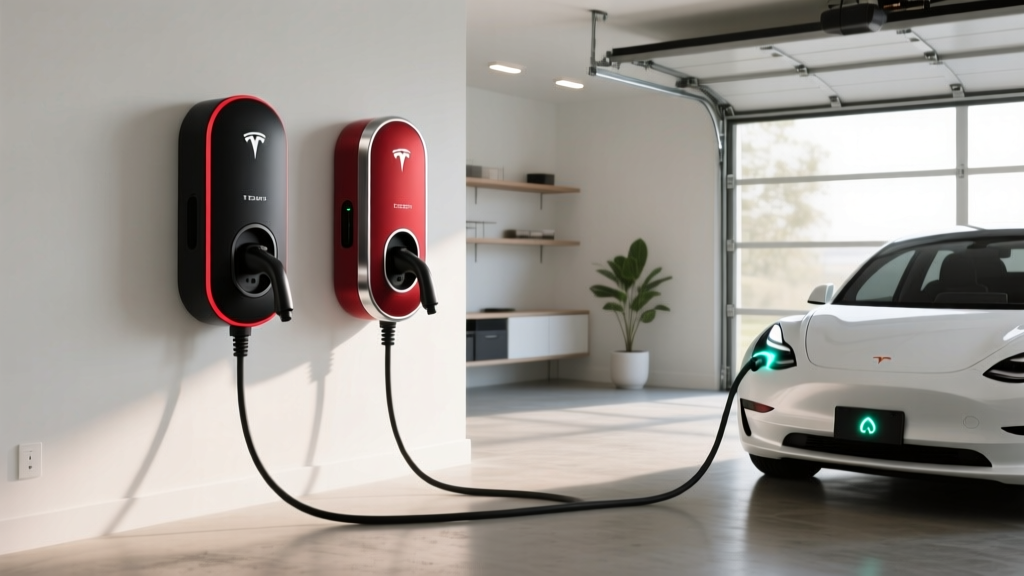
Most Level 2 home EV chargers ship in utilitarian white or gray plastic. But for EV owners who treat their garage as an extension of their home's design language, a black and red charger isn't just a cosmetic preference — it signals premium build quality and intentional placement. Brands like ChargePoint, Emporia, and Wallbox offer dark-finished enclosures with red accent lighting or cable wraps that stand out against typical garage walls.
Beyond color, what matters is the underlying electrical architecture: amperage delivery, connector type, cable management, and smart-grid communication. This guide covers everything you need to spec, install, and operate a home Level 2 charger — with specific attention to black and red charger models that deliver both form and function.
Understanding EV Charging Levels and Real-World Speeds
Before selecting equipment, you need to understand the three charging tiers and what they deliver in practical range recovery. The critical distinction: kW (kilowatts) measures power delivery rate — how fast energy flows into your battery. kWh (kilowatt-hours) measures total energy capacity — the size of your battery. Confusing these is the most common EV literacy error.
| Level | Voltage / Amps | Max Power (kW) | Miles Added Per Hour | Typical Use Case |
|---|---|---|---|---|
| Level 1 | 120V / 12-16A | 1.4–1.9 kW | 3–5 mi/hr | Overnight trickle; PHEVs with small batteries |
| Level 2 (Home) | 240V / 32–48A | 7.7–11.5 kW | 25–44 mi/hr | Daily home charging; full overnight replenishment |
| DC Fast Charge | 400–800V DC | 50–350 kW | 180–1,200+ mi/hr | Road trips; 10–80% in 18–45 minutes |
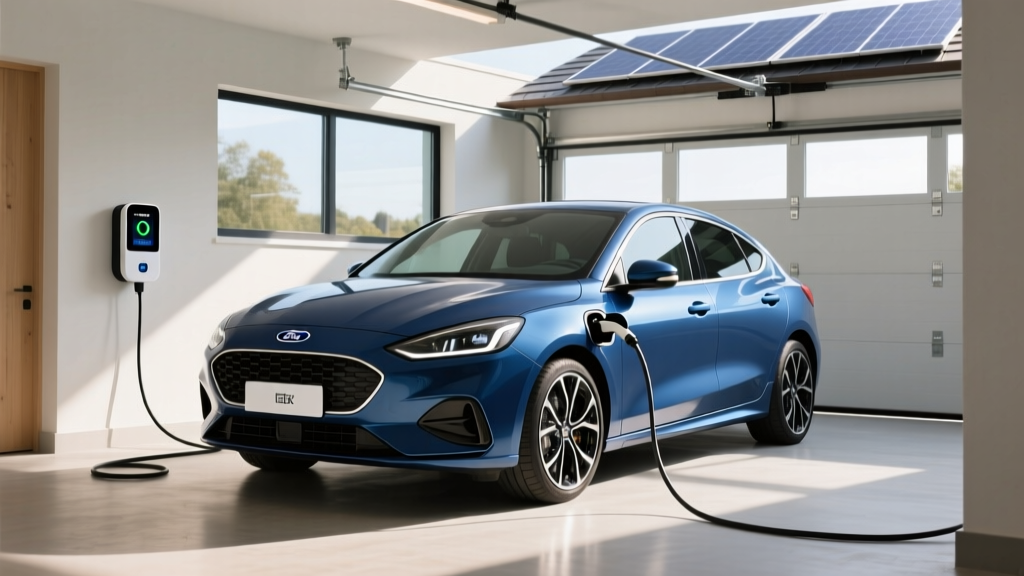
Real-World Charging Reality: A 48-amp Level 2 charger delivers roughly 11.5 kW peak, but sustained delivery depends on your vehicle's onboard charger. The Ford F-150 Lightning (extended range, 131 kWh usable) accepts up to 11.5 kW on Level 2, adding ~30 miles per hour. A Tesla Model Y (75 kWh usable) with an 11.5 kW onboard charger adds roughly 44 miles per hour. Always check your vehicle's onboard charger limit — it caps your home charging speed regardless of the EVSE's output.
Home Installation: Electrical Requirements, Permits, and Total Cost
Installing a Level 2 charger isn't plug-and-play for most homes built before 2020. You'll likely need a dedicated 240V circuit, which means running new wiring from your electrical panel to the garage or carport. Here's what that entails:
Electrical Specifications
- Circuit: Dedicated 40-amp or 50-amp breaker (NEC requires 125% overhead, so a 40A breaker supports a 32A continuous charger; a 50A breaker supports 40A continuous)
- Wire gauge: 6 AWG copper for 50A circuits; 8 AWG for 40A (run length matters — over 50 feet may require upsizing)
- Outlet vs. hardwired: NEMA 14-50 outlet allows portability; hardwired eliminates the receptacle failure point and is required for some 48A+ chargers
- GFCI protection: 2023 NEC update requires GFCI breakers for 14-50 receptacles in garages — adds $50–$120 to breaker cost
Panel Upgrade Reality
Homes with 100-amp service or older panels (common in pre-1990 builds) often cannot support a new 50A circuit without exceeding the panel's rated capacity. A licensed electrician will perform a load calculation — adding up existing circuits, HVAC, water heater, dryer, and the proposed EV charger. If you're over 80% of panel capacity, you'll need either:
- A panel upgrade to 200A ($1,800–$4,500 including permit and labor)
- A smart load-management device like the Emporia Smart Load Center, which throttles charger amperage when household demand spikes ($200–$400 hardware cost)
| Component | Cost Range | Notes |
|---|---|---|
| Level 2 EVSE (equipment) | $350–$750 | 32A–48A smart charger, black/red aesthetic options |
| Electrician labor (run + terminate) | $600–$2,200 | Depends on distance from panel, wall penetration, conduit |
| Permit & inspection | $75–$350 | Varies by municipality; required for insurance/warranty |
| Panel upgrade (if needed) | $1,800–$4,500 | 100A → 200A service; includes new breakers, grounding |
| GFCI breaker (if using 14-50 outlet) | $50–$120 | NEC 2023+ requirement for garage receptacles |
| Total (no panel upgrade) | $1,025–$3,420 | Most homes with 200A service |
| Total (with panel upgrade) | $2,825–$7,920 | Older homes or high-load households |
The IRS §30C Alternative Fuel Vehicle Refueling Property Credit covers up to 30% of home charger installation costs (max $1,000), but only if you live in an eligible census tract and meet income thresholds. Check current-year eligibility on irs.gov before assuming qualification.
Connector Compatibility: NACS, CCS1, and CHAdeMO Explained
Your charger's connector must match your vehicle's charge port. As of 2026, the North American market has largely consolidated around NACS (Tesla's proprietary design, now open-standard), but legacy vehicles still use CCS1 or CHAdeMO.
| Connector | Compatible Brands | Adapter Needed? |
|---|---|---|
| NACS (Tesla) | Tesla (all), Ford (2025+), GM (2025+), Rivian (2025+), Hyundai/Kia (2026+) | CCS→NACS adapters available (~$200) for older non-Tesla EVs |
| CCS1 | VW, BMW, Mercedes, older Ford/GM/Hyundai/Kia (pre-2025) | NACS→CCS adapter needed for Tesla Supercharger access |
| CHAdeMO | Nissan Leaf (legacy), Mitsubishi Outlander PHEV | No cross-compatibility; CHAdeMO infrastructure declining |
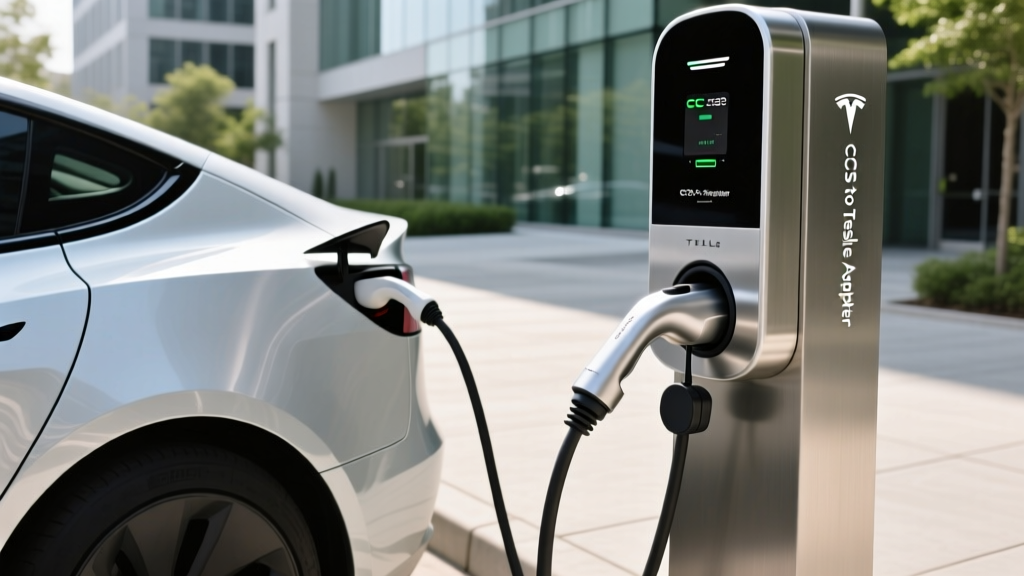
Adapter Caveat: Third-party NACS-to-CCS adapters (like the A2Z or Lectron) work for Level 2 AC charging but may not support DC fast charging at full speed. Tesla's official CCS adapter is rated for Supercharger use but limits peak kW on non-Tesla vehicles. Always verify adapter amperage ratings match your charger's output.
Charging Cost Per Mile: Home vs. Public vs. Gas
The economic case for home charging hinges on your local electricity rate and time-of-use (TOU) pricing. Here's a realistic breakdown for a 75 kWh battery (typical midsize EV like the Tesla Model Y or Hyundai Ioniq 5):
| Scenario | Rate ($/kWh) | Full Charge Cost | Cost Per Mile |
|---|---|---|---|
| Home off-peak (TOU) | $0.09–$0.14 | $6.75–$10.50 | $0.026–$0.040 |
| Home standard rate | $0.15–$0.22 | $11.25–$16.50 | $0.043–$0.063 |
| Public Level 2 (ChargePoint, EVgo) | $0.25–$0.45 | $18.75–$33.75 | $0.071–$0.129 |
| DC Fast Charge (Electrify America, Tesla Supercharger) | $0.35–$0.55 | $26.25–$41.25 | $0.100–$0.157 |
| Gas equivalent (28 MPG combined, $3.40/gal) | — | — | $0.121 |
At home off-peak rates, you're paying roughly one-quarter the per-mile cost of gasoline. Even at standard residential rates, EV charging undercuts gas in most U.S. markets. Public DC fast charging, however, approaches or exceeds gas cost per mile — which is why home Level 2 installation pays for itself within 18–36 months for drivers covering 12,000+ miles annually.
Black and Red Charger Equipment Recommendations
Here are three Level 2 chargers that deliver both the black/red aesthetic and technical performance for 2026 EV owners:
ChargePoint Home Flex (Black Edition)
- Power Output: Up to 11.5 kW (48A) on a 60A circuit; configurable down to 16A for lower-capacity panels
- Connector: NACS (2025+ models) or J1772 (legacy); 23-foot cable
- Smart Features: Wi-Fi connected, Alexa/Google Home integration, scheduled charging, energy tracking via app
- Aesthetic: Matte black enclosure with subtle red LED status ring
- Price: $649 (NACS version); $599 (J1772)
- Warranty: 3 years
- Best For: Tesla, Ford, and GM owners who want app-based scheduling and load management
Emporia Vue Level 2 Charger (Red Accent)
- Power Output: Up to 11.5 kW (48A); pairs with Emporia whole-home energy monitor for real-time load balancing
- Connector: NACS or J1772; 24-foot cable
- Smart Features: Solar-aware charging (prioritizes excess solar production), circuit-level energy monitoring, TOU rate optimization
- Aesthetic: Black body with red cable wrap and red LED indicator strip
- Price: $499 (charger only); $699 (bundled with Emporia Vue energy monitor)
- Warranty: 3 years
- Best For: Solar-panel owners and homes with tight electrical panels needing smart load management
Wallbox Pulsar Max (Stealth Black)
- Power Output: Up to 11.5 kW (48A); compact form factor (smallest in class)
- Connector: NACS or J1772; 25-foot cable
- Smart Features: Bluetooth + Wi-Fi, Power Sharing (daisy-chain two chargers on one circuit for two-car garages), Eco-Smart mode
- Aesthetic: Gloss black with red accent line; award-winning industrial design
- Price: $699
- Warranty: 3 years (extendable to 5 years for $99)
- Best For: Two-EV households and design-conscious garage builds
Safety, Code Compliance, and Installation Best Practices
A Level 2 charger draws continuous high amperage for 6–10 hours — this is not a casual appliance. Proper installation protects your home, your vehicle, and your insurance coverage:
- Dedicated circuit: Never share the charger circuit with other loads (dryer, HVAC, workshop tools). NEC 625.40 requires a dedicated branch circuit for EVSE.
- Outdoor rating: If installing outdoors (carport, driveway), the EVSE must carry a NEMA 4 or IP65 rating for weather resistance. All three chargers above meet this standard.
- Cable management: A 23–25 foot cable left on the garage floor is a trip hazard and degrades from abrasion. Wall-mounted cable retractors or holsters ($30–$60) extend cable life and reduce liability.
- Permit and inspection: Skipping the permit saves $75–$350 upfront but voids your homeowner's insurance coverage for electrical fires originating from the unpermitted work. Most insurers require permit documentation for EVSE-related claims.
- Thermal monitoring: Premium chargers like the ChargePoint Home Flex include internal temperature sensors that throttle amperage if the unit overheats — critical for hot-climate garages (Arizona, Texas, Nevada).
Frequently Asked Questions
How much does it cost to install a home EV charger?
Total installed cost ranges from $1,025 to $3,420 for homes with adequate 200A panel capacity (equipment + electrician + permit). Homes requiring a panel upgrade to 200A service should budget $2,825–$7,920. The IRS §30C credit may offset up to $1,000 (30% of cost) if you meet census-tract and income eligibility — verify at irs.gov.
How fast will each charging level add range?
Level 1 (120V) adds 3–5 miles per hour — adequate only for PHEVs with 20–40 mile batteries. Level 2 (240V, 48A) adds 25–44 miles per hour depending on your vehicle's onboard charger limit. DC fast charging adds 180–1,200+ miles per hour but tapers significantly above 80% state of charge due to battery protection protocols.
Which connector/charger is compatible with my EV?
2025+ Tesla, Ford, GM, Rivian, and Hyundai/Kia models use NACS. Pre-2025 non-Tesla EVs typically use CCS1. Nissan Leaf uses CHAdeMO. Check your vehicle's charge port or owner's manual. If you drive a CCS1 vehicle but want NACS charger compatibility, a CCS-to-NACS adapter (~$200) bridges the gap for Level 2 AC charging.
How much does charging cost per mile vs gas?
Home off-peak charging costs $0.026–$0.040 per mile (assuming $0.09–$0.14/kWh and 3.5 mi/kWh efficiency). Gasoline at $3.40/gallon and 28 MPG combined costs $0.121 per mile. Home EV charging is 67–78% cheaper per mile than gasoline. Public DC fast charging narrows the gap to $0.10–$0.16 per mile.
What electrical upgrades might I need?
If your home has 100A service or an older panel (common in pre-1990 construction), a load calculation may reveal you're near capacity. Solutions include a 200A panel upgrade ($1,800–$4,500), a smart load-management device that throttles charger amperage during peak household demand ($200–$400), or downsizing to a 32A charger on a 40A circuit to reduce the load draw.
Can I install a black and red charger outdoors?
Yes, provided the EVSE carries a NEMA 4 or IP65 weather-resistance rating. The ChargePoint Home Flex, Emporia Vue, and Wallbox Pulsar Max all meet this standard. Ensure your outdoor installation includes a weatherproof conduit and a GFCI-protected breaker per NEC 2023 requirements.
For authoritative EV efficiency and range data, cross-reference your vehicle's specs at fueleconomy.gov before calculating your personal charging cost and time estimates.