What Does 'Black Charger Car' Mean for Your EV Setup?
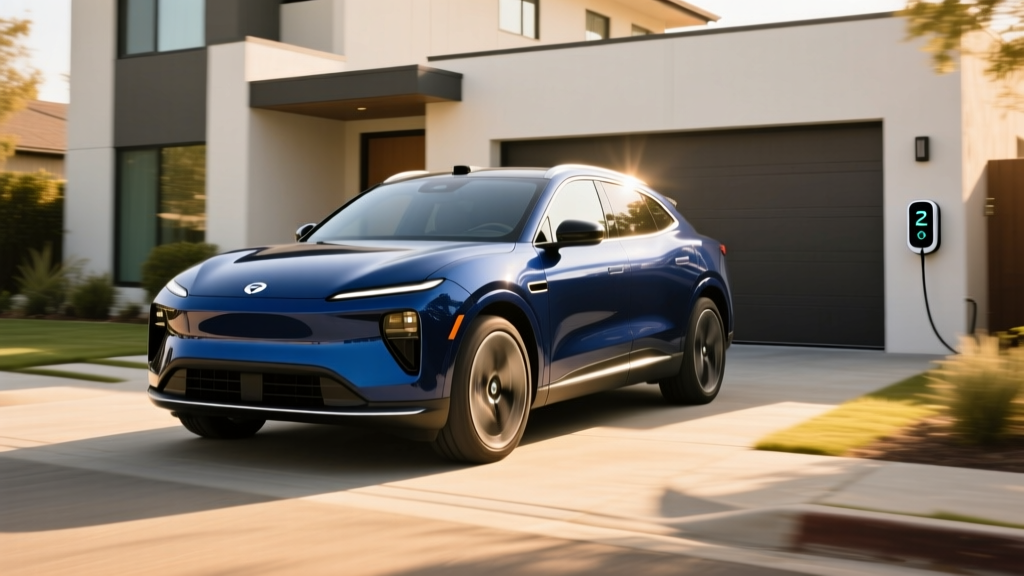
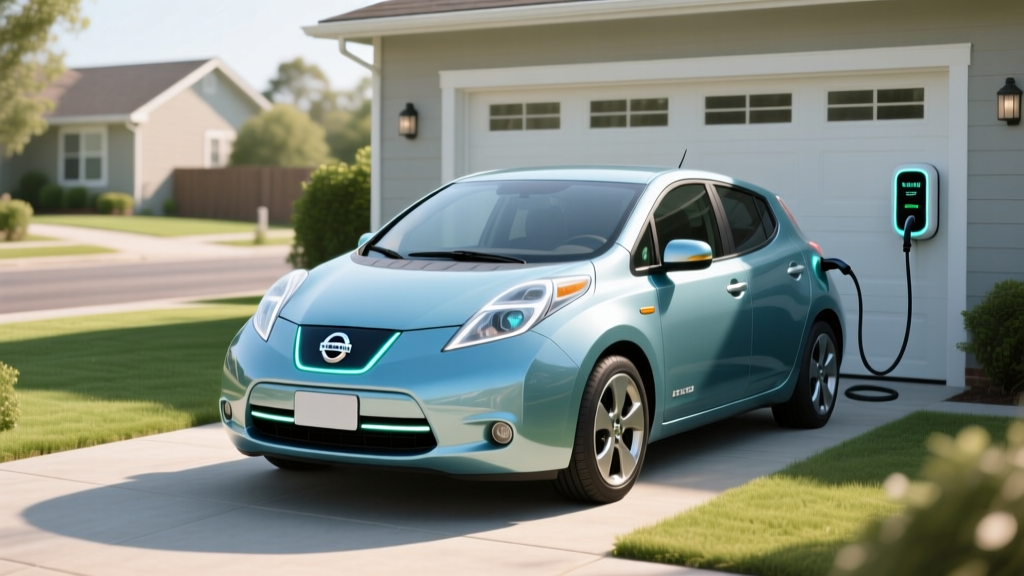
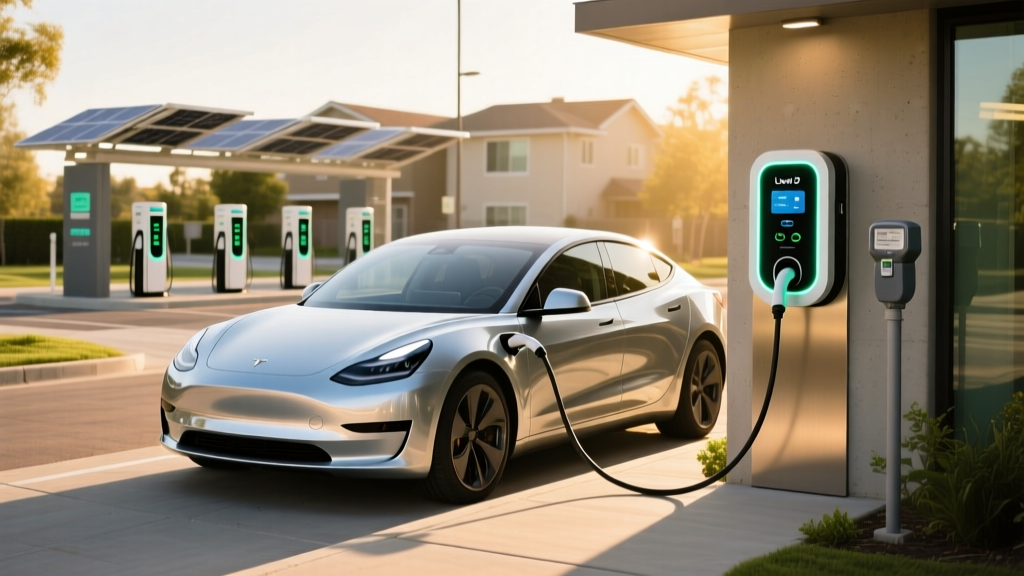
Search for a black charger car and you'll find everything from sleek matte-black home wall connectors to black-cable DC fast-charging stations at public plazas. The color isn't just aesthetic — black EV chargers dominate the market because UV-resistant black housings hide outdoor wear, and major brands like Tesla, ChargePoint, Emporia, and Grizzl-E default to black enclosures. But picking the right black charger for your car requires understanding charging speeds, home electrical requirements, connector types, and real-world cost per mile.
This guide breaks down every layer of EV charging — from the 1.4 kW trickle of a Level 1 outlet to 350 kW DC fast chargers — with exact numbers, installation costs, and equipment recommendations current for 2026.
Charging Levels Explained: Speed, Power, and Real-World Range
EV charging happens at three distinct levels. The critical distinction: kW (kilowatts) measures power — how fast energy flows into your battery. kWh (kilowatt-hours) measures energy — how much your battery stores. A 75 kWh battery charged at 7.2 kW takes roughly 10 hours from empty to full. A 75 kWh battery charged at 150 kW can go from 10–80% in about 25 minutes, though the charge curve tapers as the battery fills.
| Level | Voltage | Max Power (kW) | Miles of Range Added Per Hour | Best Use Case |
|---|---|---|---|---|
| Level 1 | 120V AC | 1.4–1.9 kW | 3–5 miles | Overnight top-up, PHEV owners, low daily mileage |
| Level 2 | 240V AC | 3.3–19.2 kW | 12–75 miles | Daily home charging, workplace, destinations |
| DC Fast Charge | 400–900V DC | 50–350 kW | 150–1,200+ miles/hour equivalent | Road trips, rapid top-ups, commercial fleets |
Real-world charging time varies with battery size. A Hyundai Ioniq 5 (77.4 kWh usable battery) at a 240 kW DC fast charger can go from 10–80% in roughly 18 minutes under ideal conditions. That same car on a 48A Level 2 home charger (11.5 kW) takes about 6.5 hours for a full charge. On Level 1 (1.4 kW), you're looking at 55+ hours — which is why Level 1 is practical only for plug-in hybrids with smaller batteries or EVs driven under 30 miles daily.
Home EV Charger Installation: Costs, Electrical Requirements, and Panel Upgrades
Installing a Level 2 home charger is the single biggest ownership upgrade you'll make. Most EV owners charge 80% or more of their energy at home, according to the U.S. Department of Energy. Here's what the project actually involves.
Electrical Requirements
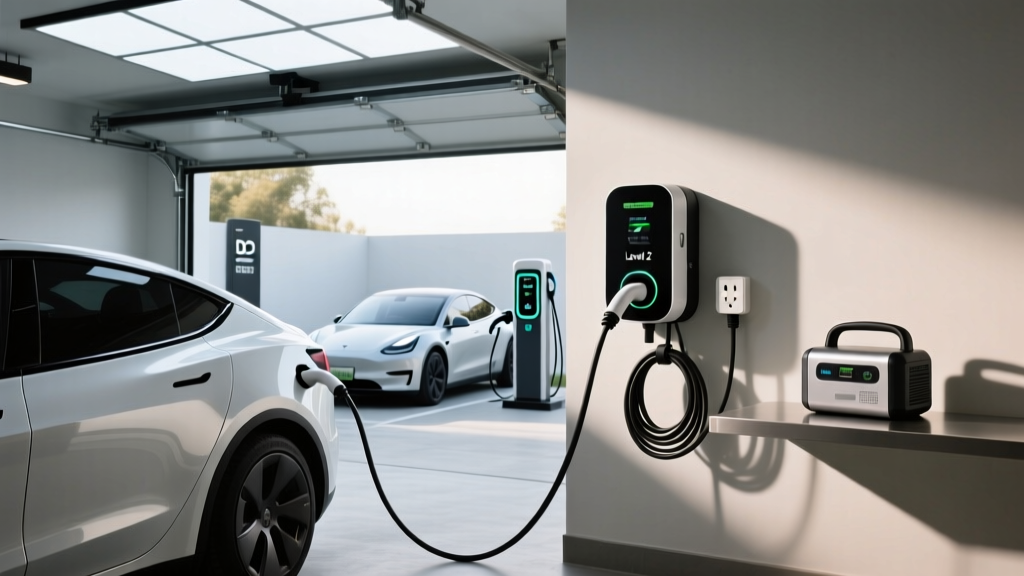
A typical Level 2 home charger runs on a 240V dedicated circuit, similar to a dryer or oven outlet. Common configurations:
- 40A circuit / 32A continuous — delivers 7.7 kW (NEMA 14-50 outlet or hardwired)
- 50A circuit / 40A continuous — delivers 9.6 kW (NEMA 14-50 or hardwired)
- 60A circuit / 48A continuous — delivers 11.5 kW (hardwired only)
- 80A circuit / 64A continuous — delivers 15.4 kW (hardwired, requires 100A+ panel headroom)
National Electrical Code (NEC) requires that continuous loads (like EV charging, which runs for 3+ hours) use only 80% of the circuit's rated capacity. So a 40A breaker supports 32A continuous charging.
Panel Upgrade Reality
Many homes built before 2000 have 100A electrical panels. If your panel is already near capacity (running electric heat, a dryer, an oven, and AC), adding a 40–60A EV circuit may require a panel upgrade to 200A, which costs $1,500–$3,500 on top of the charger install. Homes with existing 200A panels usually have enough headroom.
An alternative: smart load-management systems like the Emporia Smart Load Center or Span panel can dynamically share capacity between circuits, avoiding a full panel upgrade.
| Cost Component | Typical Range | Notes |
|---|---|---|
| Level 2 Charger (Equipment) | $300–$750 | Smart Wi-Fi chargers cost more; dumb chargers are cheaper |
| Electrician Labor | $300–$1,500 | Depends on run length from panel to garage/carport |
| Permit & Inspection | $50–$300 | Required in most jurisdictions; varies by municipality |
| Panel Upgrade (if needed) | $1,500–$3,500 | 100A → 200A upgrade; not always required |
| Total (No Panel Upgrade) | $650–$2,550 | Most homeowners fall in the $800–$1,500 range |
| Total (With Panel Upgrade) | $2,150–$6,050 | Older homes with 100A service |
The federal Residential Clean Energy Credit does not cover EV chargers as of 2026 (the alternative fuel vehicle refueling property credit under §30C expired for most residential installations). Some states and utilities still offer rebates — check your local utility for $250–$500 charger rebates.
Connector Compatibility: NACS, CCS1, and CHAdeMO
The connector landscape has consolidated significantly since Tesla opened its Supercharger network and the North American Charging Standard (NACS) became the dominant plug. Here's where things stand for 2025–2026 model-year vehicles:
| Connector | Brands Using It | Adapter Needed? |
|---|---|---|
| NACS (Tesla / J3400) | Tesla (all), Ford, GM, Rivian, Volvo, Polestar, Mercedes, BMW, Hyundai/Kia (2025+), Nissan (2025+) | CCS-to-NACS adapters available from Tesla ($250) and third parties for older CCS vehicles |
| CCS1 | Legacy: older Hyundai/Kia, VW ID.4, BMW iX (pre-2025), Stellantis, some Honda | NACS-to-CCS adapters for Supercharger access |
| CHAdeMO | Nissan Leaf (pre-2025), Mitsubishi Outlander PHEV | Limited adapter options; network is shrinking |
Bottom line: If you're buying a new EV in 2026, it almost certainly has NACS. If you own a 2022–2024 CCS vehicle, a NACS adapter ($200–$300) unlocks Tesla Superchargers. CHAdeMO owners face the most limited public charging options and should prioritize home Level 2 charging.
How Much Does EV Charging Cost Per Mile vs. Gas?
One of the strongest EV ownership arguments is fuel-cost savings. The math depends on your electricity rate and whether you charge at home or on public DC fast chargers.
| Scenario | Rate | Vehicle Efficiency | Cost Per Mile |
|---|---|---|---|
| Home charging (off-peak utility rate) | $0.10/kWh | 3.5 mi/kWh (e.g., Tesla Model Y) | $0.029/mi |
| Home charging (national avg. rate) | $0.17/kWh | 3.5 mi/kWh | $0.049/mi |
| Public Level 2 (ChargePoint, etc.) | $0.25–$0.49/kWh | 3.5 mi/kWh | $0.071–$0.14/mi |
| DC Fast Charger (Electrify America, Tesla) | $0.32–$0.56/kWh | 3.0 mi/kWh (highway) | $0.11–$0.19/mi |
| Gas car (28 MPG combined) | $3.40/gal | 28 MPG | $0.121/mi |
| Gas truck (20 MPG combined) | $3.40/gal | 20 MPG | $0.170/mi |
Home charging at off-peak rates delivers fuel costs roughly 75–80% lower than a comparable gas car. Even public DC fast charging is often cheaper per mile than gasoline — though the gap narrows significantly. If you rely exclusively on DC fast charging at $0.48+/kWh, your per-mile cost approaches or exceeds that of an efficient gas sedan. This is why home Level 2 charging is the economic backbone of EV ownership.
Best Black EV Chargers for Home: 2026 Equipment Picks
We evaluated black-finish Level 2 home chargers on power output, cable length, smart features, build quality, and price. All units below come in black or black-primary enclosures.
Emporia Vue Level 2 Smart Charger
- Power: 48A / 11.5 kW (hardwired) or 40A / 9.6 kW (NEMA 14-50)
- Connector: NACS (J3400) native, CCS adapter included
- Cable Length: 24 ft
- Smart Features: Wi-Fi, Emporia app scheduling, solar integration, load management, energy tracking
- Price: ~$400 (hardwired) / ~$450 (plug-in)
- Best For: Budget-conscious buyers wanting full smart features and solar integration
ChargePoint Home Flex (2nd Gen)
- Power: Up to 50A / 12 kW (adjustable via DIP switches: 16A–50A)
- Connector: NACS native (2025+ models), CCS legacy available
- Cable Length: 23 ft
- Smart Features: Wi-Fi, ChargePoint app, Alexa/Google integration, flexible amperage
- Price: ~$550–$650
- Best For: Flexibility across different circuit sizes; strong brand ecosystem
Grizzl-E Smart
- Power: 40A / 9.6 kW
- Connector: NACS or CCS (select at purchase)
- Cable Length: 24 ft
- Smart Features: Wi-Fi, OCPP compatibility, adjustable amperage, extreme cold rating (-40°F)
- Price: ~$450–$550
- Best For: Cold-climate durability; Canadian-built with IP67 outdoor rating
Tesla Wall Connector (Gen 3)
- Power: 48A / 11.5 kW (hardwired, 60A circuit)
- Connector: NACS native; Magic Dock adapter for CCS vehicles
- Cable Length: 24 ft
- Smart Features: Wi-Fi, over-the-air updates, power sharing (link multiple units), load management
- Price: ~$475
- Best For: Tesla owners and NACS-native EVs; cleanest aesthetic match for Tesla vehicles
Key spec to match: Your charger's max amperage should not exceed 80% of your circuit breaker rating. A 60A breaker supports a 48A charger. A 50A breaker supports a 40A charger. Buying a 48A charger for a 40A circuit means you'll configure it down to 32A — so match equipment to your available circuit before purchasing.
DC Fast Charging: 10–80% Times for Common EVs
DC fast charging is what makes road trips possible, but peak kW numbers are misleading. Chargers advertise "up to 350 kW," but your vehicle's charge curve determines how long you actually wait. Batteries charge fastest between 10–50% State of Charge (SoC), then taper significantly above 80% to protect cell health. Here's what to expect:
| Vehicle | Battery (kWh Usable) | Peak DC kW | 10–80% Time | Notes |
|---|---|---|---|---|
| Hyundai Ioniq 5 (2025) | 77.4 kWh (NMC) | 240 kW | ~18 min | 800V architecture enables sustained high-rate charging |
| Tesla Model Y (2026) | 75 kWh (LFP/NMC) | 250 kW | ~22 min | V4 Supercharger stalls deliver consistent power |
| Ford F-150 Lightning (2025) | 131 kWh (Extended Range, NMC) | 150 kW | ~41 min | Large battery = longer session despite decent kW |
| Chevrolet Equinox EV (2026) | 85 kWh (NMC) | 175 kW | ~28 min | GM Ultium platform on CCS-to-NACS adapter |
| BMW iX xDrive50 (2025) | 105.2 kWh (NMC) | 200 kW | ~31 min | Preconditioning critical for peak rate |
Preconditioning matters. If you navigate to a DC fast charger using your car's built-in navigation, most EVs will automatically warm or cool the battery to optimal temperature before you arrive. Without preconditioning — especially in cold weather — your peak charge rate can drop by 30–50%, adding significant time to your stop. Always use the vehicle's nav system to route to chargers when possible.
Safety and Code Considerations for Home Charging
EV charging is a high-draw, long-duration electrical load. The National Electrical Code (NEC) and local building codes address this with specific requirements:
- Dedicated circuit: Your Level 2 charger must be on its own dedicated breaker — it cannot share a circuit with other appliances.
- GFCI protection: NEC 2020 and later require GFCI (Ground Fault Circuit Interrupter) protection for EV charging outlets. Hardwired chargers may have GFCI built into the unit. Outdoor NEMA 14-50 receptacles require a GFCI breaker ($80–$150 additional).
- Outdoor rating: If your charger is mounted outside (carport, driveway wall), it must carry at minimum an IP55 or NEMA 4 rating for water and dust resistance. All chargers recommended above meet IP55 or higher.
- Wire gauge: A 60A circuit typically requires 6 AWG copper wire; a 50A circuit uses 6 AWG or 8 AWG depending on run length. Your electrician will size this to code.
- Permit and inspection: Most jurisdictions require an electrical permit for EV charger installation. The inspection verifies correct wire gauge, breaker size, grounding, and GFCI compliance. Skipping the permit risks insurance claim denial if an electrical fire occurs.
Never use an extension cord with a Level 2 charger. If your parking spot is far from the charger, buy a unit with a longer cable (24–25 ft is standard; some offer 30 ft options) or have your electrician relocate the charger closer to your parking position.
Frequently Asked Questions
How much does it cost to install a home EV charger?
Most homeowners pay $800–$1,500 total for a Level 2 charger installation (equipment + electrician + permit) when no panel upgrade is needed. If your home has a 100A panel that needs upgrading to 200A, total costs can reach $2,500–$6,000. Get 2–3 quotes from licensed electricians; prices vary significantly based on the distance from your electrical panel to the charger location.
How fast will each charging level add range?
Level 1 (120V) adds 3–5 miles per hour. Level 2 (240V, 48A) adds roughly 35–40 miles per hour for an efficient EV like a Tesla Model Y, or 25–30 miles per hour for a larger vehicle like an F-150 Lightning. DC fast charging adds 150–1,200+ miles per hour equivalent, though sessions are measured in minutes (10–80% in 18–41 minutes depending on the vehicle and charger).
Which connector/charger is compatible with my EV?
If your EV is a 2025 or newer model from Tesla, Ford, GM, Rivian, Hyundai, Kia, Volvo, or most other major brands, it uses the NACS (J3400) connector. Older CCS1 vehicles (2022–2024 VW ID.4, older Hyundai/Kia) can access NACS chargers with an adapter ($200–$300). CHAdeMO vehicles (Nissan Leaf) have the most limited public charging access and should prioritize home charging. Always check your vehicle's charge port before purchasing a home charger.
How much does charging cost per mile vs. gas?
Home charging at average utility rates ($0.17/kWh) costs roughly $0.04–$0.05 per mile for an efficient EV, compared to $0.12 per mile for a 28 MPG gas car at $3.40/gallon. That's a 60–70% fuel cost reduction. Public DC fast charging at $0.40–$0.50/kWh costs $0.11–$0.19 per mile — still competitive with gas but far more expensive than home charging.
What electrical upgrades might I need?
The most common upgrade is a panel capacity increase from 100A to 200A, needed if your existing panel doesn't have enough spare capacity for a 40–60A dedicated EV circuit. Signs you may need an upgrade: your panel is near full (few or no open breaker slots), you already run electric heat/AC/dryer/oven on a 100A panel, or your home was built before 1990. A licensed electrician can perform a load calculation to determine if an upgrade is required. Smart load-management devices can sometimes avoid the need for a panel upgrade entirely.
Can I install a black EV charger outdoors?
Yes. Most modern Level 2 chargers carry IP55 or IP67 ratings for outdoor installation. Ensure the unit is rated for your climate's temperature extremes (the Grizzl-E is rated to -40°F for cold climates). Outdoor installations require a GFCI-protected circuit and proper weatherproof mounting. A covered carport mounting location extends the charger's lifespan.
Sources: U.S. Department of Energy (energy.gov), EPA Fuel Economy (fueleconomy.gov), IRS Residential Energy Credits (irs.gov). All pricing and specs reflect 2025–2026 model-year data and current electrical code requirements. Verify local utility rates and permit requirements with your municipality.