Your electric vehicle's battery isn't just for driving anymore. Bidirectional EV charging lets you push stored energy back out — to power tools at a campsite, run your home during an outage, or even sell electricity back to the grid. But the technology is fragmented, equipment is expensive, and not every EV supports it. Here's exactly what bidirectional charging can (and can't) do in 2026, with hard numbers on costs, compatible vehicles, and installation requirements.
What Is Bidirectional EV Charging? V2L, V2H, and V2G Defined
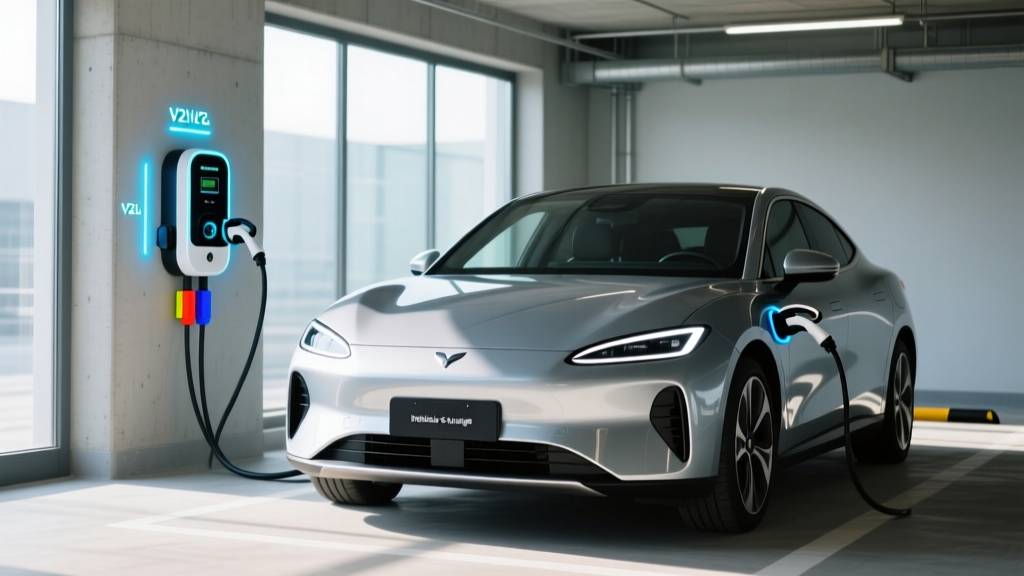
Bidirectional charging reverses the normal flow of electricity. Instead of only accepting power from the grid, your EV's battery can discharge energy to external loads. There are three flavors:
- V2L (Vehicle-to-Load): Your EV acts as a mobile generator via a standard 120V or 240V outlet. Plug in appliances, power tools, or a CPAP machine at a campsite. Typical output: 1.9 kW to 3.6 kW. No special home equipment needed — just an adapter dongle from the OEM.
- V2H (Vehicle-to-Home): Your EV powers your entire house through a hardwired bidirectional charger and a transfer switch or energy management system. Output: 9.6 kW to 19.2 kW — enough to run most homes for days. Requires a dedicated bidirectional wall unit and electrical panel integration.
- V2G (Vehicle-to-Grid): Your EV sends power back to the utility grid during peak demand, potentially earning you money. Still largely in pilot-program territory in 2026, with limited utility support and regulatory frameworks.
Which EVs Support Bidirectional Charging in 2026?
Not every EV can send power back. Here's the landscape of compatible models as of the 2026 model year:
| Vehicle | Battery (kWh) | V2L | V2H | V2G | Max Discharge kW |
|---|---|---|---|---|---|
| Ford F-150 Lightning | 131 (extended) | Yes (Pro Power Onboard) | Yes (with Charge Station Pro) | Pilot only | 9.6 kW (V2H) |
| Hyundai Ioniq 5 | 77.4 | Yes (V2L adapter) | Limited | No | 3.6 kW (V2L) |
| Kia EV6 / EV9 | 77.4 / 100 | Yes | Limited | No | 3.6 kW (V2L) |
| Chevrolet Silverado EV | 200+ | Yes (Pro Power) | Yes (announced) | No | 9.6 kW |
| Hyundai Ioniq 9 (2026) | 110.3 | Yes | Yes (announced) | No | ~10 kW (est.) |
| Toyota bZ4X (2026 refresh) | 74.4 | Yes (JPN spec only) | No | No | — |
| Tesla Cybertruck | 123 | Yes (Powershare) | Yes (announced) | No | 9.6 kW (est.) |
| Rivian R1T / R1S (Gen 2) | 141 (Max Pack) | Yes | No | No | ~3 kW (V2L) |
The reality check: V2L is broadly available on Hyundai/Kia/Genesis/Ford platforms. V2H requires specific OEM hardware (Ford's Charge Station Pro at ~$1,300, plus a home energy management system) and professional installation. V2G remains mostly theoretical for consumers — a handful of utility pilots in California, New York, and Texas are testing it, but widespread tariff structures for grid sellback don't exist yet.
Charging Levels and How Fast Each Adds Range
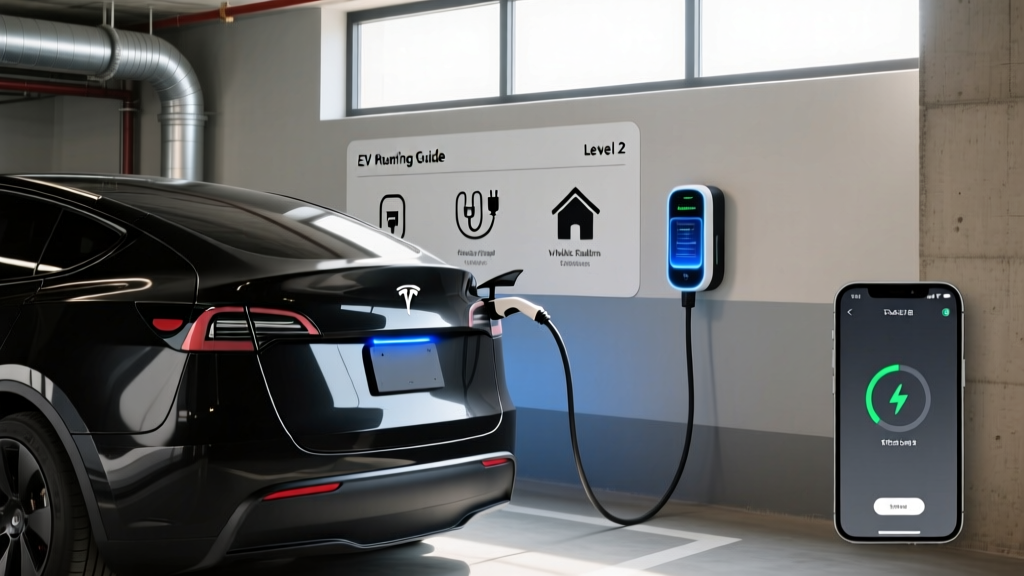
Before going bidirectional, you still need to charge the vehicle. Here's how each level works, with real-world speeds:
| Level | Voltage / Amperage | Power (kW) | Miles of Range Added per Hour | Typical Use Case |
|---|---|---|---|---|
| Level 1 | 120V / 12-16A | 1.4 – 1.9 kW | 3 – 5 mi/hr | Overnight trickle; PHEVs |
| Level 2 | 240V / 32-48A | 7.7 – 11.5 kW | 25 – 44 mi/hr | Home daily charging |
| DC Fast (Level 3) | 200-800V DC | 50 – 350 kW | 150 – 1,000+ mi/hr | Road trips; 10-80% in 18-40 min |
Real-world 10-80% charging times for common battery sizes:
- 60 kWh battery (e.g., base Ioniq 5 Standard Range) at 150 kW DCFC: ~22 minutes
- 84 kWh battery (e.g., Tesla Model Y Long Range) at 250 kW Supercharger: ~18 minutes
- 131 kWh battery (F-150 Lightning Extended Range) at 150 kW DCFC: ~41 minutes
Charging curves matter: peak kW is only sustained between roughly 10-50% SoC. Above 80%, most vehicles taper to under 50 kW to protect battery health. That's why 10-80% times are the standard metric — the last 20% can take as long as the first 70%.
How Much Does a Home EV Charger Cost to Install?
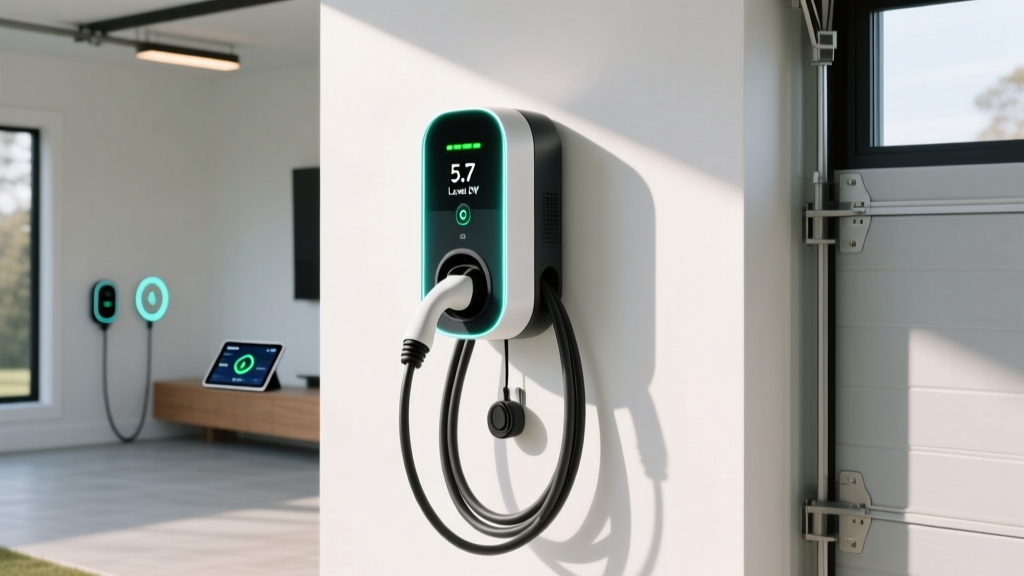
Home charging is where bidirectional capability gets expensive. A standard Level 2 charger is a straightforward install. A bidirectional V2H system is a major electrical project.
| Component | Standard Level 2 (Charge Only) | Bidirectional V2H System |
|---|---|---|
| Equipment (charger unit) | $350 – $750 | $1,300 – $3,500 |
| Home energy management system / transfer switch | Not required | $1,500 – $3,000 |
| Electrician labor (240V circuit run) | $500 – $1,500 | $2,000 – $5,000 |
| Permit & inspection | $100 – $300 | $200 – $500 |
| Electrical panel upgrade (if needed) | $1,500 – $3,000 | $1,500 – $3,000 |
| Total estimated range | $950 – $5,550 | $6,500 – $15,000 |
Why the wide range? If your electrical panel is adjacent to the garage and has spare capacity (a 60A breaker slot), a standard Level 2 install can be under $1,200 total. If you need a 200A panel upgrade, a 100-foot conduit run, and a bidirectional system with an automatic transfer switch (like Ford's integration with the Charge Station Pro), costs climb steeply.
Electrical Requirements for Bidirectional V2H
A V2H system requires:
- A dedicated 60A or 80A 240V circuit (depending on charger amperage)
- An automatic transfer switch or energy management system (EMS) to isolate your home from the grid during outages — this is a code requirement to prevent backfeeding utility workers
- GFCI protection on the circuit (NEC 2023 and later)
- NEMA 4 outdoor-rated equipment if the charger is installed outside
- A licensed electrician — this is not a DIY project, and permits/inspections are required in virtually all US jurisdictions
Connector Compatibility: NACS, CCS1, and CHAdeMO
Bidirectional charging adds a connector wrinkle: the plug must carry power in both directions, and not all connectors and standards support this equally.
| Connector | Bidirectional Capable? | Vehicles Using It | Notes |
|---|---|---|---|
| NACS (Tesla / SAE J3400) | Yes (hardware); V2H ecosystem developing | All Tesla vehicles; Ford, GM, Rivian, Hyundai, others (2025+) | Adopted by most OEMs for 2025+ models. Bidirectional specs still being finalized in SAE standards. |
| CCS1 | Yes (per ISO 15118-20) | VW ID.4, older Hyundai/Kia, BMW iX | Supports bidirectional protocol, but OEM implementation varies. |
| CHAdeMO | Yes (native V2H support) | Nissan Leaf (legacy) | Earliest bidirectional standard; used in Japan for V2H. Declining in US market. |
The adapter situation: If you own a CCS1 vehicle and want to use Tesla Superchargers (now open to non-Tesla EVs), you'll need a CCS-to-NACS adapter (~$150-$250). For bidirectional V2H, you must use the OEM-specified charger — Ford's Charge Station Pro for the F-150 Lightning, for example. Third-party bidirectional chargers are emerging but remain limited.
Cost to Charge: Per-Mile Economics vs. Gasoline
Whether you're charging to drive or charging to power your home, the cost per kWh determines the value proposition.
| Scenario | Cost per kWh | Cost per Mile (at 3.5 mi/kWh) | Annual Cost (12,000 mi) |
|---|---|---|---|
| Home Level 2 — off-peak (utility TOU rate) | $0.08 – $0.12 | $0.023 – $0.034 | $275 – $410 |
| Home Level 2 — standard residential rate | $0.14 – $0.18 | $0.040 – $0.051 | $480 – $615 |
| Public Level 2 (ChargePoint, etc.) | $0.20 – $0.35 | $0.057 – $0.100 | $685 – $1,200 |
| DC Fast Charging (Electrify America, EVgo) | $0.35 – $0.55 | $0.100 – $0.157 | $1,200 – $1,885 |
| Gasoline vehicle (25 MPG, $3.40/gal) | — | $0.136 | $1,632 |
The bidirectional bonus: During a grid outage, your EV battery replaces a home generator. A 131 kWh F-150 Lightning with V2H at 9.6 kW can power an average US home (drawing ~1.5-2 kW continuous with selective loads) for roughly 3 to 5 days. Compare that to a portable gas generator that needs refueling every 8-12 hours. At $0.15/kWh equivalent, the stored energy cost is about $0.04/mile-equivalent — dramatically cheaper than running a gasoline generator.
Bidirectional Equipment Recommendations
Here are the key bidirectional-capable products available or announced for 2026:
Ford Charge Station Pro
- Power: 9.6 kW bidirectional (V2H)
- Connector: NACS (J3400)
- Price: ~$1,300 (unit only)
- Smart features: FordPass app integration, scheduled charging, energy monitoring
- Compatibility: F-150 Lightning (required for Intelligent Backup Power)
- Note: Requires Sunrun or Ford-certified home energy management system install
Wallbox Quasar 2
- Power: Up to 11.5 kW bidirectional (V2H/V2G ready)
- Connector: NACS / CCS1 (region dependent)
- Price: ~$2,500 – $3,500 (unit only)
- Smart features: Wallbox app, solar integration, TOU scheduling
- Compatibility: CCS1 vehicles with ISO 15118-20 support; NACS versions rolling out
- Note: One of the first widely available third-party bidirectional chargers
Emporia V2X Bidirectional Charger
- Power: 9.6 kW bidirectional
- Connector: NACS (J3400)
- Price: ~$2,000 – $2,800
- Smart features: Emporia energy monitoring ecosystem, solar-aware scheduling, outage auto-switch
- Compatibility: NACS-equipped EVs with bidirectional support
- Note: Integrates with Emporia's whole-home energy monitor for load management
Hyundai/Kia V2L Adapter (OEM)
- Power: 3.6 kW (V2L only, not V2H)
- Connector: Plugs into CCS1 charge port; provides standard NEMA 5-15 (120V) and NEMA 14-50 (240V) outlets
- Price: ~$150 – $300
- Smart features: Set discharge limit in vehicle infotainment (e.g., stop at 20% SoC)
- Compatibility: Ioniq 5, Ioniq 6, Ioniq 9, EV6, EV9, Genesis GV60
- Note: No home electrical work required — simplest entry to bidirectional power
Real-World Bidirectional Performance: What to Expect
Manufacturer claims are one thing; real-world output is another. Based on owner reports and testing:
- V2L (Hyundai Ioniq 5, 3.6 kW): Sustained output holds close to rated 3.6 kW for resistive loads (space heater, kettle). Inductive loads (compressor-based fridge, AC) may cause brief power dips. A full 77.4 kWh battery at 3.6 kW output lasts ~21 hours — more than enough for a weekend camping trip.
- V2H (Ford F-150 Lightning, 9.6 kW): Ford's Intelligent Backup Power system, installed by Sunrun, automatically switches the home to battery power within seconds of a grid outage. Real-world continuous draw for a typical home with selective loads (fridge, lights, internet, one HVAC zone) runs 2-4 kW, meaning the 131 kWh battery provides 3+ days of runtime. Heavy loads (electric oven, dryer, second AC zone) will drain faster.
- Efficiency loss: Bidirectional conversion (DC battery → AC home) incurs a 5-10% energy loss through the inverter. Expect to get ~90-95% of the battery's stored energy as usable AC power.
Safety, Electrical Code, and Permit Considerations
Bidirectional systems carry higher stakes than a standard charger because they energize your home's wiring during outages. Key requirements:
- Anti-islanding protection: Your bidirectional charger must automatically disconnect from the grid during an outage to prevent backfeeding power to utility lines (which could electrocute line workers). This is mandated by NEC Article 702 (standby systems) and UL 1741 certification for the inverter.
- Transfer switch or EMS: A manual or automatic transfer switch physically separates your home wiring from the grid. Automatic systems (like Ford's) switch in under 10 seconds. Manual switches require you to physically throw a lever.
- Dedicated circuit: The bidirectional charger requires its own dedicated breaker — 60A or 80A depending on the unit. No sharing with other appliances.
- GFCI protection: NEC 2023+ requires GFCI protection for all EV charging circuits, including bidirectional units.
- Permit and inspection: Every US jurisdiction requires a permit for EV charger installation. Bidirectional systems with transfer switches require additional inspection for the standby power system. Budget $100-$500 for permitting.
- Outdoor rating: If mounted outside, the charger must be NEMA 4 rated (weatherproof). Most bidirectional units meet this standard.
Frequently Asked Questions
How much does it cost to install a home bidirectional EV charger?
A full V2H bidirectional system — including the charger unit ($1,300-$3,500), home energy management system or transfer switch ($1,500-$3,000), electrician labor ($2,000-$5,000), and permits ($200-$500) — typically costs $6,500 to $15,000 before any utility rebates. If your home needs an electrical panel upgrade to 200A, add $1,500-$3,000. Compare this to a standard Level 2 charger install, which runs $950-$5,550 depending on your home's wiring.
How fast will each charging level add range?
Level 1 (120V) adds 3-5 miles per hour. Level 2 (240V, 48A) adds 25-44 miles per hour depending on vehicle efficiency. DC fast charging at 150-350 kW adds 150-1,000+ miles per hour, enabling 10-80% charges in 18-40 minutes depending on battery size and charge-curve characteristics. For bidirectional discharge, expect 3.6 kW (V2L) or 9.6 kW (V2H) — which translates to powering a home, not adding driving range.
Which connector and charger is compatible with my EV for bidirectional charging?
It depends on your vehicle. Ford's F-150 Lightning uses NACS with the Charge Station Pro. Hyundai/Kia vehicles use CCS1 with an OEM V2L adapter for basic power output. CHAdeMO (Nissan Leaf) was the earliest bidirectional standard but is phasing out in the US. Check your vehicle's owner's manual or OEM website — bidirectional compatibility is model-specific, not universal even within a brand.
How much does EV charging cost per mile compared to gasoline?
Home Level 2 charging at off-peak rates ($0.08-$0.12/kWh) costs roughly $0.023-$0.034 per mile for an efficient EV getting 3.5 miles per kWh. That's about 75-83% cheaper than a 25 MPG gasoline vehicle at $3.40/gallon ($0.136/mile). Even public DC fast charging at $0.35-$0.55/kWh ($0.10-$0.16/mile) beats gasoline on a per-mile basis. Source: fueleconomy.gov EV efficiency data.
What electrical upgrades might I need for a bidirectional charger?
The most common upgrade is an electrical panel expansion. Homes with 100A or 125A service panels often need an upgrade to 200A to accommodate a 60A dedicated bidirectional charger circuit (NEC continuous-load rules require the breaker to be rated at 125% of the continuous draw). Other potential upgrades include running new 240V conduit from the panel to the garage or driveway, installing a transfer switch or energy management system, and upgrading the utility service drop if your home's total load exceeds the existing service capacity. Always get a load calculation from a licensed electrician before committing to equipment.
Can bidirectional charging damage my EV battery?
Occasional V2L and V2H use adds minimal wear. A 131 kWh battery used for a 3-day outage might cycle through 50-70 kWh of discharge — roughly half a full cycle. Modern EV batteries are warrantied for 8 years/100,000 miles (federally mandated minimum) with capacity retention thresholds of 70% or better. Daily V2G cycling for grid revenue would accumulate cycles faster, but no major OEM currently encourages daily V2G use for consumers. Monitor your battery's State of Health (SoH) through the vehicle's diagnostics or apps like Tesla's built-in degradation tracker.
Is bidirectional EV charging worth the investment?
If you live in an area with frequent power outages (Texas, California, Florida), V2H can replace a $3,000-$7,000 home standby generator while providing daily EV charging. The F-150 Lightning's V2H system costs more upfront but eliminates the need for natural gas or propane infrastructure. V2L is a no-brainer for anyone who camps, tailgates, or works on job sites — the $150-$300 adapter pays for itself on the first use. V2G, however, is not yet financially viable for most consumers in 2026; wait for utility programs and compensation structures to mature.
Bidirectional EV charging transforms your vehicle from a transportation device into a mobile energy asset. V2L is ready today with minimal investment. V2H is a serious home resilience upgrade for those willing to fund the installation. V2G remains a future promise. Whichever path you choose, the numbers — battery capacity in kWh, discharge rate in kW, and installation cost in dollars — should drive your decision, not marketing claims.