What Is Bidirectional Charging and Why It Matters Now
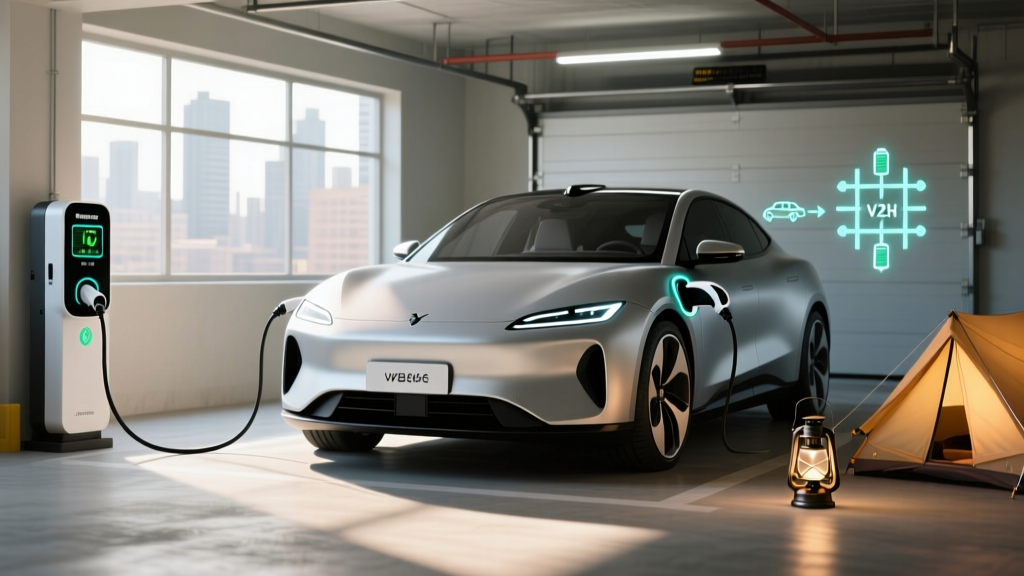
Most EVs charge in one direction: electricity flows from the grid into the battery. A bidirectional charging EV can reverse that flow, sending stored energy back out — to power appliances (V2L), run your home during an outage (V2H), or even sell electricity back to the grid (V2G). As of the 2026 model year, a growing but still limited number of vehicles support these features, and the charger hardware required is distinctly different from a standard Level 2 wallbox.
This guide covers every bidirectional-capable EV currently on sale, the specific charger equipment each one requires, what your home electrical panel needs to support, and what you'll actually pay to set it all up. We'll also cover standard charging fundamentals so you can compare total charging capability side-by-side.
- V2L (Vehicle-to-Load): Powers devices/appliances directly via onboard AC outlets. No special home charger needed.
- V2H (Vehicle-to-Home): Powers your home's electrical panel during outages. Requires a bidirectional-capable wallbox and transfer switch.
- V2G (Vehicle-to-Grid): Sends energy back to the utility grid for demand response or compensation. Requires utility program enrollment and compatible hardware.
Every Bidirectional Charging EV Available in 2026
Not every EV with a big battery can push power back out. Bidirectional capability requires specific onboard inverter hardware, compatible charge-port protocols (typically CCS1 or NACS with bidirectional signaling), and OEM software enablement. Here's the current landscape:
| Vehicle | Battery (kWh) | V2L | V2H | V2G | Max Output | Starting MSRP |
|---|---|---|---|---|---|---|
| Ford F-150 Lightning | 98 / 131 | ✓ | ✓ (Pro Power + Home Integration System) | Limited pilots | 9.6 kW (V2H) | ~$55,000 |
| Hyundai Ioniq 5 | 84 (NMC) | ✓ (3.6 kW) | ✓ (with approved inverter) | — | 3.6 kW (V2L) | ~$46,000 |
| Kia EV9 | 100 (NMC) | ✓ (3.6 kW) | ✓ (announced accessory) | — | 3.6 kW (V2L) | ~$60,000 |
| Chevrolet Silverado EV | 200+ (NMC) | ✓ | ✓ (Energy Transfer Pro) | Announced | 10.2 kW (V2H) | ~$57,000 |
| Tesla Cybertruck | ~123 (NMC) | ✓ (Powershare, 11.5 kW) | ✓ (Powershare + Wall Connector) | — | 11.5 kW | ~$80,000 |
| VW ID.4 | 82 (NMC) | — | ✓ (with HagerEnergy hardware) | Pilot programs | ~10 kW (V2H) | ~$45,000 |
| GMC Sierra EV | 200+ (NMC) | ✓ | ✓ (Energy Transfer Pro) | Announced | 10.2 kW (V2H) | ~$58,000 |
Reality check: V2L is the easiest to use — plug in a device and go. V2H requires a dedicated bidirectional charger (typically $3,000–$6,000 for hardware alone) plus a critical-loads transfer switch installed by an electrician. V2G is still limited to select utility pilot programs and is not broadly available to consumers in 2026.
Charging Levels Explained: Speeds, kW, and Real-World Times
Before evaluating bidirectional hardware, you need to understand the three standard charging levels and how they relate to energy flow. Remember: kW (kilowatts) measures the rate of power transfer, while kWh (kilowatt-hours) measures total energy stored — like gallons in a tank.
| Level | Voltage / Amps | Power (kW) | Miles of Range / Hour | Typical Use | 10–80% Example (84 kWh battery) |
|---|---|---|---|---|---|
| Level 1 | 120V / 12A | 1.4 kW | 3–5 mi/hr | Overnight trickle, PHEVs | ~40+ hours |
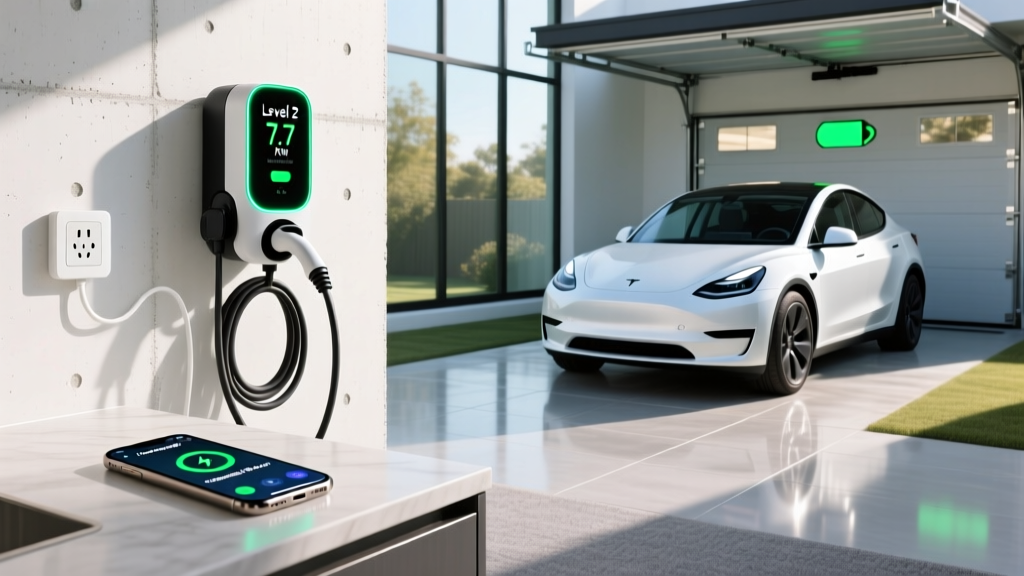
| Level 2 | 240V / 32–48A | 7.7–11.5 kW | 25–45 mi/hr | Home daily charging, workplace | ~5–7.5 hours |
| DC Fast | 400–800V DC | 50–350 kW | 150–1,000+ mi/hr (peak) | Road trips, highway corridors | ~18–35 min (peak dependent) |
For bidirectional output, the power flows in reverse at much lower rates — typically 3.6 kW to 11.5 kW AC. That means an F-150 Lightning with its 131 kWh extended-range battery pushing 9.6 kW can power an average U.S. home (using ~30 kWh/day) for roughly 3–4 days.
Home Charger Installation: Electrical Requirements and Costs
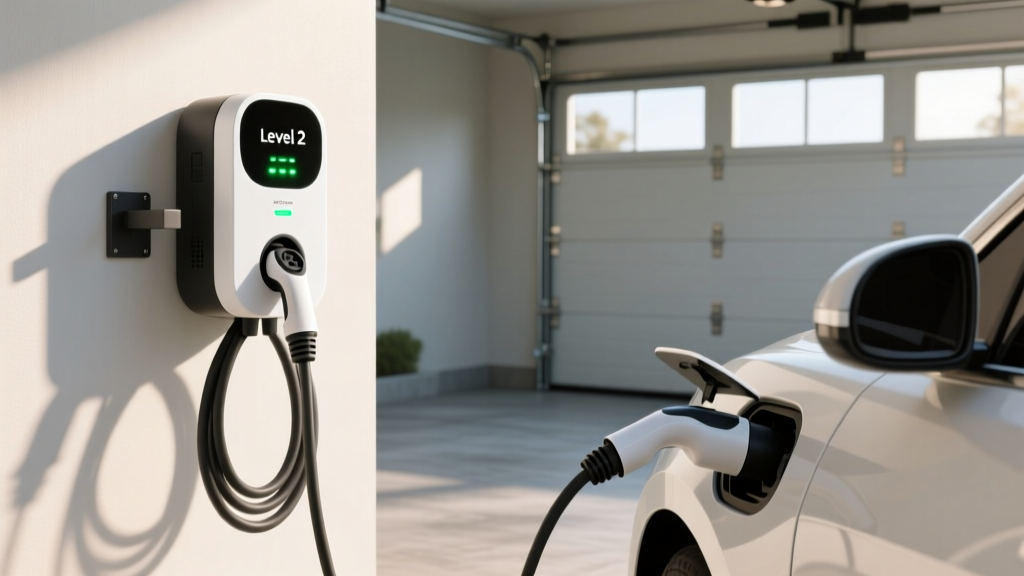
Installing a bidirectional-capable home charger is more involved than a standard Level 2 wallbox. You're not just adding an outlet — you're adding a system that can interconnect with your home's electrical panel and, in some cases, act as a backup generator replacement.
Electrical Requirements
- Circuit: A dedicated 240V circuit — typically 60A breaker for a 48A continuous charger, or 80A+ for high-power bidirectional units like Ford's Charge Station Pro (which requires a 100A circuit for 19.2 kW Level 2 input and 9.6 kW V2H output).
- Wire gauge: 6 AWG copper for 48A circuits; 3 AWG or larger for 80A+ circuits.
- Panel capacity: Most homes built before 2010 have 100A or 150A main service panels. Adding a 60–100A EV circuit may exceed available headroom, especially if you also run electric HVAC, a dryer, and an electric range.
- Transfer switch / energy management: Bidirectional V2H systems require an automatic transfer switch (ATS) or a smart panel (e.g., SPAN panel) to isolate your home from the grid during outages — a critical safety requirement to prevent back-feeding utility workers.
- Permits: Nearly all jurisdictions require an electrical permit for a new 240V circuit. The utility may also need to approve bidirectional interconnection for V2G.
What Electrical Upgrades Might You Need?
If your home has a 100A or 150A panel and you want to run a high-power bidirectional charger, a panel upgrade to 200A is common. In older homes with knob-and-tube wiring or insufficient grounding, a full rewire of the circuit run may be needed. Some homeowners opt for a smart load-management device (like the Emporia VUE or SPAN Drive) that dynamically throttles the charger when other appliances are running, avoiding a panel upgrade altogether.
| Component | Standard Level 2 | Bidirectional V2H System |
|---|---|---|
| Charger hardware | $400–$750 | $2,500–$6,000 |
| Automatic transfer switch / smart panel | Not required | $1,500–$3,500 |
| Electrician labor (circuit run + install) | $500–$2,000 | $2,000–$5,000 |
| Electrical permit | $50–$200 | $100–$400 |
| Panel upgrade (if needed, 200A) | $1,500–$3,000 | $1,500–$3,000 |
| TOTAL (no panel upgrade) | $950–$2,950 | $6,100–$14,900 |
| TOTAL (with panel upgrade) | $2,450–$5,950 | $7,600–$17,900 |
For context, the IRS §30D clean vehicle credit does not cover home charger installation as of 2026 — that falls under the separate §30C Alternative Fuel Vehicle Refueling Property Credit, which covers up to 30% of charger hardware and installation costs (capped at $1,000 for residential). Check current IRS guidance, as eligibility depends on census-tract requirements and is subject to change.
Connector Compatibility: NACS, CCS1, and Bidirectional Protocols
The North American charging standard is mid-transition. Most legacy non-Tesla EVs use CCS1 (Combined Charging System). Tesla vehicles use NACS (North American Charging Standard), which has been adopted by Ford, GM, Rivian, Hyundai/Kia, and most other automakers for 2025+ models. CHAdeMO is effectively discontinued for new vehicles.
| Connector | Brands Using It (2026) | Bidirectional Support | Adapter Needed? |
|---|---|---|---|
| NACS | Tesla, Ford (2025+), GM (2025+), Rivian, Hyundai/Kia (2025+), Volvo, BMW | V2L (Tesla Powershare); V2H (select models with compatible hardware) | CCS1→NACS adapter for older CCS1 vehicles (~$200) |
| CCS1 | VW, older Ford/Kia/Hyundai (pre-2025), BMW (pre-2025) | V2H via CCS1 bidirectional chargers (Fermata, HagerEnergy); V2L (Hyundai/Kia internal outlet) | NACS→CCS1 adapter for Tesla Superchargers |
| CHAdeMO | Nissan Leaf (discontinued), Mitsubishi Outlander PHEV | V2H/V2G historically supported (Nissan was the pioneer) | Not compatible with NACS or CCS1 without specialized adapter |
Critical note on bidirectional protocol support: Not every NACS or CCS1 vehicle supports bidirectional flow. The connector is the physical plug — bidirectional capability requires the vehicle's onboard charger/inverter to negotiate reverse power flow. Always confirm with the OEM that a specific model year and trim supports the bidirectional mode you want before purchasing equipment.
Charging Cost Per Mile: Home vs. Public vs. Gas
One of the strongest ownership arguments for an EV is fuel cost savings. Here's how the numbers break down across common scenarios, using a midsize EV averaging 3.0 miles per kWh (roughly 112 MPGe combined, per EPA fueleconomy.gov data):
| Scenario | $/kWh or $/gallon | Cost Per Mile | Annual Cost (12,000 mi) |
|---|---|---|---|
| Home Level 2 (off-peak utility rate) | $0.08–$0.12/kWh | $0.027–$0.040 | $320–$480 |
| Home Level 2 (standard rate) | $0.13–$0.18/kWh | $0.043–$0.060 | $520–$720 |
| Public Level 2 (ChargePoint, EVgo) | $0.20–$0.35/kWh | $0.067–$0.117 | $800–$1,400 |
| DC Fast Charging (EA, Tesla Supercharger) | $0.30–$0.55/kWh | $0.100–$0.183 | $1,200–$2,200 |
| Gas vehicle (30 MPG combined) | $3.20/gallon | $0.107 | $1,280 |
The takeaway: Home off-peak charging saves $800–$960/year versus gasoline. Exclusive DC fast charging, however, can exceed gasoline costs. A bidirectional charging EV adds a potential revenue stream — some utility V2G pilot programs compensate owners $0.10–$0.30/kWh for grid services, partially offsetting charging costs.
Recommended Bidirectional and Standard Charger Equipment
Below are specific units worth considering, depending on whether you need full V2H capability or just a reliable Level 2 daily charger for a V2L-equipped vehicle.
Bidirectional V2H Chargers
Ford Charge Station Pro
- Power: 19.2 kW (Level 2 input) / 9.6 kW (V2H output)
- Connector: NACS (integrated with F-150 Lightning)
- Features: Requires Home Integration System (transfer switch); automatic outage switching
- Price: ~$3,895 (hardware only)
- Compatible vehicles: Ford F-150 Lightning (extended-range)
Wallbox Quasar 2
- Power: 11.5 kW (Level 2 input) / 11.5 kW (V2H/V2G output)
- Connector: NACS or CCS1 (model dependent)
- Features: Wi-Fi, app scheduling, solar integration, V2G-ready with utility enrollment
- Price: ~$4,500–$5,500
- Compatible vehicles: CCS1/NACS vehicles with OEM bidirectional support
Fermata Energy FE-15
- Power: 15 kW (bidirectional)
- Connector: CCS1
- Features: Commercial-grade; V2G fleet-oriented; utility-interconnection capable
- Price: ~$5,000–$7,000 (fleet/commercial pricing)
- Compatible vehicles: VW ID.4, select CCS1 vehicles
Standard Level 2 Chargers (for V2L-equipped EVs that don't need V2H hardware)
Tesla Wall Connector (Gen 4)
- Power: 11.5 kW (48A on 60A circuit)
- Connector: NACS
- Cable length: 24 ft
- Smart features: Wi-Fi updates, load sharing, access control
- Price: ~$450
Emporia Vue Smart Charger
- Power: 11.5 kW (48A) or 9.6 kW (40A) configurable
- Connector: NACS or J1772 (with NACS adapter)
- Cable length: 24 ft
- Smart features: Energy monitoring, solar integration, load management
- Price: ~$400
ChargePoint Home Flex
- Power: Up to 12 kW (50A, adjustable)
- Connector: NACS or J1772 (configurable)
- Cable length: 23 ft
- Smart features: App scheduling, Alexa, load sharing
- Price: ~$550–$700
Safety, Code, and Permit Considerations
Electrical code compliance is non-negotiable — and bidirectional systems add complexity beyond a standard Level 2 install. Here's what your electrician will address:
- NEC Article 625: The National Electrical Code section governing EV charging. Requires a dedicated circuit with GFCI protection for outdoor installations and specific disconnect requirements.
- Anti-islanding protection: V2H systems must automatically disconnect from the grid during outages to prevent back-feeding power to utility lines (a lethal hazard for line workers). This is handled by the transfer switch and inverter firmware.
- Outdoor rating: If the charger is mounted outdoors, it must carry a NEMA 3R or NEMA 4 rating for weather resistance. Most quality units (Wallbox, ChargePoint, Tesla) meet this.
- Utility notification: V2G installations require utility approval for grid interconnection, similar to a solar PV system. Your utility may require a formal interconnection agreement.
- Battery degradation considerations: Frequent V2H/V2G cycling adds charge-discharge cycles to your battery. Most OEM warranties (8 years / 100,000 miles, 70% capacity retention per NHTSA-documented federal minimum) do not currently exclude bidirectional use, but check your specific warranty terms. Hyundai and Ford have stated V2L/V2H use does not void the battery warranty under normal conditions.
Frequently Asked Questions
How much does it cost to install a home bidirectional EV charger?
A full V2H system (bidirectional charger + transfer switch + electrician + permit) typically costs $6,100–$14,900 without a panel upgrade, and $7,600–$17,900 if your panel needs to be upgraded to 200A. Standard Level 2 installations (non-bidirectional) run $950–$2,950 for most homes.
How fast will each charging level add range?
Level 1 (120V) adds roughly 3–5 miles per hour. Level 2 (240V, 48A) adds 25–45 miles per hour depending on vehicle efficiency. DC fast charging adds 150–1,000+ miles per hour at peak, but sessions are typically 18–35 minutes for a 10–80% fill because the charge rate tapers as the battery fills.
Which connector is compatible with my bidirectional charging EV?
For 2026 model-year vehicles: Ford, GM, Rivian, and Hyundai/Kia use NACS. VW and older non-Tesla EVs use CCS1. The physical connector must match, but bidirectional capability also depends on the vehicle's onboard inverter and the charger's bidirectional protocol support — confirm both before purchasing equipment.
How much does EV charging cost per mile versus gas?
Home off-peak charging costs roughly $0.03–$0.04 per mile, compared to $0.11 per mile for a 30 MPG gas car at $3.20/gallon. Public DC fast charging at $0.40/kWh costs roughly $0.13 per mile — more than gasoline. Home charging is where the savings live.
What electrical upgrades might I need for bidirectional charging?
The most common upgrade is a panel replacement from 100A/150A to 200A service ($1,500–$3,000). High-power bidirectional chargers like the Ford Charge Station Pro require a 100A dedicated circuit, which may not fit on an older panel. A smart load-management device can sometimes avoid the panel upgrade by throttling charge rate dynamically.
Does using V2H or V2G degrade my EV battery faster?
Every charge-discharge cycle contributes to degradation, but bidirectional use at moderate power levels (3–10 kW) is relatively gentle compared to DC fast charging. A 131 kWh F-150 Lightning battery powering a home for one day at 30 kWh represents roughly a 23% depth-of-discharge — well within normal operating parameters. Long-term degradation data for V2H use is still limited as of 2026.