What Is a Bidirectional Charger for EVs?
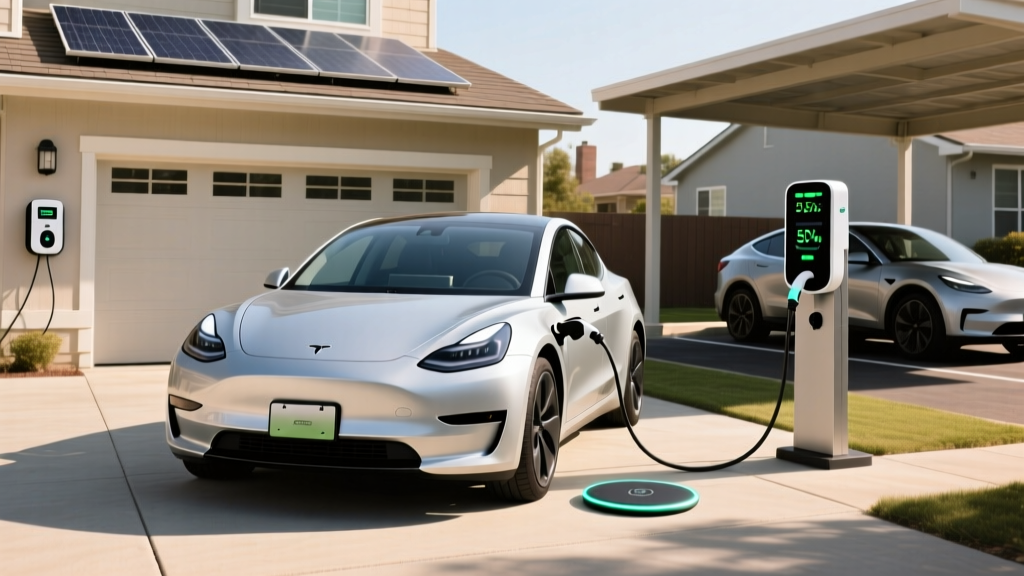
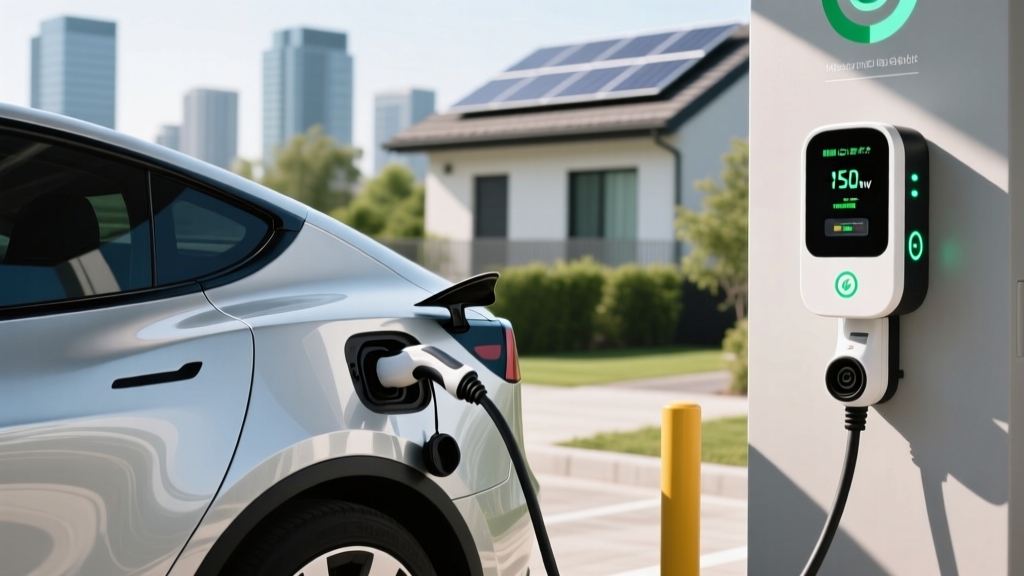
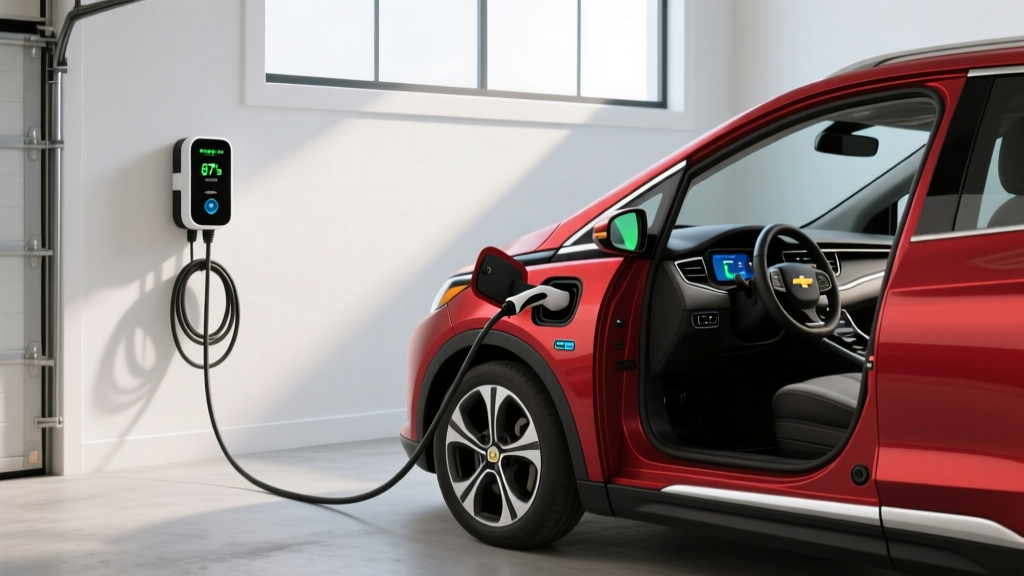
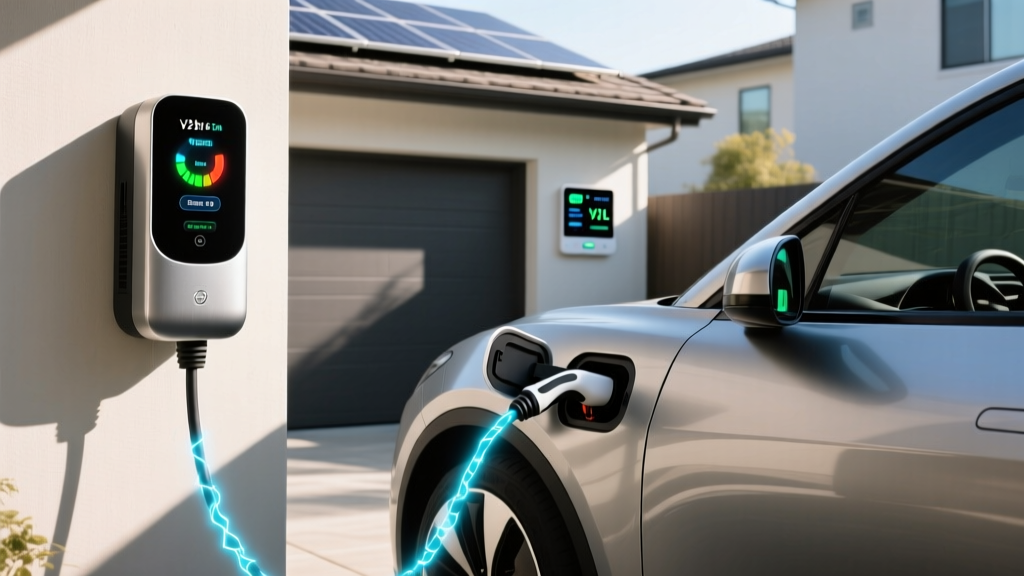
A bidirectional charger allows energy to flow both into your EV's battery (charging) and back out of it (discharging) to power your home, devices, or even the electrical grid. This capability transforms your EV from a vehicle into a mobile battery — one that typically stores between 60 and 130 kWh of usable energy, enough to run an average US home for two to four days during an outage.
Not every EV supports bidirectional charging, and not every charger enables it. As of the 2026 model year, only a specific set of vehicles offer this feature, and the hardware ecosystem is still maturing. Understanding the three flavors of bidirectionality — and the real costs of installing the equipment — is essential before you invest.
The Three Types of Bidirectional Charging
Bidirectional capability splits into three categories based on where the energy flows:
| Type | What It Does | Typical Output | Use Case |
|---|---|---|---|
| V2L (Vehicle-to-Load) | Powers devices/appliances directly via onboard outlets | 1.9–7.2 kW | Camping, tailgating, job-site tools, emergency appliance power |
| V2H (Vehicle-to-Home) | Feeds power back through your home's electrical panel | 10–19.2 kW | Whole-home backup during outages, peak shaving |
| V2G (Vehicle-to-Grid) | Sends energy back to the utility grid for compensation | 10–60 kW | Demand response programs, grid stabilization, earning credits |
V2L is the simplest — it requires no special home equipment. Vehicles like the Hyundai Ioniq 5, Kia EV6, Ford F-150 Lightning, and Rivian R1T include standard or optional 120V/240V outlets built into the vehicle. Plug in a space heater, circular saw, or refrigerator directly.
V2H requires a compatible bidirectional wall charger (such as the Ford Charge Station Pro or Wallbox Quasar) and a home energy management system with an automatic transfer switch. During a grid outage, your EV seamlessly powers designated circuits or your entire panel.
V2G remains largely limited to commercial fleet pilots and select utility programs in 2026. The National Renewable Energy Laboratory (NREL) continues to study grid-scale deployment, but residential V2G availability depends heavily on your utility's infrastructure and rate programs.
EVs That Support Bidirectional Charging in 2026
Bidirectional capability requires both hardware (onboard inverter and compatible charge port) and software support from the automaker. Here are the confirmed bidirectional-capable EVs available for the 2026 model year:
| Vehicle | V2L | V2H | V2G | Battery (kWh usable) |
|---|---|---|---|---|
| Ford F-150 Lightning (extended range) | ✓ | ✓ | Limited | 131 |
| Hyundai Ioniq 5 / Ioniq 5 N | ✓ | ✓* | — | 77.4 / 84 |
| Kia EV6 / EV9 | ✓ | ✓* | — | 77.4 / 100 |
| Chevrolet Silverado EV | ✓ | ✓ | — | 200 |
| Rivian R1T / R1S (Dual-Motor+) | ✓ | Announced | — | 149 (Max Pack) |
| GMC Sierra EV Denali | ✓ | ✓ | — | 200 |
*Requires compatible bidirectional charger and home energy management system. Hyundai/Kia V2H rolled out via Wallbox Quasar 2 partnership for 2025–2026 models.
How Standard Charging Levels Compare
Before evaluating bidirectional hardware, understand the baseline charging speeds you'll use daily. Bidirectional chargers also function as standard Level 2 chargers when sending power to the vehicle.
| Level | Voltage | Power (kW) | Miles of Range/Hour | 10–80% Time (84 kWh battery) |
|---|---|---|---|---|
| Level 1 (120V household) | 120V | 1.4–1.9 kW | 3–5 mi/hr | ~35–43 hours |
| Level 2 (240V home/public) | 240V | 7.2–19.2 kW | 20–60 mi/hr | ~3.5–8 hours |
| DC Fast (public) | 400–800V DC | 50–350 kW | 150–1,200 mi/hr | ~18–45 minutes |
Most bidirectional home chargers operate at Level 2 speeds for charging (typically 11.5–19.2 kW) and deliver 10–19.2 kW during V2H discharge. DC fast charging remains unidirectional — public stations do not pull energy from your vehicle.
Bidirectional Charger Equipment: What's Available
The bidirectional charger market is narrower than the standard Level 2 market. Here are the primary residential options as of 2026:
Ford Charge Station Pro
- Charge Power: 19.2 kW (80A, 240V)
- Discharge Power (V2H): 9.6 kW continuous
- Connector: NACS (Tesla-style, J3400)
- Cable Length: 25 ft
- Smart Features: FordPass app integration, scheduled charging, energy monitoring
- Compatibility: Ford F-150 Lightning, Silverado EV (with adapter)
- Price: ~$1,310 (hardware only)
Requires Ford Home Integration System (~$3,890 installed) for V2H transfer switch functionality.
Wallbox Quasar 2
- Charge Power: 11.5 kW (48A, 240V)
- Discharge Power (V2H/V2G): 11.5 kW
- Connector: CCS1 / NACS (region-dependent)
- Cable Length: 18 ft
- Smart Features: myWallbox app, solar integration, grid-services ready
- Compatibility: Hyundai Ioniq 5/6, Kia EV6/EV9, select CCS vehicles
- Price: ~$2,200 (hardware only)
Requires compatible home energy management system for V2H operation.
Utah Bi-Directional EVSE (dcbel r16)
- Charge Power: 16 kW (240V)
- Discharge Power (V2H): 16 kW
- Connector: NACS / CCS1
- Cable Length: 20 ft
- Smart Features: Solar + storage integration, off-grid capable, app control
- Compatibility: Works with ISO 15118-20 compatible vehicles
- Price: ~$3,500 (hardware only)
Newer entrant; availability may be limited by region.
Home Installation: Electrical Requirements and Costs
Installing a bidirectional charger is more complex than a standard Level 2 setup. You're not just adding a circuit — you're integrating your EV into your home's electrical infrastructure as a backup power source. Here's what's involved:
Electrical Requirements
- Dedicated Circuit: 60A–100A breaker at 240V (depending on charger amperage)
- Wire Gauge: 4 AWG copper for 60A; 2 AWG for 80A; 1/0 AWG for 100A
- Panel Capacity: Minimum 200A service recommended; older 100A panels will almost certainly require an upgrade
- Transfer Switch / Energy Management System: Required for V2H — isolates your home from the grid during outages (preventing backfeed to utility lines, which is a safety and code violation)
- GFCI Protection: NEC 2023/2026 requires GFCI protection for all EV supply equipment, including bidirectional units
- Permit: Required in virtually all US jurisdictions; electrical inspector must verify installation
Installation Cost Breakdown
| Component | Low End | High End | Notes |
|---|---|---|---|
| Bidirectional charger (hardware) | $1,300 | $3,500 | Ford Charge Station Pro to dcbel r16 |
| Home energy management / transfer switch | $1,500 | $3,900 | Ford Home Integration System or equivalent |
| Electrician labor (install + wiring) | $800 | $2,500 | Varies by run length, conduit, wall penetration |
| Electrical panel upgrade (if needed) | $1,500 | $4,000 | 100A to 200A service upgrade |
| Permit & inspection | $100 | $400 | Local jurisdiction fee |
| Total (no panel upgrade) | $3,700 | $10,300 | Most installs land in the $5,000–$7,500 range |
| Total (with panel upgrade) | $5,200 | $14,300 | Older homes should budget for this |
For context, a standard unidirectional Level 2 home charger install typically costs $500–$2,000 all-in. The bidirectional premium comes from the transfer switch, energy management system, and heavier electrical requirements.
Connector Compatibility: Which Plug Does Your EV Use?
The connector landscape shifted significantly in 2024–2025 as most major automakers adopted the North American Charging Standard (NACS, now SAE J3400). For bidirectional charging, connector compatibility is critical because the charger and vehicle must communicate via ISO 15118 protocols to enable reverse power flow.
| Connector | Brands Using It (2026) | Bidirectional Support | Adapter Needed? |
|---|---|---|---|
| NACS (J3400) | Tesla, Ford, GM, Rivian, Volvo, Polestar, Hyundai (2026+) | V2L (Tesla Cybertruck, Ford); V2H (Ford) | CCS→NACS adapters available (~$200–$300) |
| CCS1 | Hyundai (pre-2026), Kia, VW, BMW, legacy models | V2L + V2H (Hyundai/Kia via Wallbox Quasar 2) | NACS→CCS adapters available |
| CHAdeMO | Nissan Leaf (discontinued 2025), Mitsubishi Outlander PHEV | Limited V2H (Nissan via specific hardware) | Phase-out; no new vehicles |
Before purchasing a bidirectional charger, confirm your vehicle's connector type and its specific bidirectional protocol support. Not all CCS vehicles support V2H — only those with ISO 15118-20 compliant onboard inverters can discharge to a home.
What Does Bidirectional Charging Cost Per Mile vs. Gas?
Even with bidirectional capability, your primary use case is still charging your EV to drive. Here's how the economics break down across common charging scenarios:
| Scenario | $/kWh | Cost per Mile* | vs. Gas (30 MPG at $3.40/gal) |
|---|---|---|---|
| Home Level 2 (off-peak TOU rate) | $0.08–$0.14 | $0.024–$0.042 | Save 71–84% |
| Home Level 2 (standard rate) | $0.14–$0.22 | $0.042–$0.066 | Save 42–71% |
| Public Level 2 (ChargePoint, etc.) | $0.20–$0.40 | $0.06–$0.12 | Save 5–48% |
| DC Fast (Electrify America, EA pass) | $0.35–$0.55 | $0.105–$0.165 | Comparable to gas |
*Based on an EV averaging 3.0 miles per kWh (roughly the efficiency of a Hyundai Ioniq 5 or Tesla Model Y). EPA fueleconomy.gov lists per-model efficiency figures.
The V2H value proposition is separate from driving cost. During a grid outage, a fully charged F-150 Lightning with 131 kWh can power a home consuming 30 kWh/day for over four days. A comparable gasoline generator with fuel for four days costs $800–$1,500 in equipment plus ongoing fuel expense — and produces carbon monoxide, noise, and maintenance requirements that an EV system avoids entirely.
Battery Degradation and Warranty Considerations
A common concern with bidirectional charging is whether discharging your EV battery to power your home accelerates degradation. The data suggests the impact is modest but real:
- Cycle counting: Every full charge-discharge cycle (100%→0%→100%) counts as one cycle. V2H use that draws 30–50% of the battery daily adds roughly 0.3–0.5 equivalent cycles per day.
- Typical battery warranties: Most manufacturers warrant 70% capacity retention over 8 years / 100,000 miles. Hyundai and Kia offer 10 years / 100,000 miles on the battery.
- Manufacturer stance: Ford explicitly supports V2H use of the F-150 Lightning and has stated it does not void the battery warranty when used with approved equipment. Check your automaker's specific terms.
- Real-world degradation data: Per Recurrent Auto's fleet data, average EV battery degradation is approximately 5–8% over the first 3 years. Moderate V2H use may add 1–2% additional degradation over that period, depending on depth of discharge and thermal conditions.
Best practice: avoid discharging below 20% State of Charge (SoC) during V2H use, and don't hold the battery at 100% SoC for extended periods. Most bidirectional systems allow you to set a minimum reserve threshold (e.g., "never discharge below 30%") to protect battery longevity while still providing meaningful backup power.
Safety and Electrical Code Requirements
Bidirectional charging introduces complexity that standard Level 2 installations don't face. Key safety and code considerations include:
- Anti-islanding protection: Your bidirectional system MUST include an automatic transfer switch or grid-isolation device. Feeding power back onto utility lines during an outage can electrocute line workers — this is both extremely dangerous and a code violation under NEC Article 705.
- Outdoor rating: If mounted outdoors, the charger must carry a NEMA 4 or NEMA 4X rating for weather resistance.
- UL certification: Only install UL-listed (or ETL-listed) bidirectional EVSE. Non-certified equipment may not pass inspection and may void insurance coverage in the event of a fire.
- Dedicated circuit: NEC requires a dedicated branch circuit for EV supply equipment — no sharing with other appliances.
- Permit and inspection: All jurisdictions require a permit for EVSE installation. The inspector will verify wire sizing, breaker rating, GFCI protection, grounding, and transfer switch compliance.
Work with a licensed electrician experienced in bidirectional systems. The transfer switch installation alone requires panel-level work that is not a DIY project.
Frequently Asked Questions
How much does it cost to install a bidirectional EV charger at home?
Expect $5,000–$7,500 for a typical installation with no panel upgrade, and $7,000–$14,000 if your home needs a 200A panel upgrade. This includes the charger ($1,300–$3,500), energy management/transfer switch ($1,500–$3,900), electrician labor ($800–$2,500), and permits ($100–$400).
How fast will each charging level add range to my EV?
Level 1 (120V) adds 3–5 miles per hour. Level 2 (240V, 48A) adds roughly 25–35 miles per hour for a typical crossover EV. DC fast charging at 150+ kW can add 100–200 miles in 15–20 minutes, depending on the vehicle's charge curve and battery preconditioning.
Which connector and charger is compatible with my EV for bidirectional use?
Ford vehicles with NACS ports work with the Ford Charge Station Pro. Hyundai and Kia CCS vehicles work with the Wallbox Quasar 2. Check your vehicle's owner's manual for ISO 15118-20 compliance — this protocol is required for V2H communication between the car and charger.
Does using V2H void my EV battery warranty?
Ford has confirmed that V2H use with approved equipment does not void the F-150 Lightning battery warranty. Other automakers' policies vary — always confirm in writing before relying on V2H as your primary backup strategy. Battery warranties generally cover 70% capacity retention over 8–10 years / 100,000 miles.
Can I use a bidirectional charger as a normal Level 2 charger?
Yes. All current bidirectional chargers function as standard Level 2 chargers for daily charging. The bidirectional features only activate when you command V2H or V2L mode through the charger's app or your vehicle's settings.
Is V2G (Vehicle-to-Grid) available for residential customers in 2026?
V2G remains limited to select utility pilot programs. Some California, New York, and Texas utilities are testing residential V2G compensation, but widespread availability with retail rate credits is not yet a reality. Monitor your local utility's demand-response programs for updates.