If you've heard the term bi-directional EV charger and wondered whether your electric vehicle can power your home during an outage or run your tailgate setup, you're not alone. Bi-directional charging is shifting from a niche tech demo to a practical feature available on a growing list of 2026 EVs — but it requires specific hardware, a compatible vehicle, and a home electrical system ready to handle two-way power flow.
This guide breaks down exactly what bi-directional charging is, which EVs support it, what you'll spend on equipment and installation, and how it compares to standard Level 2 charging. We'll also cover the broader charging landscape so you can see where bi-directional fits in your setup.
What Is a Bi-Directional EV Charger?
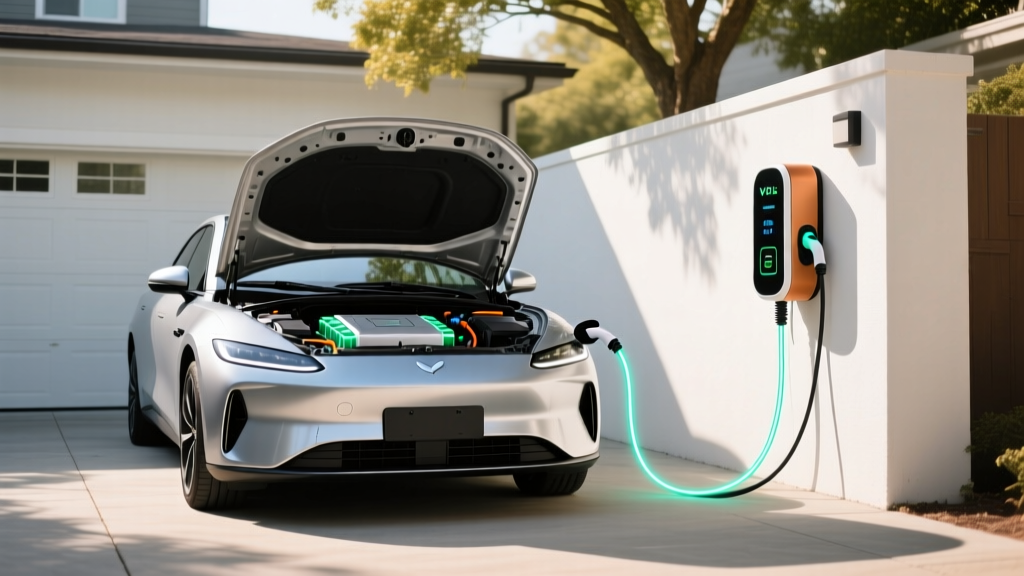
A standard EV charger pushes electricity in one direction: from the grid (or solar panels) into your vehicle's battery. A bi-directional EV charger can also pull energy out of the battery and send it elsewhere — to your home, to external devices, or back to the grid. There are three main flavors:
- V2L (Vehicle-to-Load): Powers external devices directly via a 120V outlet built into the vehicle or an adapter. No special home charger needed. Examples: Hyundai Ioniq 5, Ford F-150 Lightning (Pro Power Onboard), Kia EV9.
- V2H (Vehicle-to-Home): Sends power from the EV battery through a dedicated bi-directional wall charger to your home's electrical panel during an outage. Requires a compatible bi-directional charger and a transfer switch or energy management system. Examples: Ford F-150 Lightning with Ford Charge Station Pro, GM Silverado EV with Energy Transfer Pro.
- V2G (Vehicle-to-Grid): Sends power back to the utility grid for demand-response programs. Still limited in availability and requires utility participation.
Which 2026 EVs Support Bi-Directional Charging?
Not every EV can send power back. Bi-directional capability requires specific onboard hardware and software. Here's the current landscape for 2026 model-year vehicles:
| Vehicle | V2L | V2H | V2G | Max Output (kW) | Battery (kWh) |
|---|---|---|---|---|---|
| Ford F-150 Lightning | Yes | Yes (9.6 kW) | Testing | 9.6 | 98 / 131 |
| Hyundai Ioniq 5 | Yes (3.6 kW) | No | Limited pilots | 3.6 | 58 / 77.4 |
| Kia EV9 | Yes (3.6 kW) | Announced | No | 3.6 | 76.1 / 100 |
| Chevrolet Silverado EV | Yes | Yes (up to 10.2 kW) | No | 10.2 | 200 |
| Hyundai Ioniq 9 (2026) | Yes | Expected | No | TBA | 110.3 |
| Rivian R1T / R1S (2026) | Yes (V2L) | No | No | 3.0 | 106 / 141 |
| Tesla Cybertruck | Yes (Powershare) | Announced | No | 11.5 (V2H target) | 123 |
Always verify bi-directional capability for your specific trim level — it's often restricted to higher trims or requires an optional package.
Charging Levels Explained: Speeds and Range Added
Whether you're charging your EV or using it to power your home, understanding charging levels is essential. Here's how each level performs:
| Level | Voltage | Power (kW) | Miles of Range Added per Hour | Typical Use Case |
|---|---|---|---|---|
| Level 1 | 120V AC | 1.0–1.9 kW | 3–5 mi/hr | Overnight top-ups, PHEVs, emergency |
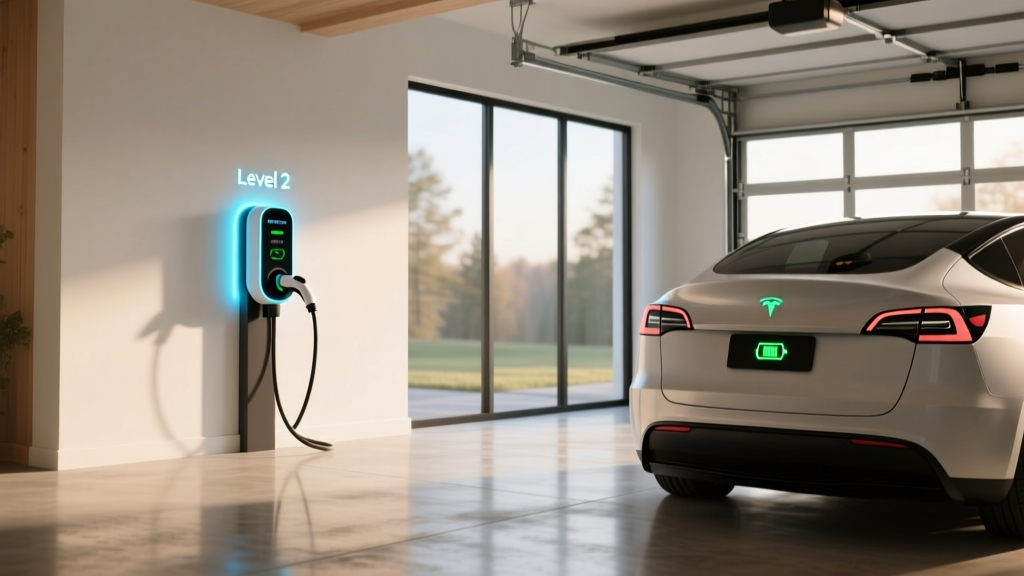
| Level 2 | 240V AC | 3.3–19.2 kW | 12–75 mi/hr | Home daily charging, workplace |
| DC Fast Charge | 400–900V DC | 50–350+ kW | 150–1,000+ mi/hr (peak) | Road trips, highway corridors |
| Bi-Directional (V2H) | 240V AC | 3.6–11.5 kW (output) | N/A — powers home loads | Backup power, peak shaving |
Real-world charging time examples (10–80% SoC):
- Hyundai Ioniq 5 (77.4 kWh, NMC): ~18 minutes on a 350 kW DC fast charger (peak ~240 kW, tapering above 60%); ~7.5 hours on a 7.7 kW Level 2 home charger.
- Ford F-150 Lightning Extended Range (131 kWh): ~40 minutes on a 150+ kW DC fast charger; ~13 hours on an 11.5 kW Level 2 charger.
- Tesla Model Y Long Range (~75 kWh usable): ~25 minutes on a 250 kW Supercharger; ~8 hours on an 11.5 kW Wall Connector.
DC fast charging speeds are not linear. Your EV will pull peak kW only in the lower state-of-charge range (typically 10–50%), then the charge curve tapers significantly above 80% to protect battery health. This is why manufacturers quote 10–80% times rather than 0–100%.
Home Installation: Electrical Requirements and Costs
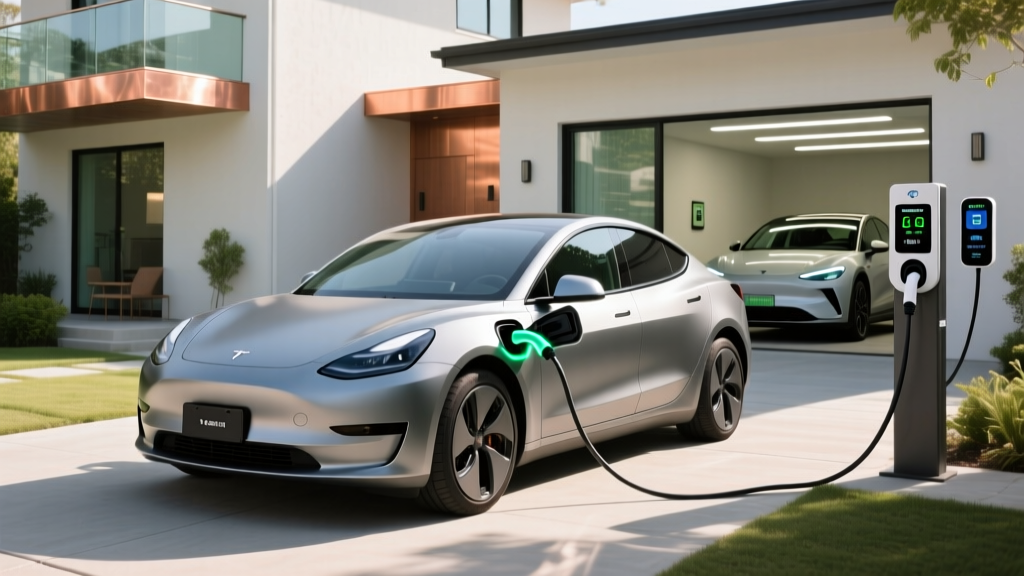
Installing a bi-directional EV charger is more complex than a standard Level 2 setup. You're not just adding an outlet — you're integrating a two-way power system that can interact with your home's main electrical panel.
Electrical Requirements
- Circuit: A dedicated 60A breaker is standard for most bi-directional chargers (supporting up to 48A continuous draw at 240V, or ~11.5 kW). Some V2L-only setups need no dedicated circuit.
- Voltage: 240V AC, single-phase (standard US residential split-phase service).
- Panel capacity: Your main panel must have physical space for a 60A double-pole breaker and sufficient ampacity headroom. Most homes with 200A service can accommodate this. Homes with 100A service will likely need a panel upgrade.
- Transfer switch or energy management system: For V2H, you need either a manual/automatic transfer switch (to isolate your home from the grid during outages) or a smart energy management device like the Span smart panel or Span Drive integration.
- GFCI protection: NEC 2023 and 2026 codes require GFCI protection for EV charging outlets. Hardwired chargers may have internal GFCI; receptacle-based installs need a GFCI breaker.
- Outdoor rating: If mounting outdoors, the charger must carry a NEMA 4 or NEMA 4X rating for weather resistance.
Installation Cost Breakdown
| Component | Standard Level 2 Install | Bi-Directional (V2H) Install |
|---|---|---|
| Charger equipment | $400–$750 | $1,300–$3,500 |
| Electrician labor (4–8 hrs) | $400–$1,200 | $800–$2,500 |
| Permit & inspection | $50–$200 | $150–$400 |
| Transfer switch / energy mgmt | N/A | $500–$2,500 |
| Panel upgrade (100A → 200A), if needed | $1,500–$3,000 | $1,500–$3,000 |
| Total (no panel upgrade) | $850–$2,150 | $2,750–$8,900 |
| Total (with panel upgrade) | $2,350–$5,150 | $4,250–$11,900 |
Bi-directional V2H installations cost significantly more than a standard Level 2 charger because of the transfer switch, additional wiring, and more complex commissioning. Always get quotes from at least two licensed electricians, and confirm they have experience with bi-directional systems — this is not a standard outlet install.
Connector Compatibility: NACS, CCS1, and CHAdeMO
The connector landscape has consolidated significantly by 2026, but it still matters for bi-directional charging because V2H systems require the charger and vehicle to communicate in both directions.
| Connector | Brands Using It (2026) | Bi-Directional Support |
|---|---|---|
| NACS (Tesla / SAE J3400) | Tesla, Ford, GM, Rivian, Volvo, Polestar, Hyundai, Kia (new models) | V2L (vehicle-side); V2H emerging on NACS-equipped trucks |
| CCS1 (Combined Charging System) | Legacy models from VW, BMW, older Ford/Hyundai/Kia models | V2H supported (Ford Charge Station Pro uses CCS1) |
| CHAdeMO | Nissan Leaf (discontinued), Mitsubishi Outlander PHEV | Limited V2H via Nissan's earlier V2H pilots |
Adapter note: Many 2026 EVs ship with NACS ports but can use CCS1 adapters for older public chargers. For bi-directional V2H, you must use the charger specified by your vehicle manufacturer — third-party adapters generally do not support the two-way communication protocol required for V2H.
Equipment Picks: Bi-Directional and Standard Level 2 Chargers
Here are specific chargers worth considering, with their exact specs and current pricing as of early 2026:
Bi-Directional (V2H) Chargers
Power: 9.6 kW (V2H) / 19.2 kW (charge-only, 80A circuit)
Connector: CCS1 (NACS adapter available)
Cable: 25 ft
Smart features: FordPass app integration, automatic outage detection with home integration system
Price: ~$1,799 (equipment only)
Compatible vehicles: F-150 Lightning (extended-range battery required for full V2H)
Power: Up to 10.2 kW (V2H) / 11.5 kW (charge-only)
Connector: NACS (J3400)
Cable: 25 ft
Smart features: GM Energy app, automatic transfer with GM Energy Home power system
Price: ~$1,900–$2,400 (equipment only)
Compatible vehicles: Chevrolet Silverado EV, future GM Ultium-based EVs
Standard Level 2 Chargers (Non-Bi-Directional)
Power: Up to 11.5 kW (48A on 60A circuit)
Connector: NACS (J3400)
Cable: 24 ft
Smart features: Wi-Fi updates, load sharing with multiple units, Tesla app scheduling
Price: ~$475
Note: Charge-only; no V2H capability
Power: Up to 12 kW (50A adjustable, on 60A circuit)
Connector: NACS or J1772 (configurable)
Cable: 23 ft
Smart features: Alexa integration, ChargePoint app scheduling, detailed energy reporting
Price: ~$599
Note: Charge-only; excellent smart features for solar-integrated homes
Cost to Charge: Per-Mile Economics vs Gas
One of the strongest arguments for EV ownership is the per-mile energy cost. Here's how charging costs compare to gasoline across different scenarios, using a 2026 Hyundai Ioniq 5 (efficiency: ~3.0 mi/kWh or ~114 MPGe combined) as the baseline:
| Scenario | Rate ($/kWh) | Cost per Mile | Gas Equivalent (28 MPG, $3.40/gal) |
|---|---|---|---|
| Home off-peak (utility TOU plan) | $0.08–$0.12 | $0.027–$0.040 | $0.121/mi |
| Home standard rate | $0.14–$0.18 | $0.047–$0.060 | $0.121/mi |
| Public Level 2 (ChargePoint, EVgo) | $0.25–$0.40 | $0.083–$0.133 | $0.121/mi |
| DC Fast (Electrify America, Tesla SC) | $0.35–$0.55 | $0.117–$0.183 | $0.121/mi |
Home charging on an off-peak rate delivers a 65–75% per-mile savings over gasoline. Even DC fast charging at highway rates is often competitive with or slightly above gas costs. The economics shift if you're using your EV for V2H backup power — you're essentially trading range for home power, but at a cost far below running a gasoline generator.
V2H cost perspective: Running a 3 kW average home load for 10 hours during an outage consumes ~30 kWh. At your home electricity rate of $0.14/kWh, that's ~$4.20 worth of stored energy — compared to $15–$25 in gasoline for a comparable portable generator, plus the noise, fumes, and maintenance.
Safety, Code, and Permit Considerations
Bi-directional charger installations must comply with the National Electrical Code (NEC) as adopted by your local jurisdiction. Key requirements:
- Dedicated circuit: Your EV charger must be on its own breaker — no sharing with other appliances or outlets.
- 80% continuous load rule: NEC requires that continuous loads (operating 3+ hours) not exceed 80% of the breaker rating. A 48A charger needs a 60A breaker. A 40A charger needs a 50A breaker.
- GFCI protection: Required for all EV charging receptacles under NEC 2023/2026. Hardwired units with integrated GFCI are acceptable.
- Permit and inspection: Virtually all jurisdictions require an electrical permit for EV charger installation. The inspector will verify wire gauge, breaker sizing, grounding, and GFCI compliance. Budget $50–$400 depending on your municipality.
- Utility notification: For V2H and especially V2G installations, your utility may require notification or approval, since you're connecting a power source to the home's service entrance. Some utilities offer interconnection agreements for bi-directional systems.
- Anti-islanding protection: V2H systems must automatically disconnect from the grid during an outage to prevent backfeeding power to utility lines (a safety risk for line workers). This is handled by the transfer switch or integrated energy management system.
Federal Tax Credit: Does a Bi-Directional Charger Qualify?
The Residential Clean Energy Credit (IRC §25D) covers qualified energy storage and certain charging equipment. However, the rules are specific:
- The Alternative Fuel Vehicle Refueling Property Credit (IRC §30C) provides up to 30% of equipment and installation costs (capped at $1,000 for residential) for EV charging equipment installed in eligible census tracts.
- Eligibility depends on your home's census tract qualifying as a low-income or non-urban area — check the IRS §30C guidance for current maps.
- Bi-directional chargers that serve as EV charging equipment generally qualify under §30C, but the transfer switch and panel upgrade may or may not be covered. Consult a tax professional for your specific situation.
- Income caps do not apply to §30C (unlike the §30D vehicle purchase credit), but the census-tract requirement is the primary filter.
Frequently Asked Questions
How much does it cost to install a bi-directional EV charger at home?
Expect $2,750–$8,900 total for a V2H-capable installation without a panel upgrade, and $4,250–$11,900 if your home needs a 100A-to-200A service upgrade. The charger itself costs $1,300–$3,500, with the remainder going to electrician labor, a transfer switch, permits, and wiring.
How fast will each charging level add range to my EV?
Level 1 (120V) adds 3–5 miles per hour. Level 2 (240V) adds 12–75 miles per hour depending on amperage and vehicle acceptance rate. DC fast charging adds 150–1,000+ miles per hour at peak rates, though the charge curve tapers significantly above 80% SoC. Bi-directional V2H doesn't add range — it uses stored range to power your home.
Which connector and charger is compatible with my EV?
Most 2026 EVs use the NACS (SAE J3400) connector, while older models may have CCS1. For bi-directional V2H, you must use the manufacturer-specified charger (e.g., Ford Charge Station Pro for F-150 Lightning, GM Energy PowerShift for Silverado EV). Third-party adapters do not support V2H communication protocols.
How much does EV charging cost per mile compared to gas?
Home charging on off-peak rates costs $0.03–$0.04 per mile for a typical efficient EV — roughly 65–75% less than a 28 MPG gas car at $3.40/gallon ($0.12/mi). Public DC fast charging at $0.40–$0.55/kWh costs $0.12–$0.18 per mile, roughly on par with gasoline.
What electrical upgrades might I need for a bi-directional charger?
At minimum, you'll need a dedicated 60A breaker with space in your panel. If you have a 100A main panel (common in pre-1990 homes), you'll likely need a full service upgrade to 200A — a $1,500–$3,000 project. You'll also need a transfer switch or energy management system ($500–$2,500) for safe V2H operation during outages.
Can any EV power my home during an outage?
No. Only vehicles with V2H capability and the matching bi-directional charger can backfeed your home. V2L-capable vehicles can power individual devices through a 120V outlet but cannot connect to your home's electrical panel. As of 2026, the Ford F-150 Lightning and Chevrolet Silverado EV are the primary V2H-capable consumer vehicles available.