What Is Bi-Directional Charging and Why It Matters
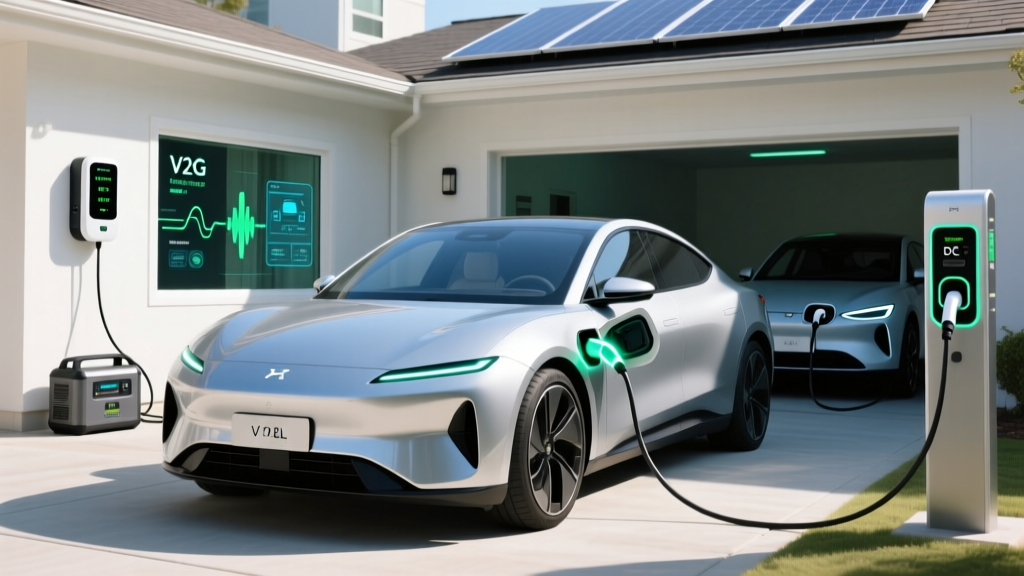
Most EV owners think of charging as a one-way street: electricity flows from the grid into the battery. Bi-directional charging reverses that flow, turning your EV into a mobile power station capable of sending energy back out — to your home, to the grid, or to external devices. This capability splits into three distinct modes, each with different hardware requirements, utility implications, and real-world utility.
As of 2026, bi-directional charging is no longer a concept-car feature. The Ford F-150 Lightning, Hyundai Ioniq 5, Kia EV9, and Chevrolet Silverado EV all ship with some form of bi-directional capability. But the ecosystem of compatible chargers, home electrical upgrades, and utility interconnection agreements remains fragmented. Here's what you need to know before investing.
The Three Types of Bi-Directional Charging
V2L (Vehicle-to-Load)
The simplest form. Your EV powers external devices directly through a standard 120V or 240V outlet — no special home charger or utility agreement required. Think of it as a built-in generator. The Hyundai Ioniq 5 offers a V2L adapter that plugs into the charge port, delivering up to 3.6 kW (roughly 15 amps at 240V). That's enough to run a refrigerator, power tools, or a campsite setup simultaneously.
V2H (Vehicle-to-Home)
Your EV connects to your home's electrical panel through a dedicated bi-directional charger and transfer switch, powering your entire house during an outage. Ford's Intelligent Backup Power system on the F-150 Lightning delivers up to 9.6 kW through the Ford Charge Station Pro — enough to sustain an average home (which draws 2–3 kW continuously with peaks to 8–10 kW) for roughly three days on a full 131 kWh extended-range battery.
V2G (Vehicle-to-Grid)
The most complex mode. Your EV sends power back to the utility grid during peak demand, and you get compensated. This requires a utility interconnection agreement, a grid-compatible bi-directional charger, and smart scheduling software. V2G is still limited in availability — a handful of utilities in California, Texas, and the Northeast offer pilot programs, but widespread adoption is expected to accelerate through 2027–2028.
Charging Levels and Speeds: The Foundation
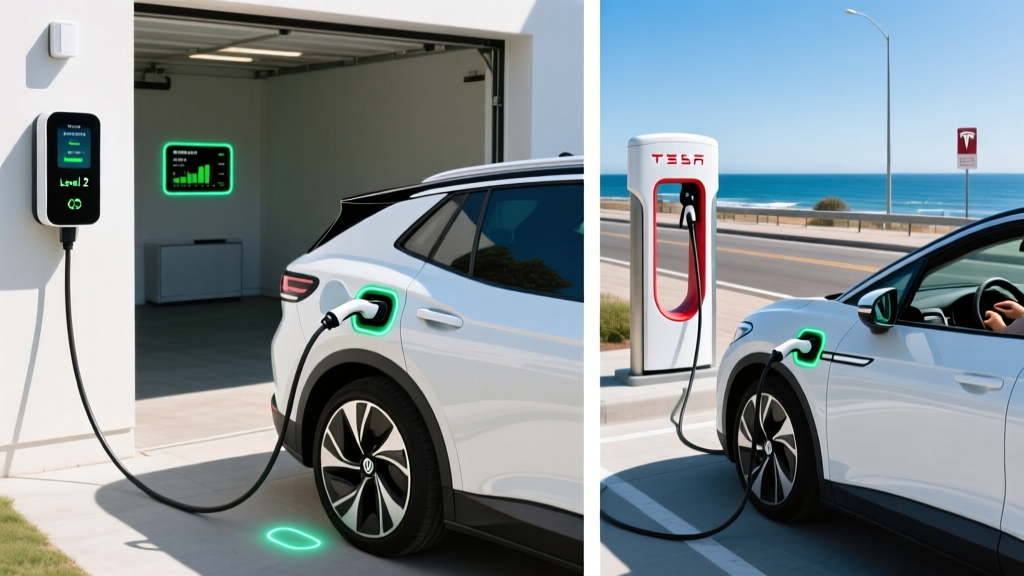
Before evaluating bi-directional hardware, you need to understand the charging levels that feed your EV in the first place. Bi-directional chargers handle Level 2 input (charging the car) and Level 2-equivalent output (discharging from the car).
| Level | Voltage / Amperage | Power (kW) | Miles of Range Added Per Hour | 10–80% Time (Typical 75 kWh Battery) |
|---|---|---|---|---|
| Level 1 | 120V / 12A | 1.4 kW | 3–5 mi/hr | ~40+ hours (impractical) |
| Level 2 | 240V / 32–48A | 7.7–11.5 kW | 25–44 mi/hr | ~6–8 hours |
| DC Fast Charge | 400–800V DC | 50–350 kW | 150–1,000+ mi/hr | 18–45 minutes |
Real-world note: DC fast charging speeds peak at low states of charge and taper significantly above 80%. A charger rated for 150 kW may sustain that rate only from 10–40% SoC before dropping to 50–70 kW. Always look at 10–80% time, not peak kW, when evaluating charging speed.
EVs Compatible With Bi-Directional Charging (2026 Models)
| Vehicle | Battery (kWh Usable) | Bi-Directional Modes | Max Output (kW) | Connector | Base MSRP |
|---|---|---|---|---|---|
| Ford F-150 Lightning (Extended Range) | 131 kWh (NMC) | V2H, V2L | 9.6 kW | NACS (built-in) | ~$62,995 |
| Hyundai Ioniq 5 | 77.4 kWh (NMC) | V2L | 3.6 kW | NACS (2025+) | ~$42,600 |
| Kia EV9 | 99.8 kWh (NMC) | V2L, V2H (with adapter) | 3.6 kW (V2L) / up to 10 kW (V2H) | NACS (2025+) | ~$55,900 |
| Chevrolet Silverado EV (4WT / RST) | 200 kWh (NMC) | V2H, V2L, V2G (announced) | up to 19.2 kW (V2H) | NACS | ~$57,900 |
| Ford E-Transit (Commercial) | 68 kWh (NMC) | V2L (Pro Power Onboard) | 2.4 kW / 7.2 kW (option) | CCS1 | ~$47,995 |
Critical detail: Not every trim of these vehicles supports bi-directional charging. On the F-150 Lightning, Intelligent Backup Power requires the extended-range battery and the Ford Charge Station Pro. On the Ioniq 5, the V2L adapter is included on SEL trim and above, but the interior 120V V2L outlet is standard on all trims with the long-range battery. Always verify trim-level compatibility before purchasing.
Home Installation: Electrical Requirements and Costs
Installing a bi-directional home charger is significantly more involved than a standard Level 2 wall connector. V2H systems require a dedicated circuit, a bi-directional charger unit, an automatic transfer switch (or critical-loads panel), and often a main-panel upgrade. Here's the breakdown.
Electrical Requirements
- Circuit: Dedicated 60A breaker (for chargers delivering up to 11.5 kW input / 9.6–19.2 kW output)
- Voltage: 240V split-phase (standard US residential)
- Wire gauge: 6 AWG copper (for 60A circuits); 4 AWG for longer runs exceeding 100 feet
- Transfer switch or critical-loads subpanel: Required for V2H to isolate your home from the grid during outages (prevents back-feeding, which is dangerous to utility workers)
- GFCI protection: Required by NEC 2023/2026 Article 625 for all EV charging equipment
- Outdoor rating: NEMA 4 enclosure required for any outdoor-mounted unit
Panel Upgrade Reality
Most homes built before 2000 have 100A or 150A main panels. Adding a 60A dedicated EV circuit alongside existing loads (HVAC, electric range, dryer) may exceed your panel's capacity. A panel upgrade to 200A typically costs $1,500–$3,000; a full upgrade to 400A (needed for simultaneous V2H + high-draw appliances) runs $3,000–$5,000. Some bi-directional systems, like the Wallbox Quasar 2, include load-management software that dynamically adjusts charging draw to avoid tripping the main breaker — potentially avoiding a panel upgrade entirely.
| Component | Standard Level 2 Install | Bi-Directional V2H Install |
|---|---|---|
| Charger / Equipment | $400–$700 | $1,200–$3,500 |
| Transfer Switch / Subpanel | Not required | $800–$2,000 |
| Electrician Labor (240V circuit) | $500–$1,500 | $1,500–$3,500 |
| Permit & Inspection | $100–$300 | $200–$500 |
| Panel Upgrade (if needed) | $0–$3,000 | $1,500–$5,000 |
| Total Range | $1,000–$5,500 | $5,200–$14,500 |
The wide cost range reflects site-specific variables: distance from panel to charger location, whether conduit runs through finished walls, and local permitting requirements. Always get at least three quotes from licensed electricians who have documented EV charger installation experience.
Connector Compatibility: NACS, CCS, and Adapter Needs
Bi-directional chargers must match your vehicle's connector. The industry has largely standardized on NACS (North American Charging Standard, originally Tesla's connector) for new vehicles from 2025 onward, but CCS1 remains common on older models and some commercial vehicles.
| Connector | Bi-Directional Capable? | Key Vehicles | Adapter Needed? |
|---|---|---|---|
| NACS (J3400) | Yes — V2H, V2L, V2G | Ford F-150 Lightning, Chevy Silverado EV, Hyundai Ioniq 5 (2025+), Kia EV9, Tesla Cybertruck | No (native on 2025+ vehicles) |
| CCS1 | Limited — V2L only on most | Hyundai Ioniq 5 (pre-2025), VW ID.4, Ford E-Transit | CCS-to-NACS adapter for newer chargers |
| CHAdeMO | Yes — V2G capable (Nissan) | Nissan Leaf (older), Mitsubishi Outlander PHEV | CHAdeMO-specific bi-directional charger required (rare) |
Adapter warning: Not all adapters support bi-directional flow. A standard CCS-to-NACS adapter may allow charging your CCS vehicle at a NACS charger, but it will not enable V2H or V2G discharge. If you're investing in bi-directional hardware, ensure both the charger and adapter are explicitly rated for reverse power flow.
Bi-Directional Charger Equipment Recommendations
The market for bi-directional home chargers is still small but growing. Here are the leading options as of 2026, with real specs — not marketing claims.
Ford Charge Station Pro
- Power: 11.5 kW (charge) / 9.6 kW (discharge V2H)
- Connector: NACS (native)
- Cable length: 25 ft
- Smart features: FordPass app integration, scheduled charging, Intelligent Backup Power with home transfer switch
- Compatible vehicles: F-150 Lightning (extended range required for full V2H)
- Price: ~$1,310 (charger only; transfer switch and install additional)
- Limitation: Only works with Ford vehicles for bi-directional features
Wallbox Quasar 2
- Power: 11.5 kW (charge) / 11.5 kW (discharge V2H/V2G)
- Connector: NACS (J3400)
- Cable length: 20 ft (tethered)
- Smart features: myWallbox app, solar integration, grid-services/V2G ready, dynamic load balancing
- Compatible vehicles: Any NACS-equipped EV with bi-directional capability
- Price: ~$2,490 (charger only)
- Limitation: V2G features depend on utility support; not all utilities accept grid interconnection
GM Energy PowerShift Charger
- Power: 19.2 kW (charge) / 19.2 kW (discharge V2H)
- Connector: NACS
- Cable length: 25 ft
- Smart features: myGMC app, V2H with GM Energy Home energy management system, integrates with solar + stationary storage
- Compatible vehicles: Chevrolet Silverado EV, GMC Sierra EV, Cadillac Escalade IQ (V2H-capable trims)
- Price: ~$2,200 (charger); full Home system with battery wall unit adds ~$7,000+
- Limitation: 19.2 kW requires a 100A dedicated circuit — panel upgrade almost certain
dcbel r16 Home Station
- Power: 11.5 kW (charge) / 11.5 kW (discharge V2H)
- Connector: NACS
- Cable length: 20 ft
- Smart features: Integrated home energy management, solar-direct EV charging, built-in DC coupling (no extra inverter needed for solar homes)
- Compatible vehicles: NACS bi-directional-capable EVs
- Price: ~$3,500 (all-in-one unit includes transfer functionality)
- Limitation: Newer company; fewer certified installers nationwide
Charging and Discharging Costs: The Economics
Bi-directional charging economics depend on your electricity rate structure, whether your utility supports time-of-use (TOU) pricing or V2G compensation, and your local gas prices for comparison.
| Scenario | Rate / Cost | Cost Per Mile (EV at 3 mi/kWh) | Equivalent Gas Cost (at 25 MPG) |
|---|---|---|---|
| Home off-peak (TOU) | $0.09/kWh | $0.03/mi | $0.75/mi (at $3.00/gal gas) |
| Home standard rate | $0.15/kWh | $0.05/mi | $1.25/mi (at $3.50/gal gas) |
| Public Level 2 (ChargePoint, etc.) | $0.25–$0.39/kWh | $0.08–$0.13/mi | — |
| DC Fast Charge (Electrify America, EA Pass) | $0.35–$0.56/kWh | $0.12–$0.19/mi | — |
| V2G revenue (pilot programs) | $0.10–$0.30/kWh exported | Earns $1–$3 per discharge session (typically 5–10 kWh exported) | |
V2H as backup power economics: A home standby generator (e.g., Generac 22 kW) costs $5,000–$8,000 installed plus fuel. If you already own a bi-directional-capable EV and install the charger for $5,200–$10,000, you're getting whole-home backup as a secondary benefit of your daily driver — effectively a $0 marginal cost for backup power compared to a dedicated generator.
Safety, Code, and Interconnection Requirements
Bi-directional charging introduces electrical complexity that goes well beyond plugging in a standard Level 2 charger. Here are the non-negotiable safety and code requirements:
- Automatic transfer switch (ATS): Mandatory for V2H. This physically disconnects your home from the utility grid before the EV begins feeding power, preventing back-feed that could electrocute utility line workers. Never attempt V2H without a properly installed, inspected ATS.
- NEC Article 625 compliance: All EV supply equipment must be listed (UL or equivalent) and installed per the National Electrical Code. Bi-directional units must carry a UL 9741 or equivalent listing for bidirectional power flow.
- Utility interconnection agreement: Required for V2G. Your utility must approve any system that sends power back to the grid. This process can take 30–90 days and may require a dedicated revenue-grade meter.
- Battery warranty implications: Some manufacturers limit warranty coverage if the battery is used for V2G grid services. Ford's battery warranty (8 years/100,000 miles, minimum 70% capacity retention per Ford's F-150 Lightning specifications) covers V2H backup use but excludes commercial V2G grid cycling. Always check your specific warranty terms.
- GFCI and ground-fault protection: Required on the dedicated circuit. Bi-directional chargers with integrated GFCI simplify compliance.
- Outdoor installation: Any exterior-mounted unit must carry a NEMA 4 (weatherproof) rating. Conduit runs must be rated for wet locations.
Frequently Asked Questions
How much does it cost to install a bi-directional home EV charger?
A complete V2H installation — including the bi-directional charger ($1,200–$3,500), automatic transfer switch ($800–$2,000), electrician labor ($1,500–$3,500), permits ($200–$500), and potential panel upgrade ($1,500–$5,000) — ranges from $5,200 to $14,500. The median real-world cost for a 200A-panel home with a short conduit run is approximately $7,000–$9,000. Standard Level 2-only installs (no bi-directional) run $1,000–$5,500 for comparison.
How fast will each charging level add range to my EV?
Level 1 (120V, 1.4 kW) adds 3–5 miles per hour — suitable only for overnight top-ups on PHEVs or very low-mileage drivers. Level 2 (240V, 7.7–11.5 kW) adds 25–44 miles per hour and is the practical standard for daily home charging. DC fast charging (50–350 kW) adds 150–1,000+ miles per hour at peak, with a typical 10–80% session taking 18–45 minutes depending on battery size, chemistry, and charger power. For bi-directional discharge, expect 3.6–19.2 kW output — enough to power a home continuously during an outage.
Which connector and charger is compatible with my EV for bi-directional use?
Check your vehicle's connector first: NACS (J3400) is standard on most 2025+ EVs and supports the broadest bi-directional charger ecosystem. CCS1 vehicles have limited bi-directional options — mostly V2L adapters rather than full V2H. CHAdeMO vehicles (primarily older Nissan Leafs) were early V2G pioneers but charger availability is declining. Match the charger to your vehicle's native connector and confirm the charger's spec sheet explicitly lists bi-directional capability — not all Level 2 chargers support it even if the car does.
How much does EV charging cost per mile compared to gas?
At the US average residential electricity rate of ~$0.16/kWh (EIA data) and a typical EV efficiency of 3 miles per kWh, home charging costs roughly $0.05 per mile. A comparable gas vehicle at 25 MPG with fuel at $3.25/gallon costs $0.13 per mile — more than 2.5× the EV cost. Off-peak TOU rates ($0.08–$0.10/kWh) drop EV cost to $0.03/mile. Public DC fast charging at $0.48/kWh raises EV cost to ~$0.16/mile, which can exceed gas — making home charging the economic sweet spot.
What electrical upgrades might I need for bi-directional charging?
The most common upgrade is a main panel replacement from 100A or 150A to 200A ($1,500–$3,000) to accommodate the 60A dedicated circuit alongside existing household loads. Homes with all-electric appliances (heat pump, induction range, electric dryer) may need a 400A service upgrade ($3,000–$5,000) for simultaneous V2H operation and heavy appliance use. Older homes may also need service entrance conductor replacement, a new meter base, or utility coordination for increased service capacity. A licensed electrician's load calculation — required by code — will determine your exact needs.
Does bi-directional charging degrade my EV battery faster?
Minimally, in most use cases. V2L and V2H backup discharge events are infrequent (a few times per year for most homeowners) and use shallow discharge cycles that have negligible impact on battery health. V2G grid services involve more frequent cycling, but utilities typically limit discharge depth and frequency. Studies from NREL (National Renewable Energy Laboratory) suggest that moderate V2G cycling adds less than 1–2% additional annual degradation beyond normal driving cycles. LFP chemistry batteries (found in some Tesla and Ford standard-range models) tolerate frequent cycling better than NMC, making them theoretically better suited for V2G — though most bi-directional-capable vehicles currently use NMC for energy density.