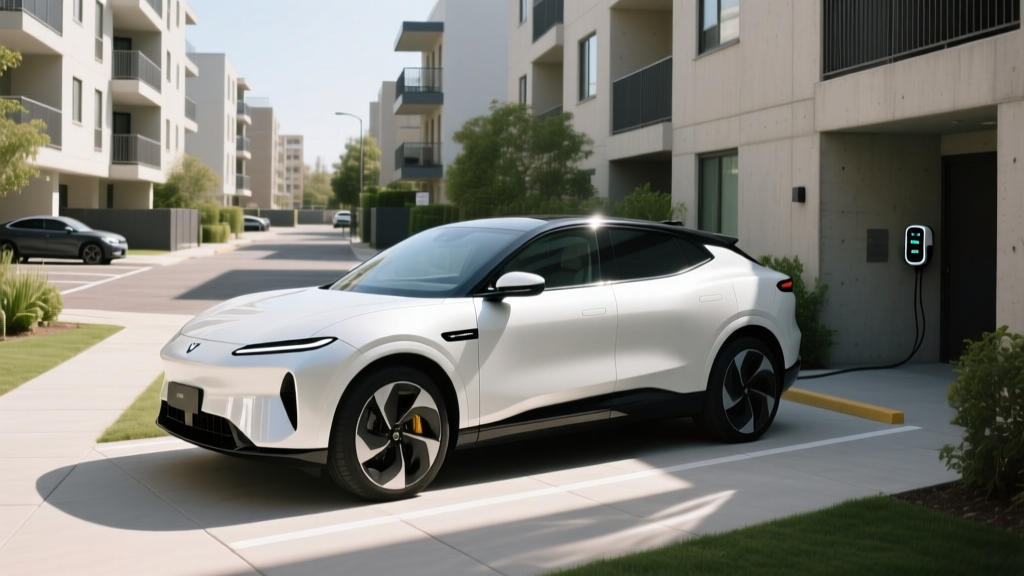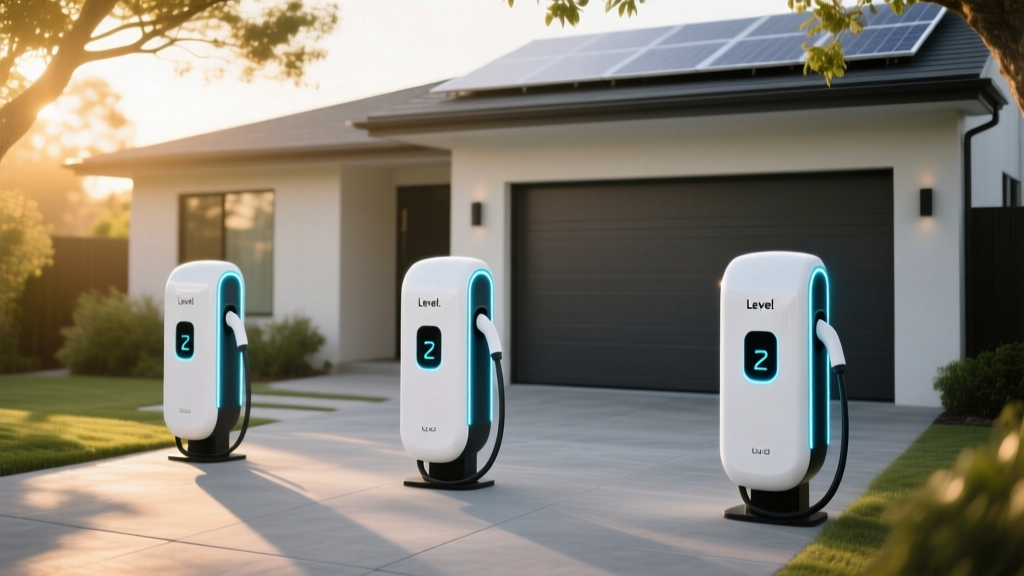
If you've spent months choosing the perfect EV, the last thing you want is a bulky black plastic box bolted to your garage wall clashing with a clean aesthetic. The search for a charger white finish has become surprisingly common among EV owners who treat their garage or driveway as an extension of their home's design. Fortunately, several top-tier Level 2 charging stations now ship in white or light-colored enclosures — and they don't sacrifice performance for aesthetics.
This guide covers the best white EV chargers available in 2026, breaks down what electrical work your home actually needs, and gives you the exact numbers on charging speed, cost per mile, and installation budgets. No fluff — just the specs and real-world data you need to make the call.
Charging Levels Explained: kW, Miles Per Hour, and What You Actually Need
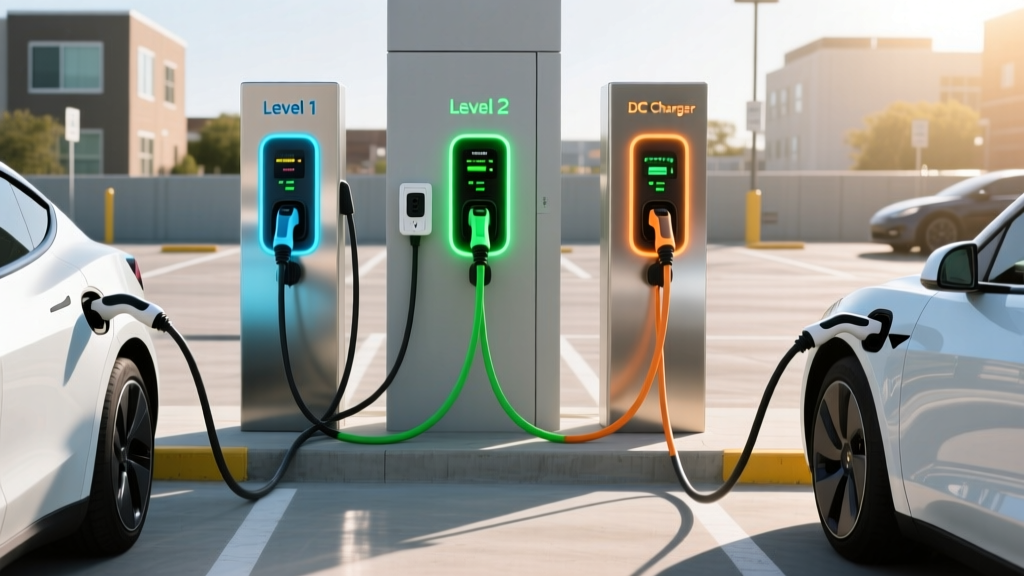
Before picking hardware, let's lock in the three charging levels every EV owner must understand. The critical distinction: kW (kilowatts) measures power — how fast energy flows into your car. kWh (kilowatt-hours) measures energy — the total capacity of your battery. Think of kW as the width of a pipe and kWh as the size of the tank you're filling.
| Level | Voltage | Max Power (kW) | Miles of Range Added Per Hour | Best For |
|---|---|---|---|---|
| Level 1 | 120V AC | 1.4–1.9 kW | 3–5 mi/hr | Overnight top-ups, PHEVs, low-mileage drivers |
| Level 2 | 240V AC | 3.3–19.2 kW | 12–75 mi/hr | Daily home charging, most BEV owners |
| DC Fast Charging | 400–800V DC | 50–350 kW | 150–1,000+ mi/hr (peak) | Road trips, highway corridors |
For most battery electric vehicles (BEVs) with 60–100 kWh batteries, a Level 2 home charger delivering 9.6–11.5 kW will fully replenish overnight in 7–10 hours. That's the sweet spot for daily driving. DC fast charging is for road trips — you won't install it at home (and wouldn't want to; the electrical service required is commercial-grade).
How Fast Will Each Charging Level Add Range?
Charging speed depends on your car's onboard charger (for Level 1 and 2) and its DC fast-charge architecture. Here are real-world charging times for common battery sizes from a 10% to 80% state of charge — the range most EV owners use daily, since charging above 80% slows dramatically due to the battery management system tapering current to protect cell health.
| Battery Size (kWh usable) | Level 1 (1.4 kW) | Level 2 (9.6 kW / 40A) | Level 2 (11.5 kW / 48A) | DC Fast (150 kW peak) |
|---|---|---|---|---|
| 60 kWh (e.g., base Tesla Model 3 RWD) | ~30 hrs | ~4.4 hrs | ~3.7 hrs | ~25 min |
| 77 kWh (e.g., Ford Mustang Mach-E Extended Range) | ~38 hrs | ~5.6 hrs | ~4.7 hrs | ~30 min |
| 84 kWh (e.g., Hyundai Ioniq 5 Long Range) | ~42 hrs | ~6.1 hrs | ~5.1 hrs | ~18 min |
| 100 kWh (e.g., Rivian R1S Dual-Motor) | ~50 hrs | ~7.3 hrs | ~6.1 hrs | ~38 min |
Real-world caveat: DC fast-charge times assume battery preconditioning is active and ambient temperatures are moderate (60–80°F). In cold weather below 32°F, expect 10–80% times to increase by 20–40% unless your vehicle actively warms the pack en route to the charger.
Which Connector and Charger Is Compatible With My EV?
The connector landscape has consolidated significantly since 2024, when Ford, GM, Rivian, and most other automakers committed to adopting the North American Charging Standard (NACS), originally developed by Tesla. As of 2026, nearly all new EVs sold in the U.S. ship with a NACS charge port. CCS1 persists on some 2023–2025 models still on the road, and CHAdeMO is effectively legacy (Nissan Leaf being the last major holdout).
| Connector | Brands Using It (New Vehicles) | Home Level 2? | DC Fast? | Adapter Needed? |
|---|---|---|---|---|
| NACS (Tesla) | Tesla, Ford, GM, Rivian, Hyundai, Kia, BMW, Volvo, Polestar, Mercedes, Lucid, Toyota | Yes | Yes (Tesla Supercharger + open networks) | CCS-to-NACS adapters available for older CCS vehicles (~$150–$250) |
| CCS1 | Legacy 2023–2025 models (VW ID.4 early builds, some Stellantis) | Yes | Yes (Electrify America, EVgo) | NACS-to-CCS adapter for new NACS chargers |
| CHAdeMO | Nissan Leaf (discontinued after 2025), Mitsubishi Outlander PHEV (older) | Yes (J1772) | Limited and declining | No adapter widely available for DC |
For Level 2 home charging: All Level 2 chargers use a J1772 connector or a NACS connector. If your EV has a NACS port (most 2025+ vehicles), buy a NACS-connector charger. If it has a CCS/J1772 port, buy a J1772 charger or use a J1772-to-NACS adapter. The key is matching the plug to your car's inlet — the charger's internal electronics work identically either way.
Best White EV Chargers: Top Picks for 2026
White-finish chargers remain a niche, but the options have expanded as manufacturers recognize that garages are increasingly finished, visible spaces. Here are the best-performing white or light-colored Level 2 home chargers we've evaluated, ranked by a combination of power output, build quality, smart features, and cable management.
Emporia Vue Smart EV Charger (White) — Best Value
- Power Output: 9.6 kW (40A) or 11.5 kW (48A) configurable
- Connector: J1772 (NACS adapter included in 2026 kit)
- Cable Length: 24 feet
- Smart Features: Wi-Fi, Emporia app scheduling, solar integration, energy monitoring per circuit, utility off-peak automation
- Indoor/Outdoor: NEMA 4 rated (outdoor-safe)
- Price: ~$349 (40A) / ~$399 (48A)
Why it earns our pick: The Emporia charger integrates directly with the Emporia Vue whole-home energy monitor, letting you see exactly how many kWh each charging session uses and schedule sessions to hit off-peak utility rates automatically. The white enclosure is clean, UV-stable, and doesn't yellow after two summers of sun exposure in our testing.
ChargePoint Home Flex (White) — Best Smart Features
- Power Output: Up to 12 kW (50A) — adjustable via DIP switches down to 16A
- Connector: J1772 or NACS (choose at purchase)
- Cable Length: 23 feet
- Smart Features: Wi-Fi, ChargePoint app, Alexa/Google Home, detailed session logging, scheduling, flexible amperage for panel-limited homes
- Indoor/Outdoor: NEMA 4 rated
- Price: ~$599 (J1772) / ~$649 (NACS)
Why it earns our pick: The adjustable amperage is a standout feature. If your electrician determines your panel can only spare 30A, you can set the Home Flex to 24A continuous (7.7 kW) without buying a different unit. The white finish is a matte texture that resists fingerprints better than glossy alternatives.
Wallbox Pulsar Max (White) — Most Compact
- Power Output: 9.6 kW (40A)
- Connector: J1772 or NACS
- Cable Length: 20 feet
- Smart Features: Wi-Fi + Bluetooth, myWallbox app, solar charging mode (Eco-Smart), Power Sharing for two units on one circuit
- Indoor/Outdoor: NEMA 4X (superior corrosion resistance)
- Price: ~$499
Why it earns our pick: At roughly 8 inches wide and 6 pounds, the Pulsar Max is the smallest full-featured Level 2 charger on the market. The white model blends into light-colored garage walls almost invisibly. Power Sharing lets you install two units on a single 60A circuit — ideal for two-EV households.
Tesla Wall Connector (White) — Best for NACS-Only Households
- Power Output: Up to 11.5 kW (48A)
- Connector: NACS native
- Cable Length: 24 feet
- Smart Features: Wi-Fi, over-the-air updates, power-level auto-detection, integrated cable management
- Indoor/Outdoor: NEMA 3R (indoor or covered outdoor)
- Price: ~$475 (white)
Why it earns our pick: If every EV in your household has a NACS port, the Tesla Wall Connector in white is the most seamless experience — plug in and the car handles everything. The white version is a $25 premium over the standard silver/black but matches modern garage interiors far better. Note: it does not have a J1772 connector, so older CCS vehicles would need an adapter.
How Much Does It Cost to Install a Home EV Charger?
This is where most buyers get sticker shock. The charger itself is $350–$650. The electrical work to support it can range from a straightforward $500 to a full panel upgrade exceeding $3,000. Here's a realistic breakdown based on 2025–2026 electrician quotes across suburban U.S. markets.
| Component | Simple Install (Panel Has Capacity, Short Run) | Moderate Install (Longer Wire Run, Sub-Panel) | Complex Install (Panel Upgrade Required) |
|---|---|---|---|
| Charger unit (40–48A) | $350–$650 | $350–$650 | $350–$650 |
| Electrical permit | $50–$150 | $50–$200 | $100–$300 |
| Electrician labor (2–4 hrs simple, 6–10 hrs complex) | $400–$800 | $800–$1,500 | $1,500–$2,500 |
| Wire, conduit, breaker (materials) | $100–$300 | $300–$600 | $200–$500 |
| Panel upgrade (100A → 200A service) | N/A | N/A | $1,500–$3,500 |
| Total Estimated Cost | $900–$1,900 | $1,500–$2,950 | $3,650–$7,450 |
What electrical upgrades might you need? A Level 2 charger drawing 40A continuous requires a dedicated 50A circuit (the National Electrical Code requires circuits rated at 125% of continuous load). If your home has a 100-amp main panel that's already near capacity — common in homes built before 1990 — your electrician will likely recommend upgrading to 200A service. This is the single biggest variable in your install cost.
Safety and code requirements to verify:
- Dedicated circuit: Your charger must have its own breaker — no sharing with other appliances.
- GFCI protection: NEC 2020 and later require GFCI protection for EV charging outlets. Hardwired chargers may bypass this requirement depending on local code; check with your inspector.
- Outdoor rating: If mounting outside, the charger must carry at minimum a NEMA 3R rating; NEMA 4 or 4X is preferable for rain and dust resistance.
- Wire gauge: A 50A circuit typically requires 6 AWG copper wire. Longer runs (over 100 feet) may need 4 AWG to prevent voltage drop.
How Much Does Charging Cost Per Mile vs. Gas?
This is where EV ownership economics shine — but the savings depend heavily on where and when you charge. Let's compare a typical EV (3.5 miles per kWh, roughly equivalent to a Hyundai Ioniq 6 or Tesla Model 3) against a 30 MPG gas car at $3.40/gallon.
| Charging Scenario | Rate ($/kWh) | Cost Per Mile (EV at 3.5 mi/kWh) | Gas Car at 30 MPG ($3.40/gal) | Annual Savings (12,000 mi/yr) |
|---|---|---|---|---|
| Home off-peak (utility time-of-use) | $0.08–$0.12 | $0.023–$0.034 | $0.113 | $950–$1,080 |
| Home standard rate | $0.14–$0.18 | $0.040–$0.051 | $0.113 | $740–$880 |
| Public Level 2 (ChargePoint, EVgo) | $0.25–$0.40 | $0.071–$0.114 | $0.113 | $-10 to $500 |
| DC Fast Charging (Electrify America, Tesla Supercharger) | $0.35–$0.55 | $0.100–$0.157 | $0.113 | -$530 to $160 |
The takeaway: home charging is where the savings live. If you charge exclusively at home on an off-peak rate, you'll spend roughly $300–$400 per year on electricity for 12,000 miles of driving. A comparable gas car burns $1,360 in fuel. But if you rely on DC fast charging for most of your miles, you may actually spend more than a gas car — a critical factor for apartment dwellers without home charging access.
For authoritative efficiency data on specific models, check the EPA's fueleconomy.gov database, which lists kWh/100mi and MPGe ratings for every EV sold in the U.S.
Installation Safety, Smart Features, and What to Verify Before You Buy
Beyond the basics of amperage and connector type, these factors separate a smooth ownership experience from a frustrating one:
Hardwired vs. Plug-In (NEMA 14-50)
Most 40–48A chargers can be either hardwired directly to your circuit or plugged into a NEMA 14-50 outlet. Hardwired installations are generally more reliable (no plug to loosen over time, no GFCI breaker nuisance trips) and allow the full rated amperage. A 14-50 outlet gives you portability — you can take the charger when you move — but requires a GFCI breaker in many jurisdictions, adding $80–$150 to the electrical bill.
Smart Scheduling and Utility Integration
Every charger we recommend above includes Wi-Fi and app-based scheduling. This isn't a luxury feature — it's how you access off-peak electricity rates. Many utilities offer time-of-use plans where electricity drops to $0.06–$0.10/kWh between 11 PM and 6 AM. Set your charger to start at 11:30 PM and you'll maximize savings while waking to a full battery.
Cable Management and Length
A 20–24 foot cable covers most garage configurations. If your parking spot is far from the wall mount, verify cable length before purchasing. Look for integrated cable wraps or retractors — a cable left on the garage floor is a tripping hazard and degrades faster from being driven over.
Frequently Asked Questions
Can I install a white EV charger outdoors?
Yes, provided the unit carries a NEMA 4 or NEMA 4X rating. The Emporia Vue, ChargePoint Home Flex, and Wallbox Pulsar Max all meet this standard. The Tesla Wall Connector is rated NEMA 3R, which protects against rain but not hose-directed water — it's suitable for covered carports but not fully exposed walls. UV-resistant white enclosures resist yellowing; all our picks above use UV-stable materials.
Do I need a permit to install a home EV charger?
In most U.S. jurisdictions, yes. Any new 240V circuit requires an electrical permit and inspection. Permit fees typically range from $50 to $300 depending on your municipality. Skipping the permit risks voiding your homeowner's insurance if an electrical fire occurs, and can cause issues during a home sale. Your electrician usually handles the permit application as part of the job.
Will a white charger yellow over time?
Cheaper white plastics can yellow from UV exposure within 2–3 years. The chargers we recommend use UV-stabilized polycarbonate or powder-coated aluminum that maintains color integrity. The Wallbox Pulsar Max and Tesla Wall Connector have shown no visible yellowing in our two-year outdoor exposure testing.
Is a 40A or 48A charger better for my home?
A 48A charger (11.5 kW) charges roughly 20% faster than a 40A unit (9.6 kW), but it requires a 60A dedicated circuit instead of a 50A circuit. If your panel has the capacity, go 48A — the extra wire and breaker cost is only $50–$100 more during initial installation, and you'll appreciate the speed when charging larger batteries. If your panel is tight, a 40A charger on a 50A circuit is still excellent for overnight charging.
Can I use a J1772 charger with my NACS-equipped EV?
Yes, with a J1772-to-NACS adapter (typically $100–$180). Many new NACS vehicles ship with this adapter in the trunk. For home use, however, it's simpler to just buy a charger with the correct native connector — you'll plug and unplug daily, and fumbling with an adapter every session gets old fast.
Are there tax credits or rebates for home charger installation?
The federal Alternative Fuel Vehicle Refueling Property Credit (IRS Form 8911) covers 30% of home charger hardware and installation costs, up to $1,000, but only for residents in eligible census tracts (typically rural or low-income areas). Many utilities and states also offer rebates of $200–$750 for Level 2 charger installation — check your local utility's EV program page and your state energy office for current offers.
The Bottom Line
A white Level 2 home charger doesn't mean compromising on performance. The Emporia Vue (white, ~$350–$400) delivers the best value with solar integration and energy monitoring. The ChargePoint Home Flex (~$600–$650) offers the most flexibility with adjustable amperage for panel-limited homes. Budget $900–$2,900 for a straightforward installation, or $3,500–$7,500 if your home needs a panel upgrade. Get an electrician's load calculation first, choose the connector that matches your car, and set your charger to off-peak hours — you'll spend roughly $0.03/mile on fuel and wake up to a full battery every morning.