Why Hotel Charging Matters for EV Road Trips
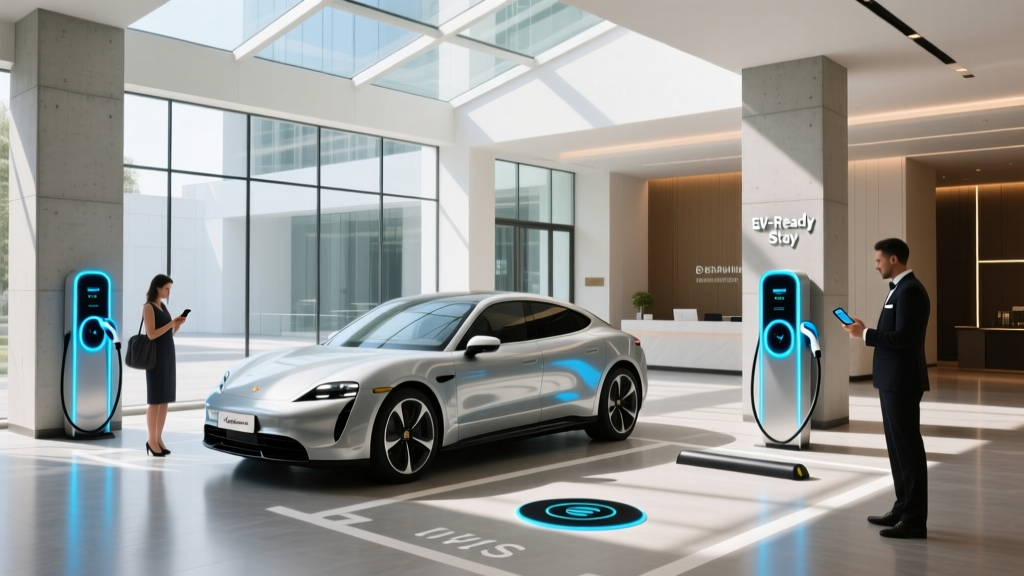
If you own an electric vehicle, planning overnight stays now involves a second checklist: Does the hotel have reliable chargers, and what kind? Unlike gas cars that refuel in five minutes anywhere, EVs benefit enormously from "destination charging" — plugging in overnight at a hotel and waking up to a full battery. This strategy reduces dependence on DC fast chargers, saves money, and eliminates range anxiety on multi-day trips.
But not all hotel charging is created equal. Some chains have invested heavily in Level 2 infrastructure, while others are just beginning to add chargers. In this guide, we break down which hotel brands lead the pack in 2026, what charging speeds to expect, and how to plan your EV-friendly stays — plus the technical details every EV traveler needs to understand about connectors, costs, and charging speeds.
Charging Levels Explained: What You'll Find at Hotels
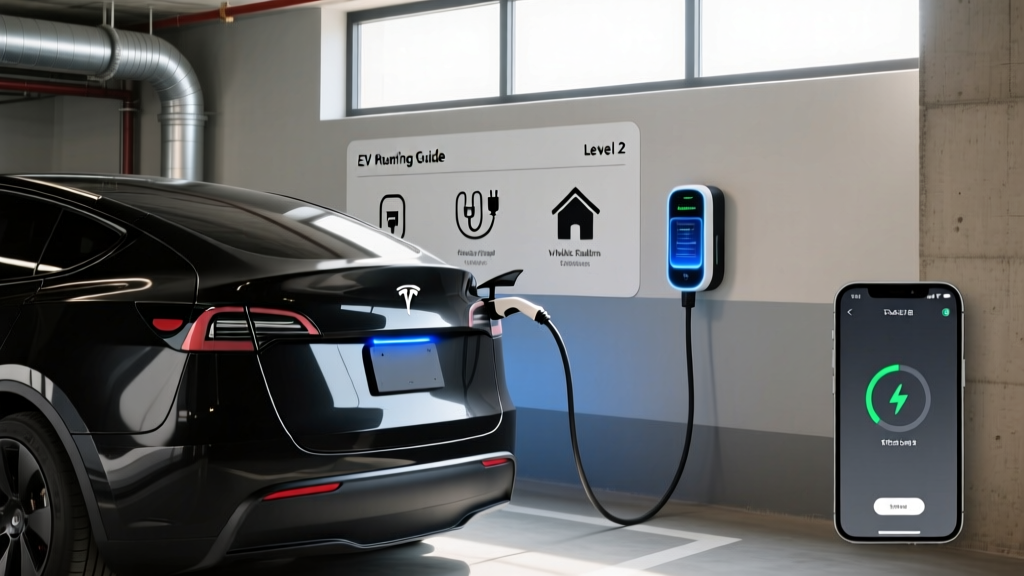
Before evaluating hotel brands, you need to understand the three charging levels and what each delivers. Hotels primarily offer Level 2 charging, though a growing number of highway-adjacent properties are adding DC fast chargers.
| Level | Voltage | Power (kW) | Miles of Range Added per Hour | Typical Location |
|---|---|---|---|---|
| Level 1 | 120V AC | 1.0–1.4 kW | 3–5 miles | Standard household outlet; some budget hotels |
| Level 2 | 208–240V AC | 3.3–19.2 kW | 12–70 miles | Most hotel chargers, home installations, workplaces |
| DC Fast Charging | 400–800V DC | 50–350 kW | 150–1,000+ miles (equivalent rate) | Highway rest stops, dedicated stations, select hotels |
Key distinction: kW (kilowatts) measures power — the rate at which energy flows. kWh (kilowatt-hours) measures energy — the total amount stored in your battery. A 10 kW charger running for 8 hours delivers 80 kWh of energy, enough to fully recharge most EV batteries.
For hotel stays, Level 2 is the sweet spot. An 8-hour overnight session at 7.2 kW adds roughly 57 kWh — enough to fully recharge a Tesla Model 3 (75 kWh battery) or take a Ford F-150 Lightning (131 kWh extended range) from 30% to about 73%. DC fast chargers at hotels are a bonus for quick top-ups but are rarely necessary when you're sleeping overnight.
Best Hotel Brands for EV Charging in 2026
Hilton — The Industry Leader
Hilton has emerged as the most EV-friendly hotel chain in North America. Through a partnership with Tesla, Hilton committed to installing 20,000 Level 2 chargers across 2,000 properties by 2025, with continued expansion into 2026. Properties span Hilton Garden Inn, Hampton Inn, DoubleTree, and full-service Hilton hotels. Many chargers are Tesla Wall Connectors with the NACS (North American Charging Standard) connector, but Tesla provides J1772 adapters upon request, and most locations also offer universal J1772 stations from ChargePoint or EVgo.
Typical setup: 7.2–11.5 kW Level 2 chargers (240V), 4–8 ports per property, often free for guests or available at a nominal fee.
Marriott International
Marriott has rolled out EV charging across its portfolio — Courtyard, Fairfield, Residence Inn, and full-service Marriott properties — primarily through partnerships with ChargePoint and Electrify America. As of 2026, over 1,200 Marriott properties in the U.S. and Canada offer Level 2 charging, with select highway-adjacent locations adding DC fast chargers.
Typical setup: 6.6–7.2 kW ChargePoint Level 2 stations, J1772 connector standard, pricing varies by property (many offer free charging for overnight guests).
IHG (InterContinental Hotels Group)
IHG brands — Holiday Inn, Holiday Inn Express, Staybridge Suites, and Crowne Plaza — have steadily expanded EV charging infrastructure. The chain partners with EVgo and ChargePoint, with roughly 800+ properties offering Level 2 charging as of early 2026.
Choice Hotels & Wyndham
Both Choice Hotels (Comfort Inn, Quality Inn) and Wyndham (La Quinta, Ramada, Days Inn) have begun adding chargers at select properties, though coverage is less consistent than Hilton or Marriott. Use apps like PlugShare or ChargePoint to verify availability before booking.
Boutique & Luxury Hotels
Many luxury and boutique properties — particularly in California, the Pacific Northwest, and the Northeast corridor — have installed high-quality Level 2 or even DC fast charging. Brands like Four Seasons, Ritz-Carlton, and Kimpton often feature 11.5–19.2 kW Level 2 chargers. Always call ahead to confirm connector type and availability.
Connector Compatibility: Will the Hotel Charger Fit Your EV?
The EV charging connector landscape has shifted dramatically. As of 2026, the North American Charging Standard (NACS), originally developed by Tesla, has become the dominant connector for new EVs. However, millions of CCS1-equipped EVs remain on the road, and older Nissan Leafs still use CHAdeMO.
| Connector | Brands Using It | Hotel Availability | Adapter Needed? |
|---|---|---|---|
| NACS (Tesla) | Tesla (all), Ford (2025+), GM (2025+), Rivian (2025+), Volvo, Polestar, Hyundai/Kia (2026+) | Increasingly common at Hilton, some Marriott | CCS-to-NACS adapter for older non-Tesla EVs (~$200–$300) |
| CCS1 | Ford (pre-2025), GM (pre-2025), VW, BMW, Hyundai/Kia (pre-2026), most legacy EVs | Most ChargePoint, EVgo Level 2 stations at hotels | NACS-to-CCS adapter if only Tesla connectors available |
| CHAdeMO | Nissan Leaf (pre-2026), Mitsubishi Outlander PHEV | Rare at hotels; mostly at dedicated DC fast stations | No widely available adapter; seek CCS or CHAdeMO stations |
| J1772 (Level 2 universal) | All EVs (for Level 2 AC charging) | Widely available; the default for Level 2 hotel chargers | Tesla owners use the J1772 adapter included with the car |
Pro tip for travelers: Always carry your EV's adapter kit. Tesla vehicles include a J1772 adapter for non-Tesla Level 2 chargers. If you drive a CCS1-equipped EV and plan to stay at Hilton properties with Tesla Wall Connectors, invest in a NACS-to-CCS adapter from Lectron or A2Z EV.
How Much Does Hotel EV Charging Cost?
Hotel charging costs vary wildly — from complimentary to surprisingly expensive. Here's what to expect:
| Scenario | $/kWh | Cost for 60 kWh (≈200 mi) | Cost per Mile |
|---|---|---|---|
| Free hotel charging | $0.00 | $0.00 | $0.00 |
| Hotel paid Level 2 (typical) | $0.25–$0.49 | $15.00–$29.40 | $0.075–$0.147 |
| Home charging (off-peak utility rate) | $0.08–$0.14 | $4.80–$8.40 | $0.024–$0.042 |
| Public DC fast charger (Electrify America, EVgo) | $0.35–$0.55 | $21.00–$33.00 | $0.105–$0.165 |
| Gas car (28 MPG avg, $3.40/gal) | — | $24.29 (7.14 gal) | $0.121 |
Free hotel charging remains one of the best deals in EV ownership. Even paid hotel Level 2 charging is often competitive with gas on a per-mile basis, especially for efficient EVs like the Tesla Model 3 (27 kWh/100mi) or Hyundai Ioniq 6 (25 kWh/100mi).
However, some hotels use third-party networks that charge by the minute or add idle fees. Always check the PlugShare or ChargePoint app listing for a specific property to see real pricing before you plug in.
Charging Time Examples: What to Expect Overnight
Here's how long common EVs take to charge at typical hotel Level 2 rates:
| Vehicle | Battery (kWh usable) | Max Level 2 Rate (kW) | Time at 7.2 kW | Time at 11.5 kW |
|---|---|---|---|---|
| Tesla Model 3 Long Range | 75 kWh | 11.5 kW | ~7.3 hours | ~4.6 hours |
| Ford Mustang Mach-E Extended Range | 91 kWh | 10.5 kW | ~8.8 hours | ~5.5 hours |
| Hyundai Ioniq 5 (84 kWh pack) | 84 kWh | 10.9 kW | ~8.2 hours | ~5.1 hours |
| Chevrolet Equinox EV | 85 kWh | 11.5 kW | ~8.2 hours | ~5.2 hours |
| Ford F-150 Lightning Ext. Range | 131 kWh | 19.2 kW | ~12.7 hours | ~8.0 hours |
Real-world note: Charging slows significantly above 80% State of Charge (SoC) to protect battery health. Most EVs will reach 80% well before the times listed above, then taper to a trickle. For overnight hotel charging, this isn't a concern — you have 8+ hours to reach 100% if needed. According to fueleconomy.gov, charging to 100% occasionally is fine for NMC batteries, but for daily driving, 80% is recommended to maximize long-term battery health.
Home Charging Setup: Install Your Own Level 2 for Maximum Savings
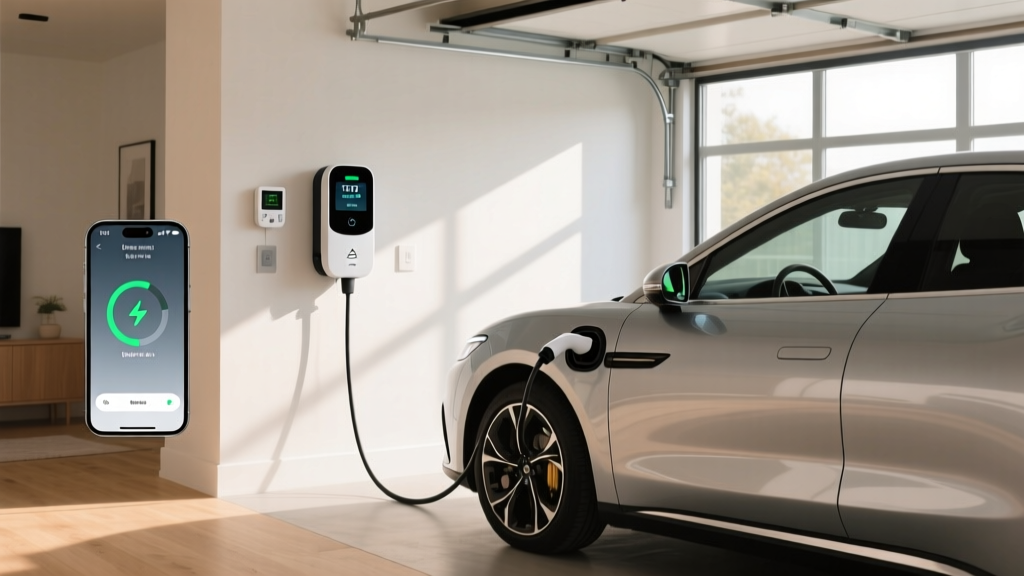
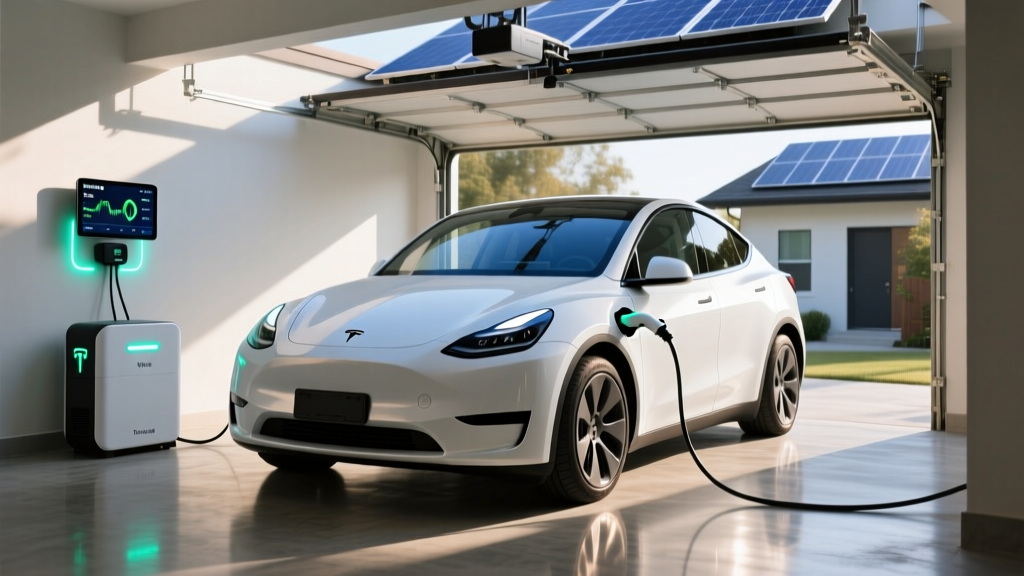
While hotel charging is essential for road trips, the vast majority of EV charging happens at home. Installing a Level 2 home charger is the single best investment an EV owner can make — it's faster, cheaper, and more convenient than any public option.
Electrical Requirements
A typical home Level 2 charger requires a dedicated 240V circuit, similar to what an electric dryer or oven uses. The most common configurations:
- 40A circuit / 32A continuous: Delivers 7.7 kW — sufficient for most EVs and the most common residential setup
- 50A circuit / 40A continuous: Delivers 9.6 kW — recommended for larger batteries (F-150 Lightning, Rivian R1T)
- 60A circuit / 48A continuous: Delivers 11.5 kW — maximum for most residential chargers; requires 200A electrical panel
Panel Upgrade Considerations
Many older homes have 100A electrical panels that may not support an additional 40–60A load. A panel upgrade to 200A typically costs $1,500–$3,000 but is sometimes necessary. A licensed electrician will perform a load calculation to determine if your panel can handle the new circuit. Some utilities offer rebates for panel upgrades tied to EV charger installation.
Installation Cost Breakdown
| Component | Low End | High End | Notes |
|---|---|---|---|
| Level 2 charger equipment | $300 | $750 | Varies by brand, power output, smart features |
| Electrician labor (240V circuit run) | $500 | $2,000 | Depends on distance from panel to garage/driveway |
| Permit & inspection | $50 | $300 | Required in most jurisdictions; varies by locality |
| Electrical panel upgrade (if needed) | $1,500 | $3,000 | Only if existing panel lacks capacity |
| Total (no panel upgrade) | $850 | $3,050 | Typical range for most homes |
| Total (with panel upgrade) | $2,350 | $6,050 | Older homes with 100A panels |
Under the IRS §30D clean vehicle credit rules, the Alternative Fuel Vehicle Refueling Property Credit (Form 8911) can cover up to 30% of home charger equipment and installation costs (maximum $1,000) for eligible taxpayers in qualifying census tracts. Consult a tax professional to verify eligibility.
Recommended Home EV Chargers
If you're installing a home charger to complement your hotel-charging road trips, here are the top options for 2026:
ChargePoint Home Flex
- Power output: Up to 12 kW (50A circuit) — adjustable via dip switches
- Connector: NACS or J1772 (select at purchase)
- Cable length: 18 or 23 feet
- Smart features: Wi-Fi, app scheduling, Alexa integration, energy tracking
- Price: ~$599–$699
- Best for: Most EV owners; flexible amperage adapts to your panel
Tesla Wall Connector
- Power output: Up to 11.5 kW (60A circuit)
- Connector: NACS (native); includes J1772 adapter in box for non-Tesla EVs
- Cable length: 24 feet
- Smart features: Wi-Fi, power sharing (link multiple units on one circuit), OTA updates
- Price: ~$475
- Best for: Tesla owners or mixed-EV households (J1772 adapter included)
Grizzl-E Smart
- Power output: Up to 10 kW (40A circuit)
- Connector: J1772 standard; NACS adapter available
- Cable length: 24 feet
- Smart features: Wi-Fi, OCPP-compatible, adjustable amperage
- Price: ~$449
- Best for: Budget-conscious buyers who want a rugged, Canadian-built unit
Safety and Electrical Code Requirements
EV charger installation must comply with the National Electrical Code (NEC) and local building codes. Key requirements:
- Dedicated circuit: Your Level 2 charger must have its own dedicated breaker — no sharing with other appliances
- GFCI protection: NEC 2020 and later requires GFCI (Ground Fault Circuit Interrupter) protection for all EV charging circuits, especially outdoor installations
- Outdoor rating: If installing outside, ensure the charger has a NEMA 4 (weather-resistant) rating. Most quality chargers are rated for outdoor use
- Permit and inspection: Most municipalities require an electrical permit and post-installation inspection. Skipping this can void your homeowner's insurance coverage for electrical fires
- Proper wire gauge: Your electrician will select wire gauge based on circuit amperage and run distance — typically 6 AWG for 50A circuits, 4 AWG for 60A circuits
Never attempt a DIY 240V installation unless you are a licensed electrician. The National Fire Protection Association reports that improper electrical work is a leading cause of residential fires.
Frequently Asked Questions
How much does it cost to install a home EV charger?
A typical Level 2 home charger installation costs $850–$3,050 including equipment, electrician labor, and permits. If your home needs an electrical panel upgrade (100A to 200A), add $1,500–$3,000. The federal Alternative Fuel Vehicle Refueling Property Credit can offset up to $1,000 (30% of costs) for eligible taxpayers.
How fast will each charging level add range?
Level 1 (120V) adds 3–5 miles per hour. Level 2 (240V) adds 12–70 miles per hour depending on amperage and your EV's onboard charger capacity. DC fast charging can add 150+ miles in 15–20 minutes at peak rates, but speed tapers significantly above 80% SoC.
Which connector/charger is compatible with my EV?
For Level 2 AC charging, all EVs use the J1772 standard — Tesla owners simply use the included J1772 adapter. For DC fast charging, new 2025–2026 EVs from Ford, GM, Rivian, and others now use NACS, while pre-2025 models typically use CCS1. Check your vehicle's charge port or owner's manual. If a hotel only has Tesla (NACS) connectors and you drive a CCS1 vehicle, a NACS-to-CCS adapter (~$200–$300) solves the problem.
How much does charging cost per mile vs gas?
Home charging at $0.12/kWh costs roughly $0.03–$0.05 per mile for most EVs — about one-quarter to one-third the cost of gas at $3.40/gallon and 28 MPG. Paid hotel Level 2 charging at $0.35/kWh runs about $0.09–$0.13 per mile, still competitive with gas. DC fast charging at $0.48/kWh averages $0.13–$0.17 per mile, roughly equivalent to gas.
What electrical upgrades might I need?
If your home has a 100A electrical panel, you may need an upgrade to 200A ($1,500–$3,000) to support a 40–60A dedicated EV circuit. A licensed electrician will perform a load calculation considering existing appliances (HVAC, electric oven, dryer). Some homes can accommodate a lower-amperage charger (16A / 3.8 kW) on a 100A panel without an upgrade.
Should I rely on hotel charging or plan DC fast stops on road trips?
Use both. Choose hotels with Level 2 charging for overnight stays — you'll wake up fully charged at little or no cost. Plan DC fast charger stops (Electrify America, EVgo, Tesla Supercharger) for mid-day breaks on long driving days when you need 150+ miles added quickly. Apps like PlugShare, A Better Routeplanner, and your EV's built-in navigation can map optimal charging stops.
Are hotel chargers reliable?
Reliability varies. Before booking, check the specific property's charger listing on PlugShare — user reviews often flag broken units, ICE'd spots (gas cars blocking chargers), or unreliable networks. Properties with Tesla Wall Connectors or ChargePoint stations tend to have higher uptime than older or proprietary systems.
Planning Your EV-Friendly Hotel Stay: A Quick Checklist
- Before booking: Search PlugShare or the hotel's website for charger type, count, and pricing. Call the front desk to confirm chargers are operational and available to guests.
- Pack your adapters: J1772 adapter (Tesla), NACS-to-CCS adapter (non-Tesla EVs visiting Tesla-equipped hotels), and your mobile connector as a backup.
- Set your EV's charge limit: If you only need 80% for the next leg, set it in your car's app to avoid unnecessary taper-time and battery stress.
- Arrive with a plan: If the hotel chargers are occupied or broken, know the nearest public Level 2 or DC fast station as a backup.
- Precondition your battery: If departing to a DC fast charger in cold weather, use your EV's preconditioning feature to warm the battery for maximum charge speed.
Hotel EV charging has matured significantly, with Hilton, Marriott, and IHG leading the way. By understanding charging levels, connector compatibility, and cost structures, you can plan road trips that are cheaper and more convenient than gas — waking up every morning with a full battery and zero stops required.