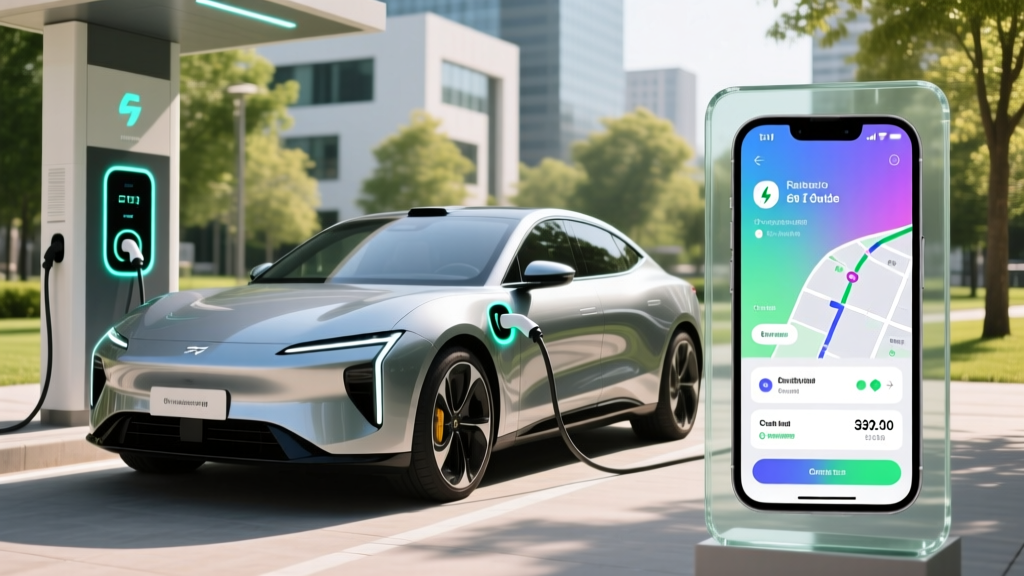
Every EV owner eventually builds a digital toolkit of charging apps — and for good reason. Public charging networks remain fragmented in 2026, with Electrify America, EVgo, ChargePoint, and Tesla Superchargers each running proprietary ecosystems. The best EV charging apps bridge that gap, aggregating real-time station availability, pricing, and reliability data into one screen so you can plan a road trip without juggling six different logins.
But apps are only half the equation. Understanding the hardware — from home Level 2 installations to DC fast-charging curves — determines whether those apps actually help you or just highlight your frustration. This guide pairs a breakdown of the top charging apps with the technical foundation every EV owner needs: charging levels, connector standards, home installation costs, and real cost-per-mile math.
The Best EV Charging Apps for 2026
These are the apps we keep on our home screen after years of real-world EV ownership across multiple networks and vehicles:
PlugShare — Best for Coverage
The most comprehensive station database in North America. PlugShare aggregates virtually every public network — Tesla Superchargers (now open to NACS-equipped non-Teslas), Electrify America, EVgo, ChargePoint, Blink, and hundreds of independent Level 2 destinations. User-submitted photos and check-in notes flag broken stalls, blocked chargers, and sketchy locations. Free with optional premium tier.
A Better Route Planner (ABRP) — Best for Trip Planning
ABRP models your specific EV's battery, efficiency curve, and charge taper to generate optimized road-trip itineraries with precise stop times. Input your vehicle (it supports 200+ models through 2026), starting SoC, cargo load, and weather — ABRP calculates whether you need 18 minutes or 32 minutes at each DC fast charger based on the real charge curve, not the peak kW marketing number. Free tier is robust; premium ($4.99/mo) adds live vehicle telemetry integration.
ChargePoint — Best for Workplace & Destination L2
ChargePoint operates the largest Level 2 network in the US with over 35,000 ports. The app excels at showing real-time availability at workplaces, shopping centers, and hotels. Its "Waitlist" feature lets you join a virtual queue when all ports are occupied. Pricing is transparent per kWh or per hour depending on the host site.
EVgo — Best for Urban DC Fast Charging
EVgo's app is essential for city dwellers without home charging. The network specializes in 350 kW-capable DC fast chargers in metro areas, often co-located with retail. The app shows real-time pricing (typically $0.38–$0.52/kWh depending on region and membership tier), station status, and connector type. EVgo Plus members get reduced rates.
Electrify America — Best for Highway Corridors
EA's app covers its 4,000+ DC fast-charger network along major interstates. The app has improved significantly — Pass+ membership ($7/mo) drops rates to roughly $0.33/kWh versus $0.53/kWh for guests. The app shows real-time stall availability, peak vs. sustained power for each charger, and CCS vs. NACS connector availability per site.
Charging Levels Explained: Speeds, Times, and What You Actually Get
Before trusting any app's "time to charge" estimate, you need to understand the three charging levels and their real-world outputs. The single most important distinction: kW (kilowatts) measures power — the rate of energy flow. kWh (kilowatt-hours) measures energy — what your battery actually stores. A 150 kW charger delivers energy faster than a 7.2 kW charger, but both fill the same kWh-rated battery.
| Level | Voltage | Power (kW) | Miles of Range Added/Hour | Typical Use Case |
|---|---|---|---|---|
| Level 1 | 120V AC | 1.2–1.9 kW | 3–5 miles | Overnight at standard outlet; PHEV top-ups |
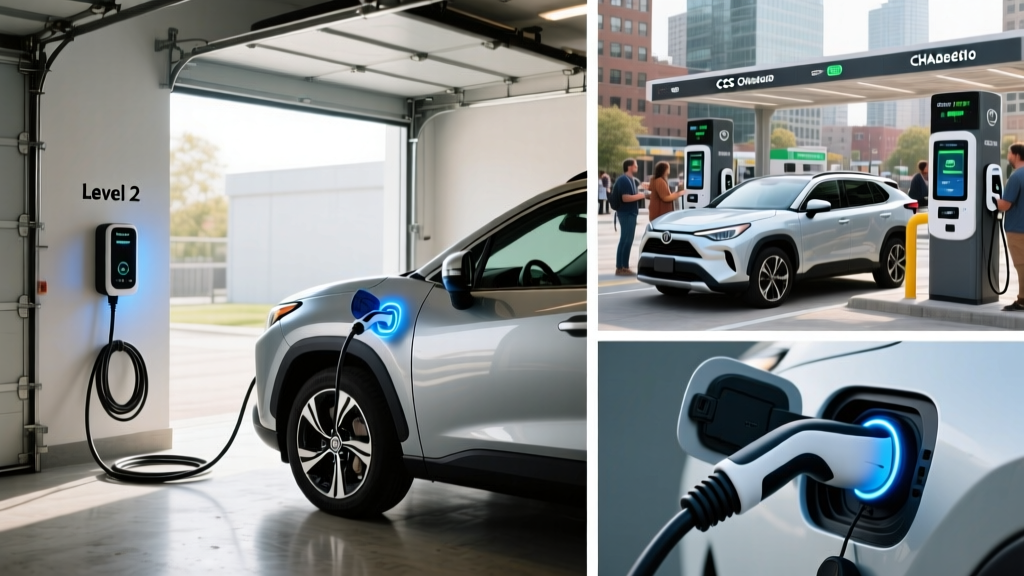
| Level 2 | 240V AC | 3.3–19.2 kW | 12–75 miles | Home wallbox; workplace; destination |
| DC Fast (Level 3) | 400–800V DC | 50–350 kW | 150–1,000+ miles (equivalent rate) | Highway road trips; 10–80% in 18–45 min |
Real-world charging time examples (10% to 80% SoC):
- Hyundai Ioniq 5 (84 kWh battery, 800V architecture): 10–80% in ~18 minutes at a 350 kW charger, sustained peak ~240 kW before tapering above 60% SoC.
- Tesla Model Y Long Range (75 kWh battery): 10–80% in ~27 minutes at a V3 Supercharger (250 kW peak), tapering to ~100 kW above 60%.
- Ford F-150 Lightning Extended Range (131 kWh battery): 10–80% in ~41 minutes at a 150 kW charger due to the large pack absorbing more total energy.
- Level 2 home charging at 48A/11.5 kW: A 75 kWh battery charges from 10–80% (~52.5 kWh) in roughly 4.5 hours — ideal for overnight.
The charge curve matters: peak kW is only sustained for a portion of the session. Most EVs taper significantly above 60–70% SoC to protect battery health. Apps like ABRP model this taper; the network's own app often shows only peak capability, which is misleading for trip planning.
Connector Compatibility: NACS, CCS, and CHAdeMO in 2026
The connector landscape has consolidated significantly since Ford, GM, Rivian, and most major automakers adopted the North American Charging Standard (NACS, originally Tesla's proprietary connector). As of 2026, nearly all new EVs sold in the US ship with a NACS charge port. CCS1 remains common on 2021–2024 models, and CHAdeMO persists only on legacy Nissan Leaf and Mitsubishi Outlander PHEV models.
| Connector | Vehicles (examples) | Network Access | Adapter Needed? |
|---|---|---|---|
| NACS (Tesla) | Tesla all models; Ford, GM, Rivian, Hyundai/Kia 2025+; Volvo, BMW, Mercedes 2025+ | Tesla Supercharger + most EA, EVgo sites now have NACS cables | CCS-to-NACS adapter for older CCS vehicles (~$150–$250) |
| CCS1 | VW ID.4 (2021–2024), Hyundai Ioniq 5 (2022–2024), Kia EV6 (2022–2024), BMW iX (2022–2024) | Electrify America, EVgo, ChargePoint DC fast | NACS-to-CCS adapter if using Tesla Superchargers (magic dock at some sites) |
| CHAdeMO | Nissan Leaf (2013–2025), Mitsubishi Outlander PHEV (pre-2025) | Limited; declining availability | No adapter widely available; network access shrinking |
Practical advice: If you drive a CCS-equipped EV from the 2022–2024 model years, a CCS-to-NACS adapter (Tesla's official adapter is ~$200) unlocks the Supercharger network — the most reliable DC fast-charging infrastructure in the US with over 25,000 stalls. Check your vehicle manufacturer for an approved adapter to ensure safe communication between the car and charger.
Home Charger Installation: Costs, Electrical Requirements, and Gotchas
Home Level 2 charging is where 80%+ of EV charging happens for most owners. It's also where costs can surprise you. Here's the honest breakdown.
Electrical Requirements
A typical Level 2 home charger requires a 240V dedicated circuit — the same voltage as your electric dryer or oven. The most common residential setup:
- 40-amp circuit delivering up to 32A continuous (9.6 kW) — sufficient for most EVs overnight
- 48-amp circuit delivering up to 40A continuous (11.5 kW) — faster fills, recommended for larger batteries (100+ kWh)
- 60-amp circuit delivering up to 48A continuous (11.5 kW) — required for chargers rated above 40A; common for hardwired units
The National Electrical Code (NEC) requires EV chargers to draw no more than 80% of a circuit's rated capacity. A 40A circuit maxes at 32A continuous; a 60A circuit maxes at 48A continuous.
Panel Upgrade Reality
Older homes with 100A main service panels may lack capacity for a new 40–60A dedicated circuit. A panel upgrade to 200A typically costs $1,500–$3,500 before the charger circuit is even added. Even some 200A panels are near capacity if you run electric heat, a dryer, an oven, and AC simultaneously. A licensed electrician will perform a load calculation to determine available headroom — do not skip this step.
Some newer alternatives like the Span smart panel or load-management devices (e.g., Emporia Smart Load Management) can dynamically share capacity between the EV charger and other appliances, potentially avoiding a full panel upgrade.
Installation Cost Breakdown
| Component | Cost Range | Notes |
|---|---|---|
| Level 2 Charger (Equipment) | $300–$700 | Smart Wi-Fi-enabled units; basic non-smart units from $200 |
| Electrician Labor | $500–$2,500 | Depends on run length from panel to garage/carport; longer runs = more conduit and wire |
| Electrical Permit | $50–$300 | Varies by municipality; required in most jurisdictions |
| Panel Upgrade (if needed) | $1,500–$3,500 | 100A → 200A upgrade; not always required |
| Total (no panel upgrade) | $850–$3,500 | Most homes with 200A service and short-to-moderate wire runs |
| Total (with panel upgrade) | $2,350–$7,000 | Older homes or high-load existing panels |
Federal Tax Credit for Home Charging
The IRS §30C Alternative Fuel Vehicle Refueling Property Credit covers 30% of home charger equipment and installation costs, up to $1,000. However, eligibility depends on your census tract meeting specific low-income or rural criteria. Check the IRS tool before assuming you qualify — many suburban addresses do not.
Cost to Charge: Home vs. Public vs. Gas
The economic case for EV ownership hinges on where you charge. Here are realistic 2026 scenarios:
| Charging Scenario | Rate ($/kWh) | Cost for 300 Miles* | Cost Per Mile |
|---|---|---|---|
| Home — off-peak utility rate | $0.08–$0.14 | $7.20–$12.60 | $0.024–$0.042 |
| Home — standard residential rate | $0.14–$0.20 | $12.60–$18.00 | $0.042–$0.060 |
| Public Level 2 (ChargePoint, etc.) | $0.20–$0.39 | $18.00–$35.10 | $0.060–$0.117 |
| DC Fast — Electrify America Pass+ | $0.33–$0.43 | $29.70–$38.70 | $0.099–$0.129 |
| DC Fast — EVgo / EA guest rate | $0.43–$0.58 | $38.70–$52.20 | $0.129–$0.174 |
| Gas vehicle (28 MPG, $3.40/gal) | — | $36.43 | $0.121 |
*Based on 3.0 mi/kWh efficiency — a reasonable average for a midsize crossover EV like the Tesla Model Y or Hyundai Ioniq 5. Source: fueleconomy.gov EPA combined MPGe data.
The takeaway: home charging at off-peak rates delivers fuel costs roughly 70–80% lower than gasoline. Exclusive reliance on DC fast charging at guest rates can actually exceed gasoline costs — a critical consideration for apartment dwellers without home charging access. Most EV apps now display real-time pricing per kWh at each station, so you can choose wisely.
Equipment Recommendations: Home Chargers Worth Buying
These are the Level 2 chargers we recommend based on reliability, smart features, and value. All are NACS-equipped or configurable for NACS/CCS:
Emporia Vue Smart EV Charger — Best Value
- Power: 48A / 11.5 kW (requires 60A circuit)
- Connector: NACS (CCS adapter available)
- Cable length: 24 feet
- Smart features: Wi-Fi, app scheduling, solar integration with Emporia Vue energy monitor, load management
- Price: ~$399
ChargePoint Home Flex — Most Flexible
- Power: Up to 50A / 12 kW (adjustable 16A–50A via dip switch)
- Connector: NACS or J1772 (NACS version for 2025+)
- Cable length: 23 feet
- Smart features: Wi-Fi, Alexa integration, app scheduling, energy tracking
- Price: ~$599
Tesla Wall Connector — Best for Tesla/NACS Owners
- Power: 48A / 11.5 kW (requires 60A circuit)
- Connector: NACS native
- Cable length: 24 feet
- Smart features: Wi-Fi, OTA updates, power sharing between multiple Wall Connectors, vehicle-specific access control
- Price: ~$475
Grizzl-E Smart — Rugged Outdoor Pick
- Power: 40A / 9.6 kW (requires 50A circuit)
- Connector: NACS or J1772
- Cable length: 24 feet
- Smart features: Wi-Fi, app scheduling, extreme temperature rating (-40°F to 122°F)
- Price: ~$449
Safety and Code Considerations
EV chargers draw sustained high current for hours — a more demanding load than most household appliances. Cutting corners here creates fire risk.
- Dedicated circuit: Your EV charger must be on its own dedicated breaker — never shared with other outlets or appliances.
- GFCI protection: NEC 2023 and later requires GFCI (Ground Fault Circuit Interrupter) protection for all EV charging outlets. Hardwired installations may have different requirements depending on local code. Many quality chargers include built-in GFCI.
- Outdoor rating: If your charger is mounted outdoors or in an open carport, it must carry a NEMA 4 or IP65+ rating for weather resistance. All chargers listed above meet this standard.
- Permit and inspection: Most jurisdictions require an electrical permit and a post-installation inspection. Your electrician should pull the permit — if they suggest skipping it, find a different electrician. Unpermitted work can void home insurance and complicate a future sale.
- Wire gauge: A 60A circuit typically requires 6 AWG copper wire; a 40A circuit uses 8 AWG. Longer runs may require upsizing to prevent voltage drop. Your electrician will calculate this.
Using Charging Apps to Optimize Your Strategy
The best approach combines apps for different scenarios:
- Daily home charging: Use your charger's native app (Emporia, ChargePoint, Tesla) to schedule sessions during off-peak utility hours — typically 11 PM to 6 AM — for the lowest $/kWh.
- Road trips: ABRP for route planning with charge-curve-aware stop times; PlugShare for vetting station reliability via user check-ins.
- Urban/public charging: The specific network app (EVgo, EA, ChargePoint) for real-time availability and pricing. Membership tiers almost always pay for themselves if you charge publicly more than twice a month.
- Cost tracking: Apps like EV Track or your vehicle's companion app (Tesla, Hyundai Bluelink, FordPass) log lifetime charging costs, efficiency, and energy usage for tax or reimbursement records.
Frequently Asked Questions
How much does it cost to install a home EV charger?
Expect $850–$3,500 for a straightforward installation with an adequate electrical panel. If your home needs a panel upgrade from 100A to 200A service, total costs can reach $2,350–$7,000. The charger unit itself runs $300–$700 for a quality smart Level 2 unit. Always get 2–3 quotes from licensed electricians and verify they include permit costs.
How fast will each charging level add range?
Level 1 (120V) adds roughly 3–5 miles per hour — fine for PHEVs with small batteries but impractical for full EVs. Level 2 (240V) adds 12–75 miles per hour depending on amperage — a 48A/11.5 kW charger adds about 35–40 miles per hour for a typical crossover. DC fast charging adds the equivalent of 150–1,000+ miles per hour at peak rates, enabling 10–80% fills in 18–45 minutes depending on battery size and charger power.
Which connector is compatible with my EV?
If your EV is a 2025+ model from Ford, GM, Rivian, Hyundai, Kia, Volvo, BMW, or Mercedes, it almost certainly has a NACS port. Earlier models (2021–2024) from most non-Tesla brands use CCS1. The Nissan Leaf uses CHAdeMO. Check your owner's manual or the charge port itself — the physical shape is distinctly different between all three. CCS owners can access Tesla Superchargers with a manufacturer-approved NACS adapter.
How much does charging cost per mile versus gas?
Home charging at off-peak rates delivers 2.4–4.2 cents per mile for a typical EV — roughly 70–80% cheaper than a 28 MPG gas car at $3.40/gallon (12.1 cents/mile). Public DC fast charging at guest rates ($0.48–$0.58/kWh) can cost 13–17 cents per mile, which may exceed gas costs. The economic advantage of an EV depends heavily on reliable home charging access.
What electrical upgrades might I need?
Homes with 200A service panels and available breaker slots typically need no upgrade — just a new dedicated 40–60A circuit. Homes with 100A panels, fully loaded panels, or panels with known issues (Federal Pacific, Zinsco) will need a panel upgrade costing $1,500–$3,500. A licensed electrician's load calculation is the definitive answer — request one before committing to equipment.
Are free EV charging apps accurate about station availability?
PlugShare and ABRP pull data directly from network APIs and supplement it with user reports, making them generally reliable for real-time status. However, a station showing "available" may have a broken cable, an ICE-vehicle parked in the spot, or a communication error. Always check the most recent user check-in comments before driving out of your way for a specific charger — this is where PlugShare's community data earns its keep.