What Is the Bee Charger and Who Makes It?
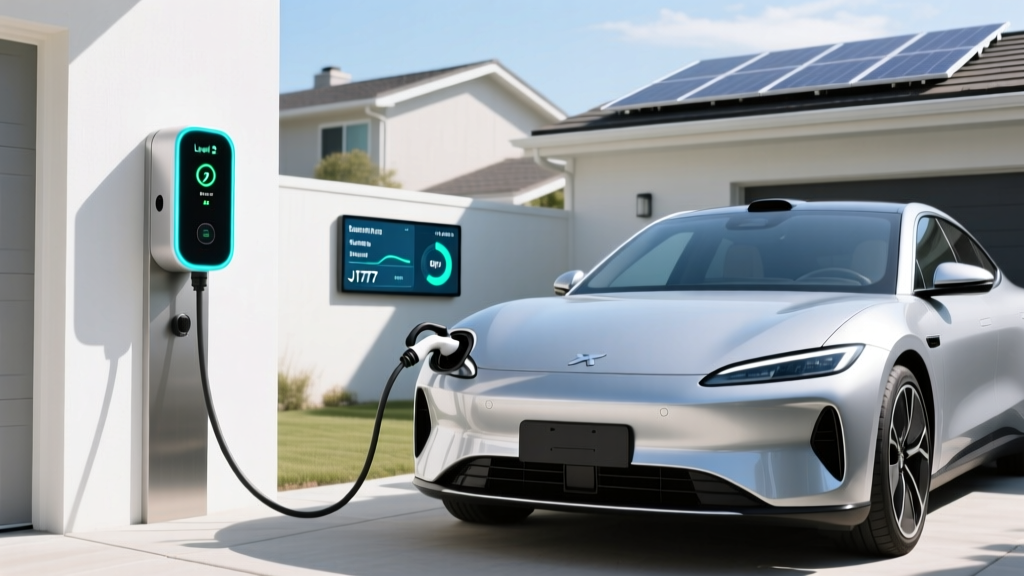
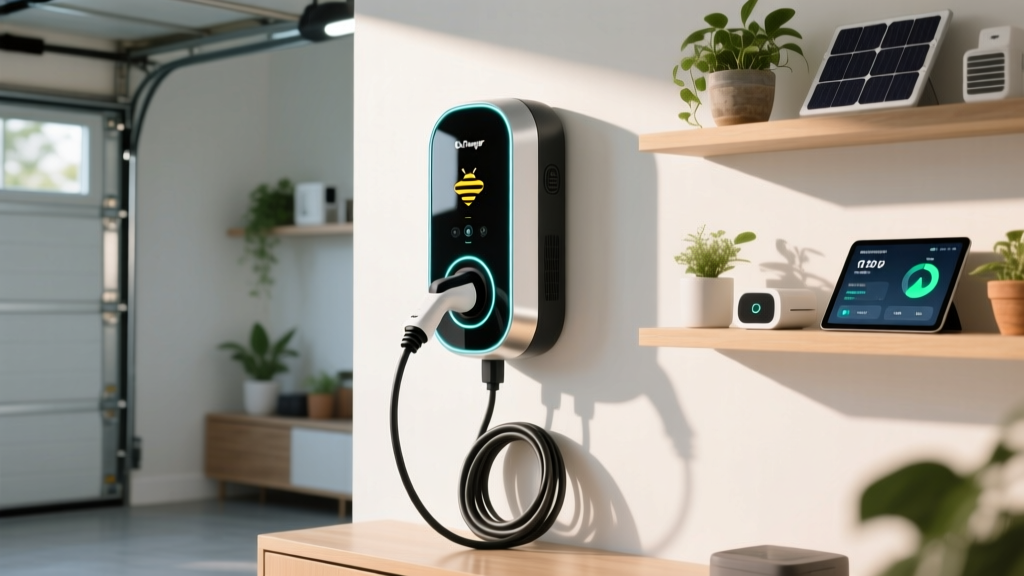
The Bee Charger is a compact, wall-mounted Level 2 home EV charger that has gained attention in 2025–2026 for its smart features and aggressive pricing. Manufactured by Bee Charge Networks (a subsidiary focused on residential charging hardware), the flagship Bee Charger Home Pro delivers up to 11.5 kW (48 amps on a 60-amp dedicated circuit) through a NACS (Tesla-style) connector, with a CCS1 adapter included in the box. Priced at $399 before any incentives, it undercuts many competitors in the 48A smart-charger segment while offering Wi-Fi scheduling, energy monitoring, and utility demand-response integration.
This guide covers everything you need to know about the Bee Charger as a home charging solution: what each charging level actually delivers in miles per hour, the real cost to install it (including the panel-upgrade scenario nobody talks about), connector compatibility across brands, and what you'll pay per mile compared to gasoline.
Charging Levels Explained: kW, Miles Per Hour, and 10–80% Times
Before evaluating any charger, you need to understand the three charging levels available to EV owners. The critical distinction: kW (kilowatts) measures power — how fast energy flows into your battery. kWh (kilowatt-hours) measures energy — the total capacity of your battery, like gallons in a fuel tank. Confusing these is the single most common EV literacy gap.
| Level | Voltage / Amps | Max Power (kW) | Miles of Range Added per Hour | Typical Use Case | 10–80% Time (75 kWh Battery) |
|---|---|---|---|---|---|
| Level 1 | 120V / 12A | 1.4 kW | 3–5 mi/hr | Overnight trickle; PHEV top-ups | ~38 hours |
| Level 2 (Home) | 240V / 32–48A | 7.7–11.5 kW | 25–44 mi/hr | Daily home charging; primary method for most owners | 5–7 hours (48A) |
| DC Fast Charge | 400–800V DC | 50–350 kW | 150–1,000+ mi/hr (peak) | Road trips; rapid top-ups | 18–35 min (varies by vehicle) |
Real-world caveat: DC fast charging speeds peak between 10–40% State of Charge (SoC) and taper significantly above 80%. A charger rated at 150 kW may sustain that rate for only 8–12 minutes before the vehicle's battery management system (BMS) reduces the charge rate to protect cell longevity. This is called the charge curve taper, and it's why manufacturers quote 10–80% times rather than 0–100%.
For the Bee Charger Home Pro at 11.5 kW (48A), a full charge from 10% to 80% on a 75 kWh battery (like a Tesla Model Y Long Range or Hyundai Ioniq 5) takes approximately 5.5 hours. Plug in at 10 PM and you're at 80% by 3:30 AM — more than enough for daily driving needs of 30–60 miles.
How Much Does It Cost to Install a Home EV Charger?
The Bee Charger itself costs $399, but the total installed cost depends heavily on your home's electrical panel capacity and the distance from your panel to the desired charger location. Here's the realistic breakdown based on 2026 electrician quotes and national averages:
| Component | Simple Install (Panel Adjacent) | Standard Install (50–80 ft Run) | Complex Install (Panel Upgrade Needed) |
|---|---|---|---|
| Bee Charger Home Pro (48A, hardwired) | $399 | $399 | $399 |
| 60A breaker + 6 AWG wire (copper) | $80–$120 | $200–$400 | $250–$450 |
| Electrician labor (licensed, 2–6 hrs) | $200–$400 | $400–$800 | $600–$1,200 |
| Permit and inspection | $50–$150 | $50–$200 | $100–$250 |
| Electrical panel upgrade (100A→200A) | — | — | $1,500–$3,500 |
| Total Estimated Cost | $730–$1,070 | $1,050–$1,800 | $2,850–$5,800 |
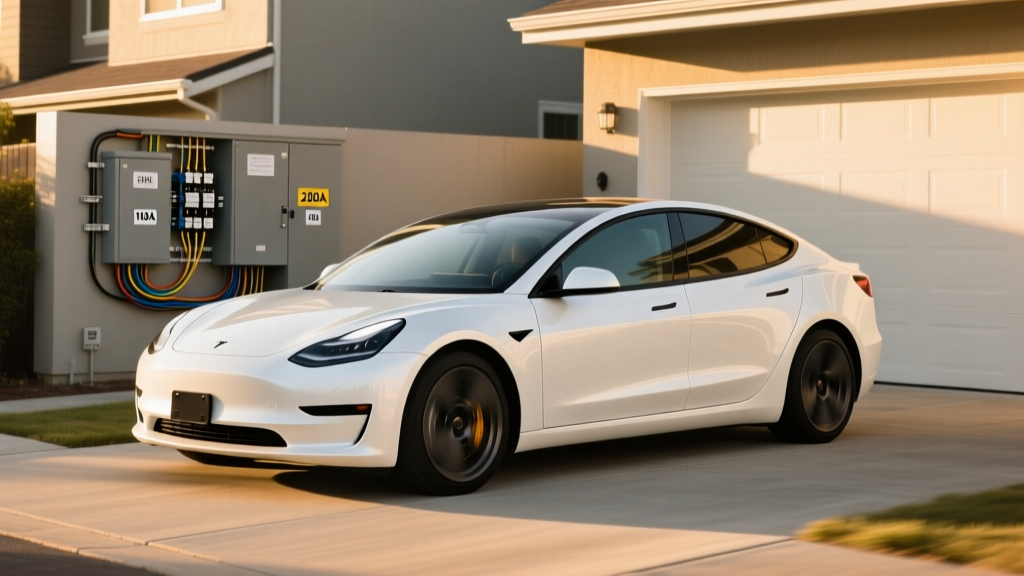
Panel upgrade reality check: Homes built before 2000 often have 100-amp main panels. Adding a 60-amp dedicated circuit for a 48A charger pushes total load dangerously close to panel capacity, especially if you also run electric HVAC, a dryer, and an oven. A licensed electrician will perform a load calculation per NEC Article 220 to determine if your panel can handle the circuit. If not, a 200-amp upgrade costs $1,500–$3,500 but also future-proofs your home for solar, battery storage, or a second EV.
Electrical requirements for the Bee Charger Home Pro:
- Voltage: 240V single-phase (standard US residential split-phase)
- Amperage: 48A continuous draw, requires a 60A dedicated breaker (NEC 80% rule: continuous loads must not exceed 80% of breaker rating)
- Wiring: 6 AWG copper (THHN/THWN) in conduit, or 4 AWG aluminum for longer runs
- Connection: Hardwired (no plug — required for circuits above 40A in most jurisdictions)
- Circuit: Dedicated — cannot share with any other outlet or appliance
Connector Compatibility: NACS, CCS1, CHAdeMO, and Adapters
The Bee Charger Home Pro ships with a NACS (North American Charging Standard) connector — the Tesla-style plug that has become the dominant standard in North America as of 2025–2026. Ford, GM, Rivian, Hyundai, Kia, BMW, and most other automakers have adopted NACS for new models. The included CCS1 adapter allows compatibility with older CCS-equipped vehicles.
| Connector | Compatible Vehicles | Bee Charger Support |
|---|---|---|
| NACS (native) | Tesla (all), Ford (2025+), GM (2025+), Rivian (2025+), Hyundai (2026+), Kia (2026+), BMW, Mercedes | Direct — native connector |
| CCS1 (via adapter) | VW ID.4 (pre-2026), older Hyundai/Kia, BMW i4 (pre-2025), Audi e-tron (pre-2025) | Included CCS1 adapter |
| CHAdeMO | Nissan Leaf (discontinued 2025), Mitsubishi Outlander PHEV (older) | Not supported — requires third-party adapter (~$200) |
Adapter note: If you drive a CHAdeMO vehicle like a used Nissan Leaf, the Bee Charger is not the right fit without an expensive third-party CHAdeMO-to-NACS adapter. CHAdeMO has been effectively phased out in North America — Electrify America removed CHAdeMO connectors from new stations in 2024, and Nissan discontinued the Leaf after the 2025 model year.
Cost to Charge: Home vs. Public vs. Gas per Mile
One of the strongest arguments for home Level 2 charging is the per-mile fuel cost advantage. Here's how the Bee Charger's home electricity cost compares to public charging and gasoline, using a mid-size EV consuming 30 kWh per 100 miles (representative of a Tesla Model Y or Ford Mustang Mach-E):
| Charging Scenario | Rate ($/kWh) | Cost per 100 mi | Cost per Mile | Annual Cost (12,000 mi) |
|---|---|---|---|---|
| Home Level 2 — Off-peak (utility TOU rate) | $0.08–$0.14 | $2.40–$4.20 | $0.024–$0.042 | $288–$504 |
| Home Level 2 — Standard rate (no TOU) | $0.14–$0.22 | $4.20–$6.60 | $0.042–$0.066 | $504–$792 |
| Public Level 2 (ChargePoint, EVgo L2) | $0.25–$0.49 | $7.50–$14.70 | $0.075–$0.147 | $900–$1,764 |
| DC Fast Charge (Electrify America, Tesla Supercharger) | $0.35–$0.64 | $10.50–$19.20 | $0.105–$0.192 | $1,260–$2,304 |
| Gasoline vehicle (28 MPG combined, $3.40/gal) | — | $12.14 | $0.121 | $1,457 |
Key takeaway: Home charging on an off-peak time-of-use (TOU) plan saves $950–$1,170 per year compared to gasoline at 12,000 miles annually. Even at standard residential rates without TOU optimization, you save $665–$950 per year. The Bee Charger's built-in scheduling feature lets you program charging to start at 11 PM or whenever your utility's off-peak window opens, maximizing these savings automatically.
The Bee Charger also integrates with utility demand-response programs (where available), allowing your utility to slightly delay or reduce charging during grid peak events in exchange for bill credits — typically $5–$15 per month in participating regions.
Bee Charger Home Pro: Equipment Specs and Alternatives
Bee Charger Home Pro
- Power Output: 11.5 kW (48A, 240V)
- Connector: NACS native + CCS1 adapter included
- Cable Length: 24 feet (wall-mounted, non-detachable)
- Smart Features: Wi-Fi scheduling, energy dashboard, utility demand-response, OTA firmware updates, load balancing with second unit
- Enclosure: NEMA 4 (indoor/outdoor rated)
- Warranty: 3 years
- Price: $399
Competitor: ChargePoint Home Flex
- Power Output: 12 kW (50A, 240V)
- Connector: J1772 (NACS adapter sold separately, ~$150)
- Cable Length: 23 feet
- Smart Features: Wi-Fi, app scheduling, Alexa integration, flex amperage (16–50A dip-switch)
- Enclosure: NEMA 4
- Warranty: 3 years
- Price: $549
Competitor: Tesla Wall Connector
- Power Output: 11.5 kW (48A, 240V)
- Connector: NACS native (J1772 adapter included for non-Tesla)
- Cable Length: 24 feet
- Smart Features: Wi-Fi, OTA updates, power sharing (up to 6 units on one circuit), no app scheduling (relies on vehicle)
- Enclosure: NEMA 3R (outdoor rated, less sealed than NEMA 4)
- Warranty: 4 years
- Price: $420
Where the Bee Charger wins: Price-to-feature ratio. At $399 with a CCS1 adapter included and utility demand-response integration, it undercuts the ChargePoint by $150 and the Tesla by $21 while offering comparable power output. The NEMA 4 rating also exceeds the Tesla's NEMA 3R, providing better protection against dust and water ingress in garage or outdoor installations.
Where it falls short: The Bee Charger's 3-year warranty is shorter than Tesla's 4-year coverage. The 24-foot cable is non-detachable — if the cable is damaged, the entire unit must be serviced. And the companion app, while functional, lacks the polish and community features of ChargePoint's ecosystem.
Safety, Code Compliance, and Installation Best Practices
Level 2 EV chargers draw significant continuous current, making proper installation non-negotiable for safety and insurance compliance. Here's what the National Electrical Code (NEC) and most local jurisdictions require for a hardwired 48A charger like the Bee Charger Home Pro:
- Dedicated circuit: The charger must be on its own 60A breaker — no sharing with outlets, lights, or other appliances. NEC 625.41 mandates this for EV supply equipment (EVSE).
- GFCI protection: NEC 2023 (Article 625.54) requires ground-fault circuit interrupter protection for all EVSE outlets. For hardwired units like the Bee Charger, GFCI protection must be integrated into the breaker (a 60A GFCI breaker costs $80–$150 more than a standard breaker) or the unit itself must include ground-fault monitoring (the Bee Charger does include internal GFCI).
- Outdoor rating: If installed outdoors, the unit must carry at minimum a NEMA 3R rating. The Bee Charger's NEMA 4 rating exceeds this requirement, protecting against splashing water and windblown dust.
- Permit and inspection: Virtually all US jurisdictions require an electrical permit for new 240V circuits. The permit cost ranges from $50–$250, and a city/county inspector will verify the installation meets code before you energize the circuit. Skipping the permit risks insurance denial in the event of an electrical fire.
- Cable management: NEC 625.18 requires the charging cable to be stored to prevent tripping hazards and damage. The Bee Charger includes a wall-mounted cable holster.
Pro tip: Ask your electrician about installing a sub-panel near the charger location if your main panel is far away. A small 100A sub-panel ($300–$500 installed) can be more cost-effective than running 80+ feet of 6 AWG copper wire, and it leaves capacity for future additions like a second EV charger or workshop equipment.
Federal and State Incentives for Home Charger Installation
The IRS §30C Alternative Fuel Vehicle Refueling Property Credit provides a tax credit of up to 30% of the cost of home EV charging equipment and installation, capped at $1,000. This applies to both the Bee Charger hardware and the electrician's labor, as long as the equipment is placed in service at your primary residence.
Eligibility requirements for §30C (2026):
- Equipment must be installed at your primary residence in the United States
- The property must be placed in service by December 31, 2032 (current sunset date)
- The credit is 30% of combined equipment + installation cost, up to $1,000 maximum
- For a $399 charger + $800 install = $1,199 total → 30% = $360 credit
- For a $399 charger + $1,800 install = $2,199 total → 30% = $660 credit
- The credit is non-refundable (it reduces your tax liability but cannot generate a refund beyond zero)
- Eligibility may be restricted based on census tract — the credit is primarily targeted at qualified low-income or rural census tracts under the Inflation Reduction Act provisions
Additionally, many utilities offer their own rebates for Level 2 charger installation — typically $200–$500. Check your utility's EV program page or search the Alternative Fuels Data Center state incentive database for local programs.
Frequently Asked Questions
How fast will the Bee Charger add range to my EV?
At its maximum 11.5 kW output (48A), the Bee Charger adds approximately 35–44 miles of range per hour, depending on your vehicle's efficiency. A highly efficient vehicle like the Tesla Model 3 (25 kWh/100mi) gains about 44 mi/hr, while a larger vehicle like the Ford F-150 Lightning (48 kWh/100mi) gains about 24 mi/hr. Most EV owners charge from 20–80% overnight, which takes 4–6 hours at this rate.
Can I plug the Bee Charger into a standard outlet?
No. The Bee Charger Home Pro requires a 240V hardwired connection on a dedicated 60-amp circuit. It cannot plug into a standard 120V household outlet (that's Level 1 charging, limited to 1.4 kW). Some competing chargers offer a NEMA 14-50 plug-in option, but the Bee Charger is hardwired-only — which is actually preferred for 48A+ circuits because plug-in connections at high amperage can overheat over time.
Will the Bee Charger work with my non-Tesla EV?
Yes, if your vehicle has a NACS charge port (2025+ Ford, GM, Rivian, Hyundai, Kia models) or if you use the included CCS1 adapter for older CCS-equipped vehicles. It will not work with CHAdeMO vehicles without an expensive third-party adapter.
Does the Bee Charger qualify for the $7,500 federal EV tax credit?
No. The §30D New Clean Vehicle Credit of up to $7,500 applies to the purchase of a qualifying new EV or PHEV, not to charging equipment. Home chargers qualify for the separate §30C credit (up to $1,000) described above. These are two distinct credits with different eligibility rules — consult a tax professional to determine your specific eligibility for both.
What happens during a power outage?
The Bee Charger, like all grid-tied Level 2 chargers, will not function during a power outage. If you have a home battery system (Tesla Powerwall, Enphase IQ), you can configure it to back up the charger's circuit — but charging an EV from a home battery during an outage is generally impractical given the large energy draw (a 75 kWh battery would deplete most home batteries in a single session).