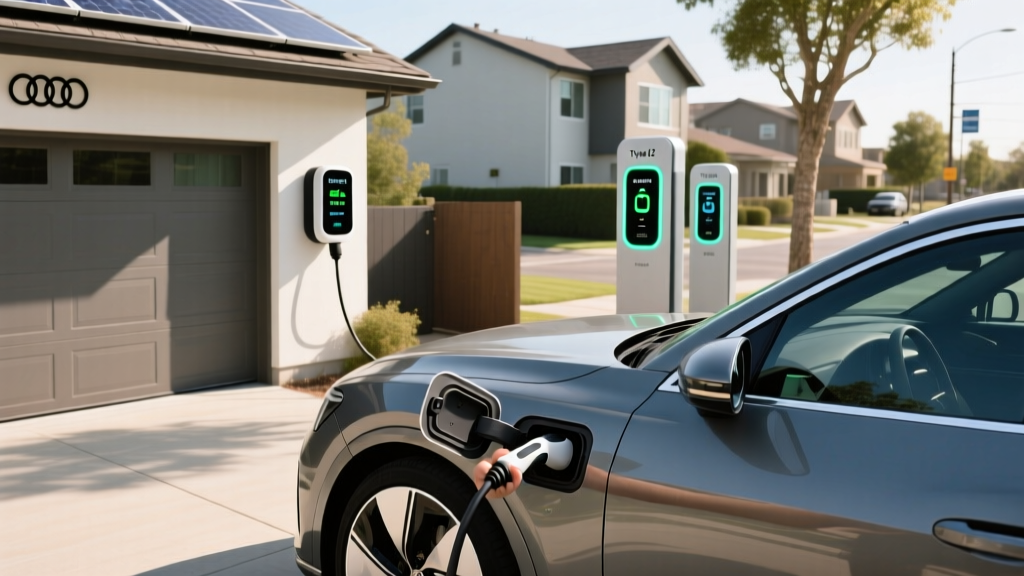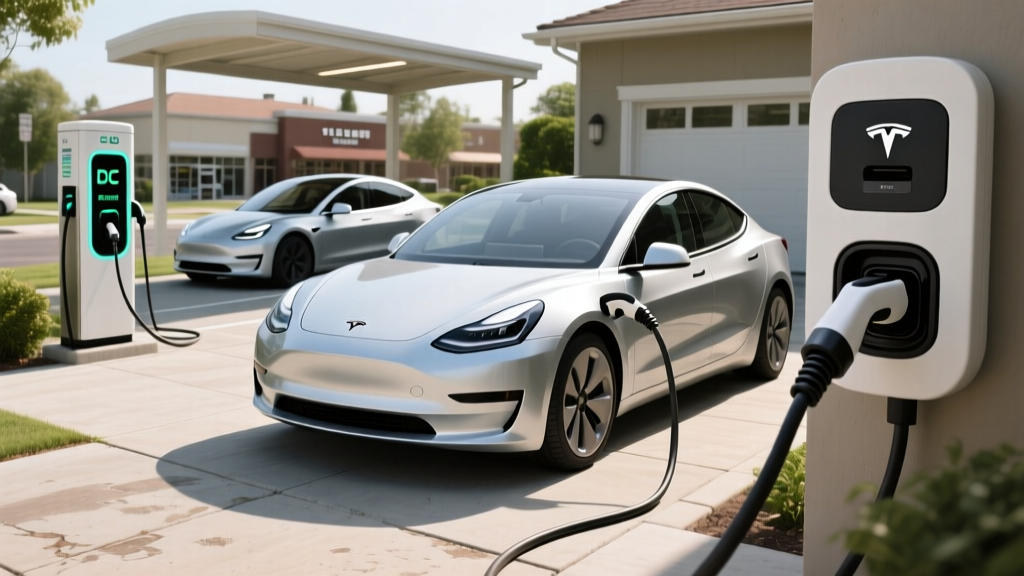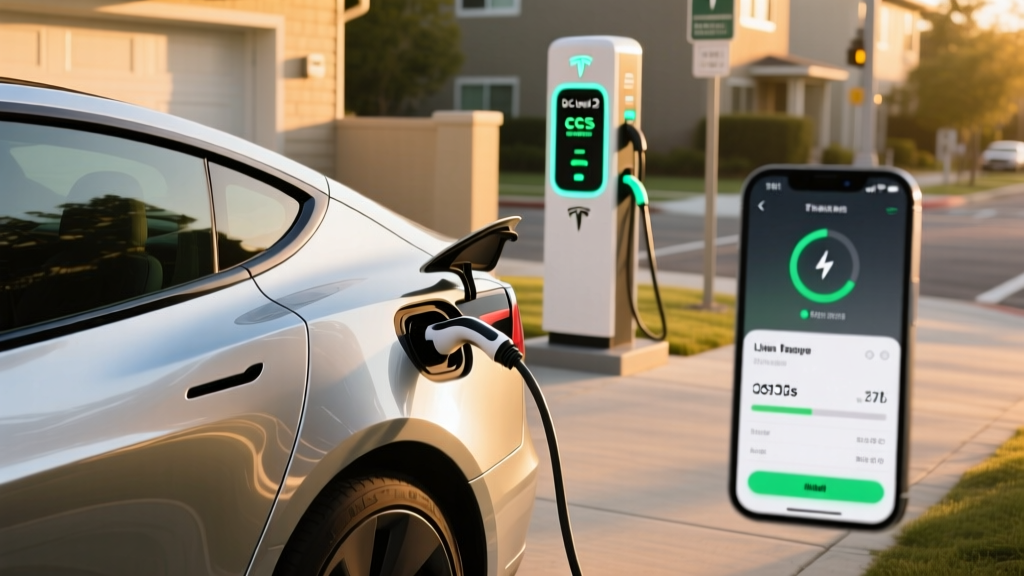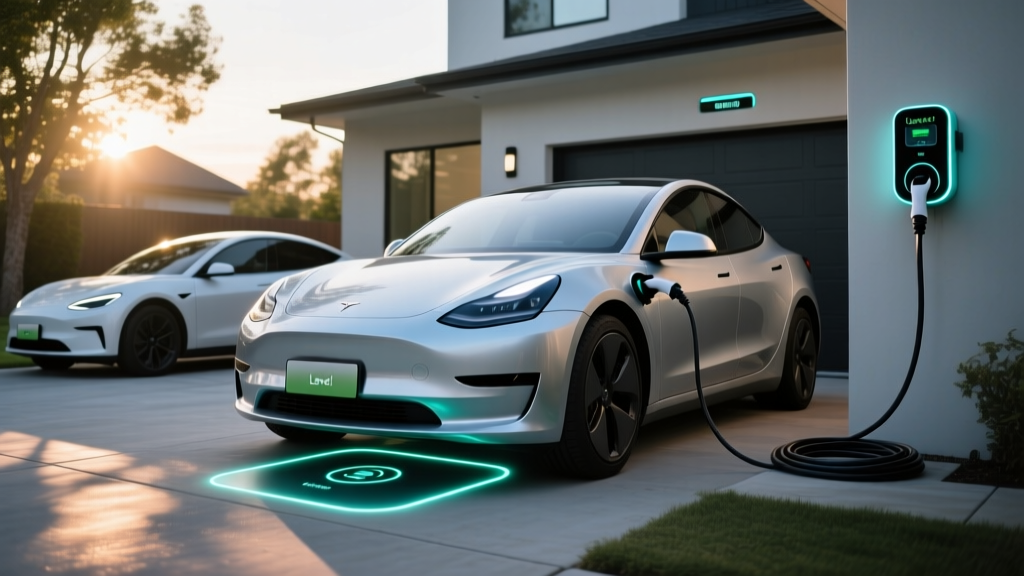
Wireless EV charging — sometimes branded as beam charging or inductive charging — has moved from concept cars to real-world pilot programs. But how does it stack up against the plug-in Level 2 and DC fast chargers most EV owners rely on today? This guide breaks down the physics, the costs, and the practical reality of going cord-free versus sticking with a cable.
What Is Beam Charging (Wireless Inductive Charging)?
Beam charging refers to wireless power transfer for electric vehicles. A ground-mounted transmitter pad (installed in a garage floor or parking space) creates an electromagnetic field that a receiver pad on the vehicle's undercarriage converts back into electricity to charge the battery. No cable, no plug — you simply park over the pad.
The technology uses resonant inductive coupling, similar in principle to a wireless phone charger but scaled to deliver kilowatts of power across a 4-to-8-inch air gap. Current commercial systems deliver between 3.6 kW and 11 kW wirelessly, putting them in the same ballpark as a residential Level 2 plug-in charger.
As of 2026, wireless charging is available through aftermarket kits (notably WiTricity-based systems) and is being piloted by OEMs including BMW (for the 530e PHEV in earlier model years) and Genesis (GV60 wireless charging pad in select markets). The SAE J2954 standard governs light-duty wireless charging alignment and interoperability.
Charging Levels Explained: Speeds in kW and Miles Per Hour
Whether you plug in or park over a beam charging pad, understanding power output in kW (kilowatts) is essential. kW measures the rate of energy flow — think of it as the size of the hose filling your battery. The battery's capacity is measured in kWh (kilowatt-hours) — the total volume of the tank. Never confuse the two.
| Level | Voltage | Power (kW) | Miles of Range Added Per Hour | Typical Use Case |
|---|---|---|---|---|
| Level 1 | 120V AC | 1.2–1.9 kW | 3–5 miles | Emergency / overnight trickle |
| Level 2 (Plug-in) | 240V AC | 3.3–19.2 kW | 12–75 miles | Home, workplace, public AC |
| Level 2 (Beam/Wireless) | 240V AC (inductive) | 3.6–11 kW | 12–45 miles | Home wireless pad, fleet |
| DC Fast Charging | 400–800V DC | 50–350 kW | 150–1,000+ miles (peak) | Highway road trips |
A critical nuance: DC fast charging speeds are peak rates, not sustained. A vehicle that peaks at 250 kW might only sustain that rate from 10% to 30% state of charge (SoC), then taper to 150 kW, then 80 kW above 60%, and finally trickle below 25 kW past 80%. This charge-curve taper is why a "10–80% in 18 minutes" spec matters more than the headline peak kW number.
How Fast Will Each Charging Level Add Range?
Charging time depends on your battery's usable capacity (in kWh) and the charger's sustained power (in kW). Here are real-world examples for common battery sizes:
| Battery Size (Usable kWh) | Example Vehicles | Level 1 (1.4 kW) | Level 2 Plug-in (11.5 kW) | Beam/Wireless (7.7 kW) | DC Fast 10–80% |
|---|---|---|---|---|---|
| 60 kWh | Chevrolet Equinox EV, base Tesla Model 3 | ~43 hours | ~5.2 hours | ~7.8 hours | ~22 min (150 kW peak) |
| 77 kWh | Ford Mustang Mach-E, Hyundai Ioniq 5 | ~55 hours | ~6.7 hours | ~10 hours | ~18 min (240 kW peak) |
| 100 kWh | Tesla Model S, Rivian R1S, GMC Sierra EV | ~71 hours | ~8.7 hours | ~13 hours | ~25 min (250–350 kW peak) |
Wireless beam charging at 7.7 kW will fully replenish a 77 kWh battery overnight in roughly 10 hours — adequate for daily commuting but noticeably slower than an 11.5 kW plug-in Level 2 unit that finishes the same job in under 7 hours. For drivers who need maximum morning readiness, a hardwired plug-in charger still holds the edge.
Home Installation: Electrical Requirements and Costs
Whether you're installing a traditional Level 2 wallbox or a wireless beam charging pad, the electrical infrastructure requirements are nearly identical — both need a dedicated 240V circuit. Here's what that entails.
Electrical Specifications
- Voltage: 240V AC (split-phase residential service)
- Amperage: 40A circuit for a 32A continuous charger; 60A circuit for a 48A charger (NEC requires circuits rated at 125% of continuous load)
- Wire gauge: 6 AWG copper for 40A; 4 AWG for 60A (longer runs may require upsizing)
- Dedicated circuit: Required — no sharing with other appliances
- GFCI protection: Required for outdoor installations per NEC 2023/2026 revisions
- Outdoor rating: NEMA 4 enclosure required for any exterior-mounted equipment
Panel Upgrade Reality
This is where costs can escalate significantly. Many homes built before 2000 have 100A or 125A main electrical panels. Adding a 60A EV circuit to an already-loaded panel may require a panel upgrade to 200A service, which typically costs $1,500–$3,500 before any EV equipment. A licensed electrician will perform a load calculation (NEC Article 220) to determine if your existing panel has headroom.
Some homeowners opt for a smart load-management device (such as the Emporia Smart Load Center or Span panel integration) that dynamically throttles EV charging when other high-draw appliances are running, avoiding a panel upgrade altogether.
| Component | Low Estimate | High Estimate | Notes |
|---|---|---|---|
| Level 2 Charger (Plug-in) | $350 | $750 | 32A–48A smart Wi-Fi units |
| Wireless Beam Charging Pad | $1,800 | $3,500 | Ground pad + vehicle receiver kit |
| Electrician Labor (standard install) | $500 | $1,500 | Short conduit run, panel has capacity |
| Electrician Labor (complex install) | $1,500 | $3,000 | Long conduit run, trenching, subpanel |
| Electrical Panel Upgrade (if needed) | $1,500 | $3,500 | 100A → 200A service upgrade |
| Permit Fees | $50 | $300 | Varies by municipality |
| Total (Plug-in, No Panel Upgrade) | $900 | $2,550 | Most common scenario |
| Total (Wireless Beam, No Panel Upgrade) | $2,350 | $5,300 | Includes pad + receiver + install |
| Total (Any, With Panel Upgrade) | $2,400 | $8,800 | Older homes with 100A service |
Connector Compatibility: NACS, CCS, CHAdeMO, and Wireless
For plug-in charging, connector type determines which chargers you can use. The North American market has largely consolidated around the NACS (North American Charging Standard) connector pioneered by Tesla, though millions of CCS1-equipped vehicles remain on the road.
| Connector | Brands Using It (2026) | DC Fast Network Access | Adapter Needed? |
|---|---|---|---|
| NACS (Tesla) | Tesla, Ford, GM, Rivian, Volvo, Polestar, Hyundai/Kia (new models), Nissan (Ariana), Fisker | Tesla Supercharger (20,000+ stalls), Electrify America (new stalls) | CCS→NACS adapter for legacy CCS vehicles (~$200–$250) |
| CCS1 | Legacy VW ID.4, BMW iX (pre-2026), older Hyundai/Kia, Mercedes EQS/EQE, Stellantis | Electrify America, EVgo, ChargePoint DC, Ionity (EU) | NACS→CCS adapter for Tesla Supercharger access |
| CHAdeMO | Nissan Leaf (discontinued 2025), Mitsubishi Outlander PHEV (older) | Limited and shrinking network | No practical adapter; use CCS/NACS for new purchases |
| Wireless (SAE J2954) | Genesis GV60 (select markets), aftermarket kits (WiTricity-based) | N/A — home/fleet only currently | Vehicle must have receiver pad installed |
Key takeaway for buyers: If you're purchasing a new EV in 2026, prioritize NACS-equipped models for the broadest DC fast-charging access. CCS1 vehicles work fine but may require adapters as networks migrate. CHAdeMO is effectively legacy — avoid it unless you already own the vehicle and charge primarily at home.
Equipment Recommendations: Plug-In Level 2 Chargers
For most EV owners, a plug-in Level 2 wallbox remains the most cost-effective and fastest home charging solution. Here are three proven units for 2026:
ChargePoint Home Flex (Best Overall)
- Power Output: Up to 12 kW (50A circuit) / 9.6 kW (40A circuit)
- Connector: NACS or J1772 (configurable at purchase)
- Cable Length: 23 feet
- Smart Features: Wi-Fi, Alexa integration, scheduled charging, energy tracking via app
- Price: ~$550–$650
- Why it works: NEMA 4 outdoor-rated, UL-listed, adjustable amperage to match your circuit. The 23-foot cable reaches most garage configurations.
Emporia Level 2 EV Charger (Best Value)
- Power Output: Up to 11.5 kW (48A on 60A circuit)
- Connector: J1772 (NACS adapter included in 2026 kit)
- Cable Length: 24 feet
- Smart Features: Wi-Fi, integration with Emporia Vue energy monitor, solar-aware charging, load management
- Price: ~$399–$450
- Why it works: Best price-to-power ratio. Load-management feature can avoid a panel upgrade by dynamically adjusting draw.
Tesla Wall Connector (Best for NACS Vehicles)
- Power Output: Up to 11.5 kW (48A on 60A circuit)
- Connector: NACS native; J1772 adapter available
- Cable Length: 24 feet
- Smart Features: Wi-Fi, over-the-air updates, power sharing (link multiple units on one circuit), Tesla app integration
- Price: ~$475
- Why it works: Cleanest integration with Tesla and NACS-adopting vehicles. Power-sharing feature is ideal for two-EV households on a single 60A circuit.
Cost to Charge: Home vs. Public vs. Gas Per Mile
The economics of EV charging depend heavily on where and when you plug in. Here's a breakdown using real 2026 electricity and fuel prices.
| Scenario | Rate | Efficiency Assumption | Cost Per Mile |
|---|---|---|---|
| Home (off-peak utility rate) | $0.09/kWh | 3.5 mi/kWh (115 MPGe) | $0.026 |
| Home (national average) | $0.17/kWh | 3.5 mi/kWh | $0.049 |
| Public Level 2 (ChargePoint, etc.) | $0.25–$0.40/kWh | 3.5 mi/kWh | $0.071–$0.114 |
| DC Fast Charging (Electrify America) | $0.35–$0.55/kWh | 3.5 mi/kWh | $0.100–$0.157 |
| Tesla Supercharger (average) | $0.28–$0.36/kWh | 3.8 mi/kWh (Model 3) | $0.074–$0.095 |
| Gasoline (28 MPG combined) | $3.30/gallon | 28 MPG | $0.118 |
| Gasoline (40 MPG hybrid) | $3.30/gallon | 40 MPG | $0.083 |
The bottom line: Home charging at off-peak rates delivers fuel costs roughly one-quarter to one-fifth of a comparable gasoline vehicle. Even public DC fast charging at peak rates is cost-competitive with a 28 MPG gas car. The savings gap narrows significantly if you rely exclusively on public DC fast chargers — which is why home Level 2 installation is the single highest-ROI investment an EV owner can make.
Wireless beam charging introduces a small efficiency penalty (typically 85–93% transfer efficiency versus 95–99% for a plug-in cable), meaning you'll draw roughly 7–15% more kWh from the grid for the same battery fill. At off-peak home rates, this translates to a fraction of a cent per mile — negligible in practice but worth noting for solar-charging households where every kWh counts.
Safety, Code, and Permit Considerations
Both plug-in and wireless beam charging installations must comply with the National Electrical Code (NEC) and local amendments. Key requirements:
- Dedicated circuit: EVSE (Electric Vehicle Supply Equipment) requires its own breaker — no shared circuits with dryers, ovens, or HVAC.
- GFCI protection: Required for all outdoor receptacles and hardwired outdoor EVSE per NEC 625.54 (2023 edition, adopted by most jurisdictions by 2026).
- Permitting: Nearly all municipalities require an electrical permit for EVSE installation. Inspections verify wire gauge, breaker sizing, grounding, and GFCI compliance.
- Wireless pad safety: SAE J2954-compliant pads include foreign-object detection (FOD) and living-object protection (LOP) that shut down the field if a metal object or animal enters the gap. Verify UL or equivalent listing on any wireless system.
- HOA considerations: Many states (CA, CO, FL, TX, and others) have "right to charge" laws that prevent HOAs from blocking EVSE installation, though they may impose reasonable aesthetic restrictions.
Always hire a licensed electrician and pull a permit. Unpermitted EVSE work can void homeowner's insurance claims and create fire liability. Per the National Electrical Contractors Association, a proper installation typically takes 2–6 hours for a standard garage setup.
Beam Charging vs. Plug-In: Which Should You Choose?
Wireless beam charging is a genuine convenience upgrade — park and walk away, no cable handling in rain or cold. But the trade-offs are real:
- Cost: $2,000–$4,500 more than a plug-in Level 2 setup (pad + receiver + installation)
- Speed: Typically 7–11 kW wirelessly vs. 11.5–19.2 kW for hardwired plug-in units
- Efficiency: 85–93% transfer vs. 95–99% for cables
- Vehicle compatibility: Requires a receiver pad — either factory-installed (limited models) or aftermarket ($1,500–$2,500 kit)
- Public availability: Virtually nonexistent for public wireless charging; plug-in infrastructure is ubiquitous
Decision Framework
Choose plug-in Level 2 if: You want the fastest home charging speed, lowest cost, broadest vehicle compatibility, and don't mind plugging in (a 5-second task).
Consider wireless beam charging if: You have a compatible vehicle or fleet, value cable-free convenience, have garage space for pad alignment, and are willing to pay a premium for a cleaner aesthetic and hands-free operation.
Neither replaces DC fast charging for road trips. Plan highway travel around Tesla Supercharger or Electrify America networks regardless of your home setup.
Frequently Asked Questions
How much does it cost to install a home EV charger?
A plug-in Level 2 home charger installation typically costs $900–$2,550 total (equipment, electrician labor, and permit) if your electrical panel has sufficient capacity. If a panel upgrade from 100A to 200A is required, add $1,500–$3,500. Wireless beam charging systems cost $2,350–$5,300 without a panel upgrade due to the higher cost of the transmitter pad and vehicle receiver kit.
How fast will each charging level add range?
Level 1 (120V) adds 3–5 miles per hour. Level 2 (240V plug-in) adds 12–75 miles per hour depending on amperage. Wireless beam charging adds 12–45 miles per hour. DC fast charging can add 150–1,000+ miles per hour at peak rate, but sustained speeds taper significantly as the battery fills — expect a 10–80% session to take 18–35 minutes depending on vehicle and charger capability.
Which connector/charger is compatible with my EV?
Check your vehicle's charge port. New 2026 models from Tesla, Ford, GM, Rivian, Hyundai, Kia, Volvo, and others use NACS. Older or pre-transition models may use CCS1. The Nissan Leaf used CHAdeMO (now discontinued). For home Level 2 charging, all vehicles accept J1772 or NACS — purchase a charger matching your vehicle's native connector to avoid adapters. Refer to the EPA's fueleconomy.gov for model-specific charging specs.
How much does charging cost per mile vs gas?
Home charging at off-peak rates costs approximately $0.026 per mile — roughly one-quarter the cost of gasoline at $3.30/gallon in a 28 MPG vehicle ($0.118/mile). Even at the national average electricity rate of $0.17/kWh, home charging costs $0.049/mile. Public DC fast charging at $0.35–$0.55/kWh costs $0.10–$0.16/mile, making it comparable to gasoline for non-hybrid vehicles.
What electrical upgrades might I need?
The most common upgrade is a panel capacity increase from 100A or 125A to 200A service ($1,500–$3,500). You may also need conduit runs if your panel is far from the garage ($3–$8 per foot for materials and labor), a subpanel addition, or utility service upgrade if your home's incoming service is below 200A. A licensed electrician's load calculation will determine exactly what's needed. Smart load-management devices can sometimes avoid a panel upgrade entirely.
Is beam charging available at public stations?
As of 2026, public wireless charging infrastructure is extremely limited — mostly confined to taxi/ride-hail fleet pilots and select municipal demonstration projects (e.g., Qualcomm Halo trials in select cities). For public charging, plan on plug-in DC fast chargers via Tesla Supercharger, Electrify America, EVgo, or ChargePoint networks.