If you're shopping for an EV in 2026, you've probably seen the headline number: the average range of electric cars now sits around 270–310 miles EPA for mainstream models, with efficiency leaders pushing past 340 miles and budget options holding near 230 miles. But range alone doesn't tell you how an EV fits into your life — charging speed, home infrastructure, and cost per mile determine whether that range is practical or anxiety-inducing.
This guide maps the real-world average range of electric cars against the three charging levels, breaks down what a home Level 2 install actually costs in 2026, and shows the per-mile economics versus gasoline. We'll use concrete battery sizes, kW figures, and installation data — no marketing fluff.
What Is the Average Range of Electric Cars in 2026?
Based on EPA data at fueleconomy.gov, the median EPA combined range for 2025–2026 model-year EVs sold in the U.S. is approximately 283 miles. Here's how that breaks down by segment:
- Compact sedans/crossovers (Chevrolet Equinox EV, Hyundai Ioniq 5, Tesla Model 3): 300–342 mi EPA
- Midsize SUVs (Tesla Model Y, Ford Mustang Mach-E, Kia EV6): 270–320 mi EPA
- Full-size trucks/SUVs (Ford F-150 Lightning, Rivian R1S, Chevy Silverado EV): 270–380 mi EPA
- Budget EVs (Nissan Leaf, Mini Cooper SE): 149–212 mi EPA
Charging Levels Explained: kW, Miles Per Hour, and 10–80% Times
Before diving into speeds, the essential literacy point: kW (kilowatts) is power — how fast energy flows. kWh (kilowatt-hours) is energy — how much the battery holds. A 75 kWh battery charged at 7 kW takes roughly 10+ hours from empty. Confusing these two is the #1 mistake new EV buyers make.
| Level | Voltage / Amps | Power (kW) | Miles of Range / Hour | Best Use Case |
|---|---|---|---|---|
| Level 1 (120V) | 120V / 12A | 1.4 kW | 3–5 mi/hr | Overnight top-up, PHEVs, low-mileage drivers |
| Level 2 (240V) | 240V / 32–48A | 7.7–11.5 kW | 25–44 mi/hr | Daily home charging, workplace |
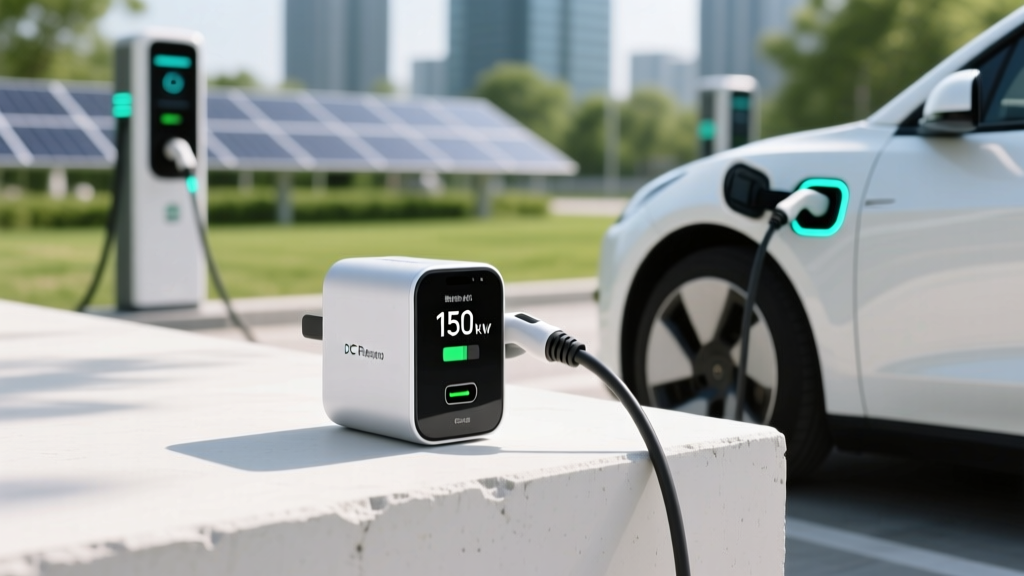
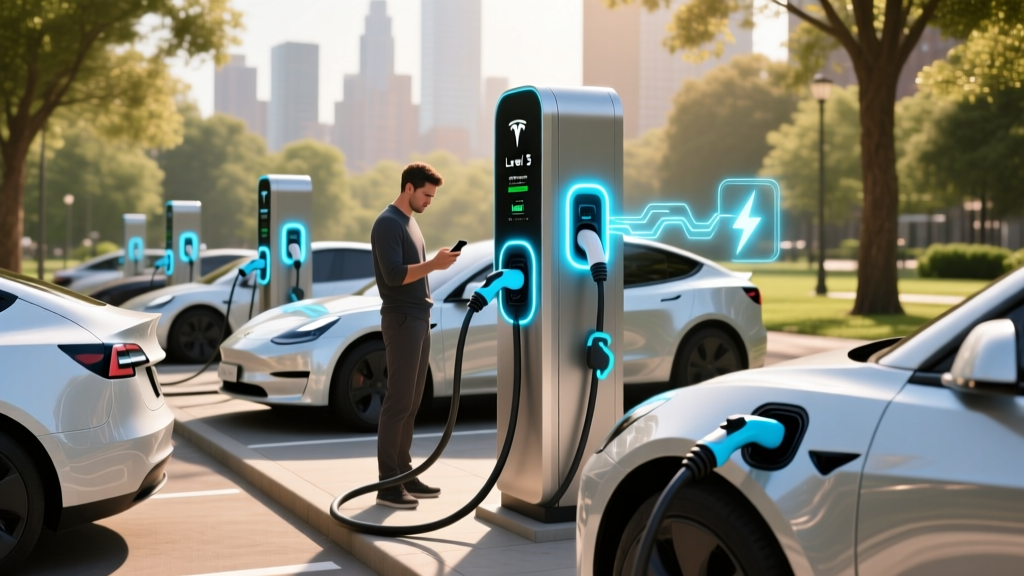
| DC Fast Charging | 400–800V DC | 50–350 kW | 150–1,000+ mi/hr (peak) | Road trips, rapid top-ups |
Realistic 10–80% Charging Times for Common Battery Sizes
DC fast charging doesn't sustain peak kW all the way to 80%. The charge curve tapers significantly above ~50–60% State of Charge to protect battery chemistry. Here's what to actually expect:
- 60 kWh pack (e.g., base Hyundai Ioniq 5): ~18 minutes on a 150+ kW charger, ~25 minutes on a 50 kW CHAdeMO/CCS unit
- 75–82 kWh pack (Tesla Model 3/Y, BMW i4): ~20–25 minutes on V3/V4 Supercharger or 250 kW Electrify America station
- 100+ kWh pack (F-150 Lightning Extended, Rivian R1T): ~30–40 minutes, often requiring 350 kW stations to reach full potential
- 400V vs 800V architecture matters: Hyundai/Kia/Porsche 800V systems can sustain 200+ kW deeper into the charge curve than 400V systems, which taper earlier.
Home Level 2 Installation: Electrical Requirements, Costs, and Panel Upgrades
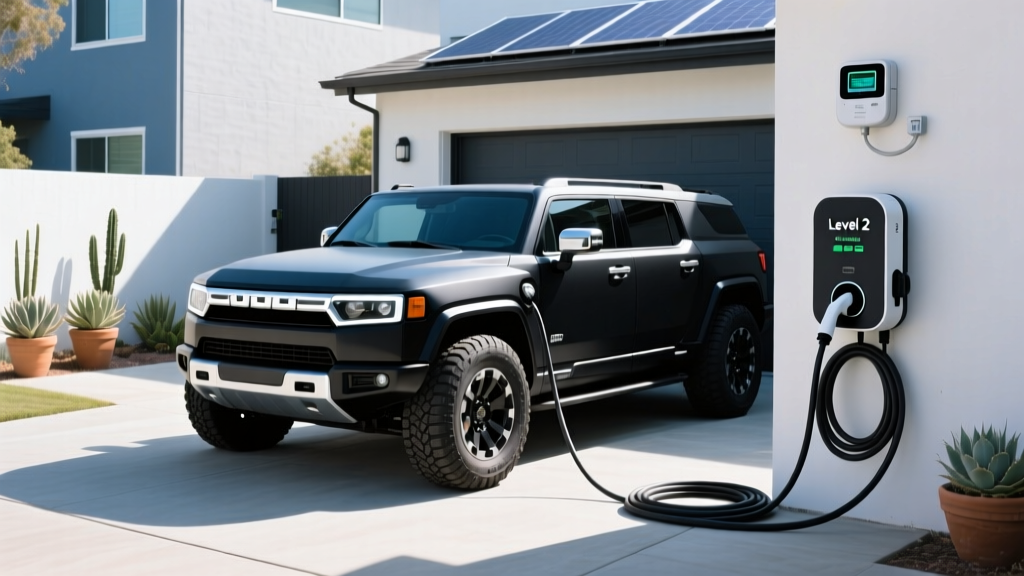
A Level 2 home charger is the single biggest quality-of-life upgrade for EV ownership. But installation costs vary wildly based on your home's electrical panel, the distance from panel to garage, and local permitting.
Electrical Requirements
A typical Level 2 charger requires a dedicated 240V circuit rated 20% higher than the charger's continuous draw (per NEC 80% rule). For a 48A charger (11.5 kW), you need a 60A breaker. For a 32A charger (7.7 kW), a 40A breaker suffices. Hardwired installations are preferred for 48A+ units; NEMA 14-50 outlets work for 40A circuits.
Do You Need a Panel Upgrade?
Homes with 100A service (common in pre-1990 builds) often cannot support a 48A EV charger plus existing loads. Upgrading to 200A service typically costs $1,500–$3,500 and may require utility coordination. Homes already on 200A service usually have enough headroom, but a load calculation by a licensed electrician is mandatory.
| Component | Low-End Cost | High-End Cost | Notes |
|---|---|---|---|
| Level 2 Charger (Equipment) | $300 | $700 | 32A–48A smart chargers |
| Electrician Labor (short run, <30 ft) | $400 | $800 | Conduit, wiring, breaker |
| Electrician Labor (long run, 50–100 ft) | $800 | $1,800 | Trenching, longer conduit |
| Permit & Inspection | $50 | $300 | Varies by jurisdiction |
| Panel Upgrade (if needed) | $1,500 | $3,500 | 100A → 200A service |
| Total (no panel upgrade) | $750 | $2,800 | Most typical install |
| Total (with panel upgrade) | $2,250 | $6,300 | Older homes |
Final specs must be confirmed by a licensed electrician performing a load calculation per NEC Article 220. The Department of Energy's home charging guide provides additional code context.
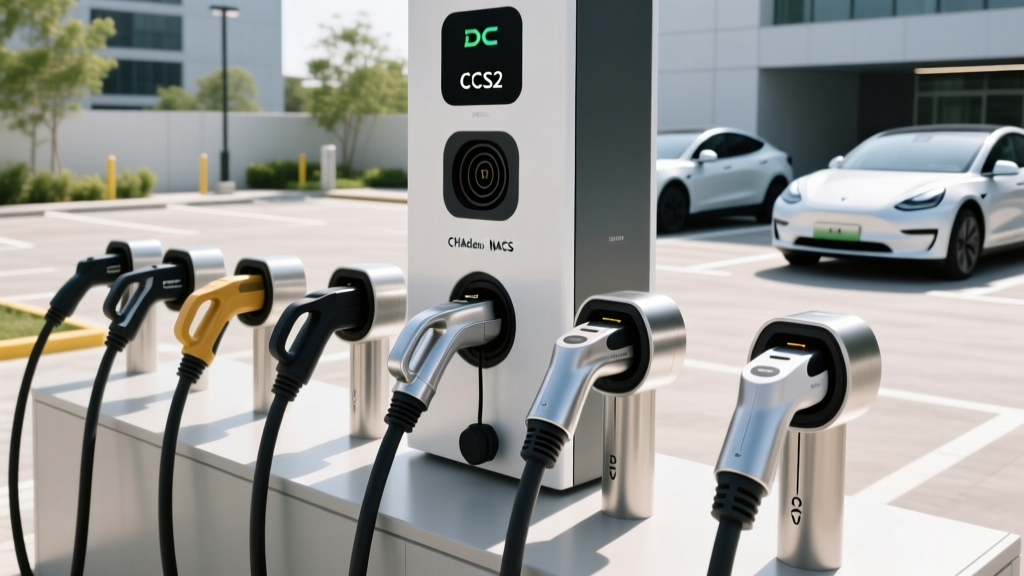
Connector Compatibility: NACS, CCS1, CHAdeMO, and Adapter Realities
As of 2026, the North American EV charging connector landscape has consolidated significantly, but your EV's port still determines where you can charge.
| Connector | Brands (2026 Models) | Adapter Needed For |
|---|---|---|
| NACS (Tesla/J3400) | Tesla (all), Ford, GM, Rivian, Volvo, Polestar, Mercedes, Nissan (new Ariya refresh) | CCS1 stations require a CCS-to-NACS adapter (~$200–$250) |
| CCS1 | Hyundai, Kia, BMW, VW, Stellantis (some), Honda Prologue | Tesla Superchargers require NACS-to-CCS adapter (Tesla-supplied for some brands) |
| CHAdeMO | Nissan Leaf (legacy), Mitsubishi Outlander PHEV | Limited network; no practical adapter to NACS/CCS for DCFC |
For home Level 2 charging, all EVs use a J1772 connector (or NACS with built-in J1772 pins on Teslas). Any J1772 home charger works with any EV using the adapter that came with the car. This is not a concern for home setups.
Cost Per Mile: EV Charging vs. Gasoline in 2026
The economics of EV ownership depend heavily on where and when you charge. Here's how common scenarios compare against a 28 MPG gasoline car at $3.40/gallon:
| Charging Scenario | Rate ($/kWh) | Cost/Mile (at 3.5 mi/kWh) | vs. Gas (28 MPG, $3.40/gal) |
|---|---|---|---|
| Home off-peak (utility TOU rate) | $0.08–$0.12 | $0.023–$0.034 | 75–80% cheaper |
| Home standard rate | $0.14–$0.18 | $0.040–$0.051 | 60–70% cheaper |
| Public Level 2 (ChargePoint, etc.) | $0.20–$0.35 | $0.057–$0.100 | 30–65% cheaper |
| DC Fast Charging (EA, EVgo, Tesla) | $0.30–$0.55 | $0.086–$0.157 | 0–55% cheaper (some parity) |
| Gasoline baseline | $3.40/gallon | $0.121 | — |
Key takeaway: Home charging on off-peak rates delivers the strongest EV economics — roughly 3¢/mile vs 12¢/mile for gas. DC fast charging on road trips can approach gas parity, but road trips represent a minority of driving for most owners. Over 12,000 miles/year, home-charged EVs save $1,000–$1,200 annually in fuel.
Recommended Home Level 2 Chargers for 2026
These chargers represent the best balance of power output, reliability, smart features, and value based on multi-year field use:
ChargePoint Home Flex
- Power: Up to 11.5 kW (48A) on 60A circuit; configurable down to 16A
- Connector: J1772 (NACS adapter included or built-in for newer models)
- Cable: 23 ft
- Smart features: Wi-Fi, scheduling, Alexa, energy tracking
- Price: ~$550–$650
- Best for: Flexibility across circuit sizes
Tesla Wall Connector
- Power: Up to 11.5 kW (48A) on 60A circuit
- Connector: NACS native; J1772 adapter available for non-Tesla EVs
- Cable: 24 ft
- Smart features: Wi-Fi, OTA updates, power sharing (2 units on one circuit)
- Price: ~$420–$475
- Best for: NACS-equipped EVs, best value at 48A
Grizzl-E Smart
- Power: Up to 9.6 kW (40A) on 50A circuit
- Connector: J1772 (NACS version available)
- Cable: 24 ft
- Smart features: OCPP-compatible, works with multiple apps
- Price: ~$450–$550
- Best for: Extreme cold durability (-40°F rated), outdoor installs
Emporia Vue Level 2
- Power: Up to 11.5 kW (48A) on 60A circuit
- Connector: J1772
- Cable: 24 ft
- Smart features: Integrated energy monitoring, solar integration, load management
- Price: ~$400–$500
- Best for: Homes with solar panels or whole-home energy monitoring
Safety, Code, and Installation Best Practices
EV charging involves sustained high-current draw — far more demanding than a dryer or oven. Cutting corners here creates fire risk. These are non-negotiable:
- Dedicated circuit: Your EV charger must be on its own breaker, never shared with other appliances.
- GFCI protection: NEC 2023+ requires GFCI protection for outdoor receptacles used for EV charging. Hardwired units may have different requirements — your electrician will confirm per local code.
- Outdoor rating: If installed outdoors, the charger must carry a NEMA 4 (weatherproof) rating. All four chargers above qualify.
- NEMA 14-50 receptacle quality: If using a plug-in install, specify a commercial-grade receptacle (Hubbell, Bryant). Consumer-grade 14-50 outlets have shown thermal failures under sustained EV loads.
- Permit and inspection: Always pull a permit. Unpermitted electrical work can void homeowner's insurance and create liability.
- Load management: If your panel is near capacity, consider a smart charger with load-management capability (e.g., Emporia, Tesla Power Sharing) that dynamically reduces draw when other loads are active.
Frequently Asked Questions
How much does it cost to install a home EV charger?
Most homes with 200A service and a short wiring run (<30 ft) will pay $750–$1,500 total (equipment + electrician + permit). Longer runs or conduit through finished walls push costs to $1,500–$2,800. Homes needing a panel upgrade from 100A to 200A should budget $2,250–$6,300 for the full project. Always get 2–3 quotes from licensed electricians who have EV charger experience.
How fast will each charging level add range?
Level 1 (120V) adds 3–5 miles per hour — adequate for PHEVs or drivers covering <30 miles/day. Level 2 (240V, 48A) adds 35–44 miles per hour, replenishing the average range of electric cars (280 mi) in roughly 7–8 hours overnight. DC fast charging adds 150–1,000+ miles per hour at peak but tapers significantly above 60% SoC.
Which connector/charger is compatible with my EV?
For home Level 2 charging, all EVs work with any J1772 charger (Teslas use an included adapter). For DC fast charging, check your EV's port: NACS-equipped vehicles (Tesla, Ford, GM, Rivian) access Superchargers natively and need an adapter for legacy CCS stations. CCS-equipped vehicles (Hyundai, Kia, BMW, VW) access Electrify America and other CCS networks natively and need a NACS adapter for Superchargers. CHAdeMO (Nissan Leaf) has a shrinking network.
How much does charging cost per mile vs gas?
Home off-peak charging costs roughly $0.025–$0.035 per mile, compared to $0.12 per mile for a 28 MPG gas car at $3.40/gallon — a 70–80% savings. Public DC fast charging ($0.30–$0.55/kWh) costs $0.09–$0.16/mile, approaching gas parity but used infrequently by most owners.
What electrical upgrades might I need?
Homes with 100A electrical service typically need a panel upgrade to 200A ($1,500–$3,500) to safely support a 40–48A EV charger. Homes already on 200A usually have sufficient capacity, but a load calculation per NEC Article 220 is required. Other potential upgrades include replacing a Federal Pacific or Zinsco panel (known fire hazards), adding a sub-panel for detached garages, or upgrading the meter base.
Does the federal tax credit cover home charger installation?
The IRS §30C Alternative Fuel Vehicle Refueling Property Credit covers 30% of home charger equipment and installation costs, up to $1,000. However, eligibility is restricted to census tracts classified as non-urban or low-income per irs.gov. Check your address eligibility before counting on this credit. This is separate from the §30D vehicle purchase credit.