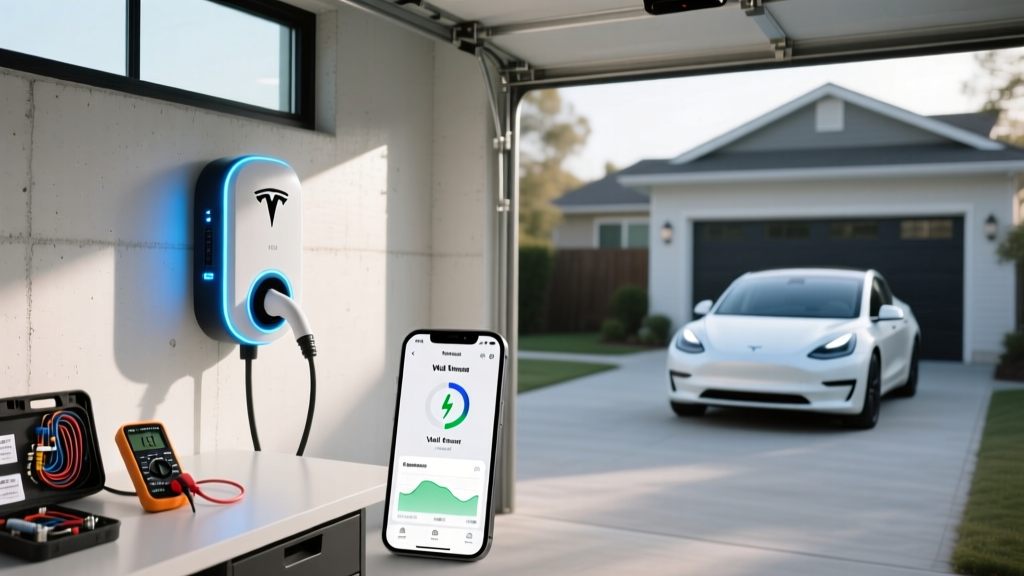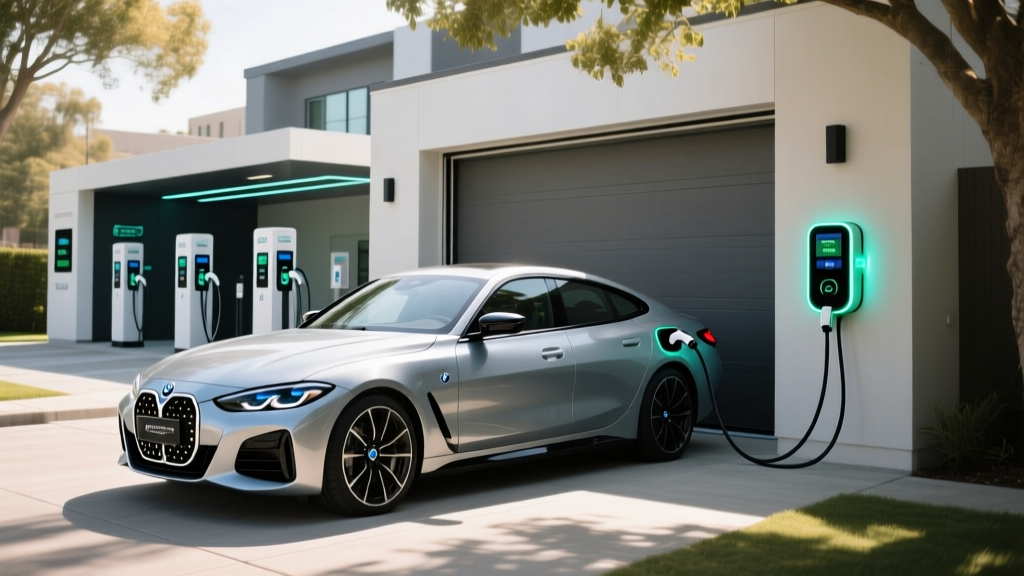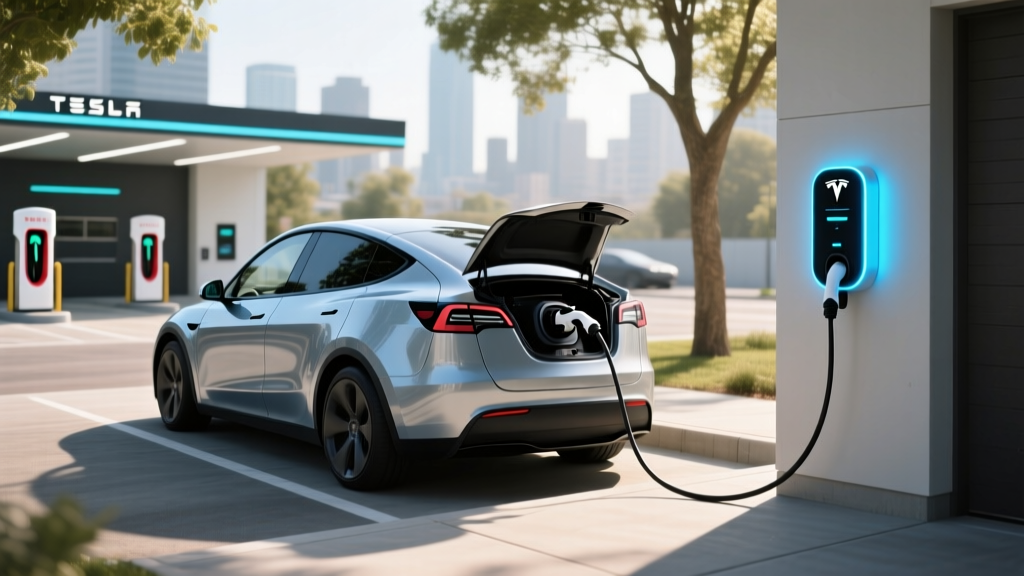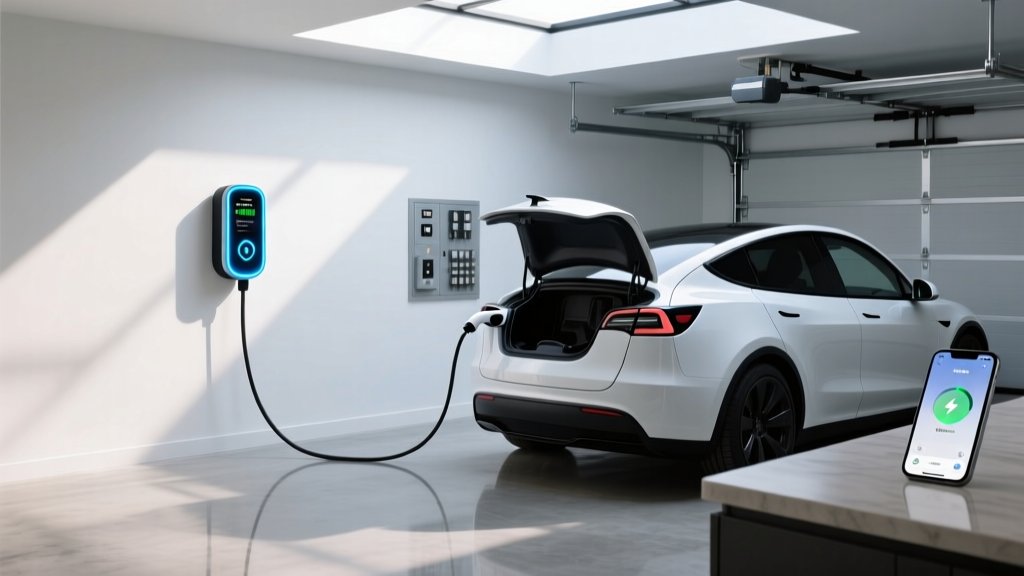
If you own a Tesla—or any EV with a NACS port—the single most impactful upgrade you can make is a Level 2 home charger. But the question that stops most buyers cold: what does installation actually cost? The answer depends on your home's electrical panel, the distance from the panel to your garage or driveway, and whether you choose Tesla's Wall Connector or a third-party unit.
The average cost to install a Tesla home charger in 2026 lands between $800 and $2,500 for a straightforward installation, but can climb to $4,000 or more if your home needs a panel upgrade. Below, we break down every cost component, explain charging speeds in concrete terms, and recommend the best equipment for Tesla owners and mixed-EV households.
How Much Does It Cost to Install a Tesla Home Charger?
The total cost splits into three categories: the charger hardware, the electrician's labor and materials, and any electrical panel upgrades your home requires. Here's what to budget:
| Component | Low End | Typical | High End |
|---|---|---|---|
| Tesla Wall Connector (hardware) | $400 | $475 | $475 |
| Electrician labor & materials (conduit, wiring, outlet/hardwire) | $300 | $750 | $1,800 |
| Permit & inspection fees | $50 | $150 | $350 |
| Electrical panel upgrade (if needed: 100A → 200A) | $1,500 | $2,500 | $4,500 |
| Total (no panel upgrade) | $750 | $1,375 | $2,625 |
| Total (with panel upgrade) | $2,250 | $3,875 | $7,125 |
What drives the wide range? A short run from a 200-amp panel to an interior garage wall might cost $300–$500 in labor. Running conduit 80 feet along an exterior wall, through attic space, or burying underground conduit to a detached garage can push labor past $1,500. Homes built before 1990 often have 100-amp panels that lack capacity for a 48-amp continuous EV circuit, triggering a panel upgrade that adds $1,500–$4,500.
Charging Levels Explained: Speeds in kW and Miles Per Hour
Before choosing equipment, understand the three charging tiers. kW (kilowatts) measures charging power—the rate electricity flows into your car. kWh (kilowatt-hours) measures energy capacity—how much the battery holds. A 75 kWh battery charged at 11.5 kW takes roughly 6.5 hours from 0 to 100% (before accounting for charging-curve taper near full).
| Level | Voltage | Max Power (kW) | Miles of Range Per Hour | Typical Use |
|---|---|---|---|---|
| Level 1 | 120V | 1.4–1.9 kW | 3–5 mi/hr | Emergency/trickle; overnight for PHEVs |
| Level 2 (Home/Public AC) | 240V | 7.2–19.2 kW | 22–58 mi/hr | Daily home charging; destination charging |
| DC Fast Charging | 400–800V DC | 50–350+ kW | 150–1,000+ mi/hr | Road trips; rapid top-ups (not for home) |
For a Tesla Model Y (75 kWh usable battery, ~320 miles EPA range), a Level 2 Tesla Wall Connector at 11.5 kW (48 amps on a 60-amp circuit) adds roughly 44 miles of range per hour. That means a 10–80% charge (the daily recommended range for NMC batteries) takes about 5 hours—plenty of time to refill overnight.
Tesla's onboard charger maxes out at 11.5 kW (Model Y/3) or up to 17.2 kW on older Model S/X with dual chargers. Buying a 19.2 kW charger won't charge a Model Y faster than 11.5 kW—the car limits the intake.
Which Connector and Charger Is Compatible with My EV?
Tesla vehicles use the NACS (North American Charging Standard) connector, which Tesla opened to the industry in late 2022. By 2026, most major automakers have adopted NACS natively or via adapter. Here's the connector landscape:
| Connector | Brands Using It | Tesla Charger Compatible? |
|---|---|---|
| NACS (J3400) | Tesla (native), Ford, GM, Rivian, Volvo, Polestar, Hyundai/Kia (2025+), most others by 2026 | Yes — native fit |
| CCS1 | Older VW ID.4, BMW i4, pre-2025 Hyundai Ioniq 5, legacy models | Requires CCS-to-NACS adapter (~$200–$250) |
| CHAdeMO | Nissan Leaf (discontinued), Mitsubishi Outlander PHEV | Not compatible; requires dedicated CHAdeMO station |
For Tesla-only households: The Tesla Wall Connector is the obvious choice. It ships with an integrated NACS cable (24 feet), supports up to 11.5 kW (48A) on a 60-amp circuit, and integrates with the Tesla app for scheduling and energy monitoring.
For mixed-EV households (e.g., a Tesla and a Ford Mustang Mach-E with CCS): consider a third-party Level 2 charger with a CCS connector and use Tesla's NACS-to-CCS adapter, or install two separate circuits. The ChargePoint Home Flex and Emporia Level 2 both offer configurable amperage and CCS-native cables.
Recommended Home Chargers for Tesla Owners
Tesla Wall Connector (Gen 3)
- Max output: 11.5 kW (48A)
- Connector: NACS (native Tesla)
- Cable length: 24 feet
- Smart features: Wi-Fi, OTA updates, load sharing (pair up to 6 units on one circuit), Tesla app integration
- Price: ~$475
- Best for: Tesla-only homes; cleanest integration
ChargePoint Home Flex
- Max output: 12 kW (50A) — adjustable down to 16A
- Connector: CCS1 or NACS (select at purchase)
- Cable length: 23 feet
- Smart features: Wi-Fi, app scheduling, Alexa integration, Energy Star certified
- Price: ~$699 (NACS version)
- Best for: Mixed-EV households; adjustable amperage for older panels
Emporia Level 2 Smart Charger
- Max output: 11.5 kW (48A)
- Connector: CCS1 or NACS
- Cable length: 24 feet
- Smart features: Wi-Fi, solar integration, real-time energy tracking via Emporia app, load management
- Price: ~$399
- Best for: Budget-conscious buyers; homes with solar panels
All three units are hardwired or NEMA 14-50 plug compatible. Hardwired installations eliminate the GFCI breaker requirement that the National Electrical Code (NEC) mandates for receptacle-based EV charging, saving $50–$150 on breaker cost and reducing nuisance trips.
How Much Does Charging Cost Per Mile vs. Gas?
Electricity costs vary dramatically by region, utility rate plan, and whether you charge at home or on public networks. Here's a realistic comparison for a Tesla Model Y (rated at 28 kWh/100 miles):
| Scenario | Rate | Cost Per Mile | Annual Cost (12,000 mi) |
|---|---|---|---|
| Home, off-peak utility rate (national avg) | $0.12/kWh | $0.034 | $408 |
| Home, standard rate (no TOU plan) | $0.17/kWh | $0.048 | $576 |
| Public Level 2 (ChargePoint, EVgo) | $0.30/kWh | $0.084 | $1,008 |
| Tesla Supercharger (DC fast) | $0.32/kWh avg | $0.090 | $1,080 |
| Gas equivalent (Toyota RAV4, 30 MPG combined) | $3.40/gal | $0.113 | $1,356 |
Even at public DC fast-charging rates, the Model Y costs less per mile than a 30 MPG gas crossover. Home off-peak charging delivers the deepest savings—roughly $950 less per year vs. gasoline for 12,000 miles of driving. Time-of-use (TOU) utility plans are key: charging between 10 PM and 6 AM can cut your rate by 30–50%.
Electrical Upgrades: When Your Panel Can't Handle It
A Level 2 Tesla Wall Connector at 48 amps requires a dedicated 60-amp, 240-volt circuit. The National Electrical Code (NEC) treats EV charging as a continuous load, meaning the circuit must be rated 125% above the charger's maximum draw (48A × 1.25 = 60A breaker).
You likely need a panel upgrade if:
- Your home has a 100-amp main panel (common in pre-1990 construction)
- Your panel is already near capacity (electric range, dryer, HVAC, water heater on electric)
- An electrician's load calculation shows less than 60 amps of headroom
Alternatives to a full panel upgrade:
- Reduce charger amperage: The ChargePoint Home Flex can be configured to 32A (requiring only a 40A circuit) or even 24A (30A circuit), reducing charging speed but avoiding panel work.
- Smart load management: Devices like the Emporia smart panel or Tesla's load-sharing feature dynamically reduce charger draw when other appliances activate, letting you stay within existing panel capacity.
- Sub-panel installation: Adding a sub-panel ($500–$1,200) near the charger location can sometimes avoid a full service upgrade.
Always hire a licensed electrician to perform a NEC Article 220 load calculation before committing to a 60-amp circuit. Skipping this step risks tripped main breakers or, worse, overheated wiring.
Safety, Permits, and Code Requirements
EV charger installation is regulated electrical work. Here's what code requires in most U.S. jurisdictions:
- Dedicated circuit: The charger must have its own breaker—no sharing with other outlets or appliances.
- GFCI protection: If you install a NEMA 14-50 receptacle (rather than hardwiring), NEC 2023/2026 requires a GFCI breaker. Hardwired installations are exempt from this requirement and are generally preferred for reliability.
- Outdoor rating: If the charger is mounted outside, it must carry a NEMA 4 or NEMA 4X weather rating. The Tesla Wall Connector is rated for indoor and outdoor use.
- Permit: Most municipalities require an electrical permit ($50–$350) and a post-installation inspection. Unpermitted work can void homeowner's insurance claims and complicate home sales.
- Wire gauge: A 60A circuit requires 6 AWG copper wire (THHN in conduit or NM-B/Romex where permitted). Longer runs may need 4 AWG to prevent voltage drop.
According to NFPA's National Electrical Code, EV charging circuits fall under Article 625. Your electrician should reference this article on the permit application.
Federal Tax Credit for Home Charger Installation
The IRS §30C Alternative Fuel Vehicle Refueling Property Credit covers 30% of home EV charger equipment and installation costs, up to $1,000. This is separate from the §30D vehicle purchase credit.
Key eligibility rules for 2026:
- The charger must be installed at your primary U.S. residence
- The property must be in a qualifying census tract (low-income or non-urban area, per IRS guidance)
- The credit is non-refundable—it reduces your tax liability but won't generate a refund beyond what you owe
- Both equipment and labor costs qualify
For a $1,375 typical installation, the 30% credit would be $412.50—bringing your net cost to roughly $962. Consult a tax professional to confirm eligibility for your specific census tract and tax situation.
Frequently Asked Questions
Can I install a Tesla Wall Connector myself?
Legally, some jurisdictions allow homeowner electrical work with a permit and inspection. Practically, a 240V/60A circuit involves significant risk—improper wiring can cause fires or void insurance. We strongly recommend a licensed electrician. The labor cost ($300–$1,800) is worth the safety and code compliance.
How fast does a Tesla Wall Connector charge a Model Y?
At 11.5 kW (48A), the Tesla Wall Connector adds roughly 44 miles of range per hour to a Model Y. A 10–80% charge (the recommended daily range for the NMC battery) takes approximately 5 hours. The Model Y's onboard charger limits intake to 11.5 kW, so a higher-output charger won't speed this up.
Do I need a NEMA 14-50 outlet or hardwired installation?
Hardwired is preferred. It eliminates the NEC-mandated GFCI breaker (saving $50–$150 and preventing nuisance trips), provides a cleaner look, and reduces failure points. A NEMA 14-50 outlet offers portability if you plan to move or take the charger with you, but adds cost and code complexity.
Will a Tesla Wall Connector work with non-Tesla EVs?
Starting in 2024, Tesla opened Supercharger access to NACS-equipped non-Tesla EVs. The Wall Connector hardware uses the NACS plug, so any vehicle with a native NACS port (Ford F-150 Lightning, GM Ultium vehicles, Rivian, and most 2025+ models) can charge directly. CCS-equipped EVs require a NACS-to-CCS adapter.
What if my home only has a 100-amp electrical panel?
You have options: upgrade to a 200-amp panel ($1,500–$4,500), configure a lower-amperage charger like the ChargePoint Home Flex at 32A (needs only a 40A circuit), or use smart load management to share capacity with existing appliances. An electrician's load calculation will determine the safest path.