If you own a Tesla—or any EV with the North American Charging Standard (NACS) connector—home charging is the single biggest convenience upgrade you can make. But the question every new owner asks is: what's the average cost to install a Tesla charger at home? The short answer is that most homeowners spend between $800 and $2,500 for a straightforward Level 2 installation, but that number can climb to $4,000+ if your electrical panel needs an upgrade.
This guide breaks down every line item—equipment, electrician labor, permits, and potential panel work—so you can budget accurately before calling a licensed electrician. We'll also cover charging speeds, connector compatibility beyond Tesla, and what you'll actually pay per mile compared to gasoline.
Understanding EV Charging Levels: Speeds and Real-World Range Gains
Before discussing cost, you need to know what you're paying for. EV charging falls into three categories, defined by power delivery measured in kilowatts (kW). Remember: kW is the rate of energy flow (like water pressure), while kWh is the total energy stored in your battery (like the size of the tank).
| Level | Voltage | Power (kW) | Miles of Range Per Hour | Typical Use |
|---|---|---|---|---|
| Level 1 | 120V (standard outlet) | 1.0–1.4 kW | 3–5 mi/hr | Overnight trickle; PHEVs or low-mileage drivers |
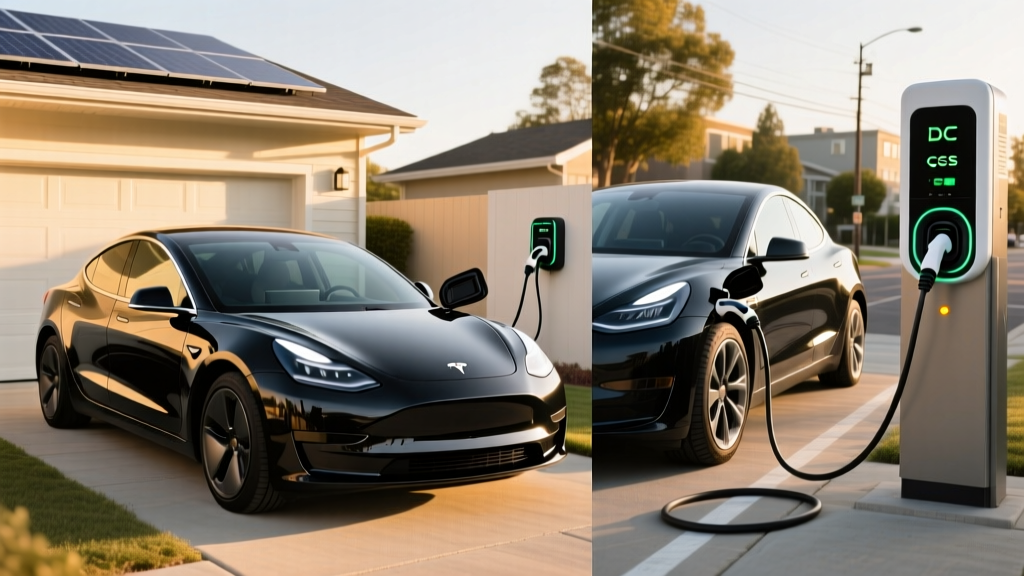
| Level 2 | 240V (dryer-style outlet or hardwired) | 7.2–19.2 kW | 25–75 mi/hr | Primary home charging; the sweet spot for BEVs |
| DC Fast Charging | 400–800V DC | 50–350 kW | 150–1,000+ mi/hr | Road trips; Tesla Superchargers, Electrify America |
For a Tesla Model Y with its ~75 kWh usable battery, Level 2 at 11.5 kW (48A) adds roughly 44 miles of range per hour. That means a 10–80% charge (about 52 kWh) takes approximately 4.5 hours. On a Tesla Supercharger (DC fast) at peak 250 kW, that same 10–80% session takes roughly 20–25 minutes, though charging speed tapers significantly above 80% State of Charge to protect battery health.
How Much Does It Cost to Install a Tesla Home Charger?
The average cost to install a Tesla charger depends on four variables: the charger unit itself, electrician labor, permit fees, and whether your electrical panel can handle the added load. Here's a realistic breakdown based on 2026 market rates.
| Line Item | Simple Install | Complex Install | Notes |
|---|---|---|---|
| Tesla Wall Connector (hardware) | $475 | $475 | 48A, 240V, NACS connector, 24-ft cable; purchased from Tesla |
| Electrician labor | $300–$800 | $1,000–$2,500 | Depends on run length from panel to garage/carport |
| Electrical permit | $50–$150 | $100–$300 | Required in most jurisdictions; varies by municipality |
| Panel upgrade (if needed) | $0 | $1,500–$4,000 | Needed if your panel is 100A or maxed out; 200A service recommended |
| Conduit, wiring, misc. materials | $50–$150 | $200–$600 | Longer runs = more copper wire and conduit |
| Total | $875–$1,575 | $3,375–$7,875 | Most homes with 200A panels fall in the $1,000–$2,000 range |
What drives cost variation?
The biggest cost swing is panel capacity. A Level 2 charger drawing 48 amps needs a dedicated 60-amp circuit (the National Electrical Code requires circuits rated at 125% of continuous load). If your home's electrical service is already 200 amps with spare breaker slots and load headroom, the install is straightforward. If you're running a 100-amp panel in an older home with electric heat, an EV dryer, and an electric oven, you may need a service upgrade—a job that can add $2,000–$4,000.
The second variable is wire run distance. If your panel is in the garage next to where you park, you might need 15 feet of 6 AWG copper wire. If the panel is in the basement on the opposite side of the house, you could need 80+ feet, plus conduit through walls or underground—driving labor and material costs higher.
Electrical Requirements: What Your Home Needs
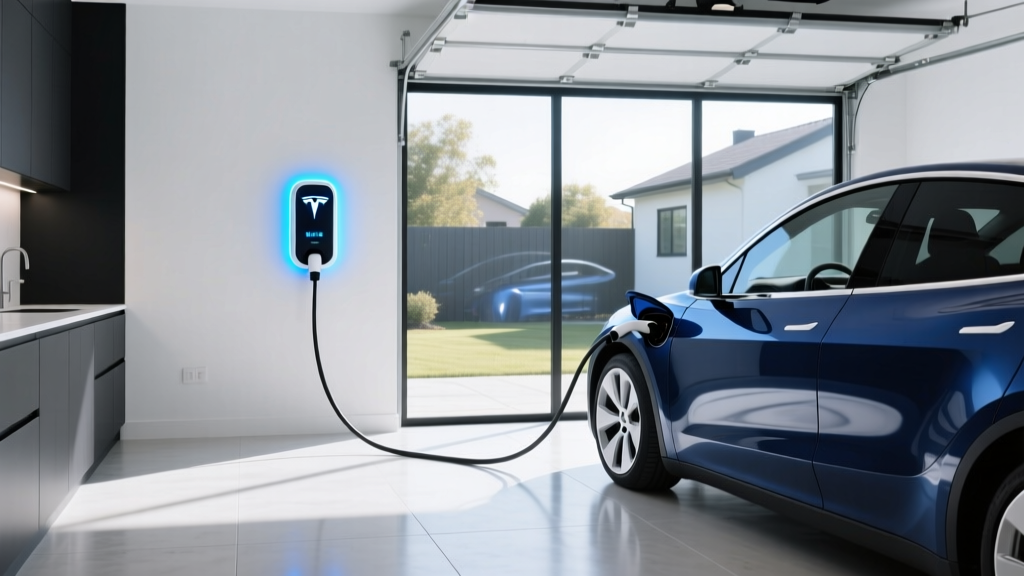
The Tesla Wall Connector is the most common home charger for Tesla owners. Here are its electrical specifications:
- Voltage: 240V (split-phase, standard US residential)
- Max amperage: 48A continuous draw
- Required circuit breaker: 60A (NEC 125% rule for continuous loads)
- Wire gauge: 6 AWG copper (for runs up to ~50 feet; 4 AWG for longer runs)
- Connection: Hardwired (no plug; requires a junction box)
If you prefer a plug-in solution, Tesla also sells the Mobile Connector ($200) with a NACS adapter and a 240V NEMA 14-50 plug. This limits you to 32A (7.7 kW) and requires a 50A outlet on a 50A breaker—a simpler and cheaper install, but slower charging. The tradeoff: 32A adds about 30 miles per hour versus 44 at 48A. For overnight charging of a Model Y (~320 miles EPA range), both will fully replenish the battery while you sleep.
Panel upgrade: when is it necessary?
Ask your electrician to perform a load calculation per NEC Article 220. This adds up your home's existing electrical loads (HVAC, water heater, oven, dryer, etc.) and determines whether a 60A EV circuit can be added safely. Homes built after 2000 with 200A service rarely need upgrades. Homes from the 1970s–1990s with 100A or 150A service are more likely candidates.
An alternative to a full panel upgrade is a smart load-management device like the Emporia Load Center or Span Drive panel, which dynamically reduces EV charging current when other high-draw appliances kick on. This can avoid a costly panel upgrade, but adds $300–$800 in hardware and may not be approved in all jurisdictions.
Connector Compatibility: NACS, CCS, and Adapters
As of 2026, the North American Charging Standard (NACS)—originally Tesla's proprietary connector—has become the dominant charging standard in the US. Ford, GM, Rivian, Volvo, BMW, and most other automakers have adopted NACS for their 2025–2026 models. Here's what that means for your charger investment:
| Connector | Brands Using It | Home Charger Options | Adapter Needed? |
|---|---|---|---|
| NACS (Tesla) | Tesla, Ford, GM, Rivian, Volvo, BMW, Hyundai (2026+), most new EVs | Tesla Wall Connector, Emporia J1772 + adapter, ChargePoint Home Flex + NACS tip | No, if your EV has NACS native |
| CCS1 | Older VW ID.4, Hyundai Ioniq 5 (pre-2026), Kia EV6 (pre-2026), Stellantis | ChargePoint Home Flex, Emporia Level 2, Grizzl-E | Tesla-to-CCS adapter ($190 from Tesla) needed to use Superchargers |
| CHAdeMO | Nissan Leaf (legacy); largely discontinued | Limited home options; mostly public DC | Not compatible with Tesla equipment |
The Tesla Wall Connector outputs NACS natively. If you have a non-Tesla EV with CCS1, you can use a J1772-to-NACS adapter (Lectron and A2Z make reliable options at ~$120–$180) to charge on a Wall Connector, or simply choose a J1772 charger like the ChargePoint Home Flex. For future-proofing, NACS is the safest bet in 2026.
What Does Charging Cost Per Mile vs. Gas?
One of the strongest arguments for home charging is cost. Let's compare a Tesla Model Y (averaging ~3.5 miles per kWh, or 28 kWh/100mi) against a comparable gas SUV getting 28 MPG combined.
| Scenario | Rate | Cost Per Mile (Model Y) | Annual Cost (12,000 mi) |
|---|---|---|---|
| Home off-peak (utility time-of-use) | $0.09/kWh | $0.026/mi | $308 |
| Home standard rate | $0.14/kWh | $0.040/mi | $480 |
| Public Level 2 (ChargePoint, etc.) | $0.25/kWh | $0.071/mi | $857 |
| Tesla Supercharger (DC fast) | $0.32/kWh | $0.091/mi | $1,097 |
| Gas SUV (28 MPG combined) | $3.50/gal | $0.125/mi | $1,500 |
At national average electricity rates, home-charging a Model Y costs roughly one-third to one-quarter what a comparable gas SUV costs to fuel. Even exclusive Supercharger use is cheaper per mile than gasoline. The savings compound: over 5 years and 60,000 miles, a home-charged Model Y saves $5,500–$7,200 versus gas, easily offsetting the charger installation cost many times over.
According to fueleconomy.gov, the 2025 Tesla Model Y Long Range achieves 111 MPGe combined, translating to an electricity cost of roughly $550 per year at the national average rate of $0.14/kWh and 15,000 annual miles.
Recommended Home Chargers for Tesla and NACS Vehicles
Here are three proven Level 2 chargers compatible with Tesla/NACS vehicles, compared by output, features, and price:
Tesla Wall Connector
- Power output: 11.5 kW (48A at 240V)
- Connector: NACS (native)
- Cable length: 24 feet
- Smart features: Wi-Fi, OTA updates, Power Sharing (link up to 6 units on one circuit), access control
- Price: $475
- Best for: Tesla owners wanting maximum speed and seamless integration
ChargePoint Home Flex
- Power output: Up to 12 kW (50A at 240V); adjustable down to 16A
- Connector: J1772 (use NACS adapter) or NACS pigtail (2025+ models)
- Cable length: 23 feet
- Smart features: Wi-Fi, app scheduling, Alexa integration, energy tracking, flexible amperage
- Price: $549–$599
- Best for: Multi-EV households (Tesla + non-Tesla); adjustable circuit sizing
Emporia Level 2 EV Charger
- Power output: 11.5 kW (48A at 240V)
- Connector: J1772 (NACS adapter available) or NACS version
- Cable length: 24 feet
- Smart features: Wi-Fi, solar integration (pairs with Emporia Vue energy monitor), load management, app control
- Price: $399–$449
- Best for: Budget-conscious buyers; solar-home integration
All three chargers require hardwiring or a NEMA 14-50 outlet (check model-specific options). The Tesla Wall Connector is hardwired only; the ChargePoint and Emporia offer plug-in variants if you prefer outlet flexibility.
Safety, Permits, and Code Requirements
EV charger installation is electrical work governed by the National Electrical Code (NEC) and your local building department. Cutting corners here risks fire, insurance denial, and failed home inspections. Here's what to get right:
- Dedicated circuit: Your charger must be on its own breaker—no sharing with other appliances. A 48A charger requires a 60A breaker.
- GFCI protection: NEC 2020 and later requires Ground Fault Circuit Interrupter protection for outdoor receptacles. Hardwired indoor installations may be exempt, but check local code.
- Outdoor rating: If mounting outside, ensure the charger is NEMA 4 rated (weatherproof). The Tesla Wall Connector and ChargePoint Home Flex both carry NEMA 4 ratings.
- Permit: Most jurisdictions require an electrical permit for a new 240V circuit. Your electrician typically pulls this. Expect a post-install inspection.
- Utility notification: Some utilities require you to notify them before adding a Level 2 charger, especially if you want time-of-use (TOU) rate plans that discount overnight charging.
Always hire a licensed electrician. Tesla maintains a certified installer network, and services like Qmerit provide quotes from vetted local electricians.
Federal and Utility Incentives for Home Charger Installation
The IRS §30C Alternative Fuel Vehicle Refueling Property Credit offers a tax credit of up to 30% of the cost of home EV charging equipment and installation, capped at $1,000. This applies to both the charger hardware and the electrician labor. Key caveats:
- The credit is non-refundable (you can't get more back than your tax liability).
- Your home must be in an eligible census tract (non-urban, per IRS guidance updated for 2025–2026).
- Point-of-sale transfer is not available for §30C—it's claimed on your annual tax return.
- Always verify current-year eligibility with a tax professional or the IRS website, as rules evolve.
Beyond the federal credit, many utilities offer rebates of $200–$500 for installing a smart Level 2 charger, especially if you enroll in a time-of-use rate plan. Check your utility's EV programs—Pacific Gas & Electric, Southern California Edison, ConEdison, and Xcel Energy all run active rebate programs as of 2026.
Frequently Asked Questions
How much does it cost to install a Tesla Wall Connector?
The Tesla Wall Connector unit costs $475. Professional installation typically adds $300–$1,500 depending on wire run length and panel capacity. Total cost for most homes: $800–$2,000. If a panel upgrade is needed, add $1,500–$4,000.
Can I install a Tesla charger myself?
Technically you can if you're a licensed electrician, but most jurisdictions require a permit and inspection for new 240V circuits. DIY electrical work without a permit can void your homeowner's insurance and create fire risk. Hire a licensed electrician.
Do I need a 200-amp electrical panel for a Tesla charger?
Not necessarily, but it helps. A 48A Level 2 charger on a 60A circuit adds significant continuous load. Homes with 100A service often need an upgrade. Homes with 150A or 200A service usually have enough headroom. A load calculation by an electrician will determine your specific situation.
How fast will a Tesla Wall Connector charge a Model Y?
At 48A (11.5 kW), the Wall Connector adds approximately 44 miles of range per hour to a Model Y. Charging from 10% to 80% (roughly 52 kWh) takes about 4.5 hours. A full overnight charge easily covers any daily driving needs.
Is it cheaper to charge a Tesla at home or at a Supercharger?
Home charging is significantly cheaper. At $0.14/kWh (national average), home charging costs about $0.04 per mile. Supercharging at $0.32/kWh costs about $0.09 per mile—more than double. Over a year of 12,000 miles, that's a difference of roughly $600.
Can non-Tesla EVs use the Tesla Wall Connector?
Yes, if the non-Tesla EV has a NACS charge port (increasingly common on 2025–2026 models from Ford, GM, Rivian, and others). For CCS-equipped vehicles, a J1772-to-NACS adapter allows charging, though at slightly reduced convenience.