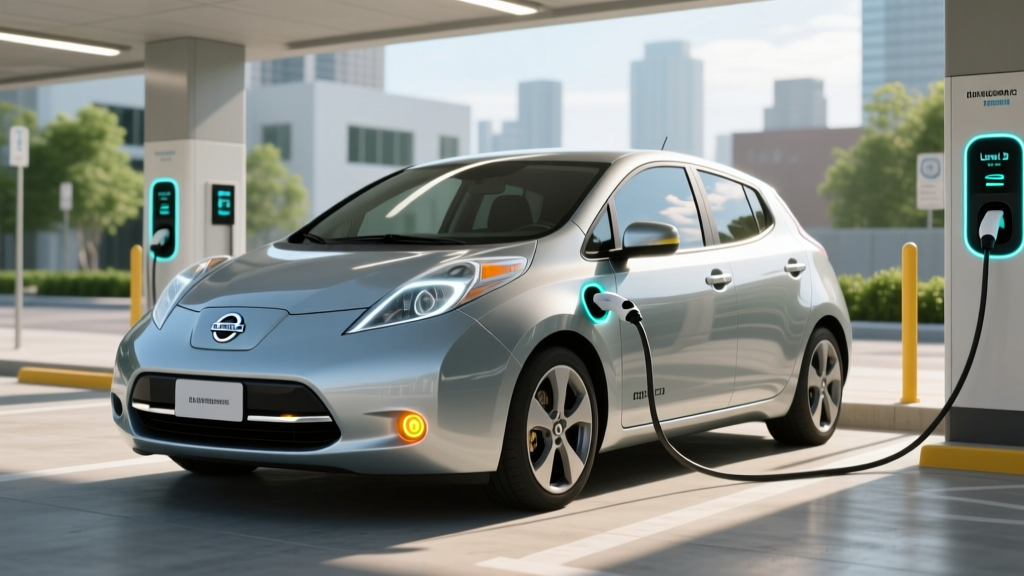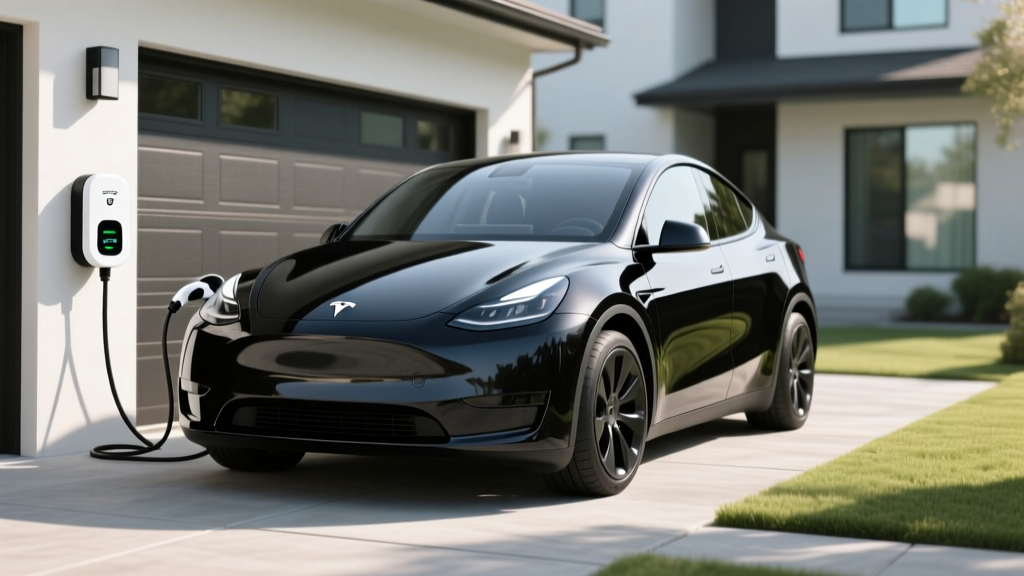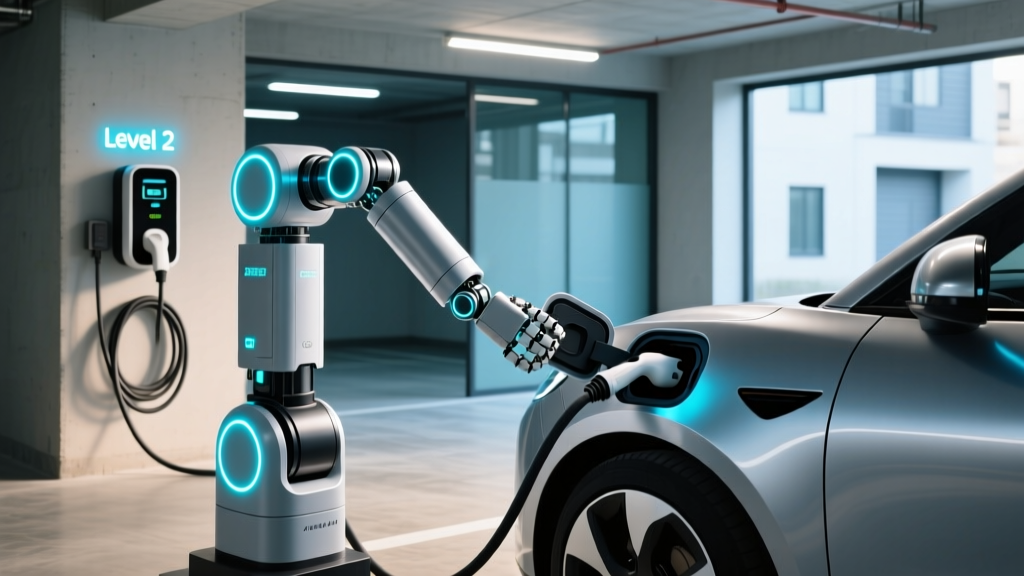
You've seen the videos: a sleek robotic arm glides out of a garage wall, locates your EV's charge port via camera, and plugs itself in. Automated EV charging robots are real prototypes in 2026 — but they're not yet real products you can buy for your home. Meanwhile, conventional Level 2 home chargers have never been more capable or affordable. This guide breaks down where robotic charging actually stands, then gives you the exact data, costs, and equipment picks you need to set up home charging today.
Where Automated EV Charging Robots Stand in 2026
Several companies — including Volkswagen's Elli, Ziggy (EV Safe Charge), and Hyundai's robot charging concept — have demonstrated automated charging systems. These fall into two categories:
- Robotic arm chargers: Fixed or wall-mounted arms with computer vision that locate and insert a CCS or NACS connector. VW demonstrated a prototype; Hyundai showed its concept at CES. Neither is commercially available for home purchase as of early 2026.
- Mobile charging robots: Battery-on-wheels units (like Ziggy) that roll to your parked EV and deliver Level 2 or low-power DC charging. These are being piloted in select parking garages and fleet depots — not consumer driveways.
Until then, here's everything you need to know about the charging infrastructure that actually works.
Charging Levels Explained: Speeds, Power, and Range Added
Understanding EV charging starts with one critical distinction: kW (kilowatts) measures power — how fast energy flows. kWh (kilowatt-hours) measures energy — how much your battery holds. A 75 kWh battery charged at 11.5 kW takes roughly 6.5 hours from empty to full. Confusing these two is the single most common EV mistake.
| Level | Voltage | Power (kW) | Miles of Range/Hour | Typical Use |
|---|---|---|---|---|
| Level 1 | 120V | 1.0–1.4 kW | 3–5 mi/hr | Overnight trickle; PHEVs |
| Level 2 | 240V | 3.3–19.2 kW | 12–75 mi/hr | Home daily; workplace |
| DC Fast (Level 3) | 400–800V DC | 50–350 kW | 150–1,200+ mi/hr (peak) | Road trips; highway corridors |
Most modern BEVs accept Level 2 at 11.5 kW (48A) or 19.2 kW (80A). On an 11.5 kW circuit, a Tesla Model Y (75 kWh usable, ~310 mi EPA range) adds roughly 44 miles of range per hour — enough to fully replenish overnight. DC fast charging peaks at high power but tapers significantly above 80% State of Charge (SoC) to protect battery health, which is why manufacturers quote 10–80% times rather than full-charge times.
Real-World 10–80% Charging Times by Battery Size
| Vehicle (Battery kWh) | Peak DC Rate | 10–80% Time | Notes |
|---|---|---|---|
| Chevy Equinox EV (85 kWh, NMC) | 150 kW | ~30 min | Sustained rate drops above 60% |
| Hyundai Ioniq 5 (77.4 kWh, NMC) | 240 kW (800V) | ~18 min | Among fastest; needs preconditioning |
| Tesla Model 3 LR (79 kWh, NMC) | 250 kW | ~25 min | V3 Supercharger required |
| Ford F-150 Lightning Ext. (131 kWh, NMC) | 150 kW | ~41 min | Large battery = longer session |
Home Level 2 Installation: Electrical Requirements, Costs, and Panel Upgrades
Installing a Level 2 home charger requires a dedicated 240V circuit, typically 40A to 60A. Here's what that means in practice:
- 40A circuit → delivers up to 9.6 kW continuous (chargers derate to 80% of breaker rating). Requires 8 AWG copper wire.
- 48A circuit → delivers up to 11.5 kW. Requires 6 AWG copper. Most popular for modern BEVs.
- 60A circuit → delivers up to 14.4 kW (or 19.2 kW on some 80A chargers). Requires 4 AWG copper. Best for future-proofing and large-battery trucks/SUVs.
Your electrical panel must have enough spare capacity. A typical home has a 200A main panel. If you're already running electric range, dryer, and HVAC, adding a 60A EV circuit may push you over the safe 80% load threshold — triggering a panel upgrade to 300A or 400A, or requiring a smart load-management device like the SPAN smart panel or an Emporia VUE with automatic load shedding.
Home Charger Installation Cost Breakdown
| Item | Low Estimate | High Estimate |
|---|---|---|
| Level 2 charger (48A, hardwired, 25ft cable) | $400 | $700 |
| Electrician labor (permit, wiring, mounting) | $600 | $2,000 |
| Electrical permit | $50 | $200 |
| Panel upgrade (if needed, 200A→300A) | $2,000 | $5,000 |
| Total (no panel upgrade) | $1,050 | $2,900 |
| Total (with panel upgrade) | $3,050 | $7,900 |
The wide range reflects run length (shorter = cheaper), local labor rates, and whether your panel has spare slots. Always get at least three quotes from licensed electricians and confirm they pull a permit — unpermitted work can void home insurance claims.
Connector Compatibility: NACS, CCS1, CHAdeMO, and Adapters
The North American connector landscape consolidated heavily between 2023 and 2025. Here's what you need to know for 2026:
| Connector | Brands Using It (Native) | DC Fast Availability | Adapter Needed? |
|---|---|---|---|
| NACS (Tesla) | Tesla, Ford, GM, Rivian, Volvo, Polestar, Hyundai/Kia (2025+), BMW, Mercedes, Nissan (new models) | Tesla Supercharger network (25,000+ stalls), Electrify America, EVgo, many others | CCS→NACS adapter needed for older CCS vehicles at Tesla chargers |
| CCS1 | Legacy models from VW, BMW, older Hyundai/Kia, older Ford/GM | Electrify America, EVgo, ChargePoint, Ionity (EU) | NACS→CCS adapter (e.g., Lectron, A2Z) for Tesla Superchargers |
| CHAdeMO | Nissan Leaf (legacy), Mitsubishi Outlander PHEV | Declining; still at some EA and EVgo stations | No practical adapter to NACS/CCS for DC fast |
For home Level 2 charging, the connector matters less than you'd think. Most Level 2 chargers ship with a J1772 connector, and every EV (except Tesla) has a J1772 inlet. Tesla owners use the included J1772 adapter, or you can buy a NACS-terminated home charger like the Tesla Wall Connector. By 2027, virtually all new EVs sold in the US will have native NACS ports.
Cost to Charge: Home vs. Public vs. Gas — Per-Mile Comparison
Electricity prices vary enormously by region and time of day. Here's a realistic cost framework using a vehicle averaging 3.5 miles per kWh (typical for a midsize crossover EV like the Ioniq 5 or Model Y):
| Scenario | $/kWh | Cost Per Mile | Notes |
|---|---|---|---|
| Home off-peak (utility TOU rate) | $0.08–$0.12 | $0.02–$0.03 | Best case; schedule overnight |
| Home standard rate (no TOU) | $0.14–$0.18 | $0.04–$0.05 | National avg ~$0.16/kWh |
| Home solar (owned system) | $0.04–$0.07 (effective) | $0.01–$0.02 | After system payback |
| Public Level 2 (ChargePoint, etc.) | $0.25–$0.49 | $0.07–$0.14 | Varies wildly by venue |
| DC Fast (Electrify America, Tesla) | $0.35–$0.58 | $0.10–$0.17 | Some networks charge idle fees |
| Gasoline car (30 MPG, $3.30/gal) | — | $0.11 | Per fueleconomy.gov averages |
Home off-peak charging at $0.10/kWh costs roughly $0.03/mile — about one-quarter the cost of gas. Even DC fast charging at highway rates is competitive with gasoline on a per-mile basis. The savings multiply if you drive 15,000+ miles annually: a typical EV owner charging at home saves $1,200–$1,800/year versus a 30 MPG gas car.
Equipment Picks: Best Home Level 2 Chargers in 2026
These are chargers we've evaluated for build quality, reliability, smart features, and value. All are NEMA 4 rated for outdoor use unless noted.
Best Overall: Tesla Wall Connector (Gen 3)
- Power: Up to 11.5 kW (48A) on 60A circuit
- Connector: NACS native; includes J1772 adapter
- Cable: 24 ft
- Smart features: Wi-Fi, OTA updates, load sharing (pair up to 6 units on one circuit), access control
- Price: ~$425
- Best for: Tesla owners and anyone with a NACS-equipped 2025+ EV
Best for CCS Vehicles: ChargePoint Home Flex
- Power: Up to 12 kW (50A) adjustable via DIP switch
- Connector: J1772 (compatible with all non-Tesla EVs; Tesla via adapter)
- Cable: 23 ft
- Smart features: Wi-Fi, app scheduling, Alexa integration, energy tracking
- Price: ~$550
- Best for: Non-Tesla BEVs and PHEVs; flexible amperage
Best Budget: Emporia Level 2 EV Charger
- Power: Up to 11.5 kW (48A)
- Connector: J1772 (NACS adapter sold separately)
- Cable: 24 ft
- Smart features: Wi-Fi, real-time energy monitoring, solar integration with Emporia VUE
- Price: ~$399
- Best for: Solar-home owners wanting detailed energy data
All three support hardwired installation (preferred for reliability and code compliance in many jurisdictions) or NEMA 14-50 plug installation. Hardwired avoids the GFCI breaker nuisance-trip issue that plagues some 14-50 receptacle setups — a known pain point discussed extensively on EV owner forums.
Safety, Code, and Common Installation Mistakes
EV chargers draw sustained high current for hours — more like an electric furnace than a typical appliance. The National Electrical Code (NEC) and most local codes require:
- Dedicated circuit: Your EV charger must have its own breaker — no shared circuits with dryers or ranges.
- Continuous-load derating: NEC Article 210.20 requires circuits to be rated at 125% of continuous load. A 48A charger needs a 60A breaker, not 50A.
- GFCI protection: Required for receptacle outlets (NEMA 14-50) in garages per 2020+ NEC. Hardwired units are typically exempt, which is one reason electricians prefer hardwiring.
- Outdoor rating: If your charger is outside, it must be NEMA 4 (weather-resistant). All recommended units above qualify.
- Permit and inspection: Required in nearly all US jurisdictions. Skipping this risks insurance denial in the event of a fire.
Frequently Asked Questions
How much does it cost to install a home EV charger?
A standard 48A hardwired Level 2 installation runs $1,050–$2,900 including equipment, labor, and permit. If your panel needs upgrading, add $2,000–$5,000. Homes with short wire runs and ample panel capacity fall at the low end; older homes with distant panels and tight capacity fall at the high end.
How fast will each charging level add range?
Level 1 (120V) adds 3–5 miles per hour — fine for PHEVs with 30-mile electric ranges. Level 2 (240V, 48A) adds roughly 35–44 miles per hour, fully replenishing most BEVs overnight. DC fast charging adds 150–1,200+ miles per hour at peak, but sessions are measured in 10–80% minutes (typically 18–41 min for modern EVs) because power tapers above 80% SoC.
Which connector/charger is compatible with my EV?
If you drive a 2025 or newer EV, it likely has a NACS port — use a Tesla Wall Connector or any NACS-terminated charger. Older non-Tesla EVs use CCS1 or J1772 for Level 2 — any J1772 charger works. CHAdeMO is limited to legacy Nissan Leaf and Mitsubishi models. Check your vehicle's charge port or owner's manual for confirmation.
How much does charging cost per mile vs gas?
Home off-peak charging averages $0.02–$0.03 per mile — roughly one-quarter the cost of gasoline at $3.30/gallon in a 30 MPG car ($0.11/mile). Even public DC fast charging at $0.45/kWh works out to ~$0.13/mile, still cheaper than gas. Annual savings for a 15,000-mile driver: $1,200–$1,500.
What electrical upgrades might I need?
The most common upgrade is a panel replacement (100A/150A → 200A/300A) if your existing panel lacks capacity for a dedicated 60A circuit. Other possibilities: upgrading aluminum wiring to copper, adding a sub-panel in the garage, or installing a smart load-management system to share capacity between your EV charger and other heavy loads like HVAC.
Will automated EV charging robots replace home chargers?
Not in the near term. Current robotic systems are commercial/fleet pilots costing $10,000+ per unit. They solve a real problem for parking garages and rental fleets where drivers can't plug in manually — but for homeowners with a garage or driveway, a $400–$700 Level 2 wall connector is faster, cheaper, and available today. Expect premium robotic home chargers to emerge around 2028–2030 at $3,000–$8,000.