Can Your Audi Use a Tesla Supercharger?
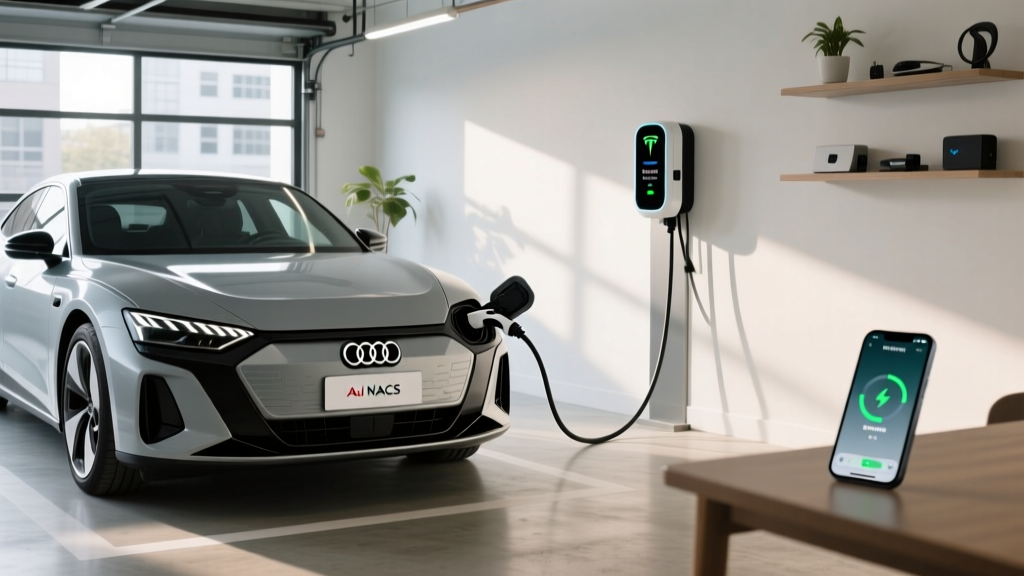
The short answer: yes — but with a critical asterisk. As of 2026, Audi's EV lineup (e-tron, Q4 e-tron, Q8 e-tron, and the upcoming A6 e-tron) ships with or supports the North American Charging Standard (NACS) connector, either natively or via a manufacturer-approved adapter. That means Audi owners can tap into Tesla's Supercharger network, the largest DC fast-charging system in North America with over 25,000 stalls. But public charging is only half the equation. To actually minimize charging costs and maximize convenience, most Audi EV owners need a solid home Level 2 setup. This guide covers exactly how Audi-Tesla Supercharger access works, what you'll pay per mile, and how to spec a home charger installation without surprises.
Charging Levels Explained: kW Speeds and Real-World Range Gains
Before we get into Supercharger specifics, let's lock down the three charging levels every EV owner must understand. Remember: kW (kilowatts) measures power — how fast energy flows into your battery. kWh (kilowatt-hours) measures energy — the battery's total capacity. Confusing them is the most common EV literacy mistake.
| Level | Voltage | Power (kW) | Miles of Range Added per Hour | Best For |
|---|---|---|---|---|
| Level 1 | 120V AC | 1.0–1.4 kW | 3–5 mi/hr | Overnight top-ups, PHEVs, emergencies |
| Level 2 | 240V AC | 3.3–19.2 kW | 12–70 mi/hr | Daily home charging, workplace |
| DC Fast Charge | 400–800V DC | 50–350 kW | 150–1,200+ mi/hr (peak) | Road trips, rapid top-ups |
For context, the Audi Q8 e-tron has a 114 kWh usable battery (106 kWh for the standard e-tron). Charging it from 10–80% on a 150 kW DC fast charger takes roughly 31 minutes under ideal conditions. On a Level 2 home charger at 11.5 kW, that same 10–80% session takes about 9–10 hours — perfectly aligned with overnight charging.
Audi on Tesla Superchargers: Connector Compatibility and Adapter Requirements
Tesla opened its Supercharger network to non-Tesla EVs through the NACS standard, but not every Supercharger stall works with every vehicle. Here's where things stand for Audi owners in 2026:
| Audi Model (Model Year) | Native Connector | Tesla Supercharger Access | Adapter Needed? |
|---|---|---|---|
| Q8 e-tron / e-tron GT (2025+) | NACS | Yes — direct plug-in | No |
| Q4 e-tron (2025+) | NACS | Yes — direct plug-in | No |
| Q8 e-tron (2023–2024) | CCS1 | Yes — via adapter | Audi-approved NACS-to-CCS1 adapter (~$200–$300) |
| e-tron (2019–2023) | CCS1 | Yes — via adapter | Audi-approved NACS-to-CCS1 adapter (~$200–$300) |
| A6 e-tron (2026, upcoming) | NACS (announced) | Yes — direct plug-in (expected) | No |
Important: Only use adapters approved or sold by Audi or certified by a recognized testing lab (UL, CSA). Third-party adapters lacking proper certification can void your battery warranty and pose fire risks. Tesla's own CCS-to-NACS adapter is designed for Teslas, not Audis — check Audi's official accessory catalog first.
On the Tesla app or in-car navigation, look for Supercharger stalls marked with a "NACS" icon or "Open to Non-Tesla EVs" label. Not every legacy stall supports non-Tesla vehicles yet, though Tesla has been retrofitting sites with Magic Dock adapters and upgrading to V4 stalls with longer cables to reach non-Tesla charge ports.
Home Level 2 Charger Installation: Costs, Electrical Requirements, and Panel Upgrades
Public Superchargers are essential for road trips, but the economics of EV ownership depend heavily on home charging. Here's what a Level 2 installation actually involves and costs.
Electrical Requirements
A typical home Level 2 charger requires a 240V dedicated circuit, similar to what an electric dryer or oven uses. The most common configurations:
- 40-amp circuit / 32-amp continuous draw — delivers up to 7.7 kW (most popular residential setup)
- 50-amp circuit / 40-amp continuous draw — delivers up to 9.6 kW (recommended for larger batteries like the Q8 e-tron)
- 60-amp circuit / 48-amp continuous draw — delivers up to 11.5 kW (requires robust panel capacity)
The National Electrical Code (NEC) requires that continuous loads (like EV charging) not exceed 80% of a circuit's rated amperage. So a 50A breaker supports a 40A charger — not 50A.
Panel Upgrade: The Hidden Cost
Many homes built before 2010 have 100-amp or 150-amp main service panels. Adding a 50-amp EV circuit to an already-loaded panel may require a panel upgrade to 200 amps, which is the single most expensive variable in a home charger install. Signs you might need one:
- Your panel is near capacity (electrician will run a load calculation)
- You have a Federal Pacific or Zinsco panel (known safety hazards, often required replacement by code)
- You already run electric heat, a hot tub, or double ovens on a 100A panel
| Component | Cost Range | Notes |
|---|---|---|
| Level 2 Charger Unit (hardwired or NEMA 14-50) | $350–$750 | Smart Wi-Fi chargers at higher end |
| Electrical Permit | $50–$250 | Varies by municipality |
| Electrician Labor (standard install, panel to garage <50 ft) | $500–$1,500 | Conduit run length drives cost |
| Electrical Panel Upgrade (if needed, 100A → 200A) | $1,500–$4,000 | Major cost driver for older homes |
| Utility Make-Ready Programs (rebate) | −$200 to −$1,500 | Some utilities cover conduit/wiring |
| Total (no panel upgrade) | $900–$2,500 | Typical suburban home |
| Total (with panel upgrade) | $2,400–$6,250 | Older homes, high-load panels |
Always hire a licensed electrician who will pull a permit. Unpermitted work can void home insurance claims and create fire hazards. The National Electrical Contractors Association maintains a directory of certified EV charger installers.
Charging Cost Per Mile: Home vs. Supercharger vs. Gas
This is where the EV ownership math either works or doesn't. Let's compare real cost-per-mile scenarios for an Audi Q8 e-tron (rated at approximately 2.0 kWh/mile or ~81 MPGe combined per fueleconomy.gov).
| Scenario | Cost per kWh or Gallon | Cost Per Mile |
|---|---|---|
| Home charging (off-peak utility rate) | $0.10/kWh | $0.020 |
| Home charging (standard residential rate) | $0.16/kWh | $0.032 |
| Tesla Supercharger (average US, 2026) | $0.30–$0.38/kWh | $0.060–$0.076 |
| Electrify America / other DC fast networks | $0.35–$0.48/kWh | $0.070–$0.096 |
| Comparable gas SUV (22 MPG combined, $3.40/gal) | $3.40/gallon | $0.155 |
At off-peak home rates, charging an Audi Q8 e-tron costs roughly one-eighth of fueling a comparable gas SUV. Even at Supercharger rates, you're paying less than half per mile. A driver covering 12,000 miles/year with 80% home charging and 20% Supercharger use would spend approximately $430/year on electricity versus $1,860 on gasoline — a savings of over $1,400 annually.
Pro tip: Many utilities offer time-of-use (TOU) plans with dramatically cheaper overnight rates. Schedule your Audi's charging to start at 11 PM or later via the myAudi app or your charger's built-in scheduling.
Best Level 2 Home Chargers for Audi EVs (2026 Picks)
These chargers are all compatible with NACS-equipped Audis (or CCS1 Audis using the vehicle's native connector). Each recommendation includes exact specs because vague "fast home charger" claims don't help you plan.
ChargePoint Home Flex
- Power: Up to 12 kW (50A circuit) / configurable down to 16A
- Connector: NACS (native), J1772 with adapter
- Cable: 23 ft
- Smart features: Wi-Fi, scheduling, Alexa, energy dashboard
- Price: ~$599
- Best for: Audi owners wanting flexible amperage tuning to match panel capacity
Tesla Wall Connector
- Power: Up to 11.5 kW (60A circuit) / 48A continuous
- Connector: NACS native
- Cable: 24 ft
- Smart features: Wi-Fi, OTA updates, load sharing (multiple units), power-sharing
- Price: ~$475
- Best for: NACS-native Audis (2025+), households with both Tesla and Audi EVs
Grizzl-E Smart
- Power: Up to 10 kW (50A circuit) / 40A continuous
- Connector: J1772 (NACS adapter available)
- Cable: 24 ft
- Smart features: Wi-Fi, OCPP protocol, extreme cold rated (-40°C)
- Price: ~$449
- Best for: Cold-climate owners, budget-conscious installs, outdoor mounting
For Audi Q8 e-tron owners with a 114 kWh battery, I recommend a 48A charger (11.5 kW) on a 60A circuit if your panel supports it. That delivers a full overnight 10–80% charge in approximately 7 hours. For the Q4 e-tron (82 kWh usable), even a 32A / 7.7 kW setup completes overnight easily.
Safety, Code, and Installation Best Practices
EV charging is a high-draw, long-duration electrical load — your charger may pull maximum current for 8+ hours straight. Safety isn't optional:
- Dedicated circuit: Your EV charger must have its own breaker — never share a circuit with other appliances.
- GFCI protection: NEC 2023 and later require GFCI (Ground Fault Circuit Interrupter) protection for outdoor receptacles and many indoor EV installations. Hardwired chargers often avoid this requirement and are generally more reliable than plug-in NEMA 14-50 setups.
- Outdoor rating: If your charger mounts outside, confirm it carries a NEMA 4 or IP65 rating for weather resistance.
- Hardwired vs. plug-in: Hardwired installations (no plug) allow higher amperage (48A+), avoid GFCI nuisance trips, and are generally preferred by electricians for circuits above 40A.
- Load management: If your panel is tight, consider a smart charger with load-sensing capability (e.g., ChargePoint Home Flex with CT clamps) that dynamically adjusts charge rate to avoid tripping the main breaker.
For authoritative installation guidance, reference the National Fire Protection Association's NEC resources and always verify local amendments with your city's building department.
Frequently Asked Questions
How much does it cost to install a home EV charger for my Audi?
A standard installation (no panel upgrade, run under 50 feet) costs between $900 and $2,500 including the charger unit, electrician labor, and permit. If your home needs a panel upgrade from 100A to 200A, add $1,500–$4,000. Get at least two quotes from licensed electricians and confirm they pull a permit.
How fast will each charging level add range to my Audi?
Level 1 (120V) adds roughly 3–5 miles per hour — essentially useless for a Q8 e-tron but workable for a PHEV. Level 2 at 11.5 kW adds about 23–25 miles per hour for a Q8 e-tron. DC fast charging at 150 kW (typical Supercharger V3) can add 150+ miles in 15 minutes at peak rate, tapering above 80% SoC.
Which connector does my Audi use, and will it fit a Tesla Supercharger?
2025+ Audi EVs ship with NACS connectors and plug directly into Tesla Superchargers. 2019–2024 models use CCS1 and require an Audi-approved NACS-to-CCS1 adapter (~$200–$300). Check your vehicle's charge port door or your myAudi app for your specific connector type.
How much does charging an Audi cost per mile versus gas?
Home charging at $0.16/kWh costs about $0.032/mile for a Q8 e-tron. Supercharger rates ($0.30–$0.38/kWh) bring that to $0.06–$0.076/mile. A comparable gas SUV at 22 MPG and $3.40/gallon costs $0.155/mile. EV charging is 50–87% cheaper per mile depending on where you plug in.
What electrical upgrades might I need for a home charger?
The most common upgrade is a panel capacity increase from 100A to 200A ($1,500–$4,000). Your electrician will run a load calculation per NEC Article 220 to determine if your existing panel can handle a new 40A–60A circuit. Older panels (Federal Pacific, Zinsco, certain Challenger models) may require full replacement regardless of capacity for safety reasons.
Can I charge my Audi at a Tesla Supercharger and still get warranty coverage?
Yes. Using a Tesla Supercharger with a NACS connector (native or via an Audi-approved adapter) does not void your Audi battery or powertrain warranty. Audi's 8-year/100,000-mile battery warranty covers capacity degradation below 70% regardless of which DC fast network you use. However, damage caused by uncertified third-party adapters may not be covered.
For current federal EV tax credit rules that may apply to home charger equipment (up to $1,000 under IRC §30C), consult the IRS Alternative Fuel Vehicle Refueling Property Credit page and a qualified tax professional, as income limits and census-tract eligibility requirements apply.