If you own an Audi e-tron, Q4 e-tron, or Q8 e-tron in 2026, the charging landscape has shifted dramatically in your favor. Tesla opened its Supercharger network to non-Tesla vehicles, and Audi has progressively rolled out NACS (North American Charging Standard) compatibility — either natively on newer models or via adapter. This guide breaks down exactly how Audi Tesla Supercharger access works today, what adapters you need, what speeds to expect, and how to set up optimal home charging.
How Audi Tesla Supercharger Access Works in 2026
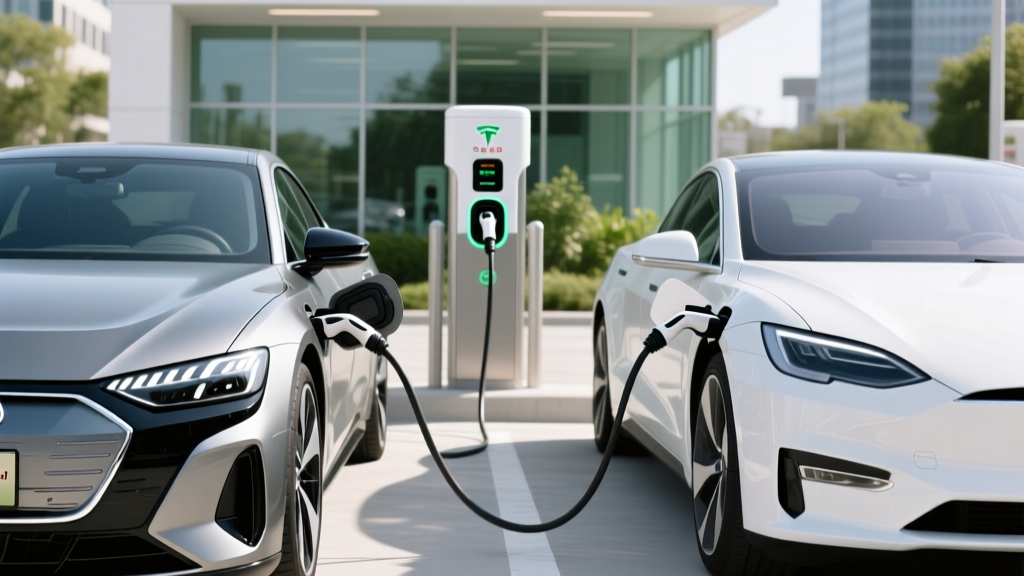
Starting in 2024, Audi joined the wave of automakers adopting Tesla's NACS connector for its EVs sold in North America. For the 2025 model year and beyond, several Audi EVs — including refreshed versions of the Q4 e-tron and the Q6 e-tron — ship with a native NACS charge port. Owners of earlier Audi EVs (2019–2024 e-tron GT, original Q4 e-tron, and the e-tron SUV) retain a CCS1 port and require a NACS-to-CCS adapter to access Tesla Superchargers.
Tesla's Supercharger network now includes over 28,000 stalls in North America, with a growing number designated for non-Tesla EVs through the "Open Supercharger" program. To use these, Audi owners need:
- A compatible NACS adapter (for CCS1-equipped Audis) or native NACS port (2025+ models)
- The Tesla app or a supported in-vehicle navigation system
- A Supercharger stall designated for non-Tesla use (marked in the Tesla app)
Charging Levels Explained: Speeds and Range Added
Understanding the three charging levels is essential whether you're plugging in at home or on the road. Remember: kW (kilowatts) measures power — how fast energy flows into your battery — while kWh (kilowatt-hours) measures energy capacity, the total amount your battery holds.
| Level | Voltage | Power (kW) | Miles of Range/Hour | Best For |
|---|---|---|---|---|
| Level 1 | 120V AC | 1.0–1.4 kW | 3–5 mi/hr | Overnight trickle, PHEVs, emergency top-ups |
| Level 2 | 240V AC | 7.2–19.2 kW | 25–65 mi/hr | Daily home charging, destination charging |
| DC Fast Charge | 400–800V DC | 50–350 kW | 150–1,000+ mi/hr (peak) | Road trips, highway corridors |
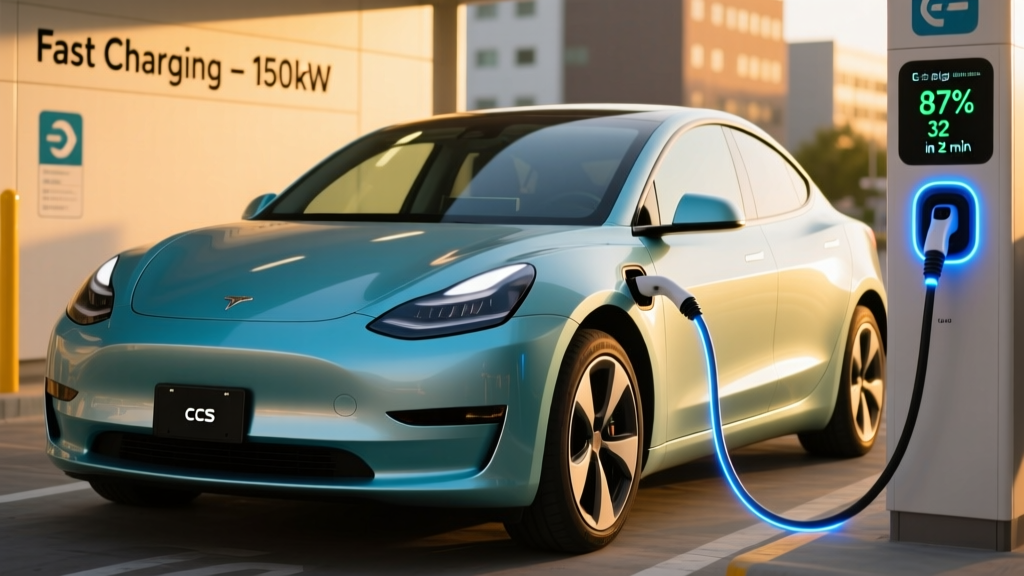
For an Audi Q4 e-tron with its 77 kWh (usable) battery, Level 2 at 11.5 kW adds roughly 37 miles of range per hour — a full overnight session from 10% to 100% takes about 7 hours. On a DC fast charger, the Q4 e-tron peaks at 175 kW, reaching 10–80% in approximately 28 minutes under ideal conditions. The Q8 e-tron, with its 89 kWh usable battery and 170 kW peak DC rate, takes about 31 minutes for the same 10–80% window.
Connector Compatibility: What Fits Your Audi
Audi's North American EV lineup spans two connector generations, and understanding which you have determines your adapter needs:
| Model | Model Years | Native Port | Tesla Supercharger Access | Adapter Needed |
|---|---|---|---|---|
| Audi e-tron / e-tron Sportback | 2019–2023 | CCS1 | Yes (Open Supercharger) | NACS-to-CCS1 adapter |
| Audi Q4 e-tron | 2022–2024 | CCS1 | Yes (Open Supercharger) | NACS-to-CCS1 adapter |
| Audi Q4 e-tron (refreshed) | 2025–2026 | NACS | Yes (native) | None |
| Audi Q8 e-tron | 2024–2026 | CCS1 / NACS (varies) | Yes | Check port; CCS1 needs adapter |
| Audi e-tron GT / RS e-tron GT | 2022–2026 | CCS1 | Yes (Open Supercharger) | NACS-to-CCS1 adapter |
| Audi Q6 e-tron | 2025–2026 | NACS | Yes (native) | None |
Audi has offered a complimentary NACS adapter to some model owners through its dealer network, similar to Ford and Rivian's adapter programs. Check with your local Audi dealer or the myAudi app for adapter availability specific to your VIN. Third-party adapters from brands like Lectron and A2Z are also available for $150–$250, but ensure any adapter is UL-listed or certified to SAE standards before purchasing.
Home Charger Installation: Costs, Requirements, and Upgrades
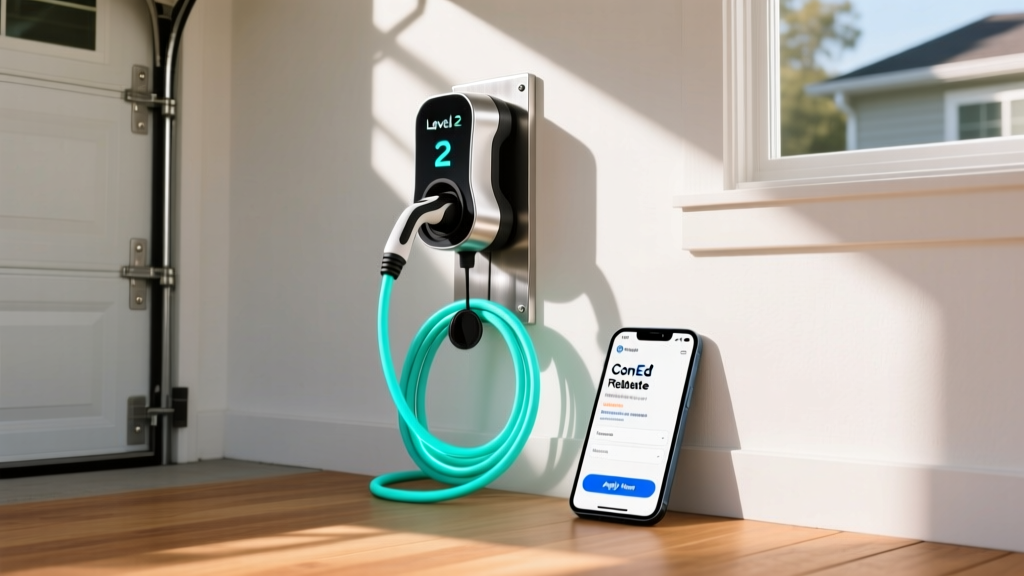
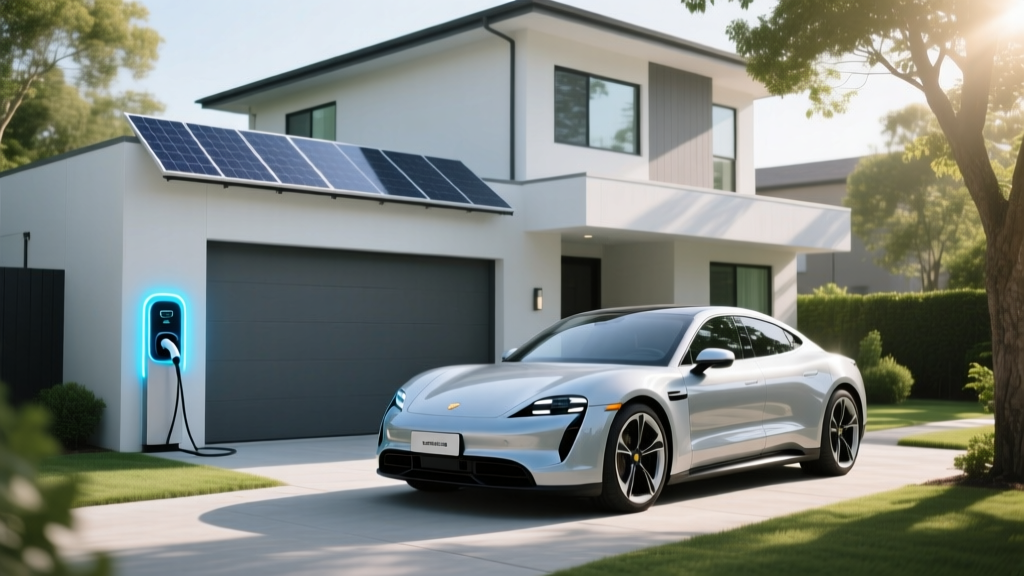
Public Supercharger access is valuable for road trips, but 80–90% of EV charging happens at home. Installing a dedicated Level 2 home charger is the single biggest quality-of-life upgrade an Audi EV owner can make. Here's what's involved.
Electrical Requirements
A typical Level 2 home charger for an Audi requires a 240V dedicated circuit on a double-pole breaker. The amperage depends on your charger:
- 32A circuit (40A breaker): Delivers 7.7 kW — sufficient for overnight charging of any Audi EV
- 40A circuit (50A breaker): Delivers 9.6 kW — faster fills, good for the Q8 e-tron's larger battery
- 48A circuit (60A breaker): Delivers 11.5 kW — matches the Q4 e-tron's maximum onboard AC acceptance rate
- 80A circuit (100A breaker): Delivers 19.2 kW — requires a 200A+ panel; overkill for most Audi EVs but future-proofs for higher-capacity vehicles
Per the National Electrical Code (NEC), a continuous load like an EV charger must be sized at 125% of the rated current — so a 48A charger requires a 60A breaker. Your electrician will verify this.
Panel Upgrade Reality
Many homes built before 2000 have 100A or 150A electrical panels. Adding a 60A EV circuit to a 100A panel that's already near capacity may require a panel upgrade to 200A. This is the single largest variable in installation cost and can add $1,500–$3,500 to the project. Homes with 200A panels and available breaker slots typically need no upgrade.
Your electrician will perform a load calculation (NEC Article 220) to determine whether your panel can handle the additional circuit. Some utilities offer time-of-use (TOU) panels or sub-panels specifically for EV charging, which can avoid a full upgrade.
| Component | Typical Range | Notes |
|---|---|---|
| Level 2 Charger (hardware) | $300–$750 | Varies by brand, power, smart features |
| Electrician labor | $500–$2,000 | Depends on run length, conduit, wall type |
| Electrical permit | $50–$200 | Required in most jurisdictions; varies by city/county |
| Panel upgrade (if needed) | $1,500–$3,500 | Only if existing panel lacks capacity |
| Conduit and wiring materials | $100–$400 | Longer runs from panel to garage increase cost |
| Total (no panel upgrade) | $950–$3,350 | Most homes with 200A panels fall in this range |
| Total (with panel upgrade) | $2,450–$6,850 | Older homes with 100A–150A panels |
The federal Residential Clean Energy Credit does not cover EV chargers as of 2026 (the Alternative Fuel Vehicle Refueling Property Credit under §30C expired for most residential installations). However, many states and utilities offer rebates of $250–$1,000 for Level 2 charger installation — check with your local utility and the AFDC incentive database for current programs in your area.
Cost to Charge: Home vs. Public vs. Gas
One of the strongest arguments for EV ownership is fuel cost savings, but the math depends heavily on where and when you charge. Here's a realistic breakdown for an Audi Q4 e-tron (2.8 mi/kWh efficiency, EPA combined):
| Scenario | Rate ($/kWh) | Cost for 200 mi | Cost Per Mile |
|---|---|---|---|
| Home (off-peak TOU rate) | $0.08–$0.12 | $5.70–$8.60 | $0.03–$0.04 |
| Home (standard residential) | $0.14–$0.18 | $10.00–$12.85 | $0.05–$0.06 |
| Public Level 2 (ChargePoint, etc.) | $0.25–$0.40 | $17.85–$28.55 | $0.09–$0.14 |
| Tesla Supercharger (Open, per kWh) | $0.28–$0.48 | $20.00–$34.30 | $0.10–$0.17 |
| Electrify America DC fast | $0.35–$0.55 | $25.00–$39.30 | $0.13–$0.20 |
| Gas equivalent (25 MPG, $3.40/gal) | — | $27.20 | $0.14 |
At home on off-peak rates, an Audi Q4 e-tron costs roughly $0.03–$0.04 per mile — about a quarter of what a comparable gas SUV costs. Even on Tesla Superchargers, you'll often pay less per mile than gas, though peak-rate DC fast charging in expensive markets (California, Northeast) can approach or exceed gas costs. The takeaway: home charging is where the economics shine, and public fast charging is a road-trip convenience premium.
Recommended Home Chargers for Audi EVs
Based on power output, reliability, smart features, and value, these are our top Level 2 home charger picks for Audi owners in 2026:
ChargePoint Home Flex
- Power: Up to 12 kW (50A), adjustable down to 16A
- Connector: J1772 (CCS1-compatible)
- Cable: 23 ft
- Smart features: Wi-Fi, app scheduling, TOU optimization, Alexa
- Price: ~$550
- Best for: Flexible amperage for older panels; great app
Tesla Wall Connector
- Power: Up to 11.5 kW (48A)
- Connector: NACS (native for 2025+ Audis; adapter needed for CCS1 Audis)
- Cable: 24 ft
- Smart features: Wi-Fi, OTA updates, power sharing between units
- Price: ~$420
- Best for: NACS-native Audis; best value at 48A
Grizzl-E Smart
- Power: Up to 9.6 kW (40A)
- Connector: J1772
- Cable: 24 ft
- Smart features: OCPP-compatible, app control, works with multiple networks
- Price: ~$450
- Best for: Extreme cold climates (-40°F rated); rugged outdoor use
Emporia Vue Level 2
- Power: Up to 11.5 kW (48A)
- Connector: J1772
- Cable: 24 ft
- Smart features: Energy monitoring integration, solar-aware charging, TOU scheduling
- Price: ~$400
- Best for: Homes with solar panels; detailed energy tracking
For CCS1-equipped Audis (2024 and earlier), any J1772 charger works natively — no adapter needed for home Level 2. The J1772-to-CCS1 connection is standard. For NACS-native 2025+ Audis, the Tesla Wall Connector offers the cleanest plug-and-charge experience. If you have a CCS1 Audi but want to use a Tesla Wall Connector, you'll need a J1772-to-NACS adapter (approximately $100–$180).
Safety, Code, and Installation Best Practices
EV charging draws significant continuous current for hours at a time. Proper installation isn't optional — it's a fire-safety requirement. Here's what your installation must include:
- Dedicated circuit: Your EV charger must have its own breaker — it cannot share a circuit with other appliances. NEC 625 governs EV charging installations.
- GFCI protection: The 2020 NEC and later require GFCI (Ground Fault Circuit Interrupter) protection for all 240V EV charging outlets in garages and outdoors. Many hardwired chargers have built-in GFCI; if using a NEMA 14-50 receptacle, your breaker must be GFCI-rated.
- Outdoor rating: If your charger is mounted outdoors, it must carry a NEMA 4 or IP65 weather rating. All chargers listed above meet this standard.
- Hardwired vs. plug: Hardwired installations (no plug) are generally preferred for 48A+ chargers because NEMA 14-50 receptacles are rated for 50A maximum and some jurisdictions restrict plug-in EV chargers above 40A. Hardwired also eliminates a common failure point.
- Permit and inspection: Most municipalities require an electrical permit for EV charger installation. Your electrician should pull this permit and schedule a post-installation inspection. Skipping the permit can void homeowner's insurance coverage for related incidents.
- Wire gauge: For a 60A breaker (48A continuous), 6 AWG copper wire is typically required; for a 50A breaker, 8 AWG may suffice. Your electrician will size wire per NEC Table 310.16 and the run length.
Frequently Asked Questions
Can I use a Tesla Supercharger with my 2022 Audi Q4 e-tron?
Yes, but you'll need a NACS-to-CCS1 adapter. Your 2022 Q4 e-tron has a CCS1 port. Purchase a UL-listed adapter, download the Tesla app, and look for Supercharger stalls designated for non-Tesla vehicles. Expect peak charging speeds around 135–150 kW (the Q4 e-tron's DC rate), not the 250 kW the V3 stall can deliver to a Tesla.
How much does it cost to install a home EV charger?
A typical Level 2 installation with no panel upgrade costs $950–$3,350 total (hardware, electrician, permit, materials). If your home needs a panel upgrade from 100A to 200A, add $1,500–$3,500, bringing the total to $2,450–$6,850. Get at least two quotes from licensed electricians and verify they pull a permit.
How fast will each charging level add range to my Audi?
Level 1 (120V) adds 3–5 miles per hour — too slow for daily use with a large battery. Level 2 (240V, 48A) adds 30–40 miles per hour for most Audi EVs. DC fast charging at 150+ kW adds 150+ miles in 10–15 minutes, but speed tapers significantly above 80% SoC.
Which connector does my Audi EV use?
2025 and newer Audi Q4 e-tron, Q6 e-tron, and select Q8 e-tron models use the NACS connector. Earlier models (2019–2024 e-tron, Q4 e-tron, e-tron GT) use CCS1. No Audi EV uses CHAdeMO. Check your charge port badge or the myAudi app for your specific vehicle.
How much does charging cost per mile vs. gas?
At home on off-peak rates, expect $0.03–$0.04 per mile — roughly 75% less than a 25 MPG gas SUV at $3.40/gallon ($0.14/mile). On public DC fast chargers at $0.35–$0.48/kWh, costs rise to $0.10–$0.17 per mile, which is comparable to or slightly above gas. Home charging is where EVs deliver maximum fuel savings.
What electrical upgrades might I need?
If your home has a 200A electrical panel with available breaker slots, you likely need no upgrade. Homes with 100A or 150A panels — common in pre-2000 construction — may need a panel upgrade ($1,500–$3,500). Your electrician will perform a load calculation to determine this. Some utilities offer "make-ready" programs that offset upgrade costs.
Does Audi's warranty cover charging-related issues?
Audi's EV battery warranty covers 8 years/100,000 miles with a minimum 70% capacity retention threshold. Charging port and onboard charger issues are covered under the 4-year/50,000-mile new vehicle limited warranty. Damage from improper home electrical installation or uncertified adapters is not covered — always use UL-listed equipment and licensed electricians.