Owning an Audi e-tron—whether the original 2019-2023 quattro, the refreshed 2024-2026 Q8 e-tron, or the sleek Q8 Sportback e-tron—demands a solid understanding of how charging choices directly impact your daily driving range. The EPA rates the 2026 Audi Q8 e-tron at up to 285 miles of range (Premium Plus trim with the 114 kWh gross / ~106 kWh usable battery), but real-world highway driving, cold weather, and charging habits will shift that number. This guide maps out exactly how to charge your e-tron at home, on the road, and what equipment you need to keep range loss to a minimum.
Understanding Audi e-tron Range: EPA vs. Real World
Real-World Highway (70 mph, moderate climate): ~240–260 miles
Cold-Weather Highway (below 32°F): ~200–230 miles
Efficiency: 77 MPGe combined (2.2 kWh/mile) per fueleconomy.gov
The e-tron's large battery pack gives it a comfortable buffer, but Audi's conservative usable-capacity strategy (roughly 93% of gross capacity) means you have about 106 kWh to work with. The heat pump, standard on recent models, helps preserve range in cold weather, but expect a 15–25% reduction below freezing—especially at highway speeds where aerodynamic drag dominates. City driving with regenerative braking recovers more energy, often pushing real-world range closer to the EPA sticker.
Charging Levels Explained: How Fast Will Each Add Range?
Before we break down speeds, let's clarify the single most common EV confusion: kW (kilowatts) measures power—how fast energy flows into your battery. kWh (kilowatt-hours) measures energy—the total capacity of your battery, like gallons in a fuel tank. Your Q8 e-tron's battery holds roughly 106 kWh of usable energy. A charger delivering 11 kW adds 11 kWh of energy per hour.
| Charging Level | Voltage / Amperage | Power (kW) | Miles Added per Hour | Best For |
|---|---|---|---|---|
| Level 1 (Standard Outlet) | 120V / 12A | ~1.4 kW | ~3–4 mi/hr | Overnight trickle, emergencies |
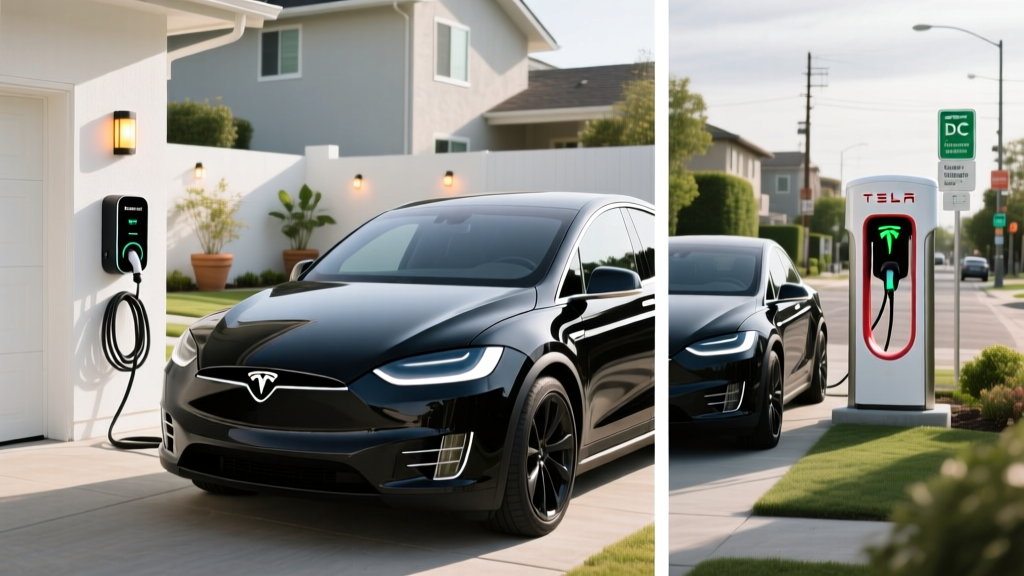
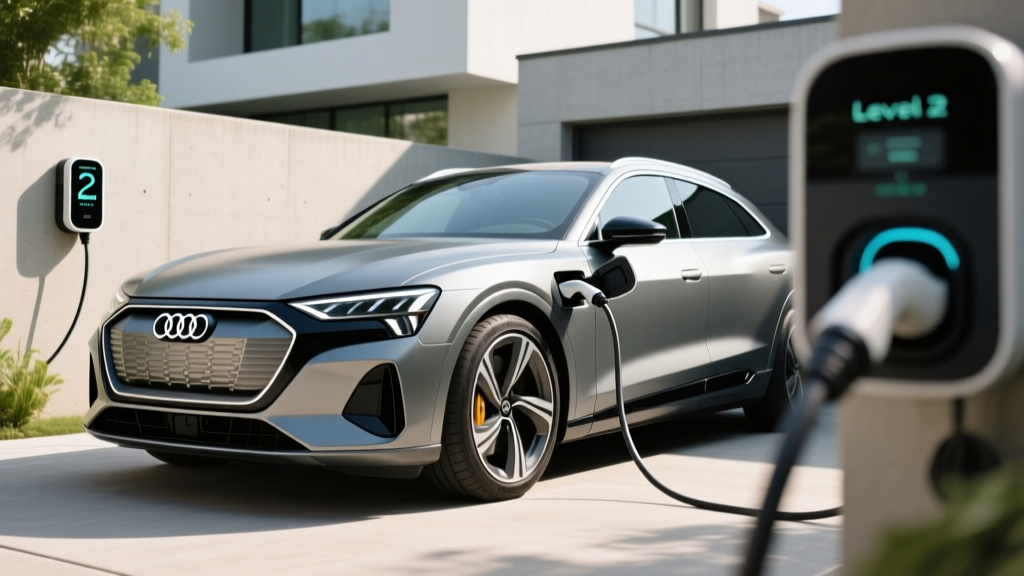
| Level 2 (Home / Workplace) | 240V / 40–48A | 9.6–11.5 kW | ~25–31 mi/hr | Daily charging, full overnight refill |
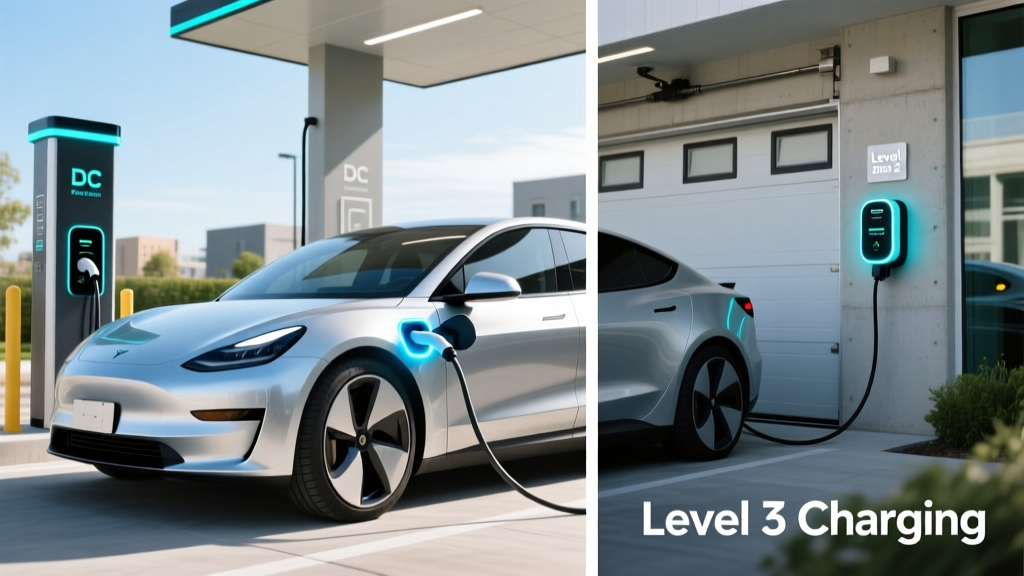
| DC Fast Charging | 400V+ DC | Up to 170 kW (Q8 e-tron peak) | ~150–200 mi in 10 min (peak) | Road trips, quick top-ups |
For the Audi Q8 e-tron's 106 kWh battery, a full Level 2 charge from 10% to 100% takes roughly 10–11 hours at 11.5 kW. On a DC fast charger, the e-tron peaks at 170 kW and can charge from 10–80% in approximately 31 minutes—though the charge curve tapers significantly above 80%, so plan to unplug at 80% on road trips to save time.
Home Charger Installation: Costs, Electrical Requirements & Panel Upgrades
A Level 2 home charger is the backbone of convenient e-tron ownership. Here's what the installation actually involves and what it costs.
Electrical Requirements for the Audi e-tron
The e-tron's onboard charger accepts up to 11.5 kW on Level 2 (240V, 48A). To deliver this, you need a dedicated 60-amp circuit (EVSEs must be derated to 80% of breaker capacity for continuous loads, so a 48A charger requires a 60A breaker). If your electrical panel is already near capacity—common in homes built before 2000—you may need a panel upgrade from 100A to 200A service, which adds significantly to cost.
| Item | Typical Cost Range | Notes |
|---|---|---|
| Level 2 EVSE Equipment (48A, hardwired) | $500–$800 | Smart chargers with Wi-Fi cost more |
| Electrician Labor (run 60A circuit, ~50 ft) | $800–$2,000 | Varies by distance from panel, wall/ceiling runs |
| Permit & Inspection | $100–$300 | Required by most jurisdictions; varies by locality |
| Panel Upgrade (if needed, 100A → 200A) | $1,500–$3,500 | Not always required; have electrician assess load calc |
| Total (no panel upgrade) | $1,400–$3,100 | Most common scenario for modern homes |
| Total (with panel upgrade) | $2,900–$6,600 | Older homes with limited panel capacity |
Always hire a licensed electrician who will pull a permit and perform a load calculation on your panel. Skipping the permit may void your homeowner's insurance coverage for electrical fires. The National Electrical Code (NEC) Article 625 governs EV charging installations, and your local inspector will verify compliance.
Connector Compatibility: NACS, CCS, and Your Audi e-tron
Audi has been transitioning its lineup to the North American Charging Standard (NACS), the Tesla-designed connector now adopted by most major automakers. Here's where the e-tron stands:
| Model Year | Native Connector | DC Fast Network Access | Adapter Needed? |
|---|---|---|---|
| 2019–2023 e-tron / e-tron Sportback | CCS1 | Electrify America, EVgo, ChargePoint | CCS-to-NACS adapter for Tesla Superchargers (check Audi compatibility list) |
| 2024–2026 Q8 e-tron / Q8 Sportback e-tron | NACS (2025+ models) | Tesla Supercharger network + all CCS networks via adapter | NACS-to-CCS adapter may be needed for older Electrify America stations |
If you own a 2024 or earlier CCS-equipped e-tron, Audi and third-party manufacturers offer CCS-to-NACS adapters (typically $150–$250) that unlock access to Tesla's Supercharger network—currently the largest and most reliable DC fast-charging network in the US. Confirm adapter compatibility with your specific model year on Audi's official EV page before purchasing.
Cost to Charge: Home vs. Public vs. Gas Comparison
Charging cost is where e-tron ownership delivers measurable savings—but only if you charge smart. Here's a realistic breakdown using national averages and the Q8 e-tron's 2.2 kWh/mile efficiency.
| Charging Scenario | Cost per kWh | Cost per Mile | Cost for 285-Mile Full "Tank" |
|---|---|---|---|
| Home (off-peak utility rate) | $0.12–$0.16 | $0.026–$0.035 | $7.50–$10.00 |
| Home (standard residential rate) | $0.16–$0.22 | $0.035–$0.048 | $10.00–$13.75 |
| Public Level 2 (workplace / retail) | $0.20–$0.35 | $0.044–$0.077 | $12.50–$22.00 |
| DC Fast Charging (Electrify America / EVgo) | $0.35–$0.55 | $0.077–$0.121 | $22.00–$34.50 |
| Gasoline Equivalent (25 MPG combined, $3.40/gal) | — | $0.136 | $38.76 |
Home off-peak charging delivers the strongest economics: roughly 75–80% cheaper per mile than a comparable gas SUV. Even at peak DC fast-charging rates, the e-tron is generally cheaper to "fuel" than a 25 MPG gasoline vehicle. Many utilities offer time-of-use (TOU) plans that drop rates to $0.08–$0.10/kWh overnight—schedule your e-tron to charge between midnight and 5 AM to capture these rates.
Recommended Home Chargers for the Audi e-tron
Below are three Level 2 chargers that pair well with the Q8 e-tron's 11.5 kW onboard charger capability. All support the amperage needed for a full-speed charge.
ChargePoint Home Flex (NACS or CCS)
- Power Output: Up to 11.5 kW (240V / 48A), adjustable down to 16A
- Cable Length: 23 feet
- Smart Features: Wi-Fi, app scheduling, Alexa integration, energy reports
- Connector: Available in NACS or J1772/CCS; NACS version native for 2025+ e-trons
- Price: ~$599–$699
- Why It Works: Flexible amperage lets you match your panel capacity; robust app with detailed session data
Wallbox Pulsar Max
- Power Output: Up to 11.5 kW (240V / 48A)
- Cable Length: 25 feet
- Smart Features: Wi-Fi + Bluetooth, app control, solar integration, load balancing
- Connector: J1772 (CCS compatible); NACS version available
- Price: ~$549–$649
- Why It Works: Compact form factor, excellent for tight garages; load-balancing feature shares power with other circuits
Emporia Level 2 EV Charger
- Power Output: Up to 11.5 kW (240V / 48A)
- Cable Length: 24 feet
- Smart Features: Wi-Fi, app scheduling, integrates with Emporia home energy monitors
- Connector: J1772 / NACS options
- Price: ~$399–$499
- Why It Works: Best value pick; pairs with Emporia Vue energy monitor to track whole-home + EV energy use in one dashboard
For hardwired installations (recommended for 48A+ chargers), all three units eliminate the need for a NEMA 14-50 outlet, which is limited to 40A continuous draw. Hardwiring also avoids the GFCI breaker requirement that NEC 2023+ imposes on plug-in EVSE outlets—a $60–$120 savings on breakers alone.
Safety, Code Compliance & Installation Best Practices
EV charging pulls sustained high current for hours—unlike any other household appliance. Follow these non-negotiable safety rules:
- Dedicated Circuit: Your EVSE must be on its own dedicated breaker—never share a circuit with appliances, outlets, or lighting.
- GFCI Protection: NEC 2023 and later requires GFCI protection for plug-in (NEMA outlet) EVSE installations. Hardwired units are exempt in most jurisdictions. Your electrician will specify the correct breaker type.
- Outdoor Rating: If your charger is mounted outside, ensure the EVSE carries a NEMA 4 or NEMA 4X rating for weather resistance. All three chargers above carry outdoor ratings.
- Cable Management: Use a holster or cable retractor to keep cords off the ground—prevents trip hazards and cord damage from vehicles rolling over them.
- Load Calculation: Before installation, your electrician must perform an NEC Article 220 load calculation to confirm your panel can handle the additional 48A continuous draw alongside existing loads (HVAC, electric range, dryer).
Audi e-tron Charging FAQ
How much does it cost to install a home EV charger for my Audi e-tron?
Expect $1,400–$3,100 for a standard Level 2 installation (equipment + electrician + permit) if your electrical panel has capacity. If you need a panel upgrade from 100A to 200A service, total costs can reach $2,900–$6,600. Always get a load calculation from a licensed electrician first.
How fast will each charging level add range to my e-tron?
Level 1 (120V outlet) adds about 3–4 miles per hour—too slow for daily use with the e-tron's large battery. Level 2 (240V, 48A) adds roughly 25–31 miles per hour, fully recharging overnight. DC fast charging at 170 kW peak can add 150+ miles in about 10 minutes under ideal conditions, but the charge curve tapers significantly above 80% SoC.
Which connector and charger is compatible with my Audi e-tron?
Model years 2019–2024 use the CCS1 connector natively. The 2025+ Q8 e-tron has transitioned to NACS. If you have a CCS-equipped e-tron, a CCS-to-NACS adapter ($150–$250) unlocks Tesla Supercharger access. For home Level 2 charging, any J1772 or NACS charger will work with the appropriate cable or adapter.
How much does charging cost per mile compared to gas?
Home off-peak charging costs roughly $0.03–$0.04 per mile, compared to $0.14 per mile for a 25 MPG gas SUV at $3.40/gallon. Even DC fast charging at $0.48/kWh averages about $0.11 per mile—still below the gasoline equivalent. Annual fuel savings of $800–$1,500 are typical for drivers covering 12,000 miles per year.
What electrical upgrades might I need for a home charger?
The most common upgrade is a panel capacity increase from 100A to 200A service, required when your existing panel is already near its load limit. Other potential upgrades include replacing a Federal Pacific or Zinsco panel (known safety hazards that insurers may flag), adding a sub-panel in a detached garage, or upgrading the service drop from your utility. Your electrician's load calculation will identify exactly what's needed.
Does DC fast charging degrade my e-tron's battery?
Occasional DC fast charging has minimal impact on battery health. Audi's battery management system includes active liquid cooling and a conservative usable-capacity buffer (roughly 7% top and bottom buffer) that protects long-term State of Health (SoH). Data from older e-tron models shows approximately 8–12% degradation over 100,000 miles with mixed charging. For daily use, Level 2 home charging is ideal; reserve DC fast charging for road trips. Audi's high-voltage battery warranty covers 8 years / 100,000 miles with a minimum 70% capacity retention threshold.