From the 3.0T Supercharged V6 to Electric: What Audi A7 Owners Need to Know
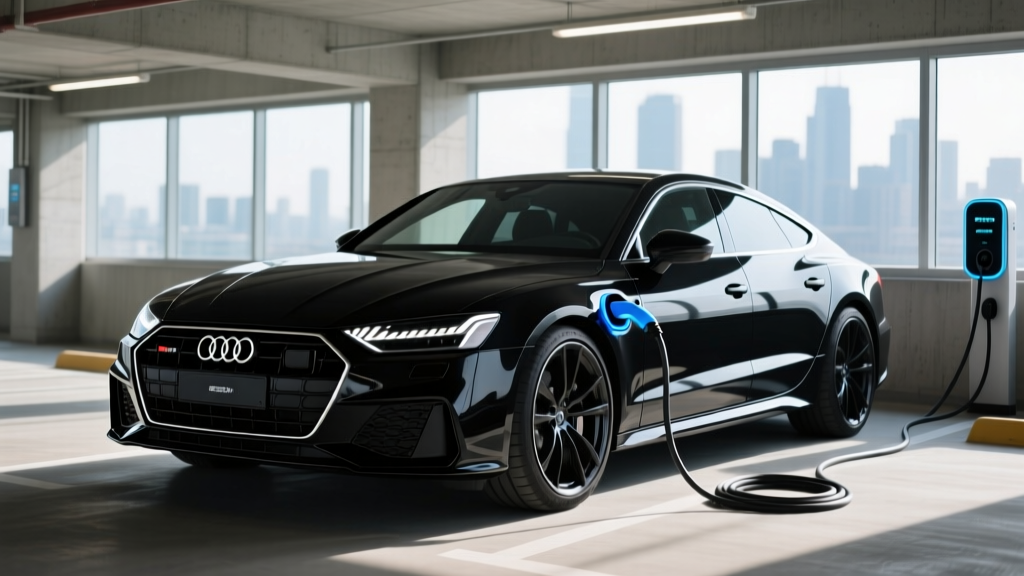
If you've owned or driven an Audi A7 with the 3.0-liter supercharged V6 (the 333 hp mill found in 2012–2017 models, or the revised 340 hp version through 2018), you already understand effortless torque, refined cruising, and a premium cabin. As that supercharged A7 ages past its powertrain warranty window, many owners are cross-shopping Audi's current electrified lineup — the 2026 Audi A6 e-tron, the A7 Sportback 55 TFSI e (PHEV), or the fully electric e-tron GT — and wondering how charging logistics compare to simply filling a 19.8-gallon tank.
This guide is built for A7 supercharged owners making the transition. We'll map every charging level in exact kW and miles-per-hour, break down real home installation costs including panel upgrades, compare connector standards, and run the cost-per-mile math against the 3.0T's real-world 22 MPG combined.
EPA combined: 22 MPG (20 city / 30 hwy for the 2017 3.0T). Real-world mixed driving: ~20–21 MPG. Tank range: ~400 miles. Refuel cost at $3.50/gal: $0.16/mile. We'll use this as the comparison benchmark throughout.
Charging Levels Explained: Speeds in kW and Miles Added Per Hour
EV charging is measured in kW (kilowatts), which is power — the rate of energy flow. The battery stores energy in kWh (kilowatt-hours). Think of kW as how fast water flows from a hose, and kWh as the size of the bucket. Never confuse the two.
| Level | Voltage / Amps | Power (kW) | Miles Added/Hour | Best Use Case |
|---|---|---|---|---|
| Level 1 | 120V / 12A | 1.4 kW | 3–5 mi/hr | Overnight trickle, PHEVs, emergencies |
| Level 2 (Home) | 240V / 32–48A | 7.7–11.5 kW | 25–44 mi/hr | Daily home charging, primary method |
| Level 2 (Public) | 208–240V / 40–80A | 7.2–19.2 kW | 25–70 mi/hr | Workplace, shopping, destination |
| DC Fast Charging | 400–800V DC | 50–350 kW | 150–1,000+ mi/hr (peak) | Road trips, rapid top-ups |
Real-world context for A7 upgraders: A Level 2 home charger at 11.5 kW (48A on a 60A circuit) will fully replenish a 2026 Audi A6 e-tron's 94.5 kWh usable battery from 10% to 100% in roughly 9 hours — plug in at 10 PM, wake up full. On a 350 kW DC fast charger, that same battery goes from 10–80% in approximately 21 minutes (Audi quotes 270 kW peak charge rate on the A6 e-tron's 800-volt architecture).
DC fast charging does not sustain peak speed. The charge curve tapers significantly above 80% state of charge to protect battery health. A session from 10–80% at a 350 kW station might average 180–200 kW sustained, not the full 350 kW. This is physics, not a defect.
Home Charger Installation: Electrical Requirements, Costs, and Panel Upgrades
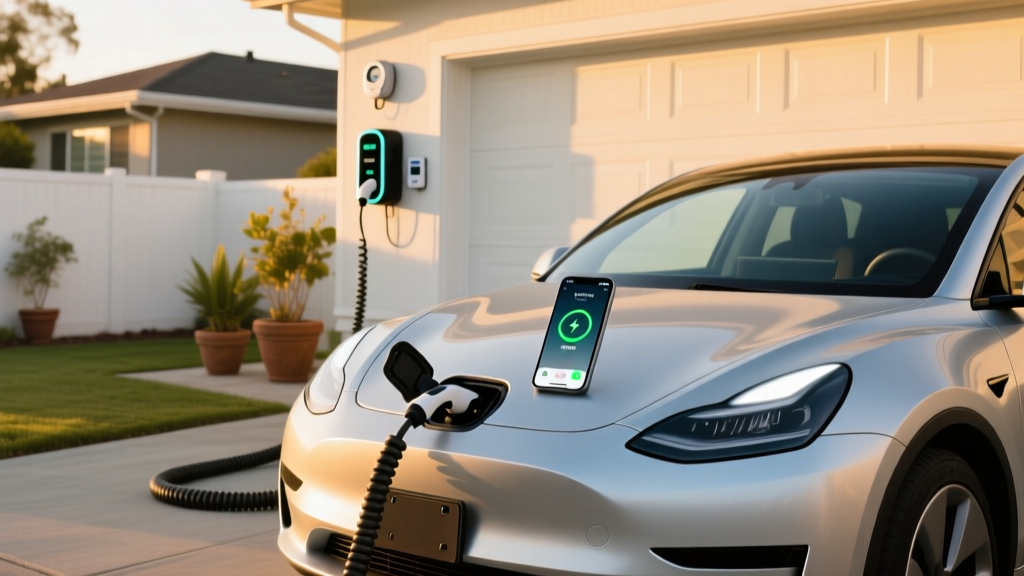
This is where most first-time EV buyers encounter surprises. A Level 2 home charger isn't just a plug-and-play appliance — it requires a dedicated circuit, proper wire gauge, and often an electrical panel assessment.
Electrical Requirements for Level 2 Charging
- Circuit: Dedicated 240V circuit, typically 40A, 50A, or 60A breaker
- Wire gauge: 6 AWG copper for 50A; 4 AWG for 60A (longer runs may require thicker gauge)
- Continuous load rule: NEC requires the charger's continuous draw to be no more than 80% of the breaker rating — a 48A charger needs a 60A breaker
- GFCI protection: NEC 2020 and later require GFCI breakers for EV receptacles (NEMA 14-50); hardwired units may be exempt depending on local code
- Outdoor rating: If mounting outside, the charger and any receptacle must carry a NEMA 4 or NEMA 4X weatherproof rating
Panel Upgrade Reality
If your home has a 100A main panel — common in homes built before the 1990s — adding a 60A EV circuit may exceed available capacity, especially if you're also running electric HVAC, a dryer, and an electric range. A panel upgrade to 200A costs $1,500–$3,500 depending on your utility, trenching requirements, and local labor rates. Some homeowners opt for a smart load-management device (like the Emporia VUE with EV charger integration) to share capacity between the EV circuit and other loads, avoiding a full panel upgrade.
| Item | Low End | High End | Notes |
|---|---|---|---|
| Level 2 Charger (Equipment) | $400 | $750 | 40A–48A Wi-Fi-enabled units |
| Electrician Labor (standard install) | $600 | $1,800 | Depends on run length, conduit, wall type |
| Permit & Inspection | $50 | $300 | Varies by municipality |
| Panel Upgrade (if needed) | $1,500 | $3,500 | 100A → 200A service upgrade |
| Total (no panel upgrade) | $1,050 | $2,850 | Most common scenario |
| Total (with panel upgrade) | $2,550 | $6,350 | Older homes, high-load panels |
Always get a licensed electrician to perform a load calculation before committing to a circuit size. The IRS Residential Clean Energy Credit does not cover EV charger equipment for most taxpayers post-2022; however, the Alternative Fuel Vehicle Refueling Property Credit (§30C) was reinstated through 2032 and can cover up to 30% of home charger equipment and installation costs (capped at $1,000), subject to census-tract eligibility. Check irs.gov for current qualification maps.
Connector Compatibility: NACS, CCS1, and What Audi Uses in 2026
The North American charging connector landscape shifted dramatically between 2023 and 2025. Here's where Audi stands for the 2026 model year:
| Connector | Standard | Audi 2026 Models | Public Network Access |
|---|---|---|---|
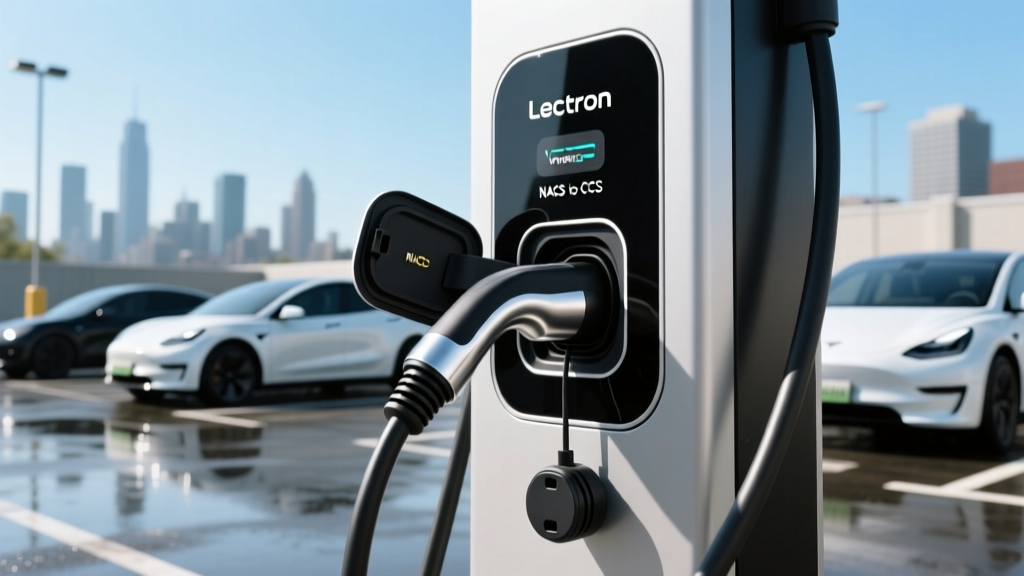
| NACS (Tesla-style) | SAE J3400 | A6 e-tron, Q6 e-tron, e-tron GT (2025+) | Tesla Supercharger network, Electrify America (newer stalls), EVgo |
| CCS1 | SAE J1772 Combo | 2022–2024 e-tron, e-tron GT (pre-2025) | Electrify America, ChargePoint, EVgo, most non-Tesla networks |
| CHAdeMO | IEC 62196 Type 2 | Not used by Audi | Nissan Leaf, older Mitsubishi; being phased out |
| J1772 (AC only) | SAE J1772 | All Audis (via adapter or native) | Level 2 public stations universally |
If you own a 2022–2024 Audi e-tron or e-tron GT with CCS1: You can access the Tesla Supercharger network using a Tesla CCS Adapter (approximately $250 from Tesla). This opens roughly 30,000+ additional fast-charging stalls. However, verify your specific model's firmware supports Supercharger handshake — Audi issued OTA updates enabling compatibility for most 2022+ CCS1 vehicles.
If you're buying a 2026 Audi A6 e-tron or Q6 e-tron: These ship with the NACS port natively. You can charge at Tesla Superchargers without an adapter. For older CCS1 public stations, Audi includes a NACS-to-CCS adapter in the vehicle's charge kit.
Cost Per Mile: EV Charging vs. Your Supercharged A7's Gas Bill
The 3.0T supercharged V6 is a magnificent engine, but it's not cheap to feed. Let's run the numbers against current Audi EVs using real-world electricity pricing.
| Scenario | Cost/kWh or $/Gal | Cost Per Mile | Annual (12,000 mi) |
|---|---|---|---|
| Audi A7 3.0T Supercharged (21 MPG real) | $3.50/gal | $0.167 | $2,004 |
| Audi A6 e-tron — Home Off-Peak (0.30 kWh/mi) | $0.13/kWh | $0.039 | $468 |
| Audi A6 e-tron — Home Peak | $0.22/kWh | $0.066 | $792 |
| Audi A6 e-tron — Public Level 2 | $0.25/kWh | $0.075 | $900 |
| Audi A6 e-tron — DC Fast (EA/EVgo) | $0.43/kWh | $0.129 | $1,548 |
Key takeaway: Home charging at off-peak rates saves roughly $1,500/year versus the supercharged A7. Even exclusive DC fast charging — the most expensive EV scenario — still undercuts the A7 by approximately $450/year. The break-even is overwhelming unless you can never charge at home and rely entirely on the most expensive public DC chargers.
The A6 e-tron achieves approximately 3.2 mi/kWh (≈107 MPGe combined) per fueleconomy.gov. Real-world highway driving at 75+ MPH drops this to ~2.8 mi/kWh (~93 MPGe), and cold weather (below 30°F) can reduce range by 15–25% due to cabin heating and battery chemistry limitations.
Charging Time Examples: What to Expect with Common Battery Sizes
Here are charge times for current Audi EVs at different charging levels:
- 2026 Audi A6 e-tron (94.5 kWh usable, NMC):
- Level 1 (1.4 kW): 10–80% in ~52 hours — impractical for daily use
- Level 2 (11.5 kW, 48A): 10–80% in ~6.5 hours
- DC Fast (270 kW peak): 10–80% in ~21 minutes
- 2026 Audi Q6 e-tron (94.5 kWh usable, NMC):
- Level 2 (11.5 kW): 10–80% in ~6.5 hours
- DC Fast (270 kW peak): 10–80% in ~21 minutes
- 2026 Audi e-tron GT (93.4 kWh usable, 800V):
- Level 2 (11 kW onboard): 10–80% in ~7 hours
- DC Fast (270 kW peak): 10–80% in ~22 minutes
- Audi A7 55 TFSI e (PHEV, 14.1 kWh usable):
- Level 1 (1.4 kW): 0–100% in ~10 hours
- Level 2 (7.7 kW): 0–100% in ~2 hours
- No DC fast charging (PHEV limitation)
Recommended Home Charging Equipment for 2026
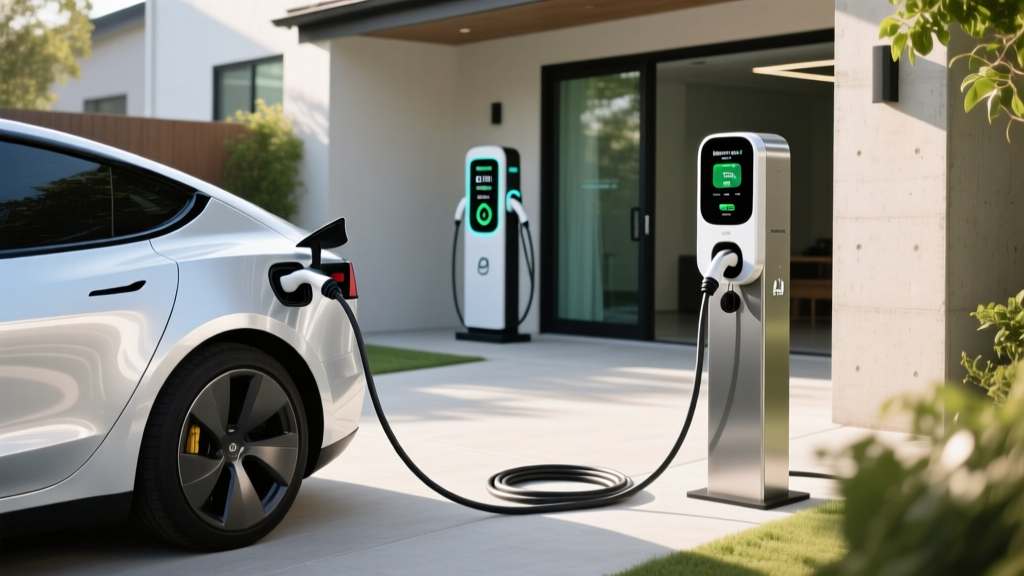
These are the Level 2 chargers we recommend based on reliability, smart features, and build quality — all compatible with current Audi EVs:
Emporia Level 2 Smart Charger
- Power: 48A / 11.5 kW (hardwired) or 40A / 9.6 kW (NEMA 14-50 plug)
- Connector: J1772 (CCS1 vehicles) — NACS version available
- Cable: 24 ft
- Smart features: Wi-Fi, energy monitoring, solar integration, load management, scheduling via app
- Price: $399–$449
- Best for: Budget-conscious buyers who want full energy visibility and solar pairing
ChargePoint Home Flex
- Power: Configurable 16A–50A (up to 12 kW hardwired)
- Connector: J1772 (CCS1) — NACS adapter available
- Cable: 23 ft
- Smart features: Wi-Fi, Alexa, scheduling, ChargePoint network integration, amperage adjustable via app
- Price: $549–$699
- Best for: Flexibility — adjust amperage to match your panel capacity without swapping hardware
Wall Connector (Tesla, 3rd Gen)
- Power: 48A / 11.5 kW (hardwired, 60A circuit required)
- Connector: NACS (native for 2025+ Audi EVs); CCS1 vehicles need adapter
- Cable: 24 ft
- Smart features: Wi-Fi, OTA updates, power sharing (link multiple units on one circuit), load management
- Price: $420
- Best for: 2026 Audi A6 e-tron / Q6 e-tron / e-tron GT owners with native NACS ports
Grizzl-E Smart
- Power: 40A / 9.6 kW (NEMA 14-50) or 48A / 11.5 kW (hardwired)
- Connector: J1772 (CCS1)
- Cable: 24 ft
- Smart features: Wi-Fi, OCPP compatibility, works with third-party energy management
- Price: $449–$549
- Best for: Cold-climate durability (rated to -40°F), rugged outdoor installations
Safety, Code, and Permit Considerations
EV charging involves sustained high-current draw — far more demanding on your wiring than intermittent appliances like a dryer. Here's what to insist on:
- Dedicated circuit: Your EV charger must have its own breaker — never share a circuit with other loads
- Hardwired vs. plug-in: Hardwired units eliminate the NEMA 14-50 receptacle failure point (receptacles can overheat under sustained 40A+ loads); plug-in offers portability but requires a GFCI breaker per NEC 2020+
- Permit required: Nearly all jurisdictions require an electrical permit for EV charger installation — skipping this can void home insurance claims related to electrical fires
- Inspection: A post-install inspection verifies wire gauge, breaker sizing, grounding, and torque specs on connections
- Outdoor installations: Use NEMA 4X-rated enclosures and UV-rated cable; ensure the charger itself carries an outdoor rating (IP65 or better)
- Utility notification: Some utilities require notification before adding an EV load — and offer time-of-use (TOU) rate plans that make off-peak charging dramatically cheaper
Never use an extension cord for EV charging. Never daisy-chain power strips. And if an electrician suggests a 14-50 receptacle on a 50A breaker for a 48A continuous load — find a different electrician. The 80% rule is not optional.
Frequently Asked Questions
How much does it cost to install a home EV charger?
A standard Level 2 home installation (40A–48A charger, 240V circuit, reasonable wire run) costs $1,050–$2,850 including equipment, electrician labor, and permits. If your home requires a panel upgrade from 100A to 200A service, add $1,500–$3,500. The federal §30C Alternative Fuel Vehicle Refueling Property Credit may cover up to 30% of equipment and installation (capped at $1,000) if you're in a qualifying census tract.
How fast will each charging level add range?
Level 1 (120V) adds 3–5 miles per hour — fine for a PHEV with a small battery, useless for a 94.5 kWh BEV. Level 2 (240V, 48A) adds roughly 35–44 miles per hour depending on vehicle efficiency. DC fast charging at 270 kW can add approximately 180+ miles in 10 minutes at peak rate, though the curve tapers significantly above 80% SoC.
Which connector and charger is compatible with my Audi EV?
For 2025 and newer Audi EVs (A6 e-tron, Q6 e-tron, refreshed e-tron GT), the native connector is NACS. For 2022–2024 models, it's CCS1. Audi includes appropriate adapters in the vehicle charge kit. For home charging, a NACS Wall Connector or a J1772 charger with a NACS adapter will cover either generation.
How much does charging cost per mile vs. my supercharged A7?
At home off-peak rates ($0.13/kWh), an Audi A6 e-tron costs approximately $0.039/mile — versus $0.167/mile for a supercharged A7 at $3.50/gallon. That's a 77% reduction in fuel cost. Even exclusive DC fast charging ($0.43/kWh) comes in at $0.129/mile, still 23% cheaper than gasoline.
What electrical upgrades might I need?
The most common upgrade is a panel capacity increase from 100A to 200A ($1,500–$3,500). Homes with 200A panels usually have sufficient capacity for a 60A EV circuit. If your panel is at capacity but you want to avoid an upgrade, consider a smart load-management device that dynamically reduces charger amperage when other major loads (HVAC, dryer) activate — this can save thousands while keeping your charging speed near-maximum most of the time.
Does cold weather affect charging speed?
Yes, significantly. Lithium-ion batteries charge slower when cold. If you arrive at a DC fast charger with a cold-soaked battery (below 40°F), expect peak charge rates to be 30–50% lower until the thermal management system warms the pack. Always use your Audi's preconditioning feature — navigating to a charger in the infotainment system triggers battery preheating, which can shave 5–10 minutes off your 10–80% charge time in winter. Per NHTSA and fueleconomy.gov, cold weather can also reduce total range by 15–30% depending on cabin heating demand and driving conditions.
Choose the A7 55 TFSI e (PHEV) if you lack home charging access or frequently drive 400+ mile trips without stopping — you keep the gas engine as a safety net while gaining ~30 miles of electric commuting.
Choose the A6 e-tron (BEV) if you can install a Level 2 home charger, drive under 300 miles/day, and want the lowest operating cost plus 300+ miles of EPA range.
Keep the supercharged A7 running if your annual mileage is under 8,000 miles, you already own it outright, and the fuel-cost savings won't offset a new vehicle payment.