Why Audi A6 3.0T Supercharged Owners Are Wiring for EV Charging
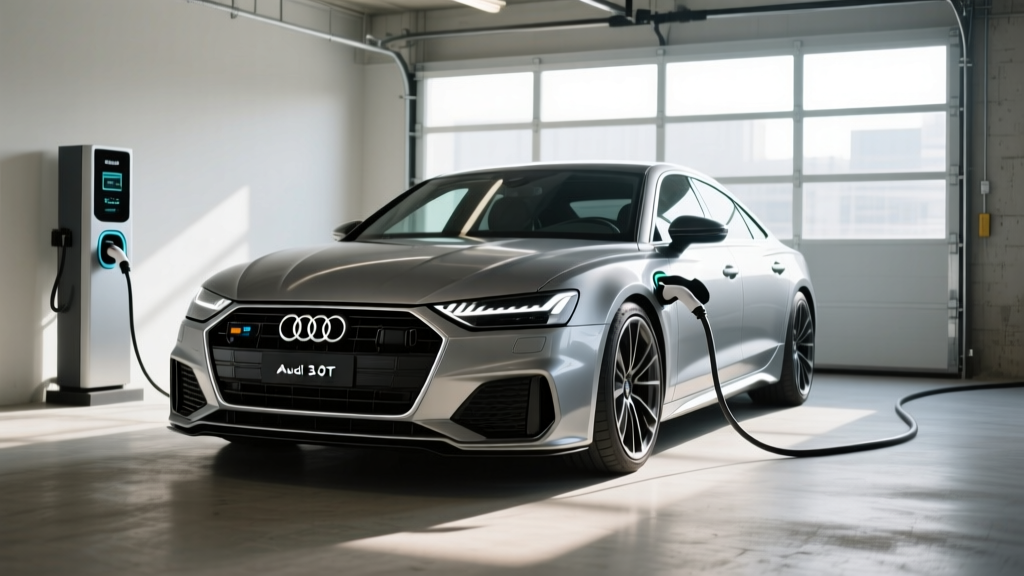
If you've spent years enjoying the 333-hp supercharged V6 in an Audi A6 3.0T (produced roughly 2009–2018), you already know what a refined, tech-forward daily driver feels like. But with repair bills climbing on aging supercharger belts, timing-chain tensioners, and carbon-fouled direct-injection engines, many A6 owners are eyeing the electric exit ramp. The question isn't just "which EV?" — it's "can my house actually charge one?"
This guide is built for that exact transition. We'll cover what Level 1, Level 2, and DC Fast Charging actually deliver in kW (power) and miles per hour, what your electrical panel needs to support a home charger, which connector your next EV will use, and what you'll actually spend per mile compared to the 3.0T's ~22 MPG combined thirst for premium.
Charging Levels Explained: kW, Miles Per Hour, and Real-World Times
The single most important EV-literacy point: kW (kilowatts) measures power — how fast energy flows into the battery. kWh (kilowatt-hours) measures energy — how much the battery holds. Think of kW as the width of the hose, and kWh as the size of the bucket.
| Level | Voltage | Power (kW) | Miles Added/Hour | Best For |
|---|---|---|---|---|
| Level 1 | 120V AC | 1.0–1.4 kW | 3–5 mi/hr | Overnight top-ups, PHEVs |
| Level 2 | 240V AC | 7.2–19.2 kW | 25–65 mi/hr | Daily home charging |
| DC Fast | 400–800V DC | 50–350 kW | 180–1,200+ mi/hr (peak) | Road trips, rapid top-ups |
For context, a 2026 Audi Q8 e-tron (106 kWh usable, ~285 mi EPA) charging at a 48A Level 2 station (11.5 kW) adds roughly 35 miles of range per hour, taking about 9 hours from 10–100%. At a 150 kW DC fast charger, that same SUV can go 10–80% in approximately 30 minutes, though the charge curve tapers sharply above 80% to protect the NMC battery chemistry.
Home Charger Installation: What Your Panel Actually Needs
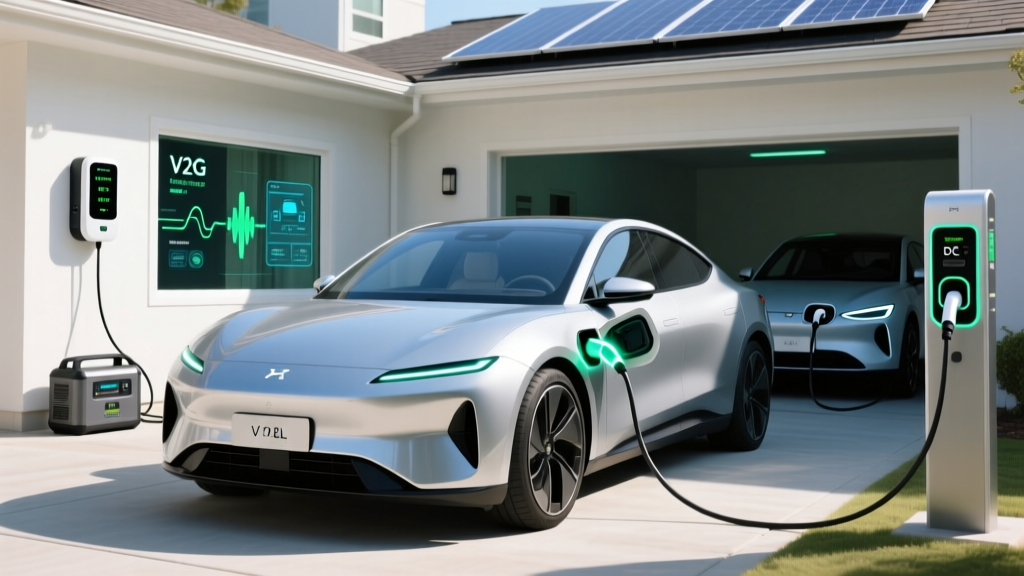
A Level 2 home charger is the backbone of EV ownership — roughly 80–90% of all charging happens at home, according to the U.S. Department of Energy. But bolting one to the wall isn't plug-and-play. Here's what's required:
- Circuit: A dedicated 240V circuit, typically 40A to 60A (a 48A charger requires a 60A breaker per NEC 80% continuous-load rule).
- Panel capacity: Most modern 200A panels can accommodate an EV circuit. Older homes with 100A service — common in houses built before the 1990s — often need a panel upgrade ($1,500–$3,000) or a load-management device like the Emporia Smart Load Management center (~$250).
- Permit: Nearly all jurisdictions require an electrical permit ($50–$250) and a final inspection.
- Wiring: 6 AWG copper for 48A circuits; 4 AWG for 60A. Run length matters — longer runs from the panel increase material cost.
| Item | Low End | High End | Notes |
|---|---|---|---|
| Level 2 Charger (hardware) | $350 | $750 | 32A–48A, NACS or J1772 |
| Electrician labor | $500 | $2,000 | Depends on panel proximity & wall type |
| Electrical permit | $50 | $250 | Varies by municipality |
| Panel upgrade (if needed) | $1,500 | $3,500 | 100A → 200A service upgrade |
| Total (no panel upgrade) | $900 | $3,000 | Typical scenario |
| Total (with panel upgrade) | $2,400 | $6,500 | Older homes |
The IRS Residential Clean Energy Credit (§25D) covers 30% of home charging equipment and installation costs (up to $1,000 annually) through 2032. Consult a tax professional for eligibility.
Connector Compatibility: NACS, CCS1, and CHAdeMO in 2026
The connector landscape has consolidated dramatically. As of 2026, the Tesla-designed NACS (North American Charging Standard) is the dominant connector for new vehicles, adopted by Ford, GM, Rivian, Hyundai/Kia, BMW, and Volvo. Audi's 2025+ e-tron models still ship with CCS1, though Audi has signaled NACS adoption for upcoming models. CHAdeMO is effectively legacy, limited to older Nissan Leafs and Mitsubishi Outlander PHEVs.
| Connector | Brands Using It | Notes |
|---|---|---|
| NACS (Tesla) | Tesla, Ford, GM, Rivian, Hyundai, Kia, BMW, Volvo, Mercedes (2025+) | Access to Tesla Supercharger network (20,000+ stalls) |
| CCS1 | Audi, Porsche, VW (current gen), Stellantis, legacy BMW | Electrify America, EVgo, ChargePoint networks |
| CHAdeMO | Nissan Leaf (older), Mitsubishi Outlander PHEV | Declining infrastructure; avoid for new purchases |
If you buy a CCS1-equipped Audi Q8 e-tron but want Supercharger access, a CCS-to-NACS adapter (officially sold by Tesla for ~$250, or by Lectron/Autel for ~$150–$200) unlocks the network. Always verify adapter firmware compatibility with your specific model year.
Cost to Charge Per Mile vs. the Audi A6 3.0T Supercharged
The 3.0T supercharged A6 averaged roughly 22 MPG combined on premium fuel. At $4.20/gallon (2026 national premium average), that's $0.19 per mile in fuel alone. Here's how EV charging compares across scenarios, using a mid-size EV averaging 3.0 miles/kWh (≈ 33 kWh/100mi):
| Scenario | Rate | Cost/Mile | Annual Savings (12k mi) |
|---|---|---|---|
| Home (off-peak utility rate) | $0.10/kWh | $0.033 | $1,884 vs. A6 |
| Home (avg. residential rate) | $0.16/kWh | $0.053 | $1,644 vs. A6 |
| Public Level 2 | $0.35/kWh | $0.117 | $876 vs. A6 |
| DC Fast Charging (EA/EVgo) | $0.48/kWh | $0.160 | $360 vs. A6 |
| Audi A6 3.0T (premium fuel) | $4.20/gal, 22 MPG | $0.191 | — |
Even exclusively using expensive DC fast chargers, the EV is cheaper per mile. For home-charging-dominant owners (the vast majority), annual fuel savings of $1,600–$1,900 are realistic, based on EPA fuel economy data.
Charging Time Examples: 10–80% for Common Battery Sizes
Charging time depends on battery size (kWh), peak charge rate (kW), and the vehicle's charge curve — the rate at which charging slows as the battery fills to prevent overheating and degradation. Here are realistic 10–80% times for popular 2026 EVs:
- Tesla Model Y (75 kWh, LFP, 250 kW peak): ~22 minutes at a V3 Supercharger
- Hyundai Ioniq 5 (77.4 kWh, NMC, 235 kW peak, 800V architecture): ~18 minutes at a 350 kW station
- Audi Q8 e-tron (106 kWh, NMC, 170 kW peak): ~31 minutes at a 150+ kW station
- Ford F-150 Lightning (131 kWh extended, NMC, 150 kW peak): ~41 minutes at a 150 kW station
- Chevrolet Equinox EV (85 kWh, NMC, 150 kW peak): ~28 minutes at a 150+ kW station
Notice that a larger battery doesn't always mean longer charge times — peak kW matters enormously. The Ioniq 5's 800V architecture sustains high charge rates longer than 400V competitors, which is why it punches above its battery-size weight.
Equipment Recommendations: 2026 Home Charger Picks
Emporia Vue Level 2 (48A / 11.5 kW)
- Power: 48A continuous (requires 60A breaker)
- Connector: J1772 (NACS version available)
- Cable: 24 ft
- Smart features: Wi-Fi, app scheduling, solar integration, load management
- Price: ~$399
Best for: Budget-conscious buyers who want smart load balancing without panel upgrades.
ChargePoint Home Flex (50A / 12 kW)
- Power: Configurable 16A–50A
- Connector: J1772 or NACS
- Cable: 23 ft
- Smart features: Alexa integration, amperage adjustment, energy tracking
- Price: ~$549
Best for: Flexibility — adjust amperage to match your panel's capacity without rewiring.
Tesla Wall Connector (48A / 11.5 kW)
- Power: 48A continuous (60A breaker)
- Connector: NACS native
- Cable: 24 ft
- Smart features: Wi-Fi, OTA updates, power-sharing for multi-unit installs
- Price: ~$420
Best for: Tesla and NACS-adopted EV owners who want seamless Supercharger-ecosystem integration.
Safety, Code, and the Panel-Upgrade Gotcha
Per the 2023 NEC (adopted by most states as of 2026), all outdoor EV receptacles require GFCI protection, and EVSE (Electric Vehicle Supply Equipment) must be on a dedicated circuit — no sharing with dryers or HVAC. Hardwired installations (preferred over plug-in NEMA 14-50 outlets) eliminate the GFCI nuisance-trip issue that plagued early plug-in setups.
The biggest surprise cost for A6 upgraders in older homes: the panel upgrade. If your home has 100A service, an electrician's load calculation may show insufficient headroom for a 60A EV circuit alongside existing loads. Options include:
- Full panel upgrade to 200A ($1,500–$3,500) — the permanent fix.
- Smart load management — devices like the Emporia SLM or Span panel dynamically shed EV charging when other loads spike, avoiding the upgrade entirely.
- Lower-amperage charger — a 32A (7.7 kW) unit requires only a 40A breaker and works on most 100A panels. You sacrifice ~8 miles/hour of charge speed but save thousands.
Always hire a licensed electrician who pulls a permit. Unpermitted EV charger installs can void homeowner's insurance claims and create fire liability.
Frequently Asked Questions
How much does it cost to install a home EV charger?
Between $900 and $3,000 for a typical Level 2 install (hardware + electrician + permit) in a home with adequate panel capacity. If your panel needs upgrading from 100A to 200A, add $1,500–$3,500. The 30% federal tax credit under §25D can offset up to $1,000 of this cost.
How fast will each charging level add range?
Level 1 (120V): 3–5 miles per hour. Level 2 (240V, 48A): 25–45 miles per hour depending on vehicle efficiency. DC Fast Charging: 180–1,200+ miles per hour at peak, though sessions are typically measured in 10–80% minutes (18–41 min for most 2026 EVs).
Which connector/charger is compatible with my EV?
Check your vehicle's charge port. Most 2026 non-Tesla EVs use either NACS or CCS1. Tesla uses NACS exclusively. If your EV has CCS1 (like current Audis), a CCS-to-NACS adapter (~$150–$250) unlocks Tesla Superchargers. CHAdeMO is legacy and should be avoided for new purchases.
How much does charging cost per mile vs. gas?
Home charging at average residential rates ($0.16/kWh) costs roughly $0.05/mile for a typical EV. The Audi A6 3.0T Supercharged on premium fuel at 22 MPG costs about $0.19/mile. That's a $1,600+ annual savings for a 12,000-mile driver charging primarily at home.
What electrical upgrades might I need?
A dedicated 240V/60A circuit is standard for a 48A Level 2 charger. Homes with 100A panels may need a service upgrade to 200A ($1,500–$3,500), a smart load-management system (~$250–$500), or a lower-amperage charger (32A on a 40A breaker) to avoid overloading existing service. An electrician's load calculation will determine which path is required.