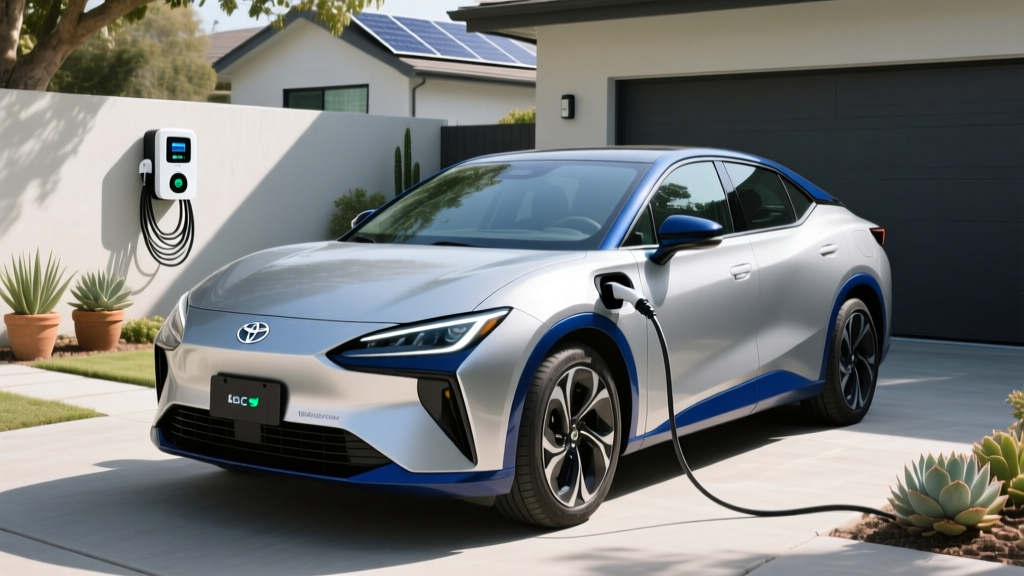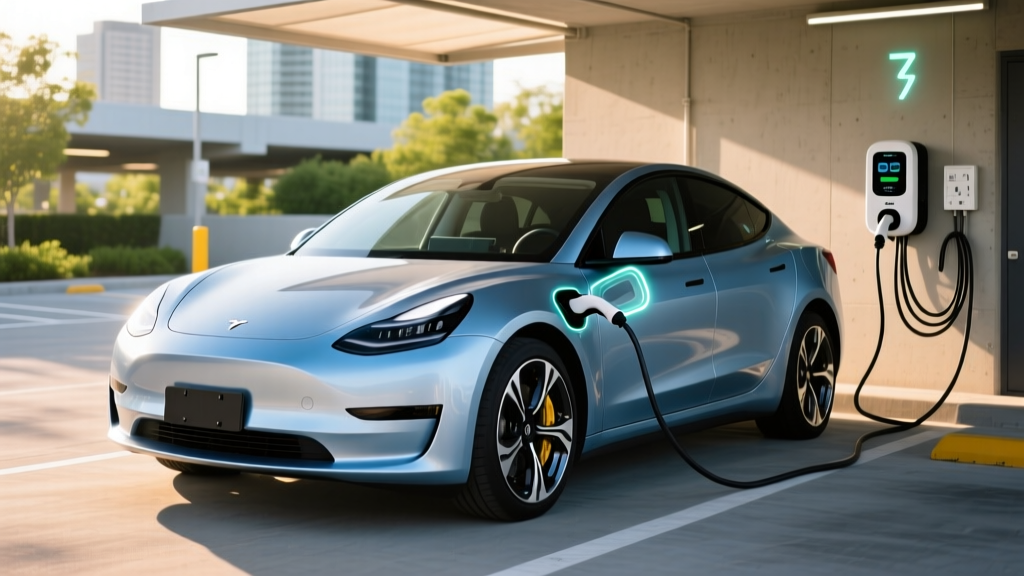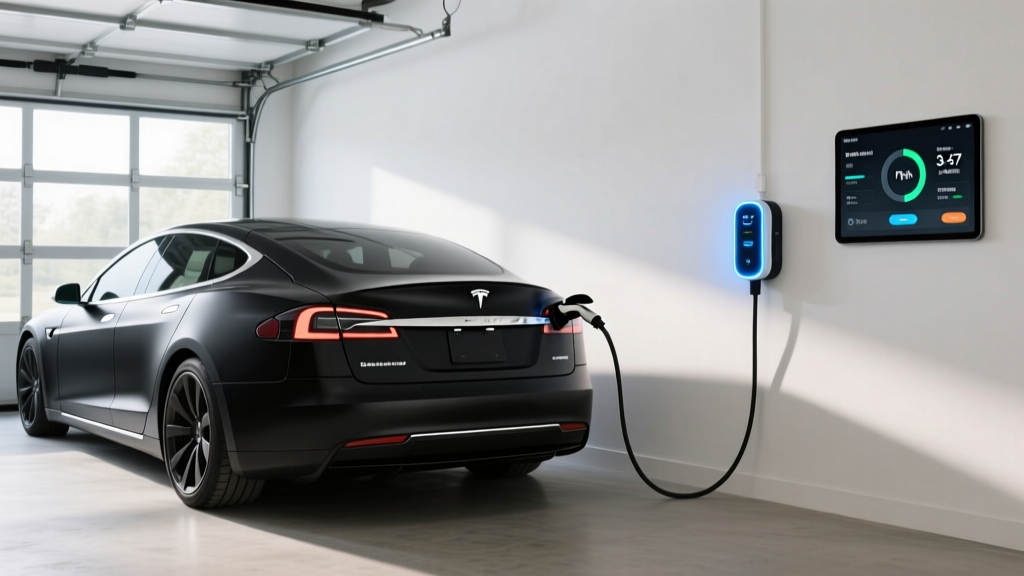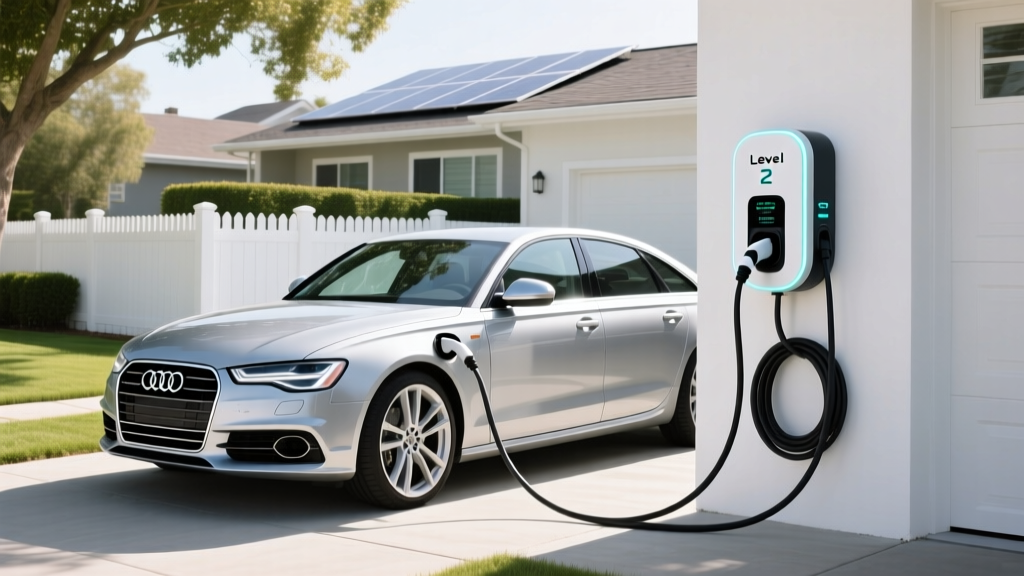
Why Audi A6 3.0T Owners Are Looking at EVs (And What Charging Really Involves)
The 2013 Audi A6 3.0 Supercharged is a benchmark sport sedan: 310 hp, a smooth ZF 8-speed, Quattro AWD, and a combined EPA rating around 22 mpg. But at 22 mpg with premium fuel hovering near $4.50/gallon in many US markets, annual fuel bills can easily exceed $2,500 for a 12,000-mile driver. That math is pushing many A6 3.0T owners toward electrified replacements — whether a Tesla Model S, Audi e-tron GT, BMW i5, or Mercedes EQE.
The single biggest ownership shift isn't driving dynamics or infotainment. It's fueling. Instead of a 3-minute gas stop, you'll need a home charging strategy and a working knowledge of public networks. This guide is built specifically for buyers stepping out of a 2013 Audi A6 3.0 Supercharged into a modern EV, with hard numbers on installation costs, speeds, connectors, and per-mile economics.
Charging Levels Explained: kW, Miles Per Hour, and Real Timelines
Before buying a charger, understand the three charging tiers. Power is measured in kW (kilowatts) — that's the rate of energy flow. Energy stored in the battery is measured in kWh (kilowatt-hours) — think of it as the "gallons" equivalent. Confusing the two is the most common EV mistake. A 48-amp Level 2 charger delivers up to 11.5 kW of power; a Tesla Model S has a 100 kWh battery.
| Level | Voltage / Amps | Power (kW) | Miles Added / Hour | Typical Use |
|---|---|---|---|---|
| Level 1 | 120V / 12A | ~1.4 kW | 3–5 mi/hr | Overnight trickle, PHEVs, emergencies |
| Level 2 (home) | 240V / 32–48A | 7.7–11.5 kW | 25–44 mi/hr | Daily home charging, primary strategy |
| DC Fast (Level 3) | 400–800V DC | 50–350 kW | 180–1,000+ mi/hr (peak) | Road trips, 10–80% in 18–35 min |
Real-world context for an A6 upgrader: A BMW i5 eDrive40 with a 84.3 kWh (usable) battery and EPA range of 295 miles will fully replenish overnight on a 48-amp Level 2 in roughly 9 hours. That same car on a 200 kW DC fast charger will add 10–80% in about 27 minutes — enough for a highway break. A plug-in hybrid like the Audi A6 TFSI e (if you're considering a bridge option) has only a ~17.9 kWh battery, so Level 2 refills it in under 3 hours.
How Much Does Home EV Charger Installation Actually Cost?
This is where most first-time EV buyers get surprised. The charger hardware itself is often $400–$700, but installation is the variable. Homes built after 2000 with a 200-amp panel and a nearby garage outlet may need only a simple 240V circuit run. A 2013-era or older home (or one with a 100-amp panel) may need an upgrade.
| Component | Low-End | High-End | Notes |
|---|---|---|---|
| Level 2 charger (hardwired, 48A) | $400 | $750 | ChargePoint Home Flex, WallConnector, Emporia |
| Electrician labor (240V/50A circuit) | $400 | $1,500 | Depends on run distance from panel |
| Permit / inspection | $50 | $250 | Varies by municipality |
| Panel upgrade (100A → 200A) | $1,500 | $4,500 | Needed on older homes; major variable |
| Conduit, wiring, disconnect | $150 | $600 | Long outdoor runs add cost |
| Total (no panel upgrade) | $1,000 | $3,100 | Most suburban garages land here |
| Total (with panel upgrade) | $2,500 | $7,600 | Older homes, heavy concurrent loads |
The IRS §25C residential clean energy credit can cover up to 30% of home charging equipment and installation costs (capped at $1,000/year through 2032). Separately, the §30D new EV credit is up to $7,500 at point of sale — but that's on the vehicle, not the charger, and has MSRP, income, and battery-sourcing requirements per IRS guidance. Always confirm eligibility with a tax professional.
Which Connector Does Your Next EV Need? NACS, CCS1, CHAdeMO
As of 2025–2026, the North American connector landscape has consolidated sharply around NACS (Tesla's North American Charging Standard). Ford, GM, Rivian, Hyundai, Kia, BMW, Mercedes, and Volvo have all adopted NACS on new models. CCS1 remains on many 2023–2024 vehicles still on the road. CHAdeMO is essentially legacy (Nissan Leaf being the main holdout, itself discontinued in the US).
| Connector | Brands / Vehicles | Adapter Needed? |
|---|---|---|
| NACS (native) | Tesla (all), Ford F-150 Lightning/Mach-E (2025+), GM Ultium (2025+), Hyundai/Kia (2025+), Rivian (2025+), BMW, Mercedes | No — direct Supercharger access |
| CCS1 | 2023–2024 Ford/GM/Hyundai/Kia/VW ID.4, Audi e-tron (pre-2025), Porsche Taycan (pre-2025) | CCS→NACS adapter (~$200) for Superchargers |
| CHAdeMO | Nissan Leaf (discontinued in US), Mitsubishi Outlander PHEV (older) | Rare public stations; plan around CCS/NACS |
For the A6 3.0T upgrader: If you're moving to the Audi e-tron GT (which retains CCS1 on most model years through 2024 and is transitioning to NACS), budget for a CCS→NACS adapter so you can use Tesla Superchargers on road trips. If you're going Tesla Model S or BMW i5 (2025+), NACS is native.
Cost Per Mile: EV Charging vs. Premium Gasoline
This is where the math tips decisively. Your 2013 A6 3.0 Supercharged requires premium fuel (91+ octane). At $4.50/gal and 22 mpg combined, you're paying about $0.205 per mile in fuel alone.
| Scenario | Rate | Cost per Mile (250 Wh/mi EV) | vs. A6 3.0T |
|---|---|---|---|
| Home off-peak (utility time-of-use) | $0.11/kWh | $0.028 | 86% cheaper |
| Home average US residential | $0.17/kWh | $0.043 | 79% cheaper |
| Public Level 2 (ChargePoint, EVgo L2) | $0.35/kWh | $0.088 | 57% cheaper |
| DC fast charging (Electrify America, Tesla) | $0.48/kWh | $0.120 | 41% cheaper |
| 2013 Audi A6 3.0T premium gas | $4.50/gal @ 22 mpg | $0.205 | Baseline |
A 12,000-mile driver primarily charging at home at $0.17/kWh spends roughly $510/year on electricity versus $2,460/year on premium gas. That's $1,950 in annual fuel savings — enough to pay back a Level 2 installation in under two years, and a strong argument for anyone keeping their A6 on the road out of inertia rather than economics.
Real Charging Times: 10–80% for Common Battery Sizes
DC fast charging follows a curve, not a constant. Peak kW (say, 270 kW on an 800V Hyundai Ioniq 5) is only sustained between ~10% and ~45% state of charge. Above 80%, the curve tapers sharply to protect battery chemistry — which is why you'll rarely see EV drivers charging past 80% on road trips.
- Tesla Model S (100 kWh usable, 250 kW peak): 10–80% in ~27 min on V3 Supercharger
- BMW i5 eDrive40 (84.3 kWh, 205 kW peak): 10–80% in ~30 min on 200+ kW DC
- Hyundai Ioniq 5 (77.4 kWh, 240 kW peak, 800V): 10–80% in ~18 min
- Ford F-150 Lightning Extended Range (131 kWh, 150 kW peak): 10–80% in ~41 min
- Audi e-tron GT (93.4 kWh gross / 85 usable, 270 kW peak, 800V): 10–80% in ~22 min
- Porsche Taycan (93.4 kWh, 270 kW peak, 800V): 10–80% in ~22 min
For daily driving, Level 2 at home is the primary strategy — you plug in when you get home and wake up to a full battery. DC fast charging is for road trips only, and preconditioning the battery (most EVs do this automatically when you navigate to a charger) is essential to hit advertised peak rates, especially in cold weather.
Equipment Picks: Level 2 Chargers Worth Installing
Tesla Wall Connector (Gen 3)
- Power: Up to 11.5 kW (48A)
- Connector: NACS native
- Cable: 24 ft
- Smart features: Wi-Fi, OTA updates, power sharing between units, load management
- Price: ~$475
- Best for: Tesla owners; CCS vehicles via adapter
ChargePoint Home Flex
- Power: Up to 12 kW (50A, configurable down)
- Connector: NACS (2025+), CCS1 on older stock
- Cable: 23 ft
- Smart features: App scheduling, utility integration, Alexa
- Price: ~$599
- Best for: Multi-EV households, non-Tesla brands
Emporia Vue EV Charger
- Power: Up to 11.5 kW (48A)
- Connector: NACS (J3400)
- Cable: 24 ft
- Smart features: Whole-home energy monitoring, solar integration, load balancing
- Price: ~$449
- Best for: Solar owners, budget-conscious installs
Grizzl-E Smart
- Power: Up to 10 kW (40A)
- Connector: NACS / CCS1 options
- Cable: 24 ft
- Smart features: OCPP, basic app, rugged -40°F outdoor rating
- Price: ~$549
- Best for: Cold climates, outdoor/driveway installs
All of these require a dedicated 240V circuit (typically 60A breaker for 48A continuous load per NEC 80% rule). Hardwired units are preferred over plug-in NEMA 14-50 receptacles for reliability and code compliance in many jurisdictions.
Safety, Code, and the Panel-Upgrade Reality
National Electrical Code (NEC) and most local jurisdictions require:
- Dedicated circuit: Your Level 2 charger must be on its own breaker — no sharing with dryer, range, or HVAC
- GFCI protection: Required for outdoor receptacles (NEC 2020+); hardwired units may be exempt in some jurisdictions
- Outdoor rating: NEMA 4 or IP65-rated enclosures for any exterior install
- Load calculation: An electrician will perform an NEC Article 220 load calculation to confirm your panel can handle the added 40–50A continuous draw
- Permit and inspection: Required in nearly all US jurisdictions — skip this and you risk insurance denial on any electrical fire
The panel-upgrade gotcha: A typical 2013-era home may have a 200A panel that's already near capacity with HVAC, electric range, dryer, and water heater. Adding a 48A EV charger can push you over. Solutions include a panel upgrade ($1,500–$4,500), a smart load-management system (like Emporia's or Span's panel) that throttles the charger when other loads spike, or simply derating the charger to 32A (7.7 kW), which still adds ~29 miles of range per hour.
Frequently Asked Questions
How much does it cost to install a home EV charger?
Expect $1,000–$3,100 for a straightforward install (Level 2 charger + electrician + permit) on a home with a 200A panel. Older homes needing a panel upgrade can see $2,500–$7,600 total. The IRS §25C credit can offset 30% of costs, up to $1,000/year.
How fast will each charging level add range?
Level 1 (120V) adds 3–5 miles per hour — essentially unusable for a full EV but fine for a PHEV. Level 2 (240V/48A) adds 30–44 miles per hour and is the daily standard. DC fast charging adds 180–1,000+ miles per hour at peak, but only for the first 20–30 minutes of a session before the charge curve tapers.
Which connector/charger is compatible with my EV?
For 2025–2026 model-year EVs, NACS is now the dominant standard across Tesla, Ford, GM, Hyundai, Kia, BMW, Mercedes, Rivian, and Volvo. CCS1 remains on 2023–2024 models (Audi e-tron, Porsche Taycan, older VW ID.4) and works at Electrify America stations; a CCS→NACS adapter (~$200) unlocks Tesla Superchargers. CHAdeMO is effectively obsolete in the US.
How much does charging cost per mile vs gas?
Home charging at the US average of $0.17/kWh costs roughly $0.043/mile for a typical EV at 250 Wh/mi. A 2013 Audi A6 3.0 Supercharged on premium at $4.50/gal and 22 mpg costs $0.205/mile. That's a 79% savings per mile on electricity, or about $1,950/year for a 12,000-mile driver.
What electrical upgrades might I need?
If your home has a 100A panel (common pre-2000), you'll almost certainly need a 200A upgrade ($1,500–$4,500). Even 200A panels can be near capacity with electric HVAC, range, and dryer — a licensed electrician will do an NEC load calculation. Smart load-management devices or derating the charger to 32A are lower-cost alternatives to a full panel swap.
Can I use the §30D $7,500 tax credit for the charger?
No — §30D applies to the vehicle itself. Home charging equipment and installation qualify for the separate §25C residential clean energy credit (30%, capped at $1,000/year). The §30D credit has MSRP caps ($55,000 sedans / $80,000 SUVs/trucks), buyer income limits ($150K single / $300K joint), and critical-mineral and battery-component sourcing rules. Always confirm with a tax professional before purchase.
Bottom Line for the A6 3.0T Upgrader
Moving from a 2013 Audi A6 3.0 Supercharged to a modern EV is a meaningful upgrade in refinement, performance, and running cost — but only if the charging infrastructure is in place before delivery day. Budget $1,500–$3,000 for a Level 2 home install on a modern panel, pick a NACS-native charger if your next EV supports it, and plan your first road trip around the EPA range figures minus a 20% real-world buffer for highway speeds and climate use. The per-mile math pays for the installation quickly; the convenience of waking up to a "full tank" every morning is what keeps former gas-car owners from going back.