Why Audi 3.0T Supercharged Owners Are Eyeing Electric
The Audi 3.0T supercharged V6 — found in models like the S4, S5, A6, A7, Q5, and Q7 from 2009 through 2017 — remains one of the most refined forced-induction engines Audi has built. Producing between 272 and 333 horsepower depending on the model year and tune, it delivers effortless torque and a distinctive Eaton TVS supercharger whine. But with premium fuel hovering above $4.00/gallon in many markets and the 3.0T averaging 18–22 MPG combined in real-world driving, owners are increasingly curious: what would switching to an EV actually look like for charging time, cost, and daily convenience?
This guide breaks down EV charging from the ground up — levels, speeds, home installation costs, connectors, and per-mile energy pricing — with direct comparisons to what you're paying at the pump with a 3.0T supercharged Audi today.
Charging Levels Explained: Speeds, Power, and Range Added
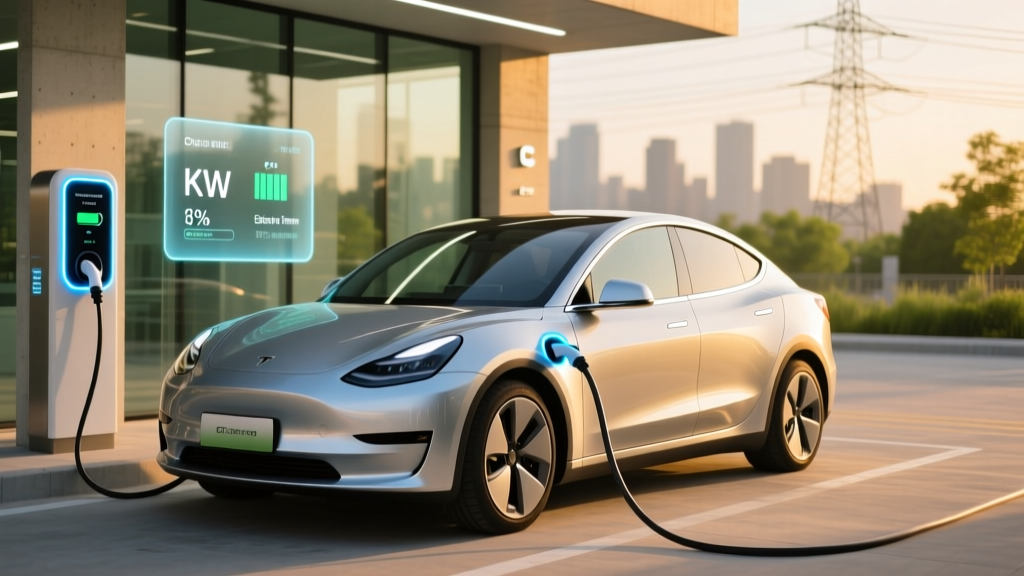
The single most important distinction in EV literacy is the difference between kW (kilowatts — a measure of power, or how fast energy flows) and kWh (kilowatt-hours — a measure of energy, or how much the battery holds). Think of kW as the diameter of a hose and kWh as the size of the bucket.
Here's how the three charging levels stack up:
| Level | Voltage | Power (kW) | Miles of Range Added Per Hour | Typical Use Case |
|---|---|---|---|---|
| Level 1 | 120V AC | 1.0–1.4 kW | 3–5 miles | Overnight top-up, emergency |
| Level 2 | 240V AC | 7.2–19.2 kW | 25–70 miles | Home daily charging, workplace |
| DC Fast Charging | 400–800V DC | 50–350 kW | 150–1,200+ miles (equivalent rate) | Road trips, rapid top-up |
For context, a modern EV like the 2026 Audi Q6 e-tron (100 kWh usable battery, EPA-estimated 321 miles of range) charging on a 11.5 kW Level 2 home charger will go from 10% to 80% in roughly 6.5 hours — perfectly suited to overnight charging. On a 270 kW DC fast charger, that same 10–80% session takes approximately 21 minutes, thanks to the Q6 e-tron's 800-volt architecture.
Compared to filling a 3.0T supercharged Audi's 16.9-gallon tank in about 3 minutes at a gas station, DC fast charging is slower — but Level 2 home charging means you start every morning with a "full tank" without ever visiting a station.
Home Charger Installation: Electrical Requirements and Real Costs
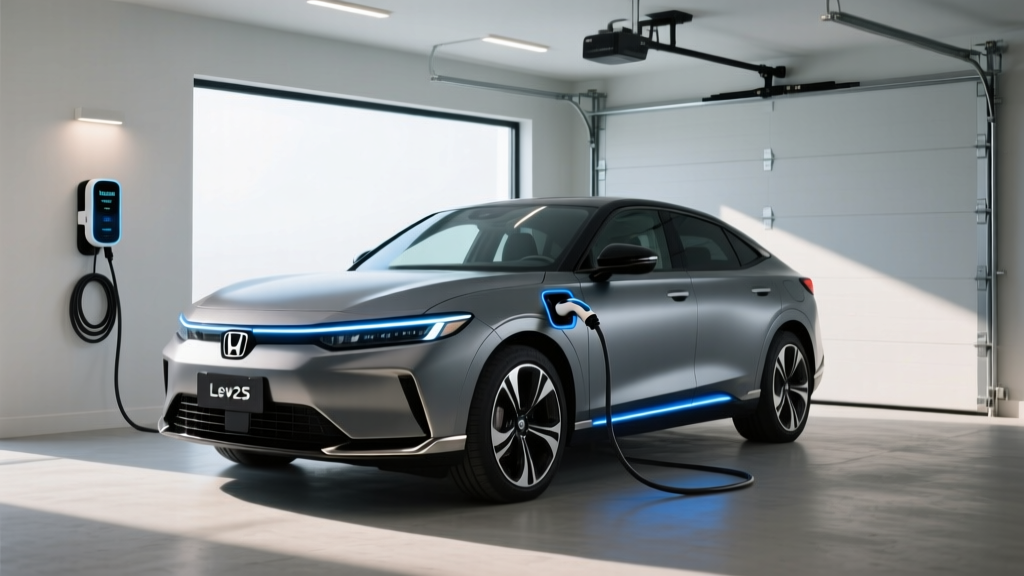
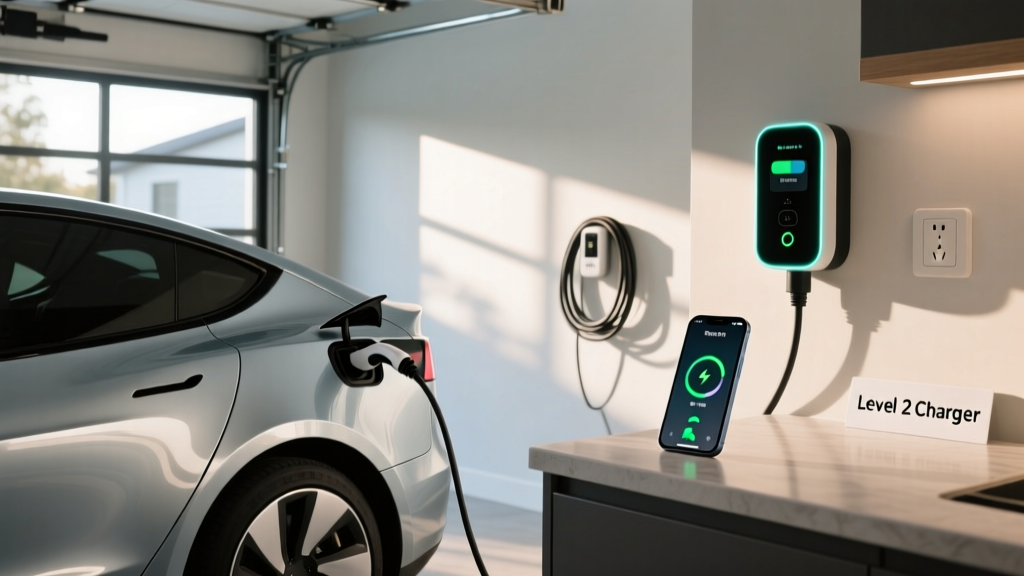
Installing a Level 2 home charger is the single biggest infrastructure decision an EV buyer makes. Here's what's involved electrically and financially.
Electrical Requirements
A typical Level 2 home charger requires a 240V dedicated circuit, similar to what an electric dryer or oven uses. Common configurations:
- 40-amp circuit (delivers 32 amps / 7.7 kW continuous to the car) — the most common residential setup
- 50-amp circuit (delivers 40 amps / 9.6 kW) — recommended for larger batteries like the 100 kWh pack in the Audi Q6 e-tron
- 60-amp circuit (delivers 48 amps / 11.5 kW) — maximizes Level 2 speed, requires thicker wire and a larger breaker
The National Electrical Code (NEC) requires EV chargers to be treated as continuous loads, meaning the circuit must be rated at 125% of the charger's maximum draw. A 40-amp charger therefore needs a 50-amp breaker.
Panel Upgrade Considerations
Many older homes — particularly those built before 2000 — have 100-amp or 150-amp electrical panels. Adding a 50-amp EV circuit to an already-loaded panel may require a panel upgrade to 200 amps, which is a significant additional cost. Signs you might need an upgrade:
- Your panel is at or near capacity (few or no open breaker slots)
- You already run high-draw appliances (electric range, dryer, HVAC, hot tub)
- Your home has a 100-amp service entrance
A licensed electrician can perform a load calculation to determine whether your panel can handle the additional circuit. Some utilities offer smart-panel solutions (like the Span smart panel) that can manage loads dynamically without a full upgrade.
Installation Cost Breakdown
| Component | Low-End Estimate | High-End Estimate |
|---|---|---|
| Level 2 Charger Equipment (hardwired or NEMA 14-50 plug) | $350 | $750 |
| Electrician Labor (run conduit, wire, breaker) | $500 | $2,000 |
| Permit and Inspection Fees | $50 | $300 |
| Electrical Panel Upgrade (if needed) | $1,500 | $4,000 |
| Total (no panel upgrade) | $900 | $3,050 |
| Total (with panel upgrade) | $2,400 | $7,050 |
The federal Residential Clean Energy Credit does not currently cover EV charger equipment (that provision expired for standalone charger credits), but some state and utility programs offer rebates of $250–$1,000 for equipment and installation. Check with your local utility and state incentive databases for current programs.
Connector Compatibility: NACS, CCS, and CHAdeMO Explained
The EV charging connector landscape has consolidated significantly as of 2026. Here's what you need to know when choosing a home charger or planning public charging:
| Connector | Brands Using It | Notes |
|---|---|---|
| NACS (North American Charging Standard / Tesla connector) | Tesla, Ford, GM, Rivian, Volvo, Polestar, Hyundai, Kia (2025+), Audi (2025+), BMW, Mercedes | Now the dominant standard; access to Tesla Supercharger network |
| CCS1 (Combined Charging System) | Legacy VW/Audi EVs (pre-2025), some older BMW, Mercedes models | Still widely available at Electrify America, EVgo stations |
| CHAdeMO | Nissan Leaf (legacy), Mitsubishi Outlander PHEV | Phasing out; limited new-station deployment |
For new Audi EV buyers in 2026, Audi has adopted NACS on models like the Q6 e-tron and upcoming A6 e-tron. If you own an older Audi e-tron (2019–2024) with a CCS1 port, NACS-to-CCS adapters are available from Tesla and third-party manufacturers for Supercharger access, though charge speeds may be limited by the vehicle's onboard charger.
When selecting a home Level 2 charger, buy one with the connector that matches your vehicle natively — or choose a charger with a J1772 connector (the legacy Level 2 standard) and use the adapter that came with your car.
Cost Per Mile: Audi 3.0T Supercharged Gas vs EV Charging
This is where the math gets compelling. Let's compare the real-world fuel cost of a 3.0T supercharged Audi against a modern EV like the 2026 Audi Q6 e-tron.
Audi 3.0T Supercharged (S4/A6/Q5 generation):
- Real-world combined fuel economy: ~19 MPG (premium required)
- Premium fuel cost (national average, 2026): ~$4.30/gallon
- Cost per mile: $4.30 ÷ 19 = $0.226/mile
2026 Audi Q6 e-tron (100 kWh battery, 321 mi EPA, ~3.0 mi/kWh efficiency):
| Charging Scenario | Cost per kWh | Cost Per Mile (at 3.0 mi/kWh) | Savings vs 3.0T |
|---|---|---|---|
| Home Level 2 — Off-Peak Utility Rate | $0.12 | $0.040 | 82% cheaper |
| Home Level 2 — Average US Residential | $0.17 | $0.057 | 75% cheaper |
| Public Level 2 (ChargePoint, EVgo L2) | $0.30 | $0.100 | 56% cheaper |
| DC Fast Charging (Electrify America, EVgo) | $0.48 | $0.160 | 29% cheaper |
Even at the most expensive DC fast-charging rates, the EV costs less per mile than the 3.0T supercharged on premium fuel. For a driver covering 12,000 miles per year, the annual fuel savings of home Level 2 charging (at $0.12/kWh off-peak) versus the 3.0T:
- 3.0T annual fuel cost: 12,000 mi × $0.226 = $2,712
- EV annual charging cost (home off-peak): 12,000 mi × $0.040 = $480
- Annual savings: $2,232
Over five years, that's over $11,000 in fuel savings alone — enough to cover a home charger installation and then some. According to fueleconomy.gov, electricity rates vary significantly by state, so check your local utility's EV time-of-use plan for the best rates.
Charging Time Examples: What to Expect with Common Battery Sizes
Charge time depends on three factors: battery size (kWh), the charger's power output (kW), and the vehicle's charge curve — the rate at which the battery accepts power, which tapers significantly above 80% State of Charge (SoC) to protect battery longevity.
Here are realistic 10–80% charging times for common battery sizes:
| Battery Size | Example Vehicle | 7.7 kW Level 2 | 11.5 kW Level 2 | 150 kW DC Fast | 270 kW DC Fast |
|---|---|---|---|---|---|
| 60 kWh | Chevrolet Equinox EV | 5.5 hours | 3.6 hours | ~28 min | ~24 min |
| 77 kWh | Ford Mustang Mach-E ER | 7.0 hours | 4.7 hours | ~32 min | ~26 min |
| 84 kWh | Hyundai Ioniq 5 | 7.6 hours | 5.1 hours | ~18 min | ~18 min |
| 100 kWh | Audi Q6 e-tron | 9.1 hours | 6.1 hours | ~38 min | ~21 min |
Notice that the Hyundai Ioniq 5 charges faster on DC than vehicles with larger batteries, because its 800V architecture and optimized charge curve sustain high power longer. Peak kW ratings are not sustained — a "240 kW peak" charger may only deliver that rate between 10–40% SoC before tapering. This is why 10–80% time is the most useful real-world metric.
For a former 3.0T owner accustomed to 3-minute fill-ups, the adjustment is real — but the vast majority of charging happens at home while you sleep, making the "refueling time" effectively zero during daily use.
Recommended Home Chargers: Power, Features, and Price
Based on reliability, connector options, smart features, and value, here are top home Level 2 charger picks for 2026:
ChargePoint Home Flex (NACS or J1772)
- Power: Up to 12 kW (50A circuit) — adjustable down to 16A
- Cable Length: 23 feet
- Smart Features: Wi-Fi, app scheduling, utility demand-response integration, Alexa
- Price: ~$599 (NACS version)
- Best For: Audi NACS owners who want flexible amperage and smart scheduling
WallConnector (Tesla, NACS native)
- Power: Up to 11.5 kW (60A circuit, 48A continuous)
- Cable Length: 24 feet
- Smart Features: Wi-Fi, over-the-air updates, power-sharing between two units, load management
- Price: ~$475
- Best For: Tesla and NACS-equipped Audi owners on a budget; excellent power-to-price ratio
Emporia Vue EV Charger (J1772)
- Power: Up to 11.5 kW (60A circuit, 48A continuous)
- Cable Length: 24 feet
- Smart Features: Integration with Emporia whole-home energy monitor, solar-aware scheduling
- Price: ~$399
- Best For: CCS1/J1772 vehicles and homes with solar panels or Emporia energy monitoring
All three chargers are UL-listed and support hardwired or NEMA 14-50 plug installation. Hardwired is generally preferred for outdoor installations (eliminates the GFCI breaker requirement that the NEC mandates for plug-in receptacles in garages and outdoors) and allows higher amperage without plug-rating limits.
Safety, Code, and Installation Best Practices
EV charger installation is governed by the National Electrical Code (NEC Article 625) and local building codes. Key requirements and best practices:
- Dedicated circuit: Your EV charger must have its own dedicated breaker — it cannot share a circuit with other appliances.
- GFCI protection: NEC 2020+ requires GFCI protection for all plug-in receptacles used for EV charging (indoor and outdoor). Hardwired installations are exempt from this specific requirement, which is one reason electricians often recommend hardwiring.
- Outdoor rating: If installing outdoors, the charger must carry a NEMA 3R or NEMA 4 weatherproof rating. All recommended chargers above meet this standard.
- Wire gauge: A 50-amp circuit requires 6 AWG copper wire; a 60-amp circuit requires 4 AWG. Longer wire runs may require upsizing to prevent voltage drop.
- Permit and inspection: Most jurisdictions require an electrical permit and post-installation inspection. Skipping this can void homeowner's insurance coverage for electrical fires and create issues during a home sale.
- Load management: If your panel is near capacity, consider a smart load-management device (like the Emporia VUE or a hardwired load shedder) that dynamically reduces charger amperage when other large loads are active.
Always hire a licensed electrician familiar with NEC Article 625. The NHTSA and your vehicle manufacturer both recommend professional installation over DIY for safety and warranty reasons.
Frequently Asked Questions
How much does it cost to install a home EV charger?
A straightforward Level 2 installation (short wire run, no panel upgrade, existing 200A service) typically costs $900–$3,050 all-in, including the charger, electrician labor, and permit. If your home needs a 200-amp panel upgrade, add $1,500–$4,000. The national median is approximately $1,200–$1,800 for a standard garage install.
How fast will each charging level add range?
Level 1 (120V) adds 3–5 miles per hour — adequate for PHEVs or very low-mileage drivers. Level 2 (240V) adds 25–70 miles per hour depending on amperage — sufficient to fully recharge any EV overnight. DC fast charging can add 150+ miles in 15–20 minutes at high-power stations, but speed varies with battery temperature, state of charge, and the vehicle's charge curve.
Which connector is compatible with my EV?
For 2025–2026 Audi EVs (Q6 e-tron, A6 e-tron), the connector is NACS. Older Audi e-tron models (2019–2024) use CCS1. The Nissan Leaf uses CHAdeMO. When buying a home charger, match the connector to your vehicle. For public DC charging, most networks now offer both NACS and CCS1 cables, and adapters are available for cross-compatibility.
How much does charging cost per mile compared to gas?
Home Level 2 charging at off-peak utility rates ($0.12/kWh) costs roughly $0.04/mile for a typical EV — about 82% less than fueling a 3.0T supercharged Audi on premium at $0.23/mile. Even DC fast charging at $0.48/kWh ($0.16/mile) remains cheaper than premium gasoline. According to EPA data on fueleconomy.gov, EVs consistently achieve 2.5–4.0 miles per kWh, making electricity the cheaper fuel in nearly every US market.
What electrical upgrades might I need?
The most common upgrade is a panel capacity increase from 100A or 150A to 200A service, needed if your existing panel lacks capacity for a new 40–60A circuit. Other potential upgrades include replacing a Federal Pacific or Zinsco panel (known fire hazards found in older homes), adding a sub-panel in a detached garage, or upgrading the service entrance wire. A licensed electrician's load calculation will determine exactly what's needed before you commit to equipment.