What the Atlantic City Electric EV Charger Rebate Covers in 2026
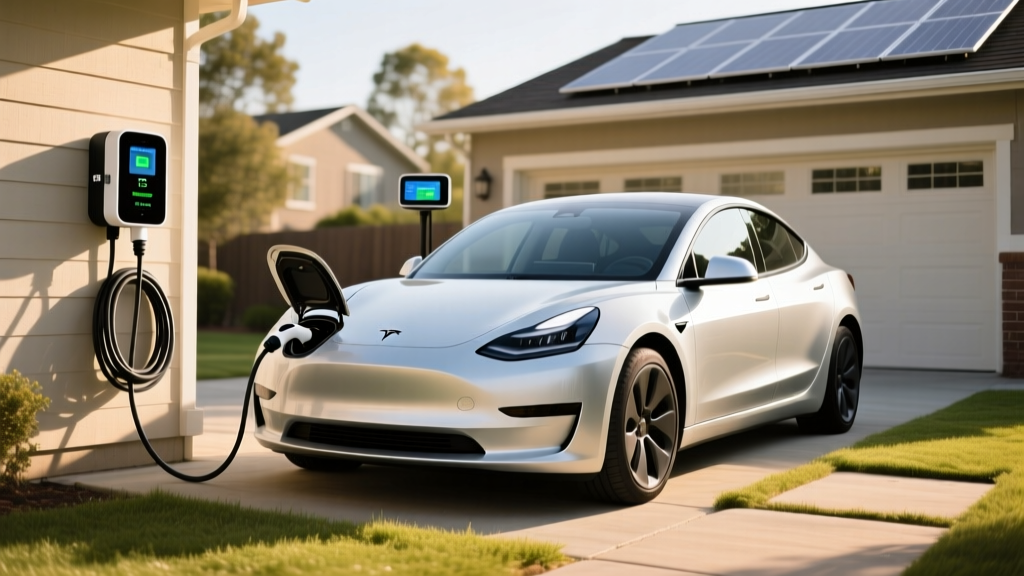
If you're an Atlantic City Electric (ACE) customer exploring home EV charging, the utility's rebate program can offset a meaningful portion of your Level 2 charger installation. As of early 2026, ACE has offered rebates targeting the make-ready infrastructure costs — the wiring, conduit, and electrical panel work needed before you even plug a charger in. Depending on the active program cycle, residential rebates have historically ranged from $200 to $1,500, with higher amounts available for income-qualified households and installations that require panel upgrades.
Before we break down how to maximize this rebate, you need to understand what you're actually installing, what it costs, and how the electrical math works. This guide covers every piece — from kW vs kWh to connector compatibility — so you can scope the job accurately and claim every dollar available.
Charging Levels Explained: Speeds, Power, and Range Added
Every EV owner deals with three charging tiers. Here's what each delivers in practical terms:
| Level | Voltage / Power | Miles of Range per Hour | Typical Use |
|---|---|---|---|
| Level 1 | 120V / 1.4–1.9 kW | 3–5 miles | Overnight top-ups, PHEVs, low daily mileage |
| Level 2 | 240V / 7.2–19.2 kW | 20–75 miles | Daily home charging, overnight full recharge |
| DC Fast Charge | 200–500V DC / 50–350 kW | 150–1,200 miles (peak rate) | Road trips, quick top-ups at public stations |
For a typical BEV with an 80 kWh battery (think Ford Mustang Mach-E Extended Range or Hyundai Ioniq 5), a Level 2 charger at 11.5 kW will refill from 10% to 80% in roughly 5–6 hours. That same session on Level 1 would take over 40 hours. This is why most EV owners consider Level 2 a practical necessity, not a luxury.
DC fast charging operates on a different physics principle — direct current bypasses the car's onboard charger and feeds the battery directly. Peak speeds of 250 kW can add 200 miles in 15–20 minutes on compatible vehicles like the Chevrolet Silverado EV or Porsche Taycan. However, charging curves taper significantly above 80% state of charge to protect battery health. Expect a 10–80% session at a 350 kW Electrify America station to take 18–25 minutes for most 2025–2026 BEVs with 800V architectures.
Home Installation: Electrical Requirements, Costs, and Panel Upgrades
Here's where the Atlantic City Electric EV charger rebate becomes most valuable — because the installation itself is often more expensive than the charger hardware.
What a Level 2 Installation Requires
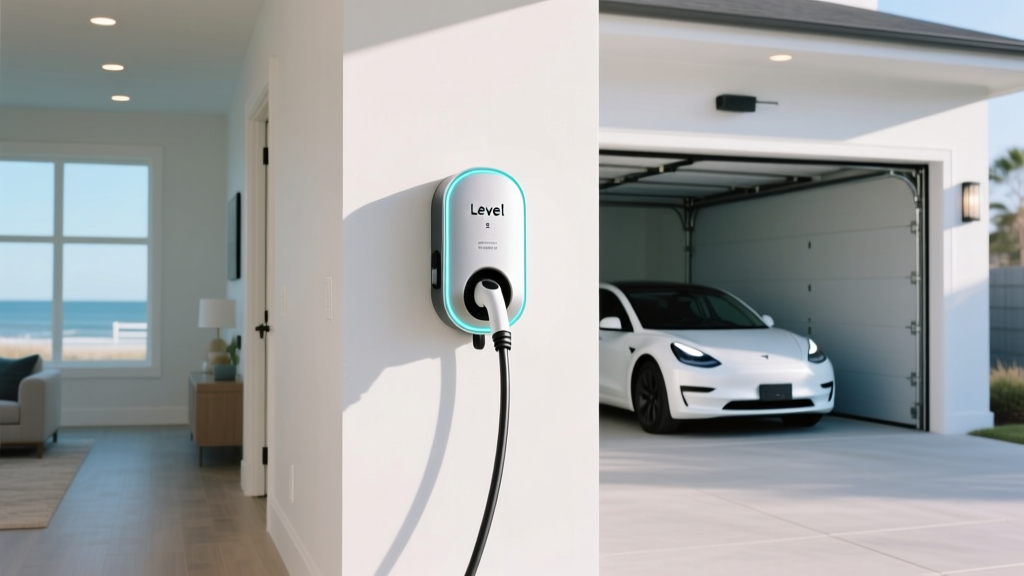
A standard home Level 2 charger needs a dedicated 240V circuit, typically rated for 40 to 60 amps. The National Electrical Code (NEC) requires that continuous loads (like EV charging, which runs for 3+ hours) not exceed 80% of a circuit's rated capacity. That means:
- A 40-amp circuit delivers up to 32 amps continuous (7.7 kW at 240V) — adequate for most daily needs
- A 50-amp circuit delivers up to 40 amps continuous (9.6 kW) — a common sweet spot
- A 60-amp circuit delivers up to 48 amps continuous (11.5 kW) — needed to max out chargers like the ChargePoint Home Flex or Tesla Wall Connector
Installation Cost Breakdown
| Component | Simple Install (Panel Nearby) | Complex Install (Long Run / Panel Upgrade) |
|---|---|---|
| Level 2 Charger Hardware | $350–$700 | $350–$700 |
| Electrician Labor (2–8 hours) | $400–$900 | $1,200–$3,500 |
| Electrical Permit | $50–$200 | $100–$350 |
| Panel Upgrade (100A → 200A, if needed) | $0 (not needed) | $1,800–$4,000 |
| Conduit, Wiring, Misc. Materials | $100–$250 | $300–$800 |
| Total Estimated Cost | $900–$2,050 | $3,750–$9,350 |
The Panel Upgrade Reality
Many homes in the ACE service territory — particularly older properties in Atlantic County built before 1990 — have 100-amp electrical panels. Adding a 50- or 60-amp dedicated EV circuit to an already-loaded 100A panel may exceed capacity, requiring an upgrade to 200 amps. This is the single largest cost variable in any EV charger installation, and it's the exact scenario where the Atlantic City Electric rebate provides the most value. Contact ACE directly or check their EV programs page for current rebate amounts, eligibility windows, and whether pre-approval is required before work begins.
Connector Compatibility: NACS, CCS1, and CHAdeMO
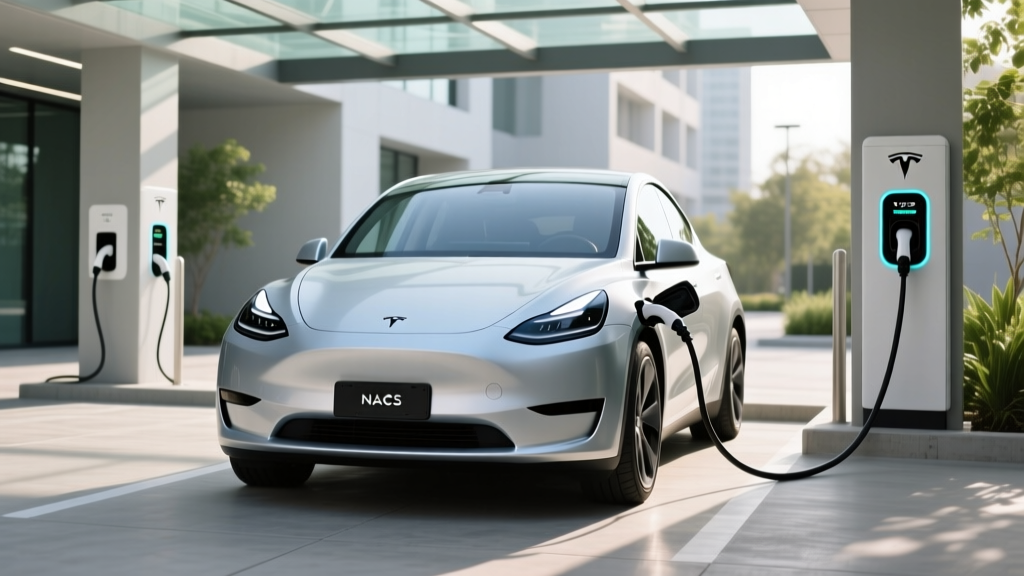
The North American charging connector landscape has consolidated significantly since 2023, when Ford and GM adopted the North American Charging Standard (NACS). Here's where things stand for 2025–2026 model-year vehicles:
| Connector | Brands Using It (Native) | Adapter Needed? |
|---|---|---|
| NACS (Tesla) | Tesla (all), Ford (2025+), GM (2025+), Rivian (2025+), Volvo, Polestar, Hyundai/Kia (2026+), Mercedes | No (native); CCS-to-NACS adapters for older CCS vehicles (~$200–$300) |
| CCS1 | Legacy models: older VW ID.4, Hyundai Ioniq 5 (pre-2026), BMW iX, Stellantis EVs | NACS-to-CCS adapter needed for Tesla Superchargers |
| CHAdeMO | Nissan Leaf (all years), Mitsubishi Outlander PHEV (DC) | Limited adapter options; CHAdeMO infrastructure declining |
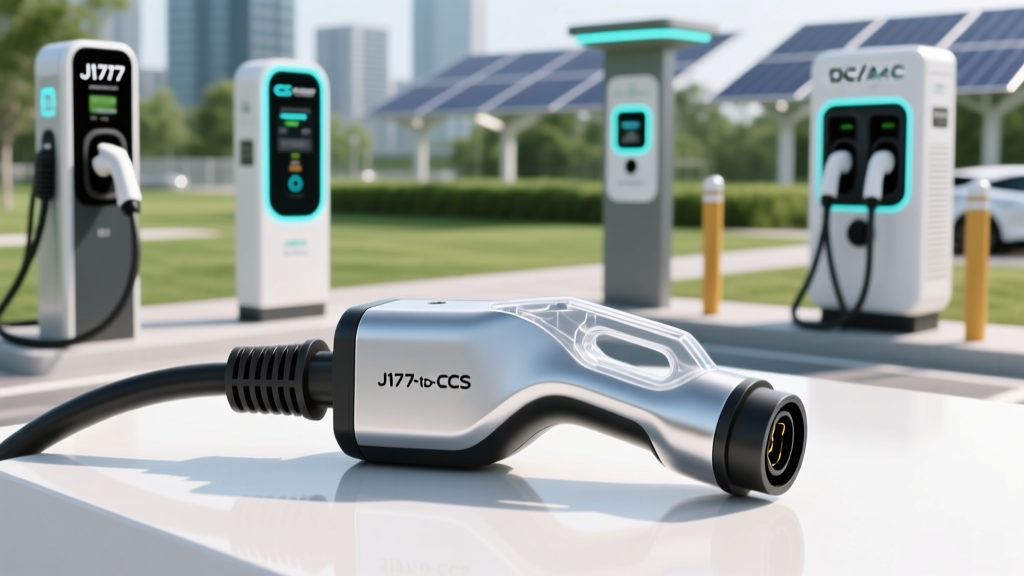
Home charger implication: Most Level 2 home chargers sold in 2026 ship with a NACS connector or offer it as a configurable option. If you drive a CCS1-equipped EV, confirm your charger includes the correct plug or budget for an adapter. For Level 2 home charging, J1772-to-NACS adapters are widely available for under $150.
Level 2 Charger Equipment Recommendations
Here are three proven home chargers that work well within ACE's service area, with the specs that matter:
Tesla Wall Connector (Gen 4)
- Max Output: 11.5 kW (48A on 60A circuit)
- Connector: NACS native
- Cable Length: 24 ft
- Smart Features: Wi-Fi, OTA updates, load sharing, Powerwall integration
- Price: ~$475
- Best For: Tesla owners and NACS-native 2025+ Ford/GM/Rivian vehicles
ChargePoint Home Flex
- Max Output: 12 kW (50A adjustable, up to 60A circuit)
- Connector: J1772 (NACS adapter available)
- Cable Length: 23 ft
- Smart Features: Wi-Fi, app scheduling, Alexa, utility demand-response ready
- Price: ~$550–$650
- Best For: Multi-EV households, utility time-of-use optimization
Emporia Level 2 Smart Charger
- Max Output: 11.5 kW (48A)
- Connector: J1772 (NACS version available)
- Cable Length: 24 ft
- Smart Features: Wi-Fi, solar integration, energy monitoring, load management
- Price: ~$399
- Best For: Budget-conscious installs, solar-equipped homes
Cost to Charge: Home vs. Public vs. Gas
Atlantic City Electric residential customers in 2026 pay an average of roughly $0.17–$0.19 per kWh for standard service, with off-peak (overnight) rates potentially dropping to $0.10–$0.13/kWh under time-of-use plans. Here's how that translates into real cost-per-mile numbers:
| Scenario | Rate | Cost for 300 Miles* | Cost per Mile |
|---|---|---|---|
| Home, Off-Peak TOU | $0.12/kWh | $10.80 | $0.036 |
| Home, Standard Rate | $0.18/kWh | $16.20 | $0.054 |
| Public Level 2 (ChargePoint/EVgo) | $0.30–$0.45/kWh | $27–$40.50 | $0.09–$0.135 |
| DC Fast Charge (Electrify America) | $0.48–$0.56/kWh | $43.20–$50.40 | $0.144–$0.168 |
| Gas Car (28 MPG, $3.45/gal) | $3.45/gal | $36.96 | $0.123 |
*Assumes a 3 mi/kWh BEV efficiency average (typical for a 2025–2026 crossover like the Ioniq 5 or Model Y).
Home charging on an off-peak rate is roughly one-quarter to one-third the per-mile cost of gasoline. Even at ACE's standard residential rate, you're saving about $0.07 per mile — which adds up to $700–$1,000 annually for a 12,000-mile driver. However, relying exclusively on DC fast charging erases most of that savings advantage, which is why a home Level 2 install is the economic foundation of EV ownership.
Safety, Code, and Smart Installation Practices
Every Level 2 installation in New Jersey must comply with NEC Article 625 (Electric Vehicle Charging Equipment) and local amendments enforced by your municipal building department. Key requirements:
- Dedicated circuit: Your EV charger cannot share a breaker with other appliances. A 50A or 60A dedicated breaker is standard.
- GFCI protection: NEC 2020 and later require ground-fault circuit interrupter protection for all EVSE outlets. Many hardwired chargers have built-in GFCI; plug-in units require a GFCI breaker.
- Outdoor rating: If your charger is mounted outside or in an unenclosed carport, it must carry a NEMA 4 or NEMA 4X weather-resistance rating. All three chargers recommended above are outdoor-rated.
- Permit and inspection: New Jersey requires an electrical permit for EVSE installation, followed by a municipal inspection. Your electrician typically handles the permit filing; budget $50–$350 depending on your township.
- Cable management: NEC requires that charging cables not create a trip hazard. Wall-mounted cord retractors or cable organizers are strongly recommended for garage installs.
Frequently Asked Questions
How much does it cost to install a home EV charger with Atlantic City Electric?
Without rebates, a straightforward Level 2 install (panel nearby, no upgrade needed) runs $900–$2,050 all-in. Complex installs with long wire runs or a 200A panel upgrade can reach $3,750–$9,350. The ACE rebate targets the make-ready infrastructure costs, potentially offsetting several hundred to over a thousand dollars. Confirm current amounts at atlanticcityelectric.com/ev before scheduling work.
How fast will each charging level add range to my EV?
Level 1 (120V) adds 3–5 miles per hour — roughly 36–50 miles overnight. Level 2 at 11.5 kW adds 35–45 miles per hour for a typical crossover, enough to refill a 75–80 kWh battery overnight. DC fast charging at 150–350 kW can add 100–250 miles in 15–25 minutes, depending on the vehicle's peak charge rate and battery preconditioning.
Which connector and charger are compatible with my EV?
Check your vehicle's charge port. If it's a 2025+ Tesla, Ford, GM, Rivian, or 2026+ Hyundai/Kia, it almost certainly has NACS. Older CCS1 vehicles (pre-2025 VW, Hyundai, BMW) need a CCS1-compatible charger or a NACS-to-CCS adapter. Nissan Leaf owners use CHAdeMO for DC and J1772 for Level 2. When buying a home charger, match the connector to your vehicle's native port to avoid adapter dependence.
How much does EV charging cost per mile compared to gas?
Home charging on ACE's off-peak rate costs approximately $0.036 per mile — roughly 70% cheaper than a 28 MPG gas car at $3.45/gallon. Standard-rate home charging comes in at about $0.054/mile, still a 56% savings. Public DC fast charging at $0.48–$0.56/kWh can actually exceed gas costs per mile, reinforcing the financial case for home Level 2 installation.
What electrical upgrades might I need before installing a charger?
The most common upgrade is a panel capacity increase from 100A to 200A, which costs $1,800–$4,000 in the ACE service territory. Other potential needs include: adding a new double-pole breaker slot (if your panel is full), upgrading service entrance wiring, or installing a sub-panel if the charger is far from the main panel (e.g., a detached garage). A licensed electrician's load calculation will determine whether your existing panel can handle the added circuit — request this assessment before purchasing equipment.
Can I claim the federal EV charger tax credit too?
The federal Alternative Fuel Vehicle Refueling Property Credit (IRC §30C) offers up to $1,000 (30% of equipment and installation costs) for home charger installations in qualifying census tracts. This is separate from the Atlantic City Electric rebate and may be stackable. Eligibility depends on your property's census tract designation and whether the installation meets prevailing wage requirements. Consult the IRS §30C guidelines and a tax professional to confirm your eligibility.
Your Next Steps
- Check your ACE rebate eligibility and current program amounts at atlanticcityelectric.com
- Get a load calculation from a licensed electrician to determine if your panel needs upgrading
- Obtain 2–3 itemized quotes that separate equipment, labor, permit, and panel-upgrade costs
- Confirm whether ACE requires pre-approval before installation begins
- File for the ACE rebate and the federal §30C credit after installation and inspection