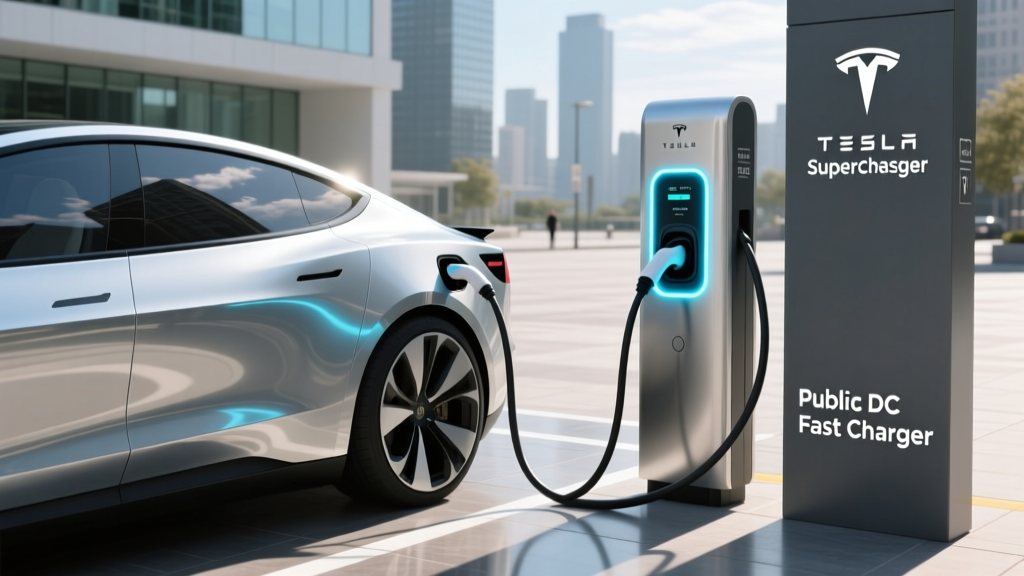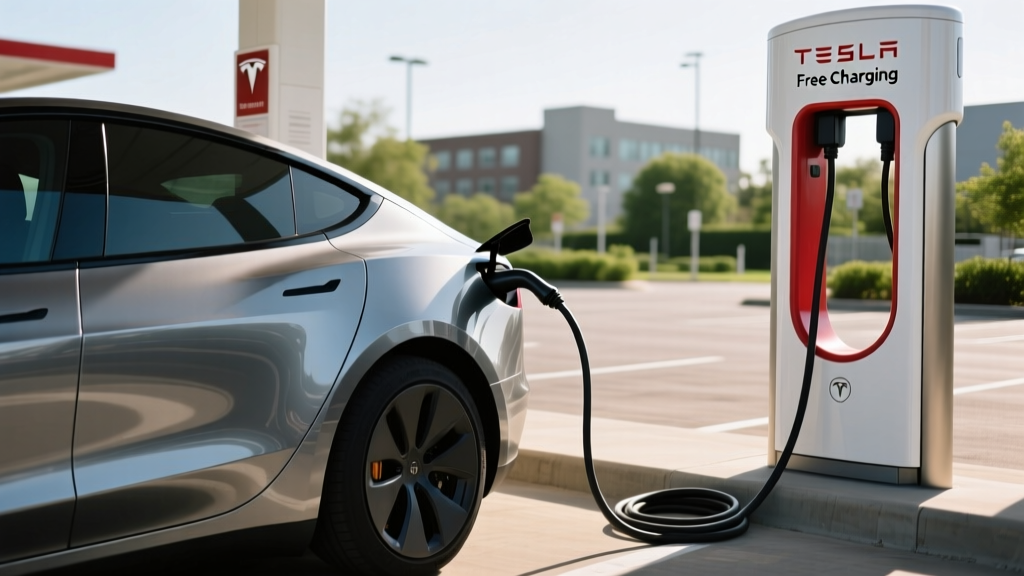
If you've heard rumors that Tesla Superchargers are free, you're not alone — but the reality in 2026 is more nuanced. While some legacy perks and referral credits still exist, the vast majority of Tesla Supercharger sessions are not free. Pricing typically ranges from $0.25 to $0.50 per kWh depending on location, time of day, and peak demand. That said, Supercharging remains one of the most reliable DC fast-charging networks in North America, and for many owners, it's still cheaper per mile than gasoline.
This guide answers the "are Tesla Superchargers free" question definitively, then walks you through the full EV charging landscape: home Level 2 installation costs, public DC fast-charging economics, connector compatibility, and the exact equipment we recommend in 2026.
Are Tesla Superchargers Actually Free?
The short answer: no, Tesla Superchargers are not free for most drivers in 2026. Here's how pricing actually works across the network:
- Pay-per-kWh (most common): $0.25–$0.50/kWh depending on the station. Urban and high-demand locations skew higher; rural stations tend to be cheaper.
- Pay-per-minute (some legacy stations): A few older Superchargers still bill by the minute rather than energy consumed, which can be less predictable.
- Idle fees: If your vehicle remains plugged in after reaching its charge limit, Tesla charges $0.50–$1.00 per minute to discourage spot-hogging.
- Free Supercharging credits: Some older Model S and Model X vehicles (pre-2017) carry transferable or non-transferable free unlimited Supercharging. New vehicle referrals occasionally include limited free Supercharging miles (e.g., 1,000–5,000 miles), but these are promotional, not permanent.
- Tesla membership pricing: Non-Tesla EVs using the Supercharger network (via the Magic Dock or NACS adapter) pay a higher per-kWh rate unless they subscribe to a Tesla charging membership (~$12.99/month) for discounted rates.
Understanding EV Charging Levels: Speed, Power, and Range Added
Before we compare costs, you need to understand the three charging levels. This is where many new EV owners get confused — particularly the difference between kW (kilowatts), which measures power or charge rate, and kWh (kilowatt-hours), which measures energy or battery capacity. Think of kW as the speed of water flowing through a hose, and kWh as the total volume of water in the bucket.
| Level | Voltage | Power (kW) | Miles of Range Added/Hour | Typical Use Case | 10–80% Time (75 kWh Battery) |
|---|---|---|---|---|---|
| Level 1 | 120V AC | 1.0–1.4 kW | 3–5 mi/hr | Overnight top-up, emergency | ~50+ hours (impractical) |
| Level 2 | 240V AC | 3.3–19.2 kW | 12–75 mi/hr | Home, workplace, hotels | 4–12 hours |
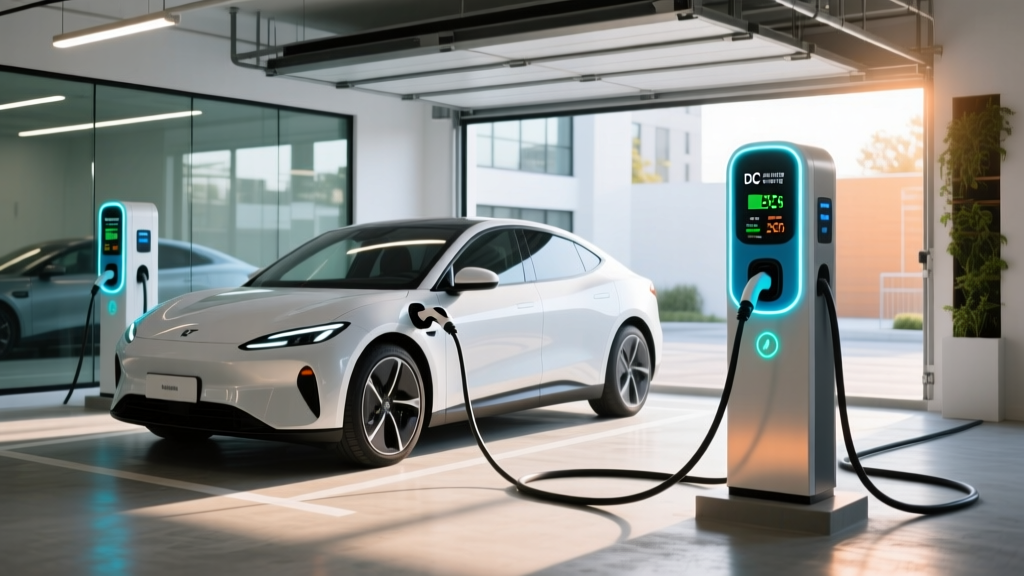
| DC Fast (Level 3) | 400–800V DC | 50–350 kW | 150–1,000+ mi/hr | Road trips, highway corridors | 15–45 minutes |
Home Level 2 Charger Installation: Costs, Electrical Requirements, and Upgrades
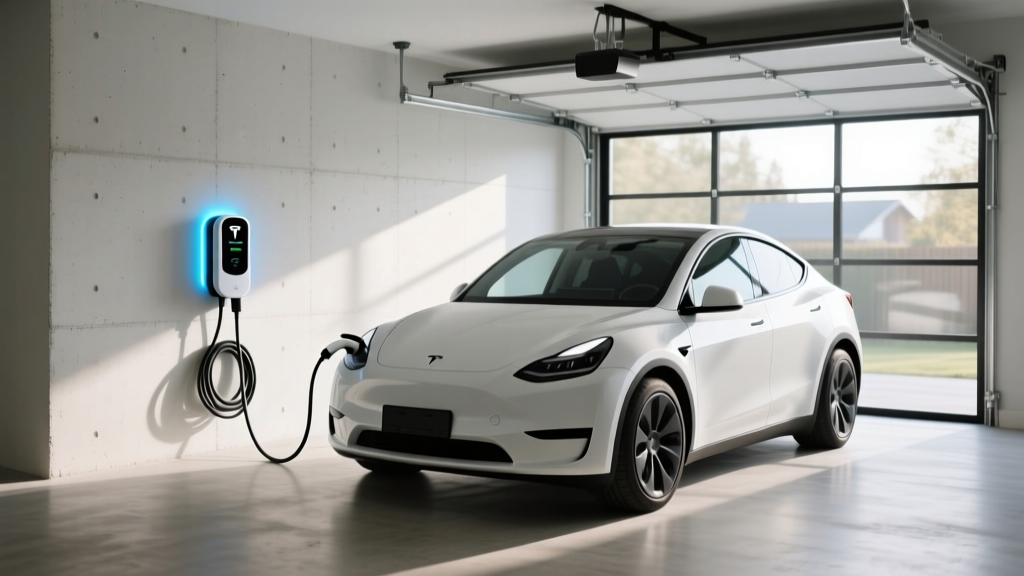
Home Level 2 charging is where the vast majority of EV charging happens — and where you'll save the most money. A properly installed 240V Level 2 charger delivers 7–11.5 kW (on a 40A or 48A circuit), adding 25–44 miles of range per hour. For a 75 kWh battery, that means a full overnight charge from 10–80% in roughly 6–8 hours.
Electrical Requirements
- Circuit: A dedicated 240V circuit — typically 40A (supports up to 32A continuous charging) or 50A (supports up to 40A continuous). A 60A circuit enables 48A continuous charging for the fastest home speeds.
- Wire gauge: 6 AWG copper for 50A circuits; 4 AWG for 60A. Your electrician will size this based on run length and local code.
- NEMA 14-50 outlet vs. hardwired: A NEMA 14-50 receptacle offers portability (take your charger when you move), while hardwired units allow higher amperage (48A+) and avoid GFCI nuisance-tripping issues common with some 14-50 installations.
- Panel capacity: Most modern homes with 200A service can accommodate a 40–60A EV circuit. Older homes with 100A service will likely need a panel upgrade.
Installation Cost Breakdown
| Component | Simple Install (Near Panel) | Complex Install (Long Run / Panel Upgrade) |
|---|---|---|
| Level 2 Charger Equipment | $350–$700 | $350–$700 |
| Electrician Labor (2–8 hrs @ $80–$150/hr) | $160–$400 | $600–$1,200 |
| Permit & Inspection | $50–$200 | $100–$300 |
| Electrical Panel Upgrade (if needed) | $0 | $1,500–$3,500 |
| Conduit, Wire, Misc. Materials | $50–$150 | $200–$600 |
| Total Estimated Cost | $610–$1,450 | $2,750–$6,300 |
Safety and Code Considerations
- Dedicated circuit: NEC (National Electrical Code) requires EV chargers to be on a dedicated circuit — not shared with other appliances.
- GFCI protection: Some jurisdictions require GFCI breakers for outdoor receptacles. Note that some EVSE units have built-in GFCI protection, and stacking two GFCI devices can cause nuisance tripping.
- Outdoor rating: If your charger is installed outside, ensure the unit carries a NEMA 4 or NEMA 4X rating for weather resistance.
- Permit requirement: Nearly all jurisdictions require an electrical permit and inspection for EV charger installations. Skipping this can void home insurance coverage in the event of an electrical fire.
Connector Compatibility: NACS, CCS1, CHAdeMO, and Adapters
The North American charging connector landscape shifted dramatically between 2023 and 2026. Tesla's North American Charging Standard (NACS) has been adopted by nearly every major automaker, effectively replacing CCS1 as the dominant standard for new vehicles sold in the US.
| Connector | Brands Using It (New Vehicles) | DC Fast-Charger Availability | Adapter Needed? |
|---|---|---|---|
| NACS (Tesla) | Tesla, Ford, GM, Rivian, Volvo, Polestar, Mercedes, Nissan (new), Fisker | 17,000+ Tesla Superchargers + growing third-party NACS stations | Non-Tesla EVs may need a NACS adapter for some networks |
| CCS1 | Hyundai, Kia, BMW, VW, Audi, Porsche, Stellantis (legacy models) | Electrify America, EVgo, ChargePoint, Ionity | Tesla Supercharger access requires a CCS-to-NACS adapter (where Magic Dock is unavailable) |
| CHAdeMO | Nissan Leaf (legacy only — discontinued) | Declining; some EVgo and legacy stations | No adapter available for CHAdeMO-to-NACS |
Key takeaway for 2026 buyers: If you're purchasing a new EV, NACS is now the safest bet for long-term charging network access. CCS1 vehicles can still access Electrify America and other networks, and Tesla has opened portions of its Supercharger network to CCS1 vehicles via the Magic Dock adapter at select stations. CHAdeMO is effectively dead for new vehicles — avoid it unless you're buying a used Nissan Leaf as a second car.
Cost to Charge: Home vs. Public vs. Gas — the Per-Mile Showdown
The economics of EV charging depend heavily on where and when you charge. Here's how the numbers break down across common scenarios:
| Scenario | Cost per kWh | Cost for 10–80% (75 kWh Battery) | Cost per Mile (at 3.5 mi/kWh) |
|---|---|---|---|
| Home — Off-Peak Utility Rate | $0.08–$0.12 | $4.20–$6.30 | $0.023–$0.034 |
| Home — Standard Residential Rate | $0.13–$0.18 | $6.83–$9.45 | $0.037–$0.051 |
| Tesla Supercharger (average) | $0.25–$0.50 | $13.13–$26.25 | $0.071–$0.143 |
| Electrify America / EVgo (DC fast) | $0.30–$0.55 | $15.75–$28.88 | $0.086–$0.165 |
| Gasoline (28 MPG avg, $3.60/gal) | — | — | $0.129 |
Recommended Home Level 2 Chargers (2026 Picks)
We've tested dozens of Level 2 chargers across multiple EVs. These are our top picks based on reliability, power output, build quality, and smart features:
Tesla Wall Connector (Gen 3)
- Power: Up to 11.5 kW (48A on a 60A circuit)
- Connector: NACS (native Tesla); J1772 adapter included for non-Tesla EVs
- Cable length: 24 ft
- Smart features: Wi-Fi for OTA updates, load sharing between multiple units, Tesla app integration
- Price: ~$475
- Best for: Tesla owners who want maximum home charge speed and a clean integrated experience
ChargePoint Home Flex
- Power: Up to 12 kW (50A on a 60A circuit); configurable from 16A–50A
- Connector: J1772 (NACS adapter available separately)
- Cable length: 23 ft
- Smart features: Wi-Fi, Alexa integration, ChargePoint app with scheduling and energy tracking
- Price: ~$550–$700
- Best for: Non-Tesla EV owners who want flexible amperage and robust app features
Emporia Level 2 EV Charger
- Power: Up to 11.5 kW (48A on a 60A circuit)
- Connector: J1772 (NACS adapter available)
- Cable length: 24 ft
- Smart features: Wi-Fi, Emporia energy monitoring integration, solar-aware scheduling
- Price: ~$350–$400
- Best for: Budget-conscious buyers who want smart features without the premium price
Grizzl-E Smart
- Power: Up to 10 kW (40A on a 50A circuit)
- Connector: J1772 (NACS version available)
- Cable length: 24 ft
- Smart features: Wi-Fi, OCPP compatibility, adjustable amperage
- Price: ~$450–$550
- Best for: Cold-climate owners — built in Canada, rated to -40°F, rugged aluminum enclosure
Frequently Asked Questions
How much does it cost to install a home EV charger?
A straightforward Level 2 installation (charger near the electrical panel, no panel upgrade) costs $610–$1,450 including equipment, electrician labor, and permit. Complex installations requiring long wire runs, conduit, or a 200A panel upgrade can range from $2,750 to $6,300. Always get a load calculation from a licensed electrician before committing.
How fast will each charging level add range?
Level 1 (120V) adds 3–5 miles per hour — enough for low-mileage commuters. Level 2 (240V) adds 12–75 miles per hour depending on amperage (a 48A unit adds ~35–44 mi/hr for most EVs). DC fast charging adds 150–1,000+ miles per hour at peak power, though real-world sessions are measured in minutes (15–45 min for 10–80%).
Which connector is compatible with my EV?
For 2026 model-year vehicles: Tesla, Ford, GM, Rivian, Volvo, and most new brands use NACS. Hyundai, Kia, BMW, and VW still use CCS1 on current models but are transitioning to NACS. CHAdeMO is only found on legacy Nissan Leafs. Check your vehicle's charge port or the EPA's fueleconomy.gov database for your specific model.
How much does charging cost per mile compared to gas?
Home charging at the US average residential rate of ~$0.16/kWh costs approximately $0.046/mile for an EV averaging 3.5 mi/kWh. A comparable 28 MPG gas car at $3.60/gallon costs $0.129/mile. That's a 64% savings per mile with home EV charging. Public DC fast charging at $0.35–$0.50/kWh narrows the gap but still beats gasoline in most scenarios.
What electrical upgrades might I need for a home charger?
Homes with 200A panels and available breaker slots typically need no upgrade — just a dedicated 40–60A circuit. Homes with 100A service, full panels, or existing high-draw appliances (electric heat, tankless water heater, EV + dryer on same leg) may need a panel upgrade to 200A ($1,500–$3,500) or a smart panel/load-management device that throttles the charger when other appliances are running.
Are there any federal tax credits for home charger installation?
The Alternative Fuel Vehicle Refueling Property Credit (IRC §30C) offers up to $1,000 (30% of cost) for home EV charger equipment and installation, subject to income limits and census-tract eligibility requirements. This is separate from the §30D new-vehicle credit. Consult a tax professional and check current IRS guidance for eligibility in your area.
Do I need a Tesla to use a Supercharger?
Not anymore. Tesla has opened select Supercharger stations to non-Tesla EVs via the built-in Magic Dock adapter (CCS1-compatible) at participating locations. Additionally, Ford, GM, Rivian, and other NACS-equipped EVs can access the full Supercharger network natively. Non-Tesla drivers pay a premium rate unless enrolled in a Tesla charging membership.