Short Answer: No — But the Gap Is Closing Fast
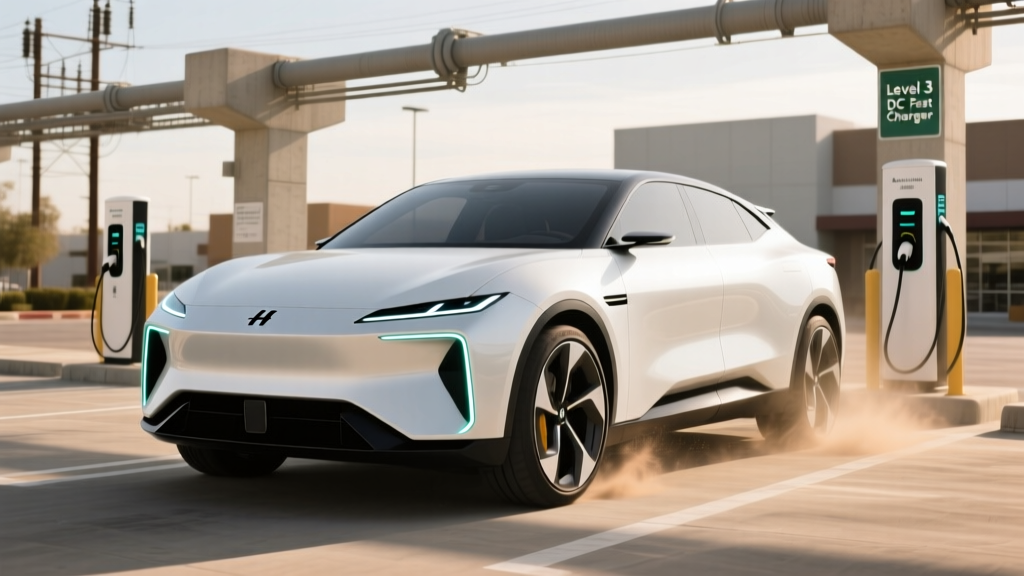
If you're asking "are EV chargers universal?" the honest answer in 2026 is: not quite, but closer than ever. The North American Charging Standard (NACS), pioneered by Tesla and now adopted by nearly every major automaker, has consolidated the DC fast-charging landscape. Still, three connector families remain in active use, charging speeds vary dramatically by level, and home electrical requirements differ from house to house. This guide maps every connector, charging tier, and cost variable so you can buy or install with confidence.
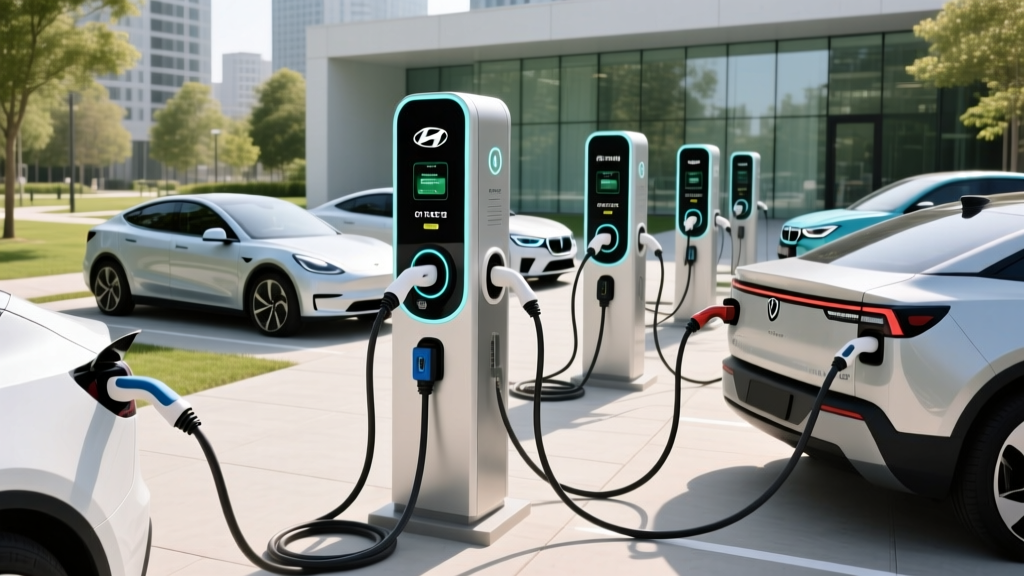
The Three Connector Families: NACS, CCS1, and CHAdeMO
Before you buy a charger or plan a road trip, identify which connector your EV uses. Here's the 2026 landscape:
| Connector | Brands Using It (2026) | Notes |
|---|---|---|
| NACS (J3400) | Tesla, Ford, GM, Rivian, Volvo, Polestar, Mercedes-Benz, Nissan (Ariya), Honda (Prologue), Hyundai/Ioniq 5 (2025+), BMW (Neue Klasse) | Now the SAE J3400 standard. Smaller, lighter plug. Native Tesla Supercharger access. |
| CCS1 (Combo) | VW ID.4 (carryover), some Stellantis models, older Hyundai/Kia models (pre-NACS switch) | Legacy standard. Adapters available to NACS. Electrify America still supports CCS1 natively. |
| CHAdeMO | Nissan LEAF (legacy), Mitsubishi Outlander PHEV (legacy) | Effectively discontinued for new models. Existing infrastructure remains but is shrinking. |
Adapter reality: If you drive a CCS1-equipped EV, a NACS-to-CCS adapter (roughly $200–$300) unlocks Tesla Superchargers. Ford and GM include these adapters with qualifying vehicles. CHAdeMO owners have fewer adapter options and should plan routes around Electrify America and ChargePoint stations that still carry CHAdeMO cables.
Charging Levels Explained: Speed, Power, and Range Added
Understanding charging requires distinguishing kW (kilowatts — the rate of power delivery, like water pressure) from kWh (kilowatt-hours — the total energy stored, like gallons in a tank). A 10 kW charger delivers energy at a certain rate; a 75 kWh battery stores a certain total amount. With that clarity:
| Level | Voltage | Power (kW) | Miles of Range Added per Hour | Typical Use |
|---|---|---|---|---|
| Level 1 | 120V AC | 1.2–1.9 kW | 3–5 mi/hr | Overnight top-ups, PHEVs, emergencies |
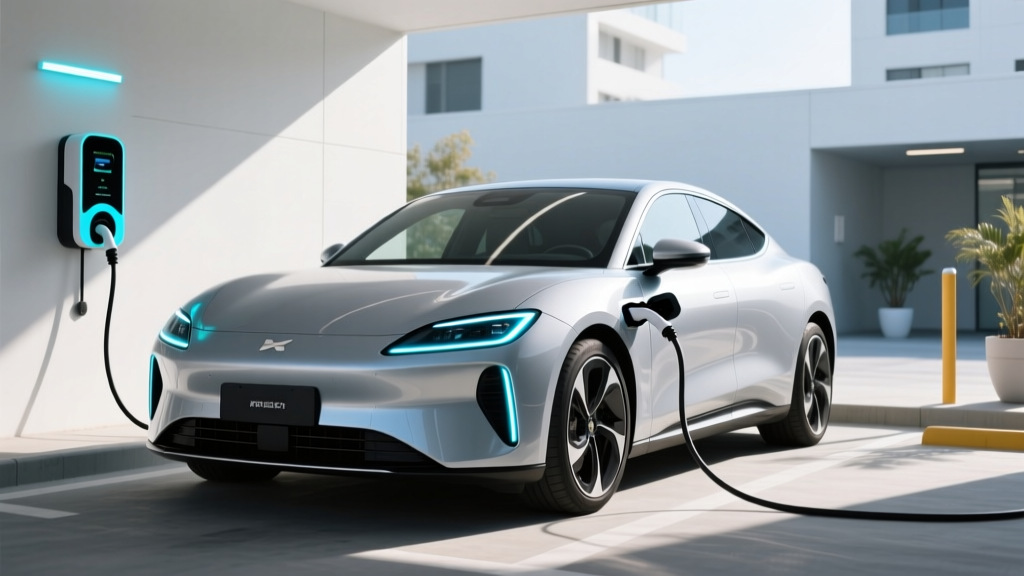
| Level 2 | 240V AC | 3.3–19.2 kW | 12–75 mi/hr | Home daily charging, workplace, hotels |
| DC Fast Charge | 400–800V DC | 50–350 kW | 150–1,000+ mi/hr (peak) | Road trips, rapid top-ups |
Real-world DC fast charging nuance: A vehicle advertising "250 kW peak" does not sustain 250 kW for the entire session. Charging curves taper significantly above 80% state of charge (SoC) to protect battery health. A Hyundai Ioniq 5 (84 kWh battery, NMC chemistry) peaks at ~240 kW on an 800V architecture, charging 10–80% in roughly 18 minutes. But that final 80–100% can take another 20+ minutes. Plan to charge to 80% on road trips and move on.
Home Charger Installation: Costs, Electrical Requirements, and Gotchas
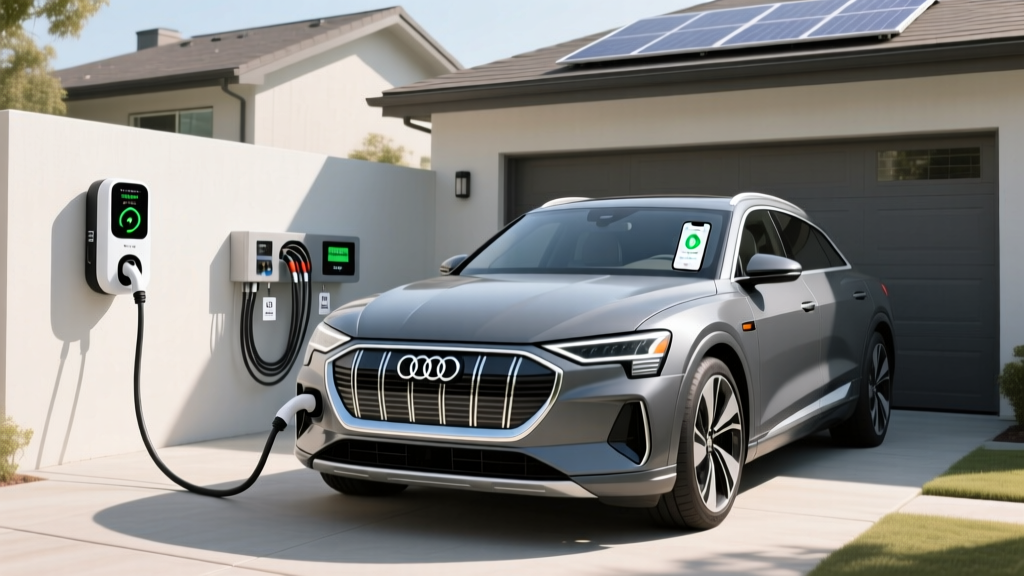
Most EV owners do 80%+ of their charging at home on Level 2. Here's what a 240V installation actually involves:
Electrical Requirements
- Circuit: A dedicated 40-amp or 60-amp 240V circuit (NEMA 14-50 outlet or hardwired connection)
- Continuous load rule: NEC requires EV chargers to use only 80% of a circuit's rated capacity — a 40A circuit supports a 32A (7.7 kW) charger; a 60A circuit supports a 48A (11.5 kW) charger
- Panel capacity: Your electrical panel must have sufficient spare amperage. A 200A panel with existing high loads (electric range, dryer, HVAC) may need a load calculation or upgrade to 300–400A
- Permit: Nearly all jurisdictions require an electrical permit and inspection for Level 2 installations
| Component | Cost Range | Notes |
|---|---|---|
| Level 2 charger unit (smart, 32–48A) | $400–$800 | Wi-Fi enabled, load management models cost more |
| Electrician labor (standard install) | $600–$1,500 | Varies by run length, conduit, wall material |
| Electrical permit | $50–$200 | Depends on municipality |
| Panel upgrade (if needed) | $1,500–$4,000+ | 200A → 300A/400A. Older homes (pre-1990) most likely to need this |
| Total (no panel upgrade) | $1,050–$2,500 | Most common scenario for modern homes |
| Total (with panel upgrade) | $2,550–$6,500+ | Budget for worst-case in older homes |
Panel upgrade gotcha: Homes built before 1990 often have 100A or 150A panels. Adding a 48A EV charger alongside an electric oven, dryer, and central AC can exceed capacity. A licensed electrician will perform a NEC Article 220 load calculation before recommending an upgrade. Don't skip this step — overloaded panels are a fire risk and will fail inspection.
Safety and Code Essentials
- Dedicated circuit: Never share a circuit with other major appliances
- GFCI protection: NEC 2023+ requires GFCI breakers for EV receptacles in garages and outdoors
- Outdoor rating: If your charger is mounted outside, ensure it carries a NEMA 4 (weatherproof) rating
- Cable management: Wall-mounted cable organizers prevent tripping hazards and connector damage
Level 2 Charger Recommendations: 2026 Top Picks
Here are three chargers that cover different budgets and needs, all with NACS connectors standard (CCS1 adapter available):
Budget Pick: Lectron V-BOX Pro (48A)
- Power output: 11.5 kW (48A / 240V, hardwired)
- Connector: NACS (J3400)
- Cable length: 20 ft
- Smart features: Wi-Fi scheduling, energy monitoring via app
- Price: ~$399
- Best for: Cost-conscious buyers with a 60A circuit available
Best Overall: ChargePoint Home Flex (up to 50A)
- Power output: Up to 12 kW (50A / 240V, configurable 16–50A)
- Connector: NACS (J3400)
- Cable length: 23 ft
- Smart features: Alexa/Google integration, detailed energy reports, load sharing with second unit
- Price: ~$649
- Best for: Most homeowners; adjustable amperage fits 40A or 60A circuits
Premium Pick: Tesla Wall Connector (48A)
- Power output: 11.5 kW (48A / 240V, hardwired)
- Connector: NACS native
- Cable length: 24 ft
- Smart features: Power sharing (up to 6 units on one circuit), OTA updates, Tesla app integration
- Price: ~$475
- Best for: Tesla owners and multi-EV households
Charging Cost Per Mile: EV vs. Gas in 2026
The financial case for EVs hinges on fuel savings. Here's what charging actually costs across scenarios, compared to a 28 MPG combined gasoline car at $3.40/gallon (2026 national average):
| Scenario | Cost per kWh | Cost per Mile (at 3.5 mi/kWh) | vs. Gas (28 MPG, $3.40/gal) |
|---|---|---|---|
| Home, off-peak utility rate | $0.09–$0.13 | $0.03–$0.04 | Gas: $0.12/mi — EV saves 65–75% |
| Home, standard residential rate | $0.14–$0.18 | $0.04–$0.05 | Gas: $0.12/mi — EV saves 55–65% |
| Public Level 2 (ChargePoint, etc.) | $0.25–$0.40 | $0.07–$0.11 | Gas: $0.12/mi — Comparable or slight EV savings |
| DC Fast Charge (Electrify America, Tesla) | $0.35–$0.55 | $0.10–$0.16 | Gas: $0.12/mi — EV may cost more per mile |
Key insight: The economics favor EVs overwhelmingly when you charge at home. Relying exclusively on DC fast charging can erase or reverse the cost advantage. A typical EV owner who charges 85% at home and 15% on DC fast chargers saves roughly $800–$1,200 annually versus a comparable gas vehicle, according to EPA fueleconomy.gov efficiency data.
Charging Time Examples by Battery Size
To ground the numbers, here are real-world 10–80% DC fast charge times for popular 2026 EVs:
- Tesla Model Y (75 kWh, LFP): ~25 minutes at a 250 kW V3 Supercharger
- Hyundai Ioniq 5 (84 kWh, NMC): ~18 minutes at a 350 kW charger (800V architecture sustains higher rates)
- Ford F-150 Lightning (131 kWh, NMC Extended Range): ~41 minutes at a 150+ kW charger
- Chevrolet Equinox EV (85 kWh, NMC): ~30 minutes at a 150+ kW charger
These times assume battery preconditioning is active (the vehicle's thermal management warms or cools the pack to optimal charging temperature before you arrive). Without preconditioning — or in extreme cold — expect 20–40% longer charge sessions.
Which Charger Is Compatible With Your EV?
Here's a quick decision framework:
Choose a NACS (J3400) home charger if: You own any 2025+ Tesla, Ford, GM, Rivian, Volvo, Hyundai, Honda, BMW, or Nissan Ariya. This is now the dominant standard and future-proofs your investment.
Choose a CCS1 home charger (or use an adapter) if: You drive a VW ID.4, older Hyundai/Kia EV, or any pre-2025 model with a CCS1 port. Purchase a CCS1-to-NACS adapter (~$200–$300) for Supercharger road trips.
CHAdeMO owners: No new home chargers ship with CHAdeMO DC connectors (home units are Level 2 AC with J1772/NACS plugs, which work universally). For DC fast charging on the road, rely on Electrify America and ChargePoint stations that still carry CHAdeMO cables — but plan carefully, as these are being phased out.
Important Level 2 clarification: All Level 2 home and public AC chargers deliver power through either a J1772 connector (pre-2025 standard) or NACS. Since 2025, most new EVs accept NACS natively. If your EV has a J1772 port, a simple J1772-to-NACS adapter (~$50–$100) lets you use any NACS Level 2 charger. This is a non-issue for daily home charging.
Federal Tax Credits and Utility Rebates for Home Charging
The IRS §30C Alternative Fuel Vehicle Refueling Property Credit covers 30% of home EV charger equipment and installation costs, up to $1,000, for chargers placed in service in qualifying census tracts. Eligibility depends on:
- Your home being located in an eligible census tract (rural or low-income community)
- The charger being new and meeting NEC safety standards
- Filing IRS Form 8911 with your tax return
Beyond federal credits, many utilities offer $250–$500 rebates for smart Level 2 chargers and off-peak charging enrollment. Check your local utility's EV program page — these stack with the federal credit.
Frequently Asked Questions
How much does it cost to install a home EV charger?
A standard Level 2 installation (40–60A circuit, 240V, hardwired or NEMA 14-50 outlet) runs $1,050–$2,500 including the charger unit, electrician labor, and permit — assuming your electrical panel has sufficient capacity. If your home needs a panel upgrade (common in pre-1990 homes), add $1,500–$4,000+. Always get a load calculation from a licensed electrician before committing.
How fast will each charging level add range?
Level 1 (120V) adds 3–5 miles per hour — adequate for PHEVs with small batteries. Level 2 (240V, 32–48A) adds 12–75 miles per hour depending on amperage and vehicle acceptance rate, fully recharging most EVs overnight. DC fast charging (50–350 kW) adds 150–1,000+ miles per hour at peak, typically delivering 10–80% in 18–45 minutes depending on battery size and architecture.
Which connector/charger is compatible with my EV?
Check your vehicle's charge port: if it's a single slim oval, it's NACS (most 2025+ vehicles). If it's a larger combo plug with two extra DC pins below, it's CCS1. If it has two large round pins, it's CHAdeMO (Nissan LEAF). For home Level 2 charging, all vehicles accept AC power through J1772 or NACS — adapters bridge any gap for under $100.
How much does charging cost per mile vs. gas?
Home charging at typical residential rates ($0.13/kWh) costs roughly $0.03–$0.05 per mile for a mainstream EV — about 60–70% less than a 28 MPG gas car at $3.40/gallon ($0.12/mile). Public DC fast charging ($0.40–$0.55/kWh) can cost $0.10–$0.16/mile, comparable to or slightly more than gas. The savings case depends on home charging access.
What electrical upgrades might I need?
Homes with 200A panels built after 2000 usually have sufficient capacity for a 40–48A EV circuit. Older homes with 100A or 150A panels, or homes with multiple high-draw electric appliances (range, dryer, heat pump, pool), may need a panel upgrade to 300A or 400A. Some utilities and installers now offer load management devices (e.g., Span smart panels or Emporia load-sharing modules) that dynamically reduce charger amperage when other appliances are running, avoiding a panel upgrade entirely.
Are Tesla Superchargers compatible with non-Tesla EVs?
Yes — as of 2026, Tesla has opened its Supercharger network to Ford, GM, Rivian, Volvo, Polestar, Mercedes, and other NACS-equipped EVs through the "Charge with NACS" program. CCS1 vehicles can access Superchargers using a Tesla-approved adapter. Use the Tesla app or your vehicle's built-in navigation to locate open Supercharger stalls.
Sources: EPA Fuel Economy – EV Charging, IRS §30C Refueling Property Credit, NHTSA, manufacturer specifications.