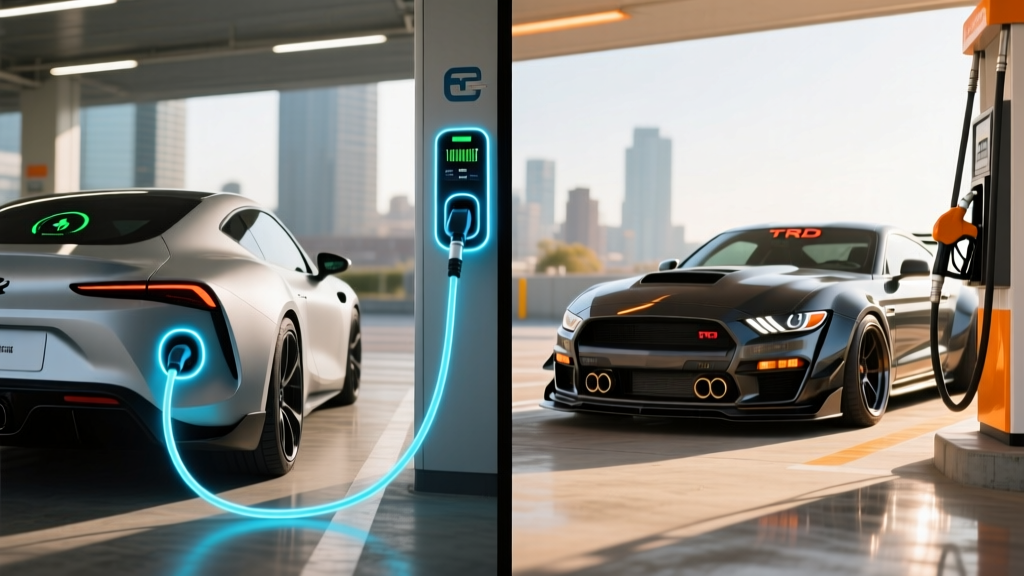
If you're shopping for an electric vehicle, one of the first questions that surfaces is simple: are charging stations free? The short answer is no — most public charging stations in 2026 charge by the kilowatt-hour (kWh), by the minute, or via a session fee. A handful of workplaces, hotels, and retail locations still offer complimentary charging as a customer amenity, but those free plugs are increasingly rare and often slow (Level 2, 3–7 kW). For daily ownership, you'll pay for electricity — though in most scenarios, you'll still pay substantially less per mile than gasoline.
This guide breaks down exactly what you'll spend at each charging tier, what home installation actually costs (including the panel-upgrade scenario nobody warns you about), which connector your EV needs, and how the per-mile cost stacks up against a gas car. All figures reflect 2026 pricing, equipment availability, and utility rate structures.
The Three Charging Levels: Speed, Cost, and Where You'll Use Each
EV charging is organized into three tiers. Understanding the difference between kW (power — how fast electricity flows) and kWh (energy — how much your battery holds) is the single most important piece of EV literacy. Think of kW as the width of a hose and kWh as the size of the bucket. A wider hose fills the bucket faster, but the bucket size doesn't change.
| Level | Voltage / Amps | Power (kW) | Miles of Range Added Per Hour | Typical Location | 10–80% Charge Time (75 kWh battery) |
|---|---|---|---|---|---|
| Level 1 | 120V / 12–16A | 1.4–1.9 kW | 3–5 miles | Standard household outlet | ~35–50 hours (not practical for 10–80%) |
| Level 2 | 240V / 32–48A | 7.7–11.5 kW | 25–44 miles | Home garage, workplace, retail, hotels | ~5–7 hours |
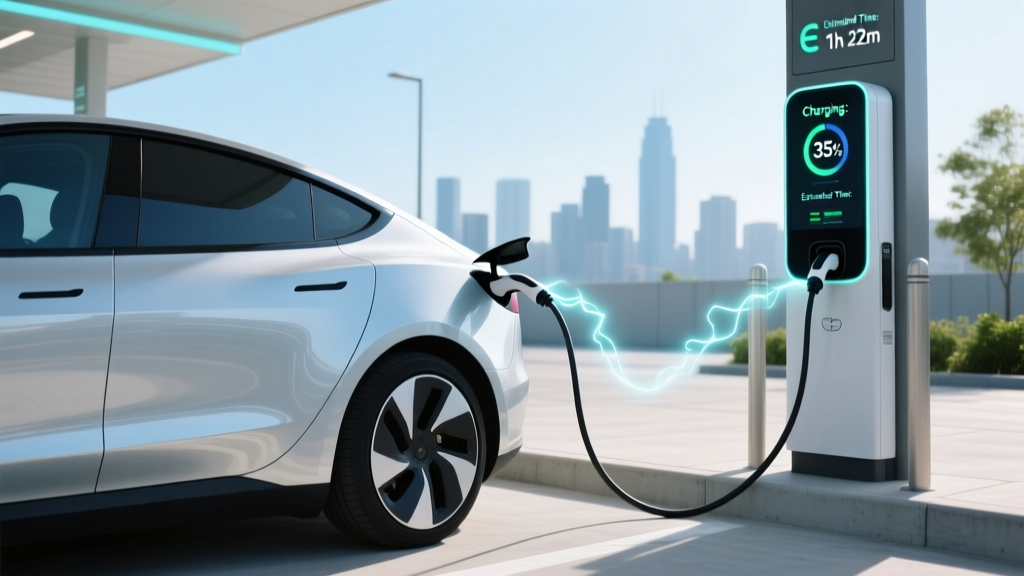
| DC Fast Charge | 400–800V DC | 50–350 kW | 150–1,200+ miles (equivalent rate) | Highway corridors, dedicated stations | ~18–35 minutes (varies by vehicle and peak kW) |
Are Public Charging Stations Free? What You'll Actually Pay
Free public charging still exists, but it's the exception. Here's a realistic breakdown of the 2026 public charging landscape:
- Truly free stations: Mostly Level 2 plugs at workplaces, some shopping centers, municipal lots, and hotels. Typically 3–7 kW. Often limited to 1–2 hours. You'll add maybe 15–30 miles of range during a visit — useful as a supplement, not a primary strategy.
- Paid Level 2 (public): Networks like ChargePoint, EVgo, and Blink charge $0.12–$0.35/kWh depending on location, plus occasional session fees of $0.99–$1.99. Average cost: ~$0.25/kWh.
- DC Fast Charging (public): Electrify America, Tesla Superchargers (now open to NACS and CCS vehicles via adapter), EVgo eXtend, and ChargePoint Express stations charge $0.35–$0.65/kWh in most metro areas, spiking to $0.70+ in California, New York, and during peak demand windows. Idle fees of $0.40–$1.00/minute apply if you stay plugged in after reaching your charge limit.
Some networks offer subscription plans — Electrify America's Pass+ at $7/month reduces per-kWh rates by roughly 25%. Tesla's membership pricing (available to non-Tesla vehicles using the Tesla app) offers a similar discount. If you DC fast charge more than twice a month, the subscription pays for itself.
Home Charging: The Real Cost Per Mile (and Why It Beats Gas)
Home Level 2 charging is where EV ownership economics shine. According to the U.S. Energy Information Administration, the national average residential electricity rate in early 2026 sits around $0.17/kWh, though this varies enormously — from $0.11/kWh in parts of the Southeast and Pacific Northwest to $0.30+/kWh in California and Hawaii.
| Scenario | Rate / Cost | Cost to Add 200 Miles (at 3.5 mi/kWh efficiency) | Cost Per Mile |
|---|---|---|---|
| Home Level 2 (national avg.) | $0.17/kWh | $9.71 | $0.049 |
| Home Level 2 (off-peak TOU rate) | $0.09/kWh | $5.14 | $0.026 |
| Home Level 2 (California avg.) | $0.30/kWh | $17.14 | $0.086 |
| Public Level 2 (paid) | $0.25/kWh | $14.29 | $0.071 |
| DC Fast Charge (avg.) | $0.48/kWh | $27.43 | $0.137 |
| Gas car (28 MPG combined, $3.40/gal) | $3.40/gal | $24.29 | $0.121 |
| Gas car (22 MPG combined, $3.40/gal) | $3.40/gal | $30.91 | $0.155 |
The math is clear: home charging at off-peak rates delivers the lowest per-mile cost of any fueling method — roughly one-fifth the cost of an average gas car. Even at California's elevated residential rates, home Level 2 charging undercuts a 28 MPG gas car. Where EV charging gets expensive is exclusive reliance on DC fast charging — at $0.48/kWh average, it exceeds the cost of fueling a 28 MPG gas vehicle. This is why home charging access is the single biggest financial factor in EV ownership.
How Much Does It Cost to Install a Home EV Charger?
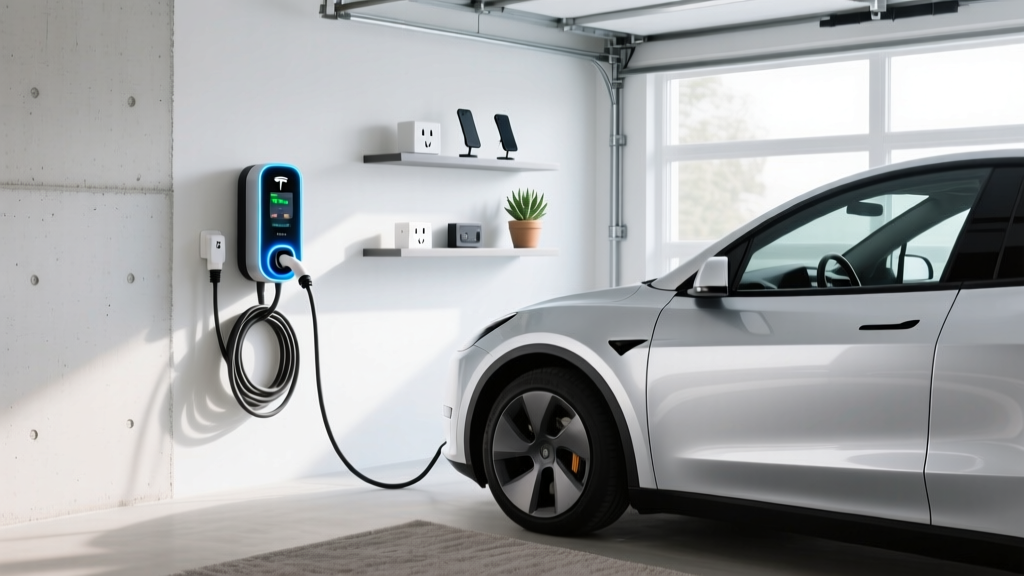
This is where the sticker shock hits some buyers. A Level 2 home charger requires a dedicated 240V circuit — the same voltage your electric dryer or oven uses. Total installation cost depends on your home's electrical panel capacity, the distance from panel to charger location, and local permit fees.
| Component | Simple Install (panel near garage, 200A service) | Complex Install (long wire run, subpanel needed) | Panel Upgrade Required (older 100A service) |
|---|---|---|---|
| Level 2 charger equipment (hardwired, 40–48A) | $400–$700 | $400–$700 | $400–$700 |
| Electrician labor (licensed) | $300–$800 | $800–$2,000 | $600–$1,500 |
| Electrical permit | $50–$200 | $50–$200 | $100–$300 |
| Panel upgrade (100A → 200A) | Not needed | Not needed | $1,500–$3,500 |
| Conduit, wiring, misc. materials | $50–$150 | $200–$500 | $100–$300 |
| Total estimated cost | $800–$1,850 | $1,450–$3,400 | $2,700–$6,300 |
A few critical details most guides gloss over:
- Panel capacity matters. A 48A charger draws roughly 11.5 kW continuously. On a 100A panel already serving an electric range, dryer, and HVAC, you may not have enough headroom. Your electrician will perform a load calculation per NEC Article 220. If you're over 80% of panel capacity, you'll need either a panel upgrade or a smart load-management device (like the Emporia V2 with load shedding) that throttles charger amperage when other appliances kick on.
- Permit is not optional. Most jurisdictions require an electrical permit and inspection for a new 240V circuit. Skipping this risks insurance claim denial if an electrical fire occurs, and it will surface during a home sale inspection.
- The federal §30D credit does not cover home charger installation in 2026. The separate §25C Energy Efficient Home Improvement Credit previously offered up to $1,000 for EVSE installation, but eligibility rules and expiration dates vary. Check IRS guidance and consult a tax professional before assuming a credit applies.
- Utility rebates can offset $200–$1,000. Many utilities offer rebates for smart Level 2 chargers, especially if you enroll in a time-of-use (TOU) rate plan. Check your local utility's EV program page before purchasing equipment.
Which Connector Does Your EV Need? NACS, CCS, and CHAdeMO in 2026
The connector landscape has consolidated dramatically. In 2026, the North American Charging Standard (NACS) — originally Tesla's proprietary connector — is the dominant standard, adopted by Ford, GM, Rivian, Volvo, Polestar, Hyundai/Kia (on new models), and most major automakers. CCS1 persists on older vehicles (2021–2024 models from VW, BMW, and some Hyundai/Kia models). CHAdeMO is effectively legacy, limited to the Nissan Leaf and Mitsubishi Outlander PHEV.
| Connector | Brands Using It (2026 new vehicles) | Public Station Availability | Adapter Needed? |
|---|---|---|---|
| NACS (Tesla standard) | Tesla, Ford, GM, Rivian, Volvo, Polestar, Hyundai (new), Kia (new), Mercedes (new) | Tesla Superchargers (20,000+ stalls), growing NACS stations on EA, EVgo | CCS → NACS adapter (~$100–$200) for CCS vehicles at Tesla Superchargers |
| CCS1 (Combo) | VW (older), BMW (older), Stellantis, some 2024–2025 Hyundai/Kia | Electrify America, EVgo, ChargePoint DC stations | NACS → CCS adapter available; Ford/GM provide complimentary adapters |
| CHAdeMO | Nissan Leaf (legacy), Mitsubishi Outlander PHEV | Declining; some EA and EVgo stations still equipped | No adapter available for DC; plan routes carefully |
Adapter reality check: If you drive a CCS-equipped vehicle (e.g., a 2024 Hyundai Ioniq 5 or VW ID.4), you can access Tesla Superchargers using a NACS adapter. Ford and GM shipped complimentary adapters to registered owners; aftermarket adapters from Tesla and third parties cost $100–$230. The reverse — plugging a NACS vehicle into a CCS station — also requires an adapter. Confirm adapter compatibility with your specific model year before purchasing, as firmware updates occasionally affect handshake protocols.
Equipment Picks: Recommended Home Level 2 Chargers for 2026
Not all Level 2 chargers are equal. Here's what separates a reliable daily driver from a frustrating one: adjustable amperage (so you can match your circuit capacity), a cable long enough to reach your charge port regardless of parking orientation, NEMA 4 outdoor rating if installed outside, and smart scheduling to exploit off-peak electricity rates.
Emporia Level 2 EV Charger
- Power: Up to 11.5 kW (48A) — adjustable down to 16A
- Connector: NACS (CCS adapter included in box)
- Cable length: 24 ft
- Smart features: Wi-Fi, app scheduling, solar integration, load management with Emporia Vue panel monitor
- Rating: NEMA 4 (indoor/outdoor)
- Price: ~$399
Best for: Budget-conscious buyers who want load-management capability and energy monitoring.
ChargePoint Home Flex (2nd Gen)
- Power: Up to 12 kW (50A) — adjustable via dip switch
- Connector: NACS native (CCS J1772 variant also available)
- Cable length: 23 ft
- Smart features: Wi-Fi, Alexa/Google Home, scheduled charging, ChargePoint network account integration
- Rating: NEMA 4
- Price: ~$599
Best for: Drivers who use ChargePoint's public network and want a unified app experience.
Tesla Wall Connector
- Power: Up to 11.5 kW (48A)
- Connector: NACS native
- Cable length: 24 ft
- Smart features: Wi-Fi, OTA updates, Power Sharing (link two units on one circuit), Tesla app integration
- Rating: NEMA 4
- Price: ~$420
Best for: Tesla owners and NACS-native vehicles. Sleek design, reliable firmware.
Grizzl-E Smart (United Chargers)
- Power: Up to 10 kW (40A)
- Connector: NACS or J1772 (configurable)
- Cable length: 24 ft
- Smart features: OCPP-compatible, works with multiple apps, adjustable amperage
- Rating: NEMA 4X (superior weather resistance)
- Price: ~$499
Best for: Extreme climates. Built in Canada, rated to -40°F operation.
Safety, Electrical Code, and the Upgrades Your Home Might Need
Level 2 EV charging draws sustained, high-amperage current for hours — a duty cycle far more demanding than a dryer that cycles on and off. This makes code compliance non-negotiable.
- Dedicated circuit required. NEC 625.40 requires a dedicated branch circuit for EVSE. You cannot share the circuit with other appliances. A 48A charger requires a 60A breaker (NEC 125% continuous-load rule: 48A × 1.25 = 60A).
- GFCI protection. NEC 2020 and later require GFCI protection for all receptacles used for EV charging. Hardwired installations (no plug) avoid the nuisance-tripping issues some owners experience with 240V GFCI breakers and NEMA 14-50 receptacles. Most experienced EV electricians recommend hardwiring for reliability.
- Wire gauge. A 60A circuit requires 6 AWG copper wire (THHN in conduit) or 4 AWG NM-B (Romex) depending on installation method and local code amendments. Your electrician determines this based on run length and voltage drop calculations.
- Outdoor rating. If your charger mounts outside, it must carry a NEMA 4 (splash-resistant) or NEMA 4X (corrosion-resistant) rating. All recommended chargers above meet this standard.
- The 100A panel trap. Homes built before 1990 frequently have 100A main panels. Adding a 60A EV circuit to a 100A panel that already serves electric heat, a dryer, and a range will almost certainly exceed capacity. Budget $1,500–$3,500 for a 200A panel upgrade — or consider a lower-amperage charger (32A / 7.7 kW) that fits within existing capacity. A 32A charger still adds ~25 miles per hour, which is more than enough for overnight replenishment.
Charging Time Examples: What to Expect With Common Battery Sizes
Charge time depends on battery capacity (kWh), charger power (kW), and the vehicle's onboard charger limit (for Level 2) or DC charge-curve profile (for fast charging). Here are realistic 10–80% times for representative 2026 EVs:
- Tesla Model Y Long Range (75 kWh usable, NMC): Level 2 at 11.5 kW → ~5 hours. DC fast at 250 kW peak → 10–80% in ~18 minutes (sustained rate averages ~170 kW due to taper above 50% SoC).
- Hyundai Ioniq 5 (77.4 kWh usable, NMC): Level 2 at 10.9 kW → ~5.5 hours. DC fast at 238 kW peak (800V architecture) → 10–80% in ~18 minutes. One of the fastest-charging EVs available.
- Ford F-150 Lightning Extended Range (131 kWh usable, NMC): Level 2 at 11.5 kW → ~9.5 hours. DC fast at 150 kW peak → 10–80% in ~42 minutes. Large batteries take longer — plan accordingly.
- Chevrolet Equinox EV (85 kWh usable, NMC): Level 2 at 11.5 kW → ~6 hours. DC fast at 150 kW peak → 10–80% in ~28 minutes.
- Tesla Model 3 RWD (57.5 kWh usable, LFP): Level 2 at 11.5 kW → ~4 hours. DC fast at 170 kW peak → 10–80% in ~22 minutes. LFP chemistry tolerates 100% daily charging without accelerated degradation — a key advantage of LFP batteries.
Frequently Asked Questions
How much does it cost to install a home EV charger?
Between $800 and $1,850 for a straightforward install on a modern 200A panel. If your home needs a panel upgrade from 100A to 200A, expect $2,700–$6,300 total. Always get a load calculation from a licensed electrician before assuming your panel has capacity.
How fast will each charging level add range?
Level 1 (120V) adds 3–5 miles per hour — enough only for plug-in hybrids with small batteries or emergency top-offs. Level 2 (240V, 48A) adds 30–44 miles per hour, fully replenishing most EVs overnight. DC fast charging adds 150–300+ miles in a 20–30 minute stop, depending on the vehicle's peak kW acceptance and battery temperature.
Which connector/charger is compatible with my EV?
For 2026 new vehicles, NACS is the dominant standard — Tesla, Ford, GM, Rivian, Volvo, Polestar, and new Hyundai/Kia models use it. CCS1 persists on 2021–2024 models from VW, BMW, and others. CHAdeMO is limited to the Nissan Leaf. Check your vehicle's charge port or owner's manual, and confirm adapter availability if you plan to use stations with a different connector.
How much does charging cost per mile vs gas?
Home charging at the national average ($0.17/kWh) costs roughly $0.05 per mile for an EV averaging 3.5 miles per kWh. A 28 MPG gas car at $3.40/gallon costs $0.12 per mile. Even public DC fast charging at $0.48/kWh ($0.14/mile) is competitive with a less-efficient gas vehicle. Off-peak home charging at $0.09/kWh drops to $0.026/mile — the cheapest fueling option available.
What electrical upgrades might I need?
The most common upgrade is a 100A-to-200A panel replacement, required when your existing panel lacks capacity for a dedicated 60A EV circuit alongside other major appliances. Older homes may also need a new meter socket, service drop from the utility, or a subpanel if the charger is far from the main panel. A smart load-management system can sometimes avoid a panel upgrade by dynamically reducing charger amperage when other loads are active.
Are there any truly free charging stations in 2026?
Yes, but they're dwindling. Some workplaces, hotels, shopping centers, and municipal lots offer free Level 2 charging as a customer or employee perk. Apps like PlugShare and ChargeHub let you filter for free stations. Expect slow speeds (3–7 kW), time limits (1–2 hours), and competition from other EV drivers. Treat free charging as a bonus, not a strategy.