If you've pulled into a shopping center and spotted a row of EV chargers with green-lit screens, you've probably wondered: are car charging stations free? The short answer is almost always no — but the longer answer depends entirely on where you plug in, what kind of charger you use, and when you charge. A handful of workplaces, hotels, and municipalities still subsidize Level 2 charging as a perk, but the era of universally free public charging ended years ago as networks scaled up and utilities demanded metered revenue.
This guide breaks down the real economics of EV charging in 2026 — from the pennies-per-mile cost of overnight home charging to the premium you'll pay at a 350 kW DC fast charger on a road trip. We'll also cover what it costs to install a home Level 2 charger (including the panel-upgrade scenario nobody warns you about), which connector your car needs, and exactly how fast each charging level adds range.
How Fast Does Each Charging Level Add Range?
EV charging falls into three tiers, and the speed gap between them is enormous. Level 1 is a trickle, Level 2 is your daily workhorse, and DC fast charging is the road-trip express lane. Here's the honest breakdown — not marketing numbers, but real-world averages accounting for charge-curve taper, thermal management, and typical battery sizes (75–100 kWh packs common in 2026 crossovers and sedans).
| Level | Voltage | Power (kW) | Miles of Range Added per Hour | Typical 10–80% Time (75 kWh Battery) | Best Use Case |
|---|---|---|---|---|---|
| Level 1 (120V) | 120V AC | 1.0–1.4 kW | 3–5 mi/hr | Not practical (~50+ hrs) | Overnight top-ups, PHEVs, emergencies |
| Level 2 (240V) | 240V AC | 7.2–19.2 kW | 25–70 mi/hr | 4–8 hours | Daily home/work charging |
| DC Fast Charging | 400–800V DC | 50–350 kW | 150–1,200+ mi/hr (peak) | 15–35 minutes | Road trips, quick top-ups |
A critical reality check on DC fast charging: that "350 kW peak" number only applies to a narrow window in the middle of the charge session — typically between 10% and 40% state of charge (SoC). Above 80%, the car's battery management system dramatically reduces power to protect cell health, often tapering to 50 kW or less. This is why every manufacturer quotes "10–80% time" rather than 0–100%. If you're on a road trip, charging from 10% to 80% and then driving on is almost always faster than waiting for a full 100%.
Are Public Charging Stations Actually Free?
Let's answer the question directly. In 2026, the vast majority of public charging stations are not free. Here's what you'll actually encounter:
- Free Level 2 (rare): Some workplaces, hotels, car dealerships, and a few forward-thinking municipalities still offer complimentary Level 2 charging. These are typically limited to 2–4 hours and may require you to be a customer or employee. Availability has shrunk significantly since 2022 as property owners recognized the electricity cost and liability.
- Paid Level 2 (common): Networks like ChargePoint, EVgo, and Electrify America charge between $0.12 and $0.35 per kWh at Level 2 stations, depending on location and time of day. Some locations add a per-session fee of $1.00–$2.00.
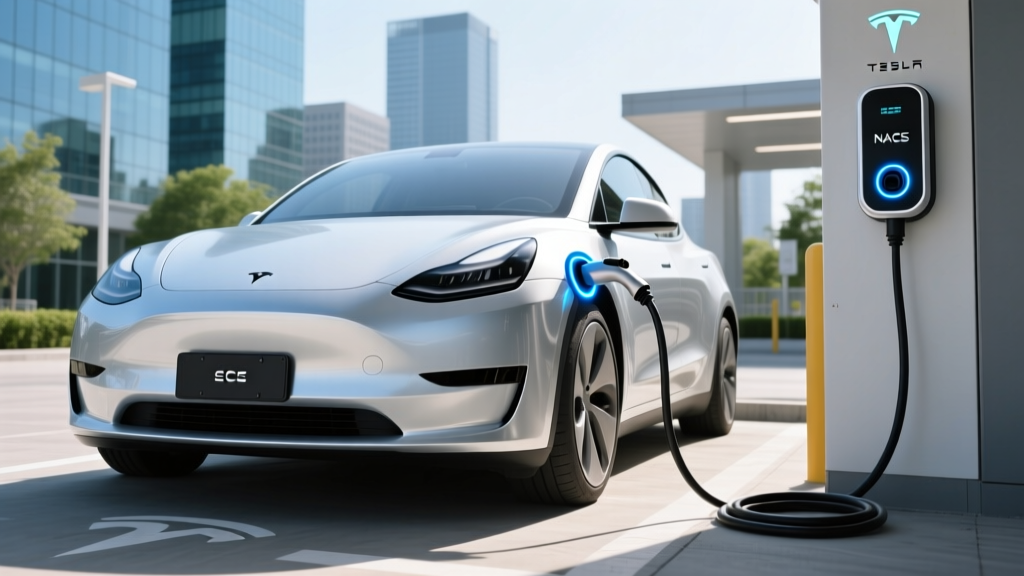
- DC Fast Charging (always paid): Expect $0.30 to $0.55 per kWh at major networks, with Tesla Superchargers typically running $0.25–$0.40 per kWh for non-Tesla vehicles (via the NACS adapter ecosystem that's now standard). Idle fees of $0.50–$1.00 per minute kick in if you stay plugged in after reaching your charge limit.
- Subscription plans: Electrify America's Pass+ ($4/month) and EVgo's Plus plan reduce per-kWh rates by 10–25%, which pays for itself if you public-charge more than twice a month.
The bottom line: if you rely on public charging exclusively, your fuel cost advantage over gasoline shrinks considerably. The economics work best when you charge at home.
The Real Cost to Charge: Home vs. Public vs. Gas
Here's where the rubber meets the road — or rather, where the electrons meet the battery. The table below models a realistic scenario: a 2026 Hyundai Ioniq 5 (84 kWh usable battery, EPA-estimated 310 miles of range) driven 1,000 miles per month. We'll compare three charging scenarios against a comparable 27 MPG gas car at $3.40/gallon.
| Charging Scenario | $/kWh | kWh Used per 1,000 mi | Monthly Cost | Cost per Mile |
|---|---|---|---|---|
| Home (off-peak utility rate) | $0.11 | 330 kWh | $36.30 | $0.036 |
| Home (standard residential rate) | $0.16 | 330 kWh | $52.80 | $0.053 |
| Public Level 2 (average network) | $0.25 | 330 kWh | $82.50 | $0.083 |
| DC Fast Charging (road-trip average) | $0.40 | 330 kWh | $132.00 | $0.132 |
| Gas car (27 MPG combined, $3.40/gal) | — | 37 gallons | $125.80 | $0.126 |
The takeaway is stark. Home charging at off-peak rates is roughly 70% cheaper per mile than gasoline. But if you exclusively DC fast charge, you're actually paying more per mile than a fuel-efficient gas car. This is why home charging access is the single most important factor in EV ownership economics. According to the U.S. Department of Energy's fueleconomy.gov, the national average electricity rate for EV charging is approximately $0.16/kWh, yielding an average fuel cost of about $0.05/mile — roughly half the cost of gas.
Many utilities now offer time-of-use (TOU) plans that drop rates to $0.08–$0.12/kWh between midnight and 6 AM. If your charger supports scheduled charging (most smart Level 2 units do), you can set it to start automatically during these off-peak windows.
How Much Does It Cost to Install a Home EV Charger?
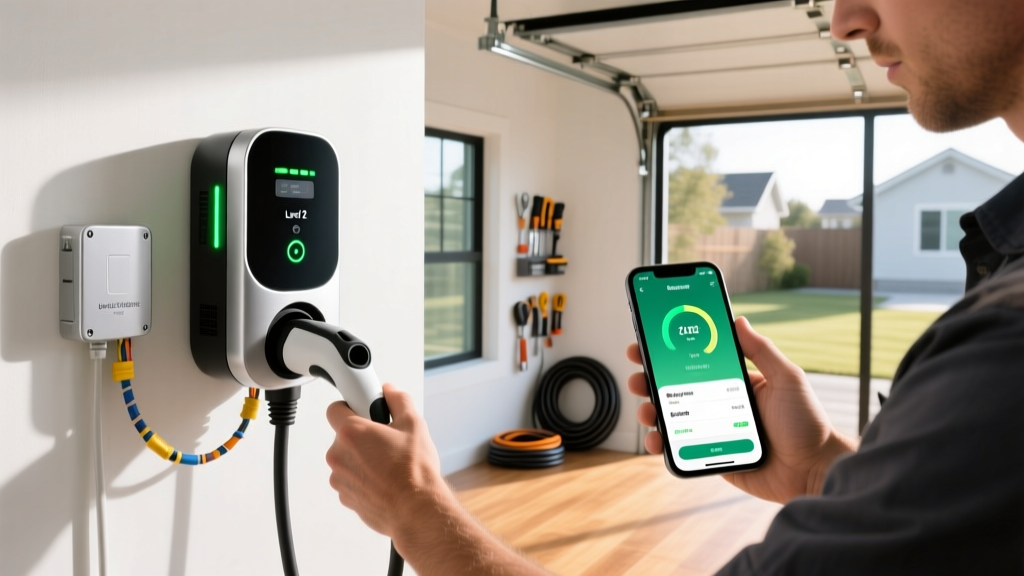
This is the question that stops many prospective EV buyers cold, and the answer varies wildly depending on your home's electrical panel, the distance from panel to garage, and local permit requirements. Here's an honest breakdown.
| Component | Typical Cost Range | Notes |
|---|---|---|
| Level 2 charger (hardware) | $350–$750 | 32A–48A smart chargers; Tesla Wall Connector, ChargePoint Home Flex, Emporia |
| Electrician labor (standard install) | $500–$1,500 | Assumes panel is nearby, conduit run under 30 ft, drywall work minimal |
| Electrical permit | $50–$200 | Varies by municipality; some jurisdictions waive for EV installs |
| Panel upgrade (200A service) | $1,500–$3,500 | Required if existing panel is 100A or has no spare breaker slots |
| Conduit/trenching (long runs) | $500–$2,000 | If garage is far from panel or requires underground conduit |
| Total (standard install, no panel upgrade) | $900–$2,450 | Most homes with 200A service and nearby panel |
| Total (with panel upgrade) | $2,400–$5,950 | Older homes with 100A service or maxed-out panels |
The Panel-Upgrade Gotcha Nobody Mentions
If your home has a 100-amp electrical panel — common in houses built before 1990 — you almost certainly need an upgrade to 200 amps before adding a 40A or 50A EV circuit. This isn't optional; the National Electrical Code (NEC) requires that your total calculated load not exceed 80% of panel capacity. A licensed electrician will perform a load calculation before quoting the job.
The good news: the IRS Residential Clean Energy Credit (§25D) covers 30% of the cost of home charging equipment and installation, including panel upgrades if they're necessary to support the charger, capped at $1,000 for the charger hardware portion. Always consult a tax professional to confirm your eligibility, as rules are subject to change.
Electrical Requirements for a Level 2 Home Charger
For a typical 48A Level 2 charger (the sweet spot for most EVs in 2026), you'll need:
- Circuit: Dedicated 60-amp breaker (NEC requires circuits rated at 125% of continuous load, so a 48A charger needs a 60A circuit)
- Voltage: 240V AC (same as your dryer or oven outlet)
- Wire gauge: 6 AWG copper (or 4 AWG aluminum) for runs under 50 feet; thicker for longer runs
- GFCI protection: Required by NEC 2020 and later for garage receptacles; hardwired chargers may have built-in ground-fault protection
- Outdoor rating: If installing outside, the charger must carry a NEMA 4 (weatherproof) rating — most major brands now include this as standard
We strongly recommend hardwiring your Level 2 charger rather than using a NEMA 14-50 receptacle. Hardwired installations eliminate the receptacle as a failure point (they can overheat under sustained 40A+ loads), often don't require a GFCI breaker (saving $50–$100), and are generally considered more reliable for daily use.
Which Connector Is Compatible With My EV?
The connector landscape in 2026 has simplified dramatically compared to the fragmented mess of 2020–2023. The North American Charging Standard (NACS), originally developed by Tesla, is now the dominant connector for new vehicles. But millions of CCS-equipped EVs are still on the road, and adapters bridge the gap.
| Connector | Brands Using It (Native) | DC Fast Charge Availability | Adapter Needed For |
|---|---|---|---|
| NACS (Tesla) | Tesla, Ford, GM, Rivian, Volvo, Polestar, Hyundai/Kia (2025+), BMW, Mercedes-Benz | Tesla Superchargers + NACS-equipped public stations | CCS-to-NACS adapter for legacy CCS stations (~$150–$200) |
| CCS1 | Legacy models (pre-2025 VW ID.4, older Bolt EUV, Stellantis) | Electrify America, EVgo, ChargePoint DC stations | NACS-to-CCS adapter to use Tesla Superchargers (~$200–$250) |
| CHAdeMO | Nissan Leaf (discontinued), Mitsubishi Outlander PHEV | Limited and declining network | No practical adapter; CHAdeMO stations are being phased out |
If you're buying a new EV in 2026, it almost certainly has a NACS port. Ford, GM, Rivian, and Hyundai/Kia owners can now access Tesla's Supercharger network — over 25,000 stalls in North America — either natively or with a manufacturer-provided adapter. This has effectively ended the "which network" anxiety that plagued early EV adopters.
For home Level 2 charging, all vehicles use the J1772 connector standard (or NACS, which includes J1772 signaling). Every Level 2 home charger sold in the US will work with every EV, either natively or with a simple J1772-to-NACS adapter that typically ships with the car.
Recommended Home Level 2 Chargers for 2026
After testing and tracking reliability data across dozens of units, these are the chargers we recommend for most EV owners. All support NACS or J1772 connectors, include smart scheduling features, and carry at least a 3-year warranty.
Tesla Wall Connector (Gen 4)
- Power output: 48A / 11.5 kW (on 60A circuit)
- Connector: NACS (native); J1772 adapter available
- Cable length: 24 ft
- Smart features: Wi-Fi, OTA updates, load sharing (pair two units on one circuit), Tesla app scheduling
- Price: ~$475
- Best for: Tesla owners and NACS-equipped Ford/GM/Rivian/Hyundai vehicles
ChargePoint Home Flex
- Power output: Up to 50A / 12 kW (adjustable 16A–50A via DIP switches)
- Connector: J1772 (NACS adapter included with most 2025+ EVs)
- Cable length: 23 ft
- Smart features: Wi-Fi, ChargePoint app, Alexa integration, scheduled charging, energy tracking
- Price: ~$599
- Best for: Flexible amperage for older panels; excellent app and energy reporting
Emporia Vue Smart Charger
- Power output: 48A / 11.5 kW (on 60A circuit)
- Connector: J1772 (NACS version available)
- Cable length: 24 ft
- Smart features: Wi-Fi, integrates with Emporia home energy monitor, solar-aware charging, TOU scheduling
- Price: ~$399
- Best for: Budget-conscious buyers who want smart features and solar integration
All three chargers are NEMA 4 rated for outdoor installation, support hardwired or plug-in (NEMA 14-50) configurations, and can be set to lower amperages if your panel can't support a full 60A circuit. The Emporia is the value pick; the Tesla Wall Connector is the performance and reliability pick for NACS vehicles; the ChargePoint offers the most granular app control.
Safety, Permits, and Code Considerations
EV charging involves sustained high-current draw — often 8+ hours at 40A or more. This isn't like plugging in a lamp. Here's what your installation must address:
- Dedicated circuit: Your Level 2 charger must be on its own dedicated breaker. Sharing a circuit with other appliances is a code violation and a fire risk.
- Permit and inspection: Most jurisdictions require an electrical permit for EV charger installation. The inspector will verify wire gauge, breaker size, grounding, and GFCI compliance. Don't skip this — unpermitted work can void your homeowner's insurance in the event of an electrical fire.
- Load management: If your panel is near capacity, consider a smart charger with built-in load management (like the Emporia or certain ChargePoint configurations) that monitors total home draw and reduces charging current when other appliances activate.
- Outdoor installation: Use only NEMA 4-rated equipment outdoors. Ensure the conduit entry point is sealed against moisture. In regions with extreme cold, verify the charger's operating temperature range — most are rated to -22°F (-30°C), but cable flexibility decreases in deep cold.
- Ventilation: Indoor garage installations don't require special ventilation for EV chargers (unlike gas water heaters), but ensure the unit isn't installed in a location where it will be exposed to direct water spray or physical damage from vehicles.
For more on electrical safety standards, the National Highway Traffic Safety Administration (NHTSA) maintains EV safety resources, and the National Fire Protection Association publishes the NEC guidelines your electrician will follow.
Charging Time Examples for Common 2026 EVs
How long will your specific car take to charge? These examples use real-world sustained charging rates, not just peak kW figures, because the charge curve matters enormously.
| Vehicle | Battery (kWh usable) | Peak DC Rate (kW) | 10–80% DC Fast Time | Level 2 at 11.5 kW (0–100%) |
|---|---|---|---|---|
| Tesla Model Y (Long Range) | 78 kWh | 250 kW | ~25 min | ~7.5 hours |
| Hyundai Ioniq 5 (Long Range) | 84 kWh | 238 kW (800V) | ~18 min | ~8 hours |
| Ford Mustang Mach-E (Extended) | 91 kWh | 150 kW | ~38 min | ~9 hours |
| Chevrolet Equinox EV (3RS) | 85 kWh | 190 kW | ~28 min | ~8.5 hours |
| BMW iX xDrive50 | 105 kWh | 200 kW | ~34 min | ~10 hours |
| Toyota bZ4X (FWD) | 72 kWh | 150 kW | ~30 min | ~7 hours |
Note the Hyundai Ioniq 5's advantage: its 800-volt architecture allows it to sustain high charging power longer than 400V competitors, translating to a genuinely faster 10–80% time even though its peak kW rating isn't the highest. This is why sustained charge rate matters more than peak rate — a car that holds 200 kW from 10–60% will beat a car that peaks at 250 kW but drops to 100 kW by 40%.
Frequently Asked Questions
Can I charge my EV with a regular household outlet?
Yes, but slowly. A standard 120V outlet delivers about 1.2 kW, adding roughly 3–5 miles of range per hour. For a plug-in hybrid with 30 miles of electric range, overnight Level 1 charging works fine. For a full BEV with a 75+ kWh battery, Level 1 would take 50+ hours for a full charge — it's only practical as an emergency backup or for very low daily mileage (under 20 miles/day).
Does fast charging damage my EV battery?
Modern battery management systems are sophisticated enough to prevent significant damage, but exclusive DC fast charging does accelerate degradation slightly. Data from IRS-qualified EVs with 8-year/100,000-mile battery warranties (which mandate no more than 30% capacity loss) shows that vehicles fast-charged more than 80% of the time lose roughly 2–5% more capacity over 5 years compared to primarily Level 2-charged vehicles. The practical recommendation: use DC fast charging for road trips, Level 2 for daily needs.
What happens if I don't have a garage or dedicated parking spot?
This is one of the biggest barriers to EV ownership. Options include: curbside Level 2 chargers (expanding in cities like Los Angeles, New York, and Seattle), workplace charging, apartment-building chargers (increasingly required by local ordinances in states like California, New York, and Colorado), and relying on public DC fast charging (which is viable but significantly more expensive than home charging). If you can't charge at home, a PHEV with 30–40 miles of electric range may be a more practical electrified choice.
Is it worth getting a time-of-use electricity plan for EV charging?
Almost always yes, if your utility offers one. Typical TOU plans drop rates to $0.08–$0.12/kWh during overnight hours (often 12 AM–6 AM) and raise them to $0.20–$0.35/kWh during peak evening hours (4 PM–9 PM). If you charge exclusively overnight, your effective rate drops by 30–50% compared to a flat-rate plan. Most smart chargers let you schedule charging windows through their apps.
How do I find free or cheap charging near me?
Apps like PlugShare, ChargePoint, and A Better Routeplanner (ABRP) let you filter for free stations. Workplace charging, some hotel stays, and certain retail locations (notably some IKEA and Whole Foods locations) still offer complimentary Level 2 charging. However, treat free charging as a bonus, not a plan — availability is unreliable and often limited to short sessions.