If you're new to electric vehicles, the charging landscape can feel like a maze of incompatible plugs, confusing power ratings, and wildly varying speeds. The short answer to the question on every new EV buyer's mind — are all electric car chargers the same? — is a definitive no. Chargers differ across three critical dimensions: power level (how fast they deliver energy), connector type (the physical plug that mates with your car), and pricing structure (what you actually pay per mile of range). Getting these distinctions right is the difference between a seamless ownership experience and a frustrating one.
This guide breaks down every charging variable you need to understand in 2026, from the 120-volt outlet in your garage to the 350 kW DC fast chargers lining interstate corridors. We'll cover exact speeds in kilowatts (kW), real-world range added per hour, home installation costs with electrician breakdowns, connector compatibility by automaker, and the true cost-per-mile compared to gasoline.
The Three Charging Levels: Speed, Power, and What They Mean for Your Daily Routine
EV charging is categorized into three levels based on voltage, amperage, and whether the power is alternating current (AC) or direct current (DC). Understanding these levels is foundational — each serves a different use case, and most EV owners will use all three at various points.
Before we get into the numbers, a critical distinction: kW (kilowatts) measures the rate of power delivery — think of it as the width of the hose. kWh (kilowatt-hours) measures the total energy stored in your battery — the size of the tank. A charger rated at 11.5 kW can, in theory, deliver 11.5 kWh of energy in one hour. Your car's battery capacity is measured in kWh (e.g., a Tesla Model Y Long Range has roughly 75 kWh of usable capacity). Confusing these two units is the single most common EV literacy mistake.
| Level | Voltage | Max Power (kW) | Miles of Range Added/Hour | Typical Use Case | 10–80% Charge Time (75 kWh Battery) |
|---|---|---|---|---|---|
| Level 1 | 120V AC | 1.0–1.4 kW | 3–5 miles | Overnight top-ups, PHEVs, low-mileage drivers | 50+ hours (impractical) |
| Level 2 | 240V AC | 7.2–19.2 kW | 20–75 miles | Home daily charging, workplace, hotels | 3.5–8 hours |
| DC Fast Charge | 400–800V DC | 50–350 kW | 150–1,200+ miles/hour (peak) | Road trips, highway corridors, quick top-ups | 15–45 minutes |
Level 1 uses a standard household 120V outlet and the portable cord that comes with most EVs. It's slow — roughly 3 to 5 miles of range per hour of charging — but it's free if you already have an accessible outlet. For plug-in hybrid owners with 30–40 miles of electric range, Level 1 overnight charging is often sufficient. For BEV owners with 250+ miles of range, it's a backup option at best.
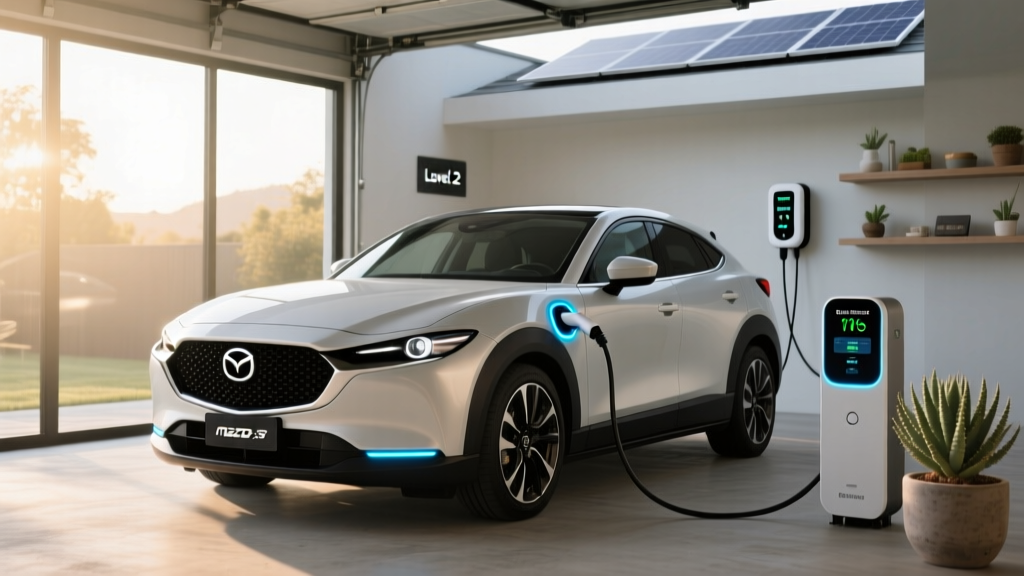
Level 2 is the backbone of practical EV ownership. Running on 240V (the same voltage as your electric dryer or oven), a Level 2 charger delivers between 7.2 kW and 19.2 kW, adding 20 to 75 miles of range per hour. Most EV owners install a Level 2 station at home and wake up to a full battery every morning. This is the charger you'll use 90% of the time.
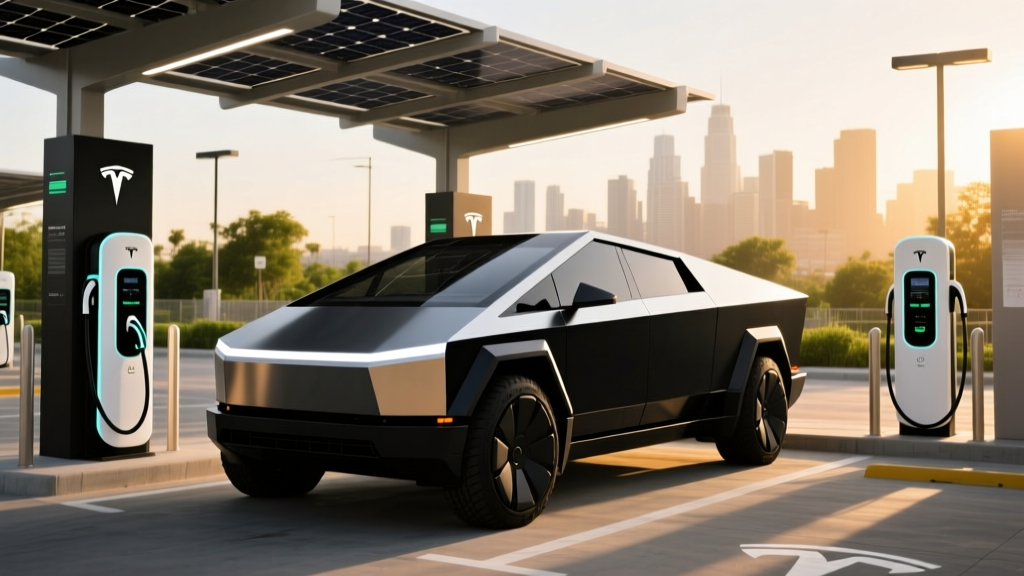
DC Fast Charging bypasses the car's onboard AC-to-DC converter and feeds direct current straight into the battery at high power. Speeds range from 50 kW (older or budget stations) to 350 kW (modern Electrify America or Tesla Supercharger V4 stalls). A 75 kWh battery can go from 10% to 80% in as little as 15–20 minutes on a 250+ kW charger — though the charge curve tapers significantly above 80% State of Charge (SoC) to protect battery health. DC fast charging is for road trips and emergencies, not daily use; frequent exclusive reliance on DCFC can accelerate battery degradation over time.
Connector Compatibility: NACS, CCS1, and CHAdeMO Explained
The physical plug — the connector — is where the "are all electric car chargers the same" question gets most tangible. Not every charger plug fits every car, though the industry is rapidly consolidating around the North American Charging Standard (NACS).
| Connector | Automakers Using It (New Vehicles) | Max DCFC Power Supported | Adapter Needed? |
|---|---|---|---|
| NACS (Tesla) | Tesla, Ford, GM, Rivian, Volvo, Polestar, Hyundai, Kia, BMW, Mercedes-Benz, Lucid, Fisker | Up to 350 kW (varies by vehicle) | CCS1 vehicles need a NACS-to-CCS adapter (~$150–$250) to use Tesla Superchargers |
| CCS1 (Combo) | VW (ID.4 pre-2025), Porsche (Taycan pre-2025), some Stellantis models, legacy 2023–2024 EVs | Up to 350 kW | NACS-equipped vehicles need a CCS adapter for Electrify America and other CCS networks |
| CHAdeMO | Nissan (Leaf only), Mitsubishi (Outlander PHEV) | Up to 100 kW | No widely available adapter to NACS or CCS1 |
For Level 2 home charging, the J1772 connector was the universal standard for non-Tesla vehicles for over a decade. With the shift to NACS, new 2025–2026 EVs from adopting brands now ship with a NACS inlet for both AC Level 2 and DC fast charging. Most new Level 2 home chargers now ship with a NACS plug, and J1772-to-NACS adapters are widely available for under $100 if you need to charge an older vehicle.
Adapter strategy for 2026: If your EV has a NACS port, carry a NACS-to-CCS adapter (such as the Lectron or A2Z adapter, typically $150–$200) to access Electrify America, EVgo, and other legacy CCS stations. If your EV has a CCS port, Tesla sells a CCS-to-NACS adapter (~$250) that grants access to the Supercharger network, which remains the most reliable public charging infrastructure in North America.
Home EV Charger Installation: Electrical Requirements, Costs, and Panel Upgrades
Installing a Level 2 home charger is the single most impactful upgrade an EV owner can make. But the total cost varies enormously depending on your home's electrical panel, the distance from the panel to your garage or driveway, and local permitting requirements.
Electrical Requirements
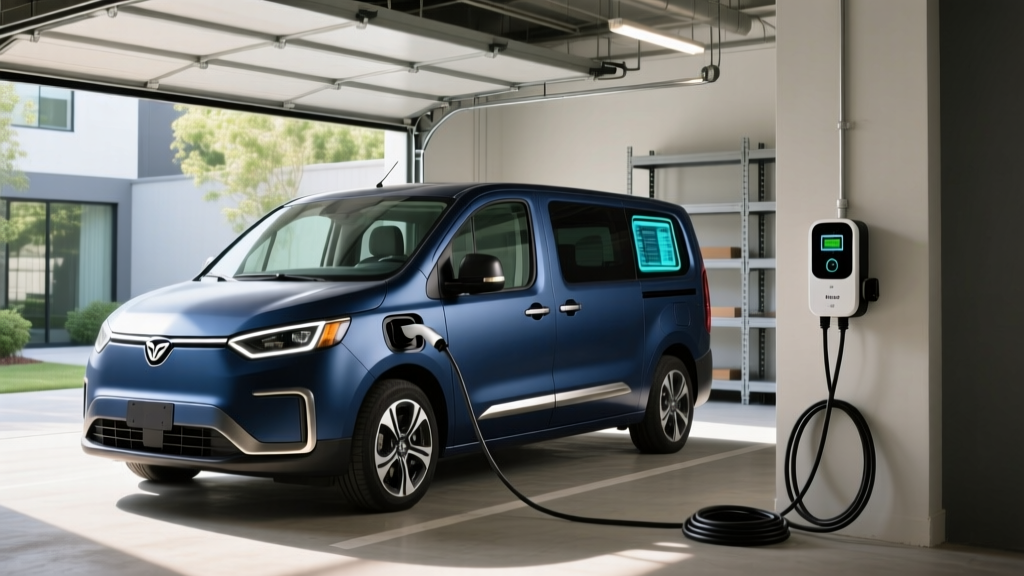
A typical Level 2 home charger requires a dedicated 240V circuit — most commonly a 40-amp or 60-amp breaker. The charger itself is usually rated for 32 amps (7.7 kW) or 48 amps (11.5 kW) on a continuous-load basis. National Electrical Code (NEC) requires that continuous loads not exceed 80% of the circuit breaker's rating, so a 48-amp charger needs a 60-amp breaker, and a 32-amp charger needs a 40-amp breaker.
If you're installing an outdoor charger, the unit must carry a NEMA 4 or NEMA 4X rating (weatherproof). All installations should include a GFCI (Ground Fault Circuit Interrupter) breaker for safety, and most jurisdictions now require this under the 2023 NEC revision. Your charger should also be UL-listed (Underwriters Laboratories) — avoid uncertified imports that lack proper safety testing.
Installation Cost Breakdown
| Cost Component | Simple Install (Panel Nearby, No Upgrade) | Moderate Install (Long Run, Minor Work) | Complex Install (Panel Upgrade Required) |
|---|---|---|---|
| Level 2 Charger Unit (hardware) | $400–$700 | $400–$700 | $400–$700 |
| Electrician Labor (licensed) | $300–$600 | $600–$1,200 | $1,000–$2,500 |
| Electrical Materials (conduit, wire, breaker) | $100–$250 | $250–$600 | $300–$800 |
| Permit Fee (local jurisdiction) | $50–$150 | $50–$150 | $50–$200 |
| Panel Upgrade (100A → 200A service) | N/A | N/A | $1,500–$4,000 |
| Total Estimated Cost | $850–$1,700 | $1,300–$2,650 | $3,250–$8,200 |
The biggest cost variable is whether your home's electrical panel can handle the additional load. Most modern homes built after 2000 have 200-amp service panels with spare capacity. Older homes — particularly those built before the 1980s — may have 100-amp panels that are already near capacity. A licensed electrician will perform a load calculation to determine whether you need a panel upgrade. This is not optional: overloading an undersized panel is a fire hazard.
Pro tip: Some utilities offer rebates of $250–$1,000 for Level 2 charger installation, and certain states offer additional incentives. Check with your local utility before scheduling the install. Additionally, the federal Alternative Fuel Vehicle Refueling Property Credit (IRS Form 8911) may cover up to 30% of home charging equipment and installation costs, capped at $1,000 — subject to income limits and census-tract eligibility. Consult a tax professional for your specific situation.
The Real Cost to Charge: Home vs. Public vs. Gasoline
One of the strongest arguments for EV ownership is lower per-mile fuel cost — but the savings depend heavily on where and when you charge. Let's run the numbers with concrete scenarios.
| Charging Scenario | Average $/kWh | Cost to Add 200 Miles (3.5 mi/kWh EV) | Cost Per Mile |
|---|---|---|---|
| Home Level 2 (national avg. residential rate) | $0.16/kWh | $9.14 | $0.046/mile |
| Home Level 2 (off-peak TOU rate) | $0.08/kWh | $4.57 | $0.023/mile |
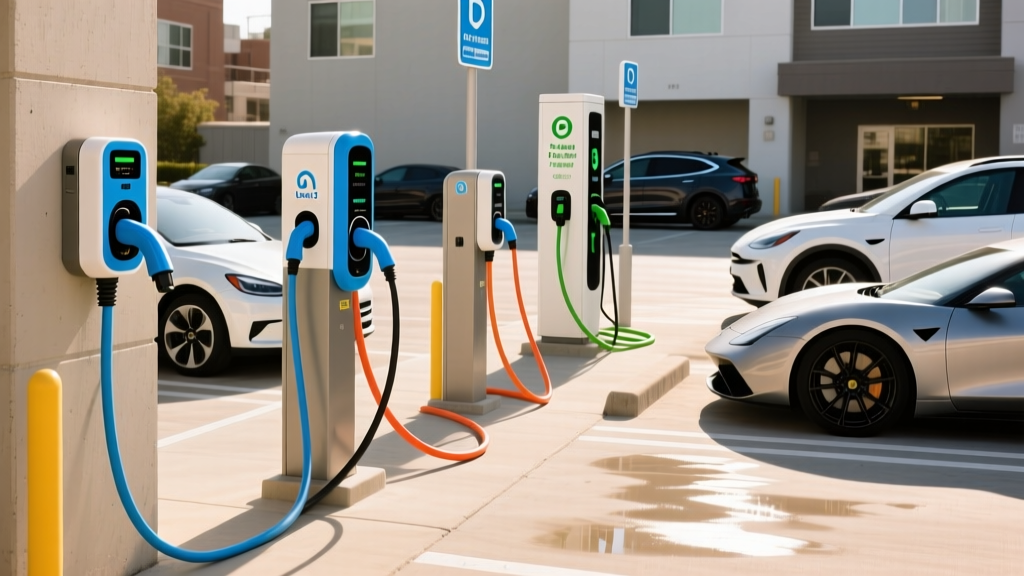
| Public Level 2 (ChargePoint, Blink, etc.) | $0.30–$0.49/kWh | $17.14–$28.00 | $0.086–$0.14/mile |
| DC Fast Charging (Tesla Supercharger avg.) | $0.28–$0.36/kWh | $16.00–$20.57 | $0.08–$0.103/mile |
| DC Fast Charging (Electrify America, EVgo) | $0.35–$0.56/kWh | $20.00–$32.00 | $0.10–$0.16/mile |
| Gasoline (25 MPG combined, $3.30/gal) | $3.30/gallon | $26.40 | $0.132/mile |
The takeaway is clear: home charging is where the savings live. At a national average residential rate of $0.16/kWh, an efficient EV (like the Hyundai Ioniq 6 SE at 4.0+ miles/kWh) costs roughly $0.04 per mile to fuel — about one-third the cost of a 25 MPG gas car at $3.30/gallon. If your utility offers time-of-use (TOU) rates and you charge overnight during off-peak hours, that drops to $0.02–$0.03 per mile.
Public DC fast charging, however, narrows the gap considerably. At $0.48/kWh (a common rate at non-Tesla DCFC networks in urban areas), you're paying $0.14/mile — essentially the same as a fuel-efficient gas car. The financial case for EVs depends on reliable home charging access. If you can only charge publicly at premium rates, the fuel-cost savings shrink dramatically.
Charging Time in Practice: What to Expect with Common Battery Sizes
Manufacturer-claimed charging times are measured under ideal conditions — battery preconditioned to optimal temperature, starting at 10% SoC, connected to a charger capable of the vehicle's maximum charge rate. Real-world times vary based on battery temperature, state of charge, and the charger's actual output.
Here's what to expect with common battery sizes in 2026:
Tesla Model Y Long Range (75 kWh battery, 250 kW peak DCFC):
10–80% on a 250 kW Supercharger: ~18–22 minutes. The charge curve peaks near 250 kW below 40% SoC, then tapers to ~100 kW by 60% and ~50 kW above 75%. On a 50 kW DCFC: ~70 minutes. On an 11.5 kW Level 2 home charger: ~6.5 hours (full charge).
Ford F-150 Lightning Extended Range (131 kWh battery, 150 kW peak DCFC):
10–80% on a 150 kW DCFC: ~40–45 minutes. The large battery means longer absolute charge times even at decent power. On a 19.2 kW Level 2 charger (80A circuit): ~7 hours (full charge). On an 11.5 kW Level 2: ~11 hours.
Hyundai Ioniq 5 (77.4 kWh battery, 240 kW peak DCFC on 800V architecture):
10–80% on a 350 kW charger: ~18 minutes (the Ioniq 5's 800V system sustains high charge rates exceptionally well). On a 150 kW charger: ~28 minutes. On an 11.5 kW Level 2: ~6.7 hours.
Equipment Picks: Best Home Level 2 Chargers for 2026
Not all Level 2 chargers are created equal. Here are four proven units we recommend, selected for reliability, safety certification, smart features, and value.
Tesla Wall Connector
Power: 11.5 kW (48A) on a 60A circuit
Connector: NACS (native), J1772 adapter included
Cable Length: 24 feet
Smart Features: Wi-Fi, OTA updates, power-sharing between two units, access control
Price: ~$475
Best For: Tesla owners and NACS-equipped vehicles. Excellent build quality and the most reliable Wi-Fi connectivity in the segment.
ChargePoint Home Flex
Power: Up to 12 kW (50A) on a 60A circuit; configurable down to 16A
Connector: NACS or J1772 (select at purchase)
Cable Length: 23 feet
Smart Features: Wi-Fi, app scheduling, Alexa integration, amperage adjustment via app
Price: ~$550–$650
Best For: Flexibility across panel capacities. The adjustable amperage means you can dial it down if your panel can't handle 60A.
Emporia Level 2 EV Charger
Power: 11.5 kW (48A) on a 60A circuit
Connector: NACS or J1772
Cable Length: 24 feet
Smart Features: Wi-Fi, energy monitoring, integration with Emporia Vue home energy panel, TOU scheduling
Price: ~$399
Best For: Budget-conscious buyers who want energy monitoring and solar integration without sacrificing power output.
Grizzl-E Smart
Power: 10 kW (40A) on a 50A circuit
Connector: NACS or J1772
Cable Length: 24 feet
Smart Features: Wi-Fi, OCPP-compatible, adjustable amperage
Price: ~$449
Best For: Extreme cold climates. Built in Canada, rated to -40°F, with a rugged aluminum enclosure. The most durable outdoor charger in its price range.
Every charger listed above is UL-listed (or ETL-listed to UL standards), supports hardwired installation (strongly preferred over plug-in NEMA 14-50 outlets for reliability and code compliance), and carries a minimum 3-year warranty. Avoid Amazon-marketplace chargers from unknown brands lacking UL certification — they may save $200 upfront but pose genuine fire and liability risks.
Safety, Code, and Installation Best Practices
EV charging draws sustained high current for hours at a time — far more demanding than most household appliances. Cutting corners on installation is dangerous and may void your homeowner's insurance in the event of a fire.
- Always use a licensed electrician. DIY 240V work is illegal in many jurisdictions without a permit and inspection, and mistakes can be lethal.
- Hardwired is preferred over plug-in. A hardwired connection eliminates the NEMA 14-50 receptacle as a failure point. Receptacles can overheat under sustained 40A+ loads, especially if the outlet is worn or low-quality. If you must use a receptacle, specify a commercial-grade (Hubbell or Bryant) 14-50 outlet — not a $10 residential unit.
- Dedicated circuit is mandatory. Your EV charger must be on its own breaker — not shared with other appliances.
- GFCI protection is required under the 2023 NEC (Article 625) for all EV charging outlets and is recommended for hardwired installations as well.
- Outdoor installations require a NEMA 4-rated charger enclosure and proper conduit sealing to prevent moisture ingress.
- Pull a permit. Most jurisdictions require an electrical permit for EV charger installations. The inspection ensures the work meets code and protects you in the event of an insurance claim.
Frequently Asked Questions
Are all electric car chargers the same plug?
No. In 2026, three connectors exist in North America: NACS (the dominant and growing standard, used by Tesla and most major automakers), CCS1 (being phased out but still present on older vehicles and many public stations), and CHAdeMO (legacy, found only on the Nissan Leaf and Mitsubishi Outlander PHEV). For Level 2 home charging, NACS and J1772 are the relevant connectors, and adapters between the two are inexpensive and widely available.
Can I charge any EV at any public charging station?
Not without the right adapter. Tesla Superchargers are now opening to non-Tesla NACS-equipped vehicles, but CCS-equipped cars need a NACS adapter. Similarly, Electrify America and EVgo stations primarily use CCS connectors, so NACS vehicles need a CCS adapter. Before a road trip, verify your adapter kit covers the networks along your route.
How much does it cost to install a home EV charger?
A straightforward Level 2 installation with adequate panel capacity typically costs $850–$1,700 all-in (charger, electrician, materials, permit). If your panel is far from the installation site, expect $1,300–$2,650. If your home needs a 200-amp panel upgrade, total costs can reach $3,250–$8,200. Always get a load calculation from a licensed electrician before committing.
Is it cheaper to charge an EV at home or at a public station?
Home charging is dramatically cheaper. At the national average residential rate of $0.16/kWh, you'll pay about $0.046 per mile. Public DC fast charging averages $0.35–$0.48/kWh, or $0.10–$0.14 per mile — comparable to gasoline. The economic case for EVs assumes reliable home or workplace charging access.
Do I need a 200-amp electrical panel to charge an EV at home?
Not necessarily. Many homes with 100-amp or 150-amp panels can accommodate a Level 2 charger if there is sufficient spare capacity after accounting for existing loads (HVAC, electric range, dryer). A licensed electrician will perform a NEC Article 220 load calculation to determine this. If the calculation shows insufficient capacity, options include a panel upgrade, a smart panel/load management device (such as the Emporia Smart Load Center), or reducing the charger's amperage setting.
Will frequent DC fast charging damage my EV battery?
Exclusively relying on DC fast charging can modestly accelerate battery degradation compared to predominantly Level 2 charging. Modern battery management systems mitigate this through thermal management and charge-rate limiting, but the physics of pushing high current through lithium-ion cells generates heat and stress. For daily use, Level 2 home charging is ideal; reserve DCFC for road trips and occasional top-ups. Most manufacturers warrant their batteries for 8 years/100,000 miles with a minimum 70% capacity retention threshold, per U.S. Department of Energy guidance.
What about the federal tax credit for home chargers?
The IRS Alternative Fuel Vehicle Refueling Property Credit (Form 8911) offers up to 30% of the cost of home charging equipment and installation, capped at $1,000. However, eligibility is restricted by census tract (the property must be in a qualifying low-income or non-urban census tract) and is subject to income limitations. Visit irs.gov for current eligibility rules and consult a tax professional to confirm your qualification.
Understanding that electric car chargers are not all the same — across power levels, connector types, and cost structures — is essential to making a confident EV purchase and optimizing your ownership experience. Equip your home with the right Level 2 station, carry the appropriate adapters, and charge smart, and the EV charging ecosystem works remarkably well.