The Challenge of EV Charging in Multi-Unit Dwellings
Owning an electric vehicle (EV) is a fantastic way to reduce your carbon footprint and save on fuel costs, but if you live in an apartment or condominium, charging at home can feel like an insurmountable hurdle. Unlike single-family homeowners who can simply mount a Level 2 charger on their garage wall, residents of Multi-Unit Dwellings (MUDs) must navigate shared electrical panels, strict Homeowners Association (HOA) rules, and complex property management approvals. However, as EV adoption accelerates, the infrastructure and legal frameworks supporting apartment and condo EV charger installation are rapidly improving. This beginner's complete guide will walk you through every step of getting an EV charger installed in your apartment or condo, from understanding your legal rights to selecting the right smart hardware.
Step 1: Understand Your 'Right to Charge' Laws
Before you approach your property manager or HOA board, you need to know your legal standing. Several states and municipalities have enacted 'Right to Charge' laws designed to prevent HOAs and landlords from unreasonably denying EV charger installation requests. States like California, Colorado, Florida, New York, and New Jersey have robust protections in place. Under these laws, while you are typically responsible for the costs of installation, electricity usage, and maintenance, the HOA cannot ban the installation outright or impose prohibitive fees.
According to the U.S. Department of Energy, understanding local and state regulations is the critical first step for residential charging infrastructure. If your state has a Right to Charge law, print a copy of the statute and include it in your proposal to the HOA. This demonstrates that you are informed and serious about the project.
Step 2: Evaluate Your Parking and Electrical Setup
The physical logistics of your parking space will dictate the type of installation required. Ask yourself the following questions:
- Is your parking space assigned or unassigned? If you do not have a dedicated, deeded space, an HOA will rarely approve a personal hardwired charger. In this case, you must advocate for a shared community charging station.
- Where is the nearest electrical panel? The distance from the electrical room to your parking space dictates the cost of trenching and conduit. A space located directly beneath or adjacent to the main electrical room will be significantly cheaper to wire.
- Does the building have the electrical capacity? Most older condos and apartments are not built with the spare electrical capacity to support multiple 40-amp or 48-amp Level 2 chargers. This is where a professional load calculation becomes mandatory.
Furthermore, consider the physical routing of the wiring. Electricians will typically use rigid metal conduit (RMC) or electrical metallic tubing (EMT) for indoor garage runs, and schedule 80 PVC buried at least 18 to 24 inches deep for outdoor trenching. The longer the run from the electrical room to your space, the higher the copper wire and labor costs will be.
Step 3: Prepare Your HOA or Property Manager Proposal
Property managers and HOA boards are primarily concerned with liability, aesthetics, and electrical safety. To get your apartment and condo EV charger installation approved quickly, you must present a professional, comprehensive proposal. Do not just send a casual email asking for permission.
Essential Documents to Include:
- Site Plan and Diagram: A visual layout showing the proposed charger location, conduit routing, and proximity to the electrical panel.
- Electrician Credentials: Proof of licensing and insurance for a certified EV installer (EVITP certified is a bonus).
- Load Calculation Report: An engineering or electrician-prepared document proving the new charger will not overload the building's shared grid.
- Insurance Addendum: A certificate of insurance showing that your homeowner's or renter's policy covers liability related to the EV charging equipment.
- Maintenance Agreement: A signed document stating you (and future owners of your unit) are responsible for all maintenance, repair, and eventual removal of the charger.
It is also highly recommended to propose a standardized 'EV Charging Policy' for the entire building. If you are the first to ask, the board might fear a flood of future requests. By providing a template policy that outlines standard fees, approved electricians, and safety rules, you position yourself as a problem-solver rather than a nuisance.
Step 4: Choosing the Right Hardware for Shared Spaces
Not all EV chargers are suitable for multi-family environments. In a condo or apartment, you need hardware that supports sub-metering (so you pay for your own electricity, not the community) and access control (so neighbors cannot steal your charge). The National Renewable Energy Laboratory (NREL) emphasizes the importance of smart charging solutions in managing grid impacts in dense housing scenarios.
Multi-Unit Dwelling Charging Options Comparison
| Feature | Portable Level 1 (120V) | Dedicated Level 2 (240V) | Shared Smart Networked Charger |
|---|---|---|---|
| Best For | Outdoor lots, temporary setups | Private garages, deeded spaces | Unassigned parking, community lots |
| Installation Cost | $0 (Plug into existing outlet) | $800 - $2,500 | $4,000 - $10,000+ (per unit) |
| Charging Speed | 3-5 miles of range per hour | 25-40 miles of range per hour | 25-40 miles of range per hour |
| Billing / Sub-metering | N/A (Draws from unit or common) | Requires smart charger (e.g., Emporia) | Managed via network (e.g., ChargePoint) |
| HOA Approval Difficulty | Low (if outdoor outlet exists) | Medium to High | High (requires board initiative) |
Step 5: The Magic of Dynamic Load Management (DLM)
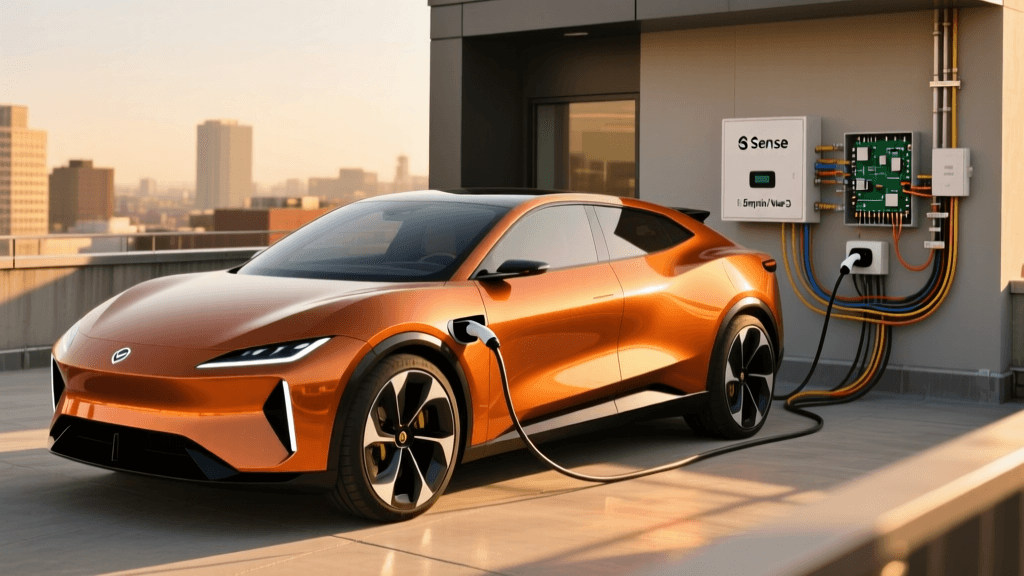
If your building's electrical engineer determines that the shared panel lacks the capacity for your Level 2 charger, the project isn't necessarily dead. Modern technology offers a solution called Dynamic Load Management (DLM). DLM systems use smart current transformers (CTs) clamped onto the building's main electrical feed. They monitor the building's total real-time electricity usage. When the building's demand is low (e.g., 2:00 AM), the DLM allows your EV charger to pull maximum power. When the building's demand spikes (e.g., 6:00 PM when everyone is cooking and running AC), the DLM automatically throttles down the power to your EV charger to prevent tripping the main breaker.
Brands like Emporia and Wallbox offer excellent DLM-compatible chargers. This technology eliminates the need for the HOA to spend tens of thousands of dollars on a utility service upgrade, making apartment and condo EV charger installation financially viable for the community.
Step 6: Installation Costs, Billing, and Rebates
Who pays for the electricity? This is the most common point of friction. If your charger is wired directly to your unit's private sub-panel, billing is automatic. However, if the conduit must run from a shared 'house' meter, you must install a smart charger with integrated sub-metering. Networks like ChargePoint Multi-Family or Enel X Way allow the HOA to set a specific per-kWh rate that bills directly to your credit card, ensuring the community doesn't foot your charging bill.
Cost Breakdown:
- Hardware: $400 - $700 for a smart, networked Level 2 charger.
- Labor and Materials: $600 - $2,000 depending on trenching, conduit length, and wall penetrations.
- Engineering/Permits: $200 - $500 for load studies and municipal permits.
- Utility Upgrades: $0 if using DLM; $10,000+ if the utility must upgrade the building's transformer (usually avoided).
Additionally, look into the Federal Alternative Fuel Infrastructure Tax Credit (AFITC). Under current IRS guidelines, residents in certain non-urban or specific census tracts may be eligible for a tax credit covering up to 30% of the hardware and installation costs, up to $1,000 for residential properties. This can significantly offset your personal investment. Always check with your local utility provider and state energy office for local rebates as well.
Final Thoughts
Installing an EV charger in an apartment or condo requires patience, diplomacy, and a solid understanding of electrical infrastructure. By leveraging Right to Charge laws, proposing Dynamic Load Management, and selecting networked hardware with sub-metering capabilities, you can turn your HOA's hesitation into approval. While the upfront effort of drafting proposals and coordinating with electricians is significant, the convenience of waking up to a fully charged EV every morning in your own building makes the journey entirely worthwhile.