If you've pulled up to a European DC fast-charging plaza or browsed EV infrastructure news, you've likely encountered the name Alpitronic. The Italian manufacturer's Hypercharger line has become one of the most widely deployed public fast-charging platforms globally — and with North American expansion accelerating through partnerships with networks like IONITY and select US operators, understanding what an Alpitronic EV charger actually delivers matters for trip planning.
This guide breaks down Alpitronic's hardware capabilities, real-world charging speeds, connector compatibility (including NACS, CCS1, and CCS2), cost expectations, and how these units compare to Electrify America, EVgo, and Tesla Supercharger stations you'll find across the US in 2026.
What Is an Alpitronic EV Charger?
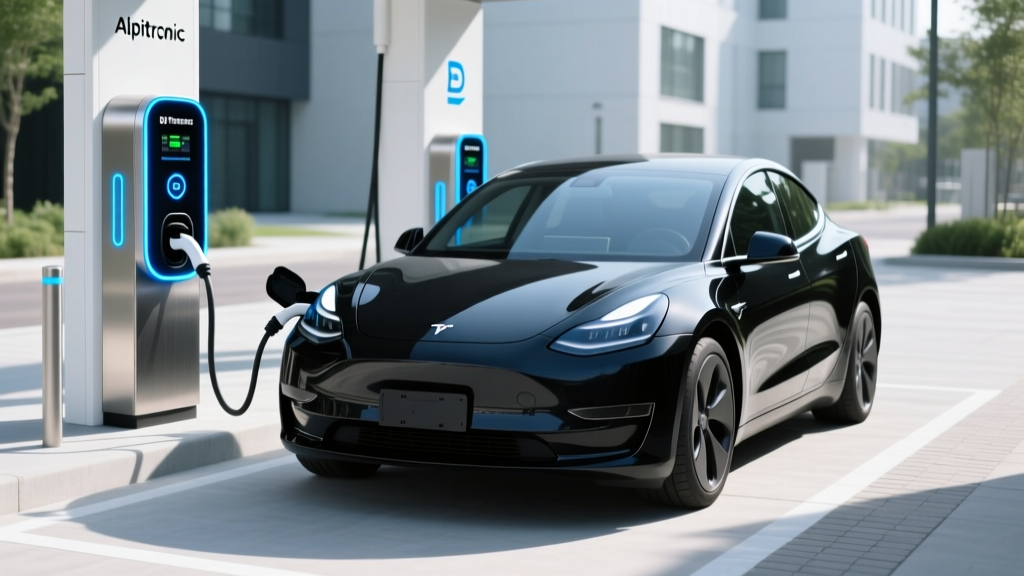
Alpitronic is an Italy-based charging hardware manufacturer best known for its Hypercharger product family — modular DC fast-charging stations that range from 50 kW single-dispenser units up to 600 kW power cabinets feeding multiple charge points. Unlike consumer-facing networks such as Electrify America or Tesla Superchargers, Alpitronic primarily sells hardware to charge-point operators (CPOs), meaning you'll typically find their units branded under network names rather than "Alpitronic" signage.
In Europe, Alpitronic Hyperchargers are a backbone of the IONITY network. In North America, their hardware is appearing through partnerships and fleet-depot installations. The key distinction: Alpitronic manufactures the charger; the network operator sets pricing, access rules, and branding.
Charging Levels and Speeds Explained
Before diving into Alpitronic's DC fast-charging specs, here's how all three charging levels stack up — critical context for understanding where Hyperchargers fit into your daily and road-trip routine.
| Level | Voltage / Power | Typical kW Output | Miles of Range Added Per Hour | Best Use Case |
|---|---|---|---|---|
| Level 1 | 120V AC | 1.0–1.4 kW | 3–5 mi/hr | Overnight top-up, PHEVs |
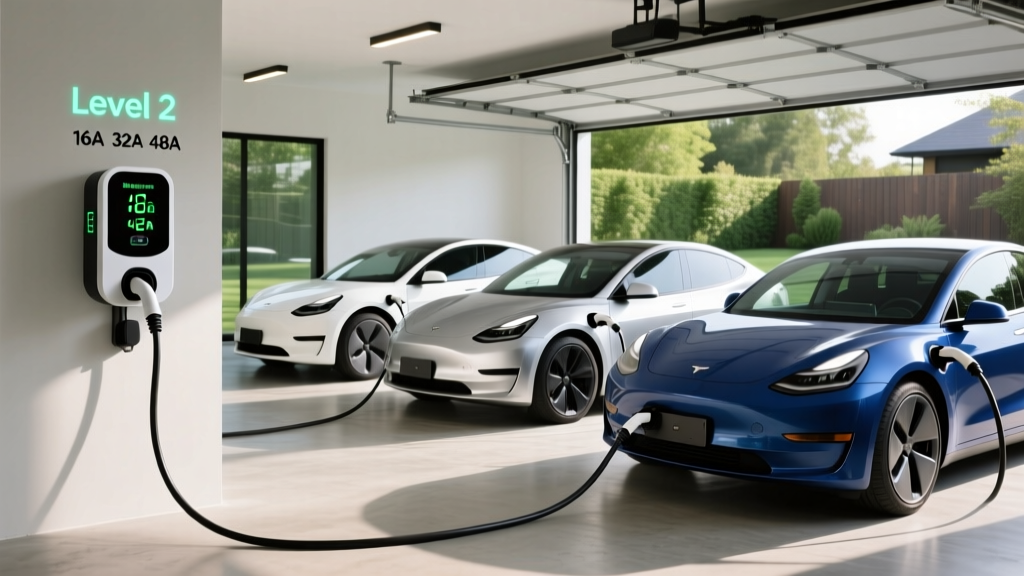
| Level 2 | 240V AC | 7.2–19.2 kW | 25–70 mi/hr | Home charging, workplace, hotels |
| DC Fast Charging | 400–920V DC | 50–350+ kW | 150–1,200+ mi/hr (peak) | Road trips, rapid top-ups |
Alpitronic's Hypercharger line operates exclusively at the DC Fast Charging level. Their current-generation HYC 300 and HYC 600 models are the most common in deployment.
Alpitronic Hypercharger Models: Specs and Real-World Performance
Alpitronic's current lineup centers on two modular platforms. Here's what each delivers at the charge point:
| Model | Max Power per Dispenser | Voltage Range | Max Current | Power Cabinet Total | Dynamic Load Sharing |
|---|---|---|---|---|---|
| HYC 150 | 150 kW | 150–920V DC | 375A | 150 kW (standalone) | No (single output) |
| HYC 300 | 175 kW (CCS) / 300 kW (CCS w/ liquid-cooled cable) | 150–920V DC | 500A | 300 kW | Yes (2 dispensers) |
| HYC 600 | Up to 300 kW per dispenser | 150–920V DC | 500A per output | 600 kW | Yes (up to 4 dispensers) |
Real-World 10–80% Charging Time Examples
Peak kW ratings don't tell the full story. Charging speed depends on your vehicle's battery chemistry, state of charge, thermal management, and the charge curve — the rate at which charging tapers as the battery fills. Here are realistic 10–80% session times on an Alpitronic HYC 300:
| Vehicle (Example) | Battery (Usable kWh) | Peak Charge Rate | Est. 10–80% Time | Notes |
|---|---|---|---|---|
| Hyundai Ioniq 5 (2025) | 77.4 kWh (NMC) | ~240 kW | ~18 min | 800V architecture; strong sustained curve |
| Tesla Model Y LR (NACS adapter) | 75 kWh (NMC) | ~250 kW | ~22 min | Requires NACS-to-CCS adapter at CCS stations |
| Ford F-150 Lightning Ext. Range | 131 kWh (NMC) | ~155 kW | ~41 min | Large battery, lower peak C-rate |
| Chevrolet Equinox EV (2025) | 85 kWh (NMC) | ~150 kW | ~30 min | 400V architecture; moderate taper |
Connector Compatibility: NACS, CCS1, and CHAdeMO
Connector availability is the single most important compatibility question for any public charger. Here's how Alpitronic hardware maps to the connectors your EV uses:
| Connector | Standard Region | Alpitronic Support | Vehicles That Use It | Adapter Needed? |
|---|---|---|---|---|
| CCS2 | Europe | Native on all HYC models | All European-market EVs | No |
| CCS1 | North America | Available on NA-spec units | Most non-Tesla EVs (2024 and earlier NA models) | No (if CCS1-equipped station) |
| NACS (Tesla) | North America | Available on newer NA-spec HYC units | Tesla, Ford, GM, Rivian, Volvo, and 2025+ NA EVs | CCS1-to-NACS adapter for older CCS1-only stations |
| CHAdeMO | Legacy (Nissan Leaf) | Rarely on new installs | Nissan Leaf, Mitsubishi Outlander PHEV | No native adapter available |
North American context for 2026: The industry-wide shift to NACS means most new Alpitronic deployments in the US and Canada include at least one NACS cable per dispenser. If you drive a Tesla and encounter a CCS1-only Alpitronic station, you'll need a CCS1-to-NACS adapter (Tesla sells one for ~$250). If you drive a newer Ford, GM, or Rivian with a native NACS port, verify the specific station has NACS cables before routing there.
For authoritative connector and charging data, the Alternative Fuels Data Center maintains a searchable map of public charging stations with connector details.
Cost to Charge: Alpitronic vs. Home vs. Gas
Public DC fast charging is the most expensive way to power an EV — but it's still often cheaper than gasoline on a per-mile basis. Here's a realistic cost breakdown:
| Scenario | Typical $/kWh | Cost to Add 200 Miles* | Cost Per Mile |
|---|---|---|---|
| Home Level 2 (off-peak utility rate) | $0.08–$0.14 | $5.60–$9.80 | $0.03–$0.05 |
| Home Level 2 (standard rate) | $0.14–$0.20 | $9.80–$14.00 | $0.05–$0.07 |
| Public DC Fast (Alpitronic / IONITY / EA) | $0.30–$0.55 | $21.00–$38.50 | $0.11–$0.19 |
| Gasoline vehicle (28 MPG, $3.40/gal) | — | $24.29 | $0.12 |
*Based on an EV consuming 35 kWh per 100 miles (typical midsize crossover efficiency). Actual costs vary with vehicle efficiency, utility rates, and network pricing.
At the higher end of DC fast-charging pricing ($0.48–$0.55/kWh at some US networks), public charging can exceed the per-mile cost of a fuel-efficient gas car. The economics strongly favor home Level 2 charging as your primary routine, with DC fast chargers like Alpitronic Hyperchargers reserved for road trips and occasional top-ups.
Check fueleconomy.gov for your specific vehicle's kWh/100mi efficiency rating to calculate personalized costs.
Where You'll Find Alpitronic Chargers in North America
Alpitronic doesn't operate its own consumer-facing network in the US the way Electrify America or Tesla does. Instead, their hardware powers stations run by:
- IONITY — Alpitronic is a primary hardware supplier for IONITY's European network (600+ stations). IONITY has announced North American expansion plans, which would bring Alpitronic hardware to US highways.
- Fleet and depot operators — Commercial fleet charging installations increasingly specify Alpitronic HYC units for their modular power-sharing architecture.
- Regional CPOs — Smaller charge-point operators in Canada and select US markets have deployed Alpitronic hardware, often branded under the operator's name.
- Retail and destination charging — Some shopping centers and hotels install Alpitronic units through third-party operators.
To locate Alpitronic-powered stations, use apps like PlugShare or A Better Routeplanner (ABRP), which list charger hardware details including manufacturer and max power output. Filter by "CCS" or "NACS" and check the station details for "Alpitronic" or "Hypercharger" in the equipment field.
Home Charging Setup: What You Actually Need
While Alpitronic specializes in public DC fast charging, your most important charging investment is a home Level 2 setup. Here's what a proper installation requires and costs in 2026:
Electrical Requirements
A standard home Level 2 charger requires a 240V dedicated circuit, typically rated at 40A, 48A, or 60A depending on the charger's maximum output. The National Electrical Code (NEC) requires the circuit breaker to be rated at 125% of the continuous load — so a 48A charger needs a 60A breaker.
| Component | Basic Install (Near Panel) | Complex Install (Long Run / Panel Upgrade) |
|---|---|---|
| Level 2 Charger (hardware) | $400–$700 | $400–$700 |
| Electrician labor (240V circuit) | $300–$600 | $800–$2,500 |
| Electrical permit | $50–$200 | $50–$200 |
| Panel upgrade (100A → 200A, if needed) | $0 (not needed) | $1,500–$4,000 |
| Conduit, wiring, misc. materials | $50–$150 | $200–$800 |
| Total Estimated Cost | $800–$1,650 | $2,950–$8,200 |
Recommended Home Level 2 Chargers
These are proven, well-supported units for home installation in 2026:
ChargePoint Home Flex
- Power: Up to 12 kW (50A) / adjustable down to 16A
- Connector: NACS or J1772 (configurable)
- Cable length: 23 ft
- Smart features: Wi-Fi, scheduling, Alexa, energy tracking
- Price: ~$550–$650
Tesla Wall Connector
- Power: Up to 11.5 kW (48A)
- Connector: NACS native
- Cable length: 24 ft
- Smart features: Wi-Fi, power sharing (multiple units), OTA updates
- Price: ~$475
Emporia Level 2 Charger
- Power: Up to 11.5 kW (48A)
- Connector: J1772 (NACS adapter included)
- Cable length: 24 ft
- Smart features: Wi-Fi, solar integration, energy monitoring, scheduling
- Price: ~$400
Safety and Code Requirements
Any Level 2 home installation must comply with NEC Article 625 (Electric Vehicle Charging System Equipment). Key requirements:
- Dedicated circuit: Your EV charger must have its own breaker — no sharing with other appliances.
- GFCI protection: Required for all receptacle-based (plug-in) installations. Hardwired units may have built-in ground-fault protection.
- Outdoor rating: If installed outside, the charger must carry a NEMA 4 (or IP65+) weatherproof rating. All three units above are outdoor-rated.
- Permit and inspection: Most jurisdictions require an electrical permit and post-installation inspection. Don't skip this — it's required for insurance coverage and home-sale disclosures.
- Wire gauge: A 60A circuit requires 6 AWG copper wire (or 4 AWG aluminum) for runs up to ~50 feet. Longer runs may require thicker wire to prevent voltage drop.
Alpitronic vs. Competing DC Fast Chargers
How does Alpitronic hardware compare to what you'll find at other public networks?
| Feature | Alpitronic HYC 300 | Tritium RT175 (EA common) | Tesla V4 Supercharger | ABB Terra 360 |
|---|---|---|---|---|
| Max power per dispenser | 300 kW | 175 kW | ~250 kW (V4) | 360 kW |
| Dynamic power sharing | Yes (2 outputs) | Limited | Yes (cabinet-based) | Yes (2 outputs) |
| 800V vehicle support | Yes (up to 920V) | Yes | Yes | Yes |
| NACS connector availability | On NA-spec units | Retrofit-dependent | Native | On NA-spec units |
| Modular / scalable | Yes (power cabinets) | Standalone units | Cabinet + dispensers | Standalone |
Alpitronic's modular architecture is a genuine advantage for operators: a single 600 kW power cabinet can serve up to four dispensers, dynamically routing power to whichever vehicle needs it most. This reduces idle capacity and improves throughput at busy stations compared to standalone 150 kW pedestals.
Frequently Asked Questions
How fast will each charging level add range to my EV?
Level 1 (120V) adds roughly 3–5 miles of range per hour — adequate for PHEVs with small batteries but impractical for full BEVs. Level 2 (240V home charging) adds 25–70 miles per hour depending on your charger amperage and vehicle acceptance rate, easily replenishing a full battery overnight. DC fast charging at an Alpitronic Hypercharger or similar station can add 150–400+ miles of range in a 20–30 minute session, depending on your vehicle's peak charge rate and battery size.
How much does it cost to install a home EV charger?
A straightforward Level 2 installation (charger near the electrical panel, no panel upgrade) typically costs $800–$1,650 total including equipment, electrician labor, and permits. If your home needs a panel upgrade from 100A to 200A service, total costs can reach $2,950–$8,200. Always get a load calculation from a licensed electrician before purchasing equipment.
Which connector and charger is compatible with my EV?
In North America for 2026: Tesla vehicles and most new EVs from Ford, GM, Rivian, Volvo, and others use the NACS connector. Most 2024 and earlier non-Tesla EVs use CCS1. The Nissan Leaf uses CHAdeMO (being phased out). Alpitronic stations in North America are increasingly equipped with both CCS1 and NACS cables, but always verify via PlugShare or the network's app before driving to a station.
How much does charging cost per mile compared to gas?
Home Level 2 charging at typical utility rates costs $0.03–$0.07 per mile — roughly one-third to one-half the cost of gasoline at $3.40/gal in a 28 MPG vehicle ($0.12/mile). Public DC fast charging at $0.35–$0.55/kWh costs $0.11–$0.19 per mile, which can match or exceed gasoline costs. The economic case for EV ownership depends heavily on consistent access to home or workplace Level 2 charging.
What electrical upgrades might I need for a home charger?
The most common upgrade is a panel service increase from 100A to 200A ($1,500–$4,000), required when your existing panel doesn't have capacity for a 40A–60A dedicated EV circuit. Older homes may also need wiring upgrades (aluminum-to-copper), new conduit runs, or a utility service drop upgrade. A licensed electrician's load calculation will determine exactly what's required. Some utilities and states offer rebates that offset panel upgrade costs — check IRS.gov for the federal Energy Efficient Home Improvement Credit (25C), which covers up to $600 toward electrical panel upgrades when installed in conjunction with EV charger wiring.
Can I use an Alpitronic charger with my Tesla?
Yes, if the specific Alpitronic station is equipped with NACS cables (increasingly common on new North American installations) or if you carry a CCS1-to-NACS adapter. Tesla's adapter retails for approximately $250 and works with CCS1 stations rated up to 250 kW. Always confirm the station's connector type and maximum power output in your route-planning app.